
So you’re heading to Vietnam and wondering — can I just use my credit card the whole trip? Honest answer: yes and no.
Credit cards work perfectly fine in hotels, shopping malls, bigger restaurants, and most tourist attractions across Hanoi, Ho Chi Minh City, Da Nang, Nha Trang, and Phu Quoc. But the moment you step outside the main tourist zones — street food stalls, local markets, Grab bike rides, small cafés, rural villages — it’s cash only. And that’s most of what makes Vietnam worth visiting.
The smart move is to carry both. This guide tells you exactly how much cash to bring, which ATMs don’t rob you on fees, and which Indian cards actually work well abroad.
Quick Answer: Cash or Card in Vietnam?
| Situation | What Works |
|---|---|
| 5-star hotels, resorts | Credit card ✅ |
| Shopping malls (Vincom, Aeon) | Credit card ✅ |
| International restaurants | Credit card ✅ |
| Supermarkets (VinMart, Co.opmart) | Credit card ✅ |
| Budget guesthouses, homestays | Cash preferred 💵 |
| Street food (Bun Bo, Banh Mi stalls) | Cash only 💵 |
| Local markets (Ben Thanh, Dong Xuan) | Cash only 💵 |
| Grab Bike, local taxis | Cash preferred 💵 |
| Small cafés and family restaurants | Cash only 💵 |
| Rural areas, smaller towns | Cash only 💵 |
| Temples, pagodas, small attractions | Cash only 💵 |
Credit card ✅
Credit card ✅
International restaurants accept cards. Small cafés and local restaurants usually need cash 💵
Cash only 💵
Grab Bike and local taxis: cash preferred 💵
Carry cash for rural areas, temples, pagodas, and small attractions.
Bottom line: Keep at least 500,000–1,000,000 VND in cash at all times. Carry more if you are travelling outside the big cities.
Where Credit Cards Actually Work in Vietnam
If you’re staying in the main tourist areas, you’ll be surprised how card-friendly Vietnam has become over the last few years.
Here’s where your Visa or Mastercard will work without any drama:
Hotels and Resorts — Almost every hotel rated 3 stars and above accepts cards.
Premium beach resorts in Da Nang, Phu Quoc, and Nha Trang are completely card-friendly.
Budget guesthouses and local homestays? Carry cash.
Shopping Malls — Vincom Mega Mall, Aeon Mall, Lotte Mart, and similar malls across major cities all accept cards and even support contactless payments.
Great for shopping, branded goods, and buying last-minute things.
International and Mid-Range Restaurants — Sit-down restaurants with printed menus and air-conditioning almost always have a card machine.
Street-side local spots, open-air eateries, and family-run joints? Cash.
Supermarkets — VinMart, Co.opmart, BigC, MM Mega Market — all accept cards with no issues.
Good for picking up bottled water, snacks, sunscreen, and toiletries cheaper than tourist shops.
Airlines and Tour Operators — Booking domestic flights with VietJet or Bamboo Airways?
Cards are accepted.
Most reputable tour operators also take cards, though some add a 2–3% surcharge.
Always ask before swiping.
Petrol Stations and Chain Pharmacies — Petrolimex and most pharmacy chains in city areas take cards.
Handy for emergencies.
Where You’ll Need Cash — No Exceptions
This is where most Indian travelers get caught off guard.
Vietnam’s most memorable experiences are almost entirely cash-based:
Street Food — A bowl of Pho costs 40,000–80,000 VND (₹130–₹260).
Banh Mi from a sidewalk stall is 25,000–40,000 VND.
These vendors don’t have card machines and never will.
Always carry small notes.
Local Markets — Ben Thanh Market in Ho Chi Minh City, Dong Xuan Market in Hanoi, Han Market in Da Nang — all cash.
You’ll also want small notes for bargaining; vendors rarely have change for large denominations.
Grab Bike and Local Taxis — Grab Car accepts online payment through the app, but Grab Bike drivers (motorbike taxis) often prefer cash.
Local xe om (motorbike taxi) drivers? Cash only. Always.
Temples, Pagodas, and Smaller Attractions — Entry fees at smaller sites are collected by hand.
Keep 20,000–50,000 VND notes handy.
Rural Vietnam and Smaller Towns — Sa Pa, Ha Giang, Mekong Delta villages, Hoi An’s outskirts — the further you go from tourist zones, the more cash-dependent everything becomes.
Stock up before leaving the city.
Tips — At restaurants, spas, and with tour guides, tips are expected in cash. It’s also more personal.
Where Credit Cards Are Commonly Accepted
Get Your Custom Vietnam Money Guide
Not sure how much cash to carry, which card works best, or what your Vietnam trip budget will look like? Share your travel dates and itinerary. We will send a practical money guide based on your travel plans.
Which Cards Work Best in Vietnam for Indian Travelers?
Not all cards are equal when you’re travelling abroad. Here’s a practical breakdown:
Visa and Mastercard — These are the two networks you want. Accepted everywhere that takes cards. If you have a Visa or Mastercard from any Indian bank, you’re covered for card payments across Vietnam’s tourist zones.
American Express — Works at some international hotels and upscale restaurants, but you cannot rely on it. Don’t go to Vietnam with only an Amex.
RuPay — Not accepted in Vietnam. Leave this one at home.
Credit Card vs Debit Card — For ATM withdrawals, use a debit card. For purchases, a credit card with zero forex markup is better because you avoid currency conversion losses.
Best Indian Cards for Vietnam Travel (Zero/Low Forex Markup)
| Card | Forex Markup | Annual Fee | Good For |
|---|---|---|---|
| Axis Magnus Credit Card | 0% | ₹12,500 + GST | Frequent travellers, high rewards |
| HDFC Regalia Gold | 0% | ₹2,500 + GST | Balance of benefits and cost |
| SBI Elite Credit Card | 0% | ₹4,999 + GST | Lounge access, travel insurance |
| IDFC FIRST Wealth Credit Card | 0% | ₹0 (milestone-based) | No annual fee, good rewards |
| Niyo SBM Card | 0% | ₹0 | Budget-friendly, zero fee on everything |
0%
Annual Fee₹12,500 + GST
Good ForFrequent travellers, high rewards.
0%
Annual Fee₹2,500 + GST
Good ForBalance of benefits and cost.
0%
Annual Fee₹4,999 + GST
Good ForLounge access and travel insurance.
0%
Annual Fee₹0 (milestone-based)
Good ForNo annual fee, good rewards.
0%
Annual Fee₹0
Good ForBudget travellers, zero fee on everything.
Note: Regular debit/credit cards from Indian banks typically charge 3–3.5% on foreign transactions plus GST. On a ₹1,00,000 Vietnam trip spend, that is ₹3,500–₹4,000 lost in hidden fees. A zero-markup card saves you all of that.
ATMs in Vietnam — Which Ones to Actually Use
Vietnam has ATMs everywhere in cities and tourist areas — airports, city centers, shopping malls, hotel lobbies. Finding one is not the problem. Finding one that does not eat your money in fees is.
ATM Fee Comparison for Foreign Cards
| Bank | Fee Per Withdrawal | Max Withdrawal Limit |
|---|---|---|
| VPBank | ✅ No fee (best option) | Up to 10,000,000 VND |
| Vietcombank | ~50,000 VND (~₹165) | 3,000,000–5,000,000 VND |
| Agribank | ~50,000 VND (~₹165) | 2,000,000–3,000,000 VND |
| BIDV | ~50,000 VND (~₹165) | 2,000,000–3,000,000 VND |
| TPBank | ~3.3% of withdrawal | Varies |
✅ No fee (best option)
Maximum WithdrawalUp to 10,000,000 VND
~50,000 VND (~₹165)
Maximum Withdrawal3,000,000–5,000,000 VND
~50,000 VND (~₹165)
Maximum Withdrawal2,000,000–3,000,000 VND
~50,000 VND (~₹165)
Maximum Withdrawal2,000,000–3,000,000 VND
~3.3% of withdrawal
Maximum WithdrawalVaries
VPBank is clearly the best ATM for foreign cards in Vietnam. No withdrawal fee + highest per-transaction limit (10,000,000 VND = roughly ₹33,000). Withdraw more in one go and save on repeated fees. (Source: Vietnam ATM Guide 2026)
Practical ATM Tips
- Always choose to pay in VND, not INR or USD. When the machine offers to convert for you, say no. That’s Dynamic Currency Conversion (DCC) and it gives you a terrible rate.
- Withdraw larger amounts less often to minimize per-transaction fees.
- VPBank ATMs are common in Ho Chi Minh City and Hanoi — look for them first.
- Avoid airport ATMs for the first withdrawal. Airport exchange counters often have worse rates. Withdraw from city ATMs instead.
- Your Indian bank also charges a fee on top of the ATM’s fee — usually ₹100–₹300 per withdrawal. This is separate from what the ATM charges.
How Much Cash Should You Carry Each Day?
This depends entirely on what kind of traveller you are. If your hotel is already paid and you are on a guided tour, your daily cash needs are lower. If you are a solo explorer eating street food and visiting local markets, you need more.
Daily Cash Estimate (Excluding Accommodation)
| Travel Style | Daily Cash Needed (VND) | Approx. in INR |
|---|---|---|
| Backpacker (street food, budget transport) | 300,000–600,000 VND | ₹1,000–₹2,000 |
| Mid-range (local restaurants, Grab rides, some shopping) | 700,000–1,200,000 VND | ₹2,300–₹4,000 |
| Comfortable traveller (mix of restaurants, markets, shopping) | 1,200,000–2,000,000 VND | ₹4,000–₹6,600 |
300,000–600,000 VND
Approx. INR₹1,000–₹2,000
Street food and budget transport.
700,000–1,200,000 VND
Approx. INR₹2,300–₹4,000
Local restaurants, Grab rides, and some shopping.
1,200,000–2,000,000 VND
Approx. INR₹4,000–₹6,600
Restaurants, markets, and shopping mix.
Exchange rate reference: 1 VND ≈ ₹0.0033 (as of 2026). So 1,000,000 VND ≈ ₹3,300.
Where to Exchange Indian Rupees to Vietnamese Dong
Can you exchange INR directly to VND? Yes, but the rates are usually not great. Here’s what actually works:
- USD is your best friend — Exchange INR to USD in India (through BookMyForex or a bank), then exchange USD to VND in Vietnam. You’ll almost always get a better rate this way.
- Gold shops in Vietnam often give the best VND rates for USD. It sounds strange but it’s a well-known traveler hack in Ho Chi Minh City and Hanoi. They’re legitimate exchange businesses.
- Licensed exchange counters in the city (not at the airport) give competitive rates. Always check the rate board before handing over money.
- Avoid hotel exchange desks — they’re convenient but usually have the worst rates.
- BookMyForex and Thomas Cook India let you buy VND or USD before you fly. Useful if you want to land with local cash in hand.
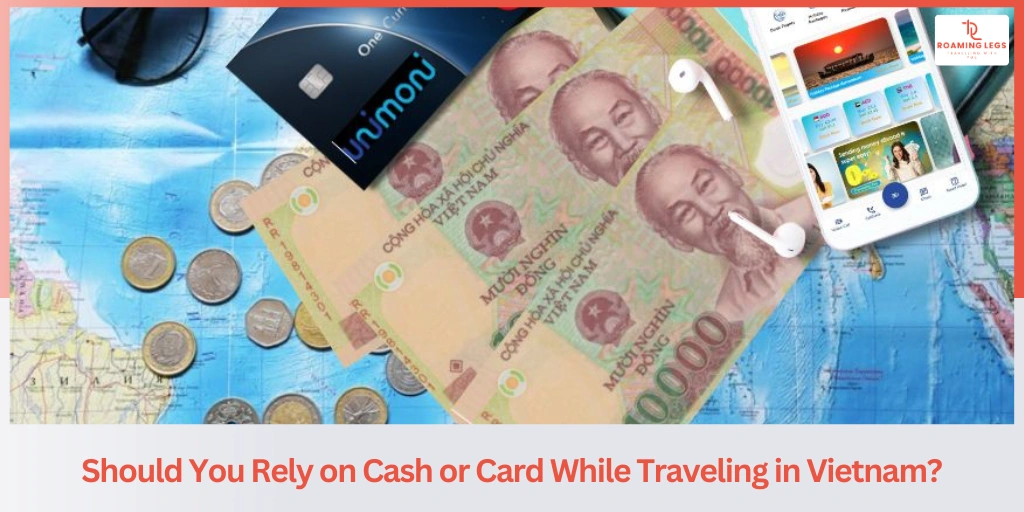
How Much Cash Should Travelers Carry in Vietnam?
Can You Use Google Pay or PhonePe in Vietnam?
No — Indian UPI apps (Google Pay, PhonePe, Paytm) don’t work in Vietnam.
Vietnam has its own mobile payment apps like MoMo, ZaloPay, and VNPay, but these require a Vietnamese bank account or phone number to set up. \
Not practical for short-term tourists.
In more upscale locations, you may find Apple Pay and Google Pay (linked to international cards) working at contactless terminals. But don’t count on it for daily spending.
City-by-City: How Cash-Dependent Is Each Destination?
| Destination | Card Acceptance | Cash Dependence | Notes |
|---|---|---|---|
| Ho Chi Minh City | High | Medium | Cards common in District 1 and malls; markets are cash-only |
| Hanoi | High | Medium | Old Quarter streets are mostly cash; Hoan Kiem area has card options |
| Da Nang | High | Low–Medium | Modern city, good card acceptance along My Khe Beach strip |
| Hoi An | Medium | High | The Ancient Town is almost entirely cash-based |
| Nha Trang | High | Medium | Beach resorts take cards; local areas need cash |
| Phu Quoc | High | Low | Most tourist infrastructure is card-friendly |
| Sa Pa, Ha Giang | Low | Very High | Carry significant cash before leaving Hanoi for these areas |
| Mekong Delta | Low | Very High | Rural area, essentially cash-only everywhere |
High
Cash DependenceMedium
NotesCards common in District 1 and malls; markets are cash-only.
High
Cash DependenceMedium
NotesOld Quarter streets are mostly cash; Hoan Kiem area has card options.
High
Cash DependenceLow–Medium
NotesModern city with good card acceptance around My Khe Beach.
Medium
Cash DependenceHigh
NotesThe Ancient Town is almost entirely cash-based.
High
Cash DependenceMedium
NotesBeach resorts take cards; local areas need cash.
High
Cash DependenceLow
NotesMost tourist infrastructure is card-friendly.
Low
Cash DependenceVery High
NotesCarry significant cash before leaving major cities. Rural areas are mostly cash-only.
Get Your Vietnam City-Wise Cash Guide + Itinerary
Travelling to Vietnam soon? Share your travel dates and group size. We will send a free city-wise cash guide and a practical 5–7 day itinerary designed around your trip.
A Few Money Scams to Know About
Vietnam is generally safe, but a few payment-related scams catch tourists:
- Cyclo overcharging — Cycle rickshaw drivers sometimes agree on a price per person, then charge per hour. Confirm total cost before getting in.
- Taxi meters running fast — Use Grab Car in cities. It’s metered, app-based, and reliable. Avoid unmetered taxis outside airports.
- DCC at ATMs — When the ATM asks “Would you like to pay in INR?” — always say no. This is dynamic currency conversion and the rate is terrible.
- Unofficial exchange counters — Stick to licensed shops and banks. Anyone approaching you on the street offering exchange rates is not someone to trust.
- Fake VND notes — It happens. Before accepting large change, quickly check for security features on higher denomination notes (200,000 and 500,000 VND notes have color-shifting ink and holographic strips).
Sample 7-Day Vietnam Cash Flow Plan
For a 7-day trip to Vietnam (Hanoi → Ha Long Bay → Da Nang → Ho Chi Minh City), here is roughly how to plan your cash.
| City / Stop | Days | Recommended Cash on Hand |
|---|---|---|
| Hanoi (arrival, Old Quarter) | Day 1–2 | 1,500,000–2,000,000 VND |
| Ha Long Bay cruise | Day 3–4 |
500,000–800,000 VND (most things are included; tips, drinks, extra snacks) |
| Da Nang / Hoi An | Day 5–6 |
1,500,000–2,000,000 VND (Hoi An is very cash-heavy) |
| Ho Chi Minh City (departure) | Day 7 | 800,000–1,000,000 VND |
Day 1–2
Recommended Cash1,500,000–2,000,000 VND
Day 3–4
Recommended Cash500,000–800,000 VND
Most things are included. Carry cash for tips, drinks, and extra snacks.
Day 5–6
Recommended Cash1,500,000–2,000,000 VND
Hoi An is especially cash-heavy.
Day 7
Recommended Cash800,000–1,000,000 VND
Total cash to arrange: Approximately 5,000,000–6,500,000 VND (≈ ₹16,500–₹21,500) for a mid-range 7-day trip, assuming hotels and flights are prepaid.
What to Do Before You Leave India
Here’s a quick pre-trip checklist so you’re not scrambling at the airport:
- ✅ Enable international transactions on your card (call your bank or do it via the app)
- ✅ Inform your bank about your travel dates (prevents security blocks on your card)
- ✅ Get a zero-forex-markup card if you don’t already have one
- ✅ Exchange some INR to USD at BookMyForex or your bank before departure
- ✅ Download the Grab app and set it up before landing in Vietnam
- ✅ Save the Roaming Legs WhatsApp number for on-ground help: +91 85120 00933
Testimonials
“We were so worried about managing money in Vietnam — we didn’t know if cards would work or how much cash to carry. Roaming Legs sorted everything out for us. They told us exactly which ATM to use in each city and how much to keep in our pockets. We didn’t face a single payment issue on the entire 9-day trip.” — Aarav & Priya Mehta, Pune | December 2025
“The cash and currency advice from Roaming Legs was a lifesaver. We were heading to Sa Pa from Hanoi and had no idea we needed a lot more VND up there. They warned us in advance and we withdrew at a VPBank ATM before leaving Hanoi. No stress.” — Rajiv Sharma, Delhi | February 2026
Frequently Asked Questions
Everything Indian travellers need to know about money, cards, and payments in Vietnam.
How much cash should I carry in Vietnam as an Indian tourist?
For a mid-range 7-day trip with prepaid hotels and flights, carry approximately 5,000,000–6,500,000 VND in cash (roughly ₹16,500–₹21,500). This covers street food, local transport, markets, shopping, and daily expenses. Keep at least 2 days' worth on you at all times because ATMs in smaller cities can sometimes run out.
Is credit card accepted in Vietnam?
Yes. Credit cards are widely accepted at hotels, shopping malls, supermarkets, international restaurants, and tourist attractions in major cities like Hanoi, Ho Chi Minh City, Da Nang, Nha Trang, and Phu Quoc. Street food stalls, local markets, Grab bikes, temples, and rural areas are mostly cash-only.
Which ATM is best for foreign cards in Vietnam?
VPBank is one of the best ATM options for foreign cardholders because it usually does not charge withdrawal fees and allows higher withdrawal limits. Other major banks like Vietcombank, Agribank, and BIDV are reliable but may charge a small withdrawal fee.
Can I use my Indian debit card in Vietnam?
Yes. Most international Visa and Mastercard debit cards work at Vietnamese ATMs. Your Indian bank may charge foreign transaction and currency conversion fees, so using a zero-forex-markup card can reduce extra costs.
Is RuPay card accepted in Vietnam?
No. RuPay cards are generally not accepted in Vietnam. Carry Visa or Mastercard as your primary payment option.
Can I use Google Pay or UPI in Vietnam?
No. Indian UPI apps like Google Pay, PhonePe, and Paytm do not work in Vietnam. Carry cash and international cards instead. Contactless payments linked with international cards may work at selected locations but should not be your only payment method.
Should I exchange INR to VND or USD before travelling?
Converting INR to USD in India and exchanging USD to VND after arrival usually gives better rates than exchanging INR directly to VND. Avoid airport exchange counters because rates are generally less favourable.
Is it safe to withdraw cash from ATMs in Vietnam?
Yes, use ATMs located at banks, shopping malls, airports, and hotels. Avoid isolated street ATMs. Always select payment in Vietnamese Dong instead of INR or USD when the ATM asks.
What is the currency of Vietnam?
Vietnam uses the Vietnamese Dong (VND). Exchange rates change regularly, so check the latest rate before exchanging large amounts of money.
How much does street food cost in Vietnam?
A bowl of Pho usually costs around 40,000–80,000 VND, Banh Mi costs around 25,000–40,000 VND, and local coffee costs around 25,000–50,000 VND. Most street food vendors accept cash only.
Is Vietnam more cash-dependent than Thailand or Bali?
Yes. Vietnam still relies heavily on cash, especially for local experiences, street food, and smaller towns. Carrying Vietnamese Dong makes everyday payments much easier.
What should I do if my card is declined in Vietnam?
Enable international transactions through your bank app, try another ATM network, or contact your bank. Always carry backup cash so a card issue does not disrupt your trip.
Can I tip in Indian Rupees or USD in Vietnam?
Vietnamese Dong is preferred for everyday tipping. USD may be accepted at luxury hotels, but INR is not useful locally. Keep small VND notes for guides, drivers, and hotel staff.
