
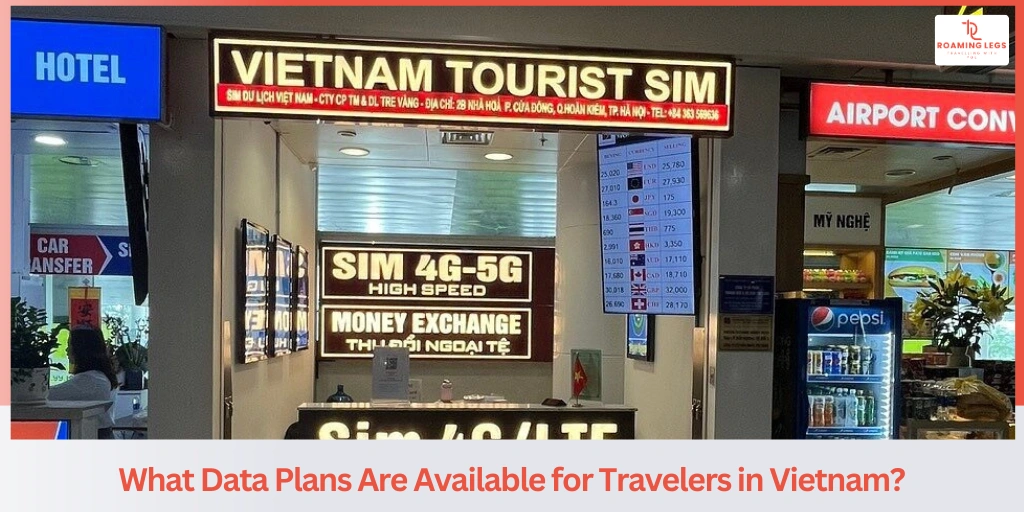
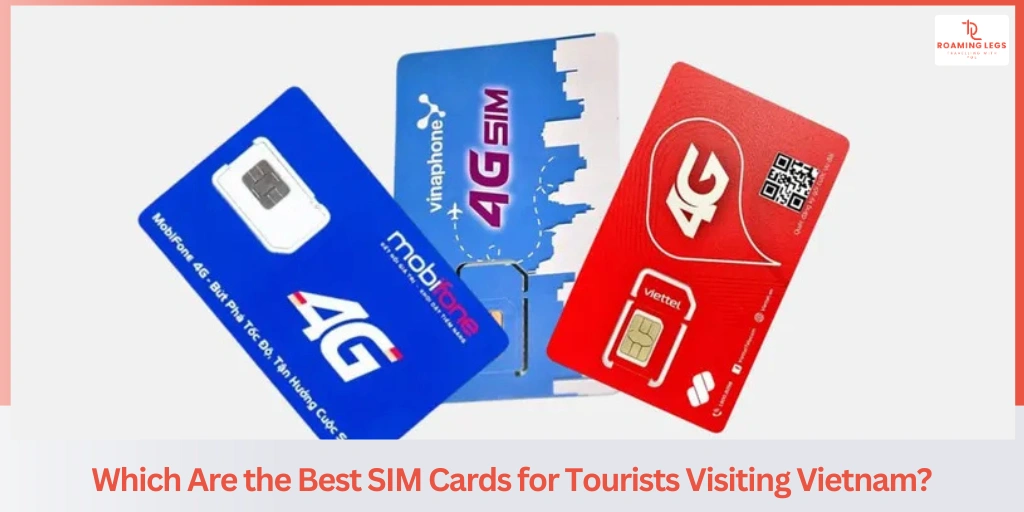
Which SIM card should you actually buy for Vietnam? For most Indian travelers, it’s a Viettel prepaid SIM — around ₹350–₹500 depending on where you buy it, giving you 4G data for 7 to 30 days across the whole country, including Sapa, Ha Giang, and Phu Quoc where other networks drop signal.
If you’re only staying in Hanoi and Ho Chi Minh City, Vinaphone or Mobifone work just as well and are sometimes cheaper.
That one-line answer is enough to get you connected.
But which plan, where to buy it, and whether an eSIM makes more sense for your specific trip — that’s what actually decides whether you’re stuck at the airport counter for 20 minutes or in a Grab within five.
We’ve set up SIM cards for hundreds of Indian travelers heading to Vietnam, and this guide covers what actually matters: real prices, real plan names, and the mistakes we see people make every single week.
Best SIM Card for Vietnam at a Glance
Compare the most popular SIM and eSIM options for travelers.
| Network | Best For | Typical Price | Data |
|---|---|---|---|
| Viettel | Widest coverage, remote areas | 200,000–300,000 VND (₹630–₹950) | Up to 5 GB/day |
| Vinaphone | City-only trips, bundled minutes | 90,000–260,000 VND (₹285–₹820) | 1.5–4 GB/day |
| Mobifone | Budget short trips, Hi Vietnam app | Free 8 GB (first 24 hrs), plans from 100,000 VND | Varies |
| Airalo eSIM (Xin Chao) | Pre-booking before you fly | US$9.50–US$32 (₹800–₹2,700) | 3–20 GB total |
Viettel
Vinaphone
Mobifone
Airalo eSIM (Xin Chao)
Why Bother With a Local SIM in the First Place
Honestly, the first thing that goes wrong for Indian travelers in Vietnam isn’t the food or the heat — it’s landing in Hanoi or Ho Chi Minh City with no working number and no way to call a Grab.
Vietnam’s airport taxi counters are notorious for overcharging tourists, and the easiest way to skip that entirely is opening the Grab app the second you clear immigration.
A local SIM is what makes Grab, Google Maps, Booking.com, and Google Translate actually work while you’re moving — not just at the hotel Wi-Fi.
And unlike a lot of destinations, Vietnam makes this genuinely cheap.
You’re looking at ₹300–₹900 for a plan that covers your entire trip, which is a rounding error next to what Indian roaming plans charge per day.
One thing most first-timers don’t realize: you need your original passport to buy a SIM in Vietnam.
It’s a legal requirement, not a formality — airport counters and city stores will scan it before activating anything.
Leave it in the hotel safe and you’ll be turned away.
Viettel: The One We Recommend for Most Trips
Viettel is government-linked and has invested the most in network infrastructure, which shows the moment you leave the big cities.
If your itinerary includes Sapa, Ha Giang Loop, Ninh Binh, or Phu Quoc along with Hanoi and Ho Chi Minh City, Viettel is the one that won’t drop out on you.
At Tan Son Nhat Airport in Ho Chi Minh City, Viettel runs two counters in the international arrivals hall — one on the left after customs (booth G.1.38/12) and one on the right (booth G.2.44/02).
The two plans most tourists actually buy are TOUR200 (200,000 VND, 5 GB/day for 7 days, includes calls) and TOUR300 (300,000 VND, 5 GB/day for 30 days).
Booking these online in advance usually knocks off 10–15% versus paying at the counter.
One thing most guides miss: buying at the airport costs roughly 20–30% more than the same SIM at a city Viettel store.
If you’re arriving in the evening and just need to get to your hotel, pay the airport premium — it’s ₹150–₹200 extra, not worth the stress of hunting for a store.
If you’re arriving mid-morning with time to spare, walk to a city outlet instead.
Vinaphone: Good for City-Only Trips With Bundled Calling
Vinaphone’s tourist SIM (often sold as the YOLO90 package) runs about 90,000 VND (~₹285) for 30 days with 1.5 GB of data per day — genuinely generous if you’re mostly using maps and messaging along the standard Hanoi–Da Nang–Ho Chi Minh City route.
It also bundles 50 minutes of international calling to India, the US, UK, and a handful of other countries, which regular data-only eSIMs don’t offer.
The catch: the SIM auto-deactivates after 15 days on the base plan and can’t be topped up or extended — you’d need to buy a fresh one if your trip runs longer.
Vinaphone counters are in arrivals at Noi Bai (Hanoi), Tan Son Nhat (Ho Chi Minh City), Da Nang, Cam Ranh (Nha Trang), and Phu Quoc, so it’s an easy pickup regardless of which city you land in.
A comparison worth knowing: if you’re doing a 4–5 day Hanoi-only trip and don’t plan to venture into Ha Giang or Sapa, Mobifone will save you money over Viettel with barely any difference in day-to-day usability.
If your trip includes any remote trekking region, skip it and go Viettel.
Get Our Free Vietnam Connectivity Checklist
Which SIM should you buy?
Which data plan offers the best value?
Which airport counter should you walk to after landing?
We will send you a simple, up-to-date checklist before your trip so you can get connected within minutes of arriving in Vietnam.
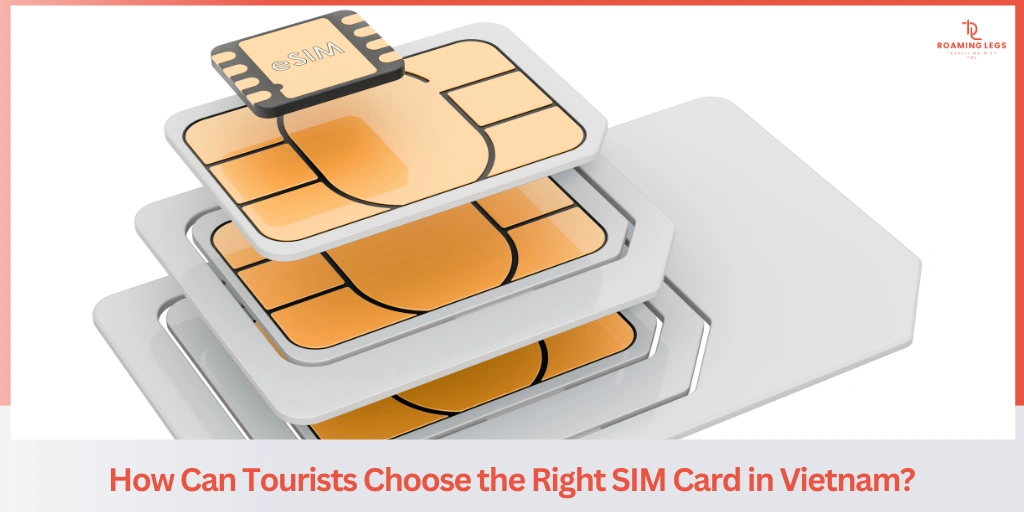
SIM Card or eSIM — Which One Actually Makes Sense for You
This is the question we get asked more than almost anything else while planning Vietnam trips.
Here’s the honest answer: an eSIM is worth it if your phone supports it (iPhone XS and later, Galaxy S20 and later, Pixel 3 and later) and you want data working the second you land, without hunting for a counter.
Airalo’s Vietnam eSIM (branded Xin Chao) runs on Viettel and Mobifone networks, with plans from $4.50 for 1 GB (7 days) up to $32 for 20 GB (30 days).
The trade-off most eSIM guides don’t mention clearly: the vast majority of Vietnam eSIMs are data-only, with no local phone number attached.
That’s fine for maps and Instagram, but Grab drivers frequently call passengers to confirm pickup points at busy spots like airports and train stations — and without a +84 number, that call simply won’t reach you. If you’re getting an eSIM, keep WhatsApp and the in-app chat function open as your backup for driver coordination.
A physical SIM from Vinaphone or Viettel, on the other hand, gives you a working local number from the moment it’s activated — useful not just for Grab but for hotel bookings, bank OTPs, and registering on Zalo, which locals use more than WhatsApp.
Our take: if you’re staying under a week and your phone supports eSIM, go digital and skip the counter queue entirely.
If you’re staying 10+ days, doing any remote travel, or want a proper local number for calls, get a physical Viettel SIM at the airport.
What a SIM Card Actually Costs: Cost Breakdown by Traveler Type
Choose the plan that best matches your travel style and data needs.
| Traveler Type | Cost for a 10–14 Day Trip | What You Get |
|---|---|---|
| Budget / short trip | ₹300–₹500 | Mobifone or basic Viettel SIM, 1–2 GB/day, city-focused use |
| Standard / most tourists | ₹600–₹950 | Viettel TOUR300 or Vinaphone bundle, 4–5 GB/day, works everywhere including remote regions |
| Heavy user / remote work | ₹1,500–₹2,700 | Airalo/Holafly unlimited eSIM or Viettel top-up, streaming and hotspot-friendly |
Budget / short trip
Standard / most tourists
Heavy user / remote work
Practical Info: Visa, Timing, Currency, and One Packing Tip
Indian tourists can currently use Vietnam’s e-visa portal, which is processed online in a few working days — apply at least a week before departure to avoid airport delays.
The best months for a trip that also involves a lot of walking around outdoors are February–April and August–October, when rainfall is lowest.
Currency is the Vietnamese Dong (VND); carry some cash for SIM purchases since not every airport counter accepts card.
One packing tip that surprises people: bring a spare passport photocopy specifically for SIM registration — some smaller city stores prefer to keep a copy rather than just scanning it.
Your Day-1 Connectivity Plan: From Landing to First Grab Ride
On the plane (before landing): If you’ve pre-booked an Airalo or Holafly eSIM, install the profile now using the airport Wi-Fi or your last bit of Indian roaming data — you’ll land already connected.
Immigration and baggage claim (10–15 minutes): Keep your passport out.
You’ll need it again in the next five minutes.
SIM counter (5–10 minutes): Head to the Viettel or Vinaphone kiosk in arrivals.
Show your passport, pick TOUR200 or TOUR300 (Viettel) or the YOLO90 bundle (Vinaphone), and get it activated on the spot — staff usually install it for you.
Outside arrivals (2 minutes): Open Grab, register with your new +84 number, and book your ride to the hotel instead of joining the taxi queue.
At the hotel: Test your data speed, download offline Google Maps for your full route in case you lose signal in remote stretches like Ha Giang, and save your hotel’s address in Vietnamese for showing drivers.
Planning a Vietnam Trip From India Takes Hours of Research
We have planned Vietnam trips for hundreds of Indian travelers.
Tell us your travel dates, departure city, and how many people are traveling.
We will prepare a personalized Vietnam trip plan with the best flight options, recommended SIM card, suggested itinerary, and practical travel tips, ready within 24 hours.
What Travelers Are Saying
Rohan M., Pune (Traveled March 2026): “We landed in Hanoi at 11 PM and honestly weren’t sure the airport SIM counters would even be open.
Roaming Legs told us exactly which Viettel booth to head to and which plan to ask for — took us under ten minutes and we had Grab working before we’d even collected our bags.”
Ayesha K., Bangalore (Traveled May 2026): “Went with the Mobifone free 8GB trick for our first day like they suggested, then upgraded to a proper Viettel plan in the city the next morning.
Saved us close to ₹400 and nobody at the counter tried to upsell us into something we didn’t need.”
Frequently Asked Questions About Vietnam SIM Cards for Indian Tourists
Responsive, Elementor-ready FAQ section with embedded CSS and no JavaScript.
1. Which SIM card is best for Indian tourists visiting Vietnam?
Viettel is the best overall choice thanks to its excellent coverage in cities and remote areas like Sapa, Ha Giang, and Phu Quoc. Vinaphone is a great budget option for city-focused trips.
2. How much does a Vietnam SIM card cost?
Prepaid tourist SIMs generally cost ₹300 to ₹500 in city stores and ₹450 to ₹950 at airport counters depending on the plan.
3. Do I need my passport to buy a SIM card?
Yes. Your original passport is required for SIM registration and activation.
4. Can I buy a SIM card at the airport?
Yes. Hanoi and Ho Chi Minh City airports have official Viettel and Vinaphone counters in the arrivals area.
5. Is an eSIM better than a physical SIM?
An eSIM is convenient for instant data. A physical SIM is better if you need a Vietnamese phone number for calls, Grab, or OTP verification.
6. Does Grab work without a Vietnamese phone number?
Yes, but drivers may call to confirm pickup locations. Keep WhatsApp available if you are using a data-only eSIM.
7. How much data do I need?
Around 2 to 3 GB per day is enough for maps, Grab, messaging, and social media. Plans with 4 to 5 GB per day offer extra flexibility.
8. Which SIM works best in remote areas?
Viettel provides the strongest network coverage in mountainous and rural regions.
9. Is the Mobifone free data offer worth it?
Yes. New users receive free starter data that is useful for the first day after arrival.
10. Can I top up my SIM?
Yes. Viettel and Mobifone can be topped up easily through stores or apps. Some tourist bundles have limitations.
11. Do SIM cards work across Vietnam?
Yes. Major networks provide coverage across mainland Vietnam and islands such as Phu Quoc.
12. Should I buy a SIM before flying or after landing?
Buy an eSIM before departure for instant connectivity or purchase a physical SIM at the airport if you need a local number.
13. What is the biggest mistake tourists make?
Buying a data-only eSIM without a phone number, making it harder for Grab drivers to contact them.
