
Most people planning international travel from India end up choosing the same five or six destinations.
And those are great choices — no argument there.
But Mongolia is something else completely.
It is not built for typical tourism.
There are no crowded beaches, luxury malls, or Instagram-famous food streets.
What Mongolia has instead is something that is genuinely hard to explain until you are standing in the middle of it: open land that never seems to end, silence that is almost uncomfortable at first, and a culture that has been living the same way for centuries.
That contrast — between the busy life Indian travelers come from and the absolute stillness of Mongolia — is what most people come back talking about.
This guide covers what Mongolia is actually like for Indian travelers: the things that surprise people, the things they wish they knew earlier, and the practical details — visa, cost, food, flights, and timing — so you can make an informed decision.
What Is Mongolia Like for Indian Travelers? (Quick Answer)
Mongolia is a nature-first, experience-first destination.
Most travel happens in open countryside, not cities.
The culture is nomadic, Buddhist-influenced, and deeply tied to horses and land.
For Indian tourists, the biggest surprises are: how quiet everything is, how different the food is, how horse-centric daily life remains, and how emotionally different this trip feels compared to anything else in Asia.
At a Glance:
| Factor | Quick Detail |
|---|---|
| Best Time to Visit | June to August (peak), September–October (Golden Eagle Festival) |
| Visa for Indians | Visa-free up to 30 days (confirm with Embassy before travel) |
| Flights from India | Delhi to Ulaanbaatar — ~9.5 hrs, one stop. From ₹66,000 return |
| Budget (10 days, incl. flights) | ₹1,75,000–₹2,50,000 per person |
| Language | Mongolian. English works in Ulaanbaatar and with tour operators |
| Vegetarian Food | Available in Ulaanbaatar. Very limited in countryside |
June to August (peak), September–October (Golden Eagle Festival)
Visa-free up to 30 days (confirm with Embassy before travel)
Delhi to Ulaanbaatar — ~9.5 hrs, one stop. From ₹66,000 return
₹1,75,000–₹2,50,000 per person
Mongolian. English works in Ulaanbaatar and with tour operators
Available in Ulaanbaatar. Very limited in countryside
Horses Are Not Just an Animal Here — They Are a Way of Life
This sounds like something you’d read in a travel brochure, but it genuinely surprises most first-time visitors.
Mongolia has more horses than people.
The country has a human population of around 3.5 million and an estimated 4.2 million horses.
That number alone tells you something about how deeply embedded horses are in Mongolian culture.
Children in nomadic families learn to ride before they learn to read.
Horses are not ridden for sport or tourism — they are used for transport, for herding livestock, for festivals, and for daily work in the countryside.
During the Naadam Festival in July, horse racing is one of the three main national sports.
And unlike what you might imagine, the jockeys are usually children between 5 and 13 years old.
That is not a novelty — it is tradition.
For travelers who grew up seeing horses mostly at weddings or in tourist traps, this feels genuinely different.
When you see a Mongolian child galloping across open grassland like it is the most normal thing in the world, something shifts.
Many Families Still Live Nomadically — And You Can Actually Stay With Them
This is the detail that surprises Indian travelers the most.
Even in 2026, a significant portion of Mongolia’s population continues to live a nomadic lifestyle.
They move seasonally — usually two to four times a year — with their livestock.
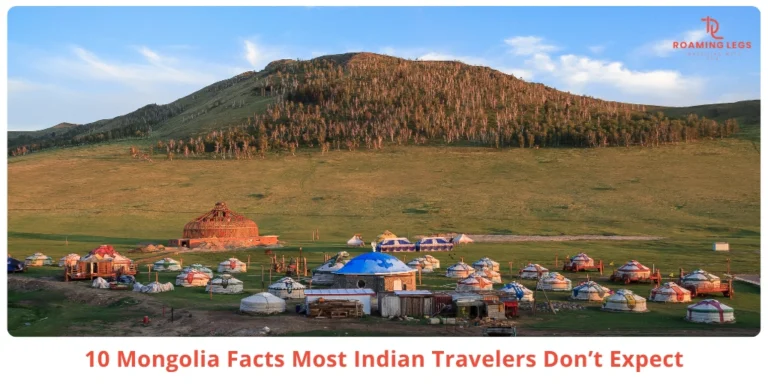
They live in a circular portable home called a ger (the Russian version of the word is “yurt”).
A ger can be set up or dismantled in under an hour, which tells you everything about how efficient this lifestyle is.
What makes a ger camp stay special is not just the accommodation — it is the context. You are waking up to open grassland.
No traffic.
No notifications that feel urgent.
Just horses grazing outside, cold morning air, and a massive sky that the city simply does not have room for.
Ger camps range from very basic (shared bathroom, simple local meals, around ₹800–₹2,000 per person per night) to fully equipped tourist camps with private bathrooms, hot showers, and included meals (₹3,500–₹8,000 per night).
Tour operators like Discover Mongolia and GER to GER offer structured ger stays that connect you with actual nomadic families, not just tourist setups.
If you are looking for the real experience — eating with a family, watching how the ger is maintained, understanding how they manage livestock across seasons — ask your operator specifically for a community ger stay rather than a standard tourist camp.
The Silence Is Going to Hit You Differently Than You Expect
Indian cities — even the quieter ones — have a baseline level of noise. Traffic, vendors, construction, neighbors, temple sounds, notifications.
Mongolia removes all of that.
In the Mongolian countryside, you can drive for two to three hours without seeing another vehicle.
The roads in many regions are not even paved — they are just tracks through the land.
You stop, step out, and there is nothing. No sounds, no movement, nothing except wind and the occasional animal.
For some travelers, that silence is immediately meditative and wonderful.
For others, it is unexpectedly emotional.
Several travelers we have spoken to describe it as the first time in years they could actually hear themselves think.
The areas that deliver this most intensely are: the Orkhon Valley in central Mongolia, the vast steppe surrounding Hustai National Park, and the Gobi Desert in the south.
The Gobi especially — those orange and yellow dunes at Khongoryn Els, with no sound except wind — is something most visitors simply do not have words for.
Get a Free 7-Day Mongolia Itinerary for Indian Travelers on WhatsApp
Not sure how to structure your first Mongolia trip? We have planned Mongolia journeys for Indian travelers from Mumbai, Delhi, Bengaluru, and Pune, creating practical itineraries that balance adventure, travel time, and comfort.
Get a 7-day Mongolia plan covering Ulaanbaatar, Terelj National Park, Orkhon Valley, and the Gobi Desert, with a route designed around the experiences that matter most.
Sample 7-Day Mongolia Itinerary for First-Time Indian Travelers
Day 1 — Ulaanbaatar Arrive, check into hotel.
Visit Gandantegchinlen Monastery in the morning (free entry, active monks, genuinely peaceful).
Afternoon: National Museum of Mongolia for a clear picture of Mongol history.
Evening: Dinner at Modern Nomads restaurant for traditional Mongolian food in comfortable surroundings.
Day 2 — Terelj National Park Drive 1.5 hours from Ulaanbaatar.
Visit Turtle Rock and Aryabal Meditation Temple.
Afternoon: horseback riding through the valley (₹1,500–₹2,500 per hour).
Night at a ger camp in Terelj.
Day 3 — Hustai National Park Drive to Hustai, home to Przewalski’s wild horses — the last truly wild horse species on earth.
Morning game drive. Afternoon: open landscape walk.
Back to Terelj camp or onward.
Day 4–5 — Orkhon Valley & Kharkhorin Drive to the ancient Mongol capital area.
Visit Erdene Zuu Monastery. Explore Orkhon Waterfall.
Stay two nights in countryside ger camp — this is where the real Mongolia experience is.
Day 6 — Karakorum Area, drive back Morning at leisure in the countryside.
Afternoon drive back toward Ulaanbaatar. Optional stop at Elstei sand dunes.
Day 7 — Ulaanbaatar, Departure Morning: Shopping at Naran Tuul market (cashmere, traditional items). Afternoon: depart.
Note: For the Gobi Desert or Golden Eagle Festival, add 3–5 days.
These require domestic flights or a longer drive.
Mongolia’s Culture Goes Much Deeper Than the Landscape
Most people research Mongolia for the scenery — the grasslands, the deserts, the wide skies.
What they do not expect is how culturally rich the country is.
The Buddhist connection is real. Mongolia has a deep Tibetan Buddhist tradition.
Gandantegchinlen Monastery in Ulaanbaatar is an active monastery with resident monks and daily rituals. The Erdene Zuu Monastery in Kharkhorin — built on the site of the ancient Mongol capital — is one of the oldest Buddhist monasteries in Mongolia.
For Indian travelers with any familiarity with Buddhist traditions, there is an unexpected sense of cultural resonance here.
Eagle hunters are not a tourist show. In western Mongolia’s Bayan-Ölgii Province, Kazakh eagle hunters have practiced their tradition for over 6,000 years.
These hunters — called berkutchi — train golden eagles from birth to hunt foxes and rabbits.
The eagles are treated as family members and released back into the wild after about a decade.
The Golden Eagle Festival, held in Ölgii in early October, is one of the most photographed events in all of Central Asia.
If you are visiting in autumn, this is worth planning your trip around.
Naadam Festival is unlike any festival you have attended. Held nationally from July 11–13 each year, Naadam celebrates Mongolia’s three traditional sports: wrestling, archery, and horse racing.
The national celebrations happen in Ulaanbaatar’s National Sports Stadium, but smaller local Naadams happen in provinces throughout July and feel more intimate.
Unlike Diwali or Holi, Naadam is not a festival you watch — you are surrounded by it, in the crowds, at the races, next to families cheering in traditional dress.
What Mongolia’s Food Is Actually Like (And What Indian Travelers Should Know)
Do not expect spice.
Do not expect variety in the countryside.
Go in knowing that Mongolian cuisine is meat-heavy, dairy-heavy, and mild in flavour — and you will be fine.
The national staple is tsuivan (stir-fried noodles with mutton), buuz (steamed dumplings filled with meat), and khorkhog (mutton cooked with hot stones inside a pressure-sealed container — a countryside specialty that is genuinely delicious even if you are not a big mutton person).
Airag — fermented mare’s milk — is something you will be offered constantly.
It is an acquired taste. Try it once.
For vegetarians: Ulaanbaatar has real options. Namaste Restaurant in the city center serves Indian food including vegetarian dishes.
Luna Blanca is a popular vegan restaurant.
Loving Hut has multiple locations in the city.
Outside Ulaanbaatar, in ger camps and smaller towns, vegetarian options are almost nonexistent unless arranged in advance.
Tell your tour operator before the trip — most ger camps will accommodate it if they know ahead of time.
Do not assume you can sort it out on arrival.
How Much Does a Mongolia Trip from India Cost? (Honest Budget Breakdown)
This is the question most Indian travelers want answered clearly, so here it is without fluff.
| Style | Total Per Couple (10 nights, incl. flights from Delhi) | What's Included |
|---|---|---|
| Budget | ₹2,40,000 – ₹3,00,000 | Basic ger camps, shared transport, simple meals, connecting flights with 1–2 stops |
| Mid-Range | ₹3,50,000 – ₹4,80,000 | Comfortable tourist ger camps, guided activities, private transport, some meals |
| Luxury | ₹6,00,000 – ₹9,00,000+ | Premium ger camps (e.g. Three Camel Lodge in Gobi), private guides, domestic flights within Mongolia |
₹2,40,000 – ₹3,00,000
IncludesBasic ger camps, shared transport, simple meals, connecting flights with 1–2 stops
₹3,50,000 – ₹4,80,000
IncludesComfortable tourist ger camps, guided activities, private transport, some meals
₹6,00,000 – ₹9,00,000+
IncludesPremium ger camps, private guides, domestic flights within Mongolia
Flights: Return flights from Delhi to Ulaanbaatar typically cost ₹55,000–₹90,000 per person. Airlines operating this route include MIAT Mongolian Airlines, Air China, Korean Air, and IndiGo with a stop. The shortest routing from Delhi takes about 9.5 hours. Book at least 6–8 weeks in advance for reasonable fares.
Currency: The Mongolian Tugrik (MNT) is used locally. Cards work in Ulaanbaatar. Carry USD cash for countryside areas and smaller towns.
Planning Mongolia From India but Not Sure What Budget You Need?
Mongolia trip costs can vary a lot depending on your travel style, group size, route, and comfort level. Share your travel dates, number of travellers, and budget range on WhatsApp, and we will prepare a realistic cost estimate for your trip.
We have planned Mongolia journeys for Indian travelers across different travel styles, including solo trips, couples, families, and groups. Get a practical budget breakdown within 24 hours.
Practical Info Every Indian Traveler Needs Before Going
Visa: Indian passport holders can enter Mongolia visa-free for up to 30 days as of 2026.
Verify this with the Embassy of Mongolia in New Delhi (located in Chanakyapuri) before booking, as visa policies do occasionally change.
Best Time to Visit: June to August is peak season — weather is pleasant (15°C–25°C daytime), grasslands are green, and Naadam happens in July.
September and October are golden for the landscape and the Eagle Festival.
Avoid November through April unless you are prepared for extreme cold (down to -30°C in winter).
Flight Time: Delhi to Ulaanbaatar is roughly 9.5 hours with one stop.
Most flights connect via Beijing, Seoul, or Istanbul.
Currency: Mongolian Tugrik (MNT).
USD cash is universally accepted in the countryside.
ATMs are available in Ulaanbaatar.
Connectivity: Ulaanbaatar has good 4G.
The countryside has very limited connectivity — this is actually part of the appeal for many travelers.
Packing Note: Even in summer, nights get cold.
Temperatures can drop to 5°C–10°C after sunset.
Layers are essential even if you are visiting in July.
What Two Indian Couples Said After Their Mongolia Trip
Priya & Arjun Mehta, Pune — August 2025 “We have done Bali, Thailand, and Vietnam before.
Mongolia was completely different.
The third day in the countryside, I cried a little — not because I was sad, just because the silence hit me in a way I didn’t expect.
The ger camp experience was something we will talk about for years.”
Sunita & Ravi Sharma, Bengaluru — September 2025 “We went for the Golden Eagle Festival.
Watching those hunters ride in full traditional dress with eagles on their arms — no camera can actually capture how that feels.
We are already thinking about going back in summer for Naadam.”
Mongolia Travel FAQs for Indian Travelers
Everything Indian travelers need to know before planning a Mongolia adventure.
Is Mongolia safe for Indian tourists?
Yes. Mongolia is considered a safe destination for tourists.
Petty theft can happen in Ulaanbaatar, so normal precautions apply. The countryside is extremely safe, and serious crime involving tourists is rare.
Do Indians need a visa for Mongolia?
Indian passport holders can currently visit Mongolia without a visa for up to 30 days.
Visa policies can change, so confirm the latest requirements with the Embassy of Mongolia before booking your flights.
What is the best time to visit Mongolia from India?
June to August is the most popular period because of pleasant weather, green landscapes, and the Naadam Festival in July.
September and October are excellent for autumn scenery and the Golden Eagle Festival. Winter is only recommended for travelers seeking extreme cold experiences.
How do I get from India to Mongolia?
Most flights from Delhi to Ulaanbaatar connect through cities like Beijing, Seoul, or Istanbul.
Return flights usually cost around ₹55,000–₹75,000, with total travel time depending on the connection route.
How much does a Mongolia trip cost from India?
A 10-night mid-range Mongolia trip from India generally costs around ₹1,75,000–₹2,50,000 per person including flights.
Budget travelers can plan around ₹1,40,000, while luxury experiences with premium ger camps and private guides can exceed ₹4,00,000 per person.
Can vegetarians travel comfortably in Mongolia?
Yes, but advance planning is important.
Ulaanbaatar has vegetarian and Indian restaurants. Outside the city, meals are mostly meat-based, so inform your tour operator and ger camps before arrival.
What is a ger camp and what is it like?
A ger is a traditional circular portable home used by Mongolian nomadic communities for centuries.
Tourist ger camps range from basic stays with shared bathrooms to comfortable camps with private bathrooms, hot showers, and included meals.
Sleeping in a ger under Mongolia's endless star-filled sky is one of the most memorable parts of the journey.
Is Mongolia good for families with children?
Yes, especially for children aged 8 and above.
Horse riding, wildlife spotting, open landscapes, and ger stays create unique family experiences. Younger children may find long road journeys challenging.
What language is spoken in Mongolia? Will English work?
Mongolian is the official language.
English works well in Ulaanbaatar and with professional tour operators. In rural areas, your guide will handle communication.
Is Mongolia expensive for Indian travelers?
Mongolia is a mid-range destination mainly because international flights and guided tours add to the cost.
Daily expenses inside Mongolia are reasonable. Food, local transport, and activities are generally affordable compared to many international destinations.
What is the Naadam Festival and should I plan my trip around it?
Naadam is Mongolia's biggest cultural festival held from July 11–13.
It celebrates traditional wrestling, archery, and horse racing. It is a fantastic experience, but July is peak travel season, so accommodation should be booked several months early.
What is the Golden Eagle Festival?
The Golden Eagle Festival takes place in Ölgii, western Mongolia, usually in early October.
The event celebrates Kazakh eagle hunters and their trained golden eagles through competitions and cultural performances.
How many days are enough for Mongolia?
A minimum of 7 days is needed to experience Mongolia beyond Ulaanbaatar.
Ten days allows you to add destinations like the Gobi Desert or Orkhon Valley. For the Gobi, Lake Khuvsgul, or Golden Eagle Festival, plan 12–14 days.
