
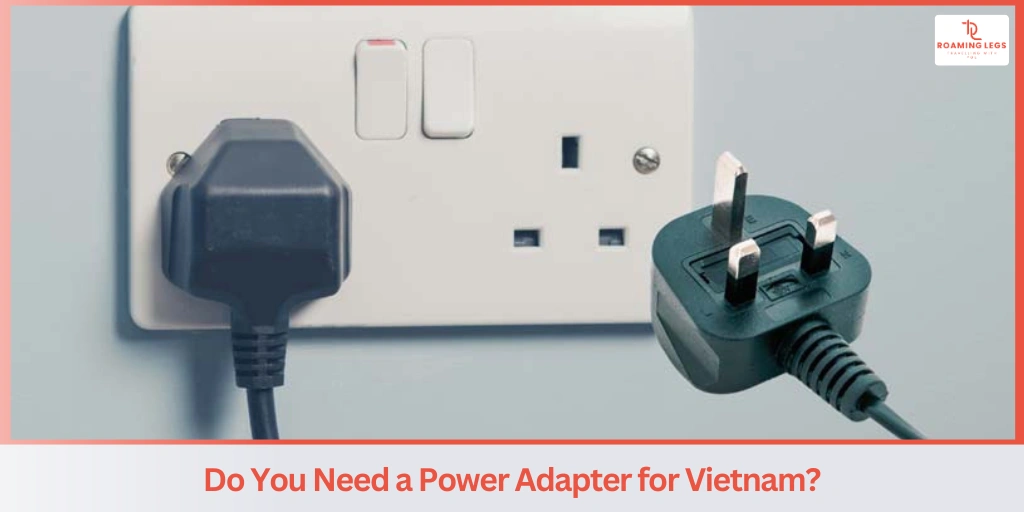
No, most Indian chargers don’t work directly in Vietnam because the socket types are different.
India uses Type D and Type M plugs (three big round pins), but Vietnam uses Type A, Type C, and sometimes Type F plugs.
You’ll need a universal travel adapter to charge your phone, laptop, and camera.
The good news? Vietnam’s voltage (220V) matches India’s (230V), so your devices won’t get damaged—they just won’t fit the socket.
What Plug Types Does Vietnam Actually Use? Your Quick Reference
| Plug Type | What It Looks Like | Common in Vietnam? | Works With Indian Plugs? |
|---|---|---|---|
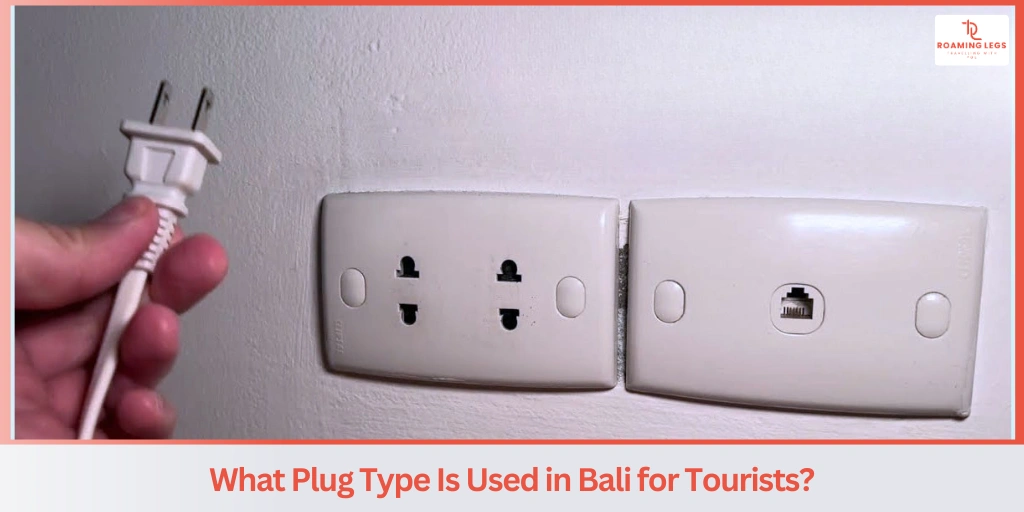
| Type A | Two flat parallel pins | Yes (South Vietnam mostly) | No — need adapter |
| Type C | Two round pins | Yes (North Vietnam, new hotels) | Maybe — some Indian Type C work |
| Type F | Two round pins + grounding clips | Yes (newer buildings) | No — need adapter |
| Type D | Three round pins (Indian standard) | Rarely | It’s Indian, but Vietnam doesn’t use it |
| Type M | Three big round pins (Indian standard) | Very rarely | It’s Indian, but Vietnam doesn’t use it |
Two flat parallel pins
Common in Vietnam?Yes (South Vietnam mostly)
Works With Indian Plugs?No — need adapter
Two round pins
Common in Vietnam?Yes (North Vietnam, new hotels)
Works With Indian Plugs?Maybe — some Indian Type C work
Two round pins + grounding clips
Common in Vietnam?Yes (newer buildings)
Works With Indian Plugs?No — need adapter
Three round pins (Indian standard)
Common in Vietnam?Rarely
Works With Indian Plugs?It’s Indian, but Vietnam doesn’t use it
Three big round pins (Indian standard)
Common in Vietnam?Very rarely
Works With Indian Plugs?It’s Indian, but Vietnam doesn’t use it
The Real Situation: Indian Plugs vs Vietnamese Sockets
If you are packing from India and planning to travel to Vietnam, here’s what actually happens at the socket.
Type C Plugs from India – Sometimes They Work
Indian phone chargers often come with Type C plugs (two round pins).
Vietnam also uses Type C sockets, especially in Northern Vietnam and newer hotels.
If your charger has a Type C plug, you’re lucky – it might fit directly without an adapter.
But here’s the catch: Not all Type C plugs are created equal.
Indian Type C plugs are slightly different in size and pin thickness compared to European Type C plugs.
Sometimes they fit loosely, sometimes not at all.
The hotel staff at 11 PM can’t fix that kind of problem.
Type D and Type M Plugs – You Definitely Need an Adapter
If you are carrying older devices or specialized electronics (hair dryers, immersion heaters, older laptop chargers), they probably use Type D plugs (the three big round pins in a triangle) or Type M plugs (even bigger three round pins).
Vietnam doesn’t use either of these.
You’ll need a travel adapter, no question.
What this means for you: Don’t assume your charger will work.
Check your plug before you pack.
Check Your Charger’s Voltage – This Matters More Than You Think
Before you worry about the socket, check the tiny label on your charger.
Find where it says something like: Input: 100–240V, 50–60Hz
If you see that range (100–240V), you’re good.
That’s what we call a “dual-voltage” charger, and it works in Vietnam without any problem.
Your phone charger probably says this.
Your laptop charger probably says this.
Your camera charger probably says this.
If your charger says only 230V or 240V, it’s single-voltage and only works in India.
This is rare for modern electronics, but old hair dryers and electric kettles often have single-voltage ratings.
Those won’t work in Vietnam even with an adapter – you’d need a voltage converter, which is a completely different thing.
Quick test:
- Check your charger label right now
- If it says 100–240V → Your device is safe in Vietnam (just need the right socket adapter)
- If it says only 230V → Only works in India (don’t plug in Vietnam)
Vietnam’s Electricity: 220V – Almost Exactly Like India’s 230V
Here’s the good news that everyone misses: Vietnam’s electricity is almost identical to India’s.
| Country | Voltage | Frequency |
|---|---|---|
| India | 230V | 50Hz |
| Vietnam | 220V | 50Hz |
230V
Frequency50Hz
220V
Frequency50Hz
That 10-volt difference is so small that modern devices don’t even notice.
Your phone charger doesn’t care.
Your laptop charger doesn’t care.
Your camera doesn’t care.
The only time voltage really matters is if you’re bringing old appliances like hair dryers or electric kettles from India.
Those single-voltage devices expect exactly 230V. At 220V, they might work slowly or might not heat up properly.
At 110V (like in some parts of Vietnam), they won’t work at all.
Why this matters: You don’t need a voltage converter for your electronics.
You only need a plug adapter so your charger physically fits the socket.
Where to Find Different Plug Types in Vietnam
If you are planning to visit Vietnam, you should know where each socket type is actually used:
Southern Vietnam (Ho Chi Minh City, Can Tho, Phu Quoc)
Type A plugs are more common here because of historical American influence.
Older hotels, guesthouses, and local shops often have Type A sockets.
Type A has two flat parallel pins – imagine a tiny rake with just two tines.
If your charger is shaped like that, it will fit many Southern Vietnam sockets without an adapter.
Northern Vietnam (Hanoi, Halong Bay, Hoi An)
Type C and Type F are more common in the north.
These are European-style round-pin sockets. Newer hotels and modern buildings use these.
Both Regions
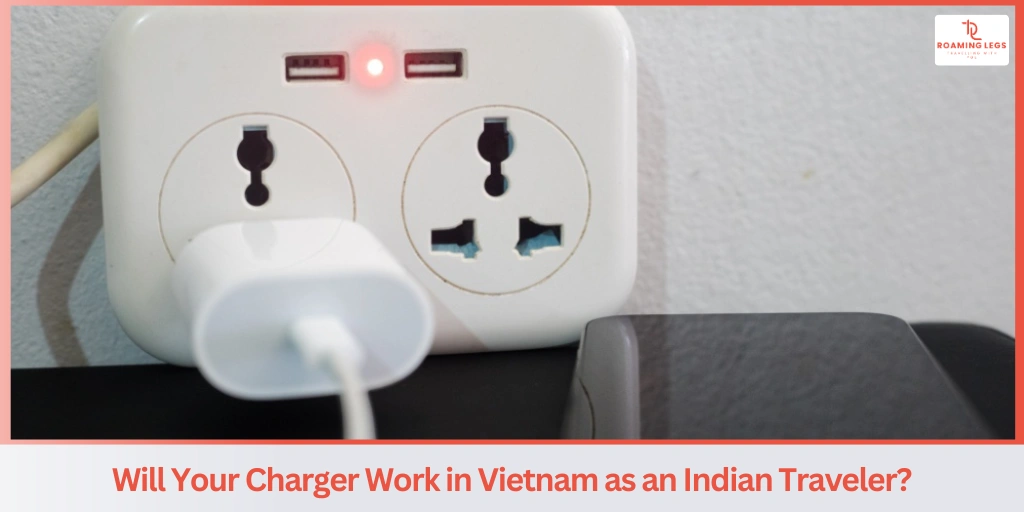
Newer luxury hotels, co-working spaces, and airport lounges often have hybrid universal sockets that accept multiple plug types.
Look for a socket that has both flat and round holes – you might not need an adapter at all.
The real situation: You still need an adapter because you can’t guarantee which socket type you’ll get.
A single hotel building might have Type A in some rooms and Type C in others.
Honest Talk: What Actually Works and What Doesn’t
Let’s be direct about what to expect.
Devices That Will Definitely Work
- ✅ Your smartphone charger (almost all are Type C or dual-voltage)
- ✅ Your laptop charger (almost all are dual-voltage)
- ✅ Your power bank (all are dual-voltage)
- ✅ Your camera or GoPro charger (almost all are dual-voltage)
- ✅ Any modern USB charger
Devices That Might Not Work
- ⚠️ Old hair dryers from India (single-voltage, don’t fit socket anyway)
- ⚠️ Electric kettles (single-voltage, dangerous at different voltage)
- ⚠️ Older laptop chargers with Type D plugs
- ⚠️ Any device that only says “230V” on the label
What You Actually Need
- A universal travel adapter that supports Type A, Type C, and Type F – costs ₹300–800 online, lasts for every international trip you ever take
- That’s it. You don’t need a voltage converter (unless you’re bringing that hair dryer, which is honestly not worth it)
Real talk: One universal adapter solves 95% of charging problems in Vietnam. Everything else is just being extra cautious.
Where Should You Buy a Travel Adapter?
Before You Leave India (Recommended)
Online: Amazon, Flipkart (search “universal travel adapter”)
- Price: ₹300–₹1,500
- Best ones: Include USB charging ports and work in 150+ countries
- You’ll actually have it when you land, not searching at 11 PM
Electronics stores: Croma, Reliance Digital
- Price: ₹500–₹2,000
- Upside: See it before buying
- Downside: Higher price than online
At Ho Chi Minh City or Hanoi Airport
- Price: Double or triple what you’d pay in India
- Available: Yes, at convenience stores
- When you’d buy: Only if you completely forgot
In Vietnam Cities
Electronics shops, supermarkets (Big C, Co.opmart), and shopping malls have adapters.
- Price: Slightly cheaper than airport, more expensive than online
- Quality: Hit or miss
Honest advice: Buy before you travel. You’ll save money and have peace of mind landing at 1 AM.
What About Older Hotels and Guesthouses?
If you are staying in a smaller or older hotel, there’s a small chance the room only has Type A or Type D sockets.
The front desk can’t magic up a new socket.
This is when carrying a multi-socket travel adapter (not just a single-type adapter) saves your trip.
A good universal adapter works with every plug type Vietnam has, plus Type D if you somehow need it.
What people forget to do: Don’t call the hotel asking “What socket type do you have?”
because half the staff won’t know what you’re talking about. Just bring a universal adapter and avoid the problem completely.
Won’t Your Hotel Provide an Adapter?
Some 4-star and 5-star hotels might have adapters at the front desk to borrow. Many don’t.
Guesthouses almost never have them.
The problem: If every guest borrowed the hotel’s adapter, the hotel would run out or lose them.
Most places don’t replace them.
Why you shouldn’t rely on this:
- You need to charge your phone before checking in (Grab app for the taxi, Google Maps)
- Hotels can run out at 9 PM
- Some hotels charge ₹200–₹500 just to borrow an adapter
Just carry your own. Problem solved, nothing to worry about.
Practical Tips for Charging Multiple Devices
If you are traveling with family or carrying multiple devices (phone, tablet, laptop, camera), one travel adapter might not be enough.
Here’s what works:
Option 1: Universal Adapter + USB Power Bank
- Plug the universal adapter into the wall socket
- Plug a multi-port USB power bank into the adapter
- Charge your phone, tablet, and earbuds from the power bank
- Cost: ₹600–₹1,500 total, totally worth it
Option 2: Multi-Port USB Charger + Universal Adapter
- Get a USB charger with 3–4 USB ports
- Plug it into the wall with your universal adapter
- Connect 4 devices at once
- Cost: ₹800–₹2,000, super convenient
Option 3: Just Bring Multiple Adapters (Overkill But It Works)
- Two universal adapters, one for the bedroom, one for your bag
- Never fight over outlets
- Cost: ₹600–₹1,600
What people actually do: One universal adapter + one USB power bank.
That’s it. Covers everything.
The Reality of Vietnam’s Power Supply
If you are worried about power safety in Vietnam, don’t be.
Vietnam’s electrical infrastructure is reliable in cities and tourist areas.
Blackouts happen but are rare in Hanoi, Ho Chi Minh City, and major tourist destinations.
One small issue: Some older buildings have occasional voltage fluctuations.
This is why dual-voltage devices exist – they handle small swings.
Modern laptop chargers handle it fine.
When power becomes a problem:
- You’re in a very remote area (not many tourists go there anyway)
- During monsoon season in extreme weather (still rare)
For regular travel: Don’t worry. Plug in, charge your device, get back to exploring.
Get Your Free Vietnam Packing Checklist for Indian Travelers
Already booked your Vietnam trip? Get a complete packing checklist covering power adapters, visas, money, clothes, airport tips, and everything you need before departure.
The Biggest Mistakes Travelers Make (And How to Avoid Them)
Mistake #1: Assuming All Indian Type C Plugs Fit Vietnamese Type C Sockets
Indian Type C pins are slightly thicker. Vietnamese Type C pins are European standard. Sometimes they fit, sometimes they don’t. Solution: Bring a universal adapter anyway.
Mistake #2: Buying a Single-Type Adapter (Like Type A Only)
You arrive in your hotel and find a Type C socket. Your Type A-only adapter is useless. Solution: Always buy a universal adapter that supports multiple types.
Mistake #3: Not Checking Your Charger’s Voltage Before Packing
You assume your hair dryer works in Vietnam because it’s electric. It’s probably 230V only. It won’t work. Solution: Check the label. If it doesn’t say 100–240V, leave it at home.
Mistake #4: Forgetting to Charge Your Phone Before Checking Out of the Hotel
You need Grab to get to the airport, but your phone is at 5%. You’re now stressed, late, and can’t book a cab. Solution: Charge your phone while eating breakfast. Always leave hotels with a full battery.
Mistake #5: Buying an Adapter at the Airport
You’re tired, time is running out, and the airport store charges triple. You panic and buy it anyway. Solution: Buy online from India for a third of the price.
Get Your Custom Vietnam Itinerary
Planning a full Vietnam trip? Share your budget, travel dates, and interests. We will create a customised itinerary covering Hanoi, Halong Bay, Ho Chi Minh City, and other destinations that fit your travel style.
Final Checklist Before You Leave for Vietnam
Before you pack your bags, check everything:
- [ ] I checked my main charger’s label – it says 100–240V ✅
- [ ] I checked my laptop charger’s label – it says 100–240V ✅
- [ ] I checked my camera charger’s label – it says 100–240V ✅
- [ ] I bought a universal travel adapter that supports Type A, C, and F ✅
- [ ] I tested my adapter with my chargers before packing ✅
- [ ] I know where to find outlets in my hotel (ask front desk or look online) ✅
- [ ] I’m bringing at least one USB power bank for long sightseeing days ✅
One more thing: Once you land and turn on your phone, Google your hotel name + “socket type” to know what you’re working with. Half the time, travelers ask the front desk and get confused. Just Google it, saves time.
Ready to Plan Your Vietnam Trip?
The power plug question is solved. Now you can focus on the experiences that make Vietnam special, from Phu Quoc beaches and Hanoi temples to the Mekong Delta, local food, and unforgettable moments.
We have helped 200+ Indian couples and families plan Vietnam trips from start to finish. Our team can help with visas, travel timing, hotels, destinations, and building a smooth itinerary that fits your budget.
Share your travel details and we will create your Vietnam itinerary within 24 hours.
Frequently Asked Questions
Everything Indian travelers need to know about using chargers and electrical devices in Vietnam.
Q1. Will my exact charger work in Vietnam?
If your charger label says 100–240V, it will work in Vietnam with the correct plug adapter.
If it says only 230V, check the device specifications before using it. Most modern phone, tablet, and laptop chargers are designed for international travel.
Q2. Do I need a voltage converter or just an adapter?
Most Indian travelers only need a plug adapter.
Voltage converters are rarely required because modern electronics like phones and laptops usually support 100–240V input.
Q3. Can I charge my phone without an adapter?
It is possible if your charger plug matches the socket, but you cannot rely on this.
Vietnam commonly uses Type A, Type C, and Type F sockets, so carrying a universal adapter avoids last-minute problems.
Q4. What's the best universal adapter for Vietnam?
Choose a universal adapter supporting Type A, Type C, and Type F plugs with USB ports.
A good travel adapter usually costs around ₹500–₹1,000. Brands such as Philips, Portronics, and Amazon Basics are commonly used by travelers.
Q5. Can I share one adapter with other travelers?
Yes, but it can become inconvenient when everyone needs charging at the same time.
For couples or families, a multi-port adapter or power strip setup makes charging much easier.
Q6. What if my adapter doesn't fit the socket?
This usually happens when travelers carry a single-type adapter.
A universal adapter designed for multiple plug types is the safer choice for Vietnam.
Q7. Will my device get damaged if I plug it in wrong?
If the plug does not fit, do not force it. Your device will not be damaged.
Voltage differences can damage electronics, but Vietnam uses 220V, which is the same standard used in India. Dual-voltage devices are generally safe.
Q8. Can I charge my laptop in Vietnam?
Yes. Connect your laptop charger through a universal adapter and plug it into the wall socket.
Most modern laptop chargers support international voltage ranges automatically.
Q9. Are there charging outlets in cafés and restaurants?
Yes, especially in tourist areas of Hanoi and Ho Chi Minh City.
Many cafés provide charging points along with WiFi and air conditioning.
Q10. Do I need an adapter at Vietnam airports?
Sometimes. International lounges may have universal sockets, but regular terminals often use standard Vietnamese outlets.
Keeping your adapter in your carry-on bag is the safest option.
Q11. What if I forget my adapter at the hotel?
You can usually buy a replacement from supermarkets or electronics shops in Vietnamese cities.
Local replacements may cost around ₹300–₹500, but airport shops are generally more expensive.
Q12. Can I use my Indian electrical extension cord in Vietnam?
No. Indian extension cords generally do not fit Vietnamese wall sockets.
Use a universal travel adapter instead for phones, laptops, cameras, and other electronics.
