
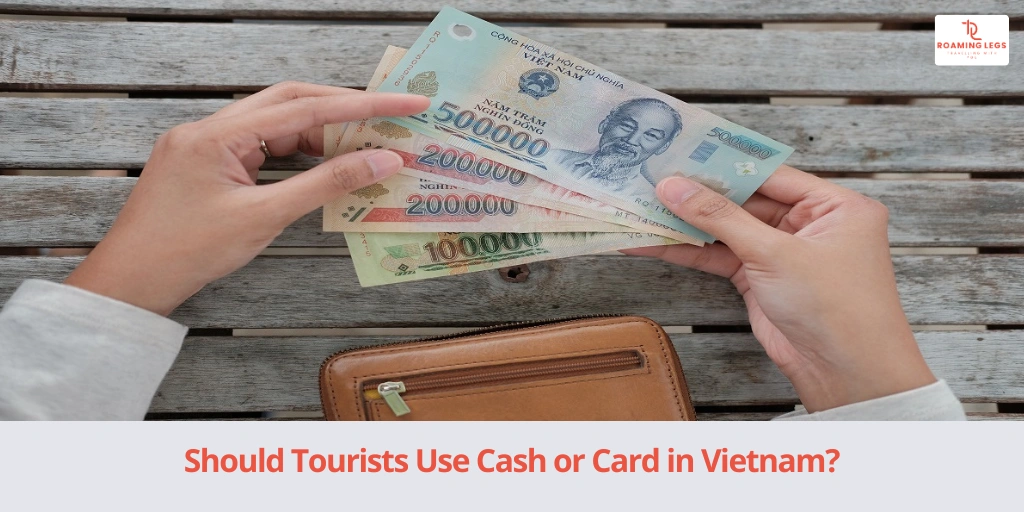
Should you carry cash or use cards in Vietnam? Both — but which one you reach for changes by the minute.
Street food, taxis, and small shops in Hoi An or rural Sapa run almost entirely on Vietnamese Dong (VND). Hotels, malls, and mid-to-upscale restaurants in Hanoi, Ho Chi Minh City, and Da Nang take cards without blinking.
Get this split wrong and you’ll either overpay on ATM fees or stand awkwardly at a street stall with a card nobody can swipe.
Here’s what most currency guides skip: not all Vietnamese ATMs charge the same fee, the dong-to-rupee math trips up almost every first-time visitor, and one specific bank note mix-up costs Indian tourists real money every single week.
That’s what we’re actually covering here — not just “carry both.”
Vietnam Currency at a Glance
| What You Need to Know | Details |
|---|---|
| Currency | Vietnamese Dong (₫ / VND) |
| Current rate | ₹1 ≈ ₫272–276 (check live rate before your trip — it moves) |
| Best zero-fee ATM | VPBank (also ACB, though lower withdrawal limit) |
| Avoid for withdrawals | Vietcombank, Agribank — charge ₫30,000–55,000 (~₹106–₹194) per pull |
| Best forex card for Indians | Niyo Global or Wise — near-zero markup, live rate |
| UPI accepted? | No — Vietnam has no UPI integration |
Currency
Vietnamese Dong (₫ / VND)
Current Rate
₹1 ≈ ₫272–276. Check live rates before exchanging money.
Best Zero-Fee ATM
VPBank is preferred. ACB is another option, although withdrawal limits may be lower.
ATM Withdrawals to Avoid
Vietcombank and Agribank may charge ₫30,000–55,000 (~₹106–₹194) per withdrawal.
Best Forex Card for Indians
Niyo Global or Wise offer near-zero markup with live exchange rates.
Is UPI Accepted?
No, Vietnam currently does not have UPI integration.
Free Vietnam Trip Budget Planner
Not sure how much cash, card balance, or forex you need for Vietnam? Share your travel dates and city list on WhatsApp, and we will send a day-by-day cash vs card budget breakdown within a few hours.
What Currency Does Vietnam Use, and How Do You Read the Numbers?
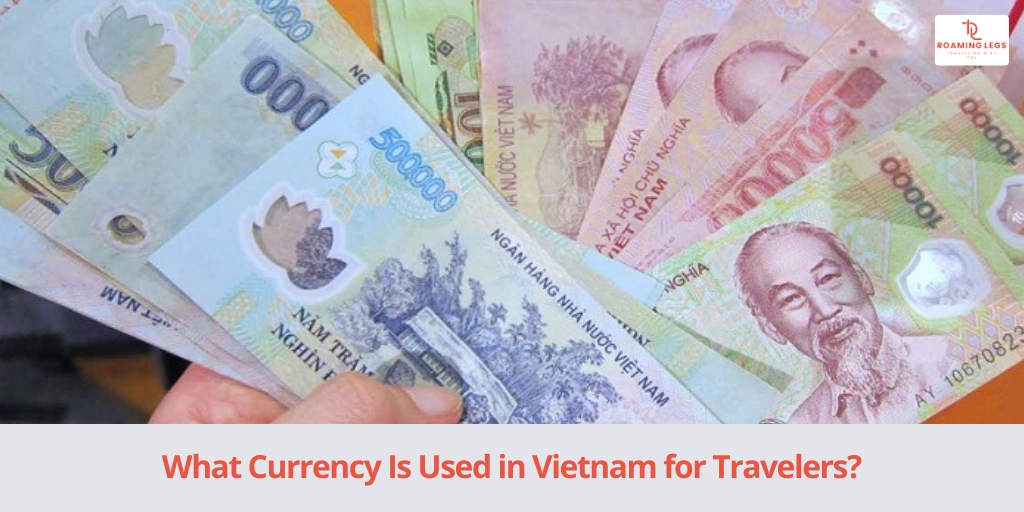
Vietnam’s official currency is the Vietnamese Dong, and yes, the numbers look alarming at first — a coffee costs 30,000–60,000 VND, a taxi ride runs 80,000–200,000 VND.
The trick that actually works: divide by roughly 275 to get the rupee value in your head. A 500,000 VND dinner bill is about ₹1,800, not the terrifying number it looks like on the bill.
One thing most guides don’t mention clearly enough — the 20,000 VND and 500,000 VND notes are both a similar shade of green, and tourists hand over the wrong one constantly, especially in a rushed street-stall moment.
The 50,000 and 500,000 notes get confused too.
Always check the printed number, never the color.
And since Vietnamese Dong notes are polymer, they stick together in a wallet — fan out a stack before counting, especially when a vendor hands you change in a hurry.
Which ATMs in Vietnam Actually Charge Zero Fees?
This is the part that saves you real money over a week-long trip.
Not every bank charges the same, and the difference between a “free” ATM and a “fee” ATM is sometimes two machines on the same street in Hanoi’s Old Quarter.
VPBank is the one to look for — free withdrawals for foreign cards, with a withdrawal limit of up to 10,000,000 VND (roughly ₹35,000) per transaction, the highest cap among the fee-free options.
ACB is also fee-free but caps out lower, around 3,000,000 VND per transaction, so you’ll be making more trips to the machine.
Vietcombank, despite being Vietnam’s most visible bank with ATMs in nearly every city, charges 30,000–55,000 VND (about ₹106–₹194) per withdrawal — and its per-transaction limit is also lower, around 5,000,000 VND. Agribank and Techcombank carry similar per-pull charges.
One thing worth knowing: since most fee-charging banks cap withdrawals around 3–5 million VND, pulling smaller amounts more often multiplies the fee.
Withdraw the maximum your card allows in one go instead of making three trips to the same machine.
Our tip: when the ATM screen offers to “confirm conversion” in INR or USD before you withdraw — that’s Dynamic Currency Conversion (DCC), and it’s almost always a worse rate than letting your Indian bank do the conversion.
Always select “without conversion” or “in VND” when the option appears.
Which Forex Card Should Indian Travelers Actually Carry?
Niyo Global, a Visa prepaid card issued through DCB Bank, has become the default recommendation for Indian travelers in Vietnam for a reason — near-zero forex markup, and most travelers report their statement matching the live Google rate within a few rupees.
It typically includes a handful of free ATM withdrawals per month before a small flat fee kicks in.
Wise is the other name that comes up repeatedly among Indian travelers for the same reason — transparent mid-market rates with no hidden markup, useful if you’re also topping up other currencies for a multi-country trip.
Compare that to using a regular Indian credit card without a forex-friendly network — the markup on international transactions can run 2–3.5%, which adds up fast on anything above a basic meal.
If you’re planning any shopping in Ho Chi Minh City or Hanoi, that difference alone can mean thousands of rupees on a single big purchase.
One thing worth confirming before you fly: call your bank and activate international transactions on your existing debit or credit card even if you’re also carrying a forex card — it’s a useful backup if your primary card gets declined or lost.
How Much Cash Should You Actually Carry Per Day?
| Travel Style | Daily Budget (VND) | Approx. INR | What It Covers |
|---|---|---|---|
| Budget | 400,000–700,000 | ₹1,450–₹2,550 | Street food, local buses, markets |
| Mid-range | 800,000–1,500,000 | ₹2,900–₹5,450 | Restaurant meals, taxis, some shopping |
| Luxury | 2,000,000+ | ₹7,270+ | Fine dining, private transfers, spa days |
Budget Traveller
Daily Budget: 400,000–700,000 VND
Approx. INR: ₹1,450–₹2,550
Covers: Street food, local buses, markets
Mid-Range Traveller
Daily Budget: 800,000–1,500,000 VND
Approx. INR: ₹2,900–₹5,450
Covers: Restaurant meals, taxis, some shopping
Luxury Traveller
Daily Budget: 2,000,000+ VND
Approx. INR: ₹7,270+
Covers: Fine dining, private transfers, spa days
Free Vietnam Currency Cheat Sheet on WhatsApp
Get a printable card with common note values, ATM bank rankings, and the DCC trap explained — handy to screenshot before you land.
Where’s the Best Place to Exchange Money — Before You Fly or After You Land?
Exchanging a small amount before departure — enough to cover an airport taxi and a first meal — through your bank or a forex company back home is worth doing just for peace of mind.
But for anything beyond that, don’t exchange large sums at the airport counter in Hanoi or Ho Chi Minh City; the rates there are consistently worse than what you’ll find at licensed exchange counters in the city center, particularly around gold shops in areas like Ben Thanh in HCMC or Hang Bac Street in Hanoi’s Old Quarter.
The mistake most travelers make: accepting a suspiciously good rate from a street money-changer.
If the number looks too good, it usually is — count your cash carefully before walking away from any counter, licensed or not.
Practical Money Tips That Actually Matter
- Withdraw larger amounts less often — this spreads any fixed ATM fee over more cash instead of paying it three or four times
- Always decline the on-screen currency conversion offer (DCC) and choose VND directly
- Keep a small stash of cash separate from your main wallet in case of a lost card
- Confirm international transactions are enabled on your Indian card before departure, even if a forex card is your primary
- Carry smaller notes (10,000–50,000 VND) for street food and markets — vendors rarely have change for a 500,000 note
What Real Travelers Say
Rohan, Bangalore, traveled April 2026: “Nobody told me Vietcombank charges a fee on every single withdrawal.
Found a VPBank ATM two streets over in Hanoi and it was free — small thing but it adds up over 10 days.”
Meera, Pune, traveled February 2026: “Used Niyo the whole trip and honestly forgot I was even converting currency.
The only cash I carried was for the night market in Hoi An.”
Frequently Asked Questions
Is Indian rupee accepted anywhere in Vietnam?
No. Vietnamese Dong is the main currency accepted by nearly all businesses. Some hotels or tour operators may quote prices in INR or USD, but daily spending requires VND.
Which ATM should I use in Vietnam to avoid fees?
VPBank is a preferred option for foreign travelers because it offers low-fee withdrawals and higher transaction limits. ACB is another useful option. Avoid ATM networks charging unnecessary fees when alternatives are available.
What's the best forex card for an Indian traveling to Vietnam?
Niyo Global and Wise are popular choices because they offer competitive forex rates compared with regular Indian cards that may add international transaction charges.
How much cash should I carry per day in Vietnam?
Budget travelers generally need 400,000–700,000 VND per day, mid-range travelers around 800,000–1,500,000 VND, and luxury travelers more depending on activities and shopping.
What is Dynamic Currency Conversion, and should I accept it at an ATM?
Dynamic Currency Conversion shows your withdrawal in INR or USD instead of VND. Always choose VND because your bank's conversion rate is usually better.
Are ATMs easy to find in Vietnam?
Yes, in major destinations like Hanoi, Ho Chi Minh City, Da Nang, Hoi An, Nha Trang, and Phu Quoc. Carry extra cash before visiting rural areas.
Can I use my Indian debit or credit card directly in Vietnam?
Yes. Most Visa and Mastercard cards work if international transactions are enabled. Confirm activation with your bank before travel.
What should I do with leftover Vietnamese Dong at the end of my trip?
Exchange remaining VND before leaving Vietnam. Airport exchange counters often offer weaker rates, and exchanging Dong in India can be difficult.
Are there common currency scams to watch for in Vietnam?
Be careful with unofficial money changers and check notes carefully. The 20,000 and 500,000 VND notes can look similar, so always verify the printed value.
Is tipping expected in Vietnam, and should it be cash?
Tipping is not mandatory but is appreciated for restaurants, spas, and guides. Cash tips in smaller denominations like 20,000–50,000 VND are practical.
