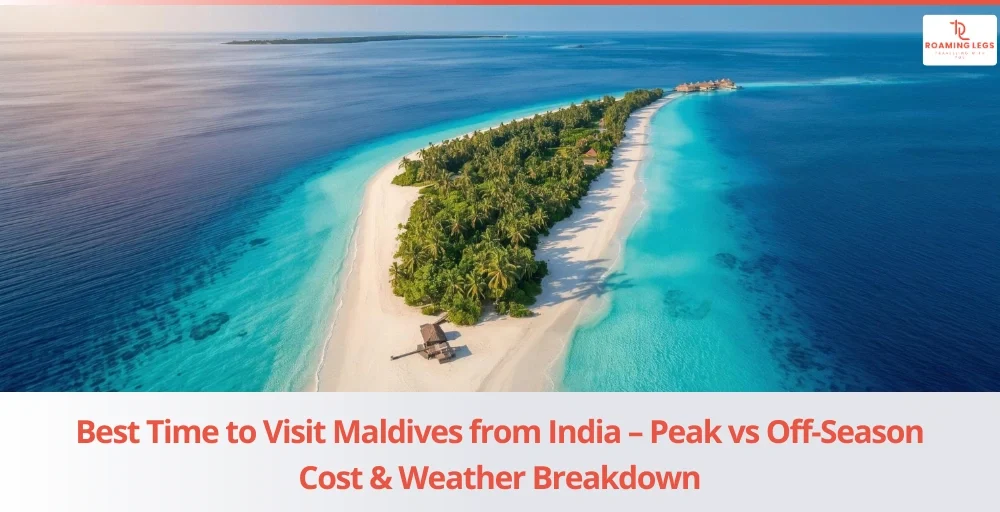
When Is the Best Time to Visit Maldives from India? The Real Answer — With Month-by-Month Weather, Resort Price Differences, and What Nobody Tells You About the Off-Season
Most Indian travelers ask the same question before booking Maldives: “Is December really the best time, or is that just what everyone says?” The honest answer is that December has the best weather — but it’s also the most expensive month of the year, and you can have a genuinely great Maldives trip in six other months for 30–50% less.
The real answer depends on what you’re going for.
Honeymoon? Book December to March and pay peak rates for peak weather.
Budget trip or just want calm water without the January crowd? November or early October hit differently.
Marine wildlife obsessed? June to September in Baa Atoll is when 100+ manta rays feed at Hanifaru Bay simultaneously — something you simply cannot see in December.
This guide breaks down every month clearly: what the weather is actually like, how much resort prices change, when flights are cheapest, and which months have hidden advantages most blogs don’t mention.
Maldives Seasons at a Glance: The Honest Quick Summary
| Period | Months | Weather | Resort Prices | Best For |
|---|---|---|---|---|
| Peak Season | Dec–Mar | Perfect | Highest (40–60% premium) | Honeymoon, clear water stays |
| Shoulder | Apr & Nov | Good | 15–25% lower | Best value, good weather |
| Off-Season | May–Oct | Variable | 30–50% lower | Budget, marine wildlife, surfing |
Dec–Mar
WeatherPerfect
Resort PricesHighest (40–60% premium)
Best ForHoneymoon, clear water stays
Apr & Nov
WeatherGood
Resort Prices15–25% lower
Best ForBest value, good weather
May–Oct
WeatherVariable
Resort Prices30–50% lower
Best ForBudget, marine wildlife, surfing
What Is Peak Season in Maldives and Why Is It So Expensive?
Peak season runs December through March.
This is when you get the closest thing to flawless Maldives weather: clear skies almost every day, calm flat sea, visibility underwater that can reach 30 metres, and those iconic deep-blue lagoon colours that look like the resort photos.
This is also when Indian travelers flood the Maldives.
Christmas week, New Year’s, and February Valentine’s bookings are the most competitive — and the most expensive — of the entire year.
A water villa at a resort like Conrad Maldives Rangali Island that costs USD 700 (roughly ₹58,000) per night in July can jump to USD 1,500–₹1.25 lakh per night in December.
That’s not an exaggeration. The price difference is real and dramatic.
January and February are actually the sweet spot within peak season.
The Christmas–New Year crowd is gone, prices drop slightly from December highs, and the weather remains just as good.
Visibility underwater is excellent.
This is the month we most often recommend for honeymoon couples who want the best weather without paying the absolute maximum.
March is the last month of peak before things start transitioning.
Weather is still very good, prices start easing, and you’ll see fewer crowds at popular dive sites. Snorkelling clarity is excellent.
The real tip most guides skip: Book peak season resorts at least 4–5 months in advance.
Top resorts like Soneva Fushi, Gili Lankanfushi, and Four Seasons Landaa Giraavaru are legitimately fully booked for December and January by September.
If you’re planning a December honeymoon and thinking “I’ll sort accommodation in October,” you’re going to be choosing from what’s left.
What Are Shoulder Months and Why Smart Travelers Love Them?
November and April are the two shoulder months and honestly, they’re our first recommendation for most Indian travelers who aren’t set on a specific experience.
November is the better of the two.
The dry season is just beginning.
Rain probability is low.
The seas are calming down from the monsoon.
Resorts are still offering shoulder pricing — typically 15–25% cheaper than December — but the weather feels very similar to peak season within a week or two of the month.
We’ve sent several couples from Mumbai and Hyderabad in late November who came back saying the weather was perfect and they spent significantly less than their friends who went in January.
One important thing about November: the famous bioluminescent “sea of stars” phenomenon (glowing plankton visible in the water at night) is most commonly seen from July through November.
If you’re going late November, you might still catch it.
It’s one of the genuinely magical Maldives experiences that doesn’t show up in Instagram photos because cameras struggle to capture it, but it’s real and stunning.
April marks the end of peak season. The first few weeks of April still have very good weather.
The Easter holiday period (which falls in April for most years) sees a short price spike, but mid to late April starts seeing shoulder rates.
Heat feels slightly more intense in April than December, but with the sea breeze and air-conditioned villas, it’s entirely manageable.
Plan Your Maldives Trip Around Your Travel Dates — Get a Free Month-Specific Guide
The month you travel can change your entire Maldives experience, from resort availability and pricing to weather, marine life, and the best areas to stay. Get a Maldives guide based on your travel month, created for Indian travelers.
Our guide includes resort recommendations, seasonal pricing insights, and what you can expect during your time on the islands.
What Actually Happens During Maldives Monsoon Season (May to October)?
This is the section most travel guides get wrong — either by saying “avoid completely” or by overselling the monsoon as some budget paradise. The truth is nuanced.
May and June are the transition months into monsoon.
May sees increasing cloud cover and occasional rain, but many days are still largely clear.
June tips into proper southwest monsoon territory with more consistent rain.
The key thing to understand: Maldives monsoon rain is typically short, intense tropical showers — 30–60 minutes — rather than all-day grey skies.
You can have a sunny morning, a rain shower at 2 PM, and a beautiful evening on the beach.
But you can also have two grey days in a row.
July and August are the heart of the monsoon.
This is when the most rain falls. Seas can get rougher, especially for seaplane transfers (delays happen). These are also the cheapest months for resorts — discounts of 40–50% off peak prices are standard.
A resort beach villa at Bandos Maldives that costs ₹30,000/night in January might be ₹18,000/night in July. Flights are cheapest now too — IndiGo and Air India direct flights from Mumbai or Delhi that cost ₹22,000–₹35,000 return in December can be ₹13,000–₹18,000 return in July.
Here’s the marine wildlife angle nobody talks about enough: July to September in Baa Atoll is when Hanifaru Bay — a UNESCO Biosphere Reserve — hosts feeding events where 100+ manta rays congregate simultaneously.
This is one of the most extraordinary marine wildlife experiences on the planet.
It doesn’t happen in December.
It happens in the “bad weather” months.
If you care about wildlife more than Instagram-perfect skies, the monsoon season is actually the more exciting time to go.
September and October are when conditions start improving.
October is considered early shoulder — some rain still possible, but seas calming.
Whale shark sightings around South Ari Atoll are excellent year-round, but October through November brings increased sightings as currents shift.
Month-by-Month Breakdown: The Real Honest Picture
December
Weather: Best of the year. Sunny, calm, excellent visibility. Resort Prices: Highest of the year.
Peak season surcharges.
Christmas and New Year weeks add another 20–30% on top. Crowds: Busiest period.
Popular dive sites crowded.
Best For: Those who want perfect weather regardless of cost.
Book: 4–6 months in advance minimum for December.
January
Weather: Excellent.
Slightly less crowded than December.
Resort Prices: High, but slightly down from Christmas spike.
Best For: Honeymoon couples — best weather, marginally better prices than December.
Tip: Last two weeks of January often have better resort availability than the first two.
February
Weather: Still excellent. Calm seas, clear skies.
Resort Prices: High. Valentine’s week spike similar to New Year.
Best For: Valentine’s honeymoons, clear-water snorkelling.
Marine Life: Good snorkelling visibility, whale sharks in South Ari Atoll.
March
Weather: Very good. Gradual warm-up.
Resort Prices: Starting to ease from January–February peaks.
Best For: Couples who want peak weather with slightly less cost pressure.
Tip: Book March to get 10–15% off vs January at the same resort.
April
Weather: Good in early April, more variable by end of month.
Resort Prices: Shoulder rates in mid-to-late April (except Easter week).
Best For: Value-conscious travelers who still want mostly good weather.
May
Weather: Transition. Increasing cloud, some rain showers.
Resort Prices: Dropping — 20–30% off peak.
Best For: Budget travelers comfortable with occasional rain.
June
Weather: Monsoon begins. More frequent rain, choppier seas.
Resort Prices: 30–40% off peak.
Marine Life: Manta ray season starting in Baa Atoll. Hanifaru Bay feeding begins.
July
Weather: Monsoon peak. Short but frequent rain. Some days fully sunny.
Resort Prices: Cheapest month. 40–50% off peak prices.
Flights: Cheapest time to fly India to Maldives.
Marine Life: Hanifaru Bay manta ray feeding at peak — 100+ mantas possible.
Best For: Budget travelers, marine wildlife enthusiasts.
August
Weather: Still monsoon. Similar to July. Resort Prices: Very low — same as July. Marine Life: Manta ray season continues in Baa Atoll. Surfing: Best waves of the year for surf spots around North Malé Atoll.
September
Weather: Starting to ease. Less frequent rain.
Resort Prices: Still low, starting to tick up late September.
Marine Life: Good manta ray sightings continue. Whale sharks in South Ari Atoll.
October
Weather: Noticeably improving. Early shoulder conditions.
Resort Prices: Starting to climb toward November shoulder rates.
Marine Life: Transition period — whale sharks good, mantas winding down.
Best For: Those who want lower prices but improving weather.
November
Weather: Good and improving through the month. Near-peak quality by end of November.
Resort Prices: 15–25% off December prices.
Best For: The best overall value month for Indian travelers — good weather, real savings.
Bioluminescence: Glowing plankton possible in early November nights.
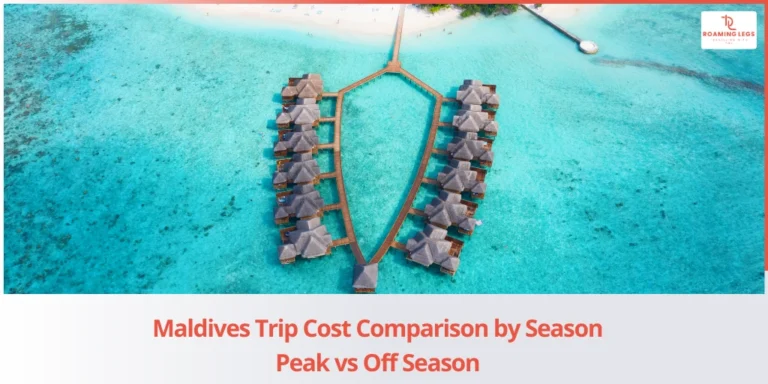
How Much Can You Actually Save by Traveling Off-Peak?
This is what the math looks like for a real trip: a couple from Bengaluru, 5 nights, mid-range resort (beach villa, not overwater), direct flights.
| Period | Flights (2 people, return) | Resort (5 nights) | Total Trip |
|---|---|---|---|
| December (Peak) | ₹55,000–₹70,000 | ₹1.8–₹2.5 lakh | ₹2.3–₹3.2 lakh |
| November (Shoulder) | ₹35,000–₹48,000 | ₹1.3–₹1.8 lakh | ₹1.6–₹2.3 lakh |
| July (Off-Season) | ₹26,000–₹36,000 | ₹80,000–₹1.2 lakh | ₹1–₹1.6 lakh |
₹55,000–₹70,000
Resort (5 nights)₹1.8–₹2.5 lakh
Total Trip₹2.3–₹3.2 lakh
₹35,000–₹48,000
Resort (5 nights)₹1.3–₹1.8 lakh
Total Trip₹1.6–₹2.3 lakh
₹26,000–₹36,000
Resort (5 nights)₹80,000–₹1.2 lakh
Total Trip₹1–₹1.6 lakh

Visa and Practical Info for Indian Travelers
Visa: No prior visa needed.
Indian passport holders get a free 30-day visa on arrival at Velana International Airport in Malé.
Carry your passport, return ticket, and resort confirmation.
Flights: IndiGo, Air India, and SpiceJet operate direct flights from Mumbai, Delhi, Bengaluru, Chennai, and Hyderabad to Malé.
Flight time is 3–4 hours from most Indian cities.
Book 4–6 weeks ahead for off-season, 3–5 months ahead for December–January.
Transfers to Resort: Speedboat (20–90 minutes, ₹7,000–₹15,000 per person return) or seaplane (25–45 minutes, ₹20,000–₹35,000 per person return).
Seaplanes only operate daylight hours — if your flight arrives late, you’ll overnight in Malé.
During monsoon months, seaplane delays are more common due to weather.
Currency: Maldivian Rufiyaa (MVR) is the local currency, but all resorts and most guesthouses accept USD. Keep USD cash for tips and small purchases.
ATMs are only available in Malé.
What to Pack: Light cotton clothes, strong sunscreen (SPF 50+ — the equatorial sun is intense), reef-safe sunscreen if you’re snorkelling, a light rain jacket if traveling May–October, and underwater camera if you care about marine life.
Real Travelers, Real Timing
Deepika & Rohan Mehta, Pune Traveled: November 2025 (5 nights, Centara Grand Island Resort, South Ari Atoll) “We were nervous about going in November because we thought the weather might not be good. Complete opposite — the weather was amazing for 4 out of 5 days.
One afternoon had a 40-minute shower and then sunshine.
We paid about ₹2.1 lakh total for two of us including flights from Pune.
Same resort in January would have been ₹3 lakh+. November was the right call.”
Siddharth Rao, Bengaluru Traveled: July 2025 (4 nights, LUX South Ari Atoll)* “Went in July specifically for manta rays and whale sharks.
I’m a diver and this was a bucket-list trip.
Saw 6 whale sharks in two dives. Weather had some overcast days but nothing that ruined the trip.
Resort cost was genuinely shocking — the price I paid in July would have been 60% higher in December.
If you dive, July is the best kept secret in Maldives.”
Maldives Best Time to Visit FAQs for Indian Travelers
Weather, seasons, prices, marine activities, and planning tips before your Maldives holiday.
What is the best month to visit Maldives from India?
November and January are two of the best months for Indian travelers.
November offers excellent weather with better value, while January brings some of the calmest seas and most reliable conditions of the year.
Is Maldives good to visit in December from India?
Yes. December offers some of the best weather conditions in Maldives with clear skies, calm seas, and excellent visibility.
The downside is cost. Christmas and New Year weeks are among the most expensive periods, so booking several months early is recommended.
Is Maldives good during monsoon season from June to September?
Yes, especially for travelers looking for lower prices and unique marine experiences.
Rain showers are usually short tropical bursts, while resort prices can drop significantly. This season is also excellent for manta ray encounters in areas like Baa Atoll.
Which months are cheapest for Maldives from India?
July and August are generally among the cheapest months.
Resort rates and flight prices are lower compared to peak season, making it a good option for travelers who can accept occasional rain.
How much does a Maldives trip cost from India in different seasons?
For a couple staying 5 nights:
December peak season: around ₹2.3–₹3.2 lakh.
November shoulder season: around ₹1.6–₹2.3 lakh.
July off-season: around ₹1–₹1.6 lakh.
The final price depends mainly on resort category, room type, and transfer method.
When is the best time for snorkelling and diving in Maldives?
December to March offers the clearest water visibility for reef snorkelling.
June to September is better for manta ray experiences, while whale shark sightings are possible throughout the year.
What is Maldives weather like in October?
October is a transition month between monsoon and dry season.
Rainfall reduces gradually, seas become calmer, and prices are still lower than November and December.
Do I need to book Maldives resorts in advance?
Yes, especially for December, January, and February travel.
Popular resorts can fill several months ahead during peak season. Shoulder and off-season travel usually allows more flexibility.
Is Maldives too hot in April and May?
No. Temperatures usually remain around 30–33°C and the sea breeze makes conditions comfortable.
For travelers sensitive to humidity, November to March remains the most comfortable period.
How is snorkelling visibility during monsoon?
Visibility can reduce during June to September because of increased plankton in the water.
However, the same conditions attract larger marine creatures like manta rays and whale sharks.
What Maldives resort is best for a honeymoon in January?
Gili Lankanfushi, Conrad Maldives Rangali Island, and Medhufushi Island Resort are popular honeymoon choices at different price levels.
Your choice depends on whether you prioritize ultra-luxury experiences, romantic privacy, or better value.
Is it safe to travel to Maldives during monsoon?
Yes. Maldives is a safe destination throughout the year.
The main challenges during monsoon are occasional seaplane delays, rougher seas on some days, and possible activity changes due to weather.

 Tier 1 — Local Islands & Budget Guesthouses (₹8,000–₹18,000/night)
 Tier 4 — Water Villa Resorts (₹80,000–₹2L+/night)