
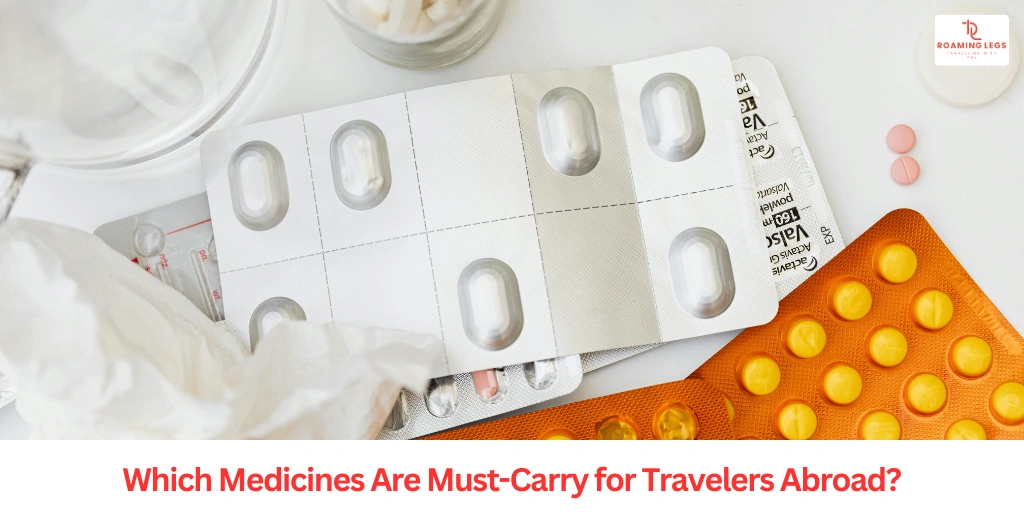
Here’s something most travel blogs don’t tell you: the biggest medicine-related problem Indian travelers face abroad isn’t forgetting to pack Dolo 650.
It’s carrying something completely normal back home — a cough syrup with codeine, a common sleeping pill, a strong painkiller — and getting flagged at customs.
In Dubai alone, this happens regularly enough that lawyers in the UAE now write guides specifically warning Indian tourists about it.
So this article does two things. First, it gives you the complete medicine checklist for your trip.
Second, it tells you what to watch out for — because carrying the wrong thing in the wrong country can ruin a vacation faster than anything else.
The Core Medicine Kit Every Indian Traveler Should Pack
This is the foundation — medicines for the most common things that go wrong on international trips.
These are all safe to carry to most countries, including Dubai, Bali, Vietnam, and Europe.
Pain and Fever Dolo 650 (paracetamol 650mg) is the one most Indian travelers already reach for.
It handles fever, headaches, and mild body aches.
Carry a strip of 10–15 tablets. If you tolerate Ibuprofen (Combiflam, Brufen), pack that too — it’s more effective for muscle pain after a long flight or a day of heavy walking.
Avoid aspirin unless your doctor has specifically recommended it.
Stomach and Acidity Traveling almost always messes with digestion.
Different water, richer food, irregular meal timing — your stomach will let you know.
Pack:
- Pantoprazole or Rabeprazole (acidity, acid reflux) — Pantodac, Pan-D, or Rablet work well
- Gelusil or Eno for quick antacid relief
- Enterogermina (probiotic sachets) — genuinely underrated, helps your gut recover faster from food changes
- Loperamide (Lopamide) for loose motions — use only if it’s simple traveler’s diarrhea, not if you have a fever with it
ORS (Oral Rehydration Salts) Pack at least 5–6 sachets.
Electral or Wellyte are both fine.
Dehydration sneaks up on you when you’re sightseeing in Dubai’s heat or doing back-to-back activities in Bali.
ORS is cheap in India and sometimes expensive or hard to find abroad in familiar form.
Allergies and Insect Bites Cetirizine (Cetzine, Alerid) — one tablet a day controls most common travel allergies.
Also helps with dust, pollen changes, and mild reactions to new food.
If you’re prone to strong allergic reactions, ask your doctor about carrying a short course of Prednisolone (steroid).
Pack a small tube of Betnovate or Soframycin cream for skin reactions and insect bites.
Motion Sickness Avomine (promethazine) is what most Indians use — take it 30 minutes before a long bus ride, boat trip, or winding mountain road.
For those who want something gentler, Stugeron (cinnarizine) is available OTC in India and works well for mild cases.
Don’t leave home without this if you’re going to Bali (lots of boat transfers) or Vietnam (Ha Long Bay cruises, mountain roads).
Cold, Cough, and Sore Throat Sinarest or Coldact for cold and mild congestion.
Strepsils lozenges for sore throat.
A nasal saline spray (Nasoclear or Otrivin saline) for dry aircraft air and climate changes — this one is surprisingly useful on long flights.
Avoid cough syrups containing codeine — more on why in the next section.
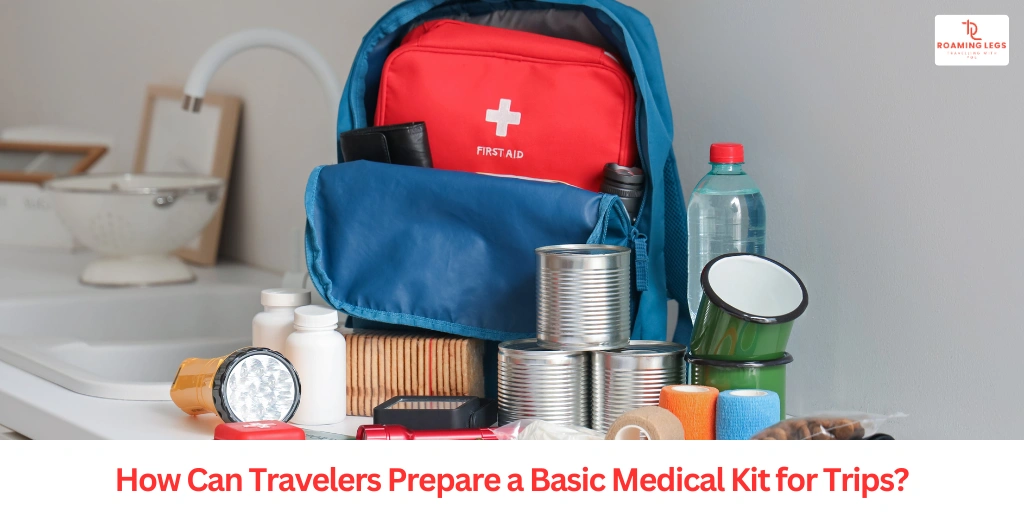
First Aid Keep a small pouch with: a digital thermometer, band-aids (multiple sizes), betadine antiseptic solution (small 15ml bottle), Soframycin or Neosporin antibiotic ointment, sterile gauze and adhesive tape, a few alcohol swabs, and a small scissors or tweezers.
This takes up almost no space and handles 90% of minor travel injuries.
Eye Care A small bottle of lubricating eye drops (Systane or I-Fresh) — cabin air is extremely drying and many people experience irritation on long hauls.
If you wear contact lenses, pack your glasses too.
Get Your Free Destination-Specific Travel Medicine Checklist on WhatsApp
Whether you are travelling to Dubai, Bali, Vietnam, Europe, or another international destination, our Travel Medicine Checklist helps you prepare with confidence. We share this guide with every traveller who books through us. It covers medicines to carry, items you should leave behind, medications that may need to be declared at customs, and trusted local pharmacy chains at your destination. It is completely free and delivered directly to WhatsApp.
Medicines to Pack
Know which essential prescription and over-the-counter medicines are worth carrying for your trip.
Customs Guidance
Understand which medicines may require documentation or declaration before you travel.
Local Pharmacy Guide
Receive the names of reliable pharmacy chains and where to find them at your destination.
Tailored to Your Destination
Your checklist is customised for your travel destination and delivered free on WhatsApp within minutes.
The Medicine Rules Nobody Warns Indian Travelers About
This is the section most travel blogs skip.
Pay attention here because this is where trips go sideways.
Dubai and UAE — Strictest Rules by Far
The UAE has one of the world’s toughest drug control systems, and the list of controlled or banned medicines is shockingly long.
Many medicines that are completely normal in India are either banned or require a government permit to bring into Dubai.
What you absolutely cannot carry into Dubai without a MOHAP (Ministry of Health and Prevention) permit:
- Codeine — including any cough syrup containing codeine (Corex, Phensedyl, many common Indian cold remedies contain this)
- Tramadol — one of the most commonly prescribed painkillers across South Asia, completely banned in UAE
- Xanax (alprazolam), Valium (diazepam) — benzodiazepine anti-anxiety medications
- Ritalin, Adderall — ADHD medications
- Ambien (zolpidem) — commonly prescribed sleeping pill in India
- CBD oil or CBD products — even if legal in your home country
What is allowed freely: Paracetamol, Ibuprofen, Cetirizine, Loperamide, antacids, ORS, antibiotic ointments, eye drops.
Standard over-the-counter stuff is fine.
For controlled medicines that have a legitimate medical need, you can apply for an import permit on the MOHAP website (mohap.gov.ae) before your trip.
The process is free, takes about 3 working days, and the permit is valid for one trip.
Carry the permit plus your doctor’s prescription (on letterhead, with dosage details) in a separate envelope with your travel documents.
The mistake we see most often: Indian travelers carrying a cough syrup bought from a local pharmacy — Corex, Phensedyl, or similar — because someone in the family had a cold.
These contain codeine.
If customs spots them, it’s not a fine situation; it’s a potential arrest situation. Just don’t.
Bali (Indonesia)
Bali is generally more relaxed than Dubai but still has specific restrictions. Narcotics, psychotropic substances, and certain controlled medications are strictly prohibited.
What this practically means for Indian travelers:
- Strong prescription painkillers, sleeping pills, and ADHD medications need a doctor’s note in English
- Some asthma medications containing ephedrine or phenobarbital may be restricted — check with your doctor before packing
- Declare all medications at customs if asked — transparency here protects you
- Common OTC medicines (paracetamol, antacids, antihistamines, ORS) are fine
One useful thing about Bali: local pharmacies (called Apotek) are well-stocked and pharmacists are knowledgeable.
Many common Indian medicines are available under Indonesian brand names.
If you run out of something basic, it’s usually findable.
Vietnam
Vietnam has rules around narcotics and psychotropic medicines, similar to most Southeast Asian countries.
A 30-day supply limit applies to controlled medicines.
For the average Indian tourist on a 7–10 day trip with standard health needs, Vietnam is uncomplicated.
Just keep prescriptions for anything beyond basic OTC medicines, and declare at customs if you’re carrying a larger quantity.
Europe (Schengen Countries)
Most EU countries allow personal medication without special permits as long as you have a valid prescription and carry only what’s needed for your trip (usually up to a 90-day supply for long stays).
Rules vary slightly by country — Germany, France, and the Netherlands are generally reasonable for most Indian medicines.
The UK (post-Brexit) follows its own system but is similarly straightforward for standard prescriptions.
Japan
Japan has the most surprising rules.
Some common cold and allergy medications containing pseudoephedrine or codeine are controlled.
ADHD medications like Adderall are completely illegal.
If you’re going to Japan with any prescription medicines, specifically check the Japanese Ministry of Health’s list before packing.
Medicines for Specific Traveler Types
If You Have Diabetes Insulin and oral diabetes medication are essential to carry — but insulin needs to be kept cold.
Pack a small insulin cooler pouch (Frio pouches work well).
Carry your glucometer with extra strips, lancets, and a spare battery.
Bring a signed doctor’s letter on letterhead stating you’re a diabetic and listing your medications — especially for Dubai customs.
If You Have High Blood Pressure or Heart Conditions Carry at least double the quantity you think you’ll need.
Time zone changes, flight stress, sightseeing fatigue, and different food can affect blood pressure more than usual.
Keep your medicines in your cabin bag, not checked luggage.
A small BP monitor is worth packing if you travel regularly with this condition.
If You Have Asthma Always carry your inhaler in your cabin bag.
Long flights with dry air can trigger symptoms.
Spare inhalers are strongly recommended.
Salbutamol (Ventolin) inhalers are generally recognized internationally, but check if your destination has any restrictions on your specific medication.
If You’re Traveling with Children Pack children’s paracetamol (Crocin DS or Calpol suspension), a liquid antihistamine (Phenergan syrup or Cetrizine drops), ORS sachets, and an ear pain reliever (Otigo or similar) — ear infections during or after flights are very common in young children.
A digital forehead thermometer is compact and fast.
If You’re a Senior Traveler Carry a typed list of all your medications with generic names (not just Indian brand names) — this helps foreign doctors and pharmacists immediately.
A week’s extra supply of every prescription medicine is the minimum buffer.
Compression stockings are worth considering for long-haul flights if you have circulation concerns.
How to Pack Medicines for International Travel
Cabin bag, always. Every essential medicine goes in your cabin bag.
Checked luggage can be delayed by 24–48 hours or lost entirely.
If your blood pressure medicine is in your checked bag and it doesn’t arrive with you — that’s a genuine problem.
Medicines, prescriptions, and first aid go in the cabin bag, no exceptions.
Original packaging matters. Custom officers in many countries — especially UAE, Japan, and Singapore — may check medicines.
Loose tablets in an unlabeled container raise questions.
Keep blister packs intact with the strip name visible.
For liquid medicines, keep the original bottle with the pharmacy label.
Liquids rule for aircraft: Medical liquids are generally exempt from the 100ml cabin bag rule, but you may be asked to show a prescription or doctor’s note.
Keep medicines separate from toiletries in a clear pouch for easy security checks.
Prescription letter format: Get your doctor to write a letter on clinic letterhead that includes your full name, passport number, the medicine name (generic + brand), dosage, and the reason you need it.
This single document solves 90% of customs questions and is especially critical for Dubai and Japan.
Expiry dates: Check every medicine before packing.
A two-year-old strip at the back of your drawer may have expired.
This is one of those obvious things that gets overlooked until you actually need the medicine.
Planning a Trip? Get Everything Sorted Before You Fly
Every traveller we help receives a complete pre-departure travel plan before departure. It includes a health and safety checklist, destination-specific medicine guidance, travel insurance advice, and important emergency contact numbers, all organised in one easy-to-use reference. It takes our team just 10 minutes to prepare and can save you hours of research and unnecessary stress. Simply tell us your destination and travel dates on WhatsApp, and we will send your personalised travel plan within 24 hours, completely free.
Health & Safety Checklist
Receive a destination-specific checklist covering health precautions and essential travel preparation.
Medicine & Insurance Guide
Know what medicines to carry, insurance essentials, and important travel recommendations.
Emergency Information
Keep hospital details, emergency numbers, and other important contacts ready before your journey.
Personalised in 24 Hours
Your customised pre-departure travel plan is delivered on WhatsApp within 24 hours at no cost.
What Real Travelers Say
“We were going to Dubai for 5 days and I almost packed Corex for my husband’s cold.
Our travel agent from Roaming Legs specifically told us not to — it has codeine and can cause serious problems at Dubai customs.
I would never have known.
We swapped it for a plain antihistamine and were completely fine.
Please check before you pack any cough syrup for UAE.
“ — Rekha S., Ahmedabad — traveled March 2026
“My mother is diabetic and we were worried about her insulin on our Bali trip. T
he Roaming Legs team told us exactly how to pack it (a Frio cooler pouch), what documents to carry, and that Apotek pharmacies in Bali have insulin available as backup.
The trip went perfectly — we were so much more confident because we were actually prepared.
“— Karthik M., Chennai — traveled January 2026
FAQ — Medicines for International Travel from India
Responsive, Elementor-ready FAQ component with embedded CSS and no JavaScript.
1. Which medicines should every Indian traveler carry abroad?
Pack paracetamol (Dolo 650), ORS, an antacid, antihistamine, anti-diarrheal medicine, motion sickness tablets, antiseptic, bandages, a thermometer, and all personal prescription medicines.
2. Is Dolo 650 allowed in Dubai?
Yes. Paracetamol, including Dolo 650, is generally permitted in the UAE.
3. Can I carry Corex or Phensedyl to Dubai?
No. These may contain codeine, a controlled substance in the UAE, and require special authorization.
4. What medicines are restricted in Bali?
Most everyday OTC medicines are fine, but narcotics, benzodiazepines, and certain prescription drugs require documentation.
5. Do I need a doctor's letter?
For prescription medicines, especially when traveling to countries with stricter rules, a doctor's letter is strongly recommended.
6. How much medicine can I carry?
Carry enough for your trip plus a few extra days, avoiding unusually large quantities.
7. Should medicines go in cabin or checked baggage?
Keep essential medicines in your cabin bag in case checked luggage is delayed.
8. What documents should I carry?
Carry prescriptions and, ideally, a doctor's letter listing generic names, dosages, and medical conditions.
9. Can I bring insulin?
Yes. Carry it in your cabin bag using an appropriate cooling solution if needed.
10. What if I run out of medicine abroad?
Visit a licensed pharmacy or local doctor for an equivalent prescription.
11. Is it safe to buy medicines overseas?
Yes, from licensed pharmacies. Avoid street vendors and unverified sellers.
12. What vaccines are recommended?
Recommendations depend on your destination. Consult a travel medicine clinic 4 to 6 weeks before departure.
13. Does travel insurance cover medicines?
Emergency medicines related to covered illnesses are usually included, but routine medications are generally not.
14. Can I carry Ayurvedic or homeopathic medicines?
Usually yes in small quantities, but always check destination-specific regulations.
15. Most important tip for Dubai?
Verify every medicine against the UAE MOHAP controlled substances list before packing.