If you’re planning a Vietnam trip from India, the first question is always: do I need a visa? The answer is straight yes.
Indian passport holders cannot enter Vietnam without a valid visa approved in advance.
That’s the non-negotiable part.
The good news? The actual process is simpler than most people think, and you can handle it entirely online in about 10 minutes.
We’ve helped hundreds of Indian travelers get Vietnam visas over the past three years.
The pattern is always the same: people worry about the process way more than they should.
Most rejections happen because of something as simple as a crooked photo or a name that doesn’t match the passport exactly.
Once you know what to avoid, getting approved is straightforward.
This guide covers everything you actually need to know: which visa type works best for your trip, exact costs in rupees, real timelines including rush options, documents you actually need, common mistakes that get applications rejected, and how to handle the whole thing without stress.
Vietnam Visa at a Glance
| Aspect | Details |
|---|---|
| Visa Required? | Yes, mandatory for Indian passport holders |
| Best Option | E-Visa (100% online, ₹2,100 approx.) |
| Processing Time | 3–5 working days (standard), 2 hours (rush) |
| Passport Validity | Minimum 6 months from arrival date |
| Stay Duration | Usually 30 days for tourist visa |
| One Major Exception | Phu Quoc Island (no visa needed if arriving directly) |
Yes, mandatory for Indian passport holders
E-Visa (100% online, ₹2,100 approx.)
3–5 working days (standard), 2 hours (rush)
Minimum 6 months from arrival date
Usually 30 days for tourist visa
Phu Quoc Island (no visa needed if arriving directly)
The Three Visa Options Explained (and Which One Actually Works Best for You)
Option 1: Vietnam E-Visa (What 90% of Indians Choose)
The e-visa is an electronic visa issued by Vietnamese immigration authorities entirely online.
You apply on their portal, upload documents, pay by card, and get approval by email.
That’s it. No embassy visit, no waiting in queues, no printing complicated forms.
Why people choose it:
- Entire process is online from your phone or laptop
- Takes 3–5 working days (you can do better with rush services)
- Costs around ₹2,100–₹2,500 (approximately USD 25)
- Valid at 83 entry points including airports, seaports, and land borders
- You just print the approval and show it at immigration
The real timeline: If you apply on a Monday morning, you’ll likely get approval by Thursday.
Most travelers build in a 7–10 day buffer before their trip just to be safe.
If you’re cutting it close, rush services can deliver within 2–4 hours (more on this below).
Cost breakdown: The official Vietnam government e-visa portal charges USD 25 (approximately ₹2,100).
Some visa agencies charge a processing fee on top of this — typically ₹200–₹500 extra.
Government portal is cheaper but you need to handle the form yourself.
Agencies cost slightly more but catch mistakes before submission, which saves rejection headaches.
Who should use this: Anyone traveling for tourism, visiting friends/family, or taking a holiday.
If you’re booking flights 3+ weeks before your trip, this is your option.
Option 2: Vietnam Visa on Arrival (Only if You’re Coming by Flight)
Visa on arrival sounds simpler, but it’s actually more complicated than the e-visa.
Here’s how it works: you get an approval letter from an agency before traveling, then pay a stamping fee in cash when you land at the airport.
The visa is issued right there.
Why most people avoid it:
- You still need pre-approval from an agency, so it’s not faster
- Only available at international airports, not land borders
- You need cash at the airport (USD 25–50 depending on entry/exit)
- Airlines sometimes ask questions about your approval letter before boarding
- Processing times are about the same as e-visa
When to use it: Almost never, honestly.
The e-visa is simpler because you handle everything online and get a printable document.
With VOA, you’re juggling approval letters and cash at the airport after a long flight.
The one exception: If your passport is damaged or you’re getting a new passport days before travel, some visa agencies prefer handling VOA because they have more flexibility.
But for normal situations, skip this.
Option 3: Vietnamese Embassy in India (Only for Specific Situations)
You can apply at the Vietnamese Embassy in New Delhi or the Consulate General in Mumbai.
The visa gets physically stamped in your passport.
Why most travelers avoid it:
- You have to visit the embassy in person (or mail your passport)
- Takes 5–7 working days typically
- More expensive than e-visa (₹2,500–₹3,500)
- Not faster than online options
When to use it: Only if you need a longer visa (60+ days) or you’re applying for a specific business visa. For regular holiday tourism, the e-visa does everything you need.
The Phu Quoc Exception: No Visa Needed (But Only if You’re Doing This Right)
There’s one special rule that trips up travelers.
Phu Quoc Island — one of Vietnam’s most beautiful spots — has a visa exemption for Indian citizens. You can stay up to 30 days without a visa.
But here’s the catch (this is important): The exemption only works if Phu Quoc is your first port of entry into Vietnam.
You have to arrive directly at Phu Quoc International Airport or Phu Quoc Seaport from outside Vietnam. You cannot fly into Hanoi or Ho Chi Minh City, then travel to Phu Quoc.
Real example: If you’re flying Delhi → Ho Chi Minh City → Phu Quoc, you need a visa because HCMC is your first entry point. If you’re flying Delhi → Phu Quoc (with a connecting flight somewhere else outside Vietnam), no visa needed.
Most travelers don’t take advantage of this because international flights to Phu Quoc are limited. But if your itinerary includes it, you’ve got options.
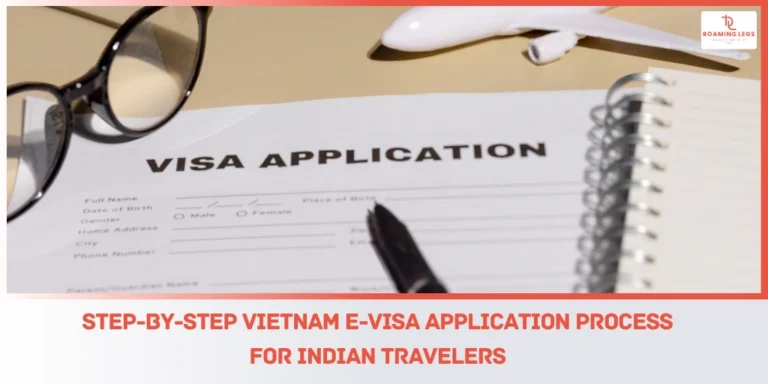
What Documents You Actually Need (Not the Generic List)
Before applying, have these ready:
- Your Passport
- Must be valid for at least 6 months from your arrival date (not from today)
- Must have at least 2 blank pages
- If your passport expires in January 2027 and you’re traveling in August 2026, you’re fine. But if it expires in February 2027 and you’re traveling in August 2026, you’re cutting it too close — renew first
- A Passport Scan (Bio Page)
- Scan or photograph the page with your photo and details
- Must be clear and readable (not blurry, not shadowed)
- File size should be under 2 MB (JPG works best)
- A Passport-Sized Photo
- This is where most rejections happen, so pay attention
- Size: 3.5 cm × 4.5 cm (standard international size)
- Background: Plain white or off-white
- Face must take up 70–80% of the frame
- Eyes must be open, looking directly at camera
- No glasses, no filters, no makeup that changes your face
- No head covering (religious exceptions are made, but submit with a note)
- Taken in the last 6 months
- File size: under 2 MB
The photo mistake I see constantly: People use old passport photos from 3–4 years ago.
The immigration system uses facial recognition. If your photo is outdated, it flags the application.
Take a new one. Just take out your phone, go near a window, stand in front of white wall, and ask someone to snap a straight-on photo.
It doesn’t need to be professional.
- Travel Details
- Your planned arrival date in Vietnam
- Your planned departure date from Vietnam
- Your arrival airport or port (e.g., Noi Bai Airport, Ho Chi Minh City, Da Nang)
The E-Visa Application: Step by Step (It Takes 10 Minutes)
Step 1: Go to the Official Portal Visit the official Vietnamese e-visa website (the government portal, not a third-party agency).
The official portal is govt-issued and cheapest.
Bookmark it: official Vietnam immigration e-visa portal.
Step 2: Start Your Application Click “Apply for e-Visa.
” You’ll see a form asking for basic information.
Step 3: Fill in Your Details
- Full name (exactly as it appears in your passport)
- Passport number
- Passport issue date
- Passport expiry date
- Date of birth
- Nationality
- Your arrival date in Vietnam
- Your departure date from Vietnam
- Your arrival airport/port
- Your email address (this is where your visa approval comes)
Triple-check the spelling of your name.
If your passport says “Rajesh Kumar” but you write “Rajesh Kumar” with a different spelling, they’ll reject it.
Step 4: Upload Documents
- Upload your passport bio page scan
- Upload your passport photo
Make sure both files are clear and readable before uploading.
Step 5: Choose Your Visa Type
- Single entry (can enter Vietnam once): USD 25 (approx. ₹2,100)
- Multiple entry (can enter/exit multiple times): USD 50 (approx. ₹4,200)
For most tourists, single entry is fine.
Choose multiple only if you’re doing a multi-country trip and re-entering Vietnam.
Step 6: Pay Online Use your debit or credit card (Visa, Mastercard).
International cards work.
The payment is in USD, so your bank will show the rupee conversion.
Step 7: Wait for Approval Check your email (including spam folder).
Approval usually comes within 3–5 working days. Once approved, you’ll get a PDF attachment — that’s your e-visa.
Print it or save it on your phone (having it on your phone is actually smarter because immigration officers can scan QR codes).
Timeline tip: If you apply on a Monday morning, you’ll likely have approval by Thursday or Friday.
If you apply on Friday, don’t expect anything before Tuesday.
If You're in a Rush: Emergency E-Visa Services
What if your trip is happening in 2 days? Or your visa got rejected and you're panicking?
Rush processing options exist:
| Service Level | Processing Time | Cost | Good For |
|---|---|---|---|
| Standard | 3–5 working days | ₹2,100 | Normal planning |
| 4-Hour Urgent | 4 hours | ₹2,500–₹3,000 | Trip in 1–2 days |
| 2-Hour Super Rush | 2 hours | ₹3,500–₹4,500 | Last-minute travel |
| 1-Hour Emergency | 1 hour | ₹5,000–₹6,000 | Flight tomorrow |
3–5 working days
Cost₹2,100
Good ForNormal planning
4 hours
Cost₹2,500–₹3,000
Good ForTrip in 1–2 days
2 hours
Cost₹3,500–₹4,500
Good ForLast-minute travel
1 hour
Cost₹5,000–₹6,000
Good ForFlight tomorrow
Agencies like Vietnamvisa.com, Vietnam-visa.com, and Vietnamimmigration.com offer rush services. They work 24/7, even on weekends. You submit your documents, they handle the application submission, and you get approval within the guaranteed timeframe.
Fair warning: Rush services are expensive. But if you're actually flying tomorrow, they work.
Get Your Free Vietnam Travel Checklist
Before you travel, there is more to prepare than just your visa. Download our practical Vietnam Pre-Trip Checklist covering visa documents, travel insurance, currency, packing essentials, and airport preparation tips.
Use it as your step-by-step guide while preparing for your Vietnam trip and avoid spending hours searching across different websites.
What Causes E-Visa Rejections (and How to Avoid Them)
In three years of helping Indian travelers, these are the top rejection reasons we see:
- Photo Issues (30% of rejections)
- Photo is cropped or angles show shoulders
- Face takes up less than 60% of the frame
- Glasses are worn or face is shadowed
- Photo is older than 6 months
- Background is not plain white
How to avoid it: Take a new photo. Go near a window, white wall background, phone camera, straight face to camera. Done.
- Name Mismatch (25% of rejections)
- Passport says “Rajesh Kumar Sharma” but form says “Rajesh Sharma”
- Passport says “Dr. Rajesh Kumar” but form says “Rajesh Kumar”
- Middle name is included in form but not in passport
How to avoid it: Copy your name exactly from your passport.
Letter by letter. Use Ctrl+C (copy) from the scanned passport image.
- Passport Issues (20% of rejections)
- Passport expires within 6 months of your Vietnam trip
- Passport is damaged or has torn pages
- Passport bio page scan is blurry or not fully visible
How to avoid it: Check your expiry date first. Renew if needed.
Scan the bio page clearly — use a scanner or good quality photo.
- Incomplete or Mismatched Travel Dates (15% of rejections)
- Departure date is before arrival date
- Dates don’t match your flight bookings
- Date format is unclear (is 03/04 March 4th or April 3rd?)
How to avoid it: Use DD/MM/YYYY format (Indian standard).
Double-check dates against your actual flight confirmations.
- Payment Problems (10% of rejections)
- Card declined or payment times out
- Application submitted but payment didn’t go through
- You assumed payment worked but didn’t check email
How to avoid it: Use a card with international transaction enabled.
Wait for the payment confirmation page.
Check your email for approval within 24 hours.
If nothing arrives, log back in and resubmit payment.
Practical Info You’ll Actually Use
When Should You Apply? Apply 1–2 weeks before your trip.
This gives time for processing plus buffer room if something goes wrong.
If your trip is in 4 days, use rush processing.
Best Time to Visit Vietnam (Visa Perspective): There’s no bad time to get a visa, but travel seasons matter. October–November is peak season (lots of applications, slightly slower processing).
April–May is shoulder season (fewer applications, faster approvals).
July is monsoon season and fewer tourists apply.
Process time is similar, but submitting in off-peak times sometimes means faster approvals.
Flight Costs from India:
- Delhi/Mumbai to Hanoi: ₹15,000–₹25,000 return (IndiGo, Air Asia, Vistara typically)
- Delhi/Mumbai to Ho Chi Minh City: ₹14,000–₹24,000 return (similar airlines)
- Booking 4–6 weeks in advance gets better rates
- Early morning flights are usually cheaper
Currency & Money: Vietnam uses Vietnamese Dong (₫).
One USD = approximately 24,000–25,000 VND.
Most ATMs in Hanoi and Ho Chi Minh City accept Indian cards.
Bring a card from SBI, HDFC, or ICICI for best compatibility.
Packing Essentials (Visa-Related):
- Printed copy of your e-visa (or save PDF on phone)
- Passport (original)
- Copy of passport (in case original is lost)
- Travel insurance (not required for visa, but highly recommended)
- Vaccination certificate if traveling with COVID concerns
A 7-Day Vietnam Itinerary with Visa Timing
Understanding visa logistics helps you plan better. Here’s what a typical Indian couple does:
Day 0 (Before Travel):
- Submit e-visa application online (Monday)
- Get approval by Thursday/Friday
- Print or screenshot visa on phone
- Book domestic flights within Vietnam if doing multi-city trip
Day 1 (Arrival):
- Land in Hanoi or HCMC
- Show e-visa at immigration
- Collect passport with entry stamp
- Go to hotel
Days 2–3 (Hanoi or Start Your Route):
- Explore Old Quarter
- Visit Hoan Kiem Lake
- Book tours or day trips
Days 4–5 (Ha Long Bay or Intermediate Stop):
- Day trip or overnight cruise
- Most popular for Indian couples
Days 6–7 (Return to Hanoi or Visit HCMC):
- Final shopping/exploration
- Prepare for departure
The visa is valid for 30 days, so you can extend this itinerary to 14–21 days comfortably. Visa extension is also possible in-country if needed (through immigration offices or agencies).
Ready to Plan More? Get Your Custom Vietnam Trip Guide
Planning a Vietnam trip involves flights, hotels, visa timing, daily routes, and budget planning. Most couples spend hours researching before booking. We have helped hundreds of Indian travelers plan smoother Vietnam holidays.
Share your travel details and we will prepare a practical trip guide built around your interests.
Real Traveler Stories
Priya & Arjun, Bangalore Traveled: June 2026 “We were worried about the visa process because of horror stories online.
But honestly, it took 10 minutes to apply and we got approval in 3 days.
The trickiest part was getting a good passport photo, but once we took a new one, it worked. Vietnam was absolutely worth it — especially Halong Bay.
The whole trip cost ₹85,000 per person including flights.”
Meera, Delhi Traveled: April 2026 (Solo) “Solo female traveler here.
Vietnam felt incredibly safe and welcoming. The e-visa process was straightforward.
Only thing I’d do differently is book accommodation in advance because hostels in Hanoi old quarter fill up fast. Immigration was smooth — showed my printed e-visa and got through in 2 minutes.”
Deepak & Family, Mumbai Traveled: March 2026 “Took our kids (ages 7 and 10). The visa process was the same — kids’ passports needed visas too, so we applied for all four of us.
Each child’s e-visa cost the same as adults, but it was simple.
Vietnamese people are super friendly with kids.
Would recommend this trip for families.”
Vietnam Visa FAQs for Indian Travelers
Clear answers about Vietnam e-Visa requirements, fees, processing time, and common mistakes.
Do all Indian citizens need a Vietnam visa?
Yes. Indian passport holders generally need a Vietnam visa before entering the country.
The main exception is direct arrival at Phu Quoc International Airport from outside Vietnam, where Indian travelers can stay visa-free for up to 30 days under specific conditions.
What's the cheapest way to get a Vietnam visa from India?
The official Vietnam government e-Visa portal is the cheapest option.
The government fee is USD 25 for a single-entry e-Visa. Third-party agencies may charge extra because they add service fees.
Can my Vietnam visa be rejected after I pay?
Yes. Applications can be rejected due to incorrect passport details, poor-quality photos, name mismatches, or incomplete information.
The visa fee is usually non-refundable, so review every detail carefully before submitting your application.
How long is the Vietnam e-Visa valid after approval?
The Vietnam e-Visa is valid for up to 90 days from the approved start date.
You can enter Vietnam anytime during this validity period as long as your travel dates match the approved visa details.
Can I extend my Vietnam visa while inside Vietnam?
Yes. Extensions can be requested through immigration authorities or authorized visa agencies in Vietnam.
Most tourists do not need an extension because the standard visa validity is sufficient for normal holidays.
What if I need to change my entry date after applying?
You cannot edit the approved entry and exit dates after the e-Visa is issued.
If your travel dates change significantly, you may need to submit a new application.
What happens if my Vietnam visa expires while I am still there?
You must extend your visa or leave Vietnam before the validity period ends.
Overstaying can result in fines and complications during departure, so always plan your exit date carefully.
Can I use the same Vietnam e-Visa for multiple entries?
Only multiple-entry e-Visas allow repeated entries and exits.
A single-entry e-Visa allows one entry only. The multiple-entry option costs USD 50.
What if I arrive in Vietnam without a printed visa?
Carry both a printed copy and a digital copy on your phone.
While digital copies may work in some cases, having a printed visa avoids unnecessary issues at airline check-in or immigration.
Do I need travel insurance for a Vietnam visa?
No. Travel insurance is not required for Vietnam e-Visa approval.
However, it is strongly recommended because medical treatment, cancellations, and emergencies abroad can become expensive.
Can I apply for Vietnam visa while outside India?
Yes. Indian passport holders can apply online from anywhere in the world.
Your current location does not matter as long as you have a valid Indian passport and correct travel details.
What if there is a public holiday during visa processing?
Vietnam e-Visa processing counts working days only.
If public holidays fall during your application period, approval may take longer. Apply early and keep extra buffer days before your flight.