Arrival visa for bali for Indians

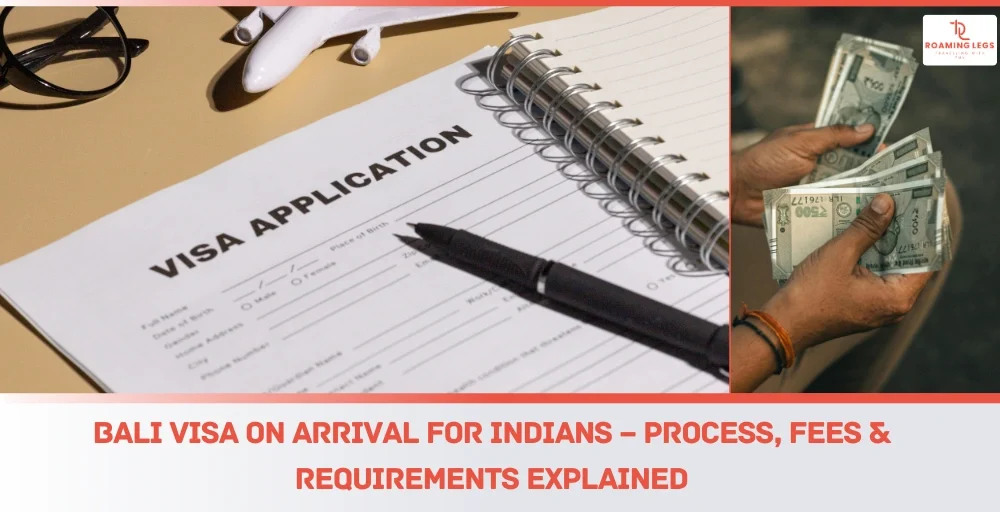
Bali Visa on Arrival for Indians — Everything You Actually Need to Know Before You Land

So you’re heading to Bali and someone told you “don’t worry, you’ll get visa on arrival.

” And now you’re here trying to figure out what that actually means — what you need to carry, how much it costs, whether you should apply online before flying, and what can go wrong.

Here’s the short answer: Yes, Indian passport holders get Visa on Arrival (VoA) in Bali. 

It’s issued at the airport when you land at Ngurah Rai International Airport in Denpasar. 

You don’t need to visit an embassy or apply weeks in advance. 

But — and this is where most people slip up — “visa on arrival” does NOT mean you show up unprepared.

This guide covers the fee, the exact airport process, the e-VOA option (which lets you skip the airport queue entirely), the new tourist levy that most blogs don’t mention, what documents you need, and the mistakes that actually get Indian travelers held up at immigration.

VoA vs e-VOA: Which One Should You Get?

Compare the two ways Indian travellers can obtain a Bali visa.

DetailVisa on Arrival (VoA)e-VOA (Online)
Where you applyAt Bali airport after landingOnline before you fly
FeeIDR 5,00,000 (~₹2,800)IDR 5,00,000 (~₹2,800)
Queue at airportYes, can take 30–60 minsNo, dedicated fast lane
Approval timeInstant at counter24–72 hours via email
Recommended?Works fineBetter option

Where you apply

Visa on Arrival
At Bali airport after landing
e-VOA
Online before you fly

Fee

Visa on Arrival
IDR 5,00,000 (~₹2,800)
e-VOA
IDR 5,00,000 (~₹2,800)

Queue at airport

Visa on Arrival
Yes, can take 30–60 mins
e-VOA
No, dedicated fast lane

Approval time

Visa on Arrival
Instant at counter
e-VOA
24–72 hours via email

Recommended?

Visa on Arrival
Works fine
e-VOA
Better option
RecommendationThe fee is the same for both options. e-VOA lets you skip the airport visa queue and head straight to immigration.

How Much Does Bali Visa on Arrival Cost for Indians?

The Bali VoA fee is IDR 5,00,000, which works out to roughly ₹2,800–₹3,000 depending on the exchange rate that day.

But here’s what most blogs miss: there is a separate Bali Tourist Levy of IDR 1,50,000 (~₹750) that every foreign visitor has to pay, on top of the visa fee. 

This is mandatory and was introduced in February 2024. 

It funds cultural preservation and environmental protection on the island.

Total cost at the airport: approximately ₹3,500–₹3,800 per person.

You can pay the tourist levy online before your trip at lovebali.baliprov.go.id or the “Love Bali” app. 

Once paid, you get a QR code to show at the airport. 

This is actually smart to do before you fly — you skip one more queue.

Warning: Several fake websites mimic the Love Bali portal. 

Only pay on the official Bali government site or app. 

Do not Google “pay Bali tourist tax” and click on the first ad.

🛂 FREE BALI TRAVEL CHECKLIST

Get Your Personalised Bali Document & Airport Checklist

Not sure what documents to carry or what happens after you reach the airport? Send us your travel dates on WhatsApp and we'll send you a customised checklist covering travel documents, airport procedures, visa guidance, and the exact order to complete every step before and after landing in Bali.

📄

Document Checklist

Know exactly what to carry before you leave.

✈️

Airport Steps

Follow the correct sequence from check-in to arrival.

🛂

Visa Guidance

Understand the key arrival formalities for your trip.

📲

Free WhatsApp Guide

Receive your personalised checklist within 24 hours.
Bali visa on Arrival for Indians

What Documents Do You Need for Bali Visa on Arrival?

Immigration at Ngurah Rai is not very strict most of the time, but they can and do ask for documents. Not having them ready is the #1 reason Indian travelers get held up or questioned.

Here’s what to carry:

Mandatory:

  • Indian passport with minimum 6 months validity from your date of arrival in Bali (not your travel date, your Bali arrival date)
  • At least 2 blank pages in your passport
  • Confirmed return or onward flight ticket — the officer may check this on their system even if you don’t show it
  • Hotel booking confirmation or accommodation address in Bali

Good to have:

  • Proof of travel funds — a recent bank statement, credit card, or at least USD 2,000 equivalent available
  • Printed copy of your travel insurance (not always asked, but good to have)

One thing people ask us all the time: “What if my return ticket is flexible or open-dated?” Get at least a confirmed booking, even if you plan to change it later. Immigration doesn’t accept open tickets.

How the Airport Visa Process Works — Step by Step

You’ve landed at Ngurah Rai International Airport (Denpasar, Bali). 

Here’s exactly what happens:

If you applied for e-VOA before flying:

  1. Follow signs to the e-VOA / autogate lane at immigration
  2. Show your QR code (emailed approval) and passport
  3. Get your stamp and go collect your luggage

Done. Usually 10–15 minutes.

If you’re getting VoA at the airport:

  1. Follow signs to the Visa on Arrival counter (before the main immigration hall)
  2. Fill the arrival form if given one
  3. Pay IDR 5,00,000 by card or cash at the counter — international cards accepted, but carry some USD or IDR as backup
  4. Receive a visa sticker in your passport
  5. Proceed to the main immigration checkpoint with your passport, arrival form, return ticket, and accommodation details
  6. Immigration officer stamps your passport — you’re done

The full process at peak hours (especially when multiple flights land together between 9 PM and midnight) can take 30–60 minutes. With e-VOA, it’s about 10–15 minutes.

Tip: If you’re landing late and there’s a big crowd, the VoA queue can be 45–60 minutes. 

Apply for e-VOA online before your trip — it genuinely saves you that time after a long flight.

How to Apply for Bali e-VOA Online (Step by Step)

The official site is evisa.imigrasi.go.id — this is Indonesia’s official immigration portal.

Here’s how to do it:

  1. Go to evisa.imigrasi.go.id at least 7–14 days before travel (processing takes 24–72 hours but give yourself buffer)
  2. Select “Visa on Arrival” and your nationality (India)
  3. Upload your passport bio page (clear scan, no blur)
  4. Upload a recent passport-size photo (plain white background)
  5. Enter your name, passport number, email address, and arrival date
  6. Pay IDR 5,00,000 online by international credit or debit card
  7. You’ll receive a QR-coded e-VOA approval by email within 24–72 hours
  8. Print it or save it on your phone — show it at the dedicated e-VOA lane at the airport

That’s it. No queues. No counter. No fumbling for cash after 10 hours on a flight.

How Long Can Indians Stay in Bali with VoA?

The Visa on Arrival is valid for 30 days from your date of entry. 

This is enough for most Bali trips — the average Indian tourist stays 6–10 nights.

But if you want to stay longer (some people do, especially couples doing a longer honeymoon or work-from-Bali stints), you can extend once.

Can You Extend the Bali VoA?

Yes — one extension is allowed, giving you another 30 days, so a maximum of 60 days total.

Extension rules:

  • Apply at least 7 days before your current visa expires — not on the last day
  • Visit the local Indonesian Immigration Office (Kantor Imigrasi) in Bali, or use a registered visa agent in Bali (easier and faster for most tourists)
  • Fee: IDR 5,00,000 (~₹2,800) for the extension

If you overstay (even by one day): The fine is IDR 10,00,000 per day (~₹5,300/day). 

And if the overstay is significant, you could face a deportation record and a future entry ban from Indonesia. It’s not worth it.

Set a reminder 10 days before your visa expires if you’re staying long.

🛂 FREE BALI VoA PLANNING HELP

Planning a Longer Bali Trip? Get Personalised Visa Extension Guidance

If you're staying in Bali beyond your initial Visa on Arrival period, we'll help you understand the extension process and plan your trip with confidence. Share your travel dates and itinerary on WhatsApp, and we'll explain what to do, when to do it, and how to avoid common planning mistakes.

🛂

VoA Extension Plan

Understand the extension process and important timelines.

📅

Trip Timeline

Know exactly when each travel step should happen.

💡

Expert Advice

Learn practical tips from helping Indian travellers.

📲

Free WhatsApp Support

Receive personalised guidance within 24 hours.

Common Mistakes Indian Travelers Make with Bali Visa

These are the things that actually cause problems. Not the big scary stuff — these are the small things people overlook.

  1. Passport expiry too close to travel Your passport needs at least 6 months validity from your arrival date in Bali. If you land on 1st August 2026, your passport needs to be valid until at least 1st February 2027. Check this before you book your flights.
  2. No return ticket (or an open ticket) Immigration officers routinely check return flights. An open-ended ticket or “I’ll book it later” isn’t accepted. Book it first.
  3. Not paying the tourist levy separately People pay the visa fee at the counter and then get stopped at another checkpoint for the tourist levy. Pay it online before you fly at lovebali.baliprov.go.id — saves hassle.
  4. Damaged passport Torn pages, water damage, or unreadable bio data pages can get you denied boarding or held at immigration. Check your passport before packing.
  5. Waiting till the last day to extend Immigration offices have queues. Going on Day 29 of your 30-day visa is stressful and risky. Go at Day 20–22.
How Visa works on Bali airport for Indians

What's the Total Cost for Bali VoA for Indians?

Here's everything in one place.

ItemCost
Visa on Arrival (VoA)IDR 5,00,000 (~₹2,800)
Bali Tourist LevyIDR 1,50,000 (~₹750)
VoA Extension (if needed)IDR 5,00,000 (~₹2,800)
Total for 30-day trip~₹3,550 per person
Total for 60-day trip~₹6,350 per person

Visa on Arrival (VoA)

Cost
IDR 5,00,000 (~₹2,800)

Bali Tourist Levy

Cost
IDR 1,50,000 (~₹750)

VoA Extension (if needed)

Cost
IDR 5,00,000 (~₹2,800)

Total for 30-day trip

Cost
~₹3,550 per person

Total for 60-day trip

Cost
~₹6,350 per person
Payment TipVisa and levy payments at Bali airports are generally accepted by international Visa and Mastercard cards. Cash is also accepted in major currencies, but carrying a card is usually the most convenient option.

Bali Visa on Arrival FAQs (2026)

Frequently asked questions for Indian travelers.

1. Do Indians need a visa to go to Bali?

Yes. Bali is part of Indonesia, and Indian passport holders need a visa. The good news is Indians are eligible for Visa on Arrival either at the airport or online via e‑VOA before travel. You do not need to visit an Indonesian embassy.

2. Is Bali visa free for Indians in 2026?

No. Bali is not visa-free for Indians in 2026. The Visa on Arrival costs IDR 5,00,000 (~₹2,800), and there is a separate tourist levy of IDR 1,50,000 (~₹750). Total per person comes to about ₹3,500.

3. How much is the Bali Visa on Arrival for Indians in rupees?

The VoA fee is approximately ₹2,800. Add the mandatory Bali Tourist Levy of about ₹750 and the total is around ₹3,550 per person. Exchange rates may vary.

4. What is the difference between VoA and e‑VOA for Indians?

Both cost the same. VoA is obtained after landing. e‑VOA is applied online before your trip and lets you skip the airport visa queue.

5. How long does it take to get Bali VoA at the airport?

Usually 15 to 30 minutes. During busy periods it can take 45 to 60 minutes. e‑VOA users usually finish in 10 to 15 minutes.

6. What documents do Indians need?

Carry a passport valid for at least 6 months with 2 blank pages, return ticket, hotel booking, and ideally proof of funds.

7. Can I extend the Bali Visa on Arrival?

Yes. One 30-day extension is available if you apply before expiry.

8. What happens if I overstay?

Overstays attract daily fines and serious cases can result in deportation and future entry restrictions.

9. Is the Tourist Levy the same as the visa fee?

No. They are separate payments and both are required.

10. Can I use an Indian debit card?

Most Visa and Mastercard debit or credit cards work, but carrying backup cash is recommended.

11. Do children also need Bali VoA?

Yes. Every eligible traveler requires the appropriate visa.

12. Minimum passport validity?

Your passport must be valid for at least 6 months from your arrival date in Bali.

13. Can I apply for e‑VOA after landing?

No. Apply online before traveling.

14. Is there a Bali visa agent at the airport?

No. Immigration handles the airport process. Agents mainly help with extensions.

15. What's the easiest way to get Bali visa?

Apply for e‑VOA before travel, pay the Tourist Levy online, carry your documents, and use the dedicated e‑VOA lane.
Dubai visa cost for Indians

Dubai Visa Cost for Indians — Exact Fees, What’s Included, and Where People End Up Paying More Than They Should

Let’s be honest — Dubai visa pricing is one of those things where every website shows a different number, and by the time you’ve checked five tabs, you’re more confused than when you started.

The actual government fee is one number. 

Then there’s the service charge. 

Then there’s insurance that some providers make mandatory. 

Then someone offers “express processing” and suddenly the cost jumps by ₹4,000 more.

This guide cuts through all of that. Here’s exactly what a Dubai visa costs for Indians in 2026, what each fee actually covers, which visa type you actually need, and the one recent rule change about visa on arrival that most blogs haven’t caught up with yet.

Dubai Visa Cost at a Glance: All Types for Indians (2026)

Estimated all-inclusive visa costs.

Visa TypeDurationApprox. Cost (INR)Entry
Tourist Visa14 days₹9,500–₹10,500Single
Tourist Visa30 days₹11,000–₹12,500Single
Tourist Visa60 days₹15,000–₹18,000Single
Tourist Visa60 days₹25,000–₹28,000Multiple
Express Processing (add-on)—+₹4,000–₹4,500—

Tourist Visa

Duration
14 days
Approx. Cost
₹9,500–₹10,500
Entry
Single

Tourist Visa

Duration
30 days
Approx. Cost
₹11,000–₹12,500
Entry
Single

Tourist Visa

Duration
60 days
Approx. Cost
₹15,000–₹18,000
Entry
Single

Tourist Visa

Duration
60 days
Approx. Cost
₹25,000–₹28,000
Entry
Multiple

Express Processing (add-on)

Duration
—
Approx. Cost
+₹4,000–₹4,500
Entry
—
Important Note These are estimated all-inclusive costs including government fees and typical service charges. Depending on the provider, the final amount paid may be around ₹1,500 to ₹3,000 higher than the government fee alone.

What Does the Dubai Visa Fee Actually Include?

This is where most travelers get confused, so let’s break it down clearly.

UAE Government Fee — This is the base fee charged by the UAE immigration authority (GDRFA). 

For a 30-day single entry tourist visa, this is approximately AED 250–300 (~₹7,500–₹9,000). 

This part is non-negotiable regardless of who you apply through.

Service Charge — Every authorized visa agent, travel company, or airline charges this on top. 

Typically ₹1,000–₹2,500 depending on the provider.

Mandatory Travel Insurance — Many authorized agents (including airlines like Emirates and Air Arabia) require you to buy their travel insurance as part of the visa package. 

Adds roughly ₹500–₹1,000 to the total.

So when you see a 30-day Dubai visa quoted at ₹11,443 on platforms like MakeMyTrip or Akbar Travels — that is the full amount you’ll pay, not just the visa fee. 

When you see ₹6,710 on VFS Global — that’s closer to the government-only fee with minimal service charges.

Neither is wrong. They’re just different components of the same thing.

🛂 FREE DUBAI VISA GUIDANCE

Not Sure Which Dubai Visa You Need?

Whether you need a 30-day or 60-day visa, or you're unsure if a single-entry or multiple-entry visa is right for your trip, we'll help you choose the correct option. Share your travel dates on WhatsApp and we'll recommend the right visa, explain the expected costs, and guide you through the fastest application process.

📅

Right Visa Type

Choose the best visa based on your travel plans.

💳

Cost Estimate

Understand the expected fees before applying.

⚡

Fastest Process

Get step-by-step guidance for a smooth application.

📲

Free WhatsApp Help

Receive personalised visa advice within 24 hours.

Guide for Dubai Visa cost for I ndians

30-Day vs 60-Day Dubai Visa: Which One Should You Get?

Most Indian tourists visiting Dubai for a holiday, honeymoon, or family trip go with the 30-day single entry visa. 

It’s the right call if your Dubai trip is 5–12 days — which is what most people do.

The 60-day visa makes sense if you are:

  • Combining Dubai with another country (Oman, Turkey, Europe) and coming back to Dubai
  • Staying for a work-related project or longer holiday
  • Planning 2 separate trips to Dubai within a few months

The multiple entry 60-day visa (~₹25,000–₹28,000) is specifically for people making multiple trips. 

For a single vacation, it’s unnecessary.

Honest take: 9 out of 10 Indian travelers who ask us about Dubai visa end up needing the 30-day single entry. 

Unless you know you’re returning to Dubai within 60 days, don’t pay for a visa type you won’t use.

Does Express Processing Actually Cost More?

Yes — express visa processing adds approximately ₹4,000–₹4,500 to whatever visa you’re applying for.

Standard processing: 3–4 working days Express processing: 4–48 hours

Worth it if your travel dates are within a week. 

Not worth it if you’re applying 2–3 weeks ahead. 

Most of our clients who book Dubai trips plan at least 2 weeks ahead, which is enough time for standard processing with no stress.

One thing people miss: “working days” means Monday to Friday. 

If you apply on a Thursday and there’s a long weekend coming, your “3 working day” visa might not arrive until Tuesday. 

Apply earlier if your travel falls around public holidays.

Can Indians Get Dubai Visa on Arrival? (2026 Rule Change)

This is the part most blogs haven’t updated yet, so read carefully.

Some Indian passport holders do qualify for Dubai visa on arrival — but the list of qualifying documents changed in 2026.

You qualify if you hold a valid visa or residence permit from:

  • United States (US visa or Green Card)
  • EU/Schengen countries
  • Australia
  • Canada
  • Japan
  • New Zealand
  • South Korea
  • Singapore

What changed in 2026: UK-issued visas and UK residence permits are no longer accepted for Dubai visa on arrival. 

This was updated by UAE immigration authorities. 

If you only have a UK visa, you need to apply for a UAE tourist visa before travel — you cannot get VoA at the airport.

The Dubai visa on arrival is a 14-day single entry visa, issued at the airport immigration counter. 

It’s free of UAE government fee in most cases, though terms can vary.

If you’re not sure whether your documents qualify, apply for a regular tourist visa. 

It’s faster to plan than to find out at the airport that you don’t qualify.

How to Apply for Dubai Visa from India

There are three main ways:

Option 1: Through VFS Global VFS Global is the official UAE visa application centre in India. 

Apply at visa.vfsglobal.com/ind/en/are/ — you can apply online or visit a VFS VAC in person in cities like Mumbai, Delhi, Bengaluru, Chennai, Hyderabad, Kolkata, and Ahmedabad. 

This is the most direct channel with lower fees (closer to the government-only fee).

Option 2: Through your airline Emirates, Air Arabia, and flydubai all offer visa services when you book flights to Dubai through them. 

Convenient, but usually includes their service fee. 

Emirates’ visa package for Indians typically runs ₹11,000–₹13,000 for a 30-day visa including insurance.

Option 3: Through a travel agent or OTA MakeMyTrip, Thomas Cook, Akbar Travels, and similar portals offer Dubai visa as an add-on to flight or holiday bookings. 

Easy if you are booking a full trip. Fees are bundled, so you often can’t separate the visa cost from other services.

All three routes are legitimate. 

The difference is mostly price and convenience.

🇦🇪 FREE DUBAI TRIP PLANNER

Planning Your Dubai Trip? Get a Personalised Plan in 24 Hours

Planning a Dubai holiday can take hours of research. Tell us your travel dates, group size, and budget on WhatsApp, and we'll create a customised Dubai travel plan with visa guidance, hotel recommendations, and a day-by-day itinerary designed around your trip.

🛂

Visa Guidance

Know the right visa and application process.

🏨

Hotel Options

Recommendations that fit your budget and travel style.

🗓️

Daily Itinerary

A ready-to-follow plan with top attractions and timings.

📲

24-Hour Delivery

Your personalised Dubai trip plan sent on WhatsApp.

Costing for India to Dubai Visa

What Documents Do You Need for Dubai Tourist Visa?

Keep these ready before you apply — missing even one can delay your application.

Mandatory documents:

  • Indian passport with minimum 6 months validity from your Dubai travel date (not application date)
  • 2 recent passport-size photos (white background, recent)
  • Confirmed return flight ticket
  • Hotel booking confirmation with address in Dubai
  • Passport copy (bio-data page, clear scan)

Sometimes asked:

  • Bank statement showing sufficient funds (last 3 months)
  • Travel insurance certificate (some agents require this)
  • Cover letter explaining purpose of visit (for non-tourist applications)

One thing we’ve seen go wrong multiple times: travelers with a passport that has just over 6 months left from their application date but under 6 months from their actual Dubai arrival date. 

Immigration goes by your entry date, not your application date. 

Count from when you land in Dubai.

Total Dubai Trip Cost Estimate for Indians (Not Just Visa)

A realistic cost estimate for a 6-night Dubai trip for two people from India.

ExpenseBudgetMid-RangePremium
Return flights (per person, from Mumbai/Delhi)₹18,000–₹22,000₹25,000–₹35,000₹45,000+
Dubai tourist visa (per person)₹9,500₹11,500₹11,500
Hotel (6 nights, per couple)₹30,000–₹45,000₹60,000–₹90,000₹1,20,000+
Local transport + food + activities₹20,000–₹30,000₹40,000–₹60,000₹80,000+
Total (per couple)₹1,00,000–₹1,30,000₹1,60,000–₹2,10,000₹3,00,000+

Return flights (per person, from Mumbai/Delhi)

Budget
₹18,000–₹22,000
Mid-Range
₹25,000–₹35,000
Premium
₹45,000+

Dubai tourist visa (per person)

Budget
₹9,500
Mid-Range
₹11,500
Premium
₹11,500

Hotel (6 nights, per couple)

Budget
₹30,000–₹45,000
Mid-Range
₹60,000–₹90,000
Premium
₹1,20,000+

Local transport + food + activities

Budget
₹20,000–₹30,000
Mid-Range
₹40,000–₹60,000
Premium
₹80,000+

Total (per couple)

Budget
₹1,00,000–₹1,30,000
Mid-Range
₹1,60,000–₹2,10,000
Premium
₹3,00,000+

Budget hotels in Al Rigga or Deira (like ibis Styles or Premier Inn) start around ₹5,000/night per couple. Mid-range options like JW Marriott Marquis or Sofitel Downtown Dubai run ₹12,000–₹18,000/night. Atlantis The Palm is ₹35,000–₹60,000/night for a couple.

Flights: IndiGo and Air India operate direct flights from Mumbai and Delhi to Dubai (DXB) — typically 3–4 hours. Air Arabia and flydubai offer connecting options. Return fares range from ₹18,000–₹45,000 depending on how far ahead you book.

What Indian Travelers Get Wrong About Dubai Visa Costs

These aren’t big mistakes — they’re the small things that quietly cost people money.

  1. Comparing base fees, not total fees ₹6,710 on one site vs ₹11,443 on another doesn’t mean one is wrong. 
  2. One shows the government fee; the other shows the full amount including service and insurance. Always ask: “Is this the total I’ll pay at checkout?”
  3. Applying for the wrong duration Buying a 60-day visa for a 7-night trip because “it gives more flexibility” is waste of ₹4,000–₹6,000. 
  4. You cannot get a refund for unused visa days.
  5. Not checking the UK VoA rule change Indian travelers with UK visas used to automatically qualify for Dubai VoA. That changed in 2026. 
  6. If your plan was to skip the visa fee because you have a UK visa — you’ll now need to apply in advance.
  7. Applying too late and paying express fees Standard processing is fine if you apply 2 weeks ahead. 
  8. Waiting until 3 days before travel forces you into express processing, which costs an extra ₹4,000+. Just apply early.

What Travelers Who Booked Through Us Say

“We were totally confused between the 30-day and 60-day visa and weren’t sure if our US visa qualified us for VoA. The team explained everything in one call, and we ended up applying for the right visa without paying for express processing.” — Priya & Rahul Mehta, Pune, March 2026

“We’d seen prices ranging from ₹6,000 to ₹15,000 for what looked like the same Dubai visa. Roaming Legs broke down exactly what each fee was for and helped us apply through the right channel. Saved us at least ₹3,000 compared to what we almost paid through a different travel portal.” — Aakash Sharma, Bengaluru, January 2026

Dubai Visa Cost for Indians (2026)

Frequently Asked Questions

1. How much does a Dubai tourist visa cost for Indians in 2026?

A 30-day single entry Dubai tourist visa costs approximately ₹11,000–₹12,500 all-inclusive (government fee + service charge + insurance). A 60-day single entry runs ₹15,000–₹18,000. The variation depends on whether you apply through VFS Global directly, an airline, or a travel agent. VFS Global tends to be cheaper, while airline packages usually bundle extra services.

2. What is the actual UAE government fee for a Dubai visa?

The UAE government fee for a 30-day tourist visa is approximately AED 250–300 (roughly ₹7,500–₹9,000). Service charges, insurance, and agent fees are added separately by the processing provider.

3. Is Dubai visa free for Indians?

No. Most Indian passport holders must obtain a UAE tourist visa before travel. However, travelers holding eligible visas or residence permits from qualifying countries may qualify for a 14-day visa on arrival.

4. Can Indians get Dubai visa on arrival in 2026?

Yes, but only if they hold a valid visa or residence permit from eligible countries such as the USA, Schengen countries, Australia, Canada, Japan, South Korea, New Zealand, or Singapore. UK-issued visas and UK residence permits no longer qualify in 2026.

5. How much does express Dubai visa processing cost?

Express processing usually adds ₹4,000–₹4,500 and reduces processing time to around 4–48 hours.

6. What is the cost difference between 30-day and 60-day Dubai visas?

A 30-day single-entry visa generally costs ₹11,000–₹12,500, while a 60-day single-entry visa costs ₹15,000–₹18,000. A 60-day multiple-entry visa can cost ₹25,000–₹28,000.

7. Is the Dubai visa fee refundable if my visa gets rejected?

Generally, no. Visa fees are usually non-refundable once processing begins, even if the application is refused.

8. How long does it take to get a Dubai visa?

Standard processing takes about 3–4 working days. Express processing is available for an extra fee.

9. Can I apply for a Dubai visa online from India?

Yes. You can apply through VFS Global, eligible airlines, or authorized travel agencies using a fully online application process.

10. What documents do Indians need?

You typically need a passport valid for at least 6 months, passport-size photos, return flight ticket, hotel booking, and a passport bio page scan.

11. Do children need a separate Dubai visa?

Yes. Every traveler with an individual passport requires a separate visa.

12. Is Dubai visa more expensive through travel agents than VFS Global?

Usually yes, because agents include additional services. VFS Global is generally the lower-cost option if you handle the application yourself.

13. How long is the Dubai tourist visa valid once issued?

Most approvals allow entry within 60 days of issue. Your permitted stay starts after entering the UAE.

14. Can I extend a Dubai tourist visa from inside Dubai?

Yes. A 30-day tourist visa can usually be extended through authorized UAE channels for an additional fee.

15. What's the cheapest way for Indians to get a Dubai visa?

Applying directly through VFS Global with standard processing is typically the lowest-cost legitimate option. Avoid paying high third-party markups unless you need bundled travel services.

Vietnam visa for Indians - step by step guide

Do You Really Need a Vietnam Visa? The Honest Answer for Indian Travelers — Plus Exact Costs, Processing Times & When to Apply

If you’re planning a Vietnam trip from India, the first question is always: do I need a visa? The answer is straight yes. 

Indian passport holders cannot enter Vietnam without a valid visa approved in advance. 

That’s the non-negotiable part. 

The good news? The actual process is simpler than most people think, and you can handle it entirely online in about 10 minutes.

We’ve helped hundreds of Indian travelers get Vietnam visas over the past three years. 

The pattern is always the same: people worry about the process way more than they should. 

Most rejections happen because of something as simple as a crooked photo or a name that doesn’t match the passport exactly. 

Once you know what to avoid, getting approved is straightforward.

This guide covers everything you actually need to know: which visa type works best for your trip, exact costs in rupees, real timelines including rush options, documents you actually need, common mistakes that get applications rejected, and how to handle the whole thing without stress.

Vietnam Visa at a Glance

Aspect Details
Visa Required? Yes, mandatory for Indian passport holders
Best Option E-Visa (100% online, ₹2,100 approx.)
Processing Time 3–5 working days (standard), 2 hours (rush)
Passport Validity Minimum 6 months from arrival date
Stay Duration Usually 30 days for tourist visa
One Major Exception Phu Quoc Island (no visa needed if arriving directly)
Visa Required?
Details

Yes, mandatory for Indian passport holders

Best Option
Details

E-Visa (100% online, ₹2,100 approx.)

Processing Time
Details

3–5 working days (standard), 2 hours (rush)

Passport Validity
Details

Minimum 6 months from arrival date

Stay Duration
Details

Usually 30 days for tourist visa

One Major Exception
Details

Phu Quoc Island (no visa needed if arriving directly)

The Three Visa Options Explained (and Which One Actually Works Best for You)

Option 1: Vietnam E-Visa (What 90% of Indians Choose)

The e-visa is an electronic visa issued by Vietnamese immigration authorities entirely online. 

You apply on their portal, upload documents, pay by card, and get approval by email. 

That’s it. No embassy visit, no waiting in queues, no printing complicated forms.

Why people choose it:

  • Entire process is online from your phone or laptop
  • Takes 3–5 working days (you can do better with rush services)
  • Costs around ₹2,100–₹2,500 (approximately USD 25)
  • Valid at 83 entry points including airports, seaports, and land borders
  • You just print the approval and show it at immigration

The real timeline: If you apply on a Monday morning, you’ll likely get approval by Thursday. 

Most travelers build in a 7–10 day buffer before their trip just to be safe. 

If you’re cutting it close, rush services can deliver within 2–4 hours (more on this below).

Cost breakdown: The official Vietnam government e-visa portal charges USD 25 (approximately ₹2,100). 

Some visa agencies charge a processing fee on top of this — typically ₹200–₹500 extra. 

Government portal is cheaper but you need to handle the form yourself. 

Agencies cost slightly more but catch mistakes before submission, which saves rejection headaches.

Who should use this: Anyone traveling for tourism, visiting friends/family, or taking a holiday. 

If you’re booking flights 3+ weeks before your trip, this is your option.

Option 2: Vietnam Visa on Arrival (Only if You’re Coming by Flight)

Visa on arrival sounds simpler, but it’s actually more complicated than the e-visa. 

Here’s how it works: you get an approval letter from an agency before traveling, then pay a stamping fee in cash when you land at the airport. 

The visa is issued right there.

Why most people avoid it:

  • You still need pre-approval from an agency, so it’s not faster
  • Only available at international airports, not land borders
  • You need cash at the airport (USD 25–50 depending on entry/exit)
  • Airlines sometimes ask questions about your approval letter before boarding
  • Processing times are about the same as e-visa

When to use it: Almost never, honestly. 

The e-visa is simpler because you handle everything online and get a printable document. 

With VOA, you’re juggling approval letters and cash at the airport after a long flight.

The one exception: If your passport is damaged or you’re getting a new passport days before travel, some visa agencies prefer handling VOA because they have more flexibility. 

But for normal situations, skip this.

Option 3: Vietnamese Embassy in India (Only for Specific Situations)

You can apply at the Vietnamese Embassy in New Delhi or the Consulate General in Mumbai. 

The visa gets physically stamped in your passport.

Why most travelers avoid it:

  • You have to visit the embassy in person (or mail your passport)
  • Takes 5–7 working days typically
  • More expensive than e-visa (₹2,500–₹3,500)
  • Not faster than online options

When to use it: Only if you need a longer visa (60+ days) or you’re applying for a specific business visa. For regular holiday tourism, the e-visa does everything you need.

The Phu Quoc Exception: No Visa Needed (But Only if You’re Doing This Right)

There’s one special rule that trips up travelers. 

Phu Quoc Island — one of Vietnam’s most beautiful spots — has a visa exemption for Indian citizens. You can stay up to 30 days without a visa.

But here’s the catch (this is important): The exemption only works if Phu Quoc is your first port of entry into Vietnam. 

You have to arrive directly at Phu Quoc International Airport or Phu Quoc Seaport from outside Vietnam. You cannot fly into Hanoi or Ho Chi Minh City, then travel to Phu Quoc.

Real example: If you’re flying Delhi → Ho Chi Minh City → Phu Quoc, you need a visa because HCMC is your first entry point. If you’re flying Delhi → Phu Quoc (with a connecting flight somewhere else outside Vietnam), no visa needed.

Most travelers don’t take advantage of this because international flights to Phu Quoc are limited. But if your itinerary includes it, you’ve got options.

India to vietnam visa guide

What Documents You Actually Need (Not the Generic List)

Before applying, have these ready:

  1. Your Passport
  • Must be valid for at least 6 months from your arrival date (not from today)
  • Must have at least 2 blank pages
  • If your passport expires in January 2027 and you’re traveling in August 2026, you’re fine. But if it expires in February 2027 and you’re traveling in August 2026, you’re cutting it too close — renew first
  1. A Passport Scan (Bio Page)
  • Scan or photograph the page with your photo and details
  • Must be clear and readable (not blurry, not shadowed)
  • File size should be under 2 MB (JPG works best)
  1. A Passport-Sized Photo
  • This is where most rejections happen, so pay attention
  • Size: 3.5 cm × 4.5 cm (standard international size)
  • Background: Plain white or off-white
  • Face must take up 70–80% of the frame
  • Eyes must be open, looking directly at camera
  • No glasses, no filters, no makeup that changes your face
  • No head covering (religious exceptions are made, but submit with a note)
  • Taken in the last 6 months
  • File size: under 2 MB

The photo mistake I see constantly: People use old passport photos from 3–4 years ago. 

The immigration system uses facial recognition. If your photo is outdated, it flags the application. 

Take a new one. Just take out your phone, go near a window, stand in front of white wall, and ask someone to snap a straight-on photo. 

It doesn’t need to be professional.

  1. Travel Details
  • Your planned arrival date in Vietnam
  • Your planned departure date from Vietnam
  • Your arrival airport or port (e.g., Noi Bai Airport, Ho Chi Minh City, Da Nang)

The E-Visa Application: Step by Step (It Takes 10 Minutes)

Step 1: Go to the Official Portal Visit the official Vietnamese e-visa website (the government portal, not a third-party agency). 

The official portal is govt-issued and cheapest. 

Bookmark it: official Vietnam immigration e-visa portal.

Step 2: Start Your Application Click “Apply for e-Visa.

” You’ll see a form asking for basic information.

Step 3: Fill in Your Details

  • Full name (exactly as it appears in your passport)
  • Passport number
  • Passport issue date
  • Passport expiry date
  • Date of birth
  • Nationality
  • Your arrival date in Vietnam
  • Your departure date from Vietnam
  • Your arrival airport/port
  • Your email address (this is where your visa approval comes)

Triple-check the spelling of your name. 

If your passport says “Rajesh Kumar” but you write “Rajesh Kumar” with a different spelling, they’ll reject it.

Step 4: Upload Documents

  • Upload your passport bio page scan
  • Upload your passport photo

Make sure both files are clear and readable before uploading.

Step 5: Choose Your Visa Type

  • Single entry (can enter Vietnam once): USD 25 (approx. ₹2,100)
  • Multiple entry (can enter/exit multiple times): USD 50 (approx. ₹4,200)

For most tourists, single entry is fine. 

Choose multiple only if you’re doing a multi-country trip and re-entering Vietnam.

Step 6: Pay Online Use your debit or credit card (Visa, Mastercard). 

International cards work. 

The payment is in USD, so your bank will show the rupee conversion.

Step 7: Wait for Approval Check your email (including spam folder). 

Approval usually comes within 3–5 working days. Once approved, you’ll get a PDF attachment — that’s your e-visa. 

Print it or save it on your phone (having it on your phone is actually smarter because immigration officers can scan QR codes).

Timeline tip: If you apply on a Monday morning, you’ll likely have approval by Thursday or Friday. 

If you apply on Friday, don’t expect anything before Tuesday.

If You're in a Rush: Emergency E-Visa Services

What if your trip is happening in 2 days? Or your visa got rejected and you're panicking?

Rush processing options exist:

Service Level Processing Time Cost Good For
Standard 3–5 working days ₹2,100 Normal planning
4-Hour Urgent 4 hours ₹2,500–₹3,000 Trip in 1–2 days
2-Hour Super Rush 2 hours ₹3,500–₹4,500 Last-minute travel
1-Hour Emergency 1 hour ₹5,000–₹6,000 Flight tomorrow
Standard
Processing Time

3–5 working days

Cost

₹2,100

Good For

Normal planning

4-Hour Urgent
Processing Time

4 hours

Cost

₹2,500–₹3,000

Good For

Trip in 1–2 days

2-Hour Super Rush
Processing Time

2 hours

Cost

₹3,500–₹4,500

Good For

Last-minute travel

1-Hour Emergency
Processing Time

1 hour

Cost

₹5,000–₹6,000

Good For

Flight tomorrow

Agencies like Vietnamvisa.com, Vietnam-visa.com, and Vietnamimmigration.com offer rush services. They work 24/7, even on weekends. You submit your documents, they handle the application submission, and you get approval within the guaranteed timeframe.

Fair warning: Rush services are expensive. But if you're actually flying tomorrow, they work.

Free Vietnam Checklist

Get Your Free Vietnam Travel Checklist

Before you travel, there is more to prepare than just your visa. Download our practical Vietnam Pre-Trip Checklist covering visa documents, travel insurance, currency, packing essentials, and airport preparation tips.

Use it as your step-by-step guide while preparing for your Vietnam trip and avoid spending hours searching across different websites.

Visa Documents Travel Insurance Packing Essentials Airport Tips
Download your free Vietnam travel checklist →
Visa guide for vietnam from Indias

What Causes E-Visa Rejections (and How to Avoid Them)

In three years of helping Indian travelers, these are the top rejection reasons we see:

  1. Photo Issues (30% of rejections)
  • Photo is cropped or angles show shoulders
  • Face takes up less than 60% of the frame
  • Glasses are worn or face is shadowed
  • Photo is older than 6 months
  • Background is not plain white

How to avoid it: Take a new photo. Go near a window, white wall background, phone camera, straight face to camera. Done.

  1. Name Mismatch (25% of rejections)
  • Passport says “Rajesh Kumar Sharma” but form says “Rajesh Sharma”
  • Passport says “Dr. Rajesh Kumar” but form says “Rajesh Kumar”
  • Middle name is included in form but not in passport

How to avoid it: Copy your name exactly from your passport. 

Letter by letter. Use Ctrl+C (copy) from the scanned passport image.

  1. Passport Issues (20% of rejections)
  • Passport expires within 6 months of your Vietnam trip
  • Passport is damaged or has torn pages
  • Passport bio page scan is blurry or not fully visible

How to avoid it: Check your expiry date first. Renew if needed. 

Scan the bio page clearly — use a scanner or good quality photo.

  1. Incomplete or Mismatched Travel Dates (15% of rejections)
  • Departure date is before arrival date
  • Dates don’t match your flight bookings
  • Date format is unclear (is 03/04 March 4th or April 3rd?)

How to avoid it: Use DD/MM/YYYY format (Indian standard). 

Double-check dates against your actual flight confirmations.

  1. Payment Problems (10% of rejections)
  • Card declined or payment times out
  • Application submitted but payment didn’t go through
  • You assumed payment worked but didn’t check email

How to avoid it: Use a card with international transaction enabled. 

Wait for the payment confirmation page. 

Check your email for approval within 24 hours. 

If nothing arrives, log back in and resubmit payment.

Practical Info You’ll Actually Use

When Should You Apply? Apply 1–2 weeks before your trip. 

This gives time for processing plus buffer room if something goes wrong. 

If your trip is in 4 days, use rush processing.

Best Time to Visit Vietnam (Visa Perspective): There’s no bad time to get a visa, but travel seasons matter. October–November is peak season (lots of applications, slightly slower processing). 

April–May is shoulder season (fewer applications, faster approvals). 

July is monsoon season and fewer tourists apply. 

Process time is similar, but submitting in off-peak times sometimes means faster approvals.

Flight Costs from India:

  • Delhi/Mumbai to Hanoi: ₹15,000–₹25,000 return (IndiGo, Air Asia, Vistara typically)
  • Delhi/Mumbai to Ho Chi Minh City: ₹14,000–₹24,000 return (similar airlines)
  • Booking 4–6 weeks in advance gets better rates
  • Early morning flights are usually cheaper

Currency & Money: Vietnam uses Vietnamese Dong (₫). 

One USD = approximately 24,000–25,000 VND. 

Most ATMs in Hanoi and Ho Chi Minh City accept Indian cards. 

Bring a card from SBI, HDFC, or ICICI for best compatibility.

Packing Essentials (Visa-Related):

  • Printed copy of your e-visa (or save PDF on phone)
  • Passport (original)
  • Copy of passport (in case original is lost)
  • Travel insurance (not required for visa, but highly recommended)
  • Vaccination certificate if traveling with COVID concerns

A 7-Day Vietnam Itinerary with Visa Timing

Understanding visa logistics helps you plan better. Here’s what a typical Indian couple does:

Day 0 (Before Travel):

  • Submit e-visa application online (Monday)
  • Get approval by Thursday/Friday
  • Print or screenshot visa on phone
  • Book domestic flights within Vietnam if doing multi-city trip

Day 1 (Arrival):

  • Land in Hanoi or HCMC
  • Show e-visa at immigration
  • Collect passport with entry stamp
  • Go to hotel

Days 2–3 (Hanoi or Start Your Route):

  • Explore Old Quarter
  • Visit Hoan Kiem Lake
  • Book tours or day trips

Days 4–5 (Ha Long Bay or Intermediate Stop):

  • Day trip or overnight cruise
  • Most popular for Indian couples

Days 6–7 (Return to Hanoi or Visit HCMC):

  • Final shopping/exploration
  • Prepare for departure

The visa is valid for 30 days, so you can extend this itinerary to 14–21 days comfortably. Visa extension is also possible in-country if needed (through immigration offices or agencies).

Free Vietnam Trip Guide

Ready to Plan More? Get Your Custom Vietnam Trip Guide

Planning a Vietnam trip involves flights, hotels, visa timing, daily routes, and budget planning. Most couples spend hours researching before booking. We have helped hundreds of Indian travelers plan smoother Vietnam holidays.

Share your travel details and we will prepare a practical trip guide built around your interests.

5–7 day itinerary based on your interests
Budget breakdown for flights, hotels, meals, and activities
Best places to stay in Hanoi, HCMC, Da Nang, and Phu Quoc
Restaurant recommendations from real travelers
Visa timing guide matched with your travel dates
Get your custom Vietnam trip guide on WhatsApp →

Real Traveler Stories

Priya & Arjun, Bangalore Traveled: June 2026 “We were worried about the visa process because of horror stories online. 

But honestly, it took 10 minutes to apply and we got approval in 3 days. 

The trickiest part was getting a good passport photo, but once we took a new one, it worked. Vietnam was absolutely worth it — especially Halong Bay. 

The whole trip cost ₹85,000 per person including flights.”

Meera, Delhi Traveled: April 2026 (Solo) “Solo female traveler here. 

Vietnam felt incredibly safe and welcoming. The e-visa process was straightforward. 

Only thing I’d do differently is book accommodation in advance because hostels in Hanoi old quarter fill up fast. Immigration was smooth — showed my printed e-visa and got through in 2 minutes.”

Deepak & Family, Mumbai Traveled: March 2026 “Took our kids (ages 7 and 10). The visa process was the same — kids’ passports needed visas too, so we applied for all four of us. 

Each child’s e-visa cost the same as adults, but it was simple. 

Vietnamese people are super friendly with kids. 

Would recommend this trip for families.”

Vietnam Visa FAQs for Indian Travelers

Clear answers about Vietnam e-Visa requirements, fees, processing time, and common mistakes.

Do all Indian citizens need a Vietnam visa?

Yes. Indian passport holders generally need a Vietnam visa before entering the country.

The main exception is direct arrival at Phu Quoc International Airport from outside Vietnam, where Indian travelers can stay visa-free for up to 30 days under specific conditions.

What's the cheapest way to get a Vietnam visa from India?

The official Vietnam government e-Visa portal is the cheapest option.

The government fee is USD 25 for a single-entry e-Visa. Third-party agencies may charge extra because they add service fees.

Can my Vietnam visa be rejected after I pay?

Yes. Applications can be rejected due to incorrect passport details, poor-quality photos, name mismatches, or incomplete information.

The visa fee is usually non-refundable, so review every detail carefully before submitting your application.

How long is the Vietnam e-Visa valid after approval?

The Vietnam e-Visa is valid for up to 90 days from the approved start date.

You can enter Vietnam anytime during this validity period as long as your travel dates match the approved visa details.

Can I extend my Vietnam visa while inside Vietnam?

Yes. Extensions can be requested through immigration authorities or authorized visa agencies in Vietnam.

Most tourists do not need an extension because the standard visa validity is sufficient for normal holidays.

What if I need to change my entry date after applying?

You cannot edit the approved entry and exit dates after the e-Visa is issued.

If your travel dates change significantly, you may need to submit a new application.

What happens if my Vietnam visa expires while I am still there?

You must extend your visa or leave Vietnam before the validity period ends.

Overstaying can result in fines and complications during departure, so always plan your exit date carefully.

Can I use the same Vietnam e-Visa for multiple entries?

Only multiple-entry e-Visas allow repeated entries and exits.

A single-entry e-Visa allows one entry only. The multiple-entry option costs USD 50.

What if I arrive in Vietnam without a printed visa?

Carry both a printed copy and a digital copy on your phone.

While digital copies may work in some cases, having a printed visa avoids unnecessary issues at airline check-in or immigration.

Do I need travel insurance for a Vietnam visa?

No. Travel insurance is not required for Vietnam e-Visa approval.

However, it is strongly recommended because medical treatment, cancellations, and emergencies abroad can become expensive.

Can I apply for Vietnam visa while outside India?

Yes. Indian passport holders can apply online from anywhere in the world.

Your current location does not matter as long as you have a valid Indian passport and correct travel details.

What if there is a public holiday during visa processing?

Vietnam e-Visa processing counts working days only.

If public holidays fall during your application period, approval may take longer. Apply early and keep extra buffer days before your flight.

Bali Visa for Indians - Entry Rules and Process Guide

Bali Visa for Indians in 2026 — What It Actually Costs, How to Apply Online, and Every Step to Clear Immigration Without Stress

Do Indians need a visa for Bali?

Yes. Indian passport holders need a visa for Bali.

But it is not complicated. 

You do not have to visit an embassy, wait for weeks, or fill 20-page forms.

Indonesia gives Indians a Visa on Arrival (VOA) — which means you either pay for it after you land at Bali airport, or you do it online a few days before your flight and skip the airport queue completely.

The visa costs IDR 500,000 (about ₹2,950 per person), and it gives you 30 days in Bali.

That is the short answer. 

But there are three things that most guides do not tell you — and these are exactly what cause problems at the airport:

  1. There is a separate Bali Tourist Levy of ₹800 that every foreign visitor has to pay on top of the visa
  2. There is a mandatory All Indonesia Arrival Card you must fill online within 72 hours before landing
  3. Indian debit cards (especially RuPay) do not work on the e-VOA portal — you need an internationally enabled Visa or Mastercard

We plan Bali trips for Indian travelers almost every week, and the visa part is where people stress the most. 

So let me walk you through all of it — the real cost, the documents, the online application, common card payment errors, and the small mistakes that cause big headaches.

Bali Visa for Indians — Quick Summary

Detail What You Need to Know
Visa type Visa on Arrival (VOA) or e-VOA
Visa cost IDR 500,000 (about ₹2,950 per person)
Stay allowed 30 days
Extension One time, 30 more days (60 days total)
Bali Tourist Levy IDR 150,000 (about ₹800 per person) — separate from visa
All Indonesia Arrival Card Mandatory, free, fill online within 72 hours before landing
Passport validity At least 6 months + 2 blank pages
Where to get the visa Online before your flight OR at Bali airport counter
Total entry cost per person About ₹3,750 (visa + levy)
Visa Type
What You Need to Know

Visa on Arrival (VOA) or e-VOA

Visa Cost
What You Need to Know

IDR 500,000 (about ₹2,950 per person)

Stay Allowed
What You Need to Know

30 days

Extension
What You Need to Know

One time, 30 more days (60 days total)

Bali Tourist Levy
What You Need to Know

IDR 150,000 (about ₹800 per person) — separate from visa

All Indonesia Arrival Card
What You Need to Know

Mandatory, free, fill online within 72 hours before landing

Passport Validity
What You Need to Know

At least 6 months + 2 blank pages

Where to Get the Visa
What You Need to Know

Online before your flight OR at Bali airport counter

Total Entry Cost Per Person
What You Need to Know

About ₹3,750 (visa + levy)

Save this table. Now let me explain each part so there are no surprises when you land.

What Does the Bali Visa Actually Cost for Indians?

The Visa on Arrival costs IDR 500,000, which works out to roughly ₹2,950 depending on the exchange rate that day.

For a couple, that is about ₹6,000. 

For a family of four, you are looking at close to ₹12,000 just for the visa.

But here is what catches people off guard — the visa is not your only entry cost.

There is also the Bali Tourist Levy of IDR 150,000 (about ₹800 per person). 

Every international visitor has to pay it. 

Children and infants included — there is no age exemption.

So your real “getting into Bali” cost per person is ₹3,750, not ₹2,950.

Here is the full cost breakdown:

Cost Item Per Person
Visa on Arrival / e-VOA ₹2,950
Bali Tourist Levy ₹800
All Indonesia Arrival Card Free
Visa extension (only if staying 30+ days) ₹2,650
Total for a standard 30-day trip ₹3,750
Visa on Arrival / e-VOA
Per Person

₹2,950

Bali Tourist Levy
Per Person

₹800

All Indonesia Arrival Card
Per Person

Free

Visa Extension
Per Person

₹2,650 (only if staying 30+ days)

Total for a Standard 30-Day Trip
Per Person

₹3,750

You can pay the visa fee by card or cash at the airport. Indonesian Rupiah works best if you are paying cash. Some counters accept USD and other currencies, but the exchange rate they give you is bad, so either carry Rupiah or use your card.

VOA at the Airport vs e-VOA Online — Which One Should You Pick?

This is the question we get asked the most. 

And honestly, it depends on how you like to travel.

Both cost exactly the same — IDR 500,000. 

The difference is in how much time you save at the airport.

Airport VOA (pay on arrival):

You land at Bali’s Ngurah Rai International Airport, walk to the VOA counter, pay the fee, get a sticker in your passport, and then move to the immigration queue.

Simple enough. But if two or three big international flights land at the same time, that payment queue can eat up 30 to 60 minutes — and you are already tired from a 6-7 hour flight.

e-VOA (apply online before you fly):

You apply on the official Indonesian immigration portal at molina.imigrasi.go.id at least 7 to 14 days before your flight. 

You fill a form, upload your passport scan and photo, pay IDR 500,000, and get approval by email within 2 to 5 working days.

When you land, you skip the payment queue entirely and go straight to immigration with your e-VOA QR code.

Our honest advice? If you are traveling with kids, elderly parents, or you just do not want to stand in a slow-moving line after a long flight — go with the e-VOA. It costs nothing extra and saves you 30 to 45 minutes at the airport.

How to Apply for the e-VOA — Step by Step

Here is the exact process:

Step 1: Go to the official portal — molina.imigrasi.go.id (do not use any third-party website — many of them charge ₹2,000-₹5,000 extra for the same thing)

Step 2: Create an account and start a new application

Step 3: Select Visa type: B1 Visitor Visa (Tourism)

Step 4: Upload these documents:

  • Passport bio page scan — full page visible, JPG/PNG, under 200 KB
  • Recent passport-size photo — white background, no glasses, JPG/PNG

Step 5: Fill in your personal details — make sure every name, date, and passport number matches your passport exactly. Even one spelling mistake can get the application rejected.

Step 6: Pay IDR 500,000 by card

Step 7: Wait for approval — usually comes in 2-3 working days, sometimes up to 5

Step 8: Download your e-VOA, save the QR code to your phone, AND take a printout

Important tip: Apply at least 14 days before your travel date. The e-VOA is valid for 90 days from the date it is issued, so even if you apply early, it will still be valid when you fly.

Why Indian Cards Fail on the e-VOA Portal (and How to Fix It)

This is something no other guide talks about, but we hear it from Indian travelers all the time: “I filled everything correctly but my payment kept failing.”

Here is why:

RuPay cards do not work. The e-VOA portal only accepts Visa, Mastercard, or JCB cards that have international transactions enabled.

Domestic-only debit cards will fail. Most Indian bank debit cards are set to domestic-only by default.

You need to enable international online transactions through your banking app or net banking before you try to pay.

3D Secure (OTP) issues. The portal uses 3D Secure verification. 

If your bank does not send OTPs for international transactions, the payment will fail every time.

120-minute payment window. Once you start the application, you have exactly 2 hours to finish the payment. 

If you miss that window, the application expires and you have to start again from scratch.

What works best: Use an internationally enabled Visa or Mastercard credit card. 

Open the portal on a laptop (not a phone browser — the payment page sometimes freezes on mobile).

Turn off your VPN if you have one running.

If your payment still fails after trying everything, you can always get the Visa on Arrival at the Bali airport counter. It costs the same amount.

Bali Visa for Indians rules and regulations
Free Bali Entry Guide

Get Your Free Bali Entry Checklist on WhatsApp

Flying to Bali soon? Get a step-by-step checklist covering e-VOA application, Bali Tourist Levy payment, All Indonesia Arrival Card, required documents, and the correct order to complete everything before your flight.

e-VOA Steps Bali Levy Guide Arrival Card Help Document Checklist
Get your free Bali entry checklist on WhatsApp →

What Documents Do Indians Need for the Bali Visa?

Even though the visa is issued on arrival, immigration officers can ask for several documents. 

They do not always check everything, but they can ask for any of these — so keep all of them ready:

  • Passport valid for at least 6 months from your entry date, with at least 2 blank pages (not the endorsement pages at the back — those do not count)
  • Return or onward flight ticket — this one they check almost every time. The flight does not have to be back to India — it can be to any country, but it must show you are leaving Indonesia within your visa validity
  • Hotel booking confirmation or proof of where you are staying
  • Proof of funds — Indonesian immigration recommends about USD 2,000 (roughly ₹1.7 lakh) per person for a 30-day stay, shown as bank balance, credit card limit, or cash

One more thing that has changed recently: your passport must be machine-readable (the kind with two lines of code at the bottom of the photo page). 

Handwritten or badly damaged passports can get you rejected at the e-VOA stage itself, even if you have valid travel dates.

The number one reason Indians get pulled aside at Bali immigration? No return ticket. 

If your return flight is booked on a separate airline, or you only have a screenshot, keep the printed booking confirmation in your hand — not buried in your bag.

What Is the All Indonesia Arrival Card (and Why You Cannot Skip It)

This is the biggest thing that has changed for Bali travelers since late 2025, and most Indian travel blogs still do not mention it.

Since October 2025, every person entering Indonesia — including Bali — must fill an All Indonesia Arrival Card online. This is a free digital form that combines your immigration declaration, customs declaration, and health declaration into one submission.

It replaces the old customs e-CD form and the SATUSEHAT health form. 

Both of those are gone now. This one card does everything.

How to fill it:

  1. Go to allindonesia.imigrasi.go.id within 72 hours of your arrival (not earlier — the system rejects submissions made more than 3 days before your flight)
  2. Select “Foreign National” and enter your passport details exactly as they appear on your passport
  3. Complete the customs section — declare any goods or select “nothing to declare”
  4. Submit and save the QR code that appears on screen — it also gets emailed to you
  5. Take a screenshot AND carry a printout — airport WiFi in Bali can be unreliable

Each traveler needs their own QR code, including children and infants. One adult can fill the form for the whole family, but every person gets a separate code.

Common mistake: Many Indian travelers still search for the old SATUSEHAT or e-CD forms. Those are discontinued. The All Indonesia Arrival Card is the only form you need now.

This form is completely free on the official portal. If any website charges you a “processing fee” for it, do not pay — it is a scam.

India to Bali Visa process and explaition

What Is the Bali Tourist Levy and How Do You Pay It?

The Bali Tourist Levy is IDR 150,000 (about ₹800) per person — a one-time fee that every international visitor has to pay. 

It is separate from your visa.

The money goes toward protecting Bali’s culture and natural environment, and it has been in effect since February 2024.

How to pay:

Go to the official Love Bali portal at lovebali.baliprov.go.id before you fly. 

Fill in your name, passport number, and arrival date. Pay by Visa, Mastercard, or Amex. 

You will get a QR code — save it and carry a printout.

You can also pay at a BRI Bank kiosk inside the Bali airport arrivals hall, but the queue there can add 10-20 minutes to your arrival process. 

Paying online before you fly is better.

A few things most guides do not mention:

  • There is no child discount. Even infants have to pay ₹800 each.
  • The levy is per entry, not per day. Whether you stay 3 days or 30 days, you pay once.
  • Tourism Police do random spot checks at major temples and tourist spots like Uluwatu and Tanah Lot. If you cannot show your levy QR code, they can ask you to pay on the spot.
  • The Love Bali app has been unstable in 2026. Use the website instead.
  • Only use the official portal — the URL must end in .baliprov.go.id. Any .com website asking for the levy payment is not official.

How Long Can Indians Stay in Bali?

Your Visa on Arrival gives you 30 days. 

That is enough for most holidays, honeymoons, and family trips.

If you want more time, you can extend it once for another 30 days, giving you a total of 60 days in Indonesia.

The 30 days start from the day you land — not from when you leave India. 

A red-eye flight that lands past midnight still counts that landing date as day one.

One thing worth knowing: the VOA covers all of Indonesia, not just Bali. 

So if you want to visit Lombok, Java, or Komodo Islands during your trip, you do not need a separate visa. 

The same VOA works everywhere.

How to Extend Your Bali Visa

The extension adds another 30 days and costs approximately IDR 500,000 (about ₹2,650).

Here is how it works:

  1. Visit the immigration office in Denpasar before your first 30 days run out
  2. Submit your passport, fill the extension request, and pay the fee
  3. The office may ask you to come back for a photo and fingerprint session — so this process usually takes 2-3 visits over several days

Start the extension process at least 7 days before your visa expires. Do not leave it for the last day — the immigration office needs time to process it, and they do not do walk-in-and-walk-out approvals.

A lot of long-stay travelers use a local visa agent in Bali to handle the whole thing. 

Agents charge around ₹2,000 to ₹3,000 extra, but they handle all the visits and paperwork for you. 

If you would rather spend your last week on a beach instead of sitting in an immigration office, it is worth it.

After 60 days, you must leave Indonesia. 

There is no second extension on a VOA.

What Happens If You Overstay Your Bali Visa?

This is the part I really want you to read carefully because it catches people off guard every year.

If you overstay by even one single day, you pay a fine of IDR 1,000,000 per day — that is about ₹5,300 for every extra day.

You pay this at the airport immigration counter before they let you board your flight home.

And if you overstay by more than 60 days, it stops being a simple fine. 

It becomes a serious immigration violation that can lead to deportation and a multi-year ban from entering Indonesia.

What to do right now: The moment you land in Bali, open your phone calendar, mark your last legal day, and set a reminder three days before it.

A ₹5,300-a-day fine is the most avoidable expense on your whole trip.

Free Bali Trip Plan

Get Your Complete Bali Trip Plan Ready in 24 Hours

Planning visa, Bali levy, flights, hotels, and activities from India takes hours of research. Share your travel dates and budget on WhatsApp. We will send a ready-made Bali plan with every important step covered, including visa and levy instructions.

Visa Guidance Bali Levy Steps Flight Planning Hotel & Activity Plan
Get your Bali trip plan on WhatsApp →

Step-by-Step: What Happens When You Land in Bali

For first-time international travelers, the airport can feel overwhelming. 

But honestly, it is not that bad. 

Here is exactly what happens at Ngurah Rai International Airport, in order:

  1. Show your All Indonesia Arrival Card QR code — they scan it before you move to immigration
  2. Go to the Visa on Arrival counter — pay the visa fee and get a sticker in your passport. If you already have an e-VOA, skip this step entirely
  3. Move to the immigration queue — the officer checks your passport, visa, e-VOA QR code, and sometimes your return ticket
  4. Get your entry stamp — you are officially in Indonesia
  5. Pass through customs — they may check the customs part of your All Indonesia card
  6. Collect your baggage and walk out

With a pre-approved e-VOA, pre-paid tourist levy, and a completed Arrival Card, the whole process takes 15 to 20 minutes.

Without any of those done in advance, you are looking at 45 to 90 minutes — especially if multiple flights land at the same time.

Quick tip: Late-night flights from India (the most common routing) often arrive during busy periods. 

The lines are longest between 10 PM and 1 AM.

Do You Need a Transit Visa When Flying from India to Bali?

There are no direct flights from India to Bali right now. Every route has a stop — usually in Kuala Lumpur, Singapore, or Bangkok.

This creates a very common question: “Do I need a transit visa for my layover?”

Here is the simple answer:

If you booked one single ticket (India → Bali, with a connection) through the same airline or codeshare partner — you do not need a transit visa. 

You stay in the international transit area and board your next flight.

If you booked two separate tickets (India → KL on one ticket, KL → Bali on another) — you may need to exit immigration to collect your luggage and check in again. In that case:

  • Kuala Lumpur: Indians currently have visa-free entry to Malaysia for 30 days (extended through December 2026). So even if you have to clear immigration, you do not need a separate visa.
  • Singapore: Indians do need a visa to enter Singapore. If you have two separate tickets with a Singapore transit where you must exit the transit area, you will need a Singapore visa. If your tickets are on the same booking, you stay airside and no visa is needed.
  • Bangkok: Indians can get a Thailand visa on arrival for transit. But if you stay in the transit area with a single booking, you do not need one.

The safest option: Book your flights as one ticket through a single airline. 

AirAsia, IndiGo (via Singapore), Scoot, and Malaysia Airlines all offer India-to-Bali connections where your luggage goes through and you do not have to clear immigration at the transit point.

Practical Info Every Indian Traveler Should Know Before Flying

A few quick facts that make planning easier:

Flight time: 8 to 10 hours total from Delhi or Mumbai, including one layover. 

The actual flying time is about 6-7 hours.

Currency: Indonesian Rupiah (IDR). ₹1 is roughly 190-200 IDR, so prices look huge but are not. 

A ₹500 meal in India costs about IDR 95,000 in Bali — the numbers just look bigger.

Best time to visit: April to October is the dry season and the most comfortable. 

July-August is peak season (highest prices and most crowded). 

September-October is the sweet spot — dry weather, fewer crowds, lower prices.

Passport rule: 6 months validity minimum from your arrival date in Bali, plus 2 blank pages. 

Check this the moment you start planning — Indian passport renewal can take 2-4 weeks, and that time can quietly eat into your travel window.

Travel insurance: Not mandatory for the visa, but immigration officers can occasionally ask for it. 

More importantly, medical treatment in Bali can be very expensive for foreigners. 

A basic international travel insurance policy costs ₹500-₹1,000 and covers medical emergencies up to several lakhs. It is worth it.

All online forms to complete before flying:

  1. e-VOA application (7-14 days before) — molina.imigrasi.go.id
  2. Bali Tourist Levy (anytime before flight) — lovebali.baliprov.go.id
  3. All Indonesia Arrival Card (within 72 hours of landing) — allindonesia.imigrasi.go.id

What Real Travelers Told Us

“We were so confused about the visa — some sites said visa-free, some said VOA. 

Roaming Legs sorted our e-VOA and the levy in one WhatsApp chat. 

We walked out of Bali airport in 20 minutes.” — Priya & Karan, Pune, March 2026

“My parents are in their 60s and I was worried about the airport queue. 

The team told us to do the e-VOA online. 

Zero waiting at the visa counter. 

Huge relief.” — Anjali S., Ahmedabad, January 2026

Bali Trip Planning

Ready to Plan Your Bali Trip?

Bali visa, tourist levy, arrival card, flights, hotels, and activities all need to come together for a smooth trip. If you do not want to manage every detail yourself, our team can help plan your complete Bali holiday.

Share your travel dates and we will guide you through every step, including visa, levy, flights, stay options, and activities.

Visa Support Levy Guidance Flight Planning Complete Trip Setup
Start planning your Bali trip with expert help →

Frequently Asked Questions About Bali Visa for Indians

Everything Indian travelers need to know about Bali visa requirements, fees, documents, and entry rules.

Do Indians need a visa for Bali in 2026?

Yes. Indian passport holders need a Visa on Arrival (VOA) or e-VOA for tourism.

You can get it at Ngurah Rai International Airport after arrival or apply online through the official Indonesian immigration portal before your flight to save time at the airport.

How much does the Bali visa cost for Indians?

The Bali Visa on Arrival costs IDR 500,000, which is approximately ₹2,950 per person.

There is also a mandatory Bali Tourist Levy of IDR 150,000 (around ₹800). The total entry cost is approximately ₹3,750 per person.

Is Bali visa-free for Indians in 2026?

No. Indian passport holders must get a Visa on Arrival or apply for an e-VOA.

Some older websites still mention visa-free entry, but that information is outdated.

Can Indians apply for the Bali visa online?

Yes. You can apply for an e-VOA through the official Indonesian immigration portal before your travel date.

The approval usually takes around 2–5 working days, and the fee is the same as the airport Visa on Arrival.

What documents do Indians need for the Bali Visa on Arrival?

You need a passport valid for at least 6 months with two blank pages, a confirmed return or onward ticket, hotel booking confirmation, and proof of funds if requested.

Keep both digital and printed copies of important documents.

Why does my Indian debit card fail on the e-VOA portal?

Many Indian debit cards are not enabled for international online payments.

Use an internationally enabled Visa or Mastercard with 3D Secure OTP authentication. RuPay cards are generally not accepted on international payment gateways.

What is the All Indonesia Arrival Card?

The All Indonesia Arrival Card is a mandatory digital arrival form that combines immigration, customs, and health declarations.

Complete it within 72 hours before arrival and save the QR code. The form is free.

What is the Bali Tourist Levy and do Indians have to pay it?

Yes. Every international visitor, including Indian travelers, must pay the Bali Tourist Levy.

The fee is IDR 150,000 per person and is separate from the visa fee. Pay online before travel and keep the payment QR code.

How long can Indians stay in Bali on a Visa on Arrival?

The Visa on Arrival allows a stay of 30 days from the date of arrival.

You can extend it once for another 30 days, allowing a maximum stay of 60 days.

Can I extend my Bali visa without leaving the country?

Yes. Apply for an extension at the Indonesian immigration office in Denpasar before your first 30 days expire.

Start the process at least 7 days before expiry to avoid last-minute issues.

What happens if I overstay my Bali visa?

Overstaying results in a fine of IDR 1,000,000 per extra day.

Longer overstays can lead to deportation and future entry restrictions.

Do I need a return ticket to enter Bali?

Yes. Immigration officers may ask for proof of onward travel outside Indonesia within your visa validity period.

The ticket can be to any country, not only India.

Do I need a transit visa when flying to Bali from India?

If your connection stays within the international transit area on a single booking, a transit visa is usually not required.

Always check the latest transit rules for your connecting country before booking flights.

Can I pay the Bali visa fee by card?

Yes. Airport counters generally accept Visa and Mastercard.

For online e-VOA payment, use an internationally enabled Visa, Mastercard, or JCB card.

Is there a direct flight from India to Bali?

Currently, most flights from India to Bali require one connection.

Popular transit points include Kuala Lumpur, Singapore, and Bangkok. Total travel time is usually around 8–10 hours including the layover.

Dubai Visa for Indians - Complete 2026 Guide

Dubai Visa for Indians — Everything You Actually Need to Know Before Applying (2026)

Dubai Visa for Indians — Everything You Actually Need to Know Before Applying (2026)

Yes, Indian passport holders need a visa to enter Dubai. And no, it’s not complicated — but a few things have changed in 2026 that most guides haven’t caught up with yet.
If you apply with the wrong documents, pick the wrong visa type, or miss one small detail, your application gets rejected and you lose both time and money.

This guide covers everything — which visa to pick, exact fees in INR, what documents you actually need, who qualifies for visa on arrival, and the one rejection reason that silently blocks thousands of Indian travelers every year.

Dubai Visa at a Glance — Quick Answer for Indians

Visa FAQ
What You Need to KnowAnswer
Do Indians need a visa?Yes, always (with some exceptions).
Most Common Visa Type30-day single-entry tourist visa.
Fee (30-Day)₹7,799–₹10,500.
Processing Time3–5 working days.
Who Can Get Visa on ArrivalIndians with valid US, Schengen, Australia, Canada, Japan, New Zealand, Singapore or South Korea visas.
UK Visa HoldersNo longer eligible for visa on arrival.
Overstay FineAED 50 per day.
Passport ValidityMinimum six months.
Travel Tip: Apply early and ensure passport validity.

Do Indians need a visa?

Yes, always (with some exceptions).

Most Common Visa Type

30-day single-entry tourist visa.

Fee (30-Day)

₹7,799–₹10,500.

Processing Time

3–5 working days.

Who Can Get Visa on Arrival

Indians with valid US, Schengen, Australia, Canada, Japan, New Zealand, Singapore or South Korea visas.

UK Visa Holders

No longer eligible for visa on arrival.

Overstay Fine

AED 50 per day.

Passport Validity

Minimum six months.
Travel Tip: Check current visa rules before booking.

Which Dubai Visa Should You Apply For?

This is the question most people get wrong — not because it’s complicated, but because nobody explains it clearly.

14-Day Tourist Visa — Good for a quick Dubai trip: 3–5 days shopping, a few days with family, or a short holiday.
No need to pay for a 30-day visa if you know you’re leaving in under two weeks.
Fee: approximately ₹6,000–₹9,000.

30-Day Tourist Visa — The one most Indian travelers should pick. Covers a comfortable 7–10 day trip with buffer time. Single entry means you land in Dubai, stay, and leave — no re-entry. Fee: approximately ₹7,799–₹10,500 (per Musafir and Teleport).

60-Day Tourist Visa — Only makes sense if you’re visiting family for an extended stay, recovering from medical treatment, or taking a long work-from-Dubai trip.
Don’t pick this just to be “safe” — it costs nearly 3x the 30-day visa.
Fee: approximately ₹13,000–₹29,500 (per Dubai for Indians).

Multiple Entry Visa — Worth it if you’re planning Dubai → Oman → back to Dubai (or any neighboring country combo). Costs more but saves you from applying for a second visa.
30-day multiple entry: approximately ₹17,999.

One thing most guides miss: The visa fee you see advertised rarely includes mandatory travel insurance, which UAE now requires as part of most tourist visa applications.
The all-in price is typically ₹1,500–₹2,500 higher than the base fee quoted.
Always ask for the final total before paying.

Step by step dubai guide

Who Can Get a Dubai Visa on Arrival (Indian Passport Holders)?

This section is where most 2026 guides have outdated information.
Here’s what’s actually true right now.

Indian passport holders can get a 14-day visa on arrival at Dubai airport if they hold a valid visa or residence permit (minimum 6 months’ validity from UAE entry date) from any of these countries:

  • 🇺🇸 USA (visa or green card)
  • 🇪🇺 Schengen countries (any EU member state)
  • 🇦🇺 Australia
  • 🇨🇦 Canada
  • 🇯🇵 Japan
  • 🇳🇿 New Zealand
  • 🇸🇬 Singapore
  • 🇰🇷 South Korea

Fee at airport: AED 100 (approx. ₹2,300), paid at the Marhaba Services counter before immigration.
Can be extended once for 14 more days (fee: AED 250).

Important 2026 change: UK-issued visas and residence permits are no longer accepted for Dubai visa on arrival.
If you only have a UK BRP or UK visa, you must apply for a UAE tourist visa before travel. Business Upturn confirmed this policy change for 2026.

Important for US Green Card holders: A US Green Card qualifies Indians for visa on arrival, but only if the green card has at least 6 months’ validity remaining at the time of UAE entry. An expired green card does not qualify, even if you’re in the US renewal process. (Source: Emirates Visa info)

Dubai Tourist Visa Documents Checklist
Dubai Tourist Visa Guide

Exact Documents Required for Dubai Tourist Visa

Submit exactly these documents in the specified format.

✅ Mandatory Documents

📘

Indian Passport
Valid for at least 6 months from your intended travel date with at least 2 blank pages.

📷

Passport Photograph
White background, 35×45 mm, recent (within 3 months), no glasses, neutral expression, face covering 70 to 80%.

✈️

Confirmed Return Flight Ticket
Must clearly show entry and exit from the UAE.

🏨

Hotel Booking
Booking for the entire stay or a host invitation letter if staying with family.

📝

Completed Visa Application Form
Fill it accurately. Any mismatch with your passport can cause rejection.

📄 Sometimes Required

🏦

Bank statement for the last 3 to 6 months showing sufficient funds.

🪪

PAN card copy.

🛡️

Travel insurance (mandatory with many providers).

⚠️ Photo Specification

The photograph must have a pure white background. Not cream, not light grey and not "near white". If you are unsure, use a professional photo studio and ask for the UAE / Dubai visa photo format.

How to Apply for a Dubai Visa from India (Step by Step)

Option 1: Through Emirates Airlines (Easiest) If you’re flying Emirates, apply directly via their visa portal — it’s powered by VFS Global and integrated with your booking. Log into your Emirates booking, find “Apply for UAE Visa,” and you’re redirected to the VFS portal.
This is the most streamlined process and minimizes application errors.
Emirates visa portal here
.

Option 2: Through a Travel Agent (Like Us) This is the simplest option if you don’t want to handle the paperwork yourself.
Submit your documents, we handle the application, and you get the visa by email.
Takes the same 3–5 days but with someone verifying your documents before submission — which matters more than most people realize.

Option 3: Via Authorized Online Platforms MakeMyTrip, Musafir, Akbar Travels, and Atlys all offer Dubai visa services for Indians. Prices and processing times vary.
Always check that the platform is a licensed UAE visa processing agent before paying.

Step-by-step process once you pick your channel:

  1. Choose your visa type (14/30/60 day, single or multiple entry)
  2. Upload documents (passport copy, photo, flight & hotel booking)
  3. Pay visa fee online
  4. Receive visa by email within 3–5 working days (24 hrs for express)
  5. Print the visa and carry a physical copy while traveling — don’t rely only on your phone

In our experience, the #1 cause of avoidable delays is photo rejection.
Spend ₹100 at a photo studio to get a UAE-format photo instead of using a phone selfie.
It saves 2–3 days on average.

Dubai Visa Fees for Indians — Honest Comparison (2026)

Dubai Visa Fees Table
Visa TypeDurationStandard FeeExpress Fee (24 hrs)
Tourist Visa14 days, single entry₹6,000–₹9,000₹10,000–₹13,000
Tourist Visa30 days, single entry₹7,799–₹10,500₹12,000–₹14,000
Tourist Visa30 days, multiple entry₹15,000–₹18,000₹20,000+
Tourist Visa60 days, single entry₹13,000–₹29,500₹33,000+
Note: Fees vary by processing agency and may include mandatory insurance. Confirm the final all-inclusive price before paying.

Sources: Musafir, Teleport, Emirates Visa

Want a Dubai visa sorted without paperwork?

We help Indian travellers process Dubai visas quickly, often within 24–48 hours depending on the visa type and documentation.

Tourist Visa

Duration
14 days, single entry
Standard Fee
₹6,000–₹9,000
Express Fee (24 hrs)
₹10,000–₹13,000

Tourist Visa

Duration
30 days, single entry
Standard Fee
₹7,799–₹10,500
Express Fee (24 hrs)
₹12,000–₹14,000

Tourist Visa

Duration
30 days, multiple entry
Standard Fee
₹15,000–₹18,000
Express Fee (24 hrs)
₹20,000+

Tourist Visa

Duration
60 days, single entry
Standard Fee
₹13,000–₹29,500
Express Fee (24 hrs)
₹33,000+
Note: Fees vary by agency. Confirm the final price before payment.
India to dubai tourist guide
📄 FREE VISA CHECKLIST

Get the Dubai Visa Document Checklist on WhatsApp

Before you apply, spend just 2 minutes with our free checklist. It covers the required documents, correct photo specifications, and the most common reasons Dubai visa applications get delayed or rejected.

📑

Required Documents

Everything you need before applying.

📸

Photo Guidelines

Correct size and specifications.

✅

Avoid Rejections

Know the most common application mistakes.

Dubai Visa Processing Time — What to Realistically Expect

Standard processing: 3–5 working days.
This is the reality for most applications in 2026, not the “24–72 hours” most providers advertise as the headline number.

Express processing: 24–48 hours. Costs ₹4,000–₹5,000 extra depending on provider.
Only use this if your travel date is less than a week away — otherwise just apply standard and save the money.

When to apply: 2–3 weeks before travel is the sweet spot.
Apply too early and your visa may expire before your trip (most tourist visas have a 58–60 day validity window from the issue date, meaning you must enter within that period).
Apply too late and you risk delays.

Peak season delays: November through January and during Eid periods, processing can extend to 5–7 working days as application volumes spike.
Apply 3–4 weeks ahead during these months.

Dubai Visa Rejection Reasons for Indians — The Ones Nobody Warns You About

Visa rejection is avoidable in most cases. Here’s what actually causes it:

The obvious ones:

  • Passport validity below 6 months from travel date
  • Non-white background in photo or blurry/unclear photo
  • Missing return ticket or hotel booking
  • Name spelling mismatch between application and passport

The ones that surprise people:

Old UAE overstay on record — Even one day of overstay from a trip years ago creates a block on new applications.
Under 2026 UAE rules, overstay fines start from AED 50/day with zero grace period.
If you overstayed in the past and never paid the fine, your new application will be rejected silently.
The new overstay rules effective February 2026 are strict
.

Ghost residency record — This one affects Indians who previously worked in the UAE.
If your employer didn’t properly cancel your residency visa when you left, the UAE immigration system may still show an active residency against your passport.
This silently blocks new tourist visa approvals. Solution: contact the UAE’s General Directorate of Residency and Foreigners Affairs (GDRFA) to check your immigration status before applying.

Profession mismatch — UAE immigration applies additional scrutiny to certain professions listed in Indian passports (laborer, unskilled worker, etc.)
as there’s a history of tourist visa misuse for work purposes.
If your passport profession doesn’t match your actual work, this can slow or block approval.

Wrong visa category — Applying for a tourist visa when your purpose is business (attending a trade fair, meeting clients) can create complications. Match the visa type to your actual purpose.

New Dubai Overstay Rules 2026 — What Changed

Effective 11 February 2026, the UAE changed overstay rules significantly:

  • Old rule: 10-day grace period for tourist visa overstays before fines kicked in
  • New rule: Fine begins from day 1 after visa expiry — no grace period
  • Fine amount: AED 50 per day (flat rate across all visa types and all emirates)
  • Impact on future visas: Any unpaid overstay fine will block future UAE visa applications

If you overstayed previously and are unsure of your status, check with GDRFA before applying for a new visa.
It’s better to know now than to find out through a rejection.
(Source: UAE Visa Overstay Guide 2026)

Can You Extend a Dubai Tourist Visa?

Yes, in most cases. Here’s how it works:

In-country extension: Many tourist visas can be extended by 30 days without leaving the UAE. Apply through the GDRFA portal or an authorized typing center in Dubai.
Extension fee: approximately AED 600–700 (₹14,000–₹16,000). Apply at least 10 days before your current visa expires.

Visa run (airport-to-airport): If in-country extension isn’t possible, fly to a nearby country (Muscat, Bahrain, or Doha are common choices), get an exit stamp, and apply for a new visa. Flights can cost ₹6,000–₹12,000 return. Cheaper than a fine, and gives you a fresh visa.

What you cannot do: Stay beyond your visa validity “just for a few extra days.
” Under 2026 rules, fines start day 1 and there’s no leniency.

Dubai Visa Myths Indians Need to Stop Believing

Myth: “I can sort the visa at the airport” Reality: You cannot.
Indians cannot get a Dubai visa at the immigration counter unless they hold a qualifying US, Schengen, or other accepted visa (see VOA section above).
Without a pre-approved visa or visa on arrival eligibility, you will be denied boarding in India.

Myth: “Any travel agent can process Dubai visas” Reality: Only UAE-authorized agents can legally process Dubai visas. Using an unauthorized agent means your application may never actually reach UAE immigration — but you’ll still lose your money if it fails.

Myth: “The visa is valid for 30 days from travel date” Reality: The 30-day validity begins from your entry date into UAE.
But the visa itself has a window (usually 58–60 days from issue date) within which you must enter.
Miss that window and your visa is invalid, even if the “30 days” haven’t started.

Myth: “My UK visa lets me enter Dubai visa-free” Reality: As of 2026, UK-issued documents are no longer accepted for UAE visa on arrival for Indian passport holders.
This changed in 2026 and most guides haven’t updated yet.

✈️ FAST DUBAI VISA ASSISTANCE

Traveling to Dubai Soon? We'll Handle Your Visa.

Send us your travel dates and passport details on WhatsApp. We'll confirm the right visa type, check your eligibility, and process your Dubai visa application within 24 to 48 hours.

🛂

Eligibility Check

We'll verify the right visa for your trip.

⚡

Fast Processing

Applications processed in 24–48 hours.

📲

WhatsApp Support

Simple document sharing and updates.

What Indian Travelers Ask Us Most About Dubai Visa

“We had a couple from Pune who’d worked in Dubai 5 years ago. Their visa kept getting rejected and they couldn’t figure out why. Turned out the employer never cancelled their residency properly — classic ghost residency issue. Once we helped them get that cleared through GDRFA, the next application went through in 48 hours.” — Nitin Batra, Roaming Legs

“The most common mistake we see is people applying 1–2 days before travel and then panicking when processing takes longer than expected. Apply 2–3 weeks ahead. It removes all the stress.” — Roaming Legs Team

Ready for Dubai? Here’s What to Do Next

The Dubai visa process is straightforward when you know what you’re doing.
The problems happen when people rush, use unauthorized agents, or overlook something simple like photo specs.

Apply 2–3 weeks out, double-check your passport validity, confirm your hotel and flight details are ready, and get the right visa type for your actual trip duration.

If you’d rather not deal with the paperwork, we handle Dubai visa applications for Indian travelers every week — standard turnaround is 48 hours, express is 24.

👉 WhatsApp us to get your Dubai visa sorted →

Frequently Asked Questions

Dubai Visa FAQ for Indian Travelers (2026)

1Do Indians need a visa to visit Dubai?

Yes. Indian passport holders generally need a UAE tourist visa before travelling unless they qualify for visa on arrival under eligible conditions.

2What is the Dubai visa fee for Indians in 2026?

A 30-day tourist visa generally costs ₹7,799 to ₹10,500 depending on the provider.

3How long does processing take?

Usually 3 to 5 working days. Express processing is available.

4What documents are required?

Passport, photo, return ticket, hotel booking, application form and usually travel insurance.

5Can Indians get a visa on arrival?

Eligible travellers with qualifying visas or residence permits from approved countries can.

6Can Indians apply online?

Yes, through authorised portals and travel agencies.

7What is the overstay fine?

AED 50 per day after visa expiry.

8How far in advance should I apply?

Around 2 to 3 weeks before departure.

9Can a tourist visa be extended?

Many tourist visas can be extended once.

10What is the common rejection reason?

Previous overstays or incorrect documents.

11Is travel insurance mandatory?

Usually included by authorised processors.

12Single vs multiple entry?

Multiple entry allows re-entry during validity.

13Can I apply without a hotel booking?

Most applications require a confirmed booking.

14Does a US visa help?

Eligible Indian travellers may receive visa on arrival.

15Is the process different with Emirates?

Emirates offers a convenient VFS-linked application process.

Best Time to Visit Vietnam from India

 Best Time to Visit Vietnam from India — What Nobody Tells You About the Weather Before You Book

Vietnam is not one weather zone. 

It is three — and they run on completely different schedules.

That is the single thing most Indian travelers miss when they type “best time to visit Vietnam from India” into Google. 

They’re expecting one clean answer. 

March. 

November. 

Monsoon. 

But that’s not how this country works.

Vietnam stretches more than 1,600 km from north to south — roughly the same distance as Delhi to Kanyakumari. 

When it is 15°C and foggy in Sapa, it is 33°C and sunny in Phu Quoc. 

When Central Vietnam is getting hit by typhoons in October, North Vietnam has just entered its most beautiful season.

So the only useful answer to “when should I go” is: it depends on where in Vietnam you are going.

This guide breaks it down properly — by region, by month, by trip type — so you can actually decide your travel dates with confidence.

The Three Weather Zones You Need to Know Before Booking

Before any month-by-month breakdown, here is the single most important thing to understand about Vietnam’s climate.

North Vietnam — Hanoi, Halong Bay, Sapa, Ninh Binh

The North has four actual seasons. 

December to February is genuinely cold — Sapa can drop to 8–10°C, and Hanoi sits around 15–18°C. 

March and April are pleasant and arguably the best weather you’ll find anywhere in the country. 

May through August is hot and humid. 

September to November is mild, with some rain in September.

Central Vietnam — Da Nang, Hoi An, Hue, Hoi An

Central Vietnam runs on the opposite cycle from what most people expect. 

The dry, sunny months here are February through August. 

That is also when beaches are clean and the sea is calm. 

Then September through November brings heavy rain, flooding risk, and active typhoon season. 

This is the one region where the timing really matters — get it wrong and your beach holiday becomes a soggy hotel stay.

South Vietnam — Ho Chi Minh City, Phu Quoc, Mekong Delta

The South is the most forgiving. 

Dry season runs December to April — that is the window most Indian families and couples target. 

Wet season is May to October, but it is mostly short afternoon showers that clear quickly, not all-day rain. 

Phu Quoc in September, for example, gets rain but is still absolutely doable if you are on a budget.

Month-by-Month: Which Region is Good When

November to February — Best for South and North

This is peak travel season for Indian tourists, and it makes sense. 

North Vietnam is cool and comfortable — Hanoi sits around 18–22°C, Halong Bay has clear skies, and Sapa is cold but beautiful. 

South Vietnam is in full dry season — Phu Quoc beaches are sunny, Ho Chi Minh City is pleasant to walk around, and the Mekong Delta is at its best.

Central Vietnam in November is mostly fine. 

By December, Da Nang and Hoi An are dry and lovely.

The catch: this is also when flights are the most expensive. 

Return tickets from Delhi or Mumbai during December–January peak can run ₹30,000–₹45,000. Christmas week pushes that even higher. 

Book 8–10 weeks out minimum, or you are paying a 30–40% premium.

Who should target this window: Families traveling during school breaks, couples who want beach weather with zero rain risk, first-time international travelers who don’t want to deal with any weather surprises.

March and April — The Sweet Spot

Honestly, if someone on our team is recommending one window for an Indian traveler visiting Vietnam for the first time, it is March and April. 

No argument.

The weather is good across all three regions. 

North Vietnam is warm but not humid — perfect for Halong Bay cruises and walking around Hanoi’s Old Quarter without sweating through your shirt. 

Central Vietnam’s beaches are at their best — the sea at Da Nang is clear and calm, and Hoi An’s ancient town is at its most walkable. 

South Vietnam is still in dry season.

Post-Tet crowds have cleared. 

Hotel prices are slightly softer than December–February. 

You still get the best weather without paying the peak premium.

Flight fares for March–April from India typically sit in the ₹22,000–₹32,000 return range, which is meaningfully cheaper than December–January.

📲 FREE VIETNAM ITINERARY PLANNER

Planning Vietnam for March to April? Get a Custom Itinerary on WhatsApp

March and April are among the best months to visit Vietnam, but deciding how to combine Hanoi, Ha Long Bay, Hoi An, Da Nang, and Ho Chi Minh City can be confusing. Tell us your travel dates, travel style, and budget on WhatsApp, and our travel experts will prepare a personalised Vietnam itinerary with the best route, recommended hotels, and practical travel tips. Delivered within 24 hours, completely free, with no charge and no commitment.

🗓️

Built Around Your Dates

Your itinerary is tailored to your exact travel dates and the March to April season.

🗺️

Optimised Travel Route

Visit the right destinations in the best order while minimising unnecessary travel time.

🏨

Hotels & Experiences

Receive hotel suggestions and experiences that fit your travel style and budget.

📲

Delivered in 24 Hours

Your personalised Vietnam itinerary arrives directly on WhatsApp, ready for planning or booking.

When to visit vietnam from India

May and June — Good for Budget Travelers, Go North or Central

The South starts its rainy season in May — but honestly, “rainy season” in southern Vietnam is not what Indian people picture. 

It is afternoon showers, usually lasting an hour, then clear again. 

Most days are warm and sunny until 2–3 PM. 

A lot of Indian families travel in May–June during school holidays and have a perfectly fine trip.

What changes: hotel prices drop noticeably. 

A mid-range hotel in Hoi An that costs ₹6,000/night in January might be ₹3,800 in June. 

If you are flexible and budget-conscious, this is when Vietnam becomes genuinely cheap.

Best bet in May–June: Da Nang and Hoi An are still in dry season and excellent.

Hanoi is hot and humid but manageable. 

Avoid Phu Quoc in June — the sea gets choppy and the island feels like it is underwater in patches.

July and August — Manageable, Not Ideal

July and August are school holiday months for India, which is why a lot of Indian families still travel to Vietnam during this period. 

It is doable. 

Just go in with the right expectations.

North Vietnam is hot and humid. 

Occasional storms in August can affect Halong Bay cruises — some boats cancel or modify routes. 

If your heart is set on Halong Bay, try to book a licensed operator who offers refund or reschedule options.

Central Vietnam in July is mostly okay for beaches. 

By August, there’s more unpredictability.

South Vietnam gets afternoon showers daily. 

Phu Quoc is the one place we usually steer people away from in August — the sea conditions can be rough and island hopping tours often don’t run.

Bottom line for July–August: Ho Chi Minh City, Hanoi, and Hoi An work fine. 

Phu Quoc and Halong Bay cruises carry more weather risk. Budget for flexibility.

September and October — Avoid Central Vietnam

This is the one window with a clear warning. 

Central Vietnam — Da Nang, Hoi An, Hue — is in active typhoon season from September through October. 

Flooding happens. Roads close. 

It is genuinely risky travel if you are planning beach time or outdoor activities.

North Vietnam in September–October, however, is beautiful. 

This is arguably the most scenic time for Sapa — the rice terraces turn golden in September–October and the trekking weather is ideal. 

Hanoi in October is mild and comfortable.

South Vietnam starts coming out of the wet season in October, and Ho Chi Minh City remains perfectly fine year-round.

Summary: If your itinerary has no Central Vietnam stop, September–October works for North and South. 

If you are planning Da Nang or Hoi An, skip September and October entirely.

What Does a Vietnam Trip Actually Cost from India?

This is the question every Indian traveler asks. These are realistic 2026 price ranges based on common trip styles.

Budget StylePer Person for 7 Nights (Including Flights from India)What You Get
Budget₹45,000 – ₹62,000VietJet / IndiGo direct flight, hostels or basic guesthouses, street food, local buses
Mid-Range₹70,000 – ₹1,05,000Vietnam Airlines or Air India, 3-star boutique hotels, Ha Long Bay 2-night cruise, guided tours
Comfort₹1,15,000 – ₹1,80,000Full-service airlines, 4-star hotels, private transfers, premium Ha Long cruise

Budget

Estimated Cost
₹45,000 – ₹62,000
What You Get
VietJet / IndiGo direct flight, hostels or basic guesthouses, street food, local buses

Mid-Range

Estimated Cost
₹70,000 – ₹1,05,000
What You Get
Vietnam Airlines or Air India, 3-star boutique hotels, Ha Long Bay 2-night cruise, guided tours

Comfort

Estimated Cost
₹1,15,000 – ₹1,80,000
What You Get
Full-service airlines, 4-star hotels, private transfers, premium Ha Long cruise
Money-Saving TipBook flights 6 to 8 weeks in advance and bundle your Ha Long Bay cruise with hotels for the best overall value.

A few things that move the needle significantly:

Flights: Direct flights from Delhi, Mumbai, or Bangalore to Hanoi (HAN) or Ho Chi Minh City (SGN) take roughly 4.5–5.5 hours. 

Airlines operating direct: Air India, Vietnam Airlines, IndiGo, and VietJet Air. Return fares during off-peak season start around ₹18,000–₹28,000.

During December–January peak, expect ₹32,000–₹48,000.

Domestic flights within Vietnam: Hanoi to Da Nang is about 1.5 hours by air and costs ₹2,500–₹5,000 one-way. 

This is almost always worth it compared to the 14-hour overnight bus on a long itinerary. 

VietJet and Bamboo Airways are the main budget carriers inside Vietnam.

Halong Bay cruise: A 2-night cruise on a decent boat — like Stellar of the Seas or Bhaya Classic — runs ₹12,000–₹18,000 per person. 

Day tours exist for ₹4,000–₹6,000 but they give you 4 hours on the water and don’t remotely compare.

Hotels: In Hanoi’s Old Quarter, a well-reviewed 3-star boutique like La Siesta Classic Ma May runs ₹3,500–₹5,500/night. 

In Hoi An, the Anantara Hoi An Resort is a 5-star option at ₹12,000–₹18,000/night. 

Budget guesthouses in Hoi An old town start at ₹1,800–₹2,500/night and are genuinely charming.

🎯 FREE VIETNAM TRIP COST ESTIMATE

Not Sure What Your Vietnam Trip Will Cost? Get an Accurate Estimate

Vietnam trip costs vary depending on your travel dates, group size, and travel style. We have planned Vietnam holidays for hundreds of Indian travellers, including couples, families, and solo first-time visitors. Simply share your approximate travel dates and group size on WhatsApp, and we will send you a personalised cost estimate based on your actual travel window, helping you budget with confidence before you book.

💰

Accurate Cost Estimate

Receive a realistic budget based on your travel season, itinerary, and group size.

👨‍👩‍👧

Matched to Your Trip

Whether you are travelling as a couple, family, or solo, your estimate is tailored to you.

📋

Detailed Budget Breakdown

Understand expected costs for flights, hotels, transport, sightseeing, and more.

📲

Delivered on WhatsApp

Your personalised Vietnam trip cost estimate is sent within 24 hours, completely free.

The Best Time for Each Region — Quick Reference

Hanoi, Halong Bay, Sapa, Ninh Binh (North Vietnam) Best: October to April. 

October–November gives you golden rice terraces in Sapa and excellent Halong visibility. 

March–April is warm and ideal. 

Avoid May–August if heat bothers you.

Da Nang, Hoi An, Hue, Nha Trang (Central Vietnam) Best: February to August. 

This region flips the calendar — its dry season is when most of India is dealing with summer. 

Great beach weather from March through July. 

Hard stop: avoid September and October.

Ho Chi Minh City, Phu Quoc, Mekong Delta (South Vietnam) Best: December to April. 

Phu Quoc is particularly beautiful November to March — clear water, calm sea, good visibility for snorkeling. 

May to October gets rainy but Ho Chi Minh City remains fine year-round.

Combining North + Central + South (Full Vietnam Route) Best window: March to April. 

This is the only period when all three regions are in good weather simultaneously. 

If you are doing a 12–14 day full-country route, aim for this window.

A 7-Day Itinerary That Actually Works for Indian Travelers

Most Indian travelers have 7–10 days. 

Here is how to use them well, depending on when you go.

7 Days — Best for: November to April

  • Day 1–2: Arrive Hanoi. Old Quarter, Hoan Kiem Lake, Temple of Literature. 
  • Street food evening on Ta Hien Street.
  • Day 3–4: Halong Bay 2-night cruise. 
  • Choose a boat with meals included.
  • Day 5: Fly Hanoi to Da Nang (VietJet, 1.5 hours, ~₹3,000).
  • Day 6: Hoi An Ancient Town. 
  • Lantern street in the evening.
  • Day 7: Da Nang beach or My Son Sanctuary. 
  • Fly home from Da Nang.

7 Days — Best for: May to October (Budget Window)

  • Day 1–2: Ho Chi Minh City. 
  • Ben Thanh Market, War Remnants Museum, Reunification Palace.
  • Day 3: Day trip to Cu Chi Tunnels (₹1,500 guided tour).
  • Day 4: Mekong Delta tour (₹2,500–₹4,500 full day).
  • Day 5–7: Fly to Phu Quoc (if May–June, still good). 
  • Beach time, snorkeling, Sao Beach.

What Real Indian Travelers Say About Timing Their Vietnam Trip

“We went in March 2025 — a family of four from Ahmedabad. 

The weather was honestly perfect across all three regions. 

Hoi An in March is something else. 

Our kids are still talking about the lanterns.” — Mehta Family, Ahmedabad, March 2025

“We were a bit worried about going in June because everyone said monsoon. 

But Hoi An was dry and sunny. 

Hotels were so much cheaper. 

Roaming Legs helped us avoid Phu Quoc in June, which was the right call.

“— Priya and Vikram S., Pune, June 2024

Vietnam Travel FAQ

Vietnam Travel FAQs for Indian Travelers

Responsive Elementor-ready FAQ section.

1. Which is the single best month to visit Vietnam from India?

March offers the best weather across Vietnam, with April being another excellent choice.

2. Can Indian families travel during May–June school holidays?

Yes. Da Nang and Hoi An are excellent during this period, while Phu Quoc is best avoided.

3. What is the cheapest time to book a Vietnam trip?

June, July, and September usually offer the lowest flight and hotel prices.

4. Do Indians need a visa for Vietnam?

Yes. Apply online for a Vietnam e-Visa, which normally takes 3 to 5 working days.

5. Is Ha Long Bay worth visiting?

Yes. October to April offers the best cruise conditions, and a two-night cruise is highly recommended.

6. How many days do I need?

Seven days is the minimum for one region, while 10 to 14 days is ideal for exploring the country.

7. How long is the flight and which airlines fly direct?

Direct flights take around 4.5 to 5.5 hours. Air India, Vietnam Airlines, IndiGo, and VietJet Air operate selected nonstop routes.

8. Is vegetarian food available?

Yes. Tourist cities have vegetarian restaurants and international dining options.

9. What currency is used?

Vietnam uses the Vietnamese Dong (VND). Carry cash for markets and smaller businesses.

10. Is Vietnam safe for senior citizens?

Yes. Private transfers and comfortable city itineraries make Vietnam suitable for seniors.

11. Vietnam or Thailand?

Thailand is easier for first-time travelers, while Vietnam offers greater cultural depth and value.

12. Should I visit in December or January?

Both are excellent, but book 10 to 12 weeks early because demand is high.

13. Which is better for a honeymoon?

Bali suits resort lovers, while Vietnam offers a wider variety of experiences.

Bali Budget Guide for Indian Travelers - Daily Cost Breakdown

How Much Does Bali Actually Cost Per Day for Indian Travelers? A No-Nonsense Budget Guide (2026)

Search “Bali trip cost from India” and you’ll get numbers that make no sense together. 

Some blogs say ₹50,000 is enough. 

Others say you need ₹2 lakh. Both are technically right — and completely useless without context.

Here’s the real answer: Bali costs between ₹3,500 and ₹18,000 per person per day, depending on where you stay, how you eat, and what you do. 

Flights are on top of that.

This guide breaks down every real cost category — per day, per person, for couples — with actual 2026 INR numbers. 

No vague ranges. No “it depends on your budget” cop-outs. 

By the time you finish reading, you’ll know exactly what to budget for your specific travel style.

Quick Answer: Bali Daily Budget by Travel Style (Excluding Flights)

Travel Style Daily Budget Per Person What It Gets You
Budget ₹3,500 – ₹5,500 Guesthouse, local food, Gojek for transport, 1–2 free/cheap activities
Mid-Range ₹6,000 – ₹10,000 Boutique hotel or villa, restaurant meals, private driver, paid activities
Luxury ₹12,000 – ₹22,000+ Private pool villa, beach clubs, fine dining, private transfers
Budget Travel
Daily Budget Per Person

₹3,500 – ₹5,500

Includes

Guesthouse, local food, Gojek transport, 1–2 free or cheap activities.

Mid-Range Travel
Daily Budget Per Person

₹6,000 – ₹10,000

Includes

Boutique hotel or villa, restaurant meals, private driver, paid activities.

Luxury Travel
Daily Budget Per Person

₹12,000 – ₹22,000+

Includes

Private pool villa, beach clubs, fine dining, private transfers.

Based on ₹1 = IDR 188 (July 2026). Add flights separately — see Section 1 below.

Section 1: What Do Flights to Bali Cost from India?

Flights are your single biggest expense — typically 35–50% of your total trip cost. There are currently no direct flights from India to Bali in 2026. All routes have at least one stop, most commonly via Kuala Lumpur, Singapore, or Ho Chi Minh City.

Return Flight Cost Per Person (2026)

Departure City Budget Airlines Premium / Full-Service
Delhi ₹27,000 – ₹40,000 ₹50,000 – ₹68,000
Mumbai ₹25,000 – ₹38,000 ₹48,000 – ₹65,000
Bangalore ₹23,000 – ₹35,000 ₹44,000 – ₹60,000
Chennai ₹22,000 – ₹33,000 ₹42,000 – ₹55,000
Kolkata ₹21,000 – ₹31,000 ₹40,000 – ₹52,000
Delhi → Bali
Budget Airlines

₹27,000 – ₹40,000

Premium / Full-Service

₹50,000 – ₹68,000

Mumbai → Bali
Budget Airlines

₹25,000 – ₹38,000

Premium / Full-Service

₹48,000 – ₹65,000

Bangalore → Bali
Budget Airlines

₹23,000 – ₹35,000

Premium / Full-Service

₹44,000 – ₹60,000

Chennai → Bali
Budget Airlines

₹22,000 – ₹33,000

Premium / Full-Service

₹42,000 – ₹55,000

Kolkata → Bali
Budget Airlines

₹21,000 – ₹31,000

Premium / Full-Service

₹40,000 – ₹52,000

Flight booking tips that actually work:

  • Book 45–60 days out — that’s the sweet spot for Bali. Too early and prices haven’t dropped; too late and you’re paying premium.
  • Routes via Vietnam (VietJet) or Malaysia (AirAsia / Batik Air) are consistently ₹8,000–₹15,000 per person cheaper than going via Singapore. Layovers are usually 2–3 hours — completely manageable.
  • Avoid May long weekends, Diwali week, and Christmas–New Year — prices spike 40–60% during these windows.
  • February and November are the cheapest months to fly, though Bali has afternoon rain in November. February often works well for couples who don’t mind some clouds.

One couple from Bangalore we worked with booked flights 55 days out via Ho Chi Minh City and paid ₹46,000 total for two return tickets. Same route booked 12 days out? ₹91,000. The difference alone covered four nights in a pool villa.

Bali Budget travel guide from India

Section 2: What Do Hotels and Villas Cost in Bali?

This is where Bali delivers its most surprising value for Indian travelers. A private pool villa that would cost ₹20,000–₹30,000 in India costs ₹8,000–₹14,000 in Bali. That's the real reason Bali stays popular despite rising global travel costs.

Accommodation Cost Per Night for Two (2026)

Type Cost Per Night Best Areas
Budget guesthouse / homestay ₹1,800 – ₹4,000 Kuta, Ubud outskirts, Canggu
3-star boutique hotel ₹4,500 – ₹8,000 Seminyak, Ubud, Kuta
Private pool villa (mid-range) ₹8,000 – ₹15,000 Ubud, Seminyak, Canggu
Luxury villa / resort ₹18,000 – ₹45,000+ Nusa Dua, Uluwatu, Seminyak
Budget Guesthouse / Homestay
Cost Per Night

₹1,800 – ₹4,000

Best Areas

Kuta, Ubud outskirts, Canggu

3-Star Boutique Hotel
Cost Per Night

₹4,500 – ₹8,000

Best Areas

Seminyak, Ubud, Kuta

Private Pool Villa (Mid-Range)
Cost Per Night

₹8,000 – ₹15,000

Best Areas

Ubud, Seminyak, Canggu

Luxury Villa / Resort
Cost Per Night

₹18,000 – ₹45,000+

Best Areas

Nusa Dua, Uluwatu, Seminyak

Which Area Costs What?

Ubud offers the best value for the experience — rice terrace views, jungle villas, boutique stays. 

A nice pool villa here costs ₹8,000–₹12,000/night. 

You’re paying less but getting something that feels genuinely special.

Seminyak and Canggu are trendier, closer to beaches, and about 20–30% pricier than Ubud for equivalent quality. 

Good for couples who want beach access and a livelier evening scene.

Nusa Dua is the most polished — five-star resorts, private beach stretches, quieter atmosphere. 

Starts at ₹12,000/night for a decent room, goes up fast for villas.

Uluwatu is cliffside with some of Bali’s most dramatic scenery. Beach clubs, surf breaks, and the Uluwatu Temple. 

Accommodation here skews premium — budget on ₹14,000–₹25,000/night for anything with a proper view.

Kuta is the cheapest but we’d only recommend it for pure backpackers. 

It’s noisy, crowded, and doesn’t represent what Bali is actually about. 

If you’re going for a proper holiday, spend ₹2,000 more and stay in Seminyak instead.

💡 Smart split for couples or families: 3 nights in Ubud (nature, temples, spa) + 3 nights in Seminyak or Nusa Dua (beach, sunsets, dining) is the arrangement that consistently gets the best reviews from travelers we work with.

Section 3: What Does Food Cost in Bali Per Day?

Food is the easiest part of your Bali budget. You can eat very well without spending much — and when you want a special meal, Bali's restaurant scene genuinely delivers at reasonable prices.

Food Cost Per Day for One Person

Eating Style Cost Per Meal Daily Estimate
Local warung (Indonesian food) ₹150 – ₹350 ₹500 – ₹900/day
Mid-range café / restaurant ₹400 – ₹900 ₹1,200 – ₹2,000/day
Indian restaurant ₹700 – ₹1,400 (occasional)
Fine dining / beach club ₹1,500 – ₹3,500 (special occasions)
Comfortable mixed daily budget — ₹1,000 – ₹2,000/person/day
Local Warung (Indonesian Food)
Cost Per Meal

₹150 – ₹350

Daily Estimate

₹500 – ₹900/day

Mid-Range Café / Restaurant
Cost Per Meal

₹400 – ₹900

Daily Estimate

₹1,200 – ₹2,000/day

Indian Restaurant
Cost Per Meal

₹700 – ₹1,400

Best Use

Good option occasionally when you want familiar food.

Fine Dining / Beach Club
Cost Per Meal

₹1,500 – ₹3,500

Best Use

Special occasions and premium experiences.

Comfortable Mixed Daily Budget

₹1,000 – ₹2,000/person/day

What to actually eat in Bali:

The best value is local Indonesian food at warungs — casual roadside cafés where Nasi Goreng (fried rice) and Mie Goreng (fried noodles) cost ₹150–₹250 per dish. 

Gado Gado (peanut sauce salad) is excellent vegetarian food at ₹200–₹300. 

These aren’t “settling” — Balinese food is genuinely delicious.

Indian food is widely available in Seminyak, Ubud, and Kuta — Spice Mantraa and Queens of India are popular names — but expect to pay ₹700–₹1,400 per person, which is roughly 3–4x the cost of a local meal. 

Save Indian food for one “comfort meal” rather than every day.

Important: Restaurants in Bali add 10–21% in taxes and service charges on top of the menu price. 

That ₹600 pasta on the menu becomes ₹700–₹730 on the bill. 

Always factor this in, especially at beach clubs and hotel restaurants where it’s consistently on the higher end.

Section 4: What Does Getting Around Bali Cost?

Bali has no metro, no reliable city bus, and no Uber. Getting this wrong costs both time and money.

Transport Options and Real Costs

Transport Type Cost Best Used For
Gojek / Grab (bike taxi) ₹50 – ₹200 per ride Short hops within one area
Gojek / Grab (car) ₹200 – ₹600 per ride Area-to-area trips, evenings
Private driver (full day, 8–10 hrs) ₹3,000 – ₹5,000 Sightseeing days, multi-stop tours
Scooter rental ₹400 – ₹650 per day Experienced riders only
Airport transfer (private car) ₹1,200 – ₹2,500 each way Arrival / departure
Gojek / Grab (Bike Taxi)
Cost

₹50 – ₹200 per ride

Best Used For

Short hops within one area.

Gojek / Grab (Car)
Cost

₹200 – ₹600 per ride

Best Used For

Area-to-area trips and evening travel.

Private Driver
Cost

₹3,000 – ₹5,000 for 8–10 hours.

Best Used For

Sightseeing days and multi-stop tours.

Scooter Rental
Cost

₹400 – ₹650 per day.

Best Used For

Experienced riders only.

Airport Transfer
Cost

₹1,200 – ₹2,500 each way.

Best Used For

Arrival and departure.

The most important transport advice for Indian travelers in Bali:

Download Gojek and Grab before you land and register with your Indian phone number — both work with Indian numbers and accept card payments. 

For short distances within Seminyak or Ubud, Gojek bike taxis cut through traffic and cost ₹50–₹150. 

It’s 50% cheaper than a taxi and 10x faster during busy hours.

For sightseeing — Tegallalang Rice Terraces, Uluwatu, the temples — hire a private driver for the day. 

A good driver for 8–10 hours costs ₹3,500–₹4,500 and often doubles as a guide. 

This cost splits perfectly between couples. 

Don’t try to Gojek your way across Bali for a full day of sightseeing — it adds up and you lose time.

Avoid: Airport taxi touts at Ngurah Rai who quote ₹3,000–₹5,000 for rides that cost ₹1,200–₹1,800 via the official Grab lounge inside arrivals. 

Always use the app. The Grab lounge is clearly signposted after customs.

For a couple doing 7 days: Budget ₹18,000–₹25,000 total for transport — that covers airport transfers both ways, 4–5 private driver days, and daily Gojek rides in between.

Free Cost Calculator

Bali Trip Cost Calculator on WhatsApp

Share your travel dates, departure city, and travel style (budget, mid-range, or luxury). We will prepare a custom Bali trip cost estimate based on your preferences and send it to you within a few hours.

Trip Budget Estimate Flight & Stay Cost Travel Style Planning Custom Breakdown
Get your free Bali cost estimate on WhatsApp →

Section 5: What Do Activities Cost in Bali?

You don't need to do everything. The trap most first-timers fall into is booking every available activity and spending 70% of the trip in vans between locations. Bali is actually better enjoyed slowly.

Activities Worth Paying For — Real 2026 Prices

Activity Cost Per Person Cost for a Couple Worth It? Notes
Nusa Penida full day trip ₹2,000 – ₹3,000 ₹4,000 – ₹6,000 Absolutely — do this first One of Bali's best experiences
Tegalalang Rice Terraces ₹200 – ₹400 ₹400 – ₹800 Yes, go before 8 AM Entry cost is low, timing matters
Uluwatu Temple + Kecak Dance ₹500 – ₹900 ₹1,000 – ₹1,800 Yes — sunset timing only Best evening cultural experience
Couple's Balinese spa (90 min) ₹1,200 – ₹2,500 ₹2,400 – ₹5,000 Yes — a real Bali experience Great after sightseeing days
Bali Swing (Ubud area) ₹1,500 – ₹2,500 ₹3,000 – ₹5,000 Only if photos matter to you Popular Instagram experience
Whitewater rafting (Ayung River) ₹1,500 – ₹2,500 ₹3,000 – ₹5,000 Good for adventure couples Fun half-day activity
Nusa Dua water sports combo ₹2,000 – ₹4,000 ₹4,000 – ₹8,000 Good if you enjoy water sports Multiple activities available
Tanah Lot Temple ₹300 – ₹600 ₹600 – ₹1,200 Yes — sunset is free Easy addition to itinerary
Kintamani Volcano view Included in driver day — Yes, combine with rice terraces Best as part of north Bali route
Scuba diving (Amed / Nusa Penida) ₹3,000 – ₹6,000 ₹6,000 – ₹12,000 For certified divers — excellent Marine life experience
Nusa Penida Full Day Trip
Cost

₹2,000 – ₹3,000/person

Worth It

Absolutely — one of Bali's best experiences.

Tegalalang Rice Terraces
Cost

₹200 – ₹400/person

Tip

Visit before 8 AM for the best experience.

Uluwatu + Kecak Dance
Cost

₹500 – ₹900/person

Best Time

Sunset timing gives the best atmosphere.

Balinese Spa
Cost

₹1,200 – ₹2,500/person

Worth It

A relaxing Bali experience after sightseeing.

Adventure Activities
Includes

Bali Swing, rafting, water sports, scuba diving.

Cost Range

₹1,500 – ₹6,000/person depending on activity.

The three non-negotiables (our honest opinion after 500+ trips):

  1. Nusa Penida day trip — Kelingking Beach, Angel’s Billabong, and Broken Beach are genuinely unlike anything else in Southeast Asia. 
  2. This is the day your photos go viral and your family group chat goes quiet with envy. Book it for Day 3 or 4 when you have energy.
  3. Uluwatu at sunset — The Uluwatu Temple sits on a cliff edge 70 meters above the ocean. 
  4. The Kecak Fire Dance performance at sunset, with the sun dropping behind the Indian Ocean, is one of those travel moments you can’t manufacture anywhere else.
  5. A proper couple’s spa — Bali’s spa tradition is real. A 90-minute Balinese massage with hot stones, flower bath, and herbal compress for ₹1,200–₹2,500 per person at a good Ubud spa. 
  6. Not a hotel rip-off spa — find a local one, and your hotel or driver will know exactly where to go.

Activity budget summary: Most travelers spend ₹2,000–₹4,500 per person per day on activities — but that’s across 2–3 activity-heavy days, not every single day. Build in 1–2 slow days where you do nothing but the pool, a local café, and maybe a market walk.

Cost guide from India to Bali tour

Section 6: The Costs Nobody Puts in Their Budget

This section alone is worth saving. These are the expenses that push Bali trips ₹15,000–₹40,000 over budget for Indian travelers.

Hidden Cost #1 — Visa on Arrival + Tourist Levy

Indians need a Visa on Arrival (VoA): IDR 500,000 (~₹2,800 per person). Additionally, since February 2024, every international tourist must pay a Bali Tourist Levy: IDR 150,000 (~₹800 per person). 

Pay the levy online before you fly at lovebali.baliprov.go.id — it takes 5 minutes and saves you confusion at immigration after a long overnight flight.

Total entry cost per couple: ~₹7,200 — put this in your spreadsheet before you start calculating anything else.

Hidden Cost #2 — Currency Exchange Losses

The original sin of Bali budgeting. Here’s the truth:

  • Don’t exchange INR at Indian airports — rates are 8–12% worse than what you get in Bali
  • Don’t use your regular Indian debit card at Bali ATMs — standard Indian banks charge ~3.5% forex markup + 18% GST on that, plus an ATM fee of ₹200–₹250. On a ₹1.5 lakh trip, that’s ₹6,000–₹8,000 in avoidable fees.
  • Don’t exchange INR to IDR directly in Bali — the rate is poor. Exchange USD to IDR instead.

The right way: Carry USD 100–200 in crisp, undamaged bills. Exchange at authorized money changers in Kuta or Seminyak (BMC Money Changer is reliable and well-reviewed). 

Rates are significantly better than airport counters. Alternatively, get a zero-forex card like Niyo, Scapia, or Fi before you leave India — these give you the live Visa/Mastercard rate with zero markup.

Critical: When a card machine asks whether to pay in INR or IDR — always choose IDR. Choosing INR triggers Dynamic Currency Conversion (DCC) at a terrible rate. 

This mistake alone costs travelers ₹2,000–₹5,000 per trip.

UPI does not work in Bali. Don’t rely on it.

Hidden Cost #3 — Restaurant Taxes

Already mentioned above, but worth repeating: every restaurant bill in Bali adds 10–21% tax and service. 

Mentally add 15% to every menu price you see.

Hidden Cost #4 — Money Changer Scams

Unauthorized money changers in Kuta and Legian are famous for short-counting — counting bills twice, dropping some in the fold, or offering suspiciously good rates that disappear when you count the cash.

Always use an authorized money changer with a visible license and security camera. 

If the rate seems too good to be true, it is.

Hidden Cost #5 — Nusa Penida Local Transport

The fast boat to Nusa Penida from Sanur costs ₹1,000–₹1,500 per person each way — that’s the easy part. 

What people miss is that local transport on the island itself (to get between beaches) has become expensive in 2026. 

Budget an additional ₹1,500–₹2,500 per couple for transport on the island. 

Pre-book your Nusa Penida day trip through a package that includes both the boat and island transfers.

Hidden Cost #6 — Travel Insurance

Non-negotiable for international travel. A solid policy for two people covering medical emergencies, trip cancellation, and lost baggage costs ₹2,000–₹4,500. 

Skip it and a single medical incident can wipe out 10x your trip savings.

Total hidden cost buffer: Add ₹15,000–₹25,000 per couple to whatever budget you calculate.

Section 7: Complete Bali Trip Budget — 7 Days for an Indian Traveler

Per Person Budget (Solo Traveler or Per-Person Share)

Cost Head Budget Mid-Range Luxury
Flights (return) ₹24,000 ₹34,000 ₹55,000
Visa + Tourist Levy ₹3,600 ₹3,600 ₹3,600
Stay (6 nights) ₹14,000 ₹32,000 ₹70,000
Food (7 days) ₹7,000 ₹13,000 ₹22,000
Transport (total) ₹8,000 ₹10,000 ₹16,000
Activities ₹5,000 ₹12,000 ₹20,000
Misc + Buffer ₹5,000 ₹10,000 ₹18,000
TOTAL PER PERSON ~₹65,000 ~₹1.15L ~₹2.05L

Per Couple Total (7 Days)

Budget Style Total for Two
Budget ₹1.1L – ₹1.4L
Mid-Range ₹1.8L – ₹2.3L
Luxury ₹3.5L – ₹4.5L+
Budget Trip

Per Person: ~₹65,000

Flights, budget stay, local food, basic transport, selected activities and buffer.

Couple Total: ₹1.1L – ₹1.4L

Mid-Range Trip

Per Person: ~₹1.15L

Better hotels/villas, restaurants, private transport and more experiences.

Couple Total: ₹1.8L – ₹2.3L

Luxury Trip

Per Person: ~₹2.05L

Luxury villa, premium dining, private transfers and premium experiences.

Couple Total: ₹3.5L – ₹4.5L+

💡 The most common mistake: Indian travelers budget at the low end of mid-range, then discover the hidden costs and end up stressed about money mid-trip. Always plan at mid-range minimum and keep a 15% buffer. A good Bali trip is not the place to cut corners.

Section 8: Is Bali Expensive Compared to Thailand and Dubai?

This is one of the most common questions Indian travelers ask — and the honest answer is more nuanced than most comparisons online.

Bali vs Thailand vs Dubai — Cost Comparison for Indians (7 Days, Per Couple)

Destination Total Cost (Per Couple) Key Difference
Thailand (Bangkok + Phuket) ₹1.0L – ₹1.8L Cheaper flights, more budget options, less "luxury feel"
Bali, Indonesia ₹2.1L – ₹2.5L Best villa value, unique cultural depth, slightly higher flights
Dubai ₹1.5L – ₹3.5L Most expensive overall, better for city/shopping, not beach
Thailand (Bangkok + Phuket)
Total Cost

₹1.0L – ₹1.8L per couple

Key Difference

Cheaper flights, more budget choices, but less luxury villa experience.

Bali, Indonesia
Total Cost

₹2.1L – ₹2.5L per couple

Key Difference

Excellent villa value, rich culture, and unique experiences.

Dubai
Total Cost

₹1.5L – ₹3.5L per couple

Key Difference

Higher overall cost, best suited for shopping, attractions, and city experiences.

The real takeaway: Thailand is cheaper on paper but Bali's private pool villas, cultural experiences, and scenic variety are genuinely hard to match at that price point. For Indian couples choosing between the two for a honeymoon or anniversary trip, Bali is usually the better experience for the money. Thailand wins on budget backpacking. Dubai wins if shopping and skyscrapers are your thing.

Section 9: Smart Ways to Cut Your Bali Budget Without Feeling It

  1. Book flights via Vietnam or Malaysia — saves ₹8,000–₹15,000 per person vs flying via Singapore. Same 2–3 hour layover, fraction of the price difference.
  2. Travel in April, May, or September — same Bali, 20–30% lower accommodation prices, smaller crowds. September in particular is a sweet spot: dry weather, festival season (Galungan), and competitive hotel rates.
  3. Use Gojek/Grab for short rides — instead of hotel taxis or pre-arranged tuk-tuks. Saves ₹500–₹1,500 per day on transport within areas.
  4. Eat local at lunch, splurge at dinner — a warung lunch costs ₹200–₹400. Use that saving to justify one proper restaurant dinner. Your overall food budget stays low but you still have the good meal experiences.
  5. Negotiate villa packages directly — email the villa 2–3 days before arrival and ask for their best rate. Many Ubud villas will add floating breakfast, flower bath, and one candlelight dinner setup for free or at cost if you book direct and ask nicely.
  6. Skip the Bali Swing — unless you specifically want the Instagram shot, the Bali Swing costs ₹1,500–₹2,500 per person for about 10 minutes of photos. The rice terraces directly below it are free and arguably more beautiful.
  7. Pre-book Nusa Penida through a package — individual fast boat + island transport + entry fees adds up to more than booking a full-day organized tour. The ₹2,500–₹3,500 per person package deal is genuinely better value than assembling it yourself.
Free Bali Trip Plan

Get a Ready-Made Bali Trip Plan for Your Budget

Share your travel dates, departure city, number of travellers, and budget range. We will create a complete day-by-day Bali plan with flight options, villa recommendations, and activities worth prioritising.

Day-Wise Itinerary Flight Suggestions Villa Recommendations Activity Planning
Get your custom Bali trip plan on WhatsApp →

What Real Travelers Say

“First international trip for both of us. 

We were terrified of overspending. Roaming Legs put together a mid-range Bali plan — 3 nights Ubud, 3 nights Seminyak — and our total spend came to ₹1.78 lakh for the two of us including everything. 

We had a private pool villa every night. 

Never imagined that was possible in our budget.” — Aditya & Pooja, Hyderabad | April 2026

“The budget sheet they sent us saved us easily ₹25,000. We didn’t know about the tourist levy, we were going to exchange at the airport, and we had no idea UPI doesn’t work in Bali. 

This guide is genuinely useful.” — Rajan, Ahmedabad | February 2026

Bali Budget FAQ

Frequently Asked Questions: Bali Budget for Indian Travelers

What is the total Bali trip cost from India per person for 7 days?
For a budget traveler, expect ₹60,000–₹75,000 per person including flights. Mid-range costs ₹1.0–₹1.3 lakh per person for a comfortable trip with a private pool villa, restaurant meals, private driver, and 4–5 key experiences. Luxury travelers spend ₹1.8–₹2.5 lakh+ per person. The biggest variable is your flight booking — booking 45–60 days out vs last minute can shift your budget by ₹15,000–₹30,000 per person.
What is the Bali daily budget for Indian travelers excluding flights?
Budget travelers manage on ₹3,500–₹5,500 per person per day — guesthouse, local warung meals, Gojek for transport, and free or cheap activities. Mid-range sits at ₹6,000–₹10,000 per person per day — boutique hotel or pool villa, restaurant meals, private driver for sightseeing days, and paid activities. Luxury is ₹12,000–₹22,000+ per person per day including beach clubs, fine dining, and premium villa stays.
Do Indians need a visa for Bali and what does it cost?
Yes. Indians are eligible for a Visa on Arrival (VoA) at IDR 500,000 (~₹2,800 per person), valid for 30 days. You can also apply for an e-VOA online before flying to skip the airport queue. Additionally, every international tourist must pay the Bali Tourist Levy of IDR 150,000 (~₹800 per person). Total mandatory entry cost per person is approximately ₹3,600.
How much cash should I carry to Bali from India?
Do not carry INR. Carry USD 150–300 in clean notes and exchange at authorised money changers in Kuta or Seminyak. A zero-forex travel card is also useful. Keep around ₹10,000–₹15,000 worth of Indonesian Rupiah for warungs, markets, and small shops.
Does UPI work in Bali?
No. UPI does not work in Indonesia. Use zero-forex cards, international debit cards, or USD exchanged locally. Download Grab and Gojek before travelling and link your international card for easy transport payments.
What is the cheapest way to get around Bali?
Gojek and Grab are the cheapest options for short distances. Bike taxis usually cost ₹50–₹200 per ride. A private driver costs around ₹3,000–₹5,000 for 8–10 hours and is ideal for sightseeing days. Scooter rental is cheaper but requires confidence with Bali traffic.
Is Bali expensive for Indian tourists in 2026?
No. Bali offers excellent value compared with destinations like Dubai or Maldives. Private pool villas, spa treatments, restaurants, and experiences are available at reasonable prices. Flights and popular areas like Seminyak and Uluwatu are the biggest expenses.
What is the cheapest time to visit Bali from India?
February and November are generally cheaper months. April–May and September–October offer the best balance of weather, fewer crowds, and better prices. Avoid July–August and Christmas holidays if you want lower costs.
How much does a private pool villa cost in Bali?
A private pool villa with breakfast usually costs ₹8,000–₹15,000 per night in Ubud and ₹10,000–₹20,000 in Seminyak. Villas provide private pools, staff service, open-air bathrooms, and more space than standard hotel rooms.
What are the biggest money-wasting mistakes Indian travelers make in Bali?
Avoid exchanging money at Indian airports, using regular debit cards with high forex fees, choosing INR at card machines, booking airport taxis, and forgetting the Bali Tourist Levy. These mistakes can easily add unnecessary costs.
Can I visit Bali in ₹50,000 per person including flights?
It is possible only with strict budgeting during off-season. You need cheap flights, guesthouses, local food, and fewer paid activities. For a comfortable 7-day Bali trip, ₹65,000–₹75,000 per person is a more realistic budget.
Is Bali good for a group trip from India?
Yes. Bali becomes more affordable for groups because villa and driver costs are shared. Large villas for families or friends can reduce the per-person cost significantly while offering more privacy than multiple hotel rooms.
Best Time to Visit Maldives from India - Weather - Pricing Guide

When Is the Best Time to Visit Maldives from India? The Real Answer — With Month-by-Month Weather, Resort Price Differences, and What Nobody Tells You About the Off-Season

Most Indian travelers ask the same question before booking Maldives: “Is December really the best time, or is that just what everyone says?” The honest answer is that December has the best weather — but it’s also the most expensive month of the year, and you can have a genuinely great Maldives trip in six other months for 30–50% less.

The real answer depends on what you’re going for. 

Honeymoon? Book December to March and pay peak rates for peak weather. 

Budget trip or just want calm water without the January crowd? November or early October hit differently. 

Marine wildlife obsessed? June to September in Baa Atoll is when 100+ manta rays feed at Hanifaru Bay simultaneously — something you simply cannot see in December.

This guide breaks down every month clearly: what the weather is actually like, how much resort prices change, when flights are cheapest, and which months have hidden advantages most blogs don’t mention.

Maldives Seasons at a Glance: The Honest Quick Summary

Period Months Weather Resort Prices Best For
Peak Season Dec–Mar Perfect Highest (40–60% premium) Honeymoon, clear water stays
Shoulder Apr & Nov Good 15–25% lower Best value, good weather
Off-Season May–Oct Variable 30–50% lower Budget, marine wildlife, surfing
Peak Season
Months

Dec–Mar

Weather

Perfect

Resort Prices

Highest (40–60% premium)

Best For

Honeymoon, clear water stays

Shoulder Season
Months

Apr & Nov

Weather

Good

Resort Prices

15–25% lower

Best For

Best value, good weather

Off-Season
Months

May–Oct

Weather

Variable

Resort Prices

30–50% lower

Best For

Budget, marine wildlife, surfing

The temperature in Maldives does not really change. It stays around 28–32°C year-round with sea temperatures holding around 27–30°C. What changes is the rain probability, sea conditions, and resort prices. That is the full picture.

What Is Peak Season in Maldives and Why Is It So Expensive?

Peak season runs December through March. 

This is when you get the closest thing to flawless Maldives weather: clear skies almost every day, calm flat sea, visibility underwater that can reach 30 metres, and those iconic deep-blue lagoon colours that look like the resort photos.

This is also when Indian travelers flood the Maldives. 

Christmas week, New Year’s, and February Valentine’s bookings are the most competitive — and the most expensive — of the entire year. 

A water villa at a resort like Conrad Maldives Rangali Island that costs USD 700 (roughly ₹58,000) per night in July can jump to USD 1,500–₹1.25 lakh per night in December. 

That’s not an exaggeration. The price difference is real and dramatic.

January and February are actually the sweet spot within peak season.

The Christmas–New Year crowd is gone, prices drop slightly from December highs, and the weather remains just as good. 

Visibility underwater is excellent. 

This is the month we most often recommend for honeymoon couples who want the best weather without paying the absolute maximum.

March is the last month of peak before things start transitioning. 

Weather is still very good, prices start easing, and you’ll see fewer crowds at popular dive sites. Snorkelling clarity is excellent.

The real tip most guides skip: Book peak season resorts at least 4–5 months in advance. 

Top resorts like Soneva Fushi, Gili Lankanfushi, and Four Seasons Landaa Giraavaru are legitimately fully booked for December and January by September. 

If you’re planning a December honeymoon and thinking “I’ll sort accommodation in October,” you’re going to be choosing from what’s left.

What Are Shoulder Months and Why Smart Travelers Love Them?

November and April are the two shoulder months and honestly, they’re our first recommendation for most Indian travelers who aren’t set on a specific experience.

November is the better of the two. 

The dry season is just beginning. 

Rain probability is low. 

The seas are calming down from the monsoon. 

Resorts are still offering shoulder pricing — typically 15–25% cheaper than December — but the weather feels very similar to peak season within a week or two of the month. 

We’ve sent several couples from Mumbai and Hyderabad in late November who came back saying the weather was perfect and they spent significantly less than their friends who went in January.

One important thing about November: the famous bioluminescent “sea of stars” phenomenon (glowing plankton visible in the water at night) is most commonly seen from July through November. 

If you’re going late November, you might still catch it. 

It’s one of the genuinely magical Maldives experiences that doesn’t show up in Instagram photos because cameras struggle to capture it, but it’s real and stunning.

April marks the end of peak season. The first few weeks of April still have very good weather. 

The Easter holiday period (which falls in April for most years) sees a short price spike, but mid to late April starts seeing shoulder rates. 

Heat feels slightly more intense in April than December, but with the sea breeze and air-conditioned villas, it’s entirely manageable.

Free Maldives Travel Guide

Plan Your Maldives Trip Around Your Travel Dates — Get a Free Month-Specific Guide

The month you travel can change your entire Maldives experience, from resort availability and pricing to weather, marine life, and the best areas to stay. Get a Maldives guide based on your travel month, created for Indian travelers.

Our guide includes resort recommendations, seasonal pricing insights, and what you can expect during your time on the islands.

Month-Wise Planning Resort Suggestions Seasonal Pricing Guide Marine Experience Tips
Maldives Peak Season - India to Maldives Tour Guide

What Actually Happens During Maldives Monsoon Season (May to October)?

This is the section most travel guides get wrong — either by saying “avoid completely” or by overselling the monsoon as some budget paradise. The truth is nuanced.

May and June are the transition months into monsoon. 

May sees increasing cloud cover and occasional rain, but many days are still largely clear. 

June tips into proper southwest monsoon territory with more consistent rain. 

The key thing to understand: Maldives monsoon rain is typically short, intense tropical showers — 30–60 minutes — rather than all-day grey skies. 

You can have a sunny morning, a rain shower at 2 PM, and a beautiful evening on the beach. 

But you can also have two grey days in a row.

July and August are the heart of the monsoon. 

This is when the most rain falls. Seas can get rougher, especially for seaplane transfers (delays happen). These are also the cheapest months for resorts — discounts of 40–50% off peak prices are standard. 

A resort beach villa at Bandos Maldives that costs ₹30,000/night in January might be ₹18,000/night in July. Flights are cheapest now too — IndiGo and Air India direct flights from Mumbai or Delhi that cost ₹22,000–₹35,000 return in December can be ₹13,000–₹18,000 return in July.

Here’s the marine wildlife angle nobody talks about enough: July to September in Baa Atoll is when Hanifaru Bay — a UNESCO Biosphere Reserve — hosts feeding events where 100+ manta rays congregate simultaneously. 

This is one of the most extraordinary marine wildlife experiences on the planet. 

It doesn’t happen in December. 

It happens in the “bad weather” months. 

If you care about wildlife more than Instagram-perfect skies, the monsoon season is actually the more exciting time to go.

September and October are when conditions start improving. 

October is considered early shoulder — some rain still possible, but seas calming. 

Whale shark sightings around South Ari Atoll are excellent year-round, but October through November brings increased sightings as currents shift.

Month-by-Month Breakdown: The Real Honest Picture

December

Weather: Best of the year. Sunny, calm, excellent visibility. Resort Prices: Highest of the year. 

Peak season surcharges. 

Christmas and New Year weeks add another 20–30% on top. Crowds: Busiest period. 

Popular dive sites crowded. 

Best For: Those who want perfect weather regardless of cost. 

Book: 4–6 months in advance minimum for December.

January

Weather: Excellent. 

Slightly less crowded than December. 

Resort Prices: High, but slightly down from Christmas spike. 

Best For: Honeymoon couples — best weather, marginally better prices than December. 

Tip: Last two weeks of January often have better resort availability than the first two.

February

Weather: Still excellent. Calm seas, clear skies. 

Resort Prices: High. Valentine’s week spike similar to New Year. 

Best For: Valentine’s honeymoons, clear-water snorkelling. 

Marine Life: Good snorkelling visibility, whale sharks in South Ari Atoll.

March

Weather: Very good. Gradual warm-up. 

Resort Prices: Starting to ease from January–February peaks.

Best For: Couples who want peak weather with slightly less cost pressure. 

Tip: Book March to get 10–15% off vs January at the same resort.

April

Weather: Good in early April, more variable by end of month. 

Resort Prices: Shoulder rates in mid-to-late April (except Easter week).

Best For: Value-conscious travelers who still want mostly good weather.

May

Weather: Transition. Increasing cloud, some rain showers. 

Resort Prices: Dropping — 20–30% off peak. 

Best For: Budget travelers comfortable with occasional rain.

June

Weather: Monsoon begins. More frequent rain, choppier seas. 

Resort Prices: 30–40% off peak. 

Marine Life: Manta ray season starting in Baa Atoll. Hanifaru Bay feeding begins.

July

Weather: Monsoon peak. Short but frequent rain. Some days fully sunny. 

Resort Prices: Cheapest month. 40–50% off peak prices. 

Flights: Cheapest time to fly India to Maldives. 

Marine Life: Hanifaru Bay manta ray feeding at peak — 100+ mantas possible. 

Best For: Budget travelers, marine wildlife enthusiasts.

August

Weather: Still monsoon. Similar to July. Resort Prices: Very low — same as July. Marine Life: Manta ray season continues in Baa Atoll. Surfing: Best waves of the year for surf spots around North Malé Atoll.

September

Weather: Starting to ease. Less frequent rain. 

Resort Prices: Still low, starting to tick up late September. 

Marine Life: Good manta ray sightings continue. Whale sharks in South Ari Atoll.

October

Weather: Noticeably improving. Early shoulder conditions. 

Resort Prices: Starting to climb toward November shoulder rates. 

Marine Life: Transition period — whale sharks good, mantas winding down. 

Best For: Those who want lower prices but improving weather.

November

Weather: Good and improving through the month. Near-peak quality by end of November. 

Resort Prices: 15–25% off December prices. 

Best For: The best overall value month for Indian travelers — good weather, real savings. 

Bioluminescence: Glowing plankton possible in early November nights.

How Much Can You Actually Save by Traveling Off-Peak?

This is what the math looks like for a real trip: a couple from Bengaluru, 5 nights, mid-range resort (beach villa, not overwater), direct flights.

Period Flights (2 people, return) Resort (5 nights) Total Trip
December (Peak) ₹55,000–₹70,000 ₹1.8–₹2.5 lakh ₹2.3–₹3.2 lakh
November (Shoulder) ₹35,000–₹48,000 ₹1.3–₹1.8 lakh ₹1.6–₹2.3 lakh
July (Off-Season) ₹26,000–₹36,000 ₹80,000–₹1.2 lakh ₹1–₹1.6 lakh
December (Peak)
Flights

₹55,000–₹70,000

Resort (5 nights)

₹1.8–₹2.5 lakh

Total Trip

₹2.3–₹3.2 lakh

November (Shoulder)
Flights

₹35,000–₹48,000

Resort (5 nights)

₹1.3–₹1.8 lakh

Total Trip

₹1.6–₹2.3 lakh

July (Off-Season)
Flights

₹26,000–₹36,000

Resort (5 nights)

₹80,000–₹1.2 lakh

Total Trip

₹1–₹1.6 lakh

The difference between a December trip and a July trip for the same resort can be around ₹1–₹1.5 lakh for a couple. That is not small money. The real question is whether you are comfortable with monsoon conditions. For many travelers, the answer is yes because rain showers are often short and prices drop significantly.
Is Maldives Too Hot Between April and June

Visa and Practical Info for Indian Travelers

Visa: No prior visa needed. 

Indian passport holders get a free 30-day visa on arrival at Velana International Airport in Malé. 

Carry your passport, return ticket, and resort confirmation.

Flights: IndiGo, Air India, and SpiceJet operate direct flights from Mumbai, Delhi, Bengaluru, Chennai, and Hyderabad to Malé. 

Flight time is 3–4 hours from most Indian cities. 

Book 4–6 weeks ahead for off-season, 3–5 months ahead for December–January.

Transfers to Resort: Speedboat (20–90 minutes, ₹7,000–₹15,000 per person return) or seaplane (25–45 minutes, ₹20,000–₹35,000 per person return). 

Seaplanes only operate daylight hours — if your flight arrives late, you’ll overnight in Malé. 

During monsoon months, seaplane delays are more common due to weather.

Currency: Maldivian Rufiyaa (MVR) is the local currency, but all resorts and most guesthouses accept USD. Keep USD cash for tips and small purchases. 

ATMs are only available in Malé.

What to Pack: Light cotton clothes, strong sunscreen (SPF 50+ — the equatorial sun is intense), reef-safe sunscreen if you’re snorkelling, a light rain jacket if traveling May–October, and underwater camera if you care about marine life.

Real Travelers, Real Timing

Deepika & Rohan Mehta, Pune Traveled: November 2025 (5 nights, Centara Grand Island Resort, South Ari Atoll) “We were nervous about going in November because we thought the weather might not be good. Complete opposite — the weather was amazing for 4 out of 5 days. 

One afternoon had a 40-minute shower and then sunshine. 

We paid about ₹2.1 lakh total for two of us including flights from Pune. 

Same resort in January would have been ₹3 lakh+. November was the right call.”

Siddharth Rao, Bengaluru Traveled: July 2025 (4 nights, LUX South Ari Atoll)* “Went in July specifically for manta rays and whale sharks. 

I’m a diver and this was a bucket-list trip. 

Saw 6 whale sharks in two dives. Weather had some overcast days but nothing that ruined the trip. 

Resort cost was genuinely shocking — the price I paid in July would have been 60% higher in December. 

If you dive, July is the best kept secret in Maldives.”

Maldives Best Time to Visit FAQs for Indian Travelers

Weather, seasons, prices, marine activities, and planning tips before your Maldives holiday.

What is the best month to visit Maldives from India?

November and January are two of the best months for Indian travelers.

November offers excellent weather with better value, while January brings some of the calmest seas and most reliable conditions of the year.

Is Maldives good to visit in December from India?

Yes. December offers some of the best weather conditions in Maldives with clear skies, calm seas, and excellent visibility.

The downside is cost. Christmas and New Year weeks are among the most expensive periods, so booking several months early is recommended.

Is Maldives good during monsoon season from June to September?

Yes, especially for travelers looking for lower prices and unique marine experiences.

Rain showers are usually short tropical bursts, while resort prices can drop significantly. This season is also excellent for manta ray encounters in areas like Baa Atoll.

Which months are cheapest for Maldives from India?

July and August are generally among the cheapest months.

Resort rates and flight prices are lower compared to peak season, making it a good option for travelers who can accept occasional rain.

How much does a Maldives trip cost from India in different seasons?

For a couple staying 5 nights:

December peak season: around ₹2.3–₹3.2 lakh.

November shoulder season: around ₹1.6–₹2.3 lakh.

July off-season: around ₹1–₹1.6 lakh.

The final price depends mainly on resort category, room type, and transfer method.

When is the best time for snorkelling and diving in Maldives?

December to March offers the clearest water visibility for reef snorkelling.

June to September is better for manta ray experiences, while whale shark sightings are possible throughout the year.

What is Maldives weather like in October?

October is a transition month between monsoon and dry season.

Rainfall reduces gradually, seas become calmer, and prices are still lower than November and December.

Do I need to book Maldives resorts in advance?

Yes, especially for December, January, and February travel.

Popular resorts can fill several months ahead during peak season. Shoulder and off-season travel usually allows more flexibility.

Is Maldives too hot in April and May?

No. Temperatures usually remain around 30–33°C and the sea breeze makes conditions comfortable.

For travelers sensitive to humidity, November to March remains the most comfortable period.

How is snorkelling visibility during monsoon?

Visibility can reduce during June to September because of increased plankton in the water.

However, the same conditions attract larger marine creatures like manta rays and whale sharks.

What Maldives resort is best for a honeymoon in January?

Gili Lankanfushi, Conrad Maldives Rangali Island, and Medhufushi Island Resort are popular honeymoon choices at different price levels.

Your choice depends on whether you prioritize ultra-luxury experiences, romantic privacy, or better value.

Is it safe to travel to Maldives during monsoon?

Yes. Maldives is a safe destination throughout the year.

The main challenges during monsoon are occasional seaplane delays, rougher seas on some days, and possible activity changes due to weather.

8 Places You Shouldn’t Miss on Your Vietnam Trip from India

10 Best Places to Visit on Your Vietnam Trip from India — With Real Costs, Honest Tips, and a Region-by-Region Plan

Vietnam is one of those countries that looks simple on the map but surprises you the moment you land. 

In the north, you have misty mountains and limestone bays. 

In the centre, lantern-lit ancient towns and long white beaches. 

In the south, a buzzing city and tropical islands that look like screensavers.

Here is the honest truth most travel articles will not tell you: Indian tourists make one big mistake when planning a Vietnam trip. 

They try to cover all three regions in 7 days, end up rushing through airports, and come back exhausted instead of recharged.

The smarter way? 

Pick the right places based on how many days you have, what you actually enjoy, and what matters most — culture, beaches, adventure, or a mix of everything.

Visits from India to Vietnam jumped 48.9% year-on-year in 2025 to 746,000 arrivals.

More Indians are discovering that Vietnam gives you an international holiday experience at a price that actually makes sense — round-trip flights from Delhi or Mumbai start at ₹18,000 to ₹28,000 in the off-season, and the e-visa costs just $25 (around ₹2,375).

Here are the 10 places that genuinely deserve your time — and what to actually do when you get there.

Hanoi — Start Here, Not Just for the Photo Ops

Most North Vietnam itineraries use Hanoi as a quick transit stop before Halong Bay. 

That is the wrong way to approach it.

Hanoi has real character. 

The Old Quarter alone can take two full days if you slow down. 

You walk through narrow streets that have been selling the same thing for 400 years — one lane for paper goods, another for tin, another for fabric. 

Hoan Kiem Lake is genuinely beautiful, especially in the early morning before the city wakes up. 

The Temple of Literature, Vietnam’s first university built in 1070, is one of the most peaceful places in the entire country.

Egg coffee at Café Giang — a decades-old spot in the Old Quarter — is something you should try once. 

It sounds odd. It tastes like dessert. 

Train Street, where a working train passes within arms’ reach of cafés, is touristy but still worth an evening stroll.

Give it: 2 full days minimum. Best hotels: Sofitel Legend Metropole Hanoi (luxury, ₹18,000–₹22,000/night), La Siesta Classic Ma May (mid-range, ₹5,000–₹7,000/night), Hanoi La Castela Hotel (budget, ₹2,500–₹3,500/night).

Halong Bay — Yes, It Actually Lives Up to the Hype

People often ask us whether Halong Bay is worth it or whether it is overhyped. 

After sending hundreds of couples and families there, the answer is: it is genuinely worth it, and the experience depends almost entirely on which cruise you book.

Halong Bay is a UNESCO World Heritage Site with over 1,600 limestone islands rising from blue-green water. 

No photograph really captures the scale of it. 

You sail between the formations, kayak through narrow caves, watch the sunset from the deck, and wake up the next morning surrounded by silence.

The difference between a good experience and a disappointing one: book a 2-day/1-night cruise, not a day trip. 

Day trips mean you spend more time in traffic from Hanoi than on the water. 

Decent mid-range cruises on boats like Indochina Sails or Bhaya Classic start at ₹9,000–₹12,000 per person for 2 days/1 night including meals. 

Budget cruises start at ₹5,000 per person. 

Premium options on Emeraude Classic Cruises go up to ₹20,000+ per person.

One practical tip: if you suffer from motion sickness, choose a larger boat. 

The smaller junks can rock noticeably at night.

Best add-on: Lan Ha Bay, adjacent to Halong, is less crowded and equally beautiful. 

Ask your cruise operator if they cover it.

Ninh Binh — The Secret That Most People Skip

This one surprises people the most. 

Ninh Binh is often called “Halong Bay on land” — rice paddies, rivers, and karst limestone formations that look identical to Halong Bay but without any water.

You take a small rowboat through the Trang An Grottoes, a UNESCO-listed complex of river caves and valleys.

The boat passes through tunnels, emerges into open fields, and then disappears into another cave. 

It is genuinely beautiful and it takes about 3 hours. 

Entry cost is around ₹800–₹1,000 per person including the boat ride.

Mua Cave, where you climb 500 steps up a hill for a panoramic view of the entire landscape, is physically demanding but the view at the top is one of the best in all of Vietnam.

Ninh Binh is 2 hours from Hanoi by bus. It is a perfect day trip or overnight stop between Hanoi and a flight to Central Vietnam.

Sapa — Go If You Have Extra Days and Love Mountains

Sapa sits near the Chinese border at 1,500 metres above sea level. 

The air is noticeably cooler, the landscapes are dramatic, and the rice terraces — especially between September and November during harvest season — look like something painted by hand.

The best way to experience Sapa is through a guided village trek. 

You walk through terraced farms, visit Hmong and Dao minority villages, and stay overnight in a local homestay. 

It is not a luxury experience — it is a raw, real one.

Here is the honest thing to know: Sapa requires extra travel time and planning. 

You either take an overnight train from Hanoi (about 8 hours, ₹1,500–₹3,500 for a sleeper cabin) or a 5-hour bus.

It is worth it only if you have 7+ days in Vietnam or specifically love mountain landscapes and cultural immersion.

For a standard 6–7 day Vietnam trip, skip Sapa and add it to your second visit.

Go between: September–November for golden rice harvest. March–May for blooming valleys.

Must visit places in vietnam
Free Vietnam Itinerary

Not Sure Which Vietnam Places to Include in Your Trip?

Vietnam has many incredible places, but choosing the right combination depends on your trip duration, budget, and travel style. We create custom Vietnam itineraries for Indian travelers every week with routes that match their plans.

Send us your travel dates and group size on WhatsApp. We will prepare a ready-to-use Vietnam itinerary within 24 hours.

Custom Vietnam Route Day-Wise Itinerary Budget-Based Planning Travel Style Matching

Da Nang — The Most Underrated City in Vietnam

Da Nang is where Central Vietnam makes the most sense as a base. 

It has a proper international airport (direct flights from multiple Indian cities via Vietnam Airlines and VietJet), clean wide roads, modern hotels, and My Khe Beach stretching for 30+ kilometres right in the city.

What most people miss: Da Nang itself is not the attraction. It is the launchpad.

Ba Na Hills — a French-era hill station at 1,487 metres with the famous Golden Bridge held up by giant stone hands — is 30 kilometres from the city. 

The cable car ride alone takes you through cloud cover. 

It costs around ₹2,500–₹3,000 per person for entry and rides. 

The Marble Mountains, five marble and limestone hills with caves, Buddhist shrines, and views of the sea, are 9 kilometres from the city and worth a 2-hour visit.

From Da Nang, you are also 30 minutes from Hoi An and 3 hours from Hue. 

This makes it the best base for Central Vietnam, even if Hoi An gets more attention.

Best hotel zone: My Khe Beach strip — Fusion Maia Da Nang (luxury, ₹16,000–₹22,000/night), Vinpearl Resort & Spa (mid-range, ₹8,000–₹12,000/night), A La Carte Da Nang Beach (affordable, ₹4,500–₹6,000/night).

Hoi An — The One Place That Always Gets It Right

Hoi An is the place most Indian tourists say they wish they had spent more time in. 

It is a 15th-century trading port turned UNESCO-listed ancient town, and on evenings when the lanterns come out along the river, it genuinely feels like nowhere else on earth.

The Ancient Town itself is walkable — narrow streets, yellow-painted shophouses, Japanese covered bridges, tailoring shops where you can get a custom outfit made in 24 hours. 

The lantern festival, held on the 14th day of every lunar month, draws thousands but still feels intimate enough to be special.

The Hoi An Cooking Class at Red Bridge Restaurant is one of the most booked activities in all of Vietnam. 

You visit a herb garden, learn to make Cao Lau and White Rose dumplings, and eat what you cooked for lunch. It costs about ₹2,500–₹3,500 per person.

An Bang Beach, 4 kilometres from the Ancient Town, is quieter than Da Nang’s beach and lined with laid-back cafés.

The honest warning: Hoi An is touristy. The Ancient Town has entrance fees (₹1,200 per person for the pass). It gets crowded midday. 

Come in the morning before 9 AM or after 5 PM — that is when the light is good and the crowds thin out.

Give it: 2 days at minimum.

Hue — If You Care About History, Do Not Skip This

One hour north of Da Nang by road is Hue, the old imperial capital of Vietnam. 

Most travellers skip it because they are short on time. That is understandable — but it is a mistake.

The Imperial Citadel of Hue is a massive walled city built in the early 19th century, modelled partly on Beijing’s Forbidden City. 

Only about 20% of the original structure survived the Vietnam War, but what remains is extraordinary — throne rooms, ceremonial gates, lotus ponds, and halls that still feel royal.

The Royal Tombs outside the city — especially Minh Mang’s tomb with its lake and pine forests — are genuinely worth half a day.

Hue is also famous for its cuisine. Bun Bo Hue, a spicy noodle soup with beef, is sharper and more complex than Hanoi’s pho. 

Most Indian travellers who try it become obsessed.

Add it as: an overnight stop between Da Nang and your flight, or a day trip if you are staying in Da Nang.

Ho Chi Minh City — A Different Kind of Vietnam

If Hanoi feels traditional and Hoi An feels dreamy, Ho Chi Minh City feels alive in a very modern way. It is fast, loud, traffic-heavy, and full of coffee shops and rooftop bars. 

It is the kind of city that gives you energy.

The War Remnants Museum is one of the most powerful museums in Southeast Asia. 

It is not comfortable — it documents the Vietnam War from the Vietnamese perspective with photographs and artefacts that stay with you. 

Allow 2 hours and go with an open mind.

Cu Chi Tunnels, 70 kilometres outside the city, is where Vietnamese guerrilla fighters built an underground network of tunnels during the war. 

You can crawl through sections of the tunnels. 

It is claustrophobic and memorable in equal measure. 

Entry plus guided tour costs about ₹1,200–₹1,500 per person.

Ben Thanh Market is touristy but genuinely good for coffee, Vietnamese snacks, and lacquerware. Prices are negotiable.

For Indian travellers: Ho Chi Minh City has the highest density of Indian restaurants in Vietnam. 

If you have been missing home food, this is where you find it.

Stay for: 2 days, including the Cu Chi Tunnels day trip.

Mekong Delta — Go If You Want to See Real Vietnam Life

The Mekong Delta is not a highlight reel destination. 

It does not have dramatic scenery or famous landmarks. 

What it has is something harder to find: a glimpse into how most rural Vietnamese people actually live.

You take a boat through the river system, visit floating markets where vendors sell fruit from boats, walk through coconut candy factories, and drink tea in a local family’s garden. 

It is slow and unhurried. After a week of sightseeing, it feels like a breath.

The easiest option: a day trip from Ho Chi Minh City. 

Most tour operators offer this for ₹1,500–₹2,500 per person including transport and lunch. My Tho and Can Tho are the two most visited areas.

It adds real texture to the southern Vietnam experience — especially if you are already spending 2 days in Ho Chi Minh City.

Phu Quoc — Vietnam’s Best Beach Island

Phu Quoc is an island in southern Vietnam, and it is Vietnam’s answer to Phuket — except less crowded and with clearer water.

Sao Beach on the south of the island is genuinely one of the most beautiful beaches in Southeast Asia. The water is turquoise. The sand is powdery. 

On a weekday morning, you can have long stretches of it almost to yourself.

The Hon Thom cable car across the sea (the world’s longest three-rope cable car at 7.9 km) is worth the ticket — ₹1,800–₹2,200 per person. 

The island park it connects to has water slides, a huge aquarium, and beach restaurants.

Vinpearl Phu Quoc Resort & Golf Club and JW Marriott Phu Quoc Emerald Bay are the luxury benchmarks (₹18,000–₹40,000/night). 

Mid-range options like Salinda Resort sit in the ₹8,000–₹12,000/night range. 

Budget guesthouses in Duong Dong town start at ₹2,000–₹3,000/night.

Honest comparison: Halong Bay = cruise romance, limestone drama, UNESCO history. 

Phu Quoc = beach relaxation, island resorts, water sports. Both are excellent. The question is what kind of trip you want.

Places to visit in Vietnam

Vietnam Budget Breakdown for Indian Travellers (2026)

Travel Style Per Person (7 nights, incl. flights from India) What You Get
Budget ₹45,000–₹65,000 Hostels or budget hotels, street food, one Halong Bay group day tour
Mid-Range ₹75,000–₹1,10,000 3-star hotels, mix of local and café dining, overnight Halong Bay cruise
Comfort ₹1,20,000–₹1,80,000 4-star hotels, mix of activities, better cruise category, 1–2 internal flights
Luxury ₹2,00,000+ 5-star properties, private tours, premium cruise, full-service itinerary

Budget

Cost:
₹45,000–₹65,000 per person

You Get:
Hostels or budget hotels, street food, one Halong Bay group day tour

Mid-Range

Cost:
₹75,000–₹1,10,000 per person

You Get:
3-star hotels, mix of local and café dining, overnight Halong Bay cruise

Comfort

Cost:
₹1,20,000–₹1,80,000 per person

You Get:
4-star hotels, mix of activities, better cruise category, 1–2 internal flights

Luxury

Cost:
₹2,00,000+ per person

You Get:
5-star properties, private tours, premium cruise, full-service itinerary

Flights from Delhi or Mumbai: ₹18,000–₹45,000 return depending on airline and booking lead time. IndiGo and VietJet are the most competitively priced; Vietnam Airlines offers better service on the same routes. Book 6–8 weeks ahead for the best fares.

Practical Info for Indian Travellers

Visa: Indian passport holders need a Vietnam e-visa. Apply at the official government portal (evisa.xuatnhapcanh.gov.vn). 

Cost: $25 for single entry, $50 for multiple entry. Processing: 3–5 working days. 

Valid for up to 90 days. Carry a printed copy when you land.

Best time to visit: February to April and September to November cover the sweet spot for most regions. For North Vietnam (Hanoi, Halong Bay), October to April is ideal. 

For Central Vietnam (Da Nang, Hoi An), February to May. 

For South Vietnam and Phu Quoc, November to April.

Flight time: Direct flights from Delhi and Mumbai to Hanoi or Ho Chi Minh City take approximately 4.5–5.5 hours on Vietnam Airlines, VietJet, and IndiGo. 

No long-haul fatigue before the trip even begins.

Currency: Vietnamese Dong (VND). UPI and INR are not accepted in Vietnam. Withdraw VND from ATMs inside malls or bank branches — not airport ATMs, which charge higher fees. 

Alternatively, convert INR to USD in India, then exchange USD for VND in Vietnam for a better rate.

SIM card: Buy a Viettel or Mobifone SIM at the airport for about ₹350–₹500 for 10 days. 

Fast 4G data works across all major tourist areas.

7-Day Sample Itinerary — North + Central Vietnam

Day 1: Arrive Hanoi. Check in, walk the Old Quarter, try Egg Coffee at Café Giang, evening at Hoan Kiem Lake.

Day 2: Hanoi full day — Temple of Literature, Ho Chi Minh Mausoleum, Hoa Lo Prison, Hanoi Street Food Walk at night.

Day 3–4: Halong Bay — 2 days/1 night cruise. Kayaking, caves, sunset on deck, overnight on the boat.

Day 5: Return to Hanoi, afternoon flight to Da Nang (1 hour, ₹2,000–₹4,000 on VietJet). Check in, evening at My Khe Beach.

Day 6: Morning at Ba Na Hills including Golden Bridge. Evening drive to Hoi An for lantern-lit streets.

Day 7: Full day in Hoi An — Ancient Town walk, cooking class, An Bang Beach in the afternoon. Evening flight home from Da Nang.

Free Vietnam Trip Plan

Planning a Vietnam Trip From India Takes More Time Than It Should

A smooth Vietnam trip needs more than just booking flights and hotels. You need to match regions with the number of days, plan the right time for a Halong Bay cruise, arrange internal flights, and create a budget that works for your group.

We plan Vietnam trips for 50+ Indian travelers every month. Share your travel dates, group size, and total budget on WhatsApp, and we will send you a complete ready-to-use Vietnam plan within 24 hours, completely free.

Region Planning Halong Bay Timing Internal Flight Planning Complete Budget Guide

How to Combine These Places Without Rushing

6 days — Stay in one region:

  • North only: Hanoi (2 days) + Halong Bay (2 days) + Ninh Binh (1 day)
  • Central only: Da Nang (1 day) + Hoi An (2 days) + Hue (1 day) + Ba Na Hills (1 day)
  • South only: Ho Chi Minh City (2 days) + Mekong Delta (1 day) + Phu Quoc (3 days)

7–8 days — North + Central works well: Hanoi (2 days) → Halong Bay (2 days) → Da Nang/Hoi An (3 days). One internal flight from Hanoi to Da Nang (1 hour, ₹1,500–₹4,000).

9–10 days — Add the South: North + Central + Ho Chi Minh City or Phu Quoc. Two internal flights required. Manageable and worth it.

The one thing we keep repeating to every traveller who calls us: do not try to squeeze all 10 places into one trip. Vietnam rewards people who slow down. 

Come back a second time — almost everyone who visits once does exactly that.

What Our Travellers Say

Priya & Karthik, Bangalore (March 2026) “We did 7 days — Hanoi, Halong Bay, and Hoi An. Roaming Legs planned the whole thing and we did not have to think about a single detail after that. Halong Bay on the cruise was the highlight. We have already started talking about the next trip.”

Rakesh Mehta, Mumbai (November 2025) “First international trip with my family — parents, wife, two kids. I was nervous about managing everything. The team sorted the cruise category, the hotels near kid-friendly areas, and the Ba Na Hills day trip. Not one moment felt stressful. Vietnam exceeded every expectation.”

Vietnam Trip From India FAQs

Frequently Asked Questions About Vietnam Trip From India

Do Indian passport holders need a visa to visit Vietnam?

Yes. Indian nationals need a Vietnam e-visa, which you apply for online at the official government portal. The fee is $25 for single entry (about ₹2,375) and takes 3–5 working days to process. It is valid for up to 90 days. Apply at least a week before travel and carry a printed copy when you land.

How many days are ideal for a Vietnam trip from India?

7 days is the minimum for a meaningful trip covering one or two regions. 9–10 days lets you combine North and Central Vietnam comfortably. 12+ days is ideal for a full North-to-South trip including Ho Chi Minh City and Phu Quoc. Anything under 5 days limits you to one city and one experience.

What is the total Vietnam trip cost from India for a couple?

A 7-day mid-range trip for a couple costs approximately ₹1,40,000–₹2,00,000 in total, covering return flights, e-visa, 3-star accommodation, Halong Bay cruise, food, local transport, and key activities. Luxury options with 5-star hotels and private tours start at ₹3,00,000+ per couple.

Which is better — Halong Bay or Phu Quoc?

They serve completely different purposes. Halong Bay is a cruise experience through UNESCO limestone islands — dramatic, scenic, cultural. Phu Quoc is a beach island for relaxation, water sports, and resort stays. First-time visitors generally get more from Halong Bay.

What is the best time to visit Vietnam from India?

February to April is the most universally suitable window — good weather across North, Central, and South Vietnam. September to November is excellent for North and Central Vietnam. Avoid July to September for North Vietnam and November for Central Vietnam.

How do I get from Hanoi to Da Nang?

The most efficient option is a direct domestic flight — 1 hour, typically ₹1,500–₹4,000 per person one-way on VietJet or Vietnam Airlines. There is also an overnight sleeper train, which is scenic but only practical if you have extra days.

Is vegetarian or Indian food available in Vietnam?

Yes, more than most people expect. Tofu dishes are widely available across the country. Hoi An and Hanoi have several vegetarian restaurants. Ho Chi Minh City has the highest concentration of Indian restaurants. If you are strictly vegetarian, plan your meals in advance because Vietnamese street food is largely meat and seafood based.

Can I use UPI or Indian debit cards in Vietnam?

UPI does not work in Vietnam. Vietnamese Dong (VND) is the standard currency for local transactions. Most mid-range and upscale hotels and restaurants accept Visa and Mastercard. For street food, local markets, and smaller shops, carry cash.

Is Sapa worth including in a 7-day Vietnam trip?

Only if you specifically love mountain trekking and have 8+ days. Sapa requires extra travel time from Hanoi and needs at least 2 nights to experience properly. For a standard 7-day first trip, it is better saved for a longer Vietnam itinerary.

Which region of Vietnam is best for couples and honeymooners?

Halong Bay offers cruise romance, Hoi An gives you lantern-lit evenings and riverside charm, while Phu Quoc delivers a relaxing beach resort experience. The combination of Halong Bay and Hoi An is one of the most popular choices for Indian honeymoon couples.

Is it safe to travel to Vietnam from India?

Vietnam is one of Southeast Asia's safest destinations for tourists. Petty theft in crowded markets is the main concern. Keep your belongings secure in busy areas like Hanoi Old Quarter and Hoi An Ancient Town. Private transfers make travel even smoother.

How do I book a Halong Bay cruise? What should I look for?

Book through a verified operator rather than choosing a last-minute cruise at the port. Look for cruises rated 3-star and above, and confirm whether meals, kayaking, cave visits, and transfers are included. Reliable options include Indochina Sails and Bhaya Classic.

What internal flights do I need in Vietnam?

For a 7-day North and Central Vietnam itinerary, one flight from Hanoi to Da Nang is usually enough. A North, Central, and South Vietnam route requires flights between Hanoi, Da Nang, and Ho Chi Minh City. Domestic flights are short and affordable.

Is Hue worth visiting in a short Vietnam trip?

Yes, if you are already spending time in Central Vietnam. Hue is about one hour from Da Nang and the Imperial Citadel is the main highlight. If your schedule is limited to 7 days, you can skip it, but travellers who visit often wish they had stayed longer.

What is the best Vietnam itinerary for Indian travellers on a first trip?

For a first visit, a 7-night itinerary covering Hanoi, Halong Bay, Da Nang, and Hoi An works extremely well. Spend time exploring Hanoi, experience the overnight Halong Bay cruise, then fly to Da Nang for beaches, Ba Na Hills, and Hoi An's Ancient Town.

How do I get around Vietnam — is public transport good enough?

Independent travellers can use Grab, buses, and domestic flights. For couples and families who want comfort, private cars with English-speaking drivers are a convenient choice for sightseeing days and airport transfers.

What are the hidden costs in a Vietnam trip that Indian travellers miss?

Common extra expenses include Hanoi–Halong Bay transfers, drinks on cruises, internal flights between regions, and shopping in places like Hoi An. Keeping a buffer budget prevents surprises during the trip.

Is Vietnam worth it compared to Bali for Indian travellers?

Both offer different experiences. Bali is better for beaches, villas, and relaxed island travel. Vietnam offers more variety with history, landscapes, food, mountains, coastline, and Halong Bay. The better choice depends on whether you prefer relaxation or exploration.

7 Must-Visit Places to Add to Your Bali Itinerary from India

7 Must-Visit Places in Bali for Indian Travelers — With Entry Fees, Timings, and Honest Tips on What’s Actually Worth Your Time

Most Bali guides for Indian travelers list the same seven places and leave you with zero idea of what to actually do there, how much it costs, or when to show up. 

You end up at Tegallalang at 11 AM in the heat with three tour buses blocking the view, wondering why you flew 9 hours for this.

So — what are the must-visit places in Bali from India? The honest short answer: Ubud (for culture and nature), Uluwatu (for cliffs and the Kecak Dance), Seminyak (for beaches and beach clubs), Nusa Penida (for dramatic island views), Tanah Lot (for the temple-at-sea sunset), Jimbaran Bay (for beachfront seafood), and Campuhan Ridge Walk (for the morning that makes everything feel worth it).

This guide covers all seven — what each place actually is, when to go, what it costs in INR, and the one thing most guides forget to mention about each one.

Must-Visit Bali Places at a Glance

Place Best For Best Time to Go Approx. Entry (INR)
Ubud Culture, rice fields, nature Before 9 AM ₹130–₹240
Uluwatu Cliffs, Kecak Dance, sunset 4–6 PM ₹780
Seminyak Beach clubs, cafés, sunset Afternoon onward Free–₹5,000 minimum spend
Nusa Penida Dramatic cliffs, island views Before 8 AM ₹160 + boat fare
Tanah Lot Temple-at-sea, sunset 5–7 PM ₹390
Jimbaran Bay Seafood dinner on the beach 6–8 PM No entry fee
Campuhan Ridge Morning walk, green hills Before 7:30 AM Free
Ubud
Best For

Culture, rice fields, nature

Best Time

Before 9 AM

Approx. Entry

₹130–₹240

Uluwatu
Best For

Cliffs, Kecak Dance, sunset

Best Time

4–6 PM

Approx. Entry

₹780

Seminyak
Best For

Beach clubs, cafés, sunset

Best Time

Afternoon onward

Approx. Cost

Free–₹5,000 minimum spend

Nusa Penida
Best For

Dramatic cliffs, island views

Best Time

Before 8 AM

Approx. Entry

₹160 + boat fare

Tanah Lot
Best For

Temple-at-sea, sunset

Best Time

5–7 PM

Approx. Entry

₹390

Jimbaran Bay
Best For

Seafood dinner on the beach

Best Time

6–8 PM

Approx. Entry

No entry fee

Campuhan Ridge
Best For

Morning walk, green hills

Best Time

Before 7:30 AM

Approx. Entry

Free

1. Ubud: Where Bali Actually Feels Like Bali

Ubud is where most Indian travelers realize they underestimated Bali. 

It’s not a beach town — it’s cool, green, quieter, and culturally richer than anything in South Bali. 

If your Bali trip is 5 days, Ubud deserves at least 2 nights. If it’s 7 days, give it 3.

Tegallalang Rice Terraces

The most photographed spot in Bali. 

Stacked rice terraces cascading down a hillside, fed by the ancient Subak irrigation system that UNESCO recognized in 2012. 

The terraces are genuinely impressive — but only if you’re there before 9 AM. 

After that, it’s tour groups, selfie sticks, and hawkers. 

Get there at 8 AM, walk to the far side away from the main café, and you’ll understand why people make this the first stop. 

Entry fee: IDR 25,000 (~₹130). Parking and café access are separate — most cafés with the best views charge a minimum spend of around ₹400–₹600 per person which gets you a coffee and the view.

Sacred Monkey Forest Sanctuary

Three Hindu temples inside a forest populated by around 700 long-tailed macaques. 

Worth 90 minutes, not a full afternoon. The monkeys will grab phones, sunglasses, and bags — don’t carry anything loose. 

Entry: IDR 100,000 (~₹520) for adults. 

Open 9 AM–6 PM. Go on a weekday morning; weekends get crowded with domestic tourists.

Tegenungan Waterfall

A 15-metre waterfall 30 minutes south of Ubud — more accessible than Tibumana, less crowded than Gitgit. 

Entry: IDR 30,000 (~₹155). 

Go before 9 AM for mist and light. 

The pool at the base is swimable. 

Wear shoes with grip — the steps down are slippery.

Where to stay in Ubud: Alaya Resort Ubud (central, private pool villas, ₹12,000–₹18,000/night), Komaneka at Bisma (jungle valley views, luxury, ₹22,000–₹30,000/night), Bisma Eight (excellent valley pool, mid-luxury, ₹9,000–₹13,000/night).

What most guides miss about Ubud: Campuhan Ridge Walk is technically in Ubud and is completely free — a 9 km trail through rolling green hills, best before 7:30 AM, no entry fee, no tour groups at that hour. 

It’s the best thing in Ubud and barely mentioned.

Free Bali Itinerary Planning

Building Your Bali Itinerary and Not Sure How to Connect These Places?

Bali has many amazing places, but the order you visit them can make a huge difference. We plan Bali trips for Indian travelers every week, from 5-day first visits to 10-day honeymoons, with routes designed to reduce unnecessary travel time.

Share your travel dates and budget. We will create a ready-made day-by-day Bali itinerary that fits your pace, interests, and trip style within 24 hours.

Route Planning Day-Wise Schedule Budget-Based Plan Bali Travel Tips
Bali places to Visit from India

2. Uluwatu: The One Place That Makes People Go Quiet

Uluwatu is at the southern tip of Bali, about 45 minutes from Seminyak. 

The temple sits on a 70-metre cliff directly above the Indian Ocean. 

It’s one of the six most important Hindu temples in Bali and genuinely one of the most dramatic locations you’ll see anywhere in Southeast Asia.

Uluwatu Temple: Entry IDR 150,000 (~₹780) per adult, which includes a sarong and sash at the entrance (mandatory dress code — shoulders and knees covered). 

The temple complex is set right at the cliff edge. 

You can walk the perimeter path and look straight down at the waves below. 

Go at 4 PM and stay for the Kecak Fire Dance at sunset.

Kecak Fire Dance: This happens every evening at the open-air amphitheater just inside the Uluwatu temple complex — built right at the cliff edge, with the ocean as the backdrop. 

The performance starts around 6 PM and lasts 45 minutes. 

It’s a theatrical retelling of the Ramayana — approximately 50 performers, no instruments (just chanting), and a fire dancer who walks through burning coconut husks at the end. 

The ticket is included in the temple entry fee. 

One thing people miss: arrive 20 minutes early to get a front seat facing the ocean — the view behind the performers is part of the experience.

After the dance: Drive 10 minutes to Single Fin bar and restaurant — an open-air spot above Uluwatu’s surf break with cocktails and good food. 

Budget ₹2,000–₹3,500 for two. 

It gets busy after 7 PM, so arrive right after the dance to get a table near the railing.

3. Seminyak: Bali’s Beach Club Capital

Seminyak is the most accessible area from Ngurah Rai Airport (about 20 minutes without traffic) and usually where Indian travelers base themselves for the first couple of nights. 

It’s livelier than Ubud, more polished than Kuta, and has the best concentration of beach clubs, restaurants, and boutique shopping on the island.

Potato Head Beach Club: One of Bali’s most famous beach clubs — large infinity pool, direct beach access, good food, and iconic sunset views. 

No entry fee, but there’s a minimum spend of around IDR 250,000 (~₹1,300) per person at the pool. 

Book a daybed in advance if you want a spot — they go fast in peak season (June–August).

Ku De Ta: Right next door to Potato Head, slightly more relaxed vibe, same sunset quality. 

Cocktails start around ₹1,000. Food is solid. 

Best on a weekday afternoon.

Seminyak Beach: The beach itself is free. 

It’s a wide stretch of dark volcanic sand, good for walking at sunset. 

The waves are strong — swimming isn’t always safe, but the sunset views are worth the walk.

What most guides don’t tell you: Seminyak traffic after 5 PM is genuinely bad. 

If you’re going to Tanah Lot for sunset and staying in Seminyak, leave by 3 PM — it’s about 30–45 minutes without traffic, 75+ with it. Most people don’t account for this and miss the best light.

4. Nusa Penida: The Island That Makes Bali Feel Even Bigger

Nusa Penida is a separate island, about 45 minutes by fast boat from Sanur Harbour on Bali’s east coast. 

It became famous internationally because of its T-Rex cliff photo — the Kelingking Beach viewpoint — and that fame is completely deserved. 

The island looks nothing like mainland Bali.

Getting there: Fast boats run from Sanur Harbour from around 7 AM. 

Return fare: IDR 200,000–250,000 (~₹1,040–₹1,300) per person. 

Book through your hotel or a local agent — don’t book the cheapest option on the street, as boat safety varies. The crossing takes 35–45 minutes.

Kelingking Beach: The most photographed viewpoint on the island — a narrow cliff point shaped like a T-Rex head, dropping straight into turquoise water. 

The viewpoint itself requires no hiking. 

The hike down to the actual beach is steep, rocky, and takes 45–60 minutes each way — manageable for fit travelers, but not worth it just for the water if you have limited time. 

Arrive before 8 AM. By 9–9:30, tour groups arrive in waves. 

Entry fee: included in the island tourism fee of around IDR 30,000 (~₹160).

Angel’s Billabong and Broken Beach: These two are 15 minutes from Kelingking and best visited together. Angel’s Billabong is a natural infinity pool in a rock formation — it fills with clear turquoise water during low tide and is genuinely stunning. 

Broken Beach is a collapsed cave arch creating a circle of ocean — you can walk the rim. 

Both are free once you’re on the island.

Important: Nusa Penida’s roads are rough. 

Hire a local driver on the island (IDR 450,000–600,000 for a full day, ~₹2,340–₹3,120) rather than a scooter unless you’re very confident riding on uneven roads. 

If one of you has back or knee issues, the bumpy roads and steep viewpoint walks make this a tough day. 

In that case, Gili T is a better island option.

5. Tanah Lot: Bali’s Most Dramatic Temple at Sunset

Every Bali trip should include Tanah Lot. 

The temple sits on a rock formation about 300 metres off the southwest coast — at high tide, it appears to float in the sea. 

At sunset, with the sky turning orange and the waves crashing around the rock, it genuinely looks unreal.

Entry fee: IDR 75,000 (~₹390) per adult for foreigners. 

Open 7 AM–7 PM. 

The best time is 5 PM to 7 PM — you get the golden light and the sunset from the viewing terrace above the temple. 

There are also a few sea temples inside the rock that you can walk around at low tide.

One thing most guides miss: The crowds peak right at sunset (5:30–6:30 PM). 

If you arrive at 4:30 PM, you get the warm afternoon light and far fewer people around you. 

By 5:15 PM, tour buses start pulling in and the viewing terrace gets packed. 

Arriving 30 minutes early makes a significant difference to the experience.

Getting there: About 20 km west of Seminyak — roughly 45 minutes with normal traffic, 75+ minutes in evening rush.

Go with a private driver and ask them to take the inland route to avoid the coastal traffic.

Bali Trip Planning

Figuring Out Bali Transport and Hotel Locations Takes Longer Than It Should

Most Indian couples planning Bali spend hours trying to arrange the right route between different areas without losing valuable holiday time in traffic. We have already solved this for 500+ Indian travelers with practical hotel locations and transport planning.

Share your travel dates and budget. We will prepare a complete Bali plan with hotel recommendations, driver options, and activity suggestions within 24 hours.

Hotel Location Guide Transport Planning Driver Recommendations Activity Booking Support
Bali places to Visit from India season

6. Jimbaran Bay: The Beachfront Seafood Dinner Every Couple Remembers

Jimbaran Bay is not a sightseeing spot — it’s an evening. 

The bay has a long stretch of beach lined with seafood restaurants that set tables literally on the sand, a metre or two from the water. 

You eat grilled prawns, lobster, fish, and squid with your feet almost touching the waves.

Best restaurants: Made’s Warung and Menega Café are both well-established with consistently good food and service. 

Most restaurants in the area are run by fishing families and have been there for decades. 

Budget: ₹1,500–₹3,000 per person depending on what you order. Lobster is extra.

When to go: Dinner from 6:30 PM onward gives you the best atmosphere — it’s dark enough for the lights to feel romantic but not so late that the kitchen starts winding down. 

The beach is a 5-minute drive from Ngurah Rai Airport and about 20 minutes from Seminyak.

What most guides miss: There’s no entry or reservation system. 

You just walk up and pick a table. 

The restaurants along the far end of the bay (past the main cluster) are quieter and have essentially the same food. 

If you want a less crowded table right at the water’s edge, walk past the first five or six restaurants before sitting down.

7. Campuhan Ridge Walk: The Free Morning That Changes the Trip

This is the most underrated experience on this entire list. 

Campuhan Ridge Walk is a 9 km trail through rolling green hills, 10 minutes by scooter or driver from central Ubud. 

It’s free. 

There’s no entry fee, no ticket counter, no vendor gauntlet. 

In the early morning, it’s just the sound of birds and the view of Ubud’s river valley below.

How to get there: Ask your driver or hotel to drop you at Pura Gunung Lebah temple on Jl. 

Raya Campuhan — the trail starts from just beside the temple. 

The full trail takes 1–1.

5 hours at a comfortable pace. 

The terrain is flat to gently rolling — easy for most fitness levels.

When to go: Before 7:30 AM.

 After 8 AM, tour groups from Ubud’s hotels start arriving and the trail gets busy.

 After 9 AM, the sun is high and the walk is noticeably hotter. 

The first 30 minutes of light on those hills — the low angle sunlight catching the green — is what makes the photos look the way they do.

Practical tip: Wear light clothes and carry water. 

There’s no shade on about 60% of the trail. 

Seniman Coffee Studio near the trailhead opens at 7 AM and is worth stopping at before or after — one of the best coffee shops in Ubud, ₹300–₹400 for a coffee and snack.

How Much Does a Bali Trip from India Cost? (5–7 Days, Per Couple)

Budget Style Total Per Couple (incl. flights) What You Get
Budget ₹80,000–₹1,10,000 3-star hotels, shared tours, local restaurants
Mid-range ₹1,20,000–₹1,80,000 Private pool villas, private driver, good restaurants
Luxury ₹2,00,000–₹3,50,000 5-star villas (Komaneka, Alila), private experiences
Budget Bali Trip
Total Cost

₹80,000–₹1,10,000 per couple

What You Get

3-star hotels, shared tours, local restaurants

Mid-Range Bali Trip
Total Cost

₹1,20,000–₹1,80,000 per couple

What You Get

Private pool villas, private driver, good restaurants

Luxury Bali Trip
Total Cost

₹2,00,000–₹3,50,000 per couple

What You Get

5-star villas (Komaneka, Alila), private experiences

Flights: IndiGo and AirAsia operate connecting flights from Delhi and Mumbai to Bali's Ngurah Rai Airport. Most routes have one stop in Kuala Lumpur or Singapore, taking around 8–10 hours. Return fares for two are usually around ₹38,000–₹60,000 when booked 6–8 weeks ahead. Cheapest months: February, March, and early May.

Practical Info: What Every Indian Traveler Needs to Know

Visa: Visa on Arrival at Ngurah Rai International Airport for Indian passport holders — USD 35 per person (~₹2,900), valid 30 days. 

Keep USD cash ready before landing.

Best time to visit: May, June, and September are the sweet spot — dry weather, good light, manageable crowds. 

July and August are peak season with higher hotel prices. 

November–March is wet season (afternoon showers are common but mornings usually clear).

Currency: IDR (Indonesian Rupiah). 

Carry USD from India — exchange at authorized money changers in Bali (PT Dirgahayu or Central Kuta Money Changer are reliable). 

The rates are significantly better than airport counters or exchanging INR directly.

Getting around: Private drivers cost ₹3,000–₹4,500 for a full 8-hour day. 

For short rides within Seminyak or Ubud center, use the Grab app — similar to Uber, works reliably. 

Taxis without meters (without Grab) often overcharge tourists.

SIM card: Buy a Telkomsel SIM at the airport — ₹600–₹900 for 10 days of data. 

Works across Bali including Nusa Penida and most of Ubud.

Sample 5-Day Bali Itinerary from India

Day 1 — Arrive + Seminyak Evening Afternoon arrival, transfer to Seminyak (20 minutes from airport). 

Check in, relax. 

Sunset walk at Seminyak Beach. 

Dinner at Merah Putih restaurant (excellent Indonesian food, ₹1,500–₹2,500 per person).

Day 2 — Ubud Full Day Morning: Campuhan Ridge Walk before 7:30 AM. 

After: Tegallalang Rice Terraces (arrive by 9 AM). 

Afternoon: Sacred Monkey Forest (90 minutes). 

Evening: Locavore dinner (book 2 weeks ahead, ₹4,000–₹6,000 for two).

Day 3 — Nusa Penida Day Trip 6:30 AM driver to Sanur Harbour. 

7 AM fast boat. Full day: Kelingking viewpoint before 8 AM, Angel’s Billabong, Broken Beach. 

Return boat 4–5 PM. Dinner at your hotel.

Day 4 — Tanah Lot + Uluwatu Afternoon: Tanah Lot sunset (arrive by 4:30 PM). 

Drive to Uluwatu. 

Evening: Kecak Fire Dance at 6 PM. 

Dinner at Single Fin. 

Return to Seminyak.

Day 5 — Jimbaran Bay + Departure Free morning. Checkout. 

Jimbaran Bay seafood dinner if your flight is late evening — it’s 5 minutes from the airport. 

If early flight, skip and enjoy a lazy pool morning.

Real Traveler Experiences

What Real Travelers Say

"We almost skipped Campuhan Ridge because the hotel said it was 'just a walk.' It ended up being the most peaceful morning of the entire trip — just the two of us on those green hills before anyone else arrived. Worth waking up at 6 AM for, absolutely."

— Priyanka & Saurabh, Pune | April 2026

"The Kecak Dance at Uluwatu is one of those experiences that's hard to describe. We were sitting at the cliff edge, the sun was going down behind the performers, and everyone went completely quiet. We'd been to Bali twice before and somehow never done it — don't make the same mistake."

— Deepika & Rahul, Hyderabad | February 2026

Bali FAQ

Frequently Asked Questions: Must-Visit Places in Bali for Indian Travelers

Which places in Bali are must-visit for Indian tourists?
The seven places worth prioritizing are Ubud, Uluwatu, Seminyak, Nusa Penida, Tanah Lot, Jimbaran Bay, and Campuhan Ridge Walk. These cover Bali's nature, culture, beaches, and island experiences.
How many days do you need in Bali from India?
Seven days is ideal for most Indian travelers. Five days works but requires choosing fewer places, while ten days allows a slower experience.
What is the best time to visit Bali from India?
May, June, and September are excellent months with dry weather, fewer crowds, and better hotel prices.
How much does entry to Bali attractions cost?
Popular attractions have different entrance fees. Budget around IDR 25,000 to IDR 150,000 depending on the attraction.
Is Nusa Penida worth visiting on a 5-day Bali trip?
Yes if you are comfortable with rough roads and long day trips. Travelers needing a relaxed pace can choose Uluwatu or Tanah Lot instead.
What is the best way to get around Bali from India?
Private drivers are best for full-day sightseeing. Grab works well for short local rides.
Do Indian citizens need a visa for Bali?
Yes. Indian passport holders need a Visa on Arrival or e-VOA for tourism.
What is the Kecak Dance at Uluwatu and is it worth it?
It is a sunset cultural performance at Uluwatu Temple with ocean views. It is one of Bali's most memorable experiences.
Which Bali beach is best for Indian couples?
Jimbaran Bay is ideal for romantic dinners, Nusa Dua for calm beaches, and Seminyak for beach clubs.
What should Indian travelers know about Bali temples?
Dress respectfully, cover shoulders and knees, remove footwear where required, and follow temple rules.
Is Bali safe for Indian travelers?
Yes. Bali is considered a safe destination. Use trusted transport and follow normal travel precautions.
How much is a full Bali trip from India for two people?
A mid-range Bali trip for two generally costs around ₹1,20,000–₹1,80,000 depending on flights, hotels, and activities.
What is Campuhan Ridge Walk and is it free?
It is a scenic walking trail near Ubud. Entry is free and early morning is the best time to visit.
Should you stay in Seminyak or Ubud?
Ideally both. Seminyak offers beaches and restaurants, while Ubud offers nature, culture, and relaxation.
What is the one thing most Indian tourists regret skipping in Bali?
Many travelers regret missing early morning experiences like Campuhan Ridge Walk, Tegallalang, and the Uluwatu Kecak Dance.