
Bali Travel Insurance for Indian Travelers — What It Covers, What It Costs, and Which Plan Is Actually Worth Buying

Do you actually need travel insurance for a Bali trip from India? And if yes, which one — and does it cover the things that actually go wrong in Bali?
Here’s the honest answer: travel insurance is not mandatory for Bali (Indonesia doesn’t require it for the Visa on Arrival).
But skipping it is one of the biggest financial mistakes Indian travelers make.
A single night at BIMC Hospital in Nusa Dua — Bali’s most popular private hospital for tourists — can cost ₹25,000–₹85,000.
A scooter accident with surgery? Easily ₹7–15 lakh out of pocket.
Without insurance, that’s coming out of your own account.
This guide covers which Indian travel insurance plans actually work for Bali, what they cover (and what they quietly exclude), real premium costs in INR, and the three things most travelers forget to check before buying.
Bali Travel Insurance at a Glance
Quick answers to the most common insurance questions.
| What You Want to Know | Quick Answer |
|---|---|
| Is it mandatory? | No, Indonesia doesn't require it for tourist entry |
| Is it recommended? | Yes, strongly, especially for adventure activities |
| Cheapest option from India | TATA AIG Silver Plan from ₹26/day |
| Best coverage for adventure sports | HDFC Ergo Platinum or TATA AIG Gold Plan |
| Does it cover scooter accidents? | Only if you have a valid licence and wore a helmet |
| Does it cover scuba diving? | Usually excluded, needs an add-on or specialist plan |
| Best time to buy | Same day you book your flights or Bali package |
Is it mandatory?
Is it recommended?
Cheapest option from India
Best coverage for adventure sports
Does it cover scooter accidents?
Does it cover scuba diving?
Best time to buy
Why Bali Specifically Needs Good Insurance (Not Just Any Insurance)
Bali is not a “low-risk” destination just because it’s popular.
Three things happen to Indian tourists here more than anywhere else we send clients:
Scooter accidents are the number one cause of tourist hospitalization in Bali.
The roads in Kuta, Canggu, and Ubud are chaotic, and many travelers rent scooters without an international driving permit.
BIMC Hospital Kuta — one of the most visited private hospitals for tourists — charges ₹12,000–₹25,000 for an ER visit plus treatment, and that’s for minor injuries.
Fractures requiring surgery can run ₹5–12 lakh.
Adventure activity injuries — Bali is full of ATV rides, white-water rafting on the Ayung River, surf lessons, cliff jumps at Blue Lagoon Beach, and scuba diving around Amed and Tulamben.
Most standard insurance plans don’t automatically cover these.
You need to specifically check or buy an add-on.
Dengue fever and stomach infections are common, especially during and after the wet season (November–March).
A private hospital stay for dengue monitoring at SOS Medika Kuta runs ₹30,000–₹60,000 for 2–3 days. Without insurance, that’s a painful surprise at the end of what was supposed to be a holiday.
One client of ours — a couple from Pune who traveled to Bali last October — got into a minor scooter accident in Seminyak.
No serious injuries, but an ER visit, X-ray, and dressing at BIMC Kuta cost them IDR 4,200,000 (roughly ₹18,500).
Their insurance reimbursed the full amount within 10 days of returning to India.
Which Indian Travel Insurance Plans Work Best for Bali?
There are dozens of options.
Here’s what actually matters and what the real differences are between the popular ones.
TATA AIG Travel Insurance — Best for Most Indian Travelers
TATA AIG is the most commonly bought travel insurance for Bali among Indian travelers, and for good reason.
Their plans are straightforward, the claim process is digital, and the premiums are among the lowest in India.
TATA AIG Silver Plan: Starts at ₹26/day.
Medical coverage up to $50,000.
Good for travelers on a budget or short trips (5–7 days).
Covers medical emergencies, hospitalization, trip cancellation, baggage loss, and passport assistance. Does not include adventure sports as standard.
TATA AIG Gold Plan: Starts at ₹36/day. Medical coverage up to $250,000.
This is what we recommend for most Bali trips — especially if you are doing any outdoor activities.
The higher medical limit matters because BIMC hospital bills are in USD, and $50,000 can disappear fast if there’s a serious injury.
For a 7-night Bali trip, a 30-year-old Indian traveler pays approximately ₹1,800–₹2,500 for the Gold Plan. That’s less than one dinner at Merah Putih in Seminyak — and it protects a trip worth ₹1+ lakh.
HDFC Ergo Travel Insurance — Best for Higher Coverage
HDFC Ergo offers four plans: Silver, Gold, Platinum, and Titanium, with sum insured ranging from USD 50,000 to USD 500,000.
Their Platinum plan is what serious Bali adventure travelers should look at — it includes higher medical limits, emergency dental coverage, and can accommodate add-ons for adventure sports.
Premium for a 7-day Bali trip on the Gold plan for a 35-year-old is approximately ₹2,200–₹3,000.
The Platinum plan runs slightly higher but gives significantly better medical cover.
Niva Bupa Travel Insurance — Best Entry-Level Option
Niva Bupa (formerly Max Bupa) offers one of the most affordable entry points — plans starting at ₹459 for a week.
Good if your trip is fully non-adventurous (beach, restaurants, sightseeing only) and you mainly want basic medical + trip cancellation cover. Not ideal if you are doing ATV, surfing, or scuba.
Not Sure Which Travel Insurance Is Right for Your Bali Trip?
The right travel insurance depends on your travel dates, planned activities, and group size. Send us your trip details on WhatsApp and we'll recommend the most suitable cover, explain what's worth paying for, highlight important exclusions, and help you avoid expensive surprises. Completely free with no obligation.
Right Policy
Recommendations based on your itinerary and travel style.
Activity Coverage
Check whether your planned adventures are protected.
Fine Print Explained
Understand exclusions, limits, and important conditions.
Free WhatsApp Advice
Receive personalised insurance guidance within 24 hours.
What Does Bali Travel Insurance Actually Cover?
This is where most people get surprised — because what’s covered on paper and what actually gets paid can differ.
Here’s a plain-language breakdown.
Medical Emergencies and Hospitalization
This is the core reason to buy insurance.
Covers doctor consultations, emergency treatment, hospital stay, medicines, ambulance services, and surgery if needed.
Private hospitals in Bali like BIMC Nusa Dua (the first hospital in Indonesia to receive Australian healthcare accreditation) and SOS Medika charge tourist rates — often 20–50% higher than local rates. Always choose a plan with at least $100,000 medical coverage for Bali.
Emergency Medical Evacuation
If you have a serious accident and need to be flown back to India for treatment, evacuation alone can cost ₹5–20 lakh.
Almost all comprehensive plans cover this, but always verify the evacuation limit is separate from the general medical limit — some cheaper plans bundle them together, which reduces the effective cover.
Trip Cancellation and Interruption
Covers prepaid, non-refundable costs (flights, hotels, tour packages) if you have to cancel due to a covered reason — serious illness, family emergency, natural disaster.
One practical note: “change of mind” or “work got busy” is not a covered reason.
Read the covered reasons list before buying.
Baggage Loss and Delay
Covers replacement costs if your baggage is lost by the airline, or reimburses essentials (clothes, toiletries) if your bag arrives more than 12 hours late.
AirAsia and Batik Air — two of the most popular airlines for the India–Bali route — have had periodic baggage delay issues at Kuala Lumpur Sentral and KL International Airport.
This cover is genuinely useful on this route.
Passport and Travel Document Assistance
Covers emergency passport replacement costs and provides legal assistance if your passport is lost or stolen in Bali.
Not the most exciting feature, but it matters — replacing an Indian passport abroad involves the Indian Embassy in Jakarta plus Indonesian authorities, and the process takes time and money.
Flight Delay Compensation
Covers meals, accommodation, and incidentals if your flight is delayed beyond a set threshold (usually 6–12 hours depending on the plan).
Given that most India–Bali flights connect through Kuala Lumpur or Singapore, connection delays happen — this is worth having.
What Is Usually NOT Covered — The Fine Print Most People Miss
This section is as important as the coverage list.
Three things consistently catch Indian Bali travelers off guard:
Scooter accidents without a valid licence. This is the biggest exclusion most people don’t know about. If you ride a scooter in Bali without an international driving permit (IDP) or a valid Indian licence converted for Indonesian roads, your insurer will likely reject the claim. Always get an IDP from the Automobile Association of India before traveling if you plan to ride.
Scuba diving at depth. Standard plans either exclude scuba entirely or only cover recreational diving above 10 metres.
If you are diving in Amed, Tulamben (USS Liberty wreck is at 28m), or Nusa Penida, you need a specialized plan or an add-on.
Decompression sickness treatment at a hyperbaric chamber in Bali costs $5,000–$15,000.
DAN (Divers Alert Network) offers diving-specific insurance from around ₹5,700/year and is what serious divers should carry.
Pre-existing medical conditions. If you have diabetes, hypertension, heart conditions, or any chronic illness, standard travel insurance will exclude claims related to those conditions unless you specifically declare them and pay for a pre-existing condition waiver.
Always disclose — non-disclosure voids the policy.
Planning Your Bali Trip from India? Get Your Personalised Departure Checklist
Whether you're travelling as a family, honeymoon couple, or adventure group, the right preparation makes all the difference. Share your travel dates and itinerary on WhatsApp, and we'll send you a customised pre-departure checklist covering travel documents, packing essentials, airport preparation, and the travel insurance coverage you should have for your planned activities.
Departure Checklist
Everything to complete before leaving India.
Packing Essentials
Carry the right items for your itinerary.
Insurance Checklist
Know what your policy should cover for your activities.
Free WhatsApp Guide
Your personalised checklist delivered within 24 hours.
How Much Does Bali Travel Insurance Cost from India?
A realistic comparison for a 30-year-old Indian traveller on a 7-night Bali trip.
| Insurance Plan | Medical Coverage | Premium (7 nights) | Best For |
|---|---|---|---|
| TATA AIG Silver | USD 50,000 | ₹1,100–₹1,500 | Budget trips, sightseeing only |
| TATA AIG Gold | USD 250,000 | ₹1,800–₹2,500 | Most Bali trips, light adventure |
| HDFC Ergo Gold | USD 100,000 | ₹2,000–₹2,800 | Standard trips with good medical cover |
| HDFC Ergo Platinum | USD 500,000 | ₹3,200–₹4,500 | Heavy adventure, families, seniors |
| Niva Bupa Basic | USD 50,000 | ₹459–₹900 | Non-adventure, very budget-conscious |
TATA AIG Silver
TATA AIG Gold
HDFC Ergo Gold
HDFC Ergo Platinum
Niva Bupa Basic
How and When to Buy Travel Insurance for Bali
Buy it the same day you book your flights.
Not three days before departure — the same day.
Here’s why: trip cancellation coverage only kicks in for events that happen after you buy the policy.
If you book flights in January, plan to fly in May, and something happens in March (medical emergency, family bereavement), you’re covered if you bought insurance in January but not if you waited until April.
Where to buy: PolicyBazaar.com lets you compare TATA AIG, HDFC Ergo, Niva Bupa, Bajaj Allianz, and others side by side on price and coverage.
TATA AIG’s own website (tataaig.com) often has direct deals.
Both are fine — just verify you’re buying the right plan for your activities.
What to carry during the trip: Keep a digital copy of your insurance certificate on your phone (Google Drive or WhatsApp yourself the PDF).
Note the emergency assistance number — for TATA AIG it’s a 24/7 international helpline, and you’ll call it before going to the hospital, not after.
Most insurers require pre-authorization for hospitalization above a certain amount.
What Indian Travelers Actually Ask Before Buying Bali Travel Insurance
Rahul & Priya Kapoor, Mumbai — Bali Trip April 2025 “We almost skipped insurance to save ₹2,000. Our travel agent at Roaming Legs convinced us to get the TATA AIG Gold Plan.
Priya had a bad allergic reaction in Ubud — ER visit at BIMC plus medicines came to ₹22,000.
Insurance covered everything.
That ₹2,200 premium saved us ₹22,000.”
Ananya Shetty, Bengaluru — Solo Trip September 2025 “I was going surfing in Kuta and doing a scuba dive in Amed.
Roaming Legs specifically told me my standard plan wouldn’t cover scuba and helped me get an add-on.
Nothing went wrong, but knowing I was actually covered made the experience so much more relaxed.”
Bali Travel Insurance for Indian Travelers
Frequently Asked Questions
1. Is travel insurance mandatory for visiting Bali from India?
No — Indonesia does not require travel insurance for the Visa on Arrival that Indian passport holders use. But it is strongly recommended. A single hospitalization at BIMC Hospital in Bali can cost ₹20,000–₹80,000, and serious accidents run into lakhs. The insurance premium for a 7-night trip is ₹1,500–₹4,500 — a small fraction of your total trip cost.
2. Which is the best travel insurance for Bali from India?
TATA AIG Gold Plan (from ₹36/day, USD 250,000 medical cover) is what we recommend for most Indian travelers going to Bali. HDFC Ergo Platinum is better for families traveling with seniors or anyone doing heavy adventure activities. Niva Bupa is an affordable option for non-adventure trips. Compare all three on PolicyBazaar before buying.
3. Does travel insurance cover scooter accidents in Bali?
Only if you were riding legally — meaning you have a valid International Driving Permit (IDP) or a valid Indian licence that covers motorcycles, were wearing a helmet, and were following local traffic rules. If you rent a scooter without a valid licence and get into an accident, most insurers will reject the medical claim. Get an IDP from the Automobile Association of India before your trip.
4. Does travel insurance cover scuba diving in Bali?
Standard travel insurance plans typically exclude scuba diving or limit coverage to very shallow recreational dives. If you are diving at popular Bali sites like the USS Liberty wreck in Tulamben (28m depth) or Manta Point in Nusa Penida, you need a diving-specific plan. DAN (Divers Alert Network) offers coverage from approximately ₹5,700/year and is widely recognized globally.
5. How much medical coverage should I have for a Bali trip?
At minimum, USD 100,000 — but USD 250,000 is more realistic given hospital costs for serious injuries in Bali. The TATA AIG Gold Plan at USD 250,000 gives adequate cover for most scenarios. If you are traveling with seniors above 60, look at USD 500,000 plans — the Platinum options from HDFC Ergo or TATA AIG cover this.
6. Does travel insurance cover trip cancellation if I change my mind?
No. "Change of mind," work commitments, or general anxiety are not covered reasons for cancellation. Covered reasons typically include: serious illness or death of the insured or immediate family member, natural disasters affecting the destination, airline bankruptcy, or government-imposed travel bans. Always read the covered reasons list before purchasing.
7. Can I buy travel insurance after I've already arrived in Bali?
Some insurers allow post-departure purchase, but coverage is significantly limited — typically excludes anything that occurred before the purchase date and may exclude pre-existing conditions more strictly. Buy before you leave India, ideally the same day you book your flights.
8. Does travel insurance cover dengue fever treatment in Bali?
Yes — dengue fever is treated as a medical emergency under standard travel insurance plans. A private hospital stay for dengue monitoring in Bali (2–3 nights at hospitals like SOS Medika Kuta) costs ₹30,000–₹60,000. This is fully covered under any comprehensive plan's hospitalization benefit.
9. What happens if I need emergency medical evacuation from Bali?
Most comprehensive plans cover emergency medical evacuation — which means being airlifted or transported back to India for treatment if local hospitals can't handle the case. Evacuation alone costs ₹5–20 lakh. Always verify your plan covers evacuation separately from the standard medical limit, not combined into the same pool.
10. Does travel insurance cover COVID-19 or infectious disease in Bali?
Coverage varies by insurer and plan. Some plans include COVID-19 treatment under the medical emergency benefit. Others require a specific add-on. TATA AIG and HDFC Ergo both offer COVID-related hospitalization cover in some of their international plans — check the policy wording before buying if this is a concern.
11. Is travel insurance more expensive for senior citizens visiting Bali?
Yes, significantly. A 60-year-old traveler typically pays 2–3x the premium of a 30-year-old for the same coverage. For a 7-night Bali trip, expect ₹5,000–₹12,000 per person for a senior on a comprehensive plan. This is non-negotiable.
12. Do I need separate travel insurance if my credit card already covers travel?
Some premium Indian credit cards include travel insurance, but dedicated plans usually provide broader coverage.
13. How do I make a claim if something goes wrong in Bali?
Call your insurer's 24/7 international helpline before going to the hospital. Keep all bills and reports.
14. Does family travel insurance cover children on a Bali trip?
Yes. Family floater plans cover eligible children under one policy.
15. Should honeymooners buy travel insurance for Bali?
Absolutely. It protects prepaid bookings and medical emergencies.
Got Sick in Dubai? Here’s Exactly What to Do — Hospitals, Costs, Pharmacies & Emergency Numbers for Indian Tourists
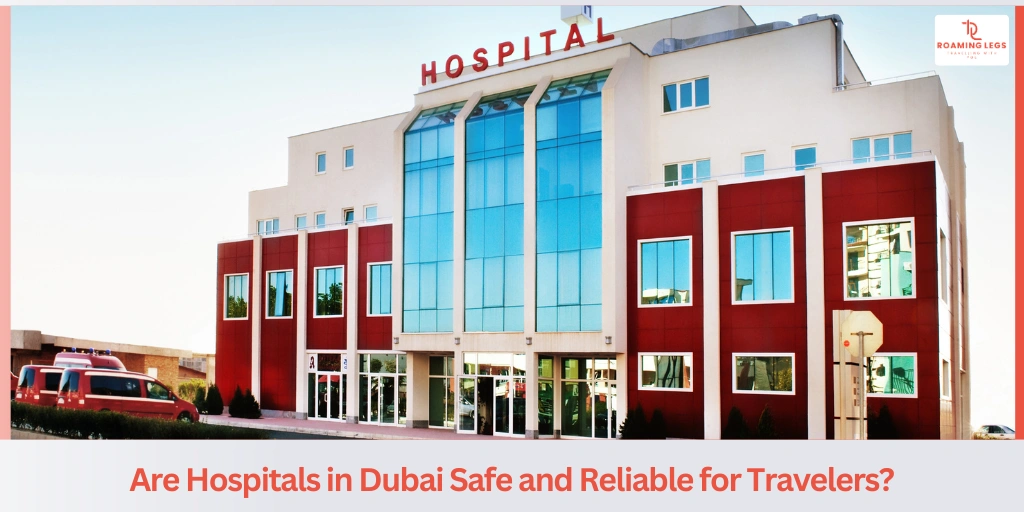
Dubai is genuinely one of the safest cities in the world for a tourist who falls sick.
The hospitals are modern, the pharmacies are everywhere, the staff speak English, and the ambulance system actually works.
But — and this is important — none of it is free.
If you land without travel insurance and something goes wrong, you could be looking at a bill of ₹50,000 to ₹5,00,000 depending on what happened.
So before anything else: get travel insurance.
It costs ₹500–₹2,000 for a short Dubai trip and it removes every financial worry we’re about to discuss.
If you already have it, great — read on for everything else you need to know.
Dubai’s Healthcare System — What’s Actually Available for Tourists
Dubai has over 4,000 licensed healthcare facilities.
The entire system is regulated by the Dubai Health Authority (DHA), which means every hospital, clinic, and pharmacy you walk into meets a specific standard.
You’re not going to accidentally end up at some unqualified facility.
There are two types of hospitals here:
Government hospitals — run by the Dubai Health Authority, these exist primarily for UAE residents and nationals.
They’re cheaper, but as a tourist you’ll face longer wait times, more paperwork, and a less smooth experience.
Emergency treatment is available to everyone, but for routine care, these aren’t your best option.
Private hospitals — this is where tourists should go.
Faster, cleaner, better patient experience, English-speaking doctors everywhere.
Yes, they cost more. But they’re designed for exactly the kind of international patient you are.
Several of Dubai’s private hospitals hold JCI (Joint Commission International) accreditation — the global gold standard for patient safety.
Over 40 facilities in Dubai carry this, making it one of the most accredited cities in the world.
You’re not going somewhere substandard.
Which Hospital Should You Go to in Dubai?
The answer depends on where in Dubai you are and what you need.
Here are the ones that actually matter for tourists:
American Hospital Dubai (Oud Metha) — The first hospital in the Middle East to receive JCI accreditation. Considered the benchmark for quality in Dubai.
Strong emergency department, specialist consultations, and an international patient services team.
Go here for anything beyond a mild issue.
Mediclinic City Hospital (Dubai Healthcare City) — Located in a dedicated free zone built entirely around healthcare.
Known for oncology, cardiology, and complex cases. Also happens to have one of the most multilingual environments in Dubai — services available in Arabic, English, Urdu, Hindi, Russian, French, and German.
Great for Indian travelers who feel more comfortable communicating in Hindi or Urdu.
Rashid Hospital (Umm Hurair) — A government hospital, but the top one for emergencies and trauma.
If you’re in a serious accident, this is where Dubai’s ambulances take you.
24/7 trauma center, world-class emergency medicine.
Saudi German Hospital (Al Barsha) — One of the largest private hospitals in Dubai.
Good for neurosurgery, cardiac care, and orthopedics.
Has extensive medical tourism packages. Strong ICU facilities.
Al Zahra Hospital (Sheikh Zayed Road) — Boutique feel, premium care, very popular with tourists and expats.
Located centrally on Sheikh Zayed Road, which means it’s accessible from most tourist areas.
Known for high clinical outcomes without the impersonal scale of a large hospital.
Aster Clinics (Multiple Locations) — Part of Aster DM Healthcare.
They have locations across the city — Dubai Marina, JBR, Deira, Business Bay.
These are where you go for minor illness, fever, stomach problems, or anything that doesn’t need a full hospital.
Walk-ins usually accepted. Much cheaper than a full hospital.
King’s College Hospital London (Dubai Hills) — Yes, the actual King’s College Hospital has a branch here.
British-trained doctors, UK healthcare culture.
Popular with tourists from the UK and anyone who prefers that system.
What You'll Actually Pay: Real Costs in AED and INR
| Treatment Type | Cost in AED | Approx. Cost in INR |
|---|---|---|
| GP consultation (clinic) | AED 250–500 | ₹5,700–₹11,500 |
| Specialist consultation | AED 500–1,200 | ₹11,500–₹27,500 |
| Emergency room visit (basic) | AED 500–1,500 | ₹11,500–₹34,500 |
| Blood test panel | AED 300–600 | ₹6,900–₹13,800 |
| MRI scan | AED 1,500–3,000 | ₹34,500–₹69,000 |
| Hospital admission (per night) | AED 2,000–6,000+ | ₹46,000–₹1,38,000+ |
| Ambulance service | AED 600+ | ₹13,800+ |
GP consultation (clinic)
Specialist consultation
Emergency room visit (basic)
Blood test panel
MRI scan
Hospital admission (per night)
Ambulance service
Get Your Free Dubai Trip Safety Checklist on WhatsApp
We send this checklist to every Indian traveller heading to Dubai because a little preparation can make a huge difference. It includes emergency contact numbers, travel insurance tips, medicines to carry, guidance on what to do in common medical situations, and a hospital map organised by area. It takes just 2 minutes to request and has helped many travellers avoid unnecessary stress during their trip.
Emergency Contacts
Keep essential emergency numbers and local assistance details readily available.
Health & Insurance
Receive practical travel insurance guidance and a recommended medicines checklist.
Hospital Map
Know where to find hospitals and medical facilities across Dubai before you need them.
Free in 2 Minutes
Your personalised Dubai safety checklist is delivered to WhatsApp quickly and completely free.

What to Do If You Have a Medical Emergency in Dubai
Keep it simple in your head.
Three steps:
Step 1: Call 998 This is Dubai’s ambulance number.
It works 24/7.
When you call, speak clearly, give your hotel name or the nearest landmark (not just the street address — Dubai’s street naming can confuse even residents).
Stay calm and stay on the line.
Step 2: Head to the nearest hospital ER if it’s faster If you can get yourself to a hospital faster than waiting for an ambulance — in cases like a broken bone or high fever — take a taxi or Uber and go directly to the emergency department.
Tell the front desk it’s urgent.
Dubai’s private hospital ERs are equipped and open 24/7.
Step 3: Call your travel insurance helpline Do this as soon as you’re stable.
Your insurer can authorize treatment at a specific hospital, which means they pay directly instead of you paying upfront.
Keep your insurance policy number and the helpline number saved in your phone before you fly.
One thing most tourists miss: Many Dubai private hospitals will ask for upfront payment or a deposit even if you have international insurance — because they don’t always have direct billing agreements with all international insurers.
Your insurer’s helpline can clarify this and sometimes issue a guarantee of payment letter directly to the hospital.
Pharmacies in Dubai — What to Know
Dubai pharmacies are very well stocked. You’ll find common antibiotics, antihistamines, antacids, ORS packets, fever medication, and most over-the-counter products you’d find in India.
Major pharmacy chains to know:
- Aster Pharmacy — The most common one across Dubai.
- Found inside malls, near clinics, and in residential areas.
- Several are 24/7.
- Boots Dubai — British pharmacy chain with great quality standards.
- Multiple locations.
- BinSina Pharmacy — Well-established chain, widely available across the city.
For Indian tourists specifically: Common medicines like Dolo 650, ORS, and basic antibiotics are usually available, but bring your own prescription copies from India for any ongoing medication.
Pharmacists in Dubai cannot dispense controlled or prescription-only medicines without a UAE-licensed doctor’s prescription — even if you show them an Indian prescription.
What you can get without a prescription: Paracetamol, antihistamines, antacids, cough syrup, rehydration salts, antiseptic creams, allergy medication.
For anything stronger, you’ll need to see a doctor first.
Got a Minor Issue? Skip the Hospital
One mistake Indian tourists make is going straight to a hospital ER for things that don’t need it — a mild fever, a stomach bug, a rash.
ERs in Dubai’s private hospitals are expensive.
A minor issue consultation at an Aster Clinic or a walk-in clinic near your hotel will cost AED 250–400 and take 30–45 minutes.
The same issue at a hospital ER could cost AED 800–1,500 just for the visit.
For anything genuinely minor — mild cold, loose motions, a small cut — head to the nearest clinic.
For anything that feels serious — chest pain, difficulty breathing, high fever that isn’t breaking, suspected fracture, severe allergic reaction — go straight to a hospital or call 998.
Hotel doctor services are another option.
Companies like EWHC (Emirates Wings Home Care) will send a DHA-licensed doctor to your hotel room across Dubai — Downtown, Marina, JBR, Deira, Business Bay — within 30–60 minutes.
It’s more expensive than a clinic visit but cheaper than an ER, and infinitely more comfortable when you’re genuinely feeling terrible.
Planning Your Dubai Trip? Let Us Take Care of Everything Before You Fly
Every year, hundreds of Indian families, couples, and first-time travellers trust us to plan their Dubai holidays. Before you travel, we help you organise your travel insurance, recommend the medicines to carry, share hospital information by area, provide emergency contact details, and help you prepare for a smooth journey. Simply send us your travel dates on WhatsApp, and we will create a personalised Dubai trip plan within 24 hours. There is no cost, no obligation, just practical advice from experienced travel specialists.
Travel Protection
Receive guidance on choosing suitable travel insurance and preparing for unexpected situations.
Health Preparedness
Get a recommended medicines checklist along with useful medical and safety information.
Hospitals & Emergency Help
Access hospital locations by area and important emergency contacts before your trip begins.
Personalised Trip Plan
Your Dubai travel plan is tailored to your dates and delivered on WhatsApp within 24 hours.

What Real Travelers Say
“We were in Dubai Marina when my husband had a bad allergic reaction.
We had no idea where to go.
I remembered seeing the Aster Clinic near The Walk.
We were in and out in 45 minutes with medication and it cost us around AED 350.
The doctor spoke perfect English and was genuinely good.
Carry your insurance details — it all worked out fine.” — manshi d., Mumbai — traveled December 2025
“My daughter had a fever on day two of our Dubai trip.
The hotel helped us call a doctor to the room.
He came within the hour, checked her properly, gave her the right medicine, and we were back to normal by the next morning.
Worth every dirham.
Please don’t skip travel insurance — we had it and it covered everything.
“ — mahesh p., Bangalore — traveled January 2026
FAQ — Healthcare in Dubai for Indian Tourists
1. Can Indian tourists visit hospitals without insurance?
Yes. You can visit private hospitals and pay upfront if needed.
2. Emergency numbers?
998 for ambulance, 999 for police, 800 DUBAI for information.
3. Do hospitals accept Indian insurance?
Some do through partner networks while others require reimbursement.
4. Doctor visit cost?
Private GP visits generally cost AED 250–500.
5. 24-hour pharmacies?
Yes, including many Aster Pharmacy locations.
6. Medicines to carry?
Carry basic medicines and personal prescriptions.
7. Prescription medicines?
Keep them in original packaging and check UAE rules.
8. Hotel doctor service?
Yes, in-room doctor services are available.
9. Best hospital areas?
Downtown, Marina, Deira and Palm have excellent hospitals.
10. Dental care?
Yes, tourist-friendly clinics are widely available.
11. Run out of medicine?
Visit a licensed clinic for a UAE prescription.
12. Need passport?
Yes, carry your passport or a copy plus insurance details.
13. Insurance after arrival?
Usually better to buy before departure.
14. Are ambulances free?
No, tourists are generally charged.
15. Hospitalized and trip extended?
Contact your insurer immediately and inform the Indian Consulate if needed.
Travel Insurance for Your Dubai Trip — Here’s What Indian Travelers Should Actually Know Before Buying
So you’re going to Dubai.
Flights are booked, hotel is sorted, and someone just told you to “get travel insurance.”
Now you’re wondering — do I actually need it? Is it even mandatory?
And if I do buy it, which plan makes sense?
Here’s the short answer: travel insurance is not strictly mandatory for a standard 30-day or 60-day Dubai tourist visa for Indian citizens.
But — and this is important — medical treatment in Dubai is genuinely expensive, and if something goes wrong without insurance, you’re paying out of pocket in AED.
That adds up fast.
This guide covers what’s actually required, what’s recommended, how much it costs in INR, which plans Indian travelers are buying, and what to check before you hit purchase.
Is Travel Insurance Mandatory for Dubai Visa from India?
This is the question everyone types into Google, and the answer depends on which visa you’re applying for.
For a 30-day or 60-day tourist visa: Travel insurance is not compulsory as of 2026.
You can get the visa without it.
That said, many visa agents, tour operators, and airlines will ask for it — especially if you’re applying through a travel agency rather than directly through Emirates or flydubai.
For the 5-year multiple-entry UAE tourist visa: Travel insurance is mandatory.
You must show proof of a valid health insurance policy to get this visa processed.
No exceptions.
Bottom line: If you’re going for a regular holiday — 5 to 14 days — you’re not legally required to carry insurance.
But skipping it is a risk that most experienced travelers won’t take.
A single night in a Dubai hospital for something routine (food poisoning, a sprained ankle, dehydration from the heat) can cost ₹50,000–₹2,00,000.
That’s not an exaggeration.
What Does Dubai Travel Insurance Actually Cover?
Before you compare plans, it helps to know what you are comparing. Most travel insurance policies for Dubai sold in India cover these things:
| Coverage Type | What It Means |
|---|---|
| Emergency Medical Treatment | Hospital visits, doctor consultations, medicines, surgery if needed |
| Hospitalization | Inpatient treatment costs covered up to policy limit |
| Trip Cancellation | Refund if you cancel for covered reasons (illness, death in family) |
| Trip Interruption | Costs if you have to cut your trip short and come home early |
| Lost / Delayed Baggage | Compensation if airline loses your bags or they arrive late |
| Flight Delays | Reimbursement for meals and accommodation during long delays |
| Passport Loss | Help replacing a lost passport while you are abroad |
| Emergency Evacuation | Medically necessary transport back to India in serious cases |
| Personal Liability | Coverage if you accidentally cause damage or injury to someone else |
Hospital visits, doctor consultations, medicines, surgery if needed
Inpatient treatment costs covered up to policy limit
Refund if you cancel for covered reasons such as illness or death in family
Costs if you need to cut your trip short and return home early
Compensation if airline loses your bags or they arrive late
Reimbursement for meals and accommodation during long delays
Help replacing a lost passport while abroad
Medically necessary transport back to India in serious cases
Coverage if you accidentally cause damage or injury to someone else
Not Sure Which Travel Insurance Plan Is Right for Your Dubai Trip?
Many Indian travelers either pay for coverage they do not need or miss important protection for activities like desert safaris and specific health requirements. Share your travel dates, group size, and planned activities. We will help you understand what coverage to look for before you buy.
How Much Does Travel Insurance for Dubai Cost from India?
This is where the good news is. Travel insurance from India to Dubai is genuinely affordable. Here’s what real plans look like in 2026:
| Insurance Provider | Plan Type | Coverage | Approx. Cost (7-day trip) |
|---|---|---|---|
| Tata AIG | Travel Guard Silver | USD 50,000 medical | ₹450–₹600 |
| Go Digit | International Travel | USD 50,000 medical | Starting ₹395 |
| HDFC ERGO | Explorer Platinum | USD 50,000 medical | ₹600–₹900 |
| Niva Bupa | Travel Pulse | USD 2,00,000 medical | ₹800–₹1,200 |
| Bajaj Allianz | Travel Companion | USD 1,00,000 medical | ₹700–₹1,000 |
| PolicyBazaar | Compared plans | Various | From ₹20/day |
| ACKO | Online plan | Various | From ₹45/day |
Travel Guard Silver
CoverageUSD 50,000 medical
Approx. Cost₹450–₹600
International Travel
CoverageUSD 50,000 medical
Approx. CostStarting ₹395
Explorer Platinum
CoverageUSD 50,000 medical
Approx. Cost₹600–₹900
Travel Pulse
CoverageUSD 2,00,000 medical
Approx. Cost₹800–₹1,200
Travel Companion
CoverageUSD 1,00,000 medical
Approx. Cost₹700–₹1,000
Compared plans
CoverageVarious
Approx. CostFrom ₹20/day
Online plan
CoverageVarious
Approx. CostFrom ₹45/day
A realistic budget: For a solo traveler on a 7-day Dubai trip, expect to pay ₹400–₹900 for a solid plan with ₹50,000–₹1,00,000 USD medical coverage.
For a family of four, ₹2,000–₹4,000 covers everyone comfortably.
That’s roughly the cost of one meal in Dubai.
What coverage limit should you choose? Most travel experts recommend a minimum of USD 1,00,000 (roughly ₹83 lakh) for emergency medical — especially for families with children or senior travelers.
The UAE has world-class hospitals but bills to match.
USD 50,000 is the minimum most will consider; USD 1,00,000 is the safer choice.
Which Travel Insurance Plan Is Best for Dubai from India?
There’s no single “best” plan — it depends on who’s traveling.
Here’s a practical breakdown:
Best for solo young travelers (under 35): Go Digit or Tata AIG’s Silver plan.
Affordable, solid medical coverage, covers trip cancellations.
Starting around ₹395–₹500 for a week.
Best for families with kids: Niva Bupa’s Travel Pulse or HDFC ERGO’s Travel Xpress.
Family floater plans give better value than buying individually.
Look for child-specific coverage like unaccompanied minor assistance.
Best for senior travelers (60+): Bajaj Allianz’s Travel Companion or Niva Bupa’s senior-specific plans.
Pre-existing condition coverage is crucial here — check the waiting period and coverage limits carefully.
Most standard plans exclude pre-existing conditions unless specifically mentioned.
Best for adventure activity coverage: Tata AIG Travel Guard with the adventure sports add-on, or any plan that explicitly lists desert safari/extreme sports in its schedule.
Read the policy wording — “adventure sports” is defined differently by each insurer.
Best for COVID-19 coverage: Most plans post-2023 include COVID-19 medical expenses and trip interruption if you test positive before departure.
Double-check this before buying, especially if you’re traveling during peak seasons when COVID protocols can still affect flights.
5 Things to Check Before Buying Dubai Travel Insurance
Most people skip this part and end up with a gap in coverage.
Don’t do that.
- Pre-existing conditions: If you have diabetes, hypertension, thyroid issues, or any condition — check whether the plan covers emergencies related to it. Many affordable plans don’t. Niva Bupa and HDFC ERGO have plans that include this, but usually at a higher premium.
- Adventure activity clause: If you’re doing a desert safari, parasailing, jet skiing, or the indoor ski slope at Mall of the Emirates — confirm these are covered. Some plans define “adventure sports” so broadly that even a simple camel ride gets excluded.
- Claim process: How do you file a claim from Dubai? Does the insurer have a 24/7 helpline? Tata AIG and Bajaj Allianz both have 24-hour international helplines. In an emergency, the last thing you want is to wait until Indian business hours to reach your insurer.
- Cashless vs reimbursement: A cashless policy means the hospital bills the insurer directly. A reimbursement policy means you pay first and claim later. For Dubai — where hospital bills run into hundreds of thousands of rupees — cashless is significantly better. Confirm your insurer has network hospitals in Dubai or offers direct billing.
- Coverage for trip cancellation pre-departure: If you need to cancel before you even leave India — due to illness, a family emergency, or work — does the policy cover non-refundable bookings? This is especially relevant if you’ve booked business class flights or a Burj Al Arab stay.
Going to Dubai With Family and Not Sure What Coverage You Need?
Family travel insurance decisions can get confusing, especially when travelling with children, elderly parents, or someone with a health condition. Share your trip details and we will help you understand the coverage that matters for your Dubai holiday.
When Should You Buy Travel Insurance for Dubai?
The best time to buy is immediately after booking your flights — not the day before departure.
Here’s why that matters: Most trip cancellation coverage only kicks in if you buy insurance before an incident occurs.
Say you book flights in January for a March trip, and in February you have a medical emergency that forces you to cancel.
If you bought insurance in January — you’re covered.
If you waited until March to buy it — you’re not.
Buying early also protects against:
- Airline bankruptcies or sudden route cancellations (rare but real)
- Natural disasters or travel advisories affecting your trip
- A COVID-positive result before departure
So: book flights → buy insurance the same week. Don’t delay.
Dubai Travel Insurance for Senior Citizens and Families: What’s Different
Dubai is actually very well-suited for senior travelers and families — the city is clean, transport is easy, and the weather (outside of summer) is mild.
But insurance requirements change depending on who’s traveling.
For senior travelers (60+): Standard plans often cap age at 70–75 for full coverage, and premium increases significantly after 60.
Go Digit and Niva Bupa have senior-specific plans.
Make sure to declare existing health conditions accurately — non-disclosure is the #1 reason claims get rejected.
For families: A floater policy covering all family members under one plan is usually 20–30% cheaper than buying individual plans.
Check if children under 5 are automatically included (many plans do this).
If your parents are coming along and they’re above 65, buy them a separate senior plan — don’t add them to a regular family floater.
What Happens If You Don’t Buy Travel Insurance for Dubai?
Nothing happens at immigration — they won’t stop you at the airport.
But if something goes wrong during the trip, here’s what you’re looking at:
A basic ER consultation at a private hospital in Dubai (Mediclinic, American Hospital, Aster) costs AED 500–1,500 just to walk in — that’s ₹11,000–₹33,000.
A one-night hospitalization can run AED 5,000–15,000 (₹1.1 lakh to ₹3.3 lakh).
A medical evacuation flight back to India, if needed, can cost AED 30,000–80,000 (₹65 lakh to ₹1.7 crore).
Compare that to ₹400–₹1,000 for a week of coverage.
It’s genuinely one of the best value decisions in travel.
Testimonials
Priya and Rahul Sharma, Mumbai — Dubai trip, November 2025 “We almost skipped travel insurance to save money.
Thank God we didn’t — Rahul had food poisoning on day two and needed IV treatment at Mediclinic City Hospital.
The entire bill came to AED 3,200.
Our Tata AIG policy covered everything.
The cashless process was smooth, and the 24/7 helpline helped us find the right hospital.”
Meena Agarwal, Pune — Dubai family trip, February 2026 “We were four adults including my in-laws (both above 65).
Roaming Legs helped us figure out separate senior plans for my in-laws and a family plan for us.
The total for all four was under ₹3,500 for 10 days. Absolutely worth it for the peace of mind.”
Frequently Asked Questions About Travel Insurance for Dubai
Everything Indian travelers need to know before choosing Dubai travel insurance.
Is travel insurance mandatory for Dubai visa from India?
For standard 30-day or 60-day UAE tourist visas, travel insurance is generally not mandatory for Indian citizens.
However, it is strongly recommended because medical expenses in Dubai can be very high. A single hospital visit can cost significantly more without insurance coverage.
How much does travel insurance for Dubai cost from India?
Dubai travel insurance plans can start from around ₹20 per day. Basic plans for short trips may cost a few hundred rupees, while comprehensive coverage depends on your age, medical coverage, and benefits selected.
Which travel insurance plan is best for Dubai from India?
Popular options include Tata AIG Travel Guard, HDFC ERGO Travel Insurance, Bajaj Allianz Travel Insurance, and senior-focused plans from providers offering additional health coverage.
The best choice depends on medical coverage, claim support, exclusions, and your travel requirements.
Does travel insurance cover desert safari and adventure activities?
Not always. Activities such as dune bashing, jet skiing, and parasailing may be excluded under adventure activity clauses.
Check the policy exclusions or purchase an adventure sports add-on if your Dubai itinerary includes these activities.
Does Dubai travel insurance cover COVID-19?
Many travel insurance plans available today include COVID-19 related medical coverage, but benefits differ between insurers.
Check whether your policy covers medical treatment, quarantine expenses, and trip cancellation before purchasing.
What is the minimum medical coverage required for Dubai travel insurance?
There is no fixed medical coverage requirement for most Dubai tourist visas.
Many travelers prefer at least USD 50,000 medical coverage. Seniors, families, and travelers with health concerns may consider higher coverage limits.
Can I buy travel insurance after booking my flight to Dubai?
Yes. You can purchase travel insurance anytime before departure.
Buying it soon after booking your trip gives you better protection because trip cancellation benefits may apply before your departure date.
Does travel insurance for Dubai cover pre-existing conditions?
Standard plans usually exclude pre-existing conditions unless specifically covered.
Always declare existing medical conditions honestly. Non-disclosure can create problems during claim processing.
What's the difference between cashless and reimbursement travel insurance?
Cashless insurance allows approved hospitals to coordinate directly with the insurer, reducing your upfront payment burden.
With reimbursement claims, you pay first and submit documents later. For Dubai, cashless support can be more convenient because healthcare costs are high.
Is travel insurance for Dubai different for families vs solo travelers?
Yes. Family floater plans may be more economical for parents and children traveling together.
Senior travelers should check age limits and medical coverage carefully because standard family plans may not provide enough protection for older travelers.
What documents do I need to buy travel insurance for Dubai from India?
Usually, you need passport details, travel dates, destination information, and basic personal details.
Some insurers may request additional health information for senior travelers or higher coverage plans.
Does travel insurance cover baggage lost by the airline on a Dubai flight?
Yes. Most comprehensive travel insurance plans include benefits for lost, delayed, or damaged baggage.
The exact compensation amount depends on your selected policy and coverage limits.
Should I get travel insurance even if I'm visiting Dubai for just 3–4 days?
Yes. Short trips can still face medical emergencies, flight delays, baggage issues, or unexpected cancellations.
Since short-duration plans are usually affordable, travel insurance is a practical safety measure even for quick Dubai visits.
SIM Card & Internet Costs in Dubai, Bali, and Vietnam — Exact Prices in INR, Best Providers, and What to Buy Before You Land
Every Indian traveler going to Dubai, Bali, or Vietnam asks some version of the same question right before landing: “Do I need a SIM card, or can I survive on hotel Wi-Fi?”
The honest answer is that hotel Wi-Fi is fine for lying in bed watching Netflix.
The moment you step outside — trying to book a Grab in Bali, navigate Old Quarter streets in Hanoi, or find the metro exit at Dubai Mall — you need mobile data.
And roaming on your Indian number will cost you more than the SIM card itself.
This article gives you the exact prices in INR, the right providers for each destination, and what the original article completely skipped: real rupee costs based on current exchange rates.
Dubai SIM Cards for Indian Travelers: Real Costs in INR
Dubai has two main telecom operators: e& (formerly Etisalat) and Du.
There’s also Virgin Mobile, which runs on Du’s network. Both e& and Du have 24-hour counters in the arrivals hall at Dubai International Airport (Terminal 1, 2, and 3), so you can get a SIM within 20 minutes of landing.
You’ll need your passport and UAE entry stamp for registration.
Both operators offer tourist-specific “Visitor Line” plans.
e& (Etisalat) Visitor Line Plans — Current Pricing
| Plan | Data | Validity | Price in AED | Price in INR (approx.) |
|---|---|---|---|---|
| Entry | 4 GB | 28 days | AED 46–49 | ₹1,200–₹1,280 |
| Popular | 20 GB | 28 days | AED 100–120 | ₹2,620–₹3,140 |
| Heavy | 40+ GB | 30 days | AED 190–220 | ₹4,980–₹5,760 |
| Unlimited | Unlimited | 7 days | AED 190 | ₹4,980 |
Entry
Data:
4 GB
Validity:
28 days
Price:
AED 46–49 (₹1,200–₹1,280 approx.)
Popular
Data:
20 GB
Validity:
28 days
Price:
AED 100–120 (₹2,620–₹3,140 approx.)
Heavy
Data:
40+ GB
Validity:
30 days
Price:
AED 190–220 (₹4,980–₹5,760 approx.)
Unlimited
Data:
Unlimited
Validity:
7 days
Price:
AED 190 (₹4,980 approx.)
(Exchange rate used: 1 AED ≈ ₹26.20, July 2026)

Du Tourist SIM Plans
Du’s entry plan starts at AED 49 (≈ ₹1,280) for 7 days with 30 minutes of calls.
Their more popular 20 GB/28-day plan runs AED 100–110 (≈ ₹2,620–₹2,880).
One thing to know before you buy at the airport: e& gives you a free SIM with 1 GB valid for 24 hours just for landing.
You can use that first, then decide on a paid plan.
Most travelers on a 5–7 day Dubai trip find the 20 GB/28-day plan from either e& or Du covers everything — Google Maps, Instagram, video calls home, and Careem bookings — without running out.
Should You Get a Dubai eSIM?
eSIMs for Dubai are available from Virgin Mobile (AED 143–150, ≈ ₹3,750–₹3,930 for 21 GB/7 days) and from global providers like Airalo or Holafly.
The convenience of activating before you fly is real, but the price per GB is noticeably higher than a physical Visitor Line SIM bought at the airport.
If you are on a quick 3–4 day Dubai trip and don’t want any airport hassle, the eSIM is worth the premium.
For a week or longer, buy the physical SIM on arrival.
Our recommendation for Indian travelers visiting Dubai: e& Visitor Line 20 GB/28-day at AED 100–120 (≈ ₹2,620–₹3,140).
Covers most trips completely, network quality is excellent (5G across all of Dubai), and the airport counter takes 10–15 minutes.
Planning a Dubai, Bali, or Vietnam Trip and Not Sure Where to Start?
International trip planning involves many small details before you fly — visa requirements, SIM cards, packing essentials, and bookings that need to be done early. We help Indian couples and families plan these trips every week.
Share your travel dates on WhatsApp and we will send you a destination-specific checklist covering visa, SIM setup, packing, and what to book in advance — completely free.
Bali SIM Cards for Indian Travelers: Real Costs in INR
Bali is where your money goes the furthest on mobile data.
The island has three main providers: Telkomsel, XL Axiata, and Indosat (IM3).
Telkomsel is Indonesia’s largest network and the one that actually works in places like Nusa Penida, Sidemen, and rural north Bali — not just in Seminyak and Kuta.
You’ll find SIM counters for all three operators right after clearing customs at Ngurah Rai International Airport (Denpasar).
A word of warning: airport prices are slightly inflated.
If you can wait until you reach your hotel area, buying at a Telkomsel GraPARI store or an Alfamart/Indomaret convenience store gives you better rates.
Telkomsel Tourist SIM Plans
| Plan | Data | Validity | Price in IDR | Price in INR (approx.) |
|---|---|---|---|---|
| Tourist SIM | 25 GB + 25 min calls | 30 days | IDR 150,000 | ₹840 |
| Basic data top-up | 10–15 GB | 15 days | IDR 70,000–100,000 | ₹390–₹560 |
| Extended top-up | 40 GB | 30 days | IDR 180,000–200,000 | ₹1,010–₹1,120 |
Tourist SIM
Data:
25 GB + 25 min calls
Validity:
30 days
Price:
IDR 150,000 (₹840 approx.)
Basic Data Top-Up
Data:
10–15 GB
Validity:
15 days
Price:
IDR 70,000–100,000 (₹390–₹560 approx.)
Extended Top-Up
Data:
40 GB
Validity:
30 days
Price:
IDR 180,000–200,000 (₹1,010–₹1,120 approx.)
(Exchange rate used: 1 IDR ≈ ₹0.0056, July 2026)
The Telkomsel Tourist SIM at IDR 150,000 (≈ ₹840) is genuinely one of the best value SIM cards available anywhere in Asia for the data amount you get. For context, the same ₹840 gets you barely 4 GB in Dubai.
XL Axiata — If You’re Staying Only in Tourist Areas
XL Axiata offers very large data bundles at low prices — sometimes 50 GB+ at similar or lower price points than Telkomsel. The trade-off is coverage.
If you are spending your entire trip in South Bali (Seminyak, Canggu, Ubud, Kuta), XL Axiata works fine.
If you are heading to Nusa Penida, Amed, or less-traveled east Bali, Telkomsel is the safer choice.
Bali eSIM Options
Airalo’s Indonesia eSIM starts at approximately $4.50 (≈ ₹375) for 1 GB/7 days — useful for a short trip — with larger plans scaling up from there. Holafly’s unlimited data Bali eSIM runs approximately $30–$45 (≈ ₹2,500–₹3,750) for 30 days.
For most Indian travelers visiting Bali for 5–10 nights, the Telkomsel physical Tourist SIM at ₹840 beats every eSIM option on price. Buy it at the airport or at a GraPARI store in Kuta or Seminyak.
Our recommendation for Indian travelers in Bali: Telkomsel Tourist SIM (25 GB/30 days, IDR 150,000 ≈ ₹840). Register with your passport at the counter. Works in Ubud, Nusa Penida, Uluwatu, Seminyak, and everywhere in between.
Vietnam SIM Cards for Indian Travelers: Real Costs in INR
Vietnam wins on price across the board.
The country has three main operators — Viettel, MobiFone, and VinaPhone — and all three have counters at Noi Bai Airport (Hanoi) and Tan Son Nhat Airport (Ho Chi Minh City). The airport staff speak enough English to handle setup in under 10 minutes.
Viettel is the network we recommend for Indian travelers.
It’s owned by Vietnam’s Ministry of Defence, holds over 50% of the mobile market, covers 95% of the country’s territory, and according to Opensignal’s 2025 network report, delivers the most consistent 4G/5G speeds across Vietnam.
If you are heading to Ha Giang, Sa Pa, Hoi An, or anywhere beyond the major cities, Viettel is the only operator that won’t drop signal on you.
Viettel Tourist SIM Plans
| Plan | Data | Validity | Price in VND | Price in INR (approx.) |
|---|---|---|---|---|
| Budget plan | 30 GB (1 GB/day) | 30 days | VND 60,000–100,000 | ₹220–₹360 |
| Standard plan | 60–90 GB | 30 days | VND 150,000–200,000 | ₹540–₹720 |
| Heavy use | 150 GB (5 GB/day) | 30 days | VND 200,000–250,000 | ₹720–₹900 |
Budget Plan
Data:
30 GB (1 GB/day)
Validity:
30 days
Price:
VND 60,000–100,000 (₹220–₹360 approx.)
Standard Plan
Data:
60–90 GB
Validity:
30 days
Price:
VND 150,000–200,000 (₹540–₹720 approx.)
Heavy Use
Data:
150 GB (5 GB/day)
Validity:
30 days
Price:
VND 200,000–250,000 (₹720–₹900 approx.)
(Exchange rate used: 1 VND ≈ ₹0.0036, July 2026)
To put this in perspective: a 150 GB Viettel plan in Vietnam costs less than ₹900. The same money buys you about 3 GB in Dubai.
At Noi Bai Airport in Hanoi, a Viettel plan with 30 GB (1 GB/day for 30 days) costs around VND 60,000–100,000 (≈ ₹220–₹360) at the airport counter.
Cheaper plans are available at city stores like The Gioi Di Dong (a well-known electronics chain across Vietnam), but the airport option is fast and hassle-free.
One practical note: Viettel’s data-only plans don’t include a Vietnamese phone number.
If you need a local number for Grab registration or OTP verification for Vietnamese bookings, ask specifically for a plan with a local number — MobiFone’s 199,000 VND tourist SIM (≈ ₹720) includes this.
Our recommendation for Indian travelers in Vietnam: Viettel tourist SIM (60–90 GB/30 days, VND 150,000–200,000 ≈ ₹540–₹720).
Buy at the airport counter, register with your passport, and you’ll be connected before you reach the taxi queue.

Heading to Bali, Dubai, or Vietnam Soon and Still Figuring Out the Plan?
Planning an international trip involves many decisions — choosing the right places, arranging hotels, timing activities, and making sure every detail fits your travel style. We have organized trips to Bali, Dubai, and Vietnam for hundreds of Indian couples and families.
Tell us your travel dates and number of travelers. We will map out your complete trip plan within 24 hours with the right route, recommendations, and next steps.
Side-by-Side Comparison: Dubai vs Bali vs Vietnam SIM Costs for Indian Travelers
This is the table the original article should have had — actual costs in rupees, not just "higher," "moderate," and "lowest."
| Factor | Dubai (e& Visitor Line) | Bali (Telkomsel) | Vietnam (Viettel) |
|---|---|---|---|
| Best plan for 7–10 days | 20 GB / 28 days | 25 GB / 30 days | 60–90 GB / 30 days |
| Cost in INR | ₹2,620–₹3,140 | ₹840 | ₹540–₹720 |
| Best network | e& (5G everywhere in Dubai) | Telkomsel (widest coverage) | Viettel (95% coverage) |
| eSIM available? | Yes (Virgin Mobile, AED 143+) | Yes (Airalo, XL Axiata) | Yes (Viettel, Airalo) |
| Buy at airport? | Yes (24-hour counter) | Yes (Ngurah Rai arrivals) | Yes (Noi Bai & Tan Son Nhat) |
| Data per ₹100 spent | ~0.6 GB | ~3 GB | ~10–12 GB |
Dubai (e& Visitor Line)
Best Plan:
20 GB / 28 days
Cost:
₹2,620–₹3,140
Network:
e& (5G everywhere in Dubai)
eSIM:
Yes (Virgin Mobile, AED 143+)
Airport Purchase:
Yes (24-hour counter)
Data Value:
~0.6 GB per ₹100 spent
Bali (Telkomsel)
Best Plan:
25 GB / 30 days
Cost:
₹840
Network:
Telkomsel (widest coverage)
eSIM:
Yes (Airalo, XL Axiata)
Airport Purchase:
Yes (Ngurah Rai arrivals)
Data Value:
~3 GB per ₹100 spent
Vietnam (Viettel)
Best Plan:
60–90 GB / 30 days
Cost:
₹540–₹720
Network:
Viettel (95% coverage)
eSIM:
Yes (Viettel, Airalo)
Airport Purchase:
Yes (Noi Bai & Tan Son Nhat)
Data Value:
~10–12 GB per ₹100 spent
Physical SIM vs eSIM: Which One Actually Makes Sense for Indian Travelers?
The eSIM question comes up a lot, and the honest answer depends on your phone and your situation.
Physical SIM is better when:
- You want the cheapest possible option (local tourist SIMs always beat eSIM providers on price)
- You’re okay spending 10–15 minutes at the airport counter
- You don’t mind carrying a second SIM (dual-SIM phones make this easy — keep your Indian number active in Slot 2)
eSIM is better when:
- You want to activate before you land (zero airport queue time)
- You are visiting multiple countries on one trip and want a regional plan
- Your phone is eSIM-compatible (most iPhones from XR onwards, Samsung Galaxy S20+ series, newer Pixel phones)
For Indian travelers: most of us use dual-SIM phones, which means physical SIMs are the practical choice. You keep your Jio/Airtel number active in one slot and use the tourist SIM in the other. No number porting, no missing calls from home.
One thing most guides skip: If you are visiting all three destinations — Dubai, then Bali, then Vietnam (or any combination) — some global eSIM providers like Airalo and Holafly offer regional Asia plans covering multiple countries.
These are more expensive per GB but eliminate the need to buy a new SIM at every airport.
Worth it if your time at each destination is short (3–4 days).
What Indian Travelers Tell Us About Internet on Their Trips
Vikram and Ananya from Bengaluru, Dubai trip, March 2026: “We bought the e& 20 GB plan at the airport and it lasted our entire 6-day trip with data to spare.
The 5G speeds in Dubai are insane — we were doing video calls from the Palm Jumeirah and it felt like broadband.”
Rohit and Priya from Mumbai, Bali trip, January 2026: “Bought Telkomsel at the Denpasar airport.
₹840 for 25 GB, and we used it every day for 8 nights — Grab bookings, Google Maps in Ubud, Instagram reels by the pool.
Never ran out. Best mobile data value we’ve ever seen abroad.”
Frequently Asked Questions About Tourist SIM Cards in Dubai, Bali & Vietnam
What is the cheapest SIM card for Indian tourists in Dubai, Bali, and Vietnam?
Vietnam is the cheapest by a significant margin. A Viettel tourist SIM with 60–90 GB data valid for 30 days costs ₹540–₹720 at Vietnamese airports. Bali's Telkomsel Tourist SIM gives 25 GB for 30 days at approximately ₹840. Dubai is the most expensive — e& and Du Visitor Line plans with 20 GB run ₹2,620–₹3,140. If cost per gigabyte matters, Vietnam gives 10–12 GB per ₹100 spent, versus 0.6 GB per ₹100 in Dubai.
Do I need a SIM card in Dubai or is hotel Wi-Fi enough?
Hotel Wi-Fi is fine inside the hotel, but the moment you're outside — booking Careem rides, navigating Dubai Metro, finding restaurants on Google Maps, or posting to Instagram in real time — you'll want mobile data. Roaming on Indian numbers in Dubai can cost ₹5–₹20 per MB depending on your Jio or Airtel plan, which adds up quickly. An e& or Du tourist SIM for ₹1,280–₹3,140 covers an entire trip and is far cheaper than roaming.
Which SIM card should Indian travelers buy in Bali?
Telkomsel is the best choice for most Indian travelers in Bali. It is Indonesia's largest network and covers places including Ubud, Seminyak, Canggu, Uluwatu, Nusa Penida, and Amed. The Telkomsel Tourist SIM at IDR 150,000 (approximately ₹840) gives 25 GB valid for 30 days. Buy it at Ngurah Rai Airport arrivals hall or at a Telkomsel GraPARI store in Seminyak or Kuta.
What is the best SIM card in Vietnam for Indian tourists?
Viettel is the clear recommendation. It covers around 95% of Vietnam's territory, including remote areas like Ha Giang, Sa Pa, and the Mekong Delta. Plans with 60–90 GB data valid for 30 days cost VND 150,000–200,000 (approximately ₹540–₹720). Buy at airport counters at Noi Bai Airport in Hanoi or Tan Son Nhat Airport in Ho Chi Minh City.
Can I use an eSIM in Dubai, Bali, and Vietnam?
Yes, all three destinations support eSIMs. Dubai has Virgin Mobile eSIM options, Bali has Airalo Indonesia and XL Axiata eSIM options, and Vietnam has Viettel and Airalo eSIM plans. Physical local SIMs are cheaper, but eSIMs offer the convenience of activating before landing.
Should I buy a local SIM at the airport or wait for a city store?
Airport prices are usually 10–20% higher than city stores in Bali and Vietnam. In Dubai, airport pricing is comparable to city stores. For Bali, buying at a GraPARI store can save a little money. For Vietnam, airport counters are fast and affordable, especially after a long flight.
Will my Indian dual-SIM phone work with tourist SIMs in these countries?
Yes. Most Indian Android phones including Realme, OnePlus, Samsung, Xiaomi, and Vivo are dual-SIM and unlocked by default. You can keep your Jio or Airtel number active for OTPs while using the tourist SIM for mobile data. iPhones purchased in India are also generally unlocked.
How much data does a typical tourist need for a 7-day trip?
Most travelers on a 7-day trip use 5–12 GB depending on habits. Frequent Instagram Stories and Reels, WhatsApp video calls, Google Maps navigation, and booking apps like Grab or Careem collectively use around 1–1.5 GB per day. If you are streaming Netflix or YouTube daily, add another 1–2 GB per day. A 20–25 GB plan comfortably covers a week for most people.
Can I use roaming instead of buying a local SIM card in Dubai, Bali, or Vietnam?
Technically yes, but it is expensive. Jio's international roaming packs for Dubai start around ₹2,299 for 3 GB / 10 days. Airtel's Dubai roaming starts around ₹2,999 for 1.5 GB / 7 days. Both are significantly worse value than buying a local SIM. Roaming only makes sense for very short layovers where buying a local SIM is inconvenient.
Is internet connectivity reliable in tourist areas of Bali and Vietnam?
Yes, in tourist areas it is reliable. In Bali, Telkomsel provides strong coverage in Seminyak, Ubud, Canggu, Kuta, Uluwatu, and Nusa Dua. In Vietnam, Viettel covers major cities and popular routes including Hanoi, Ha Long Bay, Hoi An, Da Nang, and Ho Chi Minh City. Remote mountain areas can have weaker coverage.
Is there free public Wi-Fi in Dubai, Bali, and Vietnam?
Dubai has free Wi-Fi in malls, metro stations, and selected public areas. Bali and Vietnam offer free Wi-Fi at many cafes and restaurants. However, public Wi-Fi is not reliable enough to replace a SIM card. It works best as a backup for checking emails or basic browsing.
Which destination has the fastest mobile internet?
Dubai has the fastest mobile internet experience among the three destinations, with widespread 5G coverage from e& and Du. Vietnam's Viettel 5G network has expanded rapidly in urban areas, while Bali's Telkomsel provides reliable 4G coverage in tourist locations. For regular travel needs like maps, messaging, and social media, all three destinations provide a smooth experience.
Can I use a regional eSIM for Dubai, Bali, and Vietnam together?
Yes. Providers like Airalo and Holafly offer regional Asia eSIM plans covering multiple Southeast Asian destinations including Indonesia and Vietnam. Dubai usually requires a separate Middle East or global plan. If you are visiting all three destinations, compare regional plans with individual local SIM costs before purchasing.
Which SIM Card Should You Buy for Bali? Here’s What Actually Works in 2026
Let me just say this upfront — your Indian SIM will not save you in Bali.
If you keep Airtel or Jio turned on when you land, you will get a roaming bill that makes your trip feel more expensive than it needed to be.
Jio’s international roaming pack for Indonesia costs around ₹2,299 for 10 days with just 1GB of data per day.
Airtel plans are similar — roughly ₹230 per day, for data that runs out after an hour of Google Maps and a few Gojek bookings.
A local Bali SIM card gives you 20-25GB for the entire trip at about ₹840.
The math is very obvious.
And you genuinely need internet in Bali.
This is not like a Rajasthan trip where you can figure things out on foot.
In Bali, almost everything runs on apps — Grab and Gojek for rides, Klook for booking water sports, Google Maps for Seminyak’s narrow roads.
Without a working SIM, you are completely dependent on your hotel’s Wi-Fi.
So yes, get a local SIM.
Now let’s talk about which one to actually pick.
The 3 Networks That Matter in Bali
There are four telecom providers in Indonesia, but only three matter for tourists.
Telkomsel — The One Most Travelers Go With
Telkomsel is Indonesia’s largest network with around 48% market share, and it shows in Bali.
Coverage is solid whether you are at Ubud’s Campuhan Ridge, on the boat to Nusa Lembongan, or stuck in traffic near Seminyak.
More importantly, it is the only network that holds up reasonably well in trickier spots like Nusa Penida and Uluwatu’s cliffside paths.
Telkomsel Prices in Bali (2026)
Quick comparison of the most common prepaid SIM options for visitors.
| Plan | Data | Validity | Airport Price (IDR) | Local Store (IDR) | Approx. INR |
|---|---|---|---|---|---|
| Tourist SIMPATI | 25GB + 25 min calls | 30 days | IDR 250,000–350,000 | IDR 150,000 | ₹840 |
| Starter Pack | 3GB + calls | 30 days | — | IDR 35,000 | ₹196 |
Tourist SIMPATI
Starter Pack
XL Axiata — Good Value in the Beach Towns
XL is cheaper than Telkomsel and works perfectly fine if your trip is mostly Canggu, Seminyak, Kuta, and Sanur.
Speeds in these areas are actually great — sometimes even faster than Telkomsel during off-peak hours.
One thing to watch: some XL plans look incredibly cheap but the data is split into quotas.
A plan advertised as “60GB for IDR 38,000” might mean 5GB at full speed, 20GB at reduced speed, and 35GB valid only for certain apps.
Always ask which portion is freely usable before buying.
Price at airport: IDR 60,000–100,000 (₹335–₹560) for 10–15GB
Local stores: IDR 38,000–60,000 depending on the plan
Best for: Budget travelers staying in southern beach towns and not planning any island hops.
Indosat IM3 — The Budget Option (With Limits)
IM3 is the cheapest of the three.
Starter packs cost around IDR 35,000 (₹196) for 3–5GB.
They also have “Travel On” plans for tourists.
The downside is real — IM3 is fine in Kuta and Seminyak but gets patchy in Ubud, unreliable in rural areas, and genuinely poor on Nusa Penida. Coverage drops off sharply the moment you leave the main tourist corridors.
Best for: Only if your budget is very tight and you are staying in busy tourist areas the whole trip.
Where to Buy a SIM Card in Bali
At the Airport
Ngurah Rai International Airport (DPS) has SIM card counters right after you exit customs — Telkomsel, XL, and IM3 all have kiosks there.
Staff can activate your SIM in 10–15 minutes. You will need your passport — this is legally required under Indonesian law for all SIM registrations.
Airport is convenient. It is also where most tourists get overcharged.
A Telkomsel tourist pack that costs IDR 150,000 in a local store often gets quoted at IDR 300,000–350,000 at the airport.
Always ask for the price before they touch your phone. If it sounds too high, tell them you will get one in town.
Local Stores in Bali
Better value options:
- Telkomsel GraPARI stores in Kuta, Denpasar, or Ubud
- Indomaret or Alfamart convenience stores (these are everywhere in Bali — think of them like our D-Mart)
- Official XL stores in Seminyak and Canggu
The same Telkomsel 25GB tourist SIM costs around IDR 150,000 (₹840) at these stores.
Same SIM at the airport? IDR 300,000+.
The trade-off is that you spend your first hour or two without data.
To handle that: download Google Maps offline for Bali before you fly, and save your hotel’s address on your phone before landing.
Download the Ultimate Bali Trip Planning Checklist for Indian Travellers
Avoid the last-minute rush before your flight. Our free checklist covers everything Indian travellers commonly forget, including Visa on Arrival preparation, SIM card options, currency exchange tips, essential travel apps, packing recommendations, and other practical tasks to complete before you land in Bali.
Arrival Ready
Visa, airport, and entry requirements in one checklist.
Travel Essentials
SIM cards, useful apps, and connectivity tips.
Packing Guide
Carry everything you need and avoid common oversights.
Free WhatsApp Checklist
Receive your complete Bali planning guide within 24 hours.
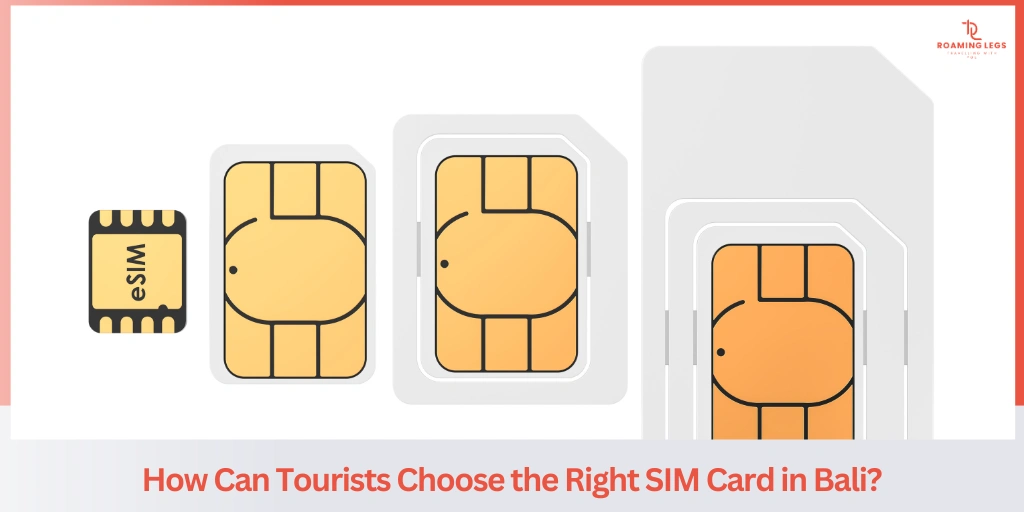
Physical SIM vs eSIM — Which One Makes Sense for You?
This is worth thinking about, especially if you have a newer phone. Most iPhones from iPhone 12 onwards, Samsung Galaxy S21 and above, and most OnePlus phones from 2022 support eSIM.
Here’s the honest comparison:
Physical SIM vs eSIM for Bali
Compare the two most common connectivity options for your Bali trip.
| Feature | Physical SIM | eSIM |
|---|---|---|
| Setup | Buy at airport or store | Activate online before landing |
| Cost | IDR 150,000–350,000 (₹840–₹1,960) | US$5–21 (₹420–₹1,760) |
| Connected on landing | No | Yes |
| Works on all phones | Yes | Only compatible phones |
| Local number for calls | Yes (some plans) | Data only (most plans) |
| Risk of losing card | Can lose the SIM | No physical card to lose |
Setup
Cost
Connected on landing
Works on all phones
Local number for calls
Risk of losing card
Best eSIM Options for Bali (2026)
The most important thing when choosing an eSIM is which Indonesian network it runs on. Some cheap eSIMs use Indosat or Smartfren — meaning the same patchy coverage problems as IM3.
You want Telkomsel or XL for Bali.
Best eSIM Providers for Bali
Popular digital SIM options for travelers visiting Indonesia.
| eSIM Provider | Network | Data | Cost (USD) | Approx. INR |
|---|---|---|---|---|
| Jetpac Indonesia | Telkomsel | 20GB | $21 | ₹1,760 |
| BaliEasy Telkomsel eSIM | Telkomsel | 21GB | $15 | ₹1,260 |
| Holafly Indonesia | Telkomsel | Unlimited | $19–$29 | ₹1,595–₹2,435 |
| Nomad Indonesia | Telkomsel | 10GB | ~$12 | ₹1,005 |
| Airalo Indonesia (Indotel) | Indosat | 10GB | ~$11 | ₹924 |
Jetpac Indonesia
BaliEasy Telkomsel eSIM
Holafly Indonesia
Nomad Indonesia
Airalo Indonesia (Indotel)
Not Sure Which SIM Card Is Best for Your Bali Itinerary?
Mobile coverage varies across Bali, especially in places like Nusa Penida and remote attractions. Tell us your travel dates, the places you plan to visit, and your group size on WhatsApp. We'll recommend the best SIM option for your route and help you build a practical day-by-day itinerary that minimizes travel time and keeps you connected throughout your trip.
Best SIM Choice
Choose the right network based on where you're actually travelling.
Smarter Itinerary
Plan each day to reduce unnecessary driving and backtracking.
Area-Specific Tips
Know where connectivity is limited before you arrive.
Free WhatsApp Planning
Get personalised SIM and itinerary advice from Bali travel experts.
The Nusa Penida Signal Problem (Read This Before Buying)
If your Bali trip includes Nusa Penida — Kelingking Beach, Diamond Beach, Angel’s Billabong — you need to know this before picking your SIM.
Nusa Penida has genuinely poor mobile coverage.
Not “a bit weak” — multiple dead zones at the most famous spots.
At Kelingking Beach viewpoint, Broken Beach, and along the west coast cliff roads, all three networks struggle once you are off the main roads.
Cliffs block the signal completely in many places.
Telkomsel holds on slightly longer than the others, but even Telkomsel goes dark at certain viewpoints.
XL and Indosat drop earlier and reconnect more slowly.
What this means practically for you:
- Download offline Google Maps for Nusa Penida before leaving the Bali mainland
- Screenshot your accommodation address and driver’s WhatsApp number
- Don’t count on live navigation while riding between spots on the west coast
- The east coast — Atuh Beach, Diamond Beach — has better signal than the west coast
This is not a reason to skip Nusa Penida.
It is just a reason to be prepared — and to choose Telkomsel over any cheaper alternative if the island is on your list.
Quick Things to Know Before You Buy
- Always ask the price before they touch your phone.
- Some airport kiosk staff will insert the SIM, activate it, and then quote a price much higher than the listed plan.
- Once it is in, people feel awkward about saying no.
- Your phone needs to be unlocked. Most Indian phones bought outright (from Amazon, Flipkart, or a retail store) are unlocked by default.
- But if you got your phone bundled with a carrier plan, check this before you leave.
- Hotspot sharing works on most plans. You can turn your Bali SIM into a hotspot and connect your travel partner’s phone, tablet, or laptop.
- Most Telkomsel and XL tourist plans allow this.
- Just confirm at the point of sale.
- Register the SIM properly. Indonesian law requires IMEI registration for all SIM cards.
- At official stores and airport counters, staff handle this for you using your passport.
- At small local shops, always ask them to complete the registration.
- An unregistered SIM can stop working after 24–48 hours.
FAQs About Bali SIM Cards for Indian Travelers
Frequently Asked Questions
Which SIM card is best for Bali tourists in 2026?
Telkomsel is the best overall choice. The Tourist SIMPATI card gives 25GB of data and 25 minutes of calls for around IDR 150,000 (₹840). It offers the strongest coverage across Ubud, Canggu, Seminyak, Uluwatu, Nusa Lembongan, and performs better than other networks on Nusa Penida.
Should I buy the SIM at Bali airport or in town?
Airport purchase is convenient but usually costs 30–40% more. Buy at the airport if you need data immediately. Otherwise, local GraPARI stores or Indomaret outlets offer better prices.
Does my Indian SIM work in Bali? Should I enable roaming?
Yes, but international roaming from Indian carriers is expensive. Switch off mobile data after landing and use a local SIM or eSIM instead.
Do I need my passport to buy a SIM card in Bali?
Yes. Indonesian regulations require passport registration. Official counters complete the process in about five minutes.
Is eSIM better than a physical SIM for Bali?
If your phone supports eSIM, it is very convenient because you arrive connected. Most eSIMs are data-only, while a Telkomsel physical SIM also offers voice services.
Which eSIM works best for Bali?
Jetpac Indonesia and BaliEasy Telkomsel eSIM are excellent choices because they use Telkomsel's network. Holafly is suitable for unlimited data users.
How much data do I need for a week in Bali?
Around 20GB is enough for most travelers. Families sharing a hotspot should consider 25–30GB.
Does the SIM card work on Nusa Penida?
Yes, although coverage varies. Telkomsel provides the strongest signal, but some western coastal attractions still experience weak reception.
Can I use hotspot on my Bali SIM?
Yes. Most Telkomsel and XL tourist plans support hotspot sharing, making them ideal for couples and families.
How much does a Bali SIM cost in Indian rupees?
A local Telkomsel tourist SIM with 25GB costs around ₹840. Airport prices are typically ₹1,400–₹1,960.
Can I use the same SIM for Lombok or the Gili Islands?
Yes. Indonesian SIM cards work nationwide. Telkomsel offers the most reliable coverage for island hopping.
Is 4G available in Bali?
Yes. Strong 4G coverage is available across major tourist destinations and is sufficient for maps, streaming, and video calls.
What apps should I download before landing in Bali?
Install Grab, Gojek, Google Maps (with offline maps), Klook, and your hotel's app before you travel.
SIM Card or eSIM in Dubai — Which One Should Indian Tourists Actually Buy?
Should You Get a SIM Card or an eSIM for Dubai?
For most Indian tourists on a trip under two weeks, an eSIM is the better choice — you activate it before you land, it’s usually cheaper than an airport SIM, and you skip the passport-copy queue at arrivals.
Go with a physical SIM only if your phone doesn’t support eSIM or you’re staying long enough that you’ll want a local number for hotel and driver calls.
Here’s what most guides about this topic skip entirely: the actual internet part is the easy decision.
The thing that catches Indian travelers off guard is that WhatsApp voice and video calls don’t work in the UAE — on any SIM, any eSIM, any WiFi.
That’s not a data or signal issue, and no amount of buying “more GB” fixes it.
We’ll get to exactly what does.
Dubai Connectivity at a Glance
| What You Need to Know | Details |
|---|---|
| Better default for most tourists | eSIM (7–10 GB, 7–14 days) |
| Typical eSIM cost | ₹1,500–₹4,500 depending on data and provider |
| Typical airport SIM cost | AED 49–149 (~₹1,100–₹3,400) for 3–10 GB |
| WhatsApp/FaceTime calls | Blocked on all UAE networks, messaging still works |
| Legal workaround | Licensed apps like BOTIM, not VPNs |
| eSIM-compatible phones | iPhone XS and newer, Galaxy S20 and newer, Pixel 3 and newer |
eSIM (7–10 GB, 7–14 days)
₹1,500–₹4,500 depending on data and provider
AED 49–149 (~₹1,100–₹3,400) for 3–10 GB
Calls are blocked on UAE networks, but messaging works.
Licensed apps like BOTIM instead of VPN services.
iPhone XS and newer, Galaxy S20 and newer, Pixel 3 and newer.
What’s the Real Difference Between a SIM Card and an eSIM in Dubai?
A physical SIM is the plastic card you’re used to — buy it, pop it into your phone, done.
An eSIM is a digital profile you install by scanning a QR code, and there’s no plastic involved at all.
In Dubai specifically, both Etisalat and du offer near-identical tourist packages on the physical side, so the provider doesn’t matter much — the format does.
The real difference that affects your trip: an eSIM lets you land already connected.
You install it at home over WiFi before you fly, it sits inactive, and the moment your phone finds a UAE tower, it switches on.
A physical SIM means queueing at a kiosk after a long flight, showing your passport, and waiting for activation — usually just a few minutes, but it’s a few minutes you don’t need if you’d rather just walk to immigration and get moving.
One thing worth knowing: eSIM only works if your phone actually supports it.
iPhone XS and later (except China-market iPhones), Samsung Galaxy S20 and later, and Google Pixel 3 and later generally do.
If you’re unsure, check your phone’s settings under “Mobile/Cellular Data” for an option to “Add eSIM” — if it’s not there, your phone doesn’t support it, and a physical SIM is your only option anyway.
How Much Does Dubai Internet Actually Cost for Tourists?
Real 2026 numbers, not vague ranges. Etisalat’s tourist packages run AED 49 for 3GB (28 days), AED 99 for 6GB, and AED 149 for 10GB — available as either physical SIM or eSIM at the same price.
Global eSIM providers often beat this: plans in the 5–10GB range for a week or two typically land between ₹1,500 and ₹4,500 depending on validity and provider, and some offer a small free trial before you pay anything.
The mistake most first-time visitors make is buying too much data.
Unless you’re planning to stream video constantly or working remotely, 5–8GB comfortably covers 5–7 days of maps, WhatsApp messaging, Instagram, and ride-hailing apps like Careem and Uber.
Save the bigger 15–20GB packs for trips over 10 days or if you know you’ll be doing video calls over data rather than hotel WiFi.
Download the Dubai Travel Essentials Checklist
Get everything you need before your Dubai trip in one simple checklist. It covers visa preparation, SIM setup, packing essentials, and calling-app workarounds so you are not searching for answers at the airport with a low phone battery.
Why Won’t WhatsApp Calls Work in Dubai — And What Actually Fixes It?
This is the part nearly every SIM-vs-eSIM article skips, and it’s the one thing that actually trips up Indian tourists.
Voice and video calling on WhatsApp, FaceTime, and Skype are blocked across every UAE telecom network — Etisalat, du, and any eSIM riding on their infrastructure — under rules enforced by the UAE’s Telecommunications and Digital Government Regulatory Authority.
It has nothing to do with your data plan or signal strength.
Messaging, photos, and voice notes on WhatsApp work completely normally; only the live call button fails.
The legal, no-hassle fix is BOTIM, a licensed calling app that costs roughly AED 50 a month (~₹1,150) and works over any data connection, including your tourist SIM or eSIM.
Download and set it up before you fly — trying to do it after landing without a working connection first is a chicken-and-egg problem.
Zoom and Google Meet also generally work fine for calls without needing a UAE number, if you’d rather not pay for BOTIM for a short trip.
One thing to be careful about: using a VPN specifically to force a WhatsApp call through is a different story from using a VPN for general browsing.
The UAE’s cybercrime law treats deliberate VoIP circumvention via VPN as an offense, with penalties that scale up for repeat or commercial use.
For a tourist making a personal call home, the practical risk is low, but there’s genuinely no need to take it — BOTIM does the same job legally and costs less than a Dubai coffee-shop breakfast for the month.
Which Should You Choose — SIM or eSIM?
Go with an eSIM if:
- Your phone supports it (check before you buy anything)
- Your trip is under two weeks
- You want to land already connected instead of queuing at a kiosk
- You’re comfortable managing the plan through an app rather than in person
Go with a physical SIM if:
- Your phone doesn’t support eSIM — this decides it instantly, no other factor matters
- You want a UAE phone number, for instance to receive OTPs for a local delivery app or hotel booking confirmations
- You’d rather have a person at a counter walk you through setup
Most Indian couples and families we’ve helped plan Dubai trips end up on an eSIM simply because their phones support it and the setup takes two minutes at home rather than fifteen at the airport after a long flight.
If you’re travelling with an older phone or a backup device that doesn’t support eSIM, a physical SIM from an Etisalat or du counter at Dubai International Airport is a completely reliable fallback — it just costs you a short queue on arrival.
Need Help Planning the Rest of Your Dubai Trip?
Beyond internet and connectivity, there are many small details to arrange before your Dubai holiday. Our team can help with visa guidance, flight options, and hotel recommendations so you do not have to manage multiple bookings just before your trip.
Common Mistakes Tourists Make With Dubai SIMs and eSIMs
Buying data before checking phone compatibility. Confirm your phone supports eSIM before purchasing one — a non-refundable eSIM plan on an incompatible phone is money down the drain.
Assuming WhatsApp calls will just work like at home. They won’t, on any network, any plan. Set up BOTIM or confirm Zoom/Google Meet access before you fly, not after.
Over-buying data “just in case.” Most 5–7 day trips need 5–8GB, not 20GB. Check your actual usage pattern — mostly maps and messaging uses far less than people assume.
Not saving the airport kiosk as backup. Even with an eSIM installed, it’s worth knowing Etisalat and du counters exist at Dubai International Airport in case something doesn’t activate properly on arrival.
One Traveller’s Experience
Rohan, Pune, travelled April 2026 — “Bought an eSIM before flying out and it connected the second we landed at DXB, which was honestly a relief after an overnight flight.
The one thing nobody told us beforehand was the WhatsApp call thing — my wife tried calling her parents and it just kept failing.
We downloaded BOTIM at the hotel WiFi and it worked instantly after that.”
Frequently Asked Questions
Is an eSIM better than a physical SIM for Dubai tourists?
For most trips under two weeks, yes. An eSIM activates before you land and is often cheaper than airport SIM packages. A physical SIM only makes sense if your phone does not support eSIM or you specifically want a UAE phone number for local OTPs and bookings.
Does WhatsApp work in Dubai in 2026?
Messaging, photos, and voice notes on WhatsApp work normally in Dubai. Only live voice and video calling are blocked on UAE networks and WiFi connections due to VoIP restrictions.
Can Indian tourists use WhatsApp calling in Dubai with a VPN?
Using a VPN specifically to bypass UAE VoIP restrictions can create legal concerns. Licensed apps like BOTIM provide a legal alternative for internet calling.
How much data does a tourist actually need for a week in Dubai?
5–8GB comfortably covers a 5–7 day trip with maps, WhatsApp messaging, social media, and ride-hailing apps like Careem or Uber.
Does every phone support eSIM?
No. Recent iPhones, Samsung Galaxy models, Google Pixel phones, and many newer flagship devices support eSIM. Check your phone settings before buying a plan.
Where can tourists buy a physical SIM card in Dubai?
Etisalat and du kiosks are available at Dubai International Airport arrivals, malls, and authorised retail stores. Passport verification is required for activation.
How much does an Etisalat tourist SIM cost?
Etisalat tourist packages include options such as 3GB, 6GB, and 10GB plans valid for 28 days. They are available as physical SIMs and eSIMs.
Is it cheaper to use my Indian SIM on international roaming instead?
Usually not. Local Dubai SIMs and eSIM plans are generally more affordable for data compared with Indian international roaming packages.
Can I keep my Indian number active while using a Dubai eSIM?
Yes. Dual-SIM and eSIM-compatible phones allow you to keep your Indian SIM active for calls and OTPs while using the Dubai eSIM for data.
Is FaceTime blocked in Dubai too?
Yes. FaceTime calling is restricted under the same VoIP limitations. Licensed alternatives like BOTIM, Zoom, and Google Meet can be used.
Do I need to activate my Dubai eSIM before I land?
You can install it before departure over WiFi. Keeping it ready means your phone connects quickly when you arrive in Dubai.
Is internet in Dubai fast for tourists?
Yes. Etisalat and du provide strong 5G coverage across Dubai, including malls, metro areas, and major tourist attractions.
Do I really need mobile data if my hotel has WiFi?
Mobile data is useful for navigation, ride-hailing, and staying connected while exploring outside your hotel.
What's the biggest mistake tourists make with Dubai connectivity?
Many travelers assume normal WhatsApp calling will work. Setting up a legal calling option before flying avoids problems later.
Which is the best all-round option for a 7-day Dubai trip?
An eSIM with around 5–8GB data activated before departure, combined with a legal calling app like BOTIM, is a practical setup for most tourists.
Which SIM Card Should You Buy for Vietnam? Real Prices, Best Networks, and Where to Get One
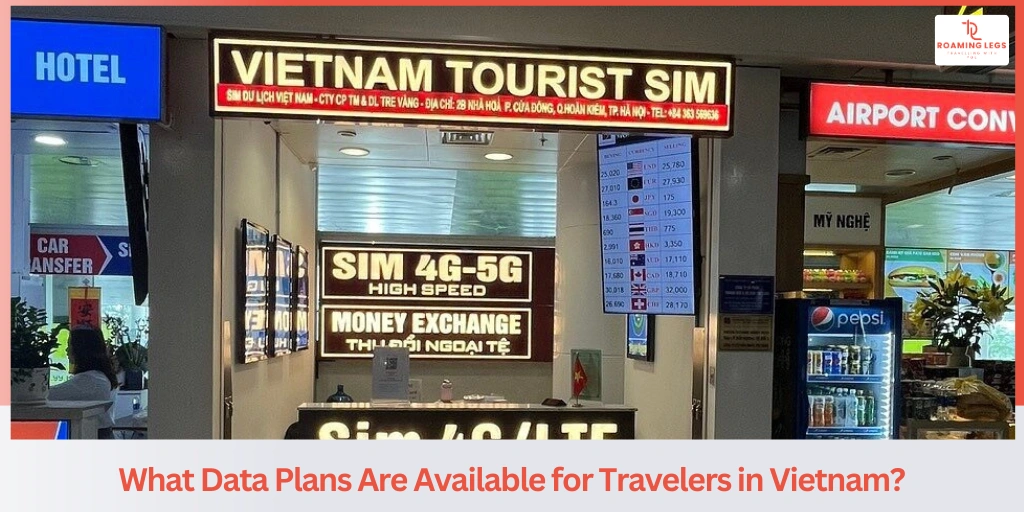
Which SIM card should you actually buy for Vietnam? For most Indian travelers, it’s a Viettel prepaid SIM — around ₹350–₹500 depending on where you buy it, giving you 4G data for 7 to 30 days across the whole country, including Sapa, Ha Giang, and Phu Quoc where other networks drop signal.
If you’re only staying in Hanoi and Ho Chi Minh City, Vinaphone or Mobifone work just as well and are sometimes cheaper.
That one-line answer is enough to get you connected.
But which plan, where to buy it, and whether an eSIM makes more sense for your specific trip — that’s what actually decides whether you’re stuck at the airport counter for 20 minutes or in a Grab within five.
We’ve set up SIM cards for hundreds of Indian travelers heading to Vietnam, and this guide covers what actually matters: real prices, real plan names, and the mistakes we see people make every single week.
Best SIM Card for Vietnam at a Glance
Compare the most popular SIM and eSIM options for travelers.
| Network | Best For | Typical Price | Data |
|---|---|---|---|
| Viettel | Widest coverage, remote areas | 200,000–300,000 VND (₹630–₹950) | Up to 5 GB/day |
| Vinaphone | City-only trips, bundled minutes | 90,000–260,000 VND (₹285–₹820) | 1.5–4 GB/day |
| Mobifone | Budget short trips, Hi Vietnam app | Free 8 GB (first 24 hrs), plans from 100,000 VND | Varies |
| Airalo eSIM (Xin Chao) | Pre-booking before you fly | US$9.50–US$32 (₹800–₹2,700) | 3–20 GB total |
Viettel
Vinaphone
Mobifone
Airalo eSIM (Xin Chao)
Why Bother With a Local SIM in the First Place
Honestly, the first thing that goes wrong for Indian travelers in Vietnam isn’t the food or the heat — it’s landing in Hanoi or Ho Chi Minh City with no working number and no way to call a Grab.
Vietnam’s airport taxi counters are notorious for overcharging tourists, and the easiest way to skip that entirely is opening the Grab app the second you clear immigration.
A local SIM is what makes Grab, Google Maps, Booking.com, and Google Translate actually work while you’re moving — not just at the hotel Wi-Fi.
And unlike a lot of destinations, Vietnam makes this genuinely cheap.
You’re looking at ₹300–₹900 for a plan that covers your entire trip, which is a rounding error next to what Indian roaming plans charge per day.
One thing most first-timers don’t realize: you need your original passport to buy a SIM in Vietnam.
It’s a legal requirement, not a formality — airport counters and city stores will scan it before activating anything.
Leave it in the hotel safe and you’ll be turned away.
Viettel: The One We Recommend for Most Trips
Viettel is government-linked and has invested the most in network infrastructure, which shows the moment you leave the big cities.
If your itinerary includes Sapa, Ha Giang Loop, Ninh Binh, or Phu Quoc along with Hanoi and Ho Chi Minh City, Viettel is the one that won’t drop out on you.
At Tan Son Nhat Airport in Ho Chi Minh City, Viettel runs two counters in the international arrivals hall — one on the left after customs (booth G.1.38/12) and one on the right (booth G.2.44/02).
The two plans most tourists actually buy are TOUR200 (200,000 VND, 5 GB/day for 7 days, includes calls) and TOUR300 (300,000 VND, 5 GB/day for 30 days).
Booking these online in advance usually knocks off 10–15% versus paying at the counter.
One thing most guides miss: buying at the airport costs roughly 20–30% more than the same SIM at a city Viettel store.
If you’re arriving in the evening and just need to get to your hotel, pay the airport premium — it’s ₹150–₹200 extra, not worth the stress of hunting for a store.
If you’re arriving mid-morning with time to spare, walk to a city outlet instead.
Vinaphone: Good for City-Only Trips With Bundled Calling
Vinaphone’s tourist SIM (often sold as the YOLO90 package) runs about 90,000 VND (~₹285) for 30 days with 1.5 GB of data per day — genuinely generous if you’re mostly using maps and messaging along the standard Hanoi–Da Nang–Ho Chi Minh City route.
It also bundles 50 minutes of international calling to India, the US, UK, and a handful of other countries, which regular data-only eSIMs don’t offer.
The catch: the SIM auto-deactivates after 15 days on the base plan and can’t be topped up or extended — you’d need to buy a fresh one if your trip runs longer.
Vinaphone counters are in arrivals at Noi Bai (Hanoi), Tan Son Nhat (Ho Chi Minh City), Da Nang, Cam Ranh (Nha Trang), and Phu Quoc, so it’s an easy pickup regardless of which city you land in.
A comparison worth knowing: if you’re doing a 4–5 day Hanoi-only trip and don’t plan to venture into Ha Giang or Sapa, Mobifone will save you money over Viettel with barely any difference in day-to-day usability.
If your trip includes any remote trekking region, skip it and go Viettel.
Get Our Free Vietnam Connectivity Checklist
Which SIM should you buy?
Which data plan offers the best value?
Which airport counter should you walk to after landing?
We will send you a simple, up-to-date checklist before your trip so you can get connected within minutes of arriving in Vietnam.
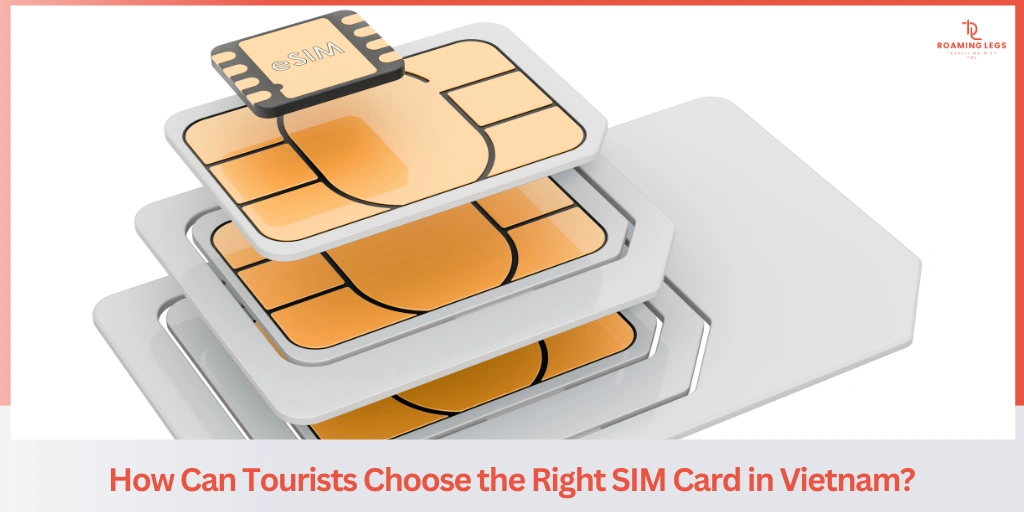
SIM Card or eSIM — Which One Actually Makes Sense for You
This is the question we get asked more than almost anything else while planning Vietnam trips.
Here’s the honest answer: an eSIM is worth it if your phone supports it (iPhone XS and later, Galaxy S20 and later, Pixel 3 and later) and you want data working the second you land, without hunting for a counter.
Airalo’s Vietnam eSIM (branded Xin Chao) runs on Viettel and Mobifone networks, with plans from $4.50 for 1 GB (7 days) up to $32 for 20 GB (30 days).
The trade-off most eSIM guides don’t mention clearly: the vast majority of Vietnam eSIMs are data-only, with no local phone number attached.
That’s fine for maps and Instagram, but Grab drivers frequently call passengers to confirm pickup points at busy spots like airports and train stations — and without a +84 number, that call simply won’t reach you. If you’re getting an eSIM, keep WhatsApp and the in-app chat function open as your backup for driver coordination.
A physical SIM from Vinaphone or Viettel, on the other hand, gives you a working local number from the moment it’s activated — useful not just for Grab but for hotel bookings, bank OTPs, and registering on Zalo, which locals use more than WhatsApp.
Our take: if you’re staying under a week and your phone supports eSIM, go digital and skip the counter queue entirely.
If you’re staying 10+ days, doing any remote travel, or want a proper local number for calls, get a physical Viettel SIM at the airport.
What a SIM Card Actually Costs: Cost Breakdown by Traveler Type
Choose the plan that best matches your travel style and data needs.
| Traveler Type | Cost for a 10–14 Day Trip | What You Get |
|---|---|---|
| Budget / short trip | ₹300–₹500 | Mobifone or basic Viettel SIM, 1–2 GB/day, city-focused use |
| Standard / most tourists | ₹600–₹950 | Viettel TOUR300 or Vinaphone bundle, 4–5 GB/day, works everywhere including remote regions |
| Heavy user / remote work | ₹1,500–₹2,700 | Airalo/Holafly unlimited eSIM or Viettel top-up, streaming and hotspot-friendly |
Budget / short trip
Standard / most tourists
Heavy user / remote work
Practical Info: Visa, Timing, Currency, and One Packing Tip
Indian tourists can currently use Vietnam’s e-visa portal, which is processed online in a few working days — apply at least a week before departure to avoid airport delays.
The best months for a trip that also involves a lot of walking around outdoors are February–April and August–October, when rainfall is lowest.
Currency is the Vietnamese Dong (VND); carry some cash for SIM purchases since not every airport counter accepts card.
One packing tip that surprises people: bring a spare passport photocopy specifically for SIM registration — some smaller city stores prefer to keep a copy rather than just scanning it.
Your Day-1 Connectivity Plan: From Landing to First Grab Ride
On the plane (before landing): If you’ve pre-booked an Airalo or Holafly eSIM, install the profile now using the airport Wi-Fi or your last bit of Indian roaming data — you’ll land already connected.
Immigration and baggage claim (10–15 minutes): Keep your passport out.
You’ll need it again in the next five minutes.
SIM counter (5–10 minutes): Head to the Viettel or Vinaphone kiosk in arrivals.
Show your passport, pick TOUR200 or TOUR300 (Viettel) or the YOLO90 bundle (Vinaphone), and get it activated on the spot — staff usually install it for you.
Outside arrivals (2 minutes): Open Grab, register with your new +84 number, and book your ride to the hotel instead of joining the taxi queue.
At the hotel: Test your data speed, download offline Google Maps for your full route in case you lose signal in remote stretches like Ha Giang, and save your hotel’s address in Vietnamese for showing drivers.
Planning a Vietnam Trip From India Takes Hours of Research
We have planned Vietnam trips for hundreds of Indian travelers.
Tell us your travel dates, departure city, and how many people are traveling.
We will prepare a personalized Vietnam trip plan with the best flight options, recommended SIM card, suggested itinerary, and practical travel tips, ready within 24 hours.
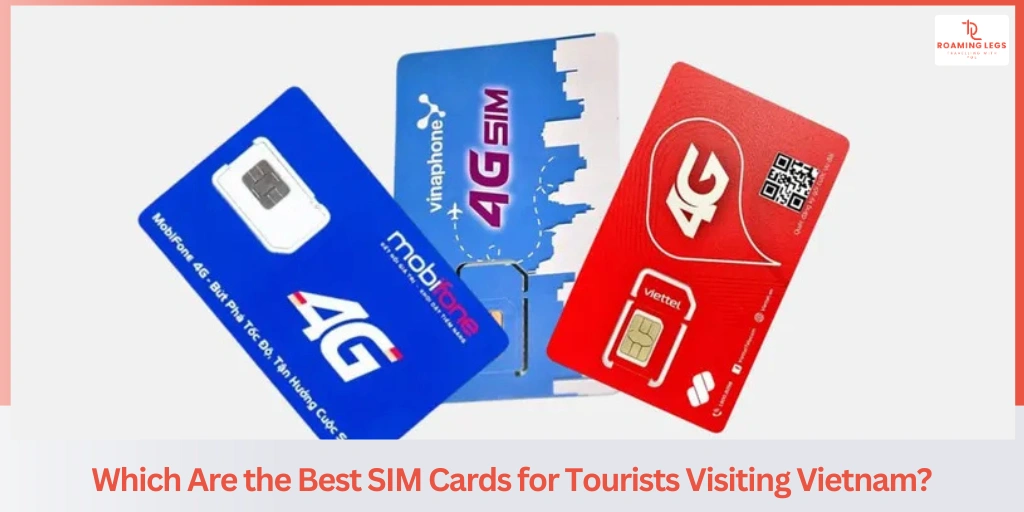
What Travelers Are Saying
Rohan M., Pune (Traveled March 2026): “We landed in Hanoi at 11 PM and honestly weren’t sure the airport SIM counters would even be open.
Roaming Legs told us exactly which Viettel booth to head to and which plan to ask for — took us under ten minutes and we had Grab working before we’d even collected our bags.”
Ayesha K., Bangalore (Traveled May 2026): “Went with the Mobifone free 8GB trick for our first day like they suggested, then upgraded to a proper Viettel plan in the city the next morning.
Saved us close to ₹400 and nobody at the counter tried to upsell us into something we didn’t need.”
Frequently Asked Questions About Vietnam SIM Cards for Indian Tourists
Responsive, Elementor-ready FAQ section with embedded CSS and no JavaScript.
1. Which SIM card is best for Indian tourists visiting Vietnam?
Viettel is the best overall choice thanks to its excellent coverage in cities and remote areas like Sapa, Ha Giang, and Phu Quoc. Vinaphone is a great budget option for city-focused trips.
2. How much does a Vietnam SIM card cost?
Prepaid tourist SIMs generally cost ₹300 to ₹500 in city stores and ₹450 to ₹950 at airport counters depending on the plan.
3. Do I need my passport to buy a SIM card?
Yes. Your original passport is required for SIM registration and activation.
4. Can I buy a SIM card at the airport?
Yes. Hanoi and Ho Chi Minh City airports have official Viettel and Vinaphone counters in the arrivals area.
5. Is an eSIM better than a physical SIM?
An eSIM is convenient for instant data. A physical SIM is better if you need a Vietnamese phone number for calls, Grab, or OTP verification.
6. Does Grab work without a Vietnamese phone number?
Yes, but drivers may call to confirm pickup locations. Keep WhatsApp available if you are using a data-only eSIM.
7. How much data do I need?
Around 2 to 3 GB per day is enough for maps, Grab, messaging, and social media. Plans with 4 to 5 GB per day offer extra flexibility.
8. Which SIM works best in remote areas?
Viettel provides the strongest network coverage in mountainous and rural regions.
9. Is the Mobifone free data offer worth it?
Yes. New users receive free starter data that is useful for the first day after arrival.
10. Can I top up my SIM?
Yes. Viettel and Mobifone can be topped up easily through stores or apps. Some tourist bundles have limitations.
11. Do SIM cards work across Vietnam?
Yes. Major networks provide coverage across mainland Vietnam and islands such as Phu Quoc.
12. Should I buy a SIM before flying or after landing?
Buy an eSIM before departure for instant connectivity or purchase a physical SIM at the airport if you need a local number.
13. What is the biggest mistake tourists make?
Buying a data-only eSIM without a phone number, making it harder for Grab drivers to contact them.
Do Indian Chargers Work in Dubai? The Real Answer — Plus Which Adapter to Buy, Where to Get One, and What Hotels Actually Provide
You land in Dubai after a 3–4 hour flight, reach your hotel, and the first thing you do is pull out your phone charger.
Then you look at the wall socket and realize — that plug is not going to fit.
This happens to a surprising number of Indian travelers.
Not because they’re careless, but because nobody tells them clearly: Dubai uses a completely different plug type from India.
Your charger isn’t broken.
The socket just doesn’t match.
Quick answer: Yes, Indian chargers require an adapter to work in Dubai.
Dubai uses Type G sockets (the same rectangular 3-pin plug used in the UK), while India uses Type C, D, and M plugs — all round-pin designs that physically won’t go into a Type G socket.
The good news is the voltage is identical (both countries use 230V), so you don’t need a converter, just an adapter.
This guide covers exactly what plug Dubai uses, whether your specific Indian charger works, which adapter to buy, where to get it, and a few real tips that hotel review pages never mention.
What Plug Type Does Dubai Use and Why Indian Chargers Don’t Fit
Dubai — and the UAE as a whole — uses the Type G power socket.
This is the same three-rectangular-pin plug used across the UK, Hong Kong, Singapore, and Malaysia.
The three pins are arranged in a triangular pattern, and each pin is flat and rectangular.
India, on the other hand, uses three plug types:
- Type C — two round pins, side by side (the classic round charger plug on most Indian phone chargers and smaller appliances)
- Type D — three large round pins in a triangular pattern (common on older Indian appliances, some chargers)
- Type M — three large round pins in a triangular pattern but larger than Type D (common on heavier appliances like irons, some laptop chargers)
None of these match the Type G socket.
Round pins physically cannot go into rectangular slots.
So the question isn’t “will my device work in Dubai?” — it’s “can my charger plug even go into the socket?” And the answer is no, without an adapter.
One clarification that trips people up: Dubai does have some older buildings and budget accommodations with Type C or Type D sockets alongside Type G, especially in older parts of Deira and Bur Dubai.
But any modern hotel, mall, airport, or apartment built in the last 10 years will be standard Type G throughout.
Don’t count on finding a socket your Indian charger fits just because someone online told you it sometimes works.
Do You Actually Need a Voltage Converter Too?
No. This is the one thing most people get wrong, and it’s worth being very clear about.
Dubai uses 230V / 50Hz. India uses 230V / 50Hz. They are identical.
This matters because some countries — particularly the US and Japan — use 110V.
Indian devices traveling there would need both an adapter (for the plug shape) and a voltage converter (to step down the power).
In Dubai, you skip that problem entirely.
Your Indian devices are already built for 230V, so they’ll work perfectly fine.
You just need something to change the shape of the plug, not the power itself.
The only time you’d need a converter is if you’re bringing a very old appliance — something from before the 2000s that doesn’t support dual voltage. Every modern phone, laptop, camera, power bank, tablet, and smartwatch automatically handles 100–240V.
Check the small print on your device’s charger brick — it’ll say “Input: 100–240V” if it’s fine.
That’s 99% of devices people travel with today.
Which Adapter Should Indian Travelers Buy?
Here’s the practical part. You have two options: buy a Type G adapter (fits only Dubai and UK-standard sockets) or buy a universal travel adapter (fits most countries worldwide).
Option 1: Type G Adapter Only (Cheapest) These are simple plug converters — your Indian charger plugs into one end, and the other end fits a Type G socket.
They’re available on Amazon India for ₹150–₹400 depending on quality.
Brands like Syska, Belkin, and Portronics sell reliable ones.
The limitation is obvious: it only works in Dubai and UK-standard countries.
Option 2: Universal Travel Adapter (Best Value if You Travel More Than Once a Year) These cover Type G (Dubai/UK), Type A/B (US), Type F (Europe), and sometimes Type D (India) for backward compatibility.
Prices on Amazon India range from ₹600 to ₹1,800.
The better ones include 2–4 USB-A ports and 1–2 USB-C ports built in, so you can charge your phone, tablet, and earbuds simultaneously from one socket.
What we tell travelers who come through us: If this is your first international trip or Dubai is the only country you’ll visit, the simple Type G adapter at ₹150–₹300 is perfectly fine.
If you travel internationally more than once a year, spend ₹800–₹1,200 on a universal adapter with USB ports.
You’ll use it for years.
The Syska Travel Adapter (₹599 on Amazon India) and the Portronics Travel Adapter (₹899) are both solid and readily available with fast delivery.
Get the Dubai Packing Checklist Before You Fly
Forgetting an adapter is frustrating. Missing your insurance documents, visa copy, or important medication can create bigger problems. Get our Dubai Pre-Trip Checklist covering electronics, travel documents, currency, weather-appropriate clothing, and what to keep in your hand luggage versus checked baggage.
Prepare with confidence and avoid last-minute packing stress before your Dubai holiday.
Where to Buy an Adapter: Before or After Landing in Dubai?
Buy before you fly. Always.
Here’s the math: a Type G adapter in India on Amazon costs ₹150–₹400.
The same adapter at Dubai International Airport (Terminal 1 or Terminal 3) costs AED 20–45, which is roughly ₹450–₹1,000.
Electronics stores inside Dubai Mall, Mall of the Emirates, and Carrefour hypermarkets sell them for AED 15–25 (₹340–₹570), which is better than airport pricing but still more than India.
If you forgot to pack one and need it urgently:
- Dubai International Airport — Plug & Socket stores near baggage claim in both T1 and T3
- Carrefour hypermarket (Mall of the Emirates, Dubai Mall) — cheapest option in Dubai, around AED 15
- Sharaf DG electronics stores — larger selection, good quality, AED 20–35
- Any Spinneys or LuLu Hypermarket — basic Type G adapters are usually in stock
Most 4-star and 5-star hotels (like Marriott, Hyatt, JW Marriott, Sofitel, Atlantis) will loan you an adapter from reception at no charge.
Ask the front desk within the first hour of check-in — they typically have a supply.
Some rooms in higher-end hotels like FIVE Palm Jumeirah and Palace Downtown already have USB charging ports built into the bedside panel alongside Type G sockets, so you may not need an adapter for phone charging at all.
But don’t rely on this for your camera, laptop, or power bank charger.
Budget hotels and older properties in Deira or Bur Dubai are hit or miss — some have adapters, many don’t.
If you’re staying somewhere like Ibis Deira City Centre or a 2–3 star property, pack your own.
What About USB-C and the Newer Devices?
This is the part most adapter guides skip and it’s worth knowing.
If your phone, laptop, or earbuds charge via USB-C (like most phones since 2022, MacBook Air, iPad Pro, Samsung Galaxy, etc.), you have more flexibility.
Many modern adapters and hotel rooms include USB-C ports directly on the socket panel, so your cable just plugs in without any adapter at all.
But — and this is the important part — your laptop’s power brick almost certainly still uses a Type C or Type M Indian plug to connect to the wall socket, even if the other end is USB-C or MagSafe going into your laptop. So you’d need an adapter for that wall-side connection, not the laptop-side cable.
Practical rule:
- Phone charging via cable → might work with hotel’s built-in USB ports, no adapter needed
- Laptop charging → you’ll need an adapter for the power brick’s wall plug
- Camera battery charger → most use a 2-pin Type C, so needs adapter
- Power bank charging → depends on whether you’re using USB-C wall charging or a regular brick
When in doubt, bring an adapter.
It weighs 50 grams.
A Real Scenario: What Happened to One of Our Dubai Travelers Last Year
We planned a Dubai trip for a family from Pune — parents, two adult kids — in November 2025.
They forgot adapters entirely. At the hotel (Rove Downtown Dubai), the front desk had two adapters they could borrow, but there were four of them and they had six devices between them.
They ended up buying two more Type G adapters at a Carrefour on Sheikh Zayed Road for AED 18 each.
Small problem, easily solved, but they spent 45 minutes figuring it out on their first evening instead of being at The Dubai Fountain.
The lesson isn’t dramatic.
But 45 minutes on your first Dubai evening matters when you could have solved this before leaving home for ₹300.
Should You Pack a Power Bank Too?
Honestly, yes — but not because of adapter issues.
Dubai’s attractions are spread out.
A day that includes Dubai Frame in Bur Dubai, lunch at Gold Souk area, then Burj Khalifa evening and Dubai Fountain at night is a 10–12 hour day.
Your phone will drain completely on photos, Google Maps navigation, Careem (the main ride-hailing app in Dubai), and ticket QR codes.
A power bank (10,000–20,000 mAh) is worth its weight.
Charge it overnight at your hotel with your adapter.
You’re sorted for the full day without ever worrying about your phone dying at the wrong moment.
Planning Your Dubai Trip? Get a Custom Itinerary
Most Indian travelers spend 4–7 days in Dubai. The best way to use those days depends on whether you are travelling as a couple, family, or group, and what experiences matter most to you. The classic Dubai Mall, Burj Khalifa, and Desert Safari route is popular, but there are many other options worth adding.
We have planned Dubai trips for hundreds of Indian travelers, from honeymoon couples in Palm Jumeirah to multi-generational family groups balancing children and grandparents. Share your travel dates, group type, and rough budget, and we will send a day-by-day Dubai plan within 24 hours at no cost.
Real Travelers, Real Feedback
Sneha & Rohan, Hyderabad Traveled: February 2026 “We read about the plug type issue on your site before our trip and packed a universal adapter from Amazon for ₹799.
Turned out it was one of the most used items we carried.
Our hotel room in JW Marriott had one Type G socket on each side of the bed, nothing else.
The adapter with its USB ports meant we charged everything simultaneously.
Small thing but made the trip smooth.”
Sanjay Mehta, Ahmedabad Traveled: March 2026 (Family Trip) “Traveling with elderly parents, so I did not want any complications.
Bought two Type G adapters from Croma in Ahmedabad before leaving — ₹280 each.
They worked perfectly throughout.
One thing to note: my father’s CPAP machine also needed an adapter (it was Type M plug) and the Type G adapter handled it without any problem since the voltage matched.”
Dubai Plug Adapter & Charger FAQs for Indian Travelers
Everything you need to know about Indian chargers, Dubai sockets, voltage, and travel adapters.
Do Indian chargers work in Dubai without any adapter?
No. Indian chargers use round pins (Type C, D, or M), while Dubai uses Type G sockets with rectangular pins.
The voltage is the same at 230V, so your charger works perfectly once you use the correct plug adapter.
What plug type is used in Dubai?
Dubai uses Type G sockets, the same British-style three-rectangular-pin plug used in the UK, Singapore, and Hong Kong.
This plug type is standard across Dubai hotels, apartments, malls, and airports.
Do I need a voltage converter for Dubai from India?
No. India and Dubai both use 230V / 50Hz electricity.
You only need a plug adapter to change the physical plug shape. A voltage converter is unnecessary for normal Indian electronics.
What adapter do I need for Dubai from India?
You need a Type G adapter or a universal travel adapter that includes Type G support.
A basic Type G adapter works for simple chargers, while a universal adapter with USB ports is better for families or travelers carrying multiple devices.
Will my laptop charger work in Dubai?
Yes. Most laptop chargers from brands like Dell, HP, Lenovo, Apple, and Asus support 100–240V automatically.
Check your charger label. If it says "100–240V", you only need a Type G adapter.
Do Dubai hotels provide plug adapters?
Many 4-star and 5-star hotels provide adapters on request from reception.
However, budget hotels may not always have enough spare adapters available, so carrying your own is safer.
Can I buy a travel adapter in Dubai?
Yes. You can find Type G adapters at supermarkets, electronics stores, and airport shops.
Buying one in India before departure is usually cheaper and avoids searching after arrival.
Can a power bank replace a travel adapter?
No. A power bank helps during day trips but does not replace an adapter for overnight charging.
Your power bank itself still needs to recharge from a wall socket.
Are cheap adapters from India safe to use?
Basic adapters from reliable brands are generally safe for phones, tablets, and cameras.
Avoid extremely cheap no-brand adapters, especially for laptops or high-power devices.
Do I need multiple adapters for multiple devices?
No. A good universal travel adapter with USB-A and USB-C ports can charge several devices from one socket.
This is especially useful for couples and families carrying phones, watches, tablets, and cameras.
Will my Indian hairdryer or straightener work in Dubai?
Yes, the voltage is compatible, but check the wattage before using it.
High-power appliances like 2000W hairdryers need a heavy-duty adapter. A normal phone adapter is not designed for such loads.
Can an Indian charger ever work in Dubai without an adapter?
Rarely. Some older buildings may have Type C sockets, but modern Dubai hotels and public spaces mainly use Type G outlets.
Do not rely on finding compatible sockets. Carry a Type G adapter before your trip.
Do Indian Phone Chargers Work in Vietnam? Complete Plug Guide for Indian Travelers
No, most Indian chargers don’t work directly in Vietnam because the socket types are different.
India uses Type D and Type M plugs (three big round pins), but Vietnam uses Type A, Type C, and sometimes Type F plugs.
You’ll need a universal travel adapter to charge your phone, laptop, and camera.
The good news? Vietnam’s voltage (220V) matches India’s (230V), so your devices won’t get damaged—they just won’t fit the socket.
What Plug Types Does Vietnam Actually Use? Your Quick Reference
| Plug Type | What It Looks Like | Common in Vietnam? | Works With Indian Plugs? |
|---|---|---|---|
| Type A | Two flat parallel pins | Yes (South Vietnam mostly) | No — need adapter |
| Type C | Two round pins | Yes (North Vietnam, new hotels) | Maybe — some Indian Type C work |
| Type F | Two round pins + grounding clips | Yes (newer buildings) | No — need adapter |
| Type D | Three round pins (Indian standard) | Rarely | It’s Indian, but Vietnam doesn’t use it |
| Type M | Three big round pins (Indian standard) | Very rarely | It’s Indian, but Vietnam doesn’t use it |
Two flat parallel pins
Common in Vietnam?Yes (South Vietnam mostly)
Works With Indian Plugs?No — need adapter
Two round pins
Common in Vietnam?Yes (North Vietnam, new hotels)
Works With Indian Plugs?Maybe — some Indian Type C work
Two round pins + grounding clips
Common in Vietnam?Yes (newer buildings)
Works With Indian Plugs?No — need adapter
Three round pins (Indian standard)
Common in Vietnam?Rarely
Works With Indian Plugs?It’s Indian, but Vietnam doesn’t use it
Three big round pins (Indian standard)
Common in Vietnam?Very rarely
Works With Indian Plugs?It’s Indian, but Vietnam doesn’t use it
The Real Situation: Indian Plugs vs Vietnamese Sockets
If you are packing from India and planning to travel to Vietnam, here’s what actually happens at the socket.
Type C Plugs from India – Sometimes They Work
Indian phone chargers often come with Type C plugs (two round pins).
Vietnam also uses Type C sockets, especially in Northern Vietnam and newer hotels.
If your charger has a Type C plug, you’re lucky – it might fit directly without an adapter.
But here’s the catch: Not all Type C plugs are created equal.
Indian Type C plugs are slightly different in size and pin thickness compared to European Type C plugs.
Sometimes they fit loosely, sometimes not at all.
The hotel staff at 11 PM can’t fix that kind of problem.
Type D and Type M Plugs – You Definitely Need an Adapter
If you are carrying older devices or specialized electronics (hair dryers, immersion heaters, older laptop chargers), they probably use Type D plugs (the three big round pins in a triangle) or Type M plugs (even bigger three round pins).
Vietnam doesn’t use either of these.
You’ll need a travel adapter, no question.
What this means for you: Don’t assume your charger will work.
Check your plug before you pack.
Check Your Charger’s Voltage – This Matters More Than You Think
Before you worry about the socket, check the tiny label on your charger.
Find where it says something like: Input: 100–240V, 50–60Hz
If you see that range (100–240V), you’re good.
That’s what we call a “dual-voltage” charger, and it works in Vietnam without any problem.
Your phone charger probably says this.
Your laptop charger probably says this.
Your camera charger probably says this.
If your charger says only 230V or 240V, it’s single-voltage and only works in India.
This is rare for modern electronics, but old hair dryers and electric kettles often have single-voltage ratings.
Those won’t work in Vietnam even with an adapter – you’d need a voltage converter, which is a completely different thing.
Quick test:
- Check your charger label right now
- If it says 100–240V → Your device is safe in Vietnam (just need the right socket adapter)
- If it says only 230V → Only works in India (don’t plug in Vietnam)
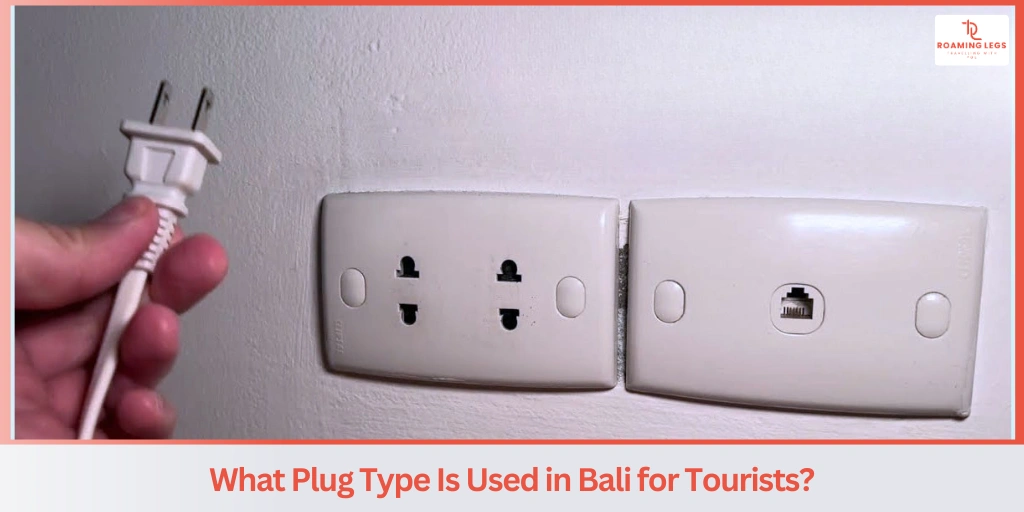
Vietnam’s Electricity: 220V – Almost Exactly Like India’s 230V
Here’s the good news that everyone misses: Vietnam’s electricity is almost identical to India’s.
| Country | Voltage | Frequency |
|---|---|---|
| India | 230V | 50Hz |
| Vietnam | 220V | 50Hz |
230V
Frequency50Hz
220V
Frequency50Hz
That 10-volt difference is so small that modern devices don’t even notice.
Your phone charger doesn’t care.
Your laptop charger doesn’t care.
Your camera doesn’t care.
The only time voltage really matters is if you’re bringing old appliances like hair dryers or electric kettles from India.
Those single-voltage devices expect exactly 230V. At 220V, they might work slowly or might not heat up properly.
At 110V (like in some parts of Vietnam), they won’t work at all.
Why this matters: You don’t need a voltage converter for your electronics.
You only need a plug adapter so your charger physically fits the socket.
Where to Find Different Plug Types in Vietnam
If you are planning to visit Vietnam, you should know where each socket type is actually used:
Southern Vietnam (Ho Chi Minh City, Can Tho, Phu Quoc)
Type A plugs are more common here because of historical American influence.
Older hotels, guesthouses, and local shops often have Type A sockets.
Type A has two flat parallel pins – imagine a tiny rake with just two tines.
If your charger is shaped like that, it will fit many Southern Vietnam sockets without an adapter.
Northern Vietnam (Hanoi, Halong Bay, Hoi An)
Type C and Type F are more common in the north.
These are European-style round-pin sockets. Newer hotels and modern buildings use these.
Both Regions
Newer luxury hotels, co-working spaces, and airport lounges often have hybrid universal sockets that accept multiple plug types.
Look for a socket that has both flat and round holes – you might not need an adapter at all.
The real situation: You still need an adapter because you can’t guarantee which socket type you’ll get.
A single hotel building might have Type A in some rooms and Type C in others.
Honest Talk: What Actually Works and What Doesn’t
Let’s be direct about what to expect.
Devices That Will Definitely Work
- ✅ Your smartphone charger (almost all are Type C or dual-voltage)
- ✅ Your laptop charger (almost all are dual-voltage)
- ✅ Your power bank (all are dual-voltage)
- ✅ Your camera or GoPro charger (almost all are dual-voltage)
- ✅ Any modern USB charger
Devices That Might Not Work
- ⚠️ Old hair dryers from India (single-voltage, don’t fit socket anyway)
- ⚠️ Electric kettles (single-voltage, dangerous at different voltage)
- ⚠️ Older laptop chargers with Type D plugs
- ⚠️ Any device that only says “230V” on the label
What You Actually Need
- A universal travel adapter that supports Type A, Type C, and Type F – costs ₹300–800 online, lasts for every international trip you ever take
- That’s it. You don’t need a voltage converter (unless you’re bringing that hair dryer, which is honestly not worth it)
Real talk: One universal adapter solves 95% of charging problems in Vietnam. Everything else is just being extra cautious.
Where Should You Buy a Travel Adapter?
Before You Leave India (Recommended)
Online: Amazon, Flipkart (search “universal travel adapter”)
- Price: ₹300–₹1,500
- Best ones: Include USB charging ports and work in 150+ countries
- You’ll actually have it when you land, not searching at 11 PM
Electronics stores: Croma, Reliance Digital
- Price: ₹500–₹2,000
- Upside: See it before buying
- Downside: Higher price than online
At Ho Chi Minh City or Hanoi Airport
- Price: Double or triple what you’d pay in India
- Available: Yes, at convenience stores
- When you’d buy: Only if you completely forgot
In Vietnam Cities
Electronics shops, supermarkets (Big C, Co.opmart), and shopping malls have adapters.
- Price: Slightly cheaper than airport, more expensive than online
- Quality: Hit or miss
Honest advice: Buy before you travel. You’ll save money and have peace of mind landing at 1 AM.
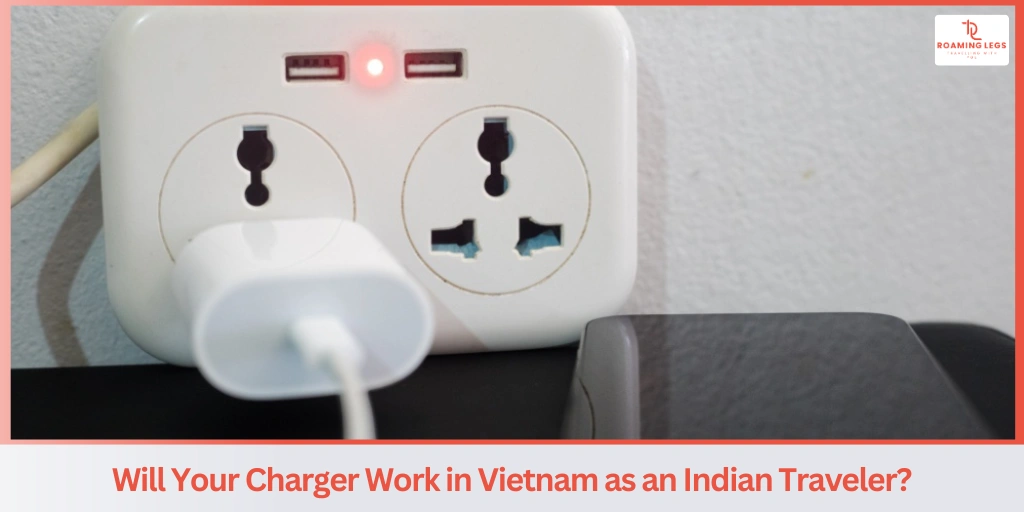
What About Older Hotels and Guesthouses?
If you are staying in a smaller or older hotel, there’s a small chance the room only has Type A or Type D sockets.
The front desk can’t magic up a new socket.
This is when carrying a multi-socket travel adapter (not just a single-type adapter) saves your trip.
A good universal adapter works with every plug type Vietnam has, plus Type D if you somehow need it.
What people forget to do: Don’t call the hotel asking “What socket type do you have?”
because half the staff won’t know what you’re talking about. Just bring a universal adapter and avoid the problem completely.
Won’t Your Hotel Provide an Adapter?
Some 4-star and 5-star hotels might have adapters at the front desk to borrow. Many don’t.
Guesthouses almost never have them.
The problem: If every guest borrowed the hotel’s adapter, the hotel would run out or lose them.
Most places don’t replace them.
Why you shouldn’t rely on this:
- You need to charge your phone before checking in (Grab app for the taxi, Google Maps)
- Hotels can run out at 9 PM
- Some hotels charge ₹200–₹500 just to borrow an adapter
Just carry your own. Problem solved, nothing to worry about.
Practical Tips for Charging Multiple Devices
If you are traveling with family or carrying multiple devices (phone, tablet, laptop, camera), one travel adapter might not be enough.
Here’s what works:
Option 1: Universal Adapter + USB Power Bank
- Plug the universal adapter into the wall socket
- Plug a multi-port USB power bank into the adapter
- Charge your phone, tablet, and earbuds from the power bank
- Cost: ₹600–₹1,500 total, totally worth it
Option 2: Multi-Port USB Charger + Universal Adapter
- Get a USB charger with 3–4 USB ports
- Plug it into the wall with your universal adapter
- Connect 4 devices at once
- Cost: ₹800–₹2,000, super convenient
Option 3: Just Bring Multiple Adapters (Overkill But It Works)
- Two universal adapters, one for the bedroom, one for your bag
- Never fight over outlets
- Cost: ₹600–₹1,600
What people actually do: One universal adapter + one USB power bank.
That’s it. Covers everything.
The Reality of Vietnam’s Power Supply
If you are worried about power safety in Vietnam, don’t be.
Vietnam’s electrical infrastructure is reliable in cities and tourist areas.
Blackouts happen but are rare in Hanoi, Ho Chi Minh City, and major tourist destinations.
One small issue: Some older buildings have occasional voltage fluctuations.
This is why dual-voltage devices exist – they handle small swings.
Modern laptop chargers handle it fine.
When power becomes a problem:
- You’re in a very remote area (not many tourists go there anyway)
- During monsoon season in extreme weather (still rare)
For regular travel: Don’t worry. Plug in, charge your device, get back to exploring.
Get Your Free Vietnam Packing Checklist for Indian Travelers
Already booked your Vietnam trip? Get a complete packing checklist covering power adapters, visas, money, clothes, airport tips, and everything you need before departure.
The Biggest Mistakes Travelers Make (And How to Avoid Them)
Mistake #1: Assuming All Indian Type C Plugs Fit Vietnamese Type C Sockets
Indian Type C pins are slightly thicker. Vietnamese Type C pins are European standard. Sometimes they fit, sometimes they don’t. Solution: Bring a universal adapter anyway.
Mistake #2: Buying a Single-Type Adapter (Like Type A Only)
You arrive in your hotel and find a Type C socket. Your Type A-only adapter is useless. Solution: Always buy a universal adapter that supports multiple types.
Mistake #3: Not Checking Your Charger’s Voltage Before Packing
You assume your hair dryer works in Vietnam because it’s electric. It’s probably 230V only. It won’t work. Solution: Check the label. If it doesn’t say 100–240V, leave it at home.
Mistake #4: Forgetting to Charge Your Phone Before Checking Out of the Hotel
You need Grab to get to the airport, but your phone is at 5%. You’re now stressed, late, and can’t book a cab. Solution: Charge your phone while eating breakfast. Always leave hotels with a full battery.
Mistake #5: Buying an Adapter at the Airport
You’re tired, time is running out, and the airport store charges triple. You panic and buy it anyway. Solution: Buy online from India for a third of the price.
Get Your Custom Vietnam Itinerary
Planning a full Vietnam trip? Share your budget, travel dates, and interests. We will create a customised itinerary covering Hanoi, Halong Bay, Ho Chi Minh City, and other destinations that fit your travel style.
Final Checklist Before You Leave for Vietnam
Before you pack your bags, check everything:
- [ ] I checked my main charger’s label – it says 100–240V ✅
- [ ] I checked my laptop charger’s label – it says 100–240V ✅
- [ ] I checked my camera charger’s label – it says 100–240V ✅
- [ ] I bought a universal travel adapter that supports Type A, C, and F ✅
- [ ] I tested my adapter with my chargers before packing ✅
- [ ] I know where to find outlets in my hotel (ask front desk or look online) ✅
- [ ] I’m bringing at least one USB power bank for long sightseeing days ✅
One more thing: Once you land and turn on your phone, Google your hotel name + “socket type” to know what you’re working with. Half the time, travelers ask the front desk and get confused. Just Google it, saves time.
Ready to Plan Your Vietnam Trip?
The power plug question is solved. Now you can focus on the experiences that make Vietnam special, from Phu Quoc beaches and Hanoi temples to the Mekong Delta, local food, and unforgettable moments.
We have helped 200+ Indian couples and families plan Vietnam trips from start to finish. Our team can help with visas, travel timing, hotels, destinations, and building a smooth itinerary that fits your budget.
Share your travel details and we will create your Vietnam itinerary within 24 hours.
Frequently Asked Questions
Everything Indian travelers need to know about using chargers and electrical devices in Vietnam.
Q1. Will my exact charger work in Vietnam?
If your charger label says 100–240V, it will work in Vietnam with the correct plug adapter.
If it says only 230V, check the device specifications before using it. Most modern phone, tablet, and laptop chargers are designed for international travel.
Q2. Do I need a voltage converter or just an adapter?
Most Indian travelers only need a plug adapter.
Voltage converters are rarely required because modern electronics like phones and laptops usually support 100–240V input.
Q3. Can I charge my phone without an adapter?
It is possible if your charger plug matches the socket, but you cannot rely on this.
Vietnam commonly uses Type A, Type C, and Type F sockets, so carrying a universal adapter avoids last-minute problems.
Q4. What's the best universal adapter for Vietnam?
Choose a universal adapter supporting Type A, Type C, and Type F plugs with USB ports.
A good travel adapter usually costs around ₹500–₹1,000. Brands such as Philips, Portronics, and Amazon Basics are commonly used by travelers.
Q5. Can I share one adapter with other travelers?
Yes, but it can become inconvenient when everyone needs charging at the same time.
For couples or families, a multi-port adapter or power strip setup makes charging much easier.
Q6. What if my adapter doesn't fit the socket?
This usually happens when travelers carry a single-type adapter.
A universal adapter designed for multiple plug types is the safer choice for Vietnam.
Q7. Will my device get damaged if I plug it in wrong?
If the plug does not fit, do not force it. Your device will not be damaged.
Voltage differences can damage electronics, but Vietnam uses 220V, which is the same standard used in India. Dual-voltage devices are generally safe.
Q8. Can I charge my laptop in Vietnam?
Yes. Connect your laptop charger through a universal adapter and plug it into the wall socket.
Most modern laptop chargers support international voltage ranges automatically.
Q9. Are there charging outlets in cafés and restaurants?
Yes, especially in tourist areas of Hanoi and Ho Chi Minh City.
Many cafés provide charging points along with WiFi and air conditioning.
Q10. Do I need an adapter at Vietnam airports?
Sometimes. International lounges may have universal sockets, but regular terminals often use standard Vietnamese outlets.
Keeping your adapter in your carry-on bag is the safest option.
Q11. What if I forget my adapter at the hotel?
You can usually buy a replacement from supermarkets or electronics shops in Vietnamese cities.
Local replacements may cost around ₹300–₹500, but airport shops are generally more expensive.
Q12. Can I use my Indian electrical extension cord in Vietnam?
No. Indian extension cords generally do not fit Vietnamese wall sockets.
Use a universal travel adapter instead for phones, laptops, cameras, and other electronics.
Do You Need a Travel Adapter for Bali? A Simple Plug Guide for Indian Travellers
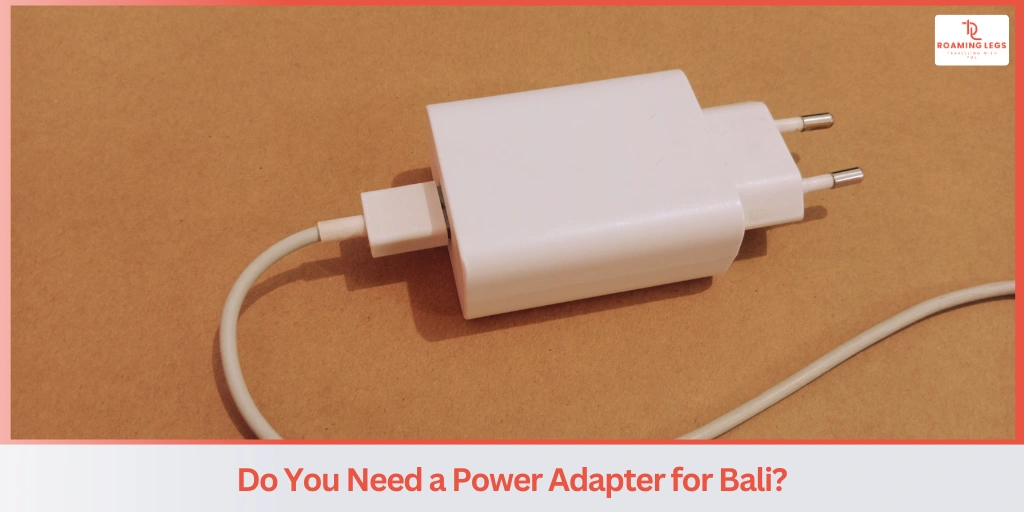
Do Indian Chargers Work in Bali?
Some do, some don’t — and it comes down to your plug shape, not the voltage.
Here’s the quick truth: Bali uses Type C and Type F sockets (two round pins), and runs on 230V, 50Hz — the exact same voltage as India. So your phone, laptop, and camera charger will charge safely.
The only question is whether the plug physically fits the hole.
If your Indian charger has the slim two round-pin (Type C) plug, it slides right in, no adapter needed.
But the big three-pin Indian plugs (Type D and Type M) won’t fit — you’ll need a small travel adapter for those.
That’s really the whole thing.
But there are a few details worth knowing before you pack — like which of your devices need an adapter, why you should never bother with a bulky voltage converter, whether your hair dryer will fry, and the one cheap thing that solves all of it.
Let me walk you through it the way I’d tell a friend flying out next week.
Bali Plugs at a Glance
A quick reference for Indian travellers.
| Detail | What You Need to Know |
|---|---|
| Socket types in Bali | Type C and Type F (two round pins) |
| Voltage | 230V, 50Hz, same as India |
| Voltage converter needed? | No, for phones, laptops and cameras |
| Indian Type C plug (slim 2-pin) | Fits directly, no adapter |
| Indian Type D / Type M plug (round 3-pin) | Needs a travel adapter |
| Easiest fix | One universal travel adapter (₹300–₹800) |
Socket types in Bali
Voltage
Voltage converter needed?
Indian Type C plug (slim 2-pin)
Indian Type D / Type M plug (round 3-pin)
Easiest fix
What Plug Types Does Bali Use?
Bali uses Type C and Type F — both have two round pins, the same style you see across most of Europe.
Type C is the common slim two-pin.
Type F is nearly identical but adds two little grounding clips on the sides.
Good news: a Type C plug fits happily into a Type F socket, so you don’t need to worry about telling them apart.
You’ll find these same sockets almost everywhere a traveller goes — hotels, villas, resorts, cafés, and coworking spaces in Canggu and Ubud. So once you’ve sorted one adapter, you’re covered for the whole island.
One thing worth knowing: a lot of newer Bali hotels and cafés now have USB ports built into the wall or bedside lamp.
If your device charges over USB, you can sometimes skip the plug question entirely and just plug the cable straight in.
Which of Your Indian Chargers Actually Need an Adapter?
This is the part people get confused about, so let’s make it dead simple. It depends on the plug on each charger, not the device.
Indian Plug Compatibility in Bali
Quick guide for Indian travellers.
| Indian Plug Type | What It Looks Like | Works in Bali? |
|---|---|---|
| Type C | Slim, two round pins | ✅ Fits directly |
| Type D | Three fat round pins in a triangle | ❌ Needs adapter |
| Type M | Like Type D but bigger pins | ❌ Needs adapter |
Type C
Type D
Type M
Here’s what this means in real life.
Most phone chargers, laptop bricks, and camera chargers sold in India these days use the slim Type C two-pin plug — so they’ll fit Bali sockets straight away.
The ones that usually cause trouble are older appliances and anything with the big round three-pin plug, like some hair dryers, trimmers, or older laptop chargers.
The mistake most people make is checking one charger, seeing it fits, and assuming everything’s fine — then finding their trimmer or power bank charger has a different plug.
Take two minutes before you pack and look at each plug.
Or honestly, just carry one universal adapter and stop worrying about it.
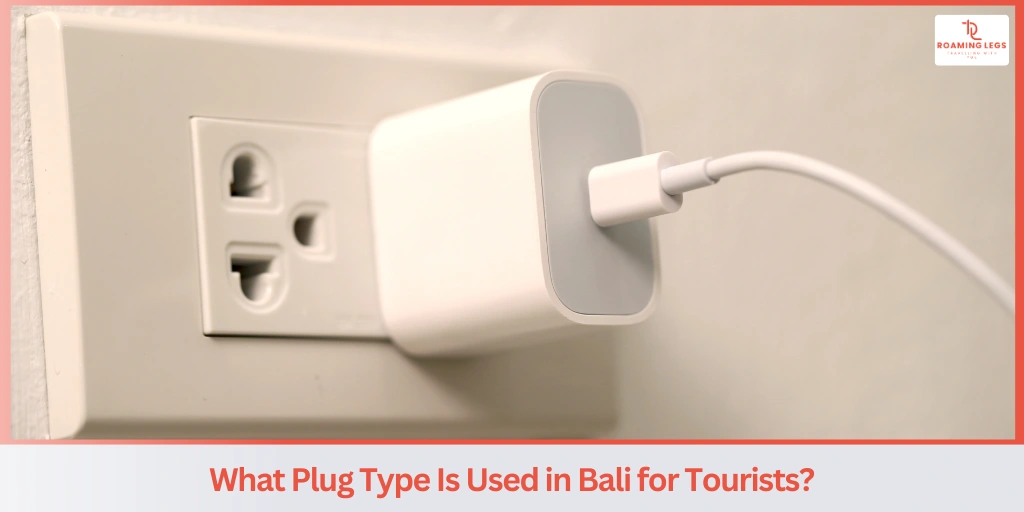
Don't Forget the Essentials for Your Bali Trip
Get our free Bali Packing Checklist for Indian Travellers on WhatsApp. It covers everything from travel documents and electronics to monsoon essentials and the small items most travellers realise they forgot only after arriving in Bali.
Complete Checklist
Everything to pack before you leave.
Travel Essentials
Adapters, documents, gadgets, and more.
WhatsApp Download
Receive your checklist instantly.
Do You Need a Voltage Converter for Bali?
No — and this is where a lot of people waste money.
Bali runs on 230V, and so does India.
Same voltage, same 50Hz frequency. So there’s nothing to “convert.
” A voltage converter is only needed when you go between very different systems, like carrying a 230V Indian device to a 110V country such as the USA.
Bali to India is not that situation.
Almost every modern gadget — phones, laptops, tablets, camera and power-bank chargers — is also dual voltage anyway.
Flip your charger over and read the small print.
If it says “Input: 100–240V,” it works anywhere in the world with just a plug adapter. Nearly all of them say exactly that.
So to be clear: you need a plug adapter (to change the shape), not a voltage converter (to change the power).
Big difference, and knowing it saves you buying a heavy, unnecessary box.
What About Hair Dryers, Straighteners and Trimmers?
This is the one exception, so read it if you’re carrying styling tools.
Small chargers are dual voltage, but some hair dryers and straighteners are not — especially older or cheaper ones. Check the label.
If it only says “230V” that’s fine for Bali (same voltage), you just need the right plug shape. The real risk is a single-voltage tool rated for a different region.
A more practical warning: high-wattage hair dryers (1500W+) can trip the sockets in smaller Bali villas, and cheap adapters aren’t built for that load.
Honestly, most decent Bali hotels already provide a hair dryer in the room — so the easiest move is to just leave yours at home and save the bag space.
For straighteners and trimmers, a good universal adapter is usually fine.
Which Adapter Should You Buy, and Where?
Get a universal travel adapter — the kind with a slide-out set of pins for different countries and a couple of USB ports built in.
One of these covers Bali, plus Dubai, Europe, Thailand, and most future trips.
That’s why it’s worth owning one properly rather than buying a cheap single-use plug.
Buy it in India before you fly. On Amazon or Flipkart, a solid universal adapter runs about ₹300–₹800. Brands like Belkin, Portronics, and Ambrane are easy to find.
Getting it before the trip is cheaper and means you’re not hunting for a shop the moment you land.
You can buy one in Bali too — at the Denpasar airport, electronics shops, and supermarkets like Pepito — but airport prices are noticeably higher and you don’t want to be sorting this out jet-lagged at 11 pm.
Buy at home.
One more tip from experience: get an adapter with at least 2 USB ports.
On a Bali trip you’re charging a phone, a power bank, maybe a smartwatch and earbuds every night, and villa sockets are often limited.
Multiple ports off one adapter saves a lot of juggling.
Planning Your Whole Bali Trip?
Skip hours of research. Share your travel dates and budget on WhatsApp, and we'll create a personalised Bali travel plan with flight guidance, visa-on-arrival information, villa recommendations, a day-by-day itinerary, and a realistic budget estimate. Delivered within 24 hours.
Flight Guidance
Choose the best travel options.
Hotels & Villas
Recommendations matched to your budget.
Daily Itinerary
A ready-to-follow travel plan.
24-Hour Delivery
Your personalised plan on WhatsApp.
Quick Packing List for Charging in Bali
Keep it simple. This is what actually earns its place in your bag:
- One universal travel adapter (with 2+ USB ports) — your must-have
- A power bank (10,000mAh is plenty) — for long days at temples, beaches, and rice terraces where sockets are scarce
- A multi-port USB charger — charge phone, watch, and earbuds off one wall socket
- Two extra charging cables — cables die on trips, and buying them in Bali costs more
- Skip: the voltage converter (don’t need it) and probably your hair dryer (hotels have them)
Note on power banks: carry them in your cabin bag, not checked luggage — airline rules don’t allow power banks in the hold. Keep it under 100Wh (a 10,000–20,000mAh bank is fine) and you’re good on IndiGo, Air India, and most carriers to Bali.
What Real Travellers Say
“I nearly bought a big voltage converter online before our Bali trip.
Roaming Legs told me not to bother — same voltage as India, just carry one adapter.
Saved me money and bag weight.
Everything charged fine.” — Sneha K., Mumbai, travelled February 2026
“Small thing, but they reminded us to keep the power bank in the cabin bag.
The couple next to us at check-in had theirs taken out of their checked suitcase. The little tips are why we book through them.
“ — Arjun & Meera, Bengaluru, travelled December 2025
Frequently Asked Questions
Bali Power Adapter & Charging FAQ for Indian Travellers
1Do Indian travellers need a power adapter for Bali?
If you use a slim Type C two-pin charger it usually fits directly. Three-pin plugs need a travel adapter. A universal adapter is the easiest option.
2What plug types are used in Bali?
Bali uses Type C and Type F sockets with two round pins.
3Is the voltage in Bali the same as India?
Yes. Both use 230V at 50Hz, so a voltage converter is not required for most devices.
4Will my Indian phone charger work in Bali?
Most modern chargers work without issues. You may only need a plug adapter depending on the plug type.
5Do I need a voltage converter?
No. Only a plug adapter may be needed.
6Can I use my laptop charger?
Yes. Most laptop chargers support 100–240V input.
7Will my hair dryer or straightener work?
Usually yes if rated for 230V, though hotels often provide hair dryers.
8Where can I buy a travel adapter?
It's usually cheaper to buy one in India before your trip.
9Do hotels provide adapters?
Some hotels do, but it's safest to carry your own.
10Can I charge using USB ports?
Many newer hotels and cafés have USB charging ports, but not all.
11Can I carry a power bank?
Yes. Keep it in your cabin bag and within airline limits.
12What's the easiest charging setup?
Carry one universal adapter, a multi-port charger, a power bank and spare cables.
-

-

-
 Things to Do in Batumi Georgia With a 3-Day Itinerary October 14, 2026
 -

-
 Kazbegi Georgia Travel Guide With Things to Do and a 2-Day Itinerary October 12, 2026
 -
 Things to Do in Tbilisi With Prices and Travel Tips October 11, 2026
 -
 Where to Stay in Georgia With Family and Kids October 10, 2026
 -
 7-Day Georgia Family Itinerary from India with Kids October 9, 2026
 -
 Best Places to Visit in Georgia with Kids by Age October 8, 2026
 -
 Georgia with Kids A Family Travel Guide for Indian Parents October 7, 2026
-
-
-
Things to Do in Batumi Georgia With a 3-Day Itinerary October 14, 2026
-
-
Kazbegi Georgia Travel Guide With Things to Do and a 2-Day Itinerary October 12, 2026
