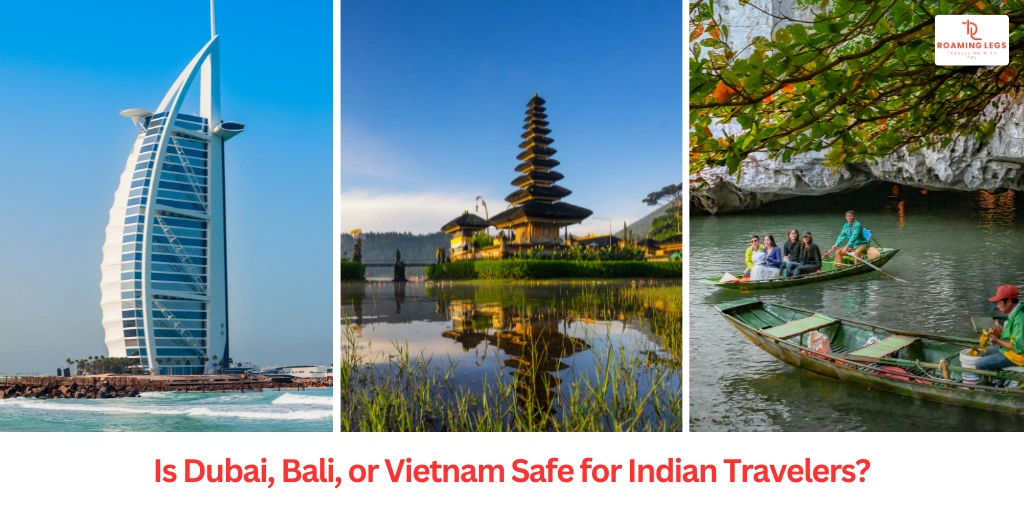
Is Dubai, Bali, or Vietnam Safe for Indian Travelers? — What the Safety Guides Don’t Actually Tell You

Every travel blog will tell you Dubai, Bali, and Vietnam are “generally safe for tourists.”
That sentence is technically true and practically useless.
What Indian families, couples, and first-time international travelers actually want to know is this: what are the specific risks in each place, what do I actually need to watch out for, and which destination suits my travel style and group type from a safety standpoint?
That’s what this guide covers — not star ratings, not emoji safety scales, but real, specific information about what can go wrong in each destination and how to make sure it doesn’t happen to you.
The One-Line Honest Answer Before You Read Further
Dubai is the safest of the three — strict laws, low crime, heavy surveillance, and excellent emergency infrastructure.
The main risks are not crime-related; they are legal.
Breaking a Dubai law you didn’t know existed is the danger Indian tourists don’t think about until it’s too late.
Bali is safe from violent crime but has three genuinely serious risks that catch tourists every single year: scooter accidents, ocean rip currents, and Indonesia’s brutal drug laws.
None of these are dramatic or rare — scooter accidents alone send dozens of tourists to BIMC Hospital in Kuta every week.
Vietnam is safe and very welcoming, but it has a specific set of scams that target tourists in 2026 — including fake e-visa websites, motorbike phone snatching, and taxi overcharging — that have gotten more sophisticated.
Traffic in Hanoi and Ho Chi Minh City also genuinely shocks most first-time visitors.
All three are worth visiting.
None are worth visiting without knowing what to actually watch out for.
Dubai — The Safest Destination, With One Major Catch
Dubai ranks among the top 5 safest major cities in the world by most international safety indices.
The crime index for the UAE in 2026 sits at 14.0 — one of the lowest recorded figures globally, well below London, Mumbai, or Bangkok.
Less than 0.3% of Dubai’s 14 million+ annual visitors report any crime-related incident.
Violent crime against tourists is exceptionally rare.
Petty theft exists but is uncommon.
The metro, taxis, and malls are monitored and well-lit.
Women — including solo Indian women — consistently report feeling safe walking around Dubai at night in tourist and commercial areas.
So what is the actual risk for Indian travelers in Dubai?
The laws. Dubai’s legal code is strict in ways that Indian tourists frequently underestimate, and ignorance is not accepted as a defence in UAE courts.
Here is what catches people out:
Alcohol rules are specific, not strict. You can drink freely in Dubai — in licensed venues.
Hotel bars, restaurants attached to hotels, licensed clubs.
That covers almost everywhere Indian tourists drink.
What you absolutely cannot do: drink in public, on the beach unless it is a licensed hotel beach, in parks, or on the street.
Buying alcohol from licensed liquor stores like MMI or African+Eastern for your hotel room is fine — they register your passport as a temporary tourist permit.
Stumbling out of a bar and drinking on the pavement outside is an arrest.
Public displays of affection. Kissing in public has led to arrests and deportation of foreign tourists. Holding hands is generally tolerated in tourist areas but is not technically legal.
For Indian couples, the practical rule is: what you do inside your hotel room is your business; what you do in lobbies, malls, and on the street is visible to police.
Dress code is real. Malls and public spaces require covered shoulders and knees.
Bikinis belong on hotel private beaches and pool areas, not on public beaches or while walking to a restaurant.
Women wearing revealing clothing in a public souk have been stopped by police.
What you say online about the UAE. Posting a social media complaint about UAE government, traffic, or laws while in Dubai can technically be a criminal offence.
This has resulted in arrests of foreign nationals.
Keep opinions about Dubai and the UAE government off your social media while you are there.
Medications from India. Some prescription medications that are legal in India — including certain codeine-containing painkillers, some anxiety medications, and sleep aids — are classified as controlled substances in the UAE.
Carry medications in original pharmacy packaging with a doctor’s prescription and check the UAE MOHAP approved medicines list if you take anything regularly.
Road safety. This is the one area where Dubai’s infrastructure does not protect you.
UAE road fatalities are significantly higher per capita than Europe or the US.
Speeding is common, lane discipline is poor on highways, and pedestrians account for over 25% of road fatalities.
Cross roads at designated crossings only and do not assume speeding cars will stop.
Dubai emergency numbers: Police: 999 | Ambulance: 998 | Indian Embassy Abu Dhabi: +971 2 449 2700 | Indian Consulate Dubai: +971 4 397 1333
Planning a Dubai Family Trip? Get Your Complete Pre-Departure Brief
Not sure what you need before flying to Dubai? Share your travel dates and group type on WhatsApp, and we'll send you a personalised Dubai pre-departure brief covering your visa rules, what not to carry, UAE laws every traveller must know, and a complete safety and documents checklist. It is completely free and takes just two minutes to request.
Visa & Documents
Know exactly which documents and visa requirements your family needs before departure.
What Not to Carry
Avoid fines and airport delays by knowing what items are restricted or banned in the UAE.
UAE Laws to Know
Stay on the right side of UAE law with a simple guide to rules that surprise most tourists.
Delivered on WhatsApp
Your customised Dubai brief is sent within 24 hours, completely free.
Bali — Genuinely Lovely, Genuinely Risky in Specific Ways
Millions of Indians visit Bali every year.
The overwhelming majority have a wonderful, incident-free trip.
Violent crime against tourists in Bali is rare — Bali has a dedicated Tourist Police (Polisi Pariwisata) force, tourist areas like Seminyak, Ubud, Nusa Dua, and Canggu are well-patrolled, and the Balinese community has enormous economic incentive to keep visitors safe and happy.
But Bali has three specific risk areas that send real tourists to real hospitals or real courts every year, and every Indian traveler needs to understand them before arriving.
Risk 1: Scooter Accidents — The Biggest Danger in Bali by a Large Margin
Scooter accidents are the number one cause of tourist injury and death in Bali.
Not crime.
Not terrorism. Traffic.
Bali’s roads — especially in South Bali (Kuta, Seminyak, Canggu) — are narrow, busy, and chaotic. Surfaces get slippery when it rains, which happens daily in certain seasons.
Indonesian traffic rules are loose on the ground.
Many tourists rent scooters believing that riding a two-wheeler in India means they can handle Bali traffic — and many end up at BIMC Hospital in Kuta, which handles dozens of tourist scooter cases every week.
The practical rule: if you have genuine motorcycle experience and a valid International Driving Permit, riding in Bali’s quieter areas (Ubud, Amed, Uluwatu) is manageable.
In Kuta, Seminyak, and Canggu, the traffic density makes it genuinely dangerous even for experienced riders.
For longer journeys, hire a driver for the day — it costs around ₹2,000–₹3,000 for 8 hours and removes all transport stress.
Use Grab or Gojek for short trips in town.
The convenience of a scooter is not worth the risk if you are traveling with family or are not an experienced rider.
Also: Indonesian insurance laws are strict.
If you have an accident without a valid motorcycle license, your travel insurance very likely will not cover your medical bills.
This is not a theoretical risk — it is a common claim rejection.
Risk 2: Ocean Rip Currents — Deadliest at Kuta and Seminyak Beaches
Bali’s southern beaches — Kuta, Legian, Seminyak, Canggu — have some of the most powerful rip currents in Southeast Asia.
Several tourists drown every year.
The waves look manageable from the shore, but rip currents can pull even strong swimmers out faster than they can respond.
The rule is simple: only swim at beaches with active lifeguards and coloured flag systems.
Nusa Dua and Sanur are calmer, protected beaches far better suited for families and non-swimmers.
If you see red flags, stay out of the water — no exceptions. If you get caught in a rip, swim parallel to the shore, not directly against the current.
Risk 3: Indonesia’s Drug Laws — Non-Negotiable
Indonesia has some of the strictest drug laws in the world.
Possession of even small amounts of recreational drugs can result in years in prison.
There is no leniency for tourists, no “first offence” consideration, and no intervention that reliably resolves the situation.
This is not a theoretical warning — there are Indian and other South Asian nationals currently serving sentences in Indonesian prisons for drug offences.
Common Scams in Bali
Unofficial money changers — Bali has a notorious unofficial money changer circuit, particularly in Kuta, where tourist get short-changed through sleight of hand.
Always use the Digibank/Kasikorn ATMs or authorised money changers like Bali Maspintjingan that show rates clearly and give a receipt.
Taxi mafia at the airport and tourist spots — Ngurah Rai Airport has official metered taxis.
Do not accept offers from men approaching you in arrivals.
Use the official taxi counter or book Grab/Gojek from outside the building.
Motorbike damage scams — You rent a scooter, return it, and the owner claims you caused a scratch that was there before you rented it.
Always photograph the bike thoroughly before you ride, including any existing damage, and share the photos with the rental shop in writing.
Bali emergency numbers: Police: 110 | Ambulance: 118 | Indian Embassy Jakarta: +62 21 5793 1100
Vietnam — Safe, Specific Scams, Shocking Traffic
Vietnam is rated Level 1 — Exercise Normal Precautions by the US State Department, the same advisory level as most of Western Europe.
Berkshire Hathaway Travel Protection ranked Vietnam among the top 10 safest international destinations for tourists in 2026.
Violent crime against tourists is genuinely uncommon — Vietnam’s homicide rate is around 1.5 per 100,000 people, significantly lower than many cities Indian travelers visit domestically.
The risks are real but specific.
Know what they are and Vietnam is a very comfortable destination.
The Traffic in Hanoi and Ho Chi Minh City
Nothing prepares first-time Vietnam visitors for the traffic in Hanoi’s Old Quarter or Saigon’s District 1.
Motorbikes flow like water — seemingly in every direction at once.
There are no gaps that feel obvious.
Pedestrians cross not by waiting for a gap but by walking steadily and letting traffic flow around them.
The key: walk slowly, keep a consistent pace, make eye contact with drivers, and never stop suddenly in the middle of the road.
Do not run.
Traffic flows around predictable pedestrians.
Use Grab for all transportation within cities — it is cheap, reliable, and removes the taxi overcharging risk entirely.
Recommended taxi operator if you prefer metered taxis: Mai Linh (green taxis) — legitimate and widely trusted.
Vietnam’s Specific Tourist Scams in 2026
Fake e-visa websites — This is the biggest scam for Indian travelers in 2026.
Scammers have built near-perfect replicas of Vietnam’s official e-visa portal (evisa.gov.vn) that appear in search results.
They collect your application fee and personal data.
Only ever apply at evisa.gov.vn — type the URL directly, never click a sponsored search result.
Drive-by phone snatching — Ho Chi Minh City’s District 1 and Hanoi’s Old Quarter are hotspots for motorbike riders who snatch phones from people walking with them in hand or in open bags.
Keep your phone in a zipped inner pocket or a cross-body bag worn in front of your body.
Never look at your phone while standing at the roadside.
Shoe-shining scam — In Hanoi’s Old Quarter and HCMC’s District 1, someone may point to a mark on your shoe, grab your foot, and start cleaning before you can object — then demand ₹1,500–₹3,000 for a “service” you didn’t agree to.
Simply walk away if someone approaches.
Fake tour operators near tourist sites — At Hoan Kiem Lake in Hanoi and the Saigon Notre-Dame area, street sellers offer Halong Bay cruises, Sapa trips, and city tours at significantly below-market prices. Many of these tours are either cancelled on departure day without refund, or end up being a completely different product from what was described.
Always book through your hotel or a verified operator, not through street touts.
The bamboo hat photo trick — Someone places a traditional non la hat on your head for a photo, then demands payment.
Similarly, someone hands you a traditional fruit basket yoke for a photograph and then demands ₹1,000–₹2,000.
You are within your rights to firmly say no and walk away.
Currency confusion — Vietnamese Dong comes in denominations of 500,000, 200,000, 100,000, 50,000 and smaller.
The 500,000 note (around ₹175) looks similar to the 20,000 note to a first-day visitor.
Some vendors exploit this confusion.
Always count your change carefully and keep small denominations separate.
Vietnam emergency numbers: Ambulance: 115 | Police: 113 | Indian Embassy Hanoi: +84 24 3823 4804 | Indian Consulate HCMC: +84 28 3822 5050
Dubai, Bali, or Vietnam — Which One Is Right for You?
Can't decide between three amazing destinations? Tell us who you're travelling with — family, couple, or a group — and we'll give you an honest recommendation and a sample itinerary for the destination that fits your travel style best. No generic advice. Just a real suggestion based on how you actually travel.
Dubai
- World-class shopping & dining
- Iconic skyline & desert safaris
- Great for families & luxury trips
- Easy visa process for Indians
Bali
- Beaches, temples & rice terraces
- Budget-friendly & laid-back vibe
- Perfect for couples & groups
- Rich culture & wellness retreats
Vietnam
- Street food, history & landscapes
- Very affordable for long trips
- Ideal for first-time Asia travellers
- North to south variety in one trip
Family
Travelling with kids? We'll match you with the safest, most family-friendly option.
Couple
Looking for romance or adventure? We'll pick the destination that sets the mood.
Group
Friends trip? We'll find the spot that keeps everyone happy without breaking the budget.
Side-by-Side Safety Comparison
| Factor | Dubai | Bali | Vietnam |
|---|---|---|---|
| Violent crime risk | Extremely low | Very low | Very low |
| Petty theft / scams | Low | Moderate (specific areas) | Moderate (specific scams) |
| Traffic danger | Medium (highways) | High (scooters) | High (city roads) |
| Legal risk (laws) | High (strict laws) | High (drug laws) | Low |
| Ocean / water risk | Low | High (rip currents) | Low–Medium |
| Solo female safety | Excellent | Good (take precautions) | Good |
| Family friendliness | Excellent | Good | Good |
| First international trip | Very easy | Moderate | Moderate |
| Recommended transport | Metro, Uber, official taxi | Grab, Gojek, hired driver | Grab, Mai Linh taxis |
Violent crime risk
Petty theft / scams
Traffic danger
Legal risk (laws)
Ocean / water risk
Solo female safety
Family friendliness
First international trip
Recommended transport
What Real Indian Travelers Say About Safety in Each Destination
“We took our parents to Dubai in December 2024.
My mother was nervous about being conservative enough with what she wore.
Honestly, as long as you dress reasonably — covered shoulders, no shorts in malls — there’s zero problem.
The metro is cleaner than most Indian metros and everyone is very professional.
We felt completely safe the whole time.
“ — Mehta Family, Surat, December 2024
“First time in Bali, we rented scooters on day one because everyone said it was easy.
My husband fell on day two — nothing serious, just a graze, but we both agree now that we should have used Grab.
The traffic in Seminyak is genuinely chaotic and we weren’t prepared for it.
The rest of the trip was amazing.
“ — Priya and Rahul K., Bengaluru, March 2025
“Vietnam felt very safe overall.
The thing that tripped us up was crossing roads in Hanoi — first two days were stressful.
After that, once we understood how it works, it was fine.
Grab was our best friend for getting anywhere.
Never had a problem.
“ — Iyer Family, Chennai, November 2024
Safety FAQs — Dubai, Bali & Vietnam for Indian Travelers
Responsive, Elementor-ready FAQ component with embedded CSS and no JavaScript.
1. Which is the safest destination for Indian families?
Dubai offers the strongest safety infrastructure, while Bali and Vietnam are also family-friendly with sensible precautions.
2. Is Dubai safe for Indian women traveling solo?
Yes. Dubai is widely regarded as one of the safest cities for solo female travelers when normal travel precautions are followed.
3. What do Indian tourists get arrested for in Dubai?
Common issues include public intoxication, controlled medicines, offensive behavior, and violating local laws.
4. Is Bali safe for couples and honeymooners?
Yes. Use reputable transport, swim only at safe beaches, and avoid illegal drugs or risky scooter use.
5. Is Vietnam safe for first-time travelers?
Yes. Tourist infrastructure is strong, though visitors should be cautious with traffic and common tourist scams.
6. Which destination has the most tourist scams?
Vietnam and Bali have more common tourist scams than Dubai, but awareness greatly reduces risk.
7. Is it safe to use ATMs?
Use bank-operated ATMs in Bali and Vietnam, shield your PIN, and avoid isolated machines.
8. Do I need travel insurance?
Yes. Comprehensive travel insurance is strongly recommended for Dubai, Bali, and Vietnam.
9. Which transport apps work?
Uber and Careem are popular in Dubai, Grab works across Bali and Vietnam, and Gojek is also common in Bali.
10. How should I handle a medical emergency?
Call the local emergency number, go to a reputable hospital, and contact your travel insurer immediately.
11. Which destination is best for a first international trip?
Dubai is generally the easiest first international destination, while Bali and Vietnam are excellent once you have a little travel experience.
Traveling to Dubai, Bali, or Vietnam? Save These Emergency Numbers Before You Leave India — A Practical Guide for Indian Travelers

Traveling to Dubai, Bali, or Vietnam? Save These Emergency Numbers Before You Leave India — A Practical Guide for Indian Travelers
Here’s the thing most Indian travelers don’t do before a trip: save the right emergency numbers.
Not because they’re being careless, but because the assumption is that everything will go smoothly.
And usually it does.
But “usually” isn’t always.
Food poisoning in Bali, a road accident in Vietnam, a stolen passport in Dubai — these happen to real travelers every month, and in those first few minutes, the difference between someone who panics and someone who acts fast is simply whether they already had the right number saved.
This guide gives you every emergency number you need for all three of Roaming Legs’ most popular destinations — Dubai, Bali, and Vietnam — plus the Indian consulate contacts that most guides completely leave out.
Read it once, screenshot the tables, and you’re set.
Emergency Numbers in Dubai
Dubai has one of the fastest emergency response systems in the world.
According to Dubai Police’s annual reports, average response times for emergency calls in Dubai sit at around 3.5 minutes — faster than most Western cities.
Operators are multilingual, with Hindi and Urdu support commonly available alongside English and Arabic, which makes Dubai one of the more Indian-traveler-friendly destinations when something goes wrong.
One important thing to know: you can call 999, 998, and 997 from any mobile phone in the UAE — even without a SIM card, even without credit, even on a roaming foreign number.
Emergency calls always connect and are free.
Dubai Emergency Numbers at a Glance
| Service | Number | When to Call |
|---|---|---|
| 🚓 Police (emergency) | 999 | Crime, theft, accidents, security threats |
| 🚑 Ambulance | 998 | Medical emergencies, injury, illness |
| 🔥 Fire / Civil Defence | 997 | Fire, gas leak, building collapse, hazmat |
| ⚓ Coast Guard | 996 | Sea emergencies, drowning, vessel distress |
| 📞 Non-emergency Police | 901 | Lost property, complaints, non-urgent police help |
| 🧳 Tourist Police (Dubai) | +971-4-609-6298 | Tourist assistance, theft reports, lost passport |
| 🧳 Tourist Police (hotline) | 800-4438 | Alternative tourist police number |
| ⚡ DEWA | 991 | Electrical emergency, water main break |
| 🚕 Dubai Taxi | +971-4-208-0808 | Taxi booking |
| 🚇 RTA (Metro/Bus) | 800-9090 | Transport help, lost items |
🚓 Police (emergency)
🚑 Ambulance
🔥 Fire / Civil Defence
⚓ Coast Guard
📞 Non-emergency Police
🧳 Tourist Police (Dubai)
🧳 Tourist Police (hotline)
⚡ DEWA
🚕 Dubai Taxi
🚇 RTA (Metro/Bus)
- Indian Consulate Dubai: +971-4-397-1333
- Pravasi Bharatiya Sahayata Kendra: 800-46342
- Emergency WhatsApp: +971-54-309-0571
- Dubai Tourism Helpline: 600 555 559
Planning a Dubai, Bali, or Vietnam Trip? Let Us Handle Everything
Planning an international holiday involves much more than booking flights and hotels. At Roaming Legs, we have helped hundreds of Indian couples and families plan seamless trips to Dubai, Bali, and Vietnam. From flights, visa assistance, and hotel bookings to a comprehensive pre-departure health and safety briefing, we take care of every important detail. Simply share your travel dates on WhatsApp, and we will send you a personalised travel plan within 24 hours, completely free and with no obligation.
Flights, Hotels & Visa
Receive expert assistance with flights, accommodation, visa guidance, and essential travel arrangements.
Personalised Itinerary
Your holiday plan is tailored to your travel dates, interests, budget, and preferred pace.
Health & Safety Brief
Travel with confidence using destination-specific medicine guidance, insurance advice, and emergency information.
Delivered in 24 Hours
Your complete travel plan is prepared by our experts and delivered on WhatsApp within 24 hours.
Emergency Numbers in Bali (Indonesia)
Bali’s emergency services are reliable in the major tourist areas — Kuta, Seminyak, Canggu, Ubud, Sanur, Nusa Dua, Jimbaran, and Uluwatu.
The further you go from South Bali, the thinner the coverage gets, so if you’re visiting North Bali or Amed, response times can be significantly longer.
The most important number to remember in Bali is 112 — this is the national emergency number that works from any mobile, even without a SIM.
It connects you to emergency coordination for police, ambulance, and fire services.
Bali Emergency Numbers at a Glance
| Service | Number | When to Call |
|---|---|---|
| 🚓 Police | 110 | Crime, theft, accidents, public safety |
| 🚑 Ambulance | 118 | Medical emergencies requiring transport |
| 🔥 Fire Department | 113 | Fire, rescue, hazardous situations |
| ☎️ General Emergency | 112 | Universal emergency number that works from any phone |
| 🏥 Bali International Hospital | 150 919 | 24/7 emergency, based in Sanur |
| 🔎 Bali Tourism Police | +62-361-224-111 | Tourist assistance, theft, lost documents |
🚓 Police
🚑 Ambulance
🔥 Fire Department
☎️ General Emergency
🏥 Bali International Hospital
🔎 Bali Tourism Police
For Indian travelers specifically — the Indian Consulate in Bali is your official support:
- Indian Consulate General, Bali: +62-361-222-454
- Emergency Helpline (WhatsApp available): +62-813-5384-6936
- Second emergency number: +62-858-5717-3749
- Email: cons.bali@mea.gov.in
- Address: Jl. Raya Puputan 163, Renon, Denpasar, Bali 80235
The Indian Consulate in Bali covers 19 provinces across eastern Indonesia and actively issues advisories during natural events like tsunamis and earthquakes.
If you’re in Bali and there’s a natural disaster warning, follow the consulate’s official WhatsApp updates.
One thing the CGI Bali advises directly: Indian Driving Licence is NOT valid in Indonesia.
If you ride a scooter without an International Driving Permit (IDP) and get into an accident, your travel insurance likely won’t cover treatment.
This is not a minor technicality — carry your IDP or use Grab/Gojek.
Also worth noting from the Indian consulate’s own advisories: mobile phone and gold chain snatching have been reported in tourist areas including Kuta, Seminyak, Canggu, and Jimbaran.
Don’t walk the streets wearing gold chains or expensive jewelry, especially on a scooter.
Emergency Numbers in Vietnam
Vietnam uses separate numbers for different emergency types — there’s no single all-purpose 999 like in Dubai.
The key numbers are simple: 113 for police, 114 for fire, 115 for ambulance.
In major cities like Hanoi, Ho Chi Minh City, and Da Nang, these services run 24/7.
English-speaking operators are sometimes available in big cities but cannot be guaranteed, especially in rural areas.
If you’re with a tour guide or your hotel’s reception staff, ask them to make the call on your behalf — they’re familiar with how to communicate with local emergency dispatchers and can give your location clearly.
Vietnam Emergency Numbers at a Glance
| Service | Number | When to Call |
|---|---|---|
| 🚓 Police | 113 | Crime, theft, accidents, public safety |
| 🔥 Fire Department | 114 | Fire, gas leak, rescue situations |
| 🚑 Ambulance / Medical | 115 | Medical emergencies, injury, serious illness |
| 🌊 Search and Rescue | 112 | Natural disasters, floods, landslides, storm rescue |
| 👶 Child Protection | 111 | Child safety concerns |
| ⚖️ Law Consultancy | 1088 | Legal guidance (not an emergency line) |
🚓 Police
🔥 Fire Department
🚑 Ambulance / Medical
🌊 Search and Rescue
👶 Child Protection
⚖️ Law Consultancy
For serious medical situations in Vietnam, heading directly to a private international hospital is often faster and more effective than waiting for an ambulance — especially in areas outside Hanoi and Ho Chi Minh City.
These are the best options for Indian travelers:
- FV Hospital, Ho Chi Minh City: 6 Nguyen Luong Bang Street, District 7 — 24/7 emergency, English-speaking staff
- Vinmec International Hospital: Locations in Hanoi, Ho Chi Minh City, Da Nang, Phu Quoc — international-standard care
- Family Medical Practice: Clinics in Hanoi, Da Nang, and Ho Chi Minh City — well-known among expats for English-fluent doctors
Indian Embassy and Consulate contacts for Vietnam:
Embassy of India, Hanoi (for northern Vietnam):
- Address: 58-60 Tran Hung Dao Street, Hoan Kiem District, Hanoi
- Phone: +84-24-3824-4989 / +84-24-3824-4990
- Consular emergency line: +84-91-308-9165
Consulate General of India, Ho Chi Minh City (for southern Vietnam including Da Nang, Phu Quoc):
- Address: 214 Vo Thi Sau Street, District 3, Ho Chi Minh City
- Emergency Contact: +84-91-718-0776
- (Available on weekends and outside office hours for genuine emergencies only)
If you lose your passport in Vietnam, contact the nearest Indian mission immediately.
They can issue an Emergency Certificate — a one-way travel document that lets you return to India without your original passport.
This process is faster if you have a photocopy or digital scan of your passport saved on your phone or email.
Get Our Free International Travel Safety Checklist
Before your next trip to Dubai, Bali, Vietnam, or any other international destination, make sure you are fully prepared. Our practical International Travel Safety Checklist is based on the guidance we share with every Indian traveller before departure. It covers what to pack, important contacts to save on your phone, travel insurance recommendations, and other essential safety tips to help you travel with confidence. It is completely free and delivered directly to WhatsApp.
Smart Packing Guide
Know exactly what travel essentials, medicines, and important documents you should carry.
Emergency Contacts
Save key emergency numbers, embassy details, and useful contacts before your journey begins.
Insurance Advice
Understand the travel insurance features that matter most for international holidays.
Free on WhatsApp
Your destination-ready travel safety checklist is delivered to WhatsApp within minutes at no cost.
What to Do in the First 5 Minutes of Any Emergency
Most people freeze for the first 30–60 seconds of an emergency.
That’s normal. But what you do in the next few minutes matters.
Here’s the exact sequence that works across all three destinations:
Step 1 — Call the right emergency number. Use the table for your destination.
If you can’t remember the specific number, call 112 — it works in all three countries and routes to emergency coordination.
Step 2 — State your location first. Don’t describe what happened before you give your location.
Emergency operators need to know where to send help before anything else.
If you’re not sure of your exact address, say the nearest landmark, hotel name, or major intersection.
Step 3 — Describe what happened. Keep it simple: how many people are hurt, what the injury or illness looks like, and whether anyone is unconscious or not breathing.
Step 4 — Call your hotel reception. Hotel staff in all three destinations are experienced at helping guests in emergencies.
They can coordinate with local services, translate if needed, and arrange transport if an ambulance is slow.
Step 5 — Contact your travel insurance helpline. Do this from the scene or from the hospital.
Your insurer can arrange direct billing with hospitals, organize medical evacuation if needed, and advise on which hospitals are on their approved network.
This call can save you lakhs.
Step 6 — Contact the Indian Embassy or Consulate if you need consular support — lost passport, legal issues, or if a family member needs to be informed of a serious situation.
Before You Leave India:
Your Emergency Prep Checklist
This takes under 10 minutes and could matter more than any other thing you pack.
📱 Save These in Your Phone
-
✓Local police / ambulance number for your destination.
-
✓Your hotel name, full address, and reception number.
-
✓Indian Embassy / Consulate number for your destination.
-
✓Your travel insurance emergency helpline and policy number.
-
✓One trusted family member who has a copy of your passport.
-
✓Bali International Hospital (150 919) if going to Bali.
-
✓FV Hospital or Vinmec number if going to Vietnam.
✈️ Also Do This Before You Fly
-
✓Photograph your passport, visa, and insurance documents. Store them in Google Drive or WhatsApp Saved Messages.
-
✓Share your itinerary including hotels, dates, and flight numbers with one family member back home.
-
✓Check if your travel insurance covers adventure activities such as scuba diving, scooter riding, or bungee jumping. Most basic policies do not.
🧡 Small Preparation. Big Peace of Mind.
A few minutes spent preparing today can save valuable time during an emergency abroad. Keep your important contacts, travel documents, and insurance details ready so you can enjoy your trip with greater confidence.
Traveler Stories That Show Why This Matters
“We were in Dubai when my father-in-law suddenly felt chest pain at the Dubai Mall.
We didn’t know the ambulance number.
My husband googled it while I asked a security guard for help.
The guard called 998 immediately.
The ambulance arrived in under 8 minutes.
The speed was genuinely impressive.
He got treatment and was discharged the next day.
But I’d promised myself — that number goes in my phone the moment we land anywhere new.
“ — Divya & Rajan Menon, Thrissur, October 2025
“In Vietnam, my daughter got a bad cut from a motorbike accident near Hoi An.
We were far from the city and didn’t know where to go.
Our Roaming Legs guide immediately called local contacts and we had a car to a private clinic in 20 minutes.
Having someone who knew the right numbers was everything.
“ — Suresh Agarwal, Jaipur, March 2026
FAQs — Emergency Numbers for Indian Travelers in Dubai, Bali & Vietnam
Responsive, Elementor-ready FAQ component with embedded CSS and no JavaScript.
1. What is the emergency number in Dubai for Indian tourists?
Call 999 for police, 998 for ambulance, and 997 for fire emergencies.
2. What is the ambulance number in Bali?
Call 118 for an ambulance or 112 for general emergencies.
3. What emergency number do I call in Vietnam?
Call 115 for ambulance, 113 for police, 114 for fire, and 112 for search and rescue.
4. How do I contact the Indian Consulate in Dubai?
Save the Consulate General, PBSK helpline, and after-hours emergency WhatsApp before travel.
5. How do I contact the Indian Consulate in Bali?
Keep the Consulate office, emergency helpline, and WhatsApp contact saved in advance.
6. How do I contact the Indian Embassy in Vietnam?
Use the Embassy in Hanoi for northern Vietnam and the Consulate in Ho Chi Minh City for southern Vietnam.
7. Do emergency operators in Dubai speak English?
Yes. English is widely supported, and Hindi or Urdu assistance is often available.
8. Do emergency services in Bali and Vietnam speak English?
English support is available in tourist areas, but asking your hotel to assist is often helpful.
9. Should I save emergency numbers offline?
Yes. Save them as contacts and keep a written backup with your passport copy.
10. What if I lose my passport?
Report it to the police first, then contact the nearest Indian Embassy or Consulate immediately.
11. Can I call emergency numbers without local credit?
In many destinations, emergency numbers work without mobile credit or active data.
12. What is the tourist police number in Bali?
The Bali Tourism Police assist with theft, lost documents, and tourist emergencies.
13. Is travel insurance mandatory?
It may not be legally required, but it is strongly recommended for medical and travel emergencies.
14. What apps help during emergencies?
Grab, Gojek, Google Translate Offline, and destination-specific police apps are useful.
15. How do I stay safe from petty theft?
Stay alert in crowded areas, avoid displaying valuables, and keep bags securely closed and close to your body.
Getting Sick in Bali? Here’s Exactly Where to Go, What It Costs, and How to Stay Safe — An Honest Guide for Indian Travelers
Getting Sick in Bali? Here’s Exactly Where to Go, What It Costs, and How to Stay Safe — An Honest Guide for Indian Travelers
Most Indian travelers who book a Bali trip don’t think much about healthcare until the moment they actually need it.
And that’s exactly when things get confusing fast.
Where do you go? Will they understand English? Can you pay by card? Will your insurance work? How much is this going to cost?
The good news: Bali is genuinely well-equipped to handle tourist medical needs, especially in South Bali.
The bad news: if you walk in without travel insurance and hit a serious situation, the bills can go north of ₹10–15 lakhs before you even blink.
So yes — it matters to know this before you land.
Here’s everything you actually need to know, broken down simply.
The Real Picture of Healthcare in Bali for Tourists
Bali gets around 6 million foreign tourists a year.
The island knows how to handle sick travelers.
In the major tourist areas — Kuta, Seminyak, Canggu, Ubud, Sanur, Nusa Dua — you will find international-standard private hospitals and clinics with English-speaking doctors, modern diagnostic equipment, and staff who handle foreign patients every single day.
For 95% of tourist medical situations — food poisoning, Bali Belly, dehydration, minor injuries, fever, infections, scooter scrapes — Bali’s healthcare is quick, accessible, and relatively affordable.
It’s for the other 5% — major trauma, cardiac events, complex surgery — that things get serious, both medically and financially.
Patients needing that level of care are often medically evacuated to Singapore, a 2.5-hour flight that can cost anywhere from $20,000 to $100,000+ without adequate insurance coverage.
That number should be reason enough to buy comprehensive travel insurance before you board your flight from Delhi or Mumbai.
The Hospitals You Actually Need to Know About
Don’t go to Bali without having at least one of these names saved on your phone.
BIMC Hospital is the most recognized international hospital name in Bali for foreign travelers.
It has three locations — Kuta (main hub), Nusa Dua (medical tourism focus), and a clinic in Ubud.
BIMC Nusa Dua was the first hospital in Indonesia to receive accreditation from the Australian Council on Healthcare Standards International (ACHSI) and was named Medical Tourism Hospital of the Year – Indonesia at the Healthcare Asia Awards 2025.
All locations run 24/7 emergency departments and have direct billing arrangements with major international insurers.
Typical costs at BIMC: consultation ₹3,500–8,500 / Emergency room visit ₹12,500–25,000 / Standard room ₹25,000–42,000 per night.
Bali International Hospital (BIH) is the newest addition — it opened in April 2025 in the Sanur Health Special Economic Zone, built specifically to serve international patients.
It offers 24/7 emergency care, specialists in cardiology, orthopaedics, oncology, and neurology, private ICU, and a dedicated private ambulance service.
Emergency Hotline: 150 919.
If you’re staying in or around Sanur, this is the one to head to.
Kasih Ibu Hospital has two major locations — Denpasar and Gianyar — and is a widely trusted option for expats and tourists.
It’s particularly well known for its neurology, stroke care, and emergency services, along with a well-equipped maternity department.
Available 24/7.
RSUP Sanglah Hospital in Denpasar is Bali’s main government hospital — the biggest on the island and the most equipped for serious, complex emergencies.
It has an international wing with English-speaking staff.
This is where patients with critical cases often end up.
It’s not as polished as the private hospitals, but its medical capabilities are strong for severe trauma situations.
Siloam Hospitals Bali is part of Indonesia’s largest private hospital network with 41+ hospitals and broad access to diagnostics, radiology, and specialist care.
Good option if other hospitals in your area are full or if you’re looking for a second option in Denpasar.
Bali Royal Hospital (BROS) is solid for travelers dealing with digestive issues, neurology, and pediatrics.
If you’re traveling with kids and someone falls ill, this is a reliable choice.
What Actually Makes Indian Travelers Sick in Bali
This is the part most travel guides skip over.
Knowing what’s likely to hit you helps you prepare and react faster.
Bali Belly is the number-one complaint among tourists.
It’s basically food poisoning or a gut infection caused by bacteria in food or water.
Symptoms come fast — loose stools, stomach cramps, nausea, vomiting.
Drink only bottled water.
Never eat ice unless you’re confident the establishment uses purified ice.
Avoid raw salads from street stalls unless you trust the hygiene.
Most Bali Belly cases resolve in 24–48 hours, but if you’re vomiting and can’t keep liquids down, you need IV fluids — don’t tough it out.
Dehydration escalates quickly in Bali’s heat.
A typical Bali Belly treatment with IV fluids at a clinic or via a mobile doctor service runs ₹20,000–28,000.
Dengue Fever is the real one to watch. Cases in Bali’s Badung and Gianyar regions rose sharply through late 2024, and early-season rains in 2025 triggered another spike.
Dengue is transmitted by Aedes mosquitoes that bite during the day — not just at night.
Symptoms include high fever, severe headache, pain behind the eyes, and deep body aches.
There’s no cure; early medical attention and hydration are what keeps it from becoming severe.
Use DEET-based mosquito repellent every single day, especially if you’re going to Ubud or any jungle/rice field area.
Scooter Accidents are far more dangerous than most travelers expect.
Bali’s roads are narrow, steep, and crowded.
Traffic rules are loosely followed.
If you’re not an experienced rider, rent a car or use Grab — it’s ₹150–400 for most South Bali trips.
If you do ride, you must have an International Driving Permit (IDP).
Without it, your travel insurance will likely not cover any accident-related treatment.
This is not a formality — it’s a legal and insurance requirement.
Dehydration and Heat Exhaustion are extremely common, especially among travelers who go temple-hopping or hiking in the middle of the day.
Drink at least 3 liters of water daily.
If you’re out in the sun for more than 3–4 hours, drink a sports drink or ORS (oral rehydration salts) — available at any pharmacy in Bali for around ₹80–150 per sachet.
Rabies exposure is a real risk.
Bali has stray dogs everywhere.
A bite or even a deep scratch from a dog or monkey (yes, especially at Uluwatu and Ubud Monkey Forest) requires immediate medical attention.
Rabies is fatal once symptoms appear — don’t wait and see.
Get Your Free Bali Health & Safety Checklist on WhatsApp
Before you fly to Bali, make sure you are fully prepared with our ready-made Health & Safety Checklist created especially for Indian travellers. It covers the medicines to pack, recommended vaccinations, travel insurance essentials, and important emergency contacts to save before your trip. Hundreds of Indian travellers use this practical checklist to travel with greater confidence and peace of mind.
Medicines to Pack
Carry a practical list of commonly needed medicines and travel health essentials.
Vaccination Guidance
Understand recommended vaccinations and health precautions before your Bali holiday.
Insurance & Emergencies
Learn what your travel insurance should cover and keep key emergency contacts handy.
Free on WhatsApp
Receive your Bali Health & Safety Checklist within minutes, completely free and ready to use.
What Medical Treatment Actually Costs in Bali (In Rupees)
Typical private healthcare costs for Indian travelers.
| Treatment / Service | Approximate Cost (INR) |
|---|---|
| Basic GP consultation (clinic) | ₹1,700–₹4,200 |
| International clinic consultation (BIMC, etc.) | ₹3,500–₹8,500 |
| Mobile doctor to your hotel/villa | ₹4,600–₹6,300 (incl. travel) |
| Emergency room visit (private hospital) | ₹12,500–₹25,000 |
| Blood test / dengue NS1 test | ₹3,000–₹6,000 |
| IV fluids + Bali Belly treatment | ₹20,000–₹28,000 |
| Hospital room per night (private) | ₹25,000–₹42,000 |
| ICU per night | ₹1,25,000–₹2,10,000 |
| Minor surgery | ₹42,000–₹2,50,000 |
| Medical evacuation to Singapore | ₹16,00,000–₹85,00,000+ |
Basic GP consultation (clinic)
International clinic consultation (BIMC, etc.)
Mobile doctor to your hotel/villa
Emergency room visit (private hospital)
Blood test / dengue NS1 test
IV fluids + Bali Belly treatment
Hospital room per night (private)
ICU per night
Minor surgery
Medical evacuation to Singapore
What to Do If a Medical Emergency Happens
Stay calm and follow these steps.
Having this written down in your phone notes before you leave India takes less than 2 minutes and could matter a lot.
Step 1 — Call for help.
Indonesia’s national emergency number is 112.
For ambulances specifically, you can also call 118.
Bali International Hospital’s emergency line is 150 919.
Step 2 — Identify the nearest hospital.
For South Bali travelers: BIMC Kuta (most accessible from Kuta, Seminyak, Legian).
For Nusa Dua / Jimbaran: BIMC Nusa Dua. For Ubud: BIMC Ubud Clinic or Kasih Ibu Gianyar.
For Sanur: Bali International Hospital.
Step 3 — Call your travel insurance helpline. Do this from the hospital or on the way.
Your insurer’s emergency number is on your policy document — photograph it and save it before you fly. Some insurers can arrange direct billing so you don’t have to pay out of pocket and claim later.
Step 4 — Keep your documents ready.
Passport, travel insurance policy, hotel details, and if relevant — any prescription medicines you take.
Indian hospitals sometimes hold back discharge until bills are settled, and Bali private hospitals work similarly.
Having insurance documentation ready speeds this up dramatically.

Pharmacies in Bali: What You Can Buy Without a Prescription
Pharmacies (Apotek) are everywhere in Bali’s tourist areas. Ubud, Kuta, Seminyak, Canggu — you’ll find one within a 5–10 minute walk almost anywhere.
Things you can generally buy over the counter: paracetamol, ibuprofen, antacids, antihistamines, ORS sachets, basic antidiarrhoeals, antiseptic cream, band-aids, sunscreen, and insect repellent.
Most pharmacies also have basic vitamins and electrolyte drinks.
Prescription medications — antibiotics, stronger pain medications — require a prescription from a doctor in Bali.
Don’t try to buy antibiotics without a prescription; even if some places let you, self-treating a bacterial infection incorrectly can make it worse.
Pack your own prescription medicines from India with enough supply for the full trip plus a few extra days.
Keep them in their original labeled packaging — this avoids problems at Indonesian customs and makes refills easier if needed.
Planning Your Bali Trip From India? Let Us Handle Everything
Planning a Bali holiday can easily take 15 to 20 hours of researching visas, comparing flights, choosing hotels, building an itinerary, and preparing for health and safety. At Roaming Legs, we have helped hundreds of Indian couples and families plan stress-free Bali holidays. Simply share your travel dates and budget on WhatsApp, and we will send you a personalised Bali travel plan within 24 hours, including itinerary suggestions, hotel recommendations, visa guidance, and health and safety tips tailored to your trip.
Complete Trip Planning
Receive a personalised itinerary designed around your travel dates, interests, and budget.
Flights, Hotels & Visa
Get expert guidance on flights, accommodation, visa requirements, and essential travel planning.
Health & Safety Tips
Travel with confidence using practical health advice, insurance guidance, and destination-specific safety information.
Delivered in 24 Hours
Your ready-made Bali travel plan arrives on WhatsApp within 24 hours, completely free and with no obligation.
Medicines to Pack From India Before You Go
This is one of those things where the advice sounds obvious, but most travelers skip it and then regret it.
Here’s what our team at Roaming Legs always tells clients to bring:
- ORS packets — Electral or equivalent.
- Pack at least 10.
- Paracetamol — For fever and body pain. 500mg is fine.
- Loperamide (Imodium) — For diarrhea. Use only to manage symptoms while getting to a clinic, not as a substitute for treatment.
- Antacids — Digene or Gelusil for acidity or upset stomach from spicy food.
- Antihistamine — Cetirizine for allergic reactions or insect bites.
- Antiseptic cream — Betadine or Soframycin for cuts and scrapes.
- Mosquito repellent — Carry a good DEET-based one from India.
- Kama Ayurveda and Odomos both work.
- Stock up because you’ll use it daily.
- Sunscreen SPF 50+ — Yes, this is a medical necessity in Bali’s UV levels.
- Any personal prescription medicines — At least 3 extra days’ worth beyond your trip length.
What Travel Testimonials Tell Us (From Indian Travelers)
“We were in Canggu when my husband got severe Bali Belly on day 3.
We called a mobile doctor who came to our villa in about an hour. He was professional, spoke fluent English, and had IV fluids with him.
The whole thing cost around ₹22,000.
We had travel insurance so most of it was covered.
We were so relieved we hadn’t skipped the insurance.
“ — Priya & Ankit Mehta, Ahmedabad, November 2025
“My daughter fell from the villa steps and we needed X-ray and stitches.
We went to BIMC Kuta — it was clean, fast, and the doctor was calm and kind.
Total bill was around ₹35,000.
Insurance covered it fully.
We were back at the beach the next day.
“ — Ramesh Nair, Kochi, January 2026
FAQs — Healthcare in Bali for Indian Tourists
Responsive, Elementor-ready FAQ component with embedded CSS and no JavaScript.
1. Are hospitals in Bali good enough for Indian travelers?
Yes. Private international hospitals such as BIMC, Bali International Hospital, and Kasih Ibu Hospital provide modern facilities, emergency care, and English-speaking staff.
2. How much does a doctor visit cost?
GP consultations generally range from ₹1,700 to ₹8,500 depending on the clinic. Emergency visits cost significantly more.
3. Do Bali hospitals accept Indian travel insurance?
Many hospitals offer direct billing with selected insurers, while others require reimbursement. Contact your insurer immediately if hospitalized.
4. What is the emergency number in Bali?
Call 112 for emergencies and 118 for ambulances in Indonesia.
5. Is travel insurance really necessary?
Yes. Medical treatment and evacuation can be expensive, making comprehensive travel insurance highly recommended.
6. What is Bali Belly?
It is travelers' diarrhea, usually resolving within 24 to 48 hours. Seek medical care if symptoms are severe or dehydration develops.
7. Can I buy medicines without a prescription?
Basic over-the-counter medicines are available, while antibiotics and certain drugs require a prescription.
8. Which area has the best hospital access?
South Bali, including Kuta, Seminyak, Nusa Dua, and Sanur, has the greatest concentration of hospitals.
9. What should I do after a scooter accident?
Seek emergency medical care immediately and remember that insurance may require a valid International Driving Permit.
10. Is dengue a real risk?
Yes. Use mosquito repellent, wear protective clothing, and seek medical attention promptly if symptoms appear.
11. What documents should I carry to a hospital?
Carry your passport, insurance details, hotel information, and any prescription records.
12. Are mobile doctors available?
Yes. Mobile doctor services can visit hotels and villas in many tourist areas.
13. What vaccines are recommended?
Consult your doctor about Hepatitis A, Hepatitis B, Typhoid, Tetanus, and other recommended vaccines.
14. How do I find the nearest hospital?
Save the nearest hospital's address and phone number before your trip.
15. What is the best travel insurance?
Choose a policy with strong medical, evacuation, trip cancellation, and adventure activity coverage.
Bali Travel Insurance for Indian Travelers — What It Covers, What It Costs, and Which Plan Is Actually Worth Buying
Do you actually need travel insurance for a Bali trip from India? And if yes, which one — and does it cover the things that actually go wrong in Bali?
Here’s the honest answer: travel insurance is not mandatory for Bali (Indonesia doesn’t require it for the Visa on Arrival).
But skipping it is one of the biggest financial mistakes Indian travelers make.
A single night at BIMC Hospital in Nusa Dua — Bali’s most popular private hospital for tourists — can cost ₹25,000–₹85,000.
A scooter accident with surgery? Easily ₹7–15 lakh out of pocket.
Without insurance, that’s coming out of your own account.
This guide covers which Indian travel insurance plans actually work for Bali, what they cover (and what they quietly exclude), real premium costs in INR, and the three things most travelers forget to check before buying.
Bali Travel Insurance at a Glance
Quick answers to the most common insurance questions.
| What You Want to Know | Quick Answer |
|---|---|
| Is it mandatory? | No, Indonesia doesn't require it for tourist entry |
| Is it recommended? | Yes, strongly, especially for adventure activities |
| Cheapest option from India | TATA AIG Silver Plan from ₹26/day |
| Best coverage for adventure sports | HDFC Ergo Platinum or TATA AIG Gold Plan |
| Does it cover scooter accidents? | Only if you have a valid licence and wore a helmet |
| Does it cover scuba diving? | Usually excluded, needs an add-on or specialist plan |
| Best time to buy | Same day you book your flights or Bali package |
Is it mandatory?
Is it recommended?
Cheapest option from India
Best coverage for adventure sports
Does it cover scooter accidents?
Does it cover scuba diving?
Best time to buy
Why Bali Specifically Needs Good Insurance (Not Just Any Insurance)
Bali is not a “low-risk” destination just because it’s popular.
Three things happen to Indian tourists here more than anywhere else we send clients:
Scooter accidents are the number one cause of tourist hospitalization in Bali.
The roads in Kuta, Canggu, and Ubud are chaotic, and many travelers rent scooters without an international driving permit.
BIMC Hospital Kuta — one of the most visited private hospitals for tourists — charges ₹12,000–₹25,000 for an ER visit plus treatment, and that’s for minor injuries.
Fractures requiring surgery can run ₹5–12 lakh.
Adventure activity injuries — Bali is full of ATV rides, white-water rafting on the Ayung River, surf lessons, cliff jumps at Blue Lagoon Beach, and scuba diving around Amed and Tulamben.
Most standard insurance plans don’t automatically cover these.
You need to specifically check or buy an add-on.
Dengue fever and stomach infections are common, especially during and after the wet season (November–March).
A private hospital stay for dengue monitoring at SOS Medika Kuta runs ₹30,000–₹60,000 for 2–3 days. Without insurance, that’s a painful surprise at the end of what was supposed to be a holiday.
One client of ours — a couple from Pune who traveled to Bali last October — got into a minor scooter accident in Seminyak.
No serious injuries, but an ER visit, X-ray, and dressing at BIMC Kuta cost them IDR 4,200,000 (roughly ₹18,500).
Their insurance reimbursed the full amount within 10 days of returning to India.
Which Indian Travel Insurance Plans Work Best for Bali?
There are dozens of options.
Here’s what actually matters and what the real differences are between the popular ones.
TATA AIG Travel Insurance — Best for Most Indian Travelers
TATA AIG is the most commonly bought travel insurance for Bali among Indian travelers, and for good reason.
Their plans are straightforward, the claim process is digital, and the premiums are among the lowest in India.
TATA AIG Silver Plan: Starts at ₹26/day.
Medical coverage up to $50,000.
Good for travelers on a budget or short trips (5–7 days).
Covers medical emergencies, hospitalization, trip cancellation, baggage loss, and passport assistance. Does not include adventure sports as standard.
TATA AIG Gold Plan: Starts at ₹36/day. Medical coverage up to $250,000.
This is what we recommend for most Bali trips — especially if you are doing any outdoor activities.
The higher medical limit matters because BIMC hospital bills are in USD, and $50,000 can disappear fast if there’s a serious injury.
For a 7-night Bali trip, a 30-year-old Indian traveler pays approximately ₹1,800–₹2,500 for the Gold Plan. That’s less than one dinner at Merah Putih in Seminyak — and it protects a trip worth ₹1+ lakh.
HDFC Ergo Travel Insurance — Best for Higher Coverage
HDFC Ergo offers four plans: Silver, Gold, Platinum, and Titanium, with sum insured ranging from USD 50,000 to USD 500,000.
Their Platinum plan is what serious Bali adventure travelers should look at — it includes higher medical limits, emergency dental coverage, and can accommodate add-ons for adventure sports.
Premium for a 7-day Bali trip on the Gold plan for a 35-year-old is approximately ₹2,200–₹3,000.
The Platinum plan runs slightly higher but gives significantly better medical cover.
Niva Bupa Travel Insurance — Best Entry-Level Option
Niva Bupa (formerly Max Bupa) offers one of the most affordable entry points — plans starting at ₹459 for a week.
Good if your trip is fully non-adventurous (beach, restaurants, sightseeing only) and you mainly want basic medical + trip cancellation cover. Not ideal if you are doing ATV, surfing, or scuba.
Not Sure Which Travel Insurance Is Right for Your Bali Trip?
The right travel insurance depends on your travel dates, planned activities, and group size. Send us your trip details on WhatsApp and we'll recommend the most suitable cover, explain what's worth paying for, highlight important exclusions, and help you avoid expensive surprises. Completely free with no obligation.
Right Policy
Recommendations based on your itinerary and travel style.
Activity Coverage
Check whether your planned adventures are protected.
Fine Print Explained
Understand exclusions, limits, and important conditions.
Free WhatsApp Advice
Receive personalised insurance guidance within 24 hours.
What Does Bali Travel Insurance Actually Cover?
This is where most people get surprised — because what’s covered on paper and what actually gets paid can differ.
Here’s a plain-language breakdown.
Medical Emergencies and Hospitalization
This is the core reason to buy insurance.
Covers doctor consultations, emergency treatment, hospital stay, medicines, ambulance services, and surgery if needed.
Private hospitals in Bali like BIMC Nusa Dua (the first hospital in Indonesia to receive Australian healthcare accreditation) and SOS Medika charge tourist rates — often 20–50% higher than local rates. Always choose a plan with at least $100,000 medical coverage for Bali.
Emergency Medical Evacuation
If you have a serious accident and need to be flown back to India for treatment, evacuation alone can cost ₹5–20 lakh.
Almost all comprehensive plans cover this, but always verify the evacuation limit is separate from the general medical limit — some cheaper plans bundle them together, which reduces the effective cover.
Trip Cancellation and Interruption
Covers prepaid, non-refundable costs (flights, hotels, tour packages) if you have to cancel due to a covered reason — serious illness, family emergency, natural disaster.
One practical note: “change of mind” or “work got busy” is not a covered reason.
Read the covered reasons list before buying.
Baggage Loss and Delay
Covers replacement costs if your baggage is lost by the airline, or reimburses essentials (clothes, toiletries) if your bag arrives more than 12 hours late.
AirAsia and Batik Air — two of the most popular airlines for the India–Bali route — have had periodic baggage delay issues at Kuala Lumpur Sentral and KL International Airport.
This cover is genuinely useful on this route.
Passport and Travel Document Assistance
Covers emergency passport replacement costs and provides legal assistance if your passport is lost or stolen in Bali.
Not the most exciting feature, but it matters — replacing an Indian passport abroad involves the Indian Embassy in Jakarta plus Indonesian authorities, and the process takes time and money.
Flight Delay Compensation
Covers meals, accommodation, and incidentals if your flight is delayed beyond a set threshold (usually 6–12 hours depending on the plan).
Given that most India–Bali flights connect through Kuala Lumpur or Singapore, connection delays happen — this is worth having.
What Is Usually NOT Covered — The Fine Print Most People Miss
This section is as important as the coverage list.
Three things consistently catch Indian Bali travelers off guard:
Scooter accidents without a valid licence. This is the biggest exclusion most people don’t know about. If you ride a scooter in Bali without an international driving permit (IDP) or a valid Indian licence converted for Indonesian roads, your insurer will likely reject the claim. Always get an IDP from the Automobile Association of India before traveling if you plan to ride.
Scuba diving at depth. Standard plans either exclude scuba entirely or only cover recreational diving above 10 metres.
If you are diving in Amed, Tulamben (USS Liberty wreck is at 28m), or Nusa Penida, you need a specialized plan or an add-on.
Decompression sickness treatment at a hyperbaric chamber in Bali costs $5,000–$15,000.
DAN (Divers Alert Network) offers diving-specific insurance from around ₹5,700/year and is what serious divers should carry.
Pre-existing medical conditions. If you have diabetes, hypertension, heart conditions, or any chronic illness, standard travel insurance will exclude claims related to those conditions unless you specifically declare them and pay for a pre-existing condition waiver.
Always disclose — non-disclosure voids the policy.
Planning Your Bali Trip from India? Get Your Personalised Departure Checklist
Whether you're travelling as a family, honeymoon couple, or adventure group, the right preparation makes all the difference. Share your travel dates and itinerary on WhatsApp, and we'll send you a customised pre-departure checklist covering travel documents, packing essentials, airport preparation, and the travel insurance coverage you should have for your planned activities.
Departure Checklist
Everything to complete before leaving India.
Packing Essentials
Carry the right items for your itinerary.
Insurance Checklist
Know what your policy should cover for your activities.
Free WhatsApp Guide
Your personalised checklist delivered within 24 hours.
How Much Does Bali Travel Insurance Cost from India?
A realistic comparison for a 30-year-old Indian traveller on a 7-night Bali trip.
| Insurance Plan | Medical Coverage | Premium (7 nights) | Best For |
|---|---|---|---|
| TATA AIG Silver | USD 50,000 | ₹1,100–₹1,500 | Budget trips, sightseeing only |
| TATA AIG Gold | USD 250,000 | ₹1,800–₹2,500 | Most Bali trips, light adventure |
| HDFC Ergo Gold | USD 100,000 | ₹2,000–₹2,800 | Standard trips with good medical cover |
| HDFC Ergo Platinum | USD 500,000 | ₹3,200–₹4,500 | Heavy adventure, families, seniors |
| Niva Bupa Basic | USD 50,000 | ₹459–₹900 | Non-adventure, very budget-conscious |
TATA AIG Silver
TATA AIG Gold
HDFC Ergo Gold
HDFC Ergo Platinum
Niva Bupa Basic
How and When to Buy Travel Insurance for Bali
Buy it the same day you book your flights.
Not three days before departure — the same day.
Here’s why: trip cancellation coverage only kicks in for events that happen after you buy the policy.
If you book flights in January, plan to fly in May, and something happens in March (medical emergency, family bereavement), you’re covered if you bought insurance in January but not if you waited until April.
Where to buy: PolicyBazaar.com lets you compare TATA AIG, HDFC Ergo, Niva Bupa, Bajaj Allianz, and others side by side on price and coverage.
TATA AIG’s own website (tataaig.com) often has direct deals.
Both are fine — just verify you’re buying the right plan for your activities.
What to carry during the trip: Keep a digital copy of your insurance certificate on your phone (Google Drive or WhatsApp yourself the PDF).
Note the emergency assistance number — for TATA AIG it’s a 24/7 international helpline, and you’ll call it before going to the hospital, not after.
Most insurers require pre-authorization for hospitalization above a certain amount.
What Indian Travelers Actually Ask Before Buying Bali Travel Insurance
Rahul & Priya Kapoor, Mumbai — Bali Trip April 2025 “We almost skipped insurance to save ₹2,000. Our travel agent at Roaming Legs convinced us to get the TATA AIG Gold Plan.
Priya had a bad allergic reaction in Ubud — ER visit at BIMC plus medicines came to ₹22,000.
Insurance covered everything.
That ₹2,200 premium saved us ₹22,000.”
Ananya Shetty, Bengaluru — Solo Trip September 2025 “I was going surfing in Kuta and doing a scuba dive in Amed.
Roaming Legs specifically told me my standard plan wouldn’t cover scuba and helped me get an add-on.
Nothing went wrong, but knowing I was actually covered made the experience so much more relaxed.”
Bali Travel Insurance for Indian Travelers
Frequently Asked Questions
1. Is travel insurance mandatory for visiting Bali from India?
No — Indonesia does not require travel insurance for the Visa on Arrival that Indian passport holders use. But it is strongly recommended. A single hospitalization at BIMC Hospital in Bali can cost ₹20,000–₹80,000, and serious accidents run into lakhs. The insurance premium for a 7-night trip is ₹1,500–₹4,500 — a small fraction of your total trip cost.
2. Which is the best travel insurance for Bali from India?
TATA AIG Gold Plan (from ₹36/day, USD 250,000 medical cover) is what we recommend for most Indian travelers going to Bali. HDFC Ergo Platinum is better for families traveling with seniors or anyone doing heavy adventure activities. Niva Bupa is an affordable option for non-adventure trips. Compare all three on PolicyBazaar before buying.
3. Does travel insurance cover scooter accidents in Bali?
Only if you were riding legally — meaning you have a valid International Driving Permit (IDP) or a valid Indian licence that covers motorcycles, were wearing a helmet, and were following local traffic rules. If you rent a scooter without a valid licence and get into an accident, most insurers will reject the medical claim. Get an IDP from the Automobile Association of India before your trip.
4. Does travel insurance cover scuba diving in Bali?
Standard travel insurance plans typically exclude scuba diving or limit coverage to very shallow recreational dives. If you are diving at popular Bali sites like the USS Liberty wreck in Tulamben (28m depth) or Manta Point in Nusa Penida, you need a diving-specific plan. DAN (Divers Alert Network) offers coverage from approximately ₹5,700/year and is widely recognized globally.
5. How much medical coverage should I have for a Bali trip?
At minimum, USD 100,000 — but USD 250,000 is more realistic given hospital costs for serious injuries in Bali. The TATA AIG Gold Plan at USD 250,000 gives adequate cover for most scenarios. If you are traveling with seniors above 60, look at USD 500,000 plans — the Platinum options from HDFC Ergo or TATA AIG cover this.
6. Does travel insurance cover trip cancellation if I change my mind?
No. "Change of mind," work commitments, or general anxiety are not covered reasons for cancellation. Covered reasons typically include: serious illness or death of the insured or immediate family member, natural disasters affecting the destination, airline bankruptcy, or government-imposed travel bans. Always read the covered reasons list before purchasing.
7. Can I buy travel insurance after I've already arrived in Bali?
Some insurers allow post-departure purchase, but coverage is significantly limited — typically excludes anything that occurred before the purchase date and may exclude pre-existing conditions more strictly. Buy before you leave India, ideally the same day you book your flights.
8. Does travel insurance cover dengue fever treatment in Bali?
Yes — dengue fever is treated as a medical emergency under standard travel insurance plans. A private hospital stay for dengue monitoring in Bali (2–3 nights at hospitals like SOS Medika Kuta) costs ₹30,000–₹60,000. This is fully covered under any comprehensive plan's hospitalization benefit.
9. What happens if I need emergency medical evacuation from Bali?
Most comprehensive plans cover emergency medical evacuation — which means being airlifted or transported back to India for treatment if local hospitals can't handle the case. Evacuation alone costs ₹5–20 lakh. Always verify your plan covers evacuation separately from the standard medical limit, not combined into the same pool.
10. Does travel insurance cover COVID-19 or infectious disease in Bali?
Coverage varies by insurer and plan. Some plans include COVID-19 treatment under the medical emergency benefit. Others require a specific add-on. TATA AIG and HDFC Ergo both offer COVID-related hospitalization cover in some of their international plans — check the policy wording before buying if this is a concern.
11. Is travel insurance more expensive for senior citizens visiting Bali?
Yes, significantly. A 60-year-old traveler typically pays 2–3x the premium of a 30-year-old for the same coverage. For a 7-night Bali trip, expect ₹5,000–₹12,000 per person for a senior on a comprehensive plan. This is non-negotiable.
12. Do I need separate travel insurance if my credit card already covers travel?
Some premium Indian credit cards include travel insurance, but dedicated plans usually provide broader coverage.
13. How do I make a claim if something goes wrong in Bali?
Call your insurer's 24/7 international helpline before going to the hospital. Keep all bills and reports.
14. Does family travel insurance cover children on a Bali trip?
Yes. Family floater plans cover eligible children under one policy.
15. Should honeymooners buy travel insurance for Bali?
Absolutely. It protects prepaid bookings and medical emergencies.
SIM Card & Internet Costs in Dubai, Bali, and Vietnam — Exact Prices in INR, Best Providers, and What to Buy Before You Land
Every Indian traveler going to Dubai, Bali, or Vietnam asks some version of the same question right before landing: “Do I need a SIM card, or can I survive on hotel Wi-Fi?”
The honest answer is that hotel Wi-Fi is fine for lying in bed watching Netflix.
The moment you step outside — trying to book a Grab in Bali, navigate Old Quarter streets in Hanoi, or find the metro exit at Dubai Mall — you need mobile data.
And roaming on your Indian number will cost you more than the SIM card itself.
This article gives you the exact prices in INR, the right providers for each destination, and what the original article completely skipped: real rupee costs based on current exchange rates.
Dubai SIM Cards for Indian Travelers: Real Costs in INR
Dubai has two main telecom operators: e& (formerly Etisalat) and Du.
There’s also Virgin Mobile, which runs on Du’s network. Both e& and Du have 24-hour counters in the arrivals hall at Dubai International Airport (Terminal 1, 2, and 3), so you can get a SIM within 20 minutes of landing.
You’ll need your passport and UAE entry stamp for registration.
Both operators offer tourist-specific “Visitor Line” plans.
e& (Etisalat) Visitor Line Plans — Current Pricing
| Plan | Data | Validity | Price in AED | Price in INR (approx.) |
|---|---|---|---|---|
| Entry | 4 GB | 28 days | AED 46–49 | ₹1,200–₹1,280 |
| Popular | 20 GB | 28 days | AED 100–120 | ₹2,620–₹3,140 |
| Heavy | 40+ GB | 30 days | AED 190–220 | ₹4,980–₹5,760 |
| Unlimited | Unlimited | 7 days | AED 190 | ₹4,980 |
Entry
Data:
4 GB
Validity:
28 days
Price:
AED 46–49 (₹1,200–₹1,280 approx.)
Popular
Data:
20 GB
Validity:
28 days
Price:
AED 100–120 (₹2,620–₹3,140 approx.)
Heavy
Data:
40+ GB
Validity:
30 days
Price:
AED 190–220 (₹4,980–₹5,760 approx.)
Unlimited
Data:
Unlimited
Validity:
7 days
Price:
AED 190 (₹4,980 approx.)
(Exchange rate used: 1 AED ≈ ₹26.20, July 2026)

Du Tourist SIM Plans
Du’s entry plan starts at AED 49 (≈ ₹1,280) for 7 days with 30 minutes of calls.
Their more popular 20 GB/28-day plan runs AED 100–110 (≈ ₹2,620–₹2,880).
One thing to know before you buy at the airport: e& gives you a free SIM with 1 GB valid for 24 hours just for landing.
You can use that first, then decide on a paid plan.
Most travelers on a 5–7 day Dubai trip find the 20 GB/28-day plan from either e& or Du covers everything — Google Maps, Instagram, video calls home, and Careem bookings — without running out.
Should You Get a Dubai eSIM?
eSIMs for Dubai are available from Virgin Mobile (AED 143–150, ≈ ₹3,750–₹3,930 for 21 GB/7 days) and from global providers like Airalo or Holafly.
The convenience of activating before you fly is real, but the price per GB is noticeably higher than a physical Visitor Line SIM bought at the airport.
If you are on a quick 3–4 day Dubai trip and don’t want any airport hassle, the eSIM is worth the premium.
For a week or longer, buy the physical SIM on arrival.
Our recommendation for Indian travelers visiting Dubai: e& Visitor Line 20 GB/28-day at AED 100–120 (≈ ₹2,620–₹3,140).
Covers most trips completely, network quality is excellent (5G across all of Dubai), and the airport counter takes 10–15 minutes.
Planning a Dubai, Bali, or Vietnam Trip and Not Sure Where to Start?
International trip planning involves many small details before you fly — visa requirements, SIM cards, packing essentials, and bookings that need to be done early. We help Indian couples and families plan these trips every week.
Share your travel dates on WhatsApp and we will send you a destination-specific checklist covering visa, SIM setup, packing, and what to book in advance — completely free.
Bali SIM Cards for Indian Travelers: Real Costs in INR
Bali is where your money goes the furthest on mobile data.
The island has three main providers: Telkomsel, XL Axiata, and Indosat (IM3).
Telkomsel is Indonesia’s largest network and the one that actually works in places like Nusa Penida, Sidemen, and rural north Bali — not just in Seminyak and Kuta.
You’ll find SIM counters for all three operators right after clearing customs at Ngurah Rai International Airport (Denpasar).
A word of warning: airport prices are slightly inflated.
If you can wait until you reach your hotel area, buying at a Telkomsel GraPARI store or an Alfamart/Indomaret convenience store gives you better rates.
Telkomsel Tourist SIM Plans
| Plan | Data | Validity | Price in IDR | Price in INR (approx.) |
|---|---|---|---|---|
| Tourist SIM | 25 GB + 25 min calls | 30 days | IDR 150,000 | ₹840 |
| Basic data top-up | 10–15 GB | 15 days | IDR 70,000–100,000 | ₹390–₹560 |
| Extended top-up | 40 GB | 30 days | IDR 180,000–200,000 | ₹1,010–₹1,120 |
Tourist SIM
Data:
25 GB + 25 min calls
Validity:
30 days
Price:
IDR 150,000 (₹840 approx.)
Basic Data Top-Up
Data:
10–15 GB
Validity:
15 days
Price:
IDR 70,000–100,000 (₹390–₹560 approx.)
Extended Top-Up
Data:
40 GB
Validity:
30 days
Price:
IDR 180,000–200,000 (₹1,010–₹1,120 approx.)
(Exchange rate used: 1 IDR ≈ ₹0.0056, July 2026)
The Telkomsel Tourist SIM at IDR 150,000 (≈ ₹840) is genuinely one of the best value SIM cards available anywhere in Asia for the data amount you get. For context, the same ₹840 gets you barely 4 GB in Dubai.
XL Axiata — If You’re Staying Only in Tourist Areas
XL Axiata offers very large data bundles at low prices — sometimes 50 GB+ at similar or lower price points than Telkomsel. The trade-off is coverage.
If you are spending your entire trip in South Bali (Seminyak, Canggu, Ubud, Kuta), XL Axiata works fine.
If you are heading to Nusa Penida, Amed, or less-traveled east Bali, Telkomsel is the safer choice.
Bali eSIM Options
Airalo’s Indonesia eSIM starts at approximately $4.50 (≈ ₹375) for 1 GB/7 days — useful for a short trip — with larger plans scaling up from there. Holafly’s unlimited data Bali eSIM runs approximately $30–$45 (≈ ₹2,500–₹3,750) for 30 days.
For most Indian travelers visiting Bali for 5–10 nights, the Telkomsel physical Tourist SIM at ₹840 beats every eSIM option on price. Buy it at the airport or at a GraPARI store in Kuta or Seminyak.
Our recommendation for Indian travelers in Bali: Telkomsel Tourist SIM (25 GB/30 days, IDR 150,000 ≈ ₹840). Register with your passport at the counter. Works in Ubud, Nusa Penida, Uluwatu, Seminyak, and everywhere in between.
Vietnam SIM Cards for Indian Travelers: Real Costs in INR
Vietnam wins on price across the board.
The country has three main operators — Viettel, MobiFone, and VinaPhone — and all three have counters at Noi Bai Airport (Hanoi) and Tan Son Nhat Airport (Ho Chi Minh City). The airport staff speak enough English to handle setup in under 10 minutes.
Viettel is the network we recommend for Indian travelers.
It’s owned by Vietnam’s Ministry of Defence, holds over 50% of the mobile market, covers 95% of the country’s territory, and according to Opensignal’s 2025 network report, delivers the most consistent 4G/5G speeds across Vietnam.
If you are heading to Ha Giang, Sa Pa, Hoi An, or anywhere beyond the major cities, Viettel is the only operator that won’t drop signal on you.
Viettel Tourist SIM Plans
| Plan | Data | Validity | Price in VND | Price in INR (approx.) |
|---|---|---|---|---|
| Budget plan | 30 GB (1 GB/day) | 30 days | VND 60,000–100,000 | ₹220–₹360 |
| Standard plan | 60–90 GB | 30 days | VND 150,000–200,000 | ₹540–₹720 |
| Heavy use | 150 GB (5 GB/day) | 30 days | VND 200,000–250,000 | ₹720–₹900 |
Budget Plan
Data:
30 GB (1 GB/day)
Validity:
30 days
Price:
VND 60,000–100,000 (₹220–₹360 approx.)
Standard Plan
Data:
60–90 GB
Validity:
30 days
Price:
VND 150,000–200,000 (₹540–₹720 approx.)
Heavy Use
Data:
150 GB (5 GB/day)
Validity:
30 days
Price:
VND 200,000–250,000 (₹720–₹900 approx.)
(Exchange rate used: 1 VND ≈ ₹0.0036, July 2026)
To put this in perspective: a 150 GB Viettel plan in Vietnam costs less than ₹900. The same money buys you about 3 GB in Dubai.
At Noi Bai Airport in Hanoi, a Viettel plan with 30 GB (1 GB/day for 30 days) costs around VND 60,000–100,000 (≈ ₹220–₹360) at the airport counter.
Cheaper plans are available at city stores like The Gioi Di Dong (a well-known electronics chain across Vietnam), but the airport option is fast and hassle-free.
One practical note: Viettel’s data-only plans don’t include a Vietnamese phone number.
If you need a local number for Grab registration or OTP verification for Vietnamese bookings, ask specifically for a plan with a local number — MobiFone’s 199,000 VND tourist SIM (≈ ₹720) includes this.
Our recommendation for Indian travelers in Vietnam: Viettel tourist SIM (60–90 GB/30 days, VND 150,000–200,000 ≈ ₹540–₹720).
Buy at the airport counter, register with your passport, and you’ll be connected before you reach the taxi queue.

Heading to Bali, Dubai, or Vietnam Soon and Still Figuring Out the Plan?
Planning an international trip involves many decisions — choosing the right places, arranging hotels, timing activities, and making sure every detail fits your travel style. We have organized trips to Bali, Dubai, and Vietnam for hundreds of Indian couples and families.
Tell us your travel dates and number of travelers. We will map out your complete trip plan within 24 hours with the right route, recommendations, and next steps.
Side-by-Side Comparison: Dubai vs Bali vs Vietnam SIM Costs for Indian Travelers
This is the table the original article should have had — actual costs in rupees, not just "higher," "moderate," and "lowest."
| Factor | Dubai (e& Visitor Line) | Bali (Telkomsel) | Vietnam (Viettel) |
|---|---|---|---|
| Best plan for 7–10 days | 20 GB / 28 days | 25 GB / 30 days | 60–90 GB / 30 days |
| Cost in INR | ₹2,620–₹3,140 | ₹840 | ₹540–₹720 |
| Best network | e& (5G everywhere in Dubai) | Telkomsel (widest coverage) | Viettel (95% coverage) |
| eSIM available? | Yes (Virgin Mobile, AED 143+) | Yes (Airalo, XL Axiata) | Yes (Viettel, Airalo) |
| Buy at airport? | Yes (24-hour counter) | Yes (Ngurah Rai arrivals) | Yes (Noi Bai & Tan Son Nhat) |
| Data per ₹100 spent | ~0.6 GB | ~3 GB | ~10–12 GB |
Dubai (e& Visitor Line)
Best Plan:
20 GB / 28 days
Cost:
₹2,620–₹3,140
Network:
e& (5G everywhere in Dubai)
eSIM:
Yes (Virgin Mobile, AED 143+)
Airport Purchase:
Yes (24-hour counter)
Data Value:
~0.6 GB per ₹100 spent
Bali (Telkomsel)
Best Plan:
25 GB / 30 days
Cost:
₹840
Network:
Telkomsel (widest coverage)
eSIM:
Yes (Airalo, XL Axiata)
Airport Purchase:
Yes (Ngurah Rai arrivals)
Data Value:
~3 GB per ₹100 spent
Vietnam (Viettel)
Best Plan:
60–90 GB / 30 days
Cost:
₹540–₹720
Network:
Viettel (95% coverage)
eSIM:
Yes (Viettel, Airalo)
Airport Purchase:
Yes (Noi Bai & Tan Son Nhat)
Data Value:
~10–12 GB per ₹100 spent
Physical SIM vs eSIM: Which One Actually Makes Sense for Indian Travelers?
The eSIM question comes up a lot, and the honest answer depends on your phone and your situation.
Physical SIM is better when:
- You want the cheapest possible option (local tourist SIMs always beat eSIM providers on price)
- You’re okay spending 10–15 minutes at the airport counter
- You don’t mind carrying a second SIM (dual-SIM phones make this easy — keep your Indian number active in Slot 2)
eSIM is better when:
- You want to activate before you land (zero airport queue time)
- You are visiting multiple countries on one trip and want a regional plan
- Your phone is eSIM-compatible (most iPhones from XR onwards, Samsung Galaxy S20+ series, newer Pixel phones)
For Indian travelers: most of us use dual-SIM phones, which means physical SIMs are the practical choice. You keep your Jio/Airtel number active in one slot and use the tourist SIM in the other. No number porting, no missing calls from home.
One thing most guides skip: If you are visiting all three destinations — Dubai, then Bali, then Vietnam (or any combination) — some global eSIM providers like Airalo and Holafly offer regional Asia plans covering multiple countries.
These are more expensive per GB but eliminate the need to buy a new SIM at every airport.
Worth it if your time at each destination is short (3–4 days).
What Indian Travelers Tell Us About Internet on Their Trips
Vikram and Ananya from Bengaluru, Dubai trip, March 2026: “We bought the e& 20 GB plan at the airport and it lasted our entire 6-day trip with data to spare.
The 5G speeds in Dubai are insane — we were doing video calls from the Palm Jumeirah and it felt like broadband.”
Rohit and Priya from Mumbai, Bali trip, January 2026: “Bought Telkomsel at the Denpasar airport.
₹840 for 25 GB, and we used it every day for 8 nights — Grab bookings, Google Maps in Ubud, Instagram reels by the pool.
Never ran out. Best mobile data value we’ve ever seen abroad.”
Frequently Asked Questions About Tourist SIM Cards in Dubai, Bali & Vietnam
What is the cheapest SIM card for Indian tourists in Dubai, Bali, and Vietnam?
Vietnam is the cheapest by a significant margin. A Viettel tourist SIM with 60–90 GB data valid for 30 days costs ₹540–₹720 at Vietnamese airports. Bali's Telkomsel Tourist SIM gives 25 GB for 30 days at approximately ₹840. Dubai is the most expensive — e& and Du Visitor Line plans with 20 GB run ₹2,620–₹3,140. If cost per gigabyte matters, Vietnam gives 10–12 GB per ₹100 spent, versus 0.6 GB per ₹100 in Dubai.
Do I need a SIM card in Dubai or is hotel Wi-Fi enough?
Hotel Wi-Fi is fine inside the hotel, but the moment you're outside — booking Careem rides, navigating Dubai Metro, finding restaurants on Google Maps, or posting to Instagram in real time — you'll want mobile data. Roaming on Indian numbers in Dubai can cost ₹5–₹20 per MB depending on your Jio or Airtel plan, which adds up quickly. An e& or Du tourist SIM for ₹1,280–₹3,140 covers an entire trip and is far cheaper than roaming.
Which SIM card should Indian travelers buy in Bali?
Telkomsel is the best choice for most Indian travelers in Bali. It is Indonesia's largest network and covers places including Ubud, Seminyak, Canggu, Uluwatu, Nusa Penida, and Amed. The Telkomsel Tourist SIM at IDR 150,000 (approximately ₹840) gives 25 GB valid for 30 days. Buy it at Ngurah Rai Airport arrivals hall or at a Telkomsel GraPARI store in Seminyak or Kuta.
What is the best SIM card in Vietnam for Indian tourists?
Viettel is the clear recommendation. It covers around 95% of Vietnam's territory, including remote areas like Ha Giang, Sa Pa, and the Mekong Delta. Plans with 60–90 GB data valid for 30 days cost VND 150,000–200,000 (approximately ₹540–₹720). Buy at airport counters at Noi Bai Airport in Hanoi or Tan Son Nhat Airport in Ho Chi Minh City.
Can I use an eSIM in Dubai, Bali, and Vietnam?
Yes, all three destinations support eSIMs. Dubai has Virgin Mobile eSIM options, Bali has Airalo Indonesia and XL Axiata eSIM options, and Vietnam has Viettel and Airalo eSIM plans. Physical local SIMs are cheaper, but eSIMs offer the convenience of activating before landing.
Should I buy a local SIM at the airport or wait for a city store?
Airport prices are usually 10–20% higher than city stores in Bali and Vietnam. In Dubai, airport pricing is comparable to city stores. For Bali, buying at a GraPARI store can save a little money. For Vietnam, airport counters are fast and affordable, especially after a long flight.
Will my Indian dual-SIM phone work with tourist SIMs in these countries?
Yes. Most Indian Android phones including Realme, OnePlus, Samsung, Xiaomi, and Vivo are dual-SIM and unlocked by default. You can keep your Jio or Airtel number active for OTPs while using the tourist SIM for mobile data. iPhones purchased in India are also generally unlocked.
How much data does a typical tourist need for a 7-day trip?
Most travelers on a 7-day trip use 5–12 GB depending on habits. Frequent Instagram Stories and Reels, WhatsApp video calls, Google Maps navigation, and booking apps like Grab or Careem collectively use around 1–1.5 GB per day. If you are streaming Netflix or YouTube daily, add another 1–2 GB per day. A 20–25 GB plan comfortably covers a week for most people.
Can I use roaming instead of buying a local SIM card in Dubai, Bali, or Vietnam?
Technically yes, but it is expensive. Jio's international roaming packs for Dubai start around ₹2,299 for 3 GB / 10 days. Airtel's Dubai roaming starts around ₹2,999 for 1.5 GB / 7 days. Both are significantly worse value than buying a local SIM. Roaming only makes sense for very short layovers where buying a local SIM is inconvenient.
Is internet connectivity reliable in tourist areas of Bali and Vietnam?
Yes, in tourist areas it is reliable. In Bali, Telkomsel provides strong coverage in Seminyak, Ubud, Canggu, Kuta, Uluwatu, and Nusa Dua. In Vietnam, Viettel covers major cities and popular routes including Hanoi, Ha Long Bay, Hoi An, Da Nang, and Ho Chi Minh City. Remote mountain areas can have weaker coverage.
Is there free public Wi-Fi in Dubai, Bali, and Vietnam?
Dubai has free Wi-Fi in malls, metro stations, and selected public areas. Bali and Vietnam offer free Wi-Fi at many cafes and restaurants. However, public Wi-Fi is not reliable enough to replace a SIM card. It works best as a backup for checking emails or basic browsing.
Which destination has the fastest mobile internet?
Dubai has the fastest mobile internet experience among the three destinations, with widespread 5G coverage from e& and Du. Vietnam's Viettel 5G network has expanded rapidly in urban areas, while Bali's Telkomsel provides reliable 4G coverage in tourist locations. For regular travel needs like maps, messaging, and social media, all three destinations provide a smooth experience.
Can I use a regional eSIM for Dubai, Bali, and Vietnam together?
Yes. Providers like Airalo and Holafly offer regional Asia eSIM plans covering multiple Southeast Asian destinations including Indonesia and Vietnam. Dubai usually requires a separate Middle East or global plan. If you are visiting all three destinations, compare regional plans with individual local SIM costs before purchasing.
Which SIM Card Should You Buy for Bali? Here’s What Actually Works in 2026
Let me just say this upfront — your Indian SIM will not save you in Bali.
If you keep Airtel or Jio turned on when you land, you will get a roaming bill that makes your trip feel more expensive than it needed to be.
Jio’s international roaming pack for Indonesia costs around ₹2,299 for 10 days with just 1GB of data per day.
Airtel plans are similar — roughly ₹230 per day, for data that runs out after an hour of Google Maps and a few Gojek bookings.
A local Bali SIM card gives you 20-25GB for the entire trip at about ₹840.
The math is very obvious.
And you genuinely need internet in Bali.
This is not like a Rajasthan trip where you can figure things out on foot.
In Bali, almost everything runs on apps — Grab and Gojek for rides, Klook for booking water sports, Google Maps for Seminyak’s narrow roads.
Without a working SIM, you are completely dependent on your hotel’s Wi-Fi.
So yes, get a local SIM.
Now let’s talk about which one to actually pick.
The 3 Networks That Matter in Bali
There are four telecom providers in Indonesia, but only three matter for tourists.
Telkomsel — The One Most Travelers Go With
Telkomsel is Indonesia’s largest network with around 48% market share, and it shows in Bali.
Coverage is solid whether you are at Ubud’s Campuhan Ridge, on the boat to Nusa Lembongan, or stuck in traffic near Seminyak.
More importantly, it is the only network that holds up reasonably well in trickier spots like Nusa Penida and Uluwatu’s cliffside paths.
Telkomsel Prices in Bali (2026)
Quick comparison of the most common prepaid SIM options for visitors.
| Plan | Data | Validity | Airport Price (IDR) | Local Store (IDR) | Approx. INR |
|---|---|---|---|---|---|
| Tourist SIMPATI | 25GB + 25 min calls | 30 days | IDR 250,000–350,000 | IDR 150,000 | ₹840 |
| Starter Pack | 3GB + calls | 30 days | — | IDR 35,000 | ₹196 |
Tourist SIMPATI
Starter Pack
XL Axiata — Good Value in the Beach Towns
XL is cheaper than Telkomsel and works perfectly fine if your trip is mostly Canggu, Seminyak, Kuta, and Sanur.
Speeds in these areas are actually great — sometimes even faster than Telkomsel during off-peak hours.
One thing to watch: some XL plans look incredibly cheap but the data is split into quotas.
A plan advertised as “60GB for IDR 38,000” might mean 5GB at full speed, 20GB at reduced speed, and 35GB valid only for certain apps.
Always ask which portion is freely usable before buying.
Price at airport: IDR 60,000–100,000 (₹335–₹560) for 10–15GB
Local stores: IDR 38,000–60,000 depending on the plan
Best for: Budget travelers staying in southern beach towns and not planning any island hops.
Indosat IM3 — The Budget Option (With Limits)
IM3 is the cheapest of the three.
Starter packs cost around IDR 35,000 (₹196) for 3–5GB.
They also have “Travel On” plans for tourists.
The downside is real — IM3 is fine in Kuta and Seminyak but gets patchy in Ubud, unreliable in rural areas, and genuinely poor on Nusa Penida. Coverage drops off sharply the moment you leave the main tourist corridors.
Best for: Only if your budget is very tight and you are staying in busy tourist areas the whole trip.
Where to Buy a SIM Card in Bali
At the Airport
Ngurah Rai International Airport (DPS) has SIM card counters right after you exit customs — Telkomsel, XL, and IM3 all have kiosks there.
Staff can activate your SIM in 10–15 minutes. You will need your passport — this is legally required under Indonesian law for all SIM registrations.
Airport is convenient. It is also where most tourists get overcharged.
A Telkomsel tourist pack that costs IDR 150,000 in a local store often gets quoted at IDR 300,000–350,000 at the airport.
Always ask for the price before they touch your phone. If it sounds too high, tell them you will get one in town.
Local Stores in Bali
Better value options:
- Telkomsel GraPARI stores in Kuta, Denpasar, or Ubud
- Indomaret or Alfamart convenience stores (these are everywhere in Bali — think of them like our D-Mart)
- Official XL stores in Seminyak and Canggu
The same Telkomsel 25GB tourist SIM costs around IDR 150,000 (₹840) at these stores.
Same SIM at the airport? IDR 300,000+.
The trade-off is that you spend your first hour or two without data.
To handle that: download Google Maps offline for Bali before you fly, and save your hotel’s address on your phone before landing.
Download the Ultimate Bali Trip Planning Checklist for Indian Travellers
Avoid the last-minute rush before your flight. Our free checklist covers everything Indian travellers commonly forget, including Visa on Arrival preparation, SIM card options, currency exchange tips, essential travel apps, packing recommendations, and other practical tasks to complete before you land in Bali.
Arrival Ready
Visa, airport, and entry requirements in one checklist.
Travel Essentials
SIM cards, useful apps, and connectivity tips.
Packing Guide
Carry everything you need and avoid common oversights.
Free WhatsApp Checklist
Receive your complete Bali planning guide within 24 hours.
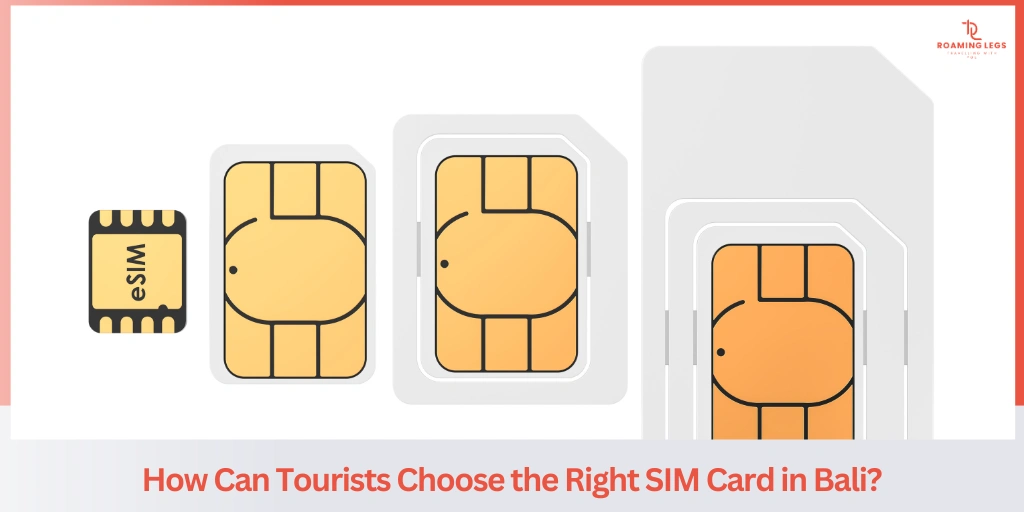
Physical SIM vs eSIM — Which One Makes Sense for You?
This is worth thinking about, especially if you have a newer phone. Most iPhones from iPhone 12 onwards, Samsung Galaxy S21 and above, and most OnePlus phones from 2022 support eSIM.
Here’s the honest comparison:
Physical SIM vs eSIM for Bali
Compare the two most common connectivity options for your Bali trip.
| Feature | Physical SIM | eSIM |
|---|---|---|
| Setup | Buy at airport or store | Activate online before landing |
| Cost | IDR 150,000–350,000 (₹840–₹1,960) | US$5–21 (₹420–₹1,760) |
| Connected on landing | No | Yes |
| Works on all phones | Yes | Only compatible phones |
| Local number for calls | Yes (some plans) | Data only (most plans) |
| Risk of losing card | Can lose the SIM | No physical card to lose |
Setup
Cost
Connected on landing
Works on all phones
Local number for calls
Risk of losing card
Best eSIM Options for Bali (2026)
The most important thing when choosing an eSIM is which Indonesian network it runs on. Some cheap eSIMs use Indosat or Smartfren — meaning the same patchy coverage problems as IM3.
You want Telkomsel or XL for Bali.
Best eSIM Providers for Bali
Popular digital SIM options for travelers visiting Indonesia.
| eSIM Provider | Network | Data | Cost (USD) | Approx. INR |
|---|---|---|---|---|
| Jetpac Indonesia | Telkomsel | 20GB | $21 | ₹1,760 |
| BaliEasy Telkomsel eSIM | Telkomsel | 21GB | $15 | ₹1,260 |
| Holafly Indonesia | Telkomsel | Unlimited | $19–$29 | ₹1,595–₹2,435 |
| Nomad Indonesia | Telkomsel | 10GB | ~$12 | ₹1,005 |
| Airalo Indonesia (Indotel) | Indosat | 10GB | ~$11 | ₹924 |
Jetpac Indonesia
BaliEasy Telkomsel eSIM
Holafly Indonesia
Nomad Indonesia
Airalo Indonesia (Indotel)
Not Sure Which SIM Card Is Best for Your Bali Itinerary?
Mobile coverage varies across Bali, especially in places like Nusa Penida and remote attractions. Tell us your travel dates, the places you plan to visit, and your group size on WhatsApp. We'll recommend the best SIM option for your route and help you build a practical day-by-day itinerary that minimizes travel time and keeps you connected throughout your trip.
Best SIM Choice
Choose the right network based on where you're actually travelling.
Smarter Itinerary
Plan each day to reduce unnecessary driving and backtracking.
Area-Specific Tips
Know where connectivity is limited before you arrive.
Free WhatsApp Planning
Get personalised SIM and itinerary advice from Bali travel experts.

The Nusa Penida Signal Problem (Read This Before Buying)
If your Bali trip includes Nusa Penida — Kelingking Beach, Diamond Beach, Angel’s Billabong — you need to know this before picking your SIM.
Nusa Penida has genuinely poor mobile coverage.
Not “a bit weak” — multiple dead zones at the most famous spots.
At Kelingking Beach viewpoint, Broken Beach, and along the west coast cliff roads, all three networks struggle once you are off the main roads.
Cliffs block the signal completely in many places.
Telkomsel holds on slightly longer than the others, but even Telkomsel goes dark at certain viewpoints.
XL and Indosat drop earlier and reconnect more slowly.
What this means practically for you:
- Download offline Google Maps for Nusa Penida before leaving the Bali mainland
- Screenshot your accommodation address and driver’s WhatsApp number
- Don’t count on live navigation while riding between spots on the west coast
- The east coast — Atuh Beach, Diamond Beach — has better signal than the west coast
This is not a reason to skip Nusa Penida.
It is just a reason to be prepared — and to choose Telkomsel over any cheaper alternative if the island is on your list.
Quick Things to Know Before You Buy
- Always ask the price before they touch your phone.
- Some airport kiosk staff will insert the SIM, activate it, and then quote a price much higher than the listed plan.
- Once it is in, people feel awkward about saying no.
- Your phone needs to be unlocked. Most Indian phones bought outright (from Amazon, Flipkart, or a retail store) are unlocked by default.
- But if you got your phone bundled with a carrier plan, check this before you leave.
- Hotspot sharing works on most plans. You can turn your Bali SIM into a hotspot and connect your travel partner’s phone, tablet, or laptop.
- Most Telkomsel and XL tourist plans allow this.
- Just confirm at the point of sale.
- Register the SIM properly. Indonesian law requires IMEI registration for all SIM cards.
- At official stores and airport counters, staff handle this for you using your passport.
- At small local shops, always ask them to complete the registration.
- An unregistered SIM can stop working after 24–48 hours.
FAQs About Bali SIM Cards for Indian Travelers
Frequently Asked Questions
Which SIM card is best for Bali tourists in 2026?
Telkomsel is the best overall choice. The Tourist SIMPATI card gives 25GB of data and 25 minutes of calls for around IDR 150,000 (₹840). It offers the strongest coverage across Ubud, Canggu, Seminyak, Uluwatu, Nusa Lembongan, and performs better than other networks on Nusa Penida.
Should I buy the SIM at Bali airport or in town?
Airport purchase is convenient but usually costs 30–40% more. Buy at the airport if you need data immediately. Otherwise, local GraPARI stores or Indomaret outlets offer better prices.
Does my Indian SIM work in Bali? Should I enable roaming?
Yes, but international roaming from Indian carriers is expensive. Switch off mobile data after landing and use a local SIM or eSIM instead.
Do I need my passport to buy a SIM card in Bali?
Yes. Indonesian regulations require passport registration. Official counters complete the process in about five minutes.
Is eSIM better than a physical SIM for Bali?
If your phone supports eSIM, it is very convenient because you arrive connected. Most eSIMs are data-only, while a Telkomsel physical SIM also offers voice services.
Which eSIM works best for Bali?
Jetpac Indonesia and BaliEasy Telkomsel eSIM are excellent choices because they use Telkomsel's network. Holafly is suitable for unlimited data users.
How much data do I need for a week in Bali?
Around 20GB is enough for most travelers. Families sharing a hotspot should consider 25–30GB.
Does the SIM card work on Nusa Penida?
Yes, although coverage varies. Telkomsel provides the strongest signal, but some western coastal attractions still experience weak reception.
Can I use hotspot on my Bali SIM?
Yes. Most Telkomsel and XL tourist plans support hotspot sharing, making them ideal for couples and families.
How much does a Bali SIM cost in Indian rupees?
A local Telkomsel tourist SIM with 25GB costs around ₹840. Airport prices are typically ₹1,400–₹1,960.
Can I use the same SIM for Lombok or the Gili Islands?
Yes. Indonesian SIM cards work nationwide. Telkomsel offers the most reliable coverage for island hopping.
Is 4G available in Bali?
Yes. Strong 4G coverage is available across major tourist destinations and is sufficient for maps, streaming, and video calls.
What apps should I download before landing in Bali?
Install Grab, Gojek, Google Maps (with offline maps), Klook, and your hotel's app before you travel.
Do You Need a Travel Adapter for Bali? A Simple Plug Guide for Indian Travellers
Do Indian Chargers Work in Bali?
Some do, some don’t — and it comes down to your plug shape, not the voltage.
Here’s the quick truth: Bali uses Type C and Type F sockets (two round pins), and runs on 230V, 50Hz — the exact same voltage as India. So your phone, laptop, and camera charger will charge safely.
The only question is whether the plug physically fits the hole.
If your Indian charger has the slim two round-pin (Type C) plug, it slides right in, no adapter needed.
But the big three-pin Indian plugs (Type D and Type M) won’t fit — you’ll need a small travel adapter for those.
That’s really the whole thing.
But there are a few details worth knowing before you pack — like which of your devices need an adapter, why you should never bother with a bulky voltage converter, whether your hair dryer will fry, and the one cheap thing that solves all of it.
Let me walk you through it the way I’d tell a friend flying out next week.
Bali Plugs at a Glance
A quick reference for Indian travellers.
| Detail | What You Need to Know |
|---|---|
| Socket types in Bali | Type C and Type F (two round pins) |
| Voltage | 230V, 50Hz, same as India |
| Voltage converter needed? | No, for phones, laptops and cameras |
| Indian Type C plug (slim 2-pin) | Fits directly, no adapter |
| Indian Type D / Type M plug (round 3-pin) | Needs a travel adapter |
| Easiest fix | One universal travel adapter (₹300–₹800) |
Socket types in Bali
Voltage
Voltage converter needed?
Indian Type C plug (slim 2-pin)
Indian Type D / Type M plug (round 3-pin)
Easiest fix
What Plug Types Does Bali Use?
Bali uses Type C and Type F — both have two round pins, the same style you see across most of Europe.
Type C is the common slim two-pin.
Type F is nearly identical but adds two little grounding clips on the sides.
Good news: a Type C plug fits happily into a Type F socket, so you don’t need to worry about telling them apart.
You’ll find these same sockets almost everywhere a traveller goes — hotels, villas, resorts, cafés, and coworking spaces in Canggu and Ubud. So once you’ve sorted one adapter, you’re covered for the whole island.
One thing worth knowing: a lot of newer Bali hotels and cafés now have USB ports built into the wall or bedside lamp.
If your device charges over USB, you can sometimes skip the plug question entirely and just plug the cable straight in.
Which of Your Indian Chargers Actually Need an Adapter?
This is the part people get confused about, so let’s make it dead simple. It depends on the plug on each charger, not the device.
Indian Plug Compatibility in Bali
Quick guide for Indian travellers.
| Indian Plug Type | What It Looks Like | Works in Bali? |
|---|---|---|
| Type C | Slim, two round pins | ✅ Fits directly |
| Type D | Three fat round pins in a triangle | ❌ Needs adapter |
| Type M | Like Type D but bigger pins | ❌ Needs adapter |
Type C
Type D
Type M
Here’s what this means in real life.
Most phone chargers, laptop bricks, and camera chargers sold in India these days use the slim Type C two-pin plug — so they’ll fit Bali sockets straight away.
The ones that usually cause trouble are older appliances and anything with the big round three-pin plug, like some hair dryers, trimmers, or older laptop chargers.
The mistake most people make is checking one charger, seeing it fits, and assuming everything’s fine — then finding their trimmer or power bank charger has a different plug.
Take two minutes before you pack and look at each plug.
Or honestly, just carry one universal adapter and stop worrying about it.
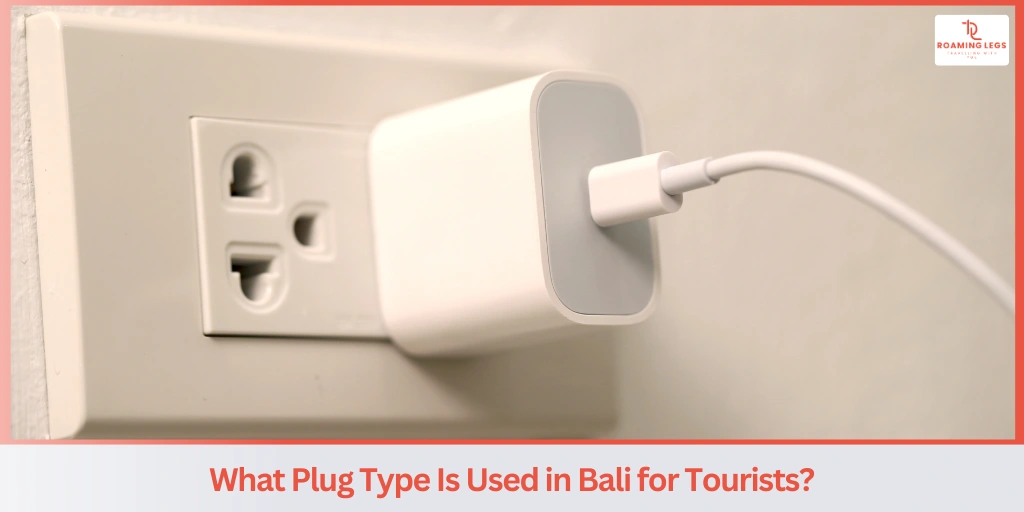
Don't Forget the Essentials for Your Bali Trip
Get our free Bali Packing Checklist for Indian Travellers on WhatsApp. It covers everything from travel documents and electronics to monsoon essentials and the small items most travellers realise they forgot only after arriving in Bali.
Complete Checklist
Everything to pack before you leave.
Travel Essentials
Adapters, documents, gadgets, and more.
WhatsApp Download
Receive your checklist instantly.
Do You Need a Voltage Converter for Bali?
No — and this is where a lot of people waste money.
Bali runs on 230V, and so does India.
Same voltage, same 50Hz frequency. So there’s nothing to “convert.
” A voltage converter is only needed when you go between very different systems, like carrying a 230V Indian device to a 110V country such as the USA.
Bali to India is not that situation.
Almost every modern gadget — phones, laptops, tablets, camera and power-bank chargers — is also dual voltage anyway.
Flip your charger over and read the small print.
If it says “Input: 100–240V,” it works anywhere in the world with just a plug adapter. Nearly all of them say exactly that.
So to be clear: you need a plug adapter (to change the shape), not a voltage converter (to change the power).
Big difference, and knowing it saves you buying a heavy, unnecessary box.
What About Hair Dryers, Straighteners and Trimmers?
This is the one exception, so read it if you’re carrying styling tools.
Small chargers are dual voltage, but some hair dryers and straighteners are not — especially older or cheaper ones. Check the label.
If it only says “230V” that’s fine for Bali (same voltage), you just need the right plug shape. The real risk is a single-voltage tool rated for a different region.
A more practical warning: high-wattage hair dryers (1500W+) can trip the sockets in smaller Bali villas, and cheap adapters aren’t built for that load.
Honestly, most decent Bali hotels already provide a hair dryer in the room — so the easiest move is to just leave yours at home and save the bag space.
For straighteners and trimmers, a good universal adapter is usually fine.
Which Adapter Should You Buy, and Where?
Get a universal travel adapter — the kind with a slide-out set of pins for different countries and a couple of USB ports built in.
One of these covers Bali, plus Dubai, Europe, Thailand, and most future trips.
That’s why it’s worth owning one properly rather than buying a cheap single-use plug.
Buy it in India before you fly. On Amazon or Flipkart, a solid universal adapter runs about ₹300–₹800. Brands like Belkin, Portronics, and Ambrane are easy to find.
Getting it before the trip is cheaper and means you’re not hunting for a shop the moment you land.
You can buy one in Bali too — at the Denpasar airport, electronics shops, and supermarkets like Pepito — but airport prices are noticeably higher and you don’t want to be sorting this out jet-lagged at 11 pm.
Buy at home.
One more tip from experience: get an adapter with at least 2 USB ports.
On a Bali trip you’re charging a phone, a power bank, maybe a smartwatch and earbuds every night, and villa sockets are often limited.
Multiple ports off one adapter saves a lot of juggling.
Planning Your Whole Bali Trip?
Skip hours of research. Share your travel dates and budget on WhatsApp, and we'll create a personalised Bali travel plan with flight guidance, visa-on-arrival information, villa recommendations, a day-by-day itinerary, and a realistic budget estimate. Delivered within 24 hours.
Flight Guidance
Choose the best travel options.
Hotels & Villas
Recommendations matched to your budget.
Daily Itinerary
A ready-to-follow travel plan.
24-Hour Delivery
Your personalised plan on WhatsApp.
Quick Packing List for Charging in Bali
Keep it simple. This is what actually earns its place in your bag:
- One universal travel adapter (with 2+ USB ports) — your must-have
- A power bank (10,000mAh is plenty) — for long days at temples, beaches, and rice terraces where sockets are scarce
- A multi-port USB charger — charge phone, watch, and earbuds off one wall socket
- Two extra charging cables — cables die on trips, and buying them in Bali costs more
- Skip: the voltage converter (don’t need it) and probably your hair dryer (hotels have them)
Note on power banks: carry them in your cabin bag, not checked luggage — airline rules don’t allow power banks in the hold. Keep it under 100Wh (a 10,000–20,000mAh bank is fine) and you’re good on IndiGo, Air India, and most carriers to Bali.
What Real Travellers Say
“I nearly bought a big voltage converter online before our Bali trip.
Roaming Legs told me not to bother — same voltage as India, just carry one adapter.
Saved me money and bag weight.
Everything charged fine.” — Sneha K., Mumbai, travelled February 2026
“Small thing, but they reminded us to keep the power bank in the cabin bag.
The couple next to us at check-in had theirs taken out of their checked suitcase. The little tips are why we book through them.
“ — Arjun & Meera, Bengaluru, travelled December 2025
Frequently Asked Questions
Bali Power Adapter & Charging FAQ for Indian Travellers
1Do Indian travellers need a power adapter for Bali?
If you use a slim Type C two-pin charger it usually fits directly. Three-pin plugs need a travel adapter. A universal adapter is the easiest option.
2What plug types are used in Bali?
Bali uses Type C and Type F sockets with two round pins.
3Is the voltage in Bali the same as India?
Yes. Both use 230V at 50Hz, so a voltage converter is not required for most devices.
4Will my Indian phone charger work in Bali?
Most modern chargers work without issues. You may only need a plug adapter depending on the plug type.
5Do I need a voltage converter?
No. Only a plug adapter may be needed.
6Can I use my laptop charger?
Yes. Most laptop chargers support 100–240V input.
7Will my hair dryer or straightener work?
Usually yes if rated for 230V, though hotels often provide hair dryers.
8Where can I buy a travel adapter?
It's usually cheaper to buy one in India before your trip.
9Do hotels provide adapters?
Some hotels do, but it's safest to carry your own.
10Can I charge using USB ports?
Many newer hotels and cafés have USB charging ports, but not all.
11Can I carry a power bank?
Yes. Keep it in your cabin bag and within airline limits.
12What's the easiest charging setup?
Carry one universal adapter, a multi-port charger, a power bank and spare cables.
How Much Cash Should You Carry to Bali? Here’s What Actually Works for Indian Travelers
How Much Cash Should You Carry to Bali? Here’s What Actually Works for Indian Travelers
So you’re going to Bali and wondering: how much cash should I actually carry? Good question — and one that most guides answer badly.
The short answer: bring enough USD from India to cover your first day, then withdraw IDR from ATMs inside banks once you land.
Don’t bring IDR from India (bad rates), don’t exchange everything at the airport (terrible rates), and don’t carry too much at once (unnecessary risk).
The full picture is a bit more nuanced, and that’s what this guide is for.
Here’s everything you need to know — daily budgets in INR and IDR, which ATMs to use, how to avoid the fake money changer scam that went viral on TikTok, and when cards actually work vs.
when you’ll need cash.
Bali Cash Quick Reference (July 2026)
| Traveler Type | Daily Cash Budget (IDR) | In Indian Rupees |
|---|---|---|
| Budget (solo) | IDR 3,00,000–5,00,000 | ₹1,600–2,700 |
| Mid-range (solo) | IDR 7,00,000–15,00,000 | ₹3,800–8,100 |
| Luxury (solo) | IDR 20,00,000+ | ₹10,800+ |
| Mid-range (couple) | IDR 12,00,000–25,00,000 | ₹6,500–13,500 |
IDR 3,00,000–5,00,000
In Indian Rupees₹1,600–2,700
IDR 7,00,000–15,00,000
In Indian Rupees₹3,800–8,100
IDR 20,00,000+
In Indian Rupees₹10,800+
IDR 12,00,000–25,00,000
In Indian Rupees₹6,500–13,500
What Does ₹1 Actually Get You in Bali?
This is the first thing people get confused about.
When you land in Bali, you’ll suddenly be dealing in “millions” — and that sounds scary until you understand the conversion.
As of July 2026, ₹1 gets you roughly IDR 186. So:
- A plate of nasi goreng at a local warung costs IDR 30,000 — that’s about ₹161
- A Grab bike across Ubud costs IDR 20,000 — about ₹107
- An entrance ticket to Tirta Gangga water palace is IDR 50,000 — about ₹269
- A nice dinner for two at a mid-range restaurant runs IDR 3,00,000–4,00,000 — about ₹1,600–2,150
Once you internalize this, Bali starts to feel incredibly affordable.
The trouble only happens when people don’t check their exchange rate and hand over money at bad counters.
More on that below.
How Much Cash Do You Need Per Day in Bali?
This depends on three things: your travel style, whether your hotel is prepaid, and which areas you’re visiting.
Seminyak and Canggu tend to cost more than Ubud or Sanur for day-to-day spending.
Budget Traveler (Solo)
IDR 3,00,000–5,00,000 per day (₹1,600–2,700)
You’re eating at warungs (IDR 25,000–40,000 a meal), renting a scooter (IDR 60,000–80,000/day), and visiting temples where the entrance fee is free or under IDR 50,000.
Totally doable, and honestly a great way to see the real Bali.
Mid-Range Traveler (Solo)
IDR 7,00,000–15,00,000 per day (₹3,800–8,100)
This covers meals at proper restaurants, a private driver for the day (IDR 6,00,000–8,00,000), a couple of activity entrance tickets, and a cafe coffee or two.
Most Indian travelers visiting Bali fall in this range.
Mid-Range Couple
IDR 12,00,000–25,00,000 per day (₹6,500–13,500)
Double the solo budget and you’re in the right zone.
Private driver costs stay the same (it’s per car, not per person), so couples actually save money on transport.
Luxury Traveler
IDR 20,00,000+ per day per person (₹10,800+)
If you’re dining at Sarong or Merah Putih, doing private spa sessions, or visiting beach clubs like Potato Head or Finns — you’re in luxury territory.
Cards work at most of these places, but you’ll still need cash for tips and incidentals.
How Much Cash for a 7-Day Bali Trip from India?
Assuming your hotel is prepaid (which it almost always is when booking through a travel agent or OTA):
| Travel Style | Total Cash Budget for 7 Days (Couple) | In INR |
|---|---|---|
| Budget | IDR 40,00,000–70,00,000 | ₹21,500–37,600 |
| Mid-Range | IDR 85,00,000–1,75,00,000 | ₹45,700–94,000 |
| Luxury | IDR 2,00,00,000+ | ₹1,07,500+ |
IDR 40,00,000–70,00,000
Approx. INR₹21,500–37,600
IDR 85,00,000–1,75,00,000
Approx. INR₹45,700–94,000
IDR 2,00,00,000+
Approx. INR₹1,07,500+
Get a Free Bali Budget Breakdown on WhatsApp
Not sure what your Bali trip will actually cost? Share your travel dates, travel style, and number of travellers. We will send a detailed day-by-day budget estimate within 24 hours.
What Should You Use Cash For in Bali?
Bali is not fully cashless — not even close. Here’s where you’ll always need cash:
Always pay with cash:
- Local warungs and street food stalls
- Motorbike taxis (ojek) and traditional transport
- Parking fees (IDR 2,000–5,000 at most spots)
- Temple entrance tickets and donations
- Traditional markets — Ubud Art Market, Sukawati Market, Beringkit Market
- Small boutique shops and souvenir stores
- Tipping your driver, guide, masseuse, or villa staff
- Small cafes and local smoothie bowls
Cards work fine at:
- Hotels, villas, and resorts
- Supermarkets (Bintang, Circle K, Indomaret, Hardy’s)
- Large restaurants and beach clubs
- Shopping malls (Discovery Mall, Beachwalk, Level 21)
- QRIS-enabled shops (Indonesia’s QR payment system — scan and pay via UPI-like interface)
One thing most guides miss: UPI does not work in Bali. GPay, PhonePe, Paytm — none of these function internationally. Your Indian UPI is India-only. Don’t assume otherwise.
How Should You Bring Money to Bali from India?
This is where most Indian travelers make expensive mistakes. Here’s what actually works:
Option 1: Multi-Currency Forex Card (Best Option)
Load a forex card with USD (not IDR — IDR isn’t available on most Indian forex cards).
In Bali, use the card at ATMs inside BCA or BNI banks to withdraw IDR.
You’ll get a fair exchange rate, and your withdrawal fees are usually USD 2–3 per transaction.
Recommended cards: Niyo Global, BookMyForex Prepaid Card, Axis Bank Multi-Currency Forex Card.
Apply at least 10–14 days before your trip — physical delivery takes time.
Option 2: Carry USD Cash, Exchange in Bali
This is what most experienced Bali travelers do, especially Indians.
Carry USD 200–300 per person and exchange it at a licensed money changer in Bali (not the airport, not random street kiosks — more on this below).
USD gets better rates than exchanging INR directly in Bali.
Can you carry USD from India? Yes, up to USD 3,000 in cash per person under RBI guidelines.
For most 7–10 day trips, USD 200–400 is more than enough.
Option 3: Use Your Indian Debit/Credit Card at ATMs
This works, but it’s the most expensive option.
Most Indian banks charge 3–3.5% forex markup plus 18% GST on top.
On a ₹50,000 withdrawal, that’s roughly ₹2,900 extra in fees.
If you do use your Indian bank card, make sure international transactions are enabled before you leave.
Call your bank or do it through net banking — some banks turn this off by default.
The Fake Money Changer Scam in Bali — Read This Before You Exchange a Single Rupee
This is the most important section in this article.
Fake money changers in Bali are a well-known problem — and it’s gotten worse, not better.
A TikTok video showing the sleight-of-hand trick at a money changer in Ubud got 1.9 million views in 2025.
The trick is fast, smooth, and hard to catch in real time.
How it works: The cashier counts your notes, then folds and refolds the bundle quickly, palming a few bills in the process.
By the time you walk out, you’re short IDR 1,00,000–5,00,000 and you don’t even know it.
The lure: These fake changers often display rates like IDR 16,800–17,000 per USD, when the real market rate is around IDR 16,200–16,400.
That “better rate” is how they get you in the door.
How to protect yourself:
- Use only licensed money changers — look for the “Bank Indonesia Authorized” sticker. You can verify any money changer at moneychangerbali.com (Bank Indonesia’s official portal).
- Trusted names: PT BMC (Bali Money Changer), Central Kuta Money Changer, and exchange counters inside banks (BCA, Mandiri, BNI).
- Always count your money yourself, in front of the cashier, before you walk away. Count twice.
- If the cashier rushes you or takes the notes back to “recount” — that’s a red flag. Walk out.
Skip the airport money changer. Ngurah Rai International Airport rates are typically 5–8% worse than city counters.
Exchange just enough at the airport for your first taxi ride (IDR 1,50,000–2,00,000 should cover it), then exchange properly in the city.
ATM Tips for Indian Travelers in Bali
ATMs are everywhere — but not all of them are equally safe or equally cheap.
Here’s what works:
Use ATMs inside these banks: BCA, BNI, Mandiri, Bank Rakyat Indonesia (BRI).
These are the safest and have the lowest third-party fees (usually IDR 30,000–50,000 per withdrawal).
Avoid: Standalone ATMs in convenience stores, tourist areas with no bank branding, or machines that look modified or unusually bulky around the card slot (possible skimmer attached).
Watch for the DCC prompt. When you insert your Indian card into a Bali ATM, it may ask: “Would you like to complete this transaction in INR?”
Always say NO. Always choose IDR. Choosing INR activates Dynamic Currency Conversion (DCC) — which lets the ATM use their own exchange rate (usually 5–7% worse than the real rate).
The ATM makes money; you lose money.
Withdrawal limits: Most Bali ATMs cap withdrawals at IDR 12,50,000–25,00,000 per transaction (roughly ₹6,700–13,400).
If you need more, do two separate transactions.
Planning Your Bali Trip? Save 20+ Hours of Research
Share your travel dates, group size, and budget. We will create a ready-made Bali itinerary with day-by-day activities, local restaurant suggestions, and estimated costs in INR.
The DCC Scam at Card Machines (Restaurants, Shops, Hotels)
This isn’t just an ATM problem.
Card machines at restaurants, shops, and even some hotels try the same trick.
When you tap or swipe your Indian card, the machine may ask: “Pay in INR or IDR?”
Always choose IDR. Every single time. No exceptions.
Choosing INR at a restaurant card machine can cost you 4–7% extra.
On a ₹5,000 dinner, that’s an extra ₹200–350 that goes straight to the merchant’s bank. It happens fast, and the person taking payment may not even explain what the choice means.
Does Bali Have a Proof of Funds Requirement in 2026?
Yes — and this caught a lot of Indian travelers off guard in early 2026.
For the standard Visa on Arrival (30 days), there’s no formally fixed minimum, but immigration officers can ask to see that you have sufficient funds.
The general guidance is USD 100 per day of your stay — so for a 7-day trip, having USD 700 (or equivalent) accessible on your card or as cash is advisable.
For the 60-day Visit Visa (C1), the requirement is stricter — a minimum bank balance of USD 2,000 with 3 months of bank statements.
Most Indian tourists visit on Visa on Arrival and have no issues.
Just make sure your card or banking app shows a reasonable balance if asked.
Showing your live banking app is accepted.
Quick Money Checklist Before You Fly to Bali
Here’s a simple pre-departure checklist to make sure you’re sorted:
- [ ] Enable international transactions on your Indian debit/credit card
- [ ] Apply for a multi-currency forex card (Niyo Global or similar) — do this 2 weeks before
- [ ] Carry USD 200–300 per person in cash for exchange in Bali (buy from BookMyForex or Thomas Cook for better rates than airport)
- [ ] Keep just IDR 1,50,000–2,00,000 worth from the airport counter for your first taxi
- [ ] Save the moneychangerbali.com link on your phone — verify any money changer before exchanging
- [ ] Set a daily cash budget in IDR and stick to it
- [ ] Keep emergency cash in your hotel safe, separate from your wallet
- [ ] Check your bank’s ATM withdrawal fees for international transactions before you go
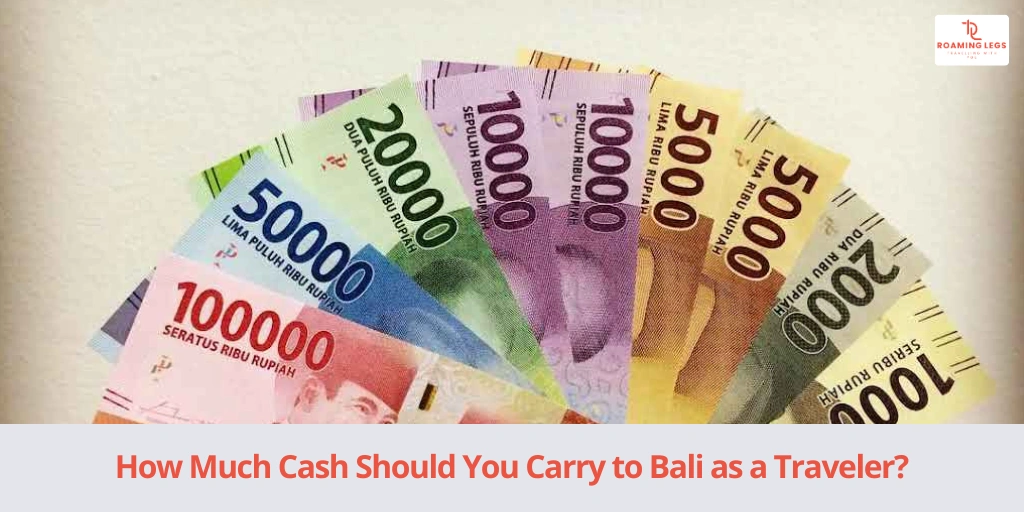
Testimonials
“We were so worried about managing money in Bali, but the team at Roaming Legs gave us a day-by-day cash plan before we even boarded.
Saved us from a really sketchy money changer in Seminyak.” — Priya & Rohit S., Mumbai | Bali, January 2026
“The tip about always choosing IDR at card machines saved us easily ₹3,000+ across our 8-day trip.
Small things make a big difference.” — Karan M., Bangalore | Bali, March 2026
Frequently Asked Questions About Carrying Cash in Bali
How much cash should I carry to Bali from India as a solo traveler?
For a 7-day solo trip with accommodation pre-booked, carry the equivalent of ₹20,000–40,000 in cash as USD, then exchange it in Bali. For daily expenses, keep IDR 5,00,000–10,00,000 accessible per day depending on your spending style.
Is IDR available in India before my trip?
Some banks and forex providers offer IDR in India, but availability is limited and rates are usually not attractive. Carrying USD from India and exchanging it at licensed money changers in Bali generally gives better value.
How much IDR should I carry on me each day in Bali?
A mid-range solo traveler can keep IDR 7,00,000–12,00,000 per day for meals, transport, activities, and shopping. Couples can budget IDR 12,00,000–20,00,000 per day. Keep only daily cash in your wallet and store the rest safely.
Should I use my Indian SBI/HDFC/ICICI debit card in Bali ATMs?
You can, but regular Indian debit cards may include forex markup, GST, and ATM fees. A zero-forex travel card or forex card is usually a cheaper option.
Can I use Google Pay or PhonePe in Bali?
No. Indian UPI apps like Google Pay, PhonePe, and Paytm do not work in Bali like they do in India. Carry a forex card, international card, and some Indonesian Rupiah.
What denominations should I ask for when exchanging money in Bali?
Ask for a mix of IDR 50,000 and IDR 1,00,000 notes for bigger payments, and IDR 10,000 and IDR 20,000 notes for smaller expenses like parking, local meals, and donations.
Is it safe to carry a lot of cash in Bali?
Bali is generally safe. Avoid carrying your full travel budget outside. Split your money between your wallet and hotel safe, especially in crowded areas.
Which areas in Bali have the most ATMs?
Kuta, Seminyak, Canggu, Ubud, and Nusa Dua have many ATMs. Withdraw cash before visiting areas like Nusa Penida, Munduk, or Amed where ATM access is limited.
What happens if I run out of cash in Bali?
You can withdraw IDR from major bank ATMs such as BCA and BNI in tourist areas. If your card has issues, hotels can often help arrange alternatives.
Are credit cards better than debit cards for Bali?
Credit cards can offer better fraud protection and may have better exchange rates. Use them at hotels and restaurants where accepted, and keep cash for smaller local purchases.
How much should I budget for tipping in Bali?
Tipping is appreciated but not compulsory. Budget around IDR 2,00,000–3,00,000 for tips during a 7-day couple trip.
What's the best way for Indian tourists to manage currency in Bali?
The best combination is USD cash for exchange, a forex card for withdrawals, and an international credit card for hotels and restaurants.
Can I use Rupees (INR) directly in Bali?
No. Bali uses Indonesian Rupiah (IDR). INR is not accepted for regular purchases.
Do I need to declare cash at the airport?
If carrying more than IDR 1,00,000,000 into or out of Indonesia, you must declare it. Most holiday travelers do not reach this limit.
Ready to Plan Your Bali Trip?
Managing money in Bali becomes simple when you know what works. Carry some USD, exchange at trusted counters, use bank ATMs, choose IDR at card machines, and keep your daily cash needs planned.
We have helped 500+ Indian travelers plan Bali trips. If you want a custom budget breakdown based on your dates and travel style, we can help you plan it before your trip.
Can You Use Indian Rupees in Bali or Vietnam? The Honest Currency Guide for Indian Travellers
So you’ve booked your Bali or Vietnam trip, and now you’re staring at your wallet wondering — can I just carry rupees and exchange them there?
Or do I need to figure this out before I leave?
Short answer: yes, you need to sort this before you go.
Indian Rupees (INR) are not accepted for payments in either Bali or Vietnam.
Not at restaurants, not at hotels, not at markets. The moment you land, you are dealing with a completely different currency — and if you haven’t planned for it, your first few hours in either country can get genuinely stressful.
This guide tells you exactly what currency to carry, the cheapest ways to get it, which cards actually save you money, what the current exchange rates look like, and the mistakes Indian travellers make that cost them real money.
What Currency Is Used in Bali and Vietnam?
Two different countries, two different currencies — and both of them have a learning curve.
Bali (Indonesia) uses the Indonesian Rupiah (IDR), symbol Rp.
The numbers are large — a casual lunch might cost Rp 80,000, a cab ride Rp 50,000, and a hotel Rp 1,500,000 per night.
As of July 2026, 1 Indian Rupee = approximately 183–190 Indonesian Rupiah.
So that Rp 1,500,000 hotel room is roughly ₹8,000.
Once you get the hang of dividing by 185, you’re fine.
Vietnam uses the Vietnamese Dong (VND).
The denominations are even more extreme — ₹100 gets you roughly 283 VND.
A street food meal in Hanoi might cost 60,000 VND, which is just ₹212.
The confusing part: the 20,000 VND and 500,000 VND notes look similar, and polymer notes stick together.
Count every time.
Neither destination accepts INR at shops, restaurants, taxis, or markets.
A few high-end hotels might quote in USD, but even then, they won’t take rupees.
How Much Does INR Actually Get You?
| Currency Pair | Approximate Rate (July 2026) |
|---|---|
| 1 INR → Indonesian Rupiah (IDR) | ~183–190 IDR |
| 1 INR → Vietnamese Dong (VND) | ~280–295 VND |
| ₹10,000 → IDR | ~18,30,000–19,00,000 IDR |
| ₹10,000 → VND | ~28,00,000–29,50,000 VND |
1 INR → ~183–190 IDR
Example₹10,000 → ~18,30,000–19,00,000 IDR
1 INR → ~280–295 VND
Example₹10,000 → ~28,00,000–29,50,000 VND
Planning Bali or Vietnam? Get Your Real Daily Budget Breakdown
Not sure how much you should actually budget for your trip? Share your travel dates, trip duration, and travel style on WhatsApp, and we will prepare a realistic per-day cost breakdown based on your plans.
Get clear numbers for stays, food, transport, activities, and daily expenses — without unnecessary extras or confusing estimates.
Bali Currency Guide for Indian Travellers
The biggest mistake Indian travellers make in Bali is arriving at Ngurah Rai International Airport and exchanging all their money there.
Airport counters in Bali are consistently 3–6% worse than the rates you’ll get in town.
Change just enough at the airport to cover a taxi or GrabCar to your hotel — around Rp 100,000–200,000 (₹540–₹1,080).
Sort the rest in Seminyak, Ubud, or Canggu.
Where to exchange money in Bali:
The most trusted licensed money changers in Bali are BMC (Bali Money Changer), Central Kuta Money Exchange (PT Central Kuta), and Permata Bali.
All three have Bank Indonesia licence certificates displayed on the wall — check for this before handing over your cash.
Do not exchange money at street-side, unlicensed changers even if they advertise better rates.
Scams include shortchanging, distraction tricks, and fake notes returned in the middle of a big bundle.
Can you exchange INR directly in Bali?
Yes, most licensed money changers in Bali accept Indian Rupees.
But the rate for INR is often slightly worse than for USD.
A practical move many Indian travellers use: carry a portion of your forex budget in USD, which tends to get better rates at Bali changers.
So if you have ₹30,000 to exchange, convert ₹15,000–₹20,000 to USD in India first through a forex dealer like BookMyForex or Thomas Cook, and exchange the rest in Bali as INR.
Cash or card in Bali?
Use both. The recommended split is 60–70% on a forex card loaded with IDR and 30–40% as IDR cash. Here’s why:
Cash is still king at traditional markets like Ubud Art Market and Sukawati Market, street food warungs, scooter rentals, temple entrance fees (most charge Rp 20,000–50,000), parking, and tips.
A good daily cash budget for Bali is Rp 500,000–1,500,000 (₹2,700–₹8,100) depending on your travel style.
Cards are accepted at hotels, beach clubs like Ku De Ta and Potato Head, shopping malls, larger restaurants, and tour operators booking activities like ATV rides with Mason Adventures or sunrise treks to Mount Batur.
Note: many Bali establishments add a 2–3% surcharge for card payments.
Ask before you swipe.
Best ATMs in Bali:
Use BCA or BNI ATMs — they have the most reliable withdrawal limits and lowest additional fees for foreign cards.
Avoid standalone ATMs not attached to a bank building, especially in tourist areas.
Always decline the ATM’s “Dynamic Currency Conversion” offer — it charges you an extra 3–5% to convert into INR on the spot.
Always choose to be charged in IDR.
Vietnam Currency Guide for Indian Travellers
Vietnam is slightly more cash-heavy than Bali, so plan accordingly.
Cities like Hanoi, Ho Chi Minh City (Saigon), and Da Nang have plenty of ATMs and card-accepting restaurants, but once you move to smaller towns, night markets, or street food alleys, you will need VND cash.
Load more cash than you’d carry in Bali.
Where to exchange money in Vietnam:
The best strategy most experienced travellers use: convert INR to USD in India before you fly (through BookMyForex, Orient Exchange, or your local RBI-authorised forex dealer), then exchange USD to VND at a licensed gold shop (tiem vang) in Hanoi’s Old Quarter or HCMC’s District 1.
Gold shops in Vietnam have a long tradition of currency exchange and consistently offer better USD-to-VND rates than airport counters or banks.
Avoid airport exchange counters at Tan Son Nhat (HCMC) and Noi Bai (Hanoi) for anything beyond the minimum to cover your taxi.
Vietnamese Dong is now directly purchasable in India through authorized dealers like Orient Exchange — convenient if you prefer to arrive with local currency already in hand.
Can you exchange INR directly in Vietnam?
It’s possible at some authorized money changers, but INR is not widely traded in Vietnam.
Availability is limited, and the rates are generally worse than for USD or EUR.
Don’t rely on this as your primary strategy.
Best ATMs in Vietnam:
Use VPBank ATMs — as of 2026, most Indian cards work smoothly with only your Indian bank’s fees (roughly ₹125 + 3.5% conversion per withdrawal).
Avoid TPBank (which started charging a 3.3% machine fee in late 2025) and standalone BIDV machines that charge a percentage-based fee instead of a flat one.
UPI does not work in Vietnam — MoMo, ZaloPay, and VietQR all require a Vietnamese bank account.
Cards and cash only.
Not Sure How Much Cash to Carry for Bali or Vietnam?
Managing money abroad can be confusing. We have planned hundreds of trips for Indian travelers and can help you decide the right balance between cash and cards.
Send us your itinerary on WhatsApp and we will share a practical money plan for your route — including how much cash to carry, how much to keep on card, and the best places to exchange currency.
Best Forex Cards for Indian Travellers Going to Bali or Vietnam (2026)
The forex card question comes up constantly — and the honest answer is: the right card depends on how you spend.
Niyo Global Card (DCB Bank): Zero forex markup, real-time interbank rates, and the first four international ATM withdrawals per month are free.
Best for travellers who will mix card payments and ATM withdrawals.
The app is functional, not fancy. Requires you to open a DCB savings account.
BookMyForex WOW Card: Zero cross-currency markup on supported currencies, competitive loading rates, and you can lock in the exchange rate when you load.
Best if you want rate certainty before your trip.
HDFC Multicurrency Platinum / Axis Multi-Currency: Legacy bank cards. Reliable and widely accepted, but charge 3–3.5% cross-currency markup.
Use only if you’re already banking with HDFC or Axis and don’t want to set up a new card.
Scapia Card: Worth considering if you’re booking hotels and activities through the app — the cashback offers can be significant for certain properties.
Less efficient than Niyo for pure ATM withdrawals.
For most Indian travellers heading to Bali or Vietnam, Niyo Global + BCA/VPBank ATMs is the lowest-cost combination.
Activate international transactions at least 24 hours before departure, and test your card at an Indian ATM first.
How Much Cash Should You Carry? A Realistic Budget Guide
| Trip Style | Bali — Per Day (Cash Only) | Vietnam — Per Day (Cash Only) |
|---|---|---|
| Budget traveller |
Rp 300,000–500,000 (₹1,620–₹2,700) |
VND 300,000–500,000 (₹1,060–₹1,770) |
| Mid-range traveller |
Rp 700,000–1,500,000 (₹3,780–₹8,100) |
VND 700,000–1,200,000 (₹2,470–₹4,240) |
| Comfortable traveller |
Rp 1,500,000–3,000,000 (₹8,100–₹16,200) |
VND 1,200,000–2,500,000 (₹4,240–₹8,800) |
Rp 300,000–500,000 (₹1,620–₹2,700)
Vietnam Daily CashVND 300,000–500,000 (₹1,060–₹1,770)
Rp 700,000–1,500,000 (₹3,780–₹8,100)
Vietnam Daily CashVND 700,000–1,200,000 (₹2,470–₹4,240)
Rp 1,500,000–3,000,000 (₹8,100–₹16,200)
Vietnam Daily CashVND 1,200,000–2,500,000 (₹4,240–₹8,800)
Quick Tips to Avoid Losing Money on Currency Exchange
In Bali:
- Never exchange money at the airport for large amounts — rates are 3–6% worse
- Use only licensed changers with the Bank Indonesia licence on the wall (BMC, Central Kuta, Permata Bali)
- Always count your notes at the counter before you walk away — shortchanging is the most common scam
- Ask for a mix of smaller denominations: Rp 10,000, 20,000, 50,000 — useful for taxis, tips, and temple donations
- Decline ATM Dynamic Currency Conversion — always choose to pay in IDR
In Vietnam:
- Convert INR to USD in India, then exchange USD to VND at a gold shop (tiem vang) in Hanoi or HCMC for best rates
- Use VPBank ATMs; avoid TPBank and airport standalone machines
- Watch the 20,000 VND and 500,000 VND notes — they look almost identical
- Keep a small USD reserve (around $50–100) as emergency backup for smaller towns
What Indian Travellers Actually Ask Us
Here’s what couples and families ask our team every week before a Bali or Vietnam trip:
“Nitin, we are going to Bali for 10 nights from Mumbai with our family.
Should we carry USD or INR or just use a card?”
Our answer: carry a Niyo card loaded with IDR, take enough USD to exchange at a licensed changer for your first few days’ cash, and keep your regular debit card as a BCA ATM backup.
Avoid the airport exchange counters entirely for anything over Rp 200,000.
“We are a couple going to Vietnam for 8 days. The guides say USD is better — is that true?”
Yes, in Vietnam, USD gets you a better exchange rate at gold shops than INR does.
Buy USD before you fly, exchange to VND at a reputable tiem vang in Hanoi or HCMC, and use VPBank ATMs when you need more cash mid-trip.
Testimonials
Rajan & Priya Mehta, Ahmedabad — Bali, March 2026 “We almost exchanged everything at the Bali airport until the Roaming Legs team told us not to.
We changed just Rp 200,000 at the airport and got the rest from Central Kuta Money Exchange the next morning.
The rate difference was significant — we saved almost ₹3,000 just by waiting.
The Niyo card worked perfectly at BCA ATMs.”
Sameer Kapoor, Pune — Vietnam, January 2026 “Vietnam’s currency confused me completely at first — I couldn’t tell if 500,000 VND was a lot or nothing.
The team sent us a simple conversion cheat sheet and helped us set up the cash split before we flew.
Hanoi gold shops gave us a far better rate than what the airport would have.”
Frequently Asked Questions
Direct Flights from India to Bali in 2026 — The Real Picture, City by City
Almost every Indian traveler planning a Bali trip asks the same thing upfront: “Is there a direct flight?”
And the answer is not a simple yes or no — it depends entirely on which city you are flying from.
Some cities have genuine non-stop flights to Bali right now.
Most cities do not, and you will connect through Singapore, Kuala Lumpur, or Bangkok.
That is not a problem — but you need to know the difference so you book the right flight and do not get surprised by a 14-hour itinerary when you expected an 8-hour one.
Here is the honest, city-by-city breakdown.
Which Indian Cities Have Direct Flights to Bali?
As of July 2026, these are the routes with confirmed non-stop service to Ngurah Rai International Airport (DPS), Bali:
Delhi (DEL) → Bali (DPS) Air India operates a daily non-stop flight from Indira Gandhi International Airport to Denpasar.
Flight time is approximately 7 hours 30 minutes.
This is the most reliable and consistent direct route from India to Bali.
IndiGo also operates on this route seasonally — worth checking if you want a budget option on the same non-stop path.
Bengaluru (BLR) → Bali (DPS) IndiGo operates a daily non-stop flight from Kempegowda International Airport.
Flight time is approximately 6 hours 30 minutes — making this the shortest India-to-Bali connection available.
If you are flying from South India and your home airport is Bengaluru or you are close to it, this is genuinely one of the most convenient routes in the India-Bali network.
Chennai (MAA) → Bali (DPS) IndiGo operates year-round direct flights from Chennai International Airport.
Flight time is approximately 5 hours 30 minutes — actually the shortest in terms of air time because of Chennai’s geographic position.
Worth checking availability on specific dates, as schedules can vary.
Bhubaneswar (BBI) → Bali (DPS) IndiGo operates year-round direct flights from Biju Patnaik International Airport.
This is a lesser-known route but genuinely useful if you are traveling from Odisha or Eastern India and want to avoid an unnecessary domestic connection to Delhi or Mumbai.
Mumbai (BOM) → Bali (DPS) Mumbai has seasonal direct flights — IndiGo operates them during peak travel periods.
When available, flight time is approximately 8 hours.
Outside peak season, Mumbai travelers typically connect through Kuala Lumpur or Singapore.
What this means in practice: If you are flying from Delhi, Bengaluru, or Chennai, a true non-stop to Bali is available today.
For Mumbai it depends on the season.
For every other Indian city — Hyderabad, Kolkata, Pune, Ahmedabad, Jaipur, Kochi, Chandigarh, and so on — you will have one stop.
If You Are Connecting — Which Hub Should You Choose?
Most Indian travelers will go through one of three Southeast Asian hubs: Singapore (SIN), Kuala Lumpur (KUL), or Bangkok (BKK).
Each works differently.
Here is what you actually need to know.
Via Singapore (Changi Airport — SIN)
Airlines: Singapore Airlines, Scoot (Singapore Airlines’ budget arm)
Typical total travel time: 10–12 hours including layover
Typical layover: 2–5 hours at Changi
Changi Airport is genuinely one of the best airports in the world to transit through.
Clean, fast, well organized.
If your layover is over 5 hours, Singapore Airlines offers a free city tour for transit passengers — you actually get to spend time in Singapore at no extra cost.
The SIN–DPS leg takes about 2 hours 20 minutes, which is one of the shortest final legs to Bali.
Best for: Travelers who want a comfortable connecting experience and do not mind paying slightly more.
Singapore Airlines especially is a full-service airline — meals included, good legroom, reliable service.
Return fare range: ₹35,000 – ₹65,000 per person (economy, from major Indian metros, off-peak)
Via Kuala Lumpur (KLIA2 — KUL)
Airlines: AirAsia, Malaysia Airlines, Batik Air
Typical total travel time: 9–11 hours including layover
Typical layover: 2–5 hours at KLIA2
Kuala Lumpur is consistently the cheapest routing from India to Bali.
AirAsia is the main budget player — available from Delhi, Mumbai, Bengaluru, Kolkata, Hyderabad, Kochi, and more.
KLIA2 (the budget terminal) is functional but basic — nothing like Changi. If the layover is short (2-3 hours), it is fine.
If you have 5+ hours, it gets dull.
One thing to be careful about with AirAsia: base fares look very low but meals, checked baggage, and seat selection are all add-ons.
Always add the extras before comparing with other airlines — the all-in price can look different from the advertised fare.
Best for: Budget-conscious travelers who want to minimize the flight cost and do not mind a no-frills airport experience.
Return fare range: ₹16,000 – ₹35,000 per person (economy, off-peak, all-in including baggage)
Via Bangkok (Suvarnabhumi — BKK)
Airlines: Thai Airways, Thai AirAsia, VietJet Air
Typical total travel time: 10–13 hours including layover
Typical layover: 3–6 hours at Suvarnabhumi
Bangkok is the middle-ground option — usually slightly cheaper than Singapore but more comfortable than KLIA2. Thai Airways is full-service.
Thai AirAsia is budget.
VietJet occasionally has attractive fares too, though it is an ultra-low-cost carrier with similar add-on structure to AirAsia.
Suvarnabhumi Airport is large and has decent food and lounge options for a layover.
The BKK–DPS leg takes about 4 hours.
Best for: Travelers where Singapore and KL flights are both expensive or unavailable on their preferred dates.
Also a natural option if you want to extend the trip with a Bangkok stopover on the way out or back.
Return fare range: ₹22,000 – ₹42,000 per person (economy, off-peak)
Planning a Bali Trip and Not Sure Which Route to Book?
Your flight route can have a huge impact on your overall travel experience. Choosing the wrong connection can add 4 to 6 unnecessary hours to your journey and often costs more than a better alternative. Share your departure city and travel dates on WhatsApp, and we'll recommend the most convenient flight routing along with the typical airfare range for your trip.
Best Flight Route
Find the fastest and most convenient way to reach Bali from your city.
Typical Fare Range
Know what you should realistically expect to pay before booking.
Avoid Long Layovers
Reduce unnecessary travel time with smarter routing recommendations.
Free WhatsApp Advice
Receive personalised flight recommendations based on your travel dates.
What Flights from India to Bali Actually Cost (Real Numbers)
Typical return airfare ranges based on route and season.
| Route | Type | Off-Peak Return Fare (per person) | Peak Season Return Fare (per person) |
|---|---|---|---|
| Delhi → Bali (Air India direct) | Non-stop | ₹28,000–₹42,000 | ₹50,000–₹75,000 |
| Bengaluru → Bali (IndiGo direct) | Non-stop | ₹26,000–₹40,000 | ₹48,000–₹70,000 |
| Any city → Bali via KL (AirAsia) | 1 stop | ₹16,000–₹30,000 | ₹35,000–₹55,000 |
| Any city → Bali via Singapore (SIA) | 1 stop | ₹35,000–₹55,000 | ₹60,000–₹90,000 |
| Any city → Bali via Bangkok | 1 stop | ₹22,000–₹40,000 | ₹42,000–₹65,000 |
Delhi → Bali (Air India direct)
Bengaluru → Bali (IndiGo direct)
Any city → Bali via KL (AirAsia)
Any city → Bali via Singapore (SIA)
Any city → Bali via Bangkok
What counts as peak season for flights to Bali from India:
- December 15 – January 10 (Christmas, New Year, winter holidays)
- Late June – early August (school summer holidays)
- Diwali week (October/November)
What counts as off-peak (cheapest fares):
- February and March (after New Year holiday crowd, before summer)
- October (after festive season, before December peak)
- Shoulder months of May and September
One thing most articles will not tell you: connecting flights via Kuala Lumpur are sometimes 20–30% cheaper than a direct Delhi–Bali flight, even accounting for the extra travel time.
If you are price-sensitive and the 2–3 extra hours of transit do not bother you, a KL connection from any major Indian city can genuinely save ₹6,000–₹15,000 per person on the return fare.
When to Book Your India–Bali Flight
There are a few timing rules that consistently work:
For off-peak travel (February, March, September, October): Book 40–60 days in advance.
Waiting longer than this rarely helps on these months and can sometimes push prices up.
For peak travel (December–January, July–August): Book 90–120 days in advance.
For December specifically — especially the 21st December to 7th January window — fares go up sharply even at 90 days.
The earlier you lock this in, the better.
The cheapest individual day to fly: Generally Tuesdays and Wednesdays.
Friday and Sunday departures are almost always the most expensive.
If your honeymoon or holiday dates are flexible even by one or two days, shifting from a Friday to a Wednesday departure can save ₹3,000–₹6,000 per person on the same route.
Set a fare alert: Bali fares from India are dynamic.
On Google Flights or MakeMyTrip, you can set an alert for your specific route and travel dates.
When the fare drops, you get a notification.
This takes two minutes to set up and can save you real money without constantly checking prices.
One more thing: If you are flying with AirAsia or any other budget carrier via Kuala Lumpur, always price the all-in fare — base price plus checked baggage (usually 20kg) plus a meal if you want one plus seat selection.
The displayed base fare can be ₹8,000 per person but the all-in price can be ₹16,000.
Both are still reasonable, but compare apples to apples with full-service airlines like Air India or Singapore Airlines which include meals and baggage in the ticket price.
The Last Leg: Arriving at Bali’s Ngurah Rai Airport
All international flights from India land at Ngurah Rai International Airport (airport code: DPS) near Denpasar.
It is Bali’s only international airport.
A few things to know for a smooth arrival:
Visa on Arrival: Indian passport holders need a Visa on Arrival.
Cost is IDR 500,000 (~₹2,800 per person).
You pay at the VOA counter after immigration.
Alternatively, apply for an e-VOA online before you fly at molina.imigrasi.go.id — same cost, same process, but you skip the queue and go straight to the immigration counter.
If you land on a busy day (like a Saturday afternoon in peak season), the VOA queue can take 30–45 minutes.
The e-VOA takes 5 minutes. Apply before travel.
Bali Tourist Levy: Separate from the visa — IDR 150,000 (~₹800 per person), paid online before arrival at lovebali.
baliprov.go.id. Keep the payment confirmation on your phone.
Getting out of the airport: Pre-book your hotel transfer before landing, especially if you are arriving late at night.
Taxis and rideshare apps like Grab work from the airport, but having a confirmed private transfer waiting for you is much smoother, especially on a honeymoon or family trip.
Distance to main areas: Seminyak is about 20 minutes from the airport.
Ubud is about 1 hour. Nusa Dua is 30 minutes.
Leaving the Flight Booking to Us?
Instead of comparing fares, routes, and layovers across multiple booking websites, let us plan everything together. Share your departure city, travel dates, and approximate budget on WhatsApp, and we'll recommend the best flights, suitable accommodation, and a personalised Bali itinerary, all designed to work seamlessly together.
Flight Planning
We recommend the most convenient routes and the best-value flight options.
Hotel Selection
Stay in the right area with accommodation that matches your budget and travel style.
Complete Itinerary
Receive a day-by-day Bali plan with sightseeing, transfers, and free time balanced perfectly.
One WhatsApp Consultation
Get your flights, hotels, and itinerary planned together in one personalised consultation.
Flights from India to Bali FAQs
Responsive Elementor-ready FAQ component with embedded CSS.
1. Are there direct flights from India to Bali in 2026?
Yes. Air India operates non-stop Delhi to Bali flights, while IndiGo offers non-stop services from Bengaluru, Chennai, Bhubaneswar, and selected seasonal routes. Other cities usually connect via Singapore, Kuala Lumpur, or Bangkok.
2. Which is the shortest flight?
Chennai to Bali is the shortest at about 5.5 hours, followed by Bengaluru at around 6.5 hours.
3. Which airline is best?
Air India and IndiGo are ideal for direct flights. Singapore Airlines offers a premium connection, while AirAsia is usually the lowest-cost option.
4. How much do return flights cost?
Expect ₹16,000 to ₹40,000 per person during off-peak months and ₹40,000 to ₹75,000 during peak travel periods.
5. Direct or connecting flight?
Choose a direct flight from Delhi or Bengaluru if available. Singapore offers the smoothest connection, while Kuala Lumpur is usually the cheapest.
6. How long is a connecting flight?
Total journey time is generally 9 to 13 hours depending on the transit airport and layover.
7. Do I need a transit visa?
Usually no for standard airside transits through Singapore, Kuala Lumpur, or Bangkok. Always verify current airline and immigration rules.
8. Is there a direct Mumbai flight?
Seasonally. Otherwise, most travellers connect via Singapore or Kuala Lumpur.
9. What is Ngurah Rai Airport like?
It is modern and efficient. An e-VOA helps reduce waiting time. Carry your hotel booking and return ticket.
10. When should I book?
Book 40 to 60 days in advance for off-peak travel and 90 to 120 days ahead for December and July to August.
11. Is AirAsia a good option?
Yes, especially for budget travellers. Remember that baggage, meals, and seat selection are usually extra.
12. Can I visit Bali in 5 days?
Yes. Overnight flights help maximize your holiday, especially if staying in one or two areas.
13. Should I apply for an e-VOA?
Yes. It costs the same as the Visa on Arrival but saves time by avoiding airport queues.
14. Which Indian city is best?
Bengaluru and Chennai offer the shortest non-stop routes, while Delhi also has excellent direct connectivity.
15. Package or separate flights?
Packages are convenient for first-time visitors and honeymooners. Independent booking offers greater flexibility.
-

-
 Things to Do in Batumi Georgia With a 3-Day Itinerary October 14, 2026
 -

-
 Kazbegi Georgia Travel Guide With Things to Do and a 2-Day Itinerary October 12, 2026
 -
 Things to Do in Tbilisi With Prices and Travel Tips October 11, 2026
 -
 Where to Stay in Georgia With Family and Kids October 10, 2026
 -
 7-Day Georgia Family Itinerary from India with Kids October 9, 2026
 -
 Best Places to Visit in Georgia with Kids by Age October 8, 2026
 -
 Georgia with Kids A Family Travel Guide for Indian Parents October 7, 2026
 -
 How Much Does a Georgia Family Trip Cost for 4? October 6, 2026
-
-
Things to Do in Batumi Georgia With a 3-Day Itinerary October 14, 2026
-
-
Kazbegi Georgia Travel Guide With Things to Do and a 2-Day Itinerary October 12, 2026
-
Things to Do in Tbilisi With Prices and Travel Tips October 11, 2026

Login
WhatsApp us

Ut enim ad minim veniam, quis nostrud exercitation ullamco laboris nisi ut aliquip ex ea commodo consequat. Duis aute irure dolor in reprehenderit in
Address
Junction, NY 12533