Is Dubai, Bali, or Vietnam Safe for Indian Travelers? — What the Safety Guides Don’t Actually Tell You
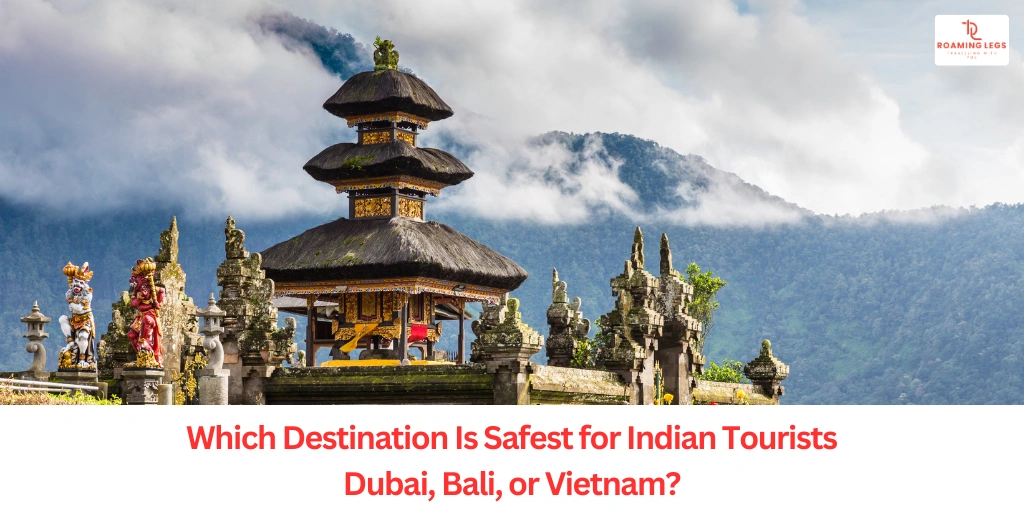
Every travel blog will tell you Dubai, Bali, and Vietnam are “generally safe for tourists.”
That sentence is technically true and practically useless.
What Indian families, couples, and first-time international travelers actually want to know is this: what are the specific risks in each place, what do I actually need to watch out for, and which destination suits my travel style and group type from a safety standpoint?
That’s what this guide covers — not star ratings, not emoji safety scales, but real, specific information about what can go wrong in each destination and how to make sure it doesn’t happen to you.
The One-Line Honest Answer Before You Read Further
Dubai is the safest of the three — strict laws, low crime, heavy surveillance, and excellent emergency infrastructure.
The main risks are not crime-related; they are legal.
Breaking a Dubai law you didn’t know existed is the danger Indian tourists don’t think about until it’s too late.
Bali is safe from violent crime but has three genuinely serious risks that catch tourists every single year: scooter accidents, ocean rip currents, and Indonesia’s brutal drug laws.
None of these are dramatic or rare — scooter accidents alone send dozens of tourists to BIMC Hospital in Kuta every week.
Vietnam is safe and very welcoming, but it has a specific set of scams that target tourists in 2026 — including fake e-visa websites, motorbike phone snatching, and taxi overcharging — that have gotten more sophisticated.
Traffic in Hanoi and Ho Chi Minh City also genuinely shocks most first-time visitors.
All three are worth visiting.
None are worth visiting without knowing what to actually watch out for.
Dubai — The Safest Destination, With One Major Catch
Dubai ranks among the top 5 safest major cities in the world by most international safety indices.
The crime index for the UAE in 2026 sits at 14.0 — one of the lowest recorded figures globally, well below London, Mumbai, or Bangkok.
Less than 0.3% of Dubai’s 14 million+ annual visitors report any crime-related incident.
Violent crime against tourists is exceptionally rare.
Petty theft exists but is uncommon.
The metro, taxis, and malls are monitored and well-lit.
Women — including solo Indian women — consistently report feeling safe walking around Dubai at night in tourist and commercial areas.
So what is the actual risk for Indian travelers in Dubai?
The laws. Dubai’s legal code is strict in ways that Indian tourists frequently underestimate, and ignorance is not accepted as a defence in UAE courts.
Here is what catches people out:
Alcohol rules are specific, not strict. You can drink freely in Dubai — in licensed venues.
Hotel bars, restaurants attached to hotels, licensed clubs.
That covers almost everywhere Indian tourists drink.
What you absolutely cannot do: drink in public, on the beach unless it is a licensed hotel beach, in parks, or on the street.
Buying alcohol from licensed liquor stores like MMI or African+Eastern for your hotel room is fine — they register your passport as a temporary tourist permit.
Stumbling out of a bar and drinking on the pavement outside is an arrest.
Public displays of affection. Kissing in public has led to arrests and deportation of foreign tourists. Holding hands is generally tolerated in tourist areas but is not technically legal.
For Indian couples, the practical rule is: what you do inside your hotel room is your business; what you do in lobbies, malls, and on the street is visible to police.
Dress code is real. Malls and public spaces require covered shoulders and knees.
Bikinis belong on hotel private beaches and pool areas, not on public beaches or while walking to a restaurant.
Women wearing revealing clothing in a public souk have been stopped by police.
What you say online about the UAE. Posting a social media complaint about UAE government, traffic, or laws while in Dubai can technically be a criminal offence.
This has resulted in arrests of foreign nationals.
Keep opinions about Dubai and the UAE government off your social media while you are there.
Medications from India. Some prescription medications that are legal in India — including certain codeine-containing painkillers, some anxiety medications, and sleep aids — are classified as controlled substances in the UAE.
Carry medications in original pharmacy packaging with a doctor’s prescription and check the UAE MOHAP approved medicines list if you take anything regularly.
Road safety. This is the one area where Dubai’s infrastructure does not protect you.
UAE road fatalities are significantly higher per capita than Europe or the US.
Speeding is common, lane discipline is poor on highways, and pedestrians account for over 25% of road fatalities.
Cross roads at designated crossings only and do not assume speeding cars will stop.
Dubai emergency numbers: Police: 999 | Ambulance: 998 | Indian Embassy Abu Dhabi: +971 2 449 2700 | Indian Consulate Dubai: +971 4 397 1333
Planning a Dubai Family Trip? Get Your Complete Pre-Departure Brief
Not sure what you need before flying to Dubai? Share your travel dates and group type on WhatsApp, and we'll send you a personalised Dubai pre-departure brief covering your visa rules, what not to carry, UAE laws every traveller must know, and a complete safety and documents checklist. It is completely free and takes just two minutes to request.
Visa & Documents
Know exactly which documents and visa requirements your family needs before departure.
What Not to Carry
Avoid fines and airport delays by knowing what items are restricted or banned in the UAE.
UAE Laws to Know
Stay on the right side of UAE law with a simple guide to rules that surprise most tourists.
Delivered on WhatsApp
Your customised Dubai brief is sent within 24 hours, completely free.
Bali — Genuinely Lovely, Genuinely Risky in Specific Ways
Millions of Indians visit Bali every year.
The overwhelming majority have a wonderful, incident-free trip.
Violent crime against tourists in Bali is rare — Bali has a dedicated Tourist Police (Polisi Pariwisata) force, tourist areas like Seminyak, Ubud, Nusa Dua, and Canggu are well-patrolled, and the Balinese community has enormous economic incentive to keep visitors safe and happy.
But Bali has three specific risk areas that send real tourists to real hospitals or real courts every year, and every Indian traveler needs to understand them before arriving.
Risk 1: Scooter Accidents — The Biggest Danger in Bali by a Large Margin
Scooter accidents are the number one cause of tourist injury and death in Bali.
Not crime.
Not terrorism. Traffic.
Bali’s roads — especially in South Bali (Kuta, Seminyak, Canggu) — are narrow, busy, and chaotic. Surfaces get slippery when it rains, which happens daily in certain seasons.
Indonesian traffic rules are loose on the ground.
Many tourists rent scooters believing that riding a two-wheeler in India means they can handle Bali traffic — and many end up at BIMC Hospital in Kuta, which handles dozens of tourist scooter cases every week.
The practical rule: if you have genuine motorcycle experience and a valid International Driving Permit, riding in Bali’s quieter areas (Ubud, Amed, Uluwatu) is manageable.
In Kuta, Seminyak, and Canggu, the traffic density makes it genuinely dangerous even for experienced riders.
For longer journeys, hire a driver for the day — it costs around ₹2,000–₹3,000 for 8 hours and removes all transport stress.
Use Grab or Gojek for short trips in town.
The convenience of a scooter is not worth the risk if you are traveling with family or are not an experienced rider.
Also: Indonesian insurance laws are strict.
If you have an accident without a valid motorcycle license, your travel insurance very likely will not cover your medical bills.
This is not a theoretical risk — it is a common claim rejection.
Risk 2: Ocean Rip Currents — Deadliest at Kuta and Seminyak Beaches
Bali’s southern beaches — Kuta, Legian, Seminyak, Canggu — have some of the most powerful rip currents in Southeast Asia.
Several tourists drown every year.
The waves look manageable from the shore, but rip currents can pull even strong swimmers out faster than they can respond.
The rule is simple: only swim at beaches with active lifeguards and coloured flag systems.
Nusa Dua and Sanur are calmer, protected beaches far better suited for families and non-swimmers.
If you see red flags, stay out of the water — no exceptions. If you get caught in a rip, swim parallel to the shore, not directly against the current.
Risk 3: Indonesia’s Drug Laws — Non-Negotiable
Indonesia has some of the strictest drug laws in the world.
Possession of even small amounts of recreational drugs can result in years in prison.
There is no leniency for tourists, no “first offence” consideration, and no intervention that reliably resolves the situation.
This is not a theoretical warning — there are Indian and other South Asian nationals currently serving sentences in Indonesian prisons for drug offences.
Common Scams in Bali
Unofficial money changers — Bali has a notorious unofficial money changer circuit, particularly in Kuta, where tourist get short-changed through sleight of hand.
Always use the Digibank/Kasikorn ATMs or authorised money changers like Bali Maspintjingan that show rates clearly and give a receipt.
Taxi mafia at the airport and tourist spots — Ngurah Rai Airport has official metered taxis.
Do not accept offers from men approaching you in arrivals.
Use the official taxi counter or book Grab/Gojek from outside the building.
Motorbike damage scams — You rent a scooter, return it, and the owner claims you caused a scratch that was there before you rented it.
Always photograph the bike thoroughly before you ride, including any existing damage, and share the photos with the rental shop in writing.
Bali emergency numbers: Police: 110 | Ambulance: 118 | Indian Embassy Jakarta: +62 21 5793 1100
Vietnam — Safe, Specific Scams, Shocking Traffic
Vietnam is rated Level 1 — Exercise Normal Precautions by the US State Department, the same advisory level as most of Western Europe.
Berkshire Hathaway Travel Protection ranked Vietnam among the top 10 safest international destinations for tourists in 2026.
Violent crime against tourists is genuinely uncommon — Vietnam’s homicide rate is around 1.5 per 100,000 people, significantly lower than many cities Indian travelers visit domestically.
The risks are real but specific.
Know what they are and Vietnam is a very comfortable destination.
The Traffic in Hanoi and Ho Chi Minh City
Nothing prepares first-time Vietnam visitors for the traffic in Hanoi’s Old Quarter or Saigon’s District 1.
Motorbikes flow like water — seemingly in every direction at once.
There are no gaps that feel obvious.
Pedestrians cross not by waiting for a gap but by walking steadily and letting traffic flow around them.
The key: walk slowly, keep a consistent pace, make eye contact with drivers, and never stop suddenly in the middle of the road.
Do not run.
Traffic flows around predictable pedestrians.
Use Grab for all transportation within cities — it is cheap, reliable, and removes the taxi overcharging risk entirely.
Recommended taxi operator if you prefer metered taxis: Mai Linh (green taxis) — legitimate and widely trusted.
Vietnam’s Specific Tourist Scams in 2026
Fake e-visa websites — This is the biggest scam for Indian travelers in 2026.
Scammers have built near-perfect replicas of Vietnam’s official e-visa portal (evisa.gov.vn) that appear in search results.
They collect your application fee and personal data.
Only ever apply at evisa.gov.vn — type the URL directly, never click a sponsored search result.
Drive-by phone snatching — Ho Chi Minh City’s District 1 and Hanoi’s Old Quarter are hotspots for motorbike riders who snatch phones from people walking with them in hand or in open bags.
Keep your phone in a zipped inner pocket or a cross-body bag worn in front of your body.
Never look at your phone while standing at the roadside.
Shoe-shining scam — In Hanoi’s Old Quarter and HCMC’s District 1, someone may point to a mark on your shoe, grab your foot, and start cleaning before you can object — then demand ₹1,500–₹3,000 for a “service” you didn’t agree to.
Simply walk away if someone approaches.
Fake tour operators near tourist sites — At Hoan Kiem Lake in Hanoi and the Saigon Notre-Dame area, street sellers offer Halong Bay cruises, Sapa trips, and city tours at significantly below-market prices. Many of these tours are either cancelled on departure day without refund, or end up being a completely different product from what was described.
Always book through your hotel or a verified operator, not through street touts.
The bamboo hat photo trick — Someone places a traditional non la hat on your head for a photo, then demands payment.
Similarly, someone hands you a traditional fruit basket yoke for a photograph and then demands ₹1,000–₹2,000.
You are within your rights to firmly say no and walk away.
Currency confusion — Vietnamese Dong comes in denominations of 500,000, 200,000, 100,000, 50,000 and smaller.
The 500,000 note (around ₹175) looks similar to the 20,000 note to a first-day visitor.
Some vendors exploit this confusion.
Always count your change carefully and keep small denominations separate.
Vietnam emergency numbers: Ambulance: 115 | Police: 113 | Indian Embassy Hanoi: +84 24 3823 4804 | Indian Consulate HCMC: +84 28 3822 5050
Dubai, Bali, or Vietnam — Which One Is Right for You?
Can't decide between three amazing destinations? Tell us who you're travelling with — family, couple, or a group — and we'll give you an honest recommendation and a sample itinerary for the destination that fits your travel style best. No generic advice. Just a real suggestion based on how you actually travel.
Dubai
- World-class shopping & dining
- Iconic skyline & desert safaris
- Great for families & luxury trips
- Easy visa process for Indians
Bali
- Beaches, temples & rice terraces
- Budget-friendly & laid-back vibe
- Perfect for couples & groups
- Rich culture & wellness retreats
Vietnam
- Street food, history & landscapes
- Very affordable for long trips
- Ideal for first-time Asia travellers
- North to south variety in one trip
Family
Travelling with kids? We'll match you with the safest, most family-friendly option.
Couple
Looking for romance or adventure? We'll pick the destination that sets the mood.
Group
Friends trip? We'll find the spot that keeps everyone happy without breaking the budget.
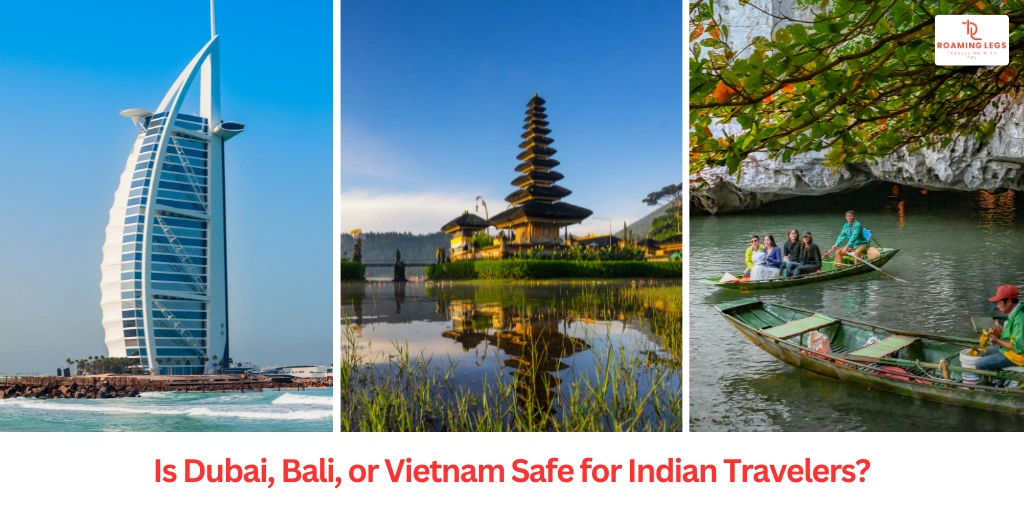
Side-by-Side Safety Comparison
| Factor | Dubai | Bali | Vietnam |
|---|---|---|---|
| Violent crime risk | Extremely low | Very low | Very low |
| Petty theft / scams | Low | Moderate (specific areas) | Moderate (specific scams) |
| Traffic danger | Medium (highways) | High (scooters) | High (city roads) |
| Legal risk (laws) | High (strict laws) | High (drug laws) | Low |
| Ocean / water risk | Low | High (rip currents) | Low–Medium |
| Solo female safety | Excellent | Good (take precautions) | Good |
| Family friendliness | Excellent | Good | Good |
| First international trip | Very easy | Moderate | Moderate |
| Recommended transport | Metro, Uber, official taxi | Grab, Gojek, hired driver | Grab, Mai Linh taxis |
Violent crime risk
Petty theft / scams
Traffic danger
Legal risk (laws)
Ocean / water risk
Solo female safety
Family friendliness
First international trip
Recommended transport
What Real Indian Travelers Say About Safety in Each Destination
“We took our parents to Dubai in December 2024.
My mother was nervous about being conservative enough with what she wore.
Honestly, as long as you dress reasonably — covered shoulders, no shorts in malls — there’s zero problem.
The metro is cleaner than most Indian metros and everyone is very professional.
We felt completely safe the whole time.
“ — Mehta Family, Surat, December 2024
“First time in Bali, we rented scooters on day one because everyone said it was easy.
My husband fell on day two — nothing serious, just a graze, but we both agree now that we should have used Grab.
The traffic in Seminyak is genuinely chaotic and we weren’t prepared for it.
The rest of the trip was amazing.
“ — Priya and Rahul K., Bengaluru, March 2025
“Vietnam felt very safe overall.
The thing that tripped us up was crossing roads in Hanoi — first two days were stressful.
After that, once we understood how it works, it was fine.
Grab was our best friend for getting anywhere.
Never had a problem.
“ — Iyer Family, Chennai, November 2024
Safety FAQs — Dubai, Bali & Vietnam for Indian Travelers
Responsive, Elementor-ready FAQ component with embedded CSS and no JavaScript.
1. Which is the safest destination for Indian families?
Dubai offers the strongest safety infrastructure, while Bali and Vietnam are also family-friendly with sensible precautions.
2. Is Dubai safe for Indian women traveling solo?
Yes. Dubai is widely regarded as one of the safest cities for solo female travelers when normal travel precautions are followed.
3. What do Indian tourists get arrested for in Dubai?
Common issues include public intoxication, controlled medicines, offensive behavior, and violating local laws.
4. Is Bali safe for couples and honeymooners?
Yes. Use reputable transport, swim only at safe beaches, and avoid illegal drugs or risky scooter use.
5. Is Vietnam safe for first-time travelers?
Yes. Tourist infrastructure is strong, though visitors should be cautious with traffic and common tourist scams.
6. Which destination has the most tourist scams?
Vietnam and Bali have more common tourist scams than Dubai, but awareness greatly reduces risk.
7. Is it safe to use ATMs?
Use bank-operated ATMs in Bali and Vietnam, shield your PIN, and avoid isolated machines.
8. Do I need travel insurance?
Yes. Comprehensive travel insurance is strongly recommended for Dubai, Bali, and Vietnam.
9. Which transport apps work?
Uber and Careem are popular in Dubai, Grab works across Bali and Vietnam, and Gojek is also common in Bali.
10. How should I handle a medical emergency?
Call the local emergency number, go to a reputable hospital, and contact your travel insurer immediately.
11. Which destination is best for a first international trip?
Dubai is generally the easiest first international destination, while Bali and Vietnam are excellent once you have a little travel experience.
Traveling to Dubai, Bali, or Vietnam? Save These Emergency Numbers Before You Leave India — A Practical Guide for Indian Travelers
Traveling to Dubai, Bali, or Vietnam? Save These Emergency Numbers Before You Leave India — A Practical Guide for Indian Travelers
Here’s the thing most Indian travelers don’t do before a trip: save the right emergency numbers.
Not because they’re being careless, but because the assumption is that everything will go smoothly.
And usually it does.
But “usually” isn’t always.
Food poisoning in Bali, a road accident in Vietnam, a stolen passport in Dubai — these happen to real travelers every month, and in those first few minutes, the difference between someone who panics and someone who acts fast is simply whether they already had the right number saved.
This guide gives you every emergency number you need for all three of Roaming Legs’ most popular destinations — Dubai, Bali, and Vietnam — plus the Indian consulate contacts that most guides completely leave out.
Read it once, screenshot the tables, and you’re set.
Emergency Numbers in Dubai
Dubai has one of the fastest emergency response systems in the world.
According to Dubai Police’s annual reports, average response times for emergency calls in Dubai sit at around 3.5 minutes — faster than most Western cities.
Operators are multilingual, with Hindi and Urdu support commonly available alongside English and Arabic, which makes Dubai one of the more Indian-traveler-friendly destinations when something goes wrong.
One important thing to know: you can call 999, 998, and 997 from any mobile phone in the UAE — even without a SIM card, even without credit, even on a roaming foreign number.
Emergency calls always connect and are free.
Dubai Emergency Numbers at a Glance
| Service | Number | When to Call |
|---|---|---|
| 🚓 Police (emergency) | 999 | Crime, theft, accidents, security threats |
| 🚑 Ambulance | 998 | Medical emergencies, injury, illness |
| 🔥 Fire / Civil Defence | 997 | Fire, gas leak, building collapse, hazmat |
| ⚓ Coast Guard | 996 | Sea emergencies, drowning, vessel distress |
| 📞 Non-emergency Police | 901 | Lost property, complaints, non-urgent police help |
| 🧳 Tourist Police (Dubai) | +971-4-609-6298 | Tourist assistance, theft reports, lost passport |
| 🧳 Tourist Police (hotline) | 800-4438 | Alternative tourist police number |
| ⚡ DEWA | 991 | Electrical emergency, water main break |
| 🚕 Dubai Taxi | +971-4-208-0808 | Taxi booking |
| 🚇 RTA (Metro/Bus) | 800-9090 | Transport help, lost items |
🚓 Police (emergency)
🚑 Ambulance
🔥 Fire / Civil Defence
⚓ Coast Guard
📞 Non-emergency Police
🧳 Tourist Police (Dubai)
🧳 Tourist Police (hotline)
⚡ DEWA
🚕 Dubai Taxi
🚇 RTA (Metro/Bus)
- Indian Consulate Dubai: +971-4-397-1333
- Pravasi Bharatiya Sahayata Kendra: 800-46342
- Emergency WhatsApp: +971-54-309-0571
- Dubai Tourism Helpline: 600 555 559
Planning a Dubai, Bali, or Vietnam Trip? Let Us Handle Everything
Planning an international holiday involves much more than booking flights and hotels. At Roaming Legs, we have helped hundreds of Indian couples and families plan seamless trips to Dubai, Bali, and Vietnam. From flights, visa assistance, and hotel bookings to a comprehensive pre-departure health and safety briefing, we take care of every important detail. Simply share your travel dates on WhatsApp, and we will send you a personalised travel plan within 24 hours, completely free and with no obligation.
Flights, Hotels & Visa
Receive expert assistance with flights, accommodation, visa guidance, and essential travel arrangements.
Personalised Itinerary
Your holiday plan is tailored to your travel dates, interests, budget, and preferred pace.
Health & Safety Brief
Travel with confidence using destination-specific medicine guidance, insurance advice, and emergency information.
Delivered in 24 Hours
Your complete travel plan is prepared by our experts and delivered on WhatsApp within 24 hours.
Emergency Numbers in Bali (Indonesia)
Bali’s emergency services are reliable in the major tourist areas — Kuta, Seminyak, Canggu, Ubud, Sanur, Nusa Dua, Jimbaran, and Uluwatu.
The further you go from South Bali, the thinner the coverage gets, so if you’re visiting North Bali or Amed, response times can be significantly longer.
The most important number to remember in Bali is 112 — this is the national emergency number that works from any mobile, even without a SIM.
It connects you to emergency coordination for police, ambulance, and fire services.
Bali Emergency Numbers at a Glance
| Service | Number | When to Call |
|---|---|---|
| 🚓 Police | 110 | Crime, theft, accidents, public safety |
| 🚑 Ambulance | 118 | Medical emergencies requiring transport |
| 🔥 Fire Department | 113 | Fire, rescue, hazardous situations |
| ☎️ General Emergency | 112 | Universal emergency number that works from any phone |
| 🏥 Bali International Hospital | 150 919 | 24/7 emergency, based in Sanur |
| 🔎 Bali Tourism Police | +62-361-224-111 | Tourist assistance, theft, lost documents |
🚓 Police
🚑 Ambulance
🔥 Fire Department
☎️ General Emergency
🏥 Bali International Hospital
🔎 Bali Tourism Police
For Indian travelers specifically — the Indian Consulate in Bali is your official support:
- Indian Consulate General, Bali: +62-361-222-454
- Emergency Helpline (WhatsApp available): +62-813-5384-6936
- Second emergency number: +62-858-5717-3749
- Email: cons.bali@mea.gov.in
- Address: Jl. Raya Puputan 163, Renon, Denpasar, Bali 80235
The Indian Consulate in Bali covers 19 provinces across eastern Indonesia and actively issues advisories during natural events like tsunamis and earthquakes.
If you’re in Bali and there’s a natural disaster warning, follow the consulate’s official WhatsApp updates.
One thing the CGI Bali advises directly: Indian Driving Licence is NOT valid in Indonesia.
If you ride a scooter without an International Driving Permit (IDP) and get into an accident, your travel insurance likely won’t cover treatment.
This is not a minor technicality — carry your IDP or use Grab/Gojek.
Also worth noting from the Indian consulate’s own advisories: mobile phone and gold chain snatching have been reported in tourist areas including Kuta, Seminyak, Canggu, and Jimbaran.
Don’t walk the streets wearing gold chains or expensive jewelry, especially on a scooter.
Emergency Numbers in Vietnam
Vietnam uses separate numbers for different emergency types — there’s no single all-purpose 999 like in Dubai.
The key numbers are simple: 113 for police, 114 for fire, 115 for ambulance.
In major cities like Hanoi, Ho Chi Minh City, and Da Nang, these services run 24/7.
English-speaking operators are sometimes available in big cities but cannot be guaranteed, especially in rural areas.
If you’re with a tour guide or your hotel’s reception staff, ask them to make the call on your behalf — they’re familiar with how to communicate with local emergency dispatchers and can give your location clearly.
Vietnam Emergency Numbers at a Glance
| Service | Number | When to Call |
|---|---|---|
| 🚓 Police | 113 | Crime, theft, accidents, public safety |
| 🔥 Fire Department | 114 | Fire, gas leak, rescue situations |
| 🚑 Ambulance / Medical | 115 | Medical emergencies, injury, serious illness |
| 🌊 Search and Rescue | 112 | Natural disasters, floods, landslides, storm rescue |
| 👶 Child Protection | 111 | Child safety concerns |
| ⚖️ Law Consultancy | 1088 | Legal guidance (not an emergency line) |
🚓 Police
🔥 Fire Department
🚑 Ambulance / Medical
🌊 Search and Rescue
👶 Child Protection
⚖️ Law Consultancy
For serious medical situations in Vietnam, heading directly to a private international hospital is often faster and more effective than waiting for an ambulance — especially in areas outside Hanoi and Ho Chi Minh City.
These are the best options for Indian travelers:
- FV Hospital, Ho Chi Minh City: 6 Nguyen Luong Bang Street, District 7 — 24/7 emergency, English-speaking staff
- Vinmec International Hospital: Locations in Hanoi, Ho Chi Minh City, Da Nang, Phu Quoc — international-standard care
- Family Medical Practice: Clinics in Hanoi, Da Nang, and Ho Chi Minh City — well-known among expats for English-fluent doctors
Indian Embassy and Consulate contacts for Vietnam:
Embassy of India, Hanoi (for northern Vietnam):
- Address: 58-60 Tran Hung Dao Street, Hoan Kiem District, Hanoi
- Phone: +84-24-3824-4989 / +84-24-3824-4990
- Consular emergency line: +84-91-308-9165
Consulate General of India, Ho Chi Minh City (for southern Vietnam including Da Nang, Phu Quoc):
- Address: 214 Vo Thi Sau Street, District 3, Ho Chi Minh City
- Emergency Contact: +84-91-718-0776
- (Available on weekends and outside office hours for genuine emergencies only)
If you lose your passport in Vietnam, contact the nearest Indian mission immediately.
They can issue an Emergency Certificate — a one-way travel document that lets you return to India without your original passport.
This process is faster if you have a photocopy or digital scan of your passport saved on your phone or email.
Get Our Free International Travel Safety Checklist
Before your next trip to Dubai, Bali, Vietnam, or any other international destination, make sure you are fully prepared. Our practical International Travel Safety Checklist is based on the guidance we share with every Indian traveller before departure. It covers what to pack, important contacts to save on your phone, travel insurance recommendations, and other essential safety tips to help you travel with confidence. It is completely free and delivered directly to WhatsApp.
Smart Packing Guide
Know exactly what travel essentials, medicines, and important documents you should carry.
Emergency Contacts
Save key emergency numbers, embassy details, and useful contacts before your journey begins.
Insurance Advice
Understand the travel insurance features that matter most for international holidays.
Free on WhatsApp
Your destination-ready travel safety checklist is delivered to WhatsApp within minutes at no cost.
What to Do in the First 5 Minutes of Any Emergency
Most people freeze for the first 30–60 seconds of an emergency.
That’s normal. But what you do in the next few minutes matters.
Here’s the exact sequence that works across all three destinations:
Step 1 — Call the right emergency number. Use the table for your destination.
If you can’t remember the specific number, call 112 — it works in all three countries and routes to emergency coordination.
Step 2 — State your location first. Don’t describe what happened before you give your location.
Emergency operators need to know where to send help before anything else.
If you’re not sure of your exact address, say the nearest landmark, hotel name, or major intersection.
Step 3 — Describe what happened. Keep it simple: how many people are hurt, what the injury or illness looks like, and whether anyone is unconscious or not breathing.
Step 4 — Call your hotel reception. Hotel staff in all three destinations are experienced at helping guests in emergencies.
They can coordinate with local services, translate if needed, and arrange transport if an ambulance is slow.
Step 5 — Contact your travel insurance helpline. Do this from the scene or from the hospital.
Your insurer can arrange direct billing with hospitals, organize medical evacuation if needed, and advise on which hospitals are on their approved network.
This call can save you lakhs.
Step 6 — Contact the Indian Embassy or Consulate if you need consular support — lost passport, legal issues, or if a family member needs to be informed of a serious situation.
Before You Leave India:
Your Emergency Prep Checklist
This takes under 10 minutes and could matter more than any other thing you pack.
📱 Save These in Your Phone
-
✓Local police / ambulance number for your destination.
-
✓Your hotel name, full address, and reception number.
-
✓Indian Embassy / Consulate number for your destination.
-
✓Your travel insurance emergency helpline and policy number.
-
✓One trusted family member who has a copy of your passport.
-
✓Bali International Hospital (150 919) if going to Bali.
-
✓FV Hospital or Vinmec number if going to Vietnam.
✈️ Also Do This Before You Fly
-
✓Photograph your passport, visa, and insurance documents. Store them in Google Drive or WhatsApp Saved Messages.
-
✓Share your itinerary including hotels, dates, and flight numbers with one family member back home.
-
✓Check if your travel insurance covers adventure activities such as scuba diving, scooter riding, or bungee jumping. Most basic policies do not.
🧡 Small Preparation. Big Peace of Mind.
A few minutes spent preparing today can save valuable time during an emergency abroad. Keep your important contacts, travel documents, and insurance details ready so you can enjoy your trip with greater confidence.
Traveler Stories That Show Why This Matters
“We were in Dubai when my father-in-law suddenly felt chest pain at the Dubai Mall.
We didn’t know the ambulance number.
My husband googled it while I asked a security guard for help.
The guard called 998 immediately.
The ambulance arrived in under 8 minutes.
The speed was genuinely impressive.
He got treatment and was discharged the next day.
But I’d promised myself — that number goes in my phone the moment we land anywhere new.
“ — Divya & Rajan Menon, Thrissur, October 2025
“In Vietnam, my daughter got a bad cut from a motorbike accident near Hoi An.
We were far from the city and didn’t know where to go.
Our Roaming Legs guide immediately called local contacts and we had a car to a private clinic in 20 minutes.
Having someone who knew the right numbers was everything.
“ — Suresh Agarwal, Jaipur, March 2026
FAQs — Emergency Numbers for Indian Travelers in Dubai, Bali & Vietnam
Responsive, Elementor-ready FAQ component with embedded CSS and no JavaScript.
1. What is the emergency number in Dubai for Indian tourists?
Call 999 for police, 998 for ambulance, and 997 for fire emergencies.
2. What is the ambulance number in Bali?
Call 118 for an ambulance or 112 for general emergencies.
3. What emergency number do I call in Vietnam?
Call 115 for ambulance, 113 for police, 114 for fire, and 112 for search and rescue.
4. How do I contact the Indian Consulate in Dubai?
Save the Consulate General, PBSK helpline, and after-hours emergency WhatsApp before travel.
5. How do I contact the Indian Consulate in Bali?
Keep the Consulate office, emergency helpline, and WhatsApp contact saved in advance.
6. How do I contact the Indian Embassy in Vietnam?
Use the Embassy in Hanoi for northern Vietnam and the Consulate in Ho Chi Minh City for southern Vietnam.
7. Do emergency operators in Dubai speak English?
Yes. English is widely supported, and Hindi or Urdu assistance is often available.
8. Do emergency services in Bali and Vietnam speak English?
English support is available in tourist areas, but asking your hotel to assist is often helpful.
9. Should I save emergency numbers offline?
Yes. Save them as contacts and keep a written backup with your passport copy.
10. What if I lose my passport?
Report it to the police first, then contact the nearest Indian Embassy or Consulate immediately.
11. Can I call emergency numbers without local credit?
In many destinations, emergency numbers work without mobile credit or active data.
12. What is the tourist police number in Bali?
The Bali Tourism Police assist with theft, lost documents, and tourist emergencies.
13. Is travel insurance mandatory?
It may not be legally required, but it is strongly recommended for medical and travel emergencies.
14. What apps help during emergencies?
Grab, Gojek, Google Translate Offline, and destination-specific police apps are useful.
15. How do I stay safe from petty theft?
Stay alert in crowded areas, avoid displaying valuables, and keep bags securely closed and close to your body.
Healthcare in Vietnam for Tourists — The Real Guide to Hospitals, Emergency Numbers, Costs, and What Actually Happens When Something Goes Wrong
Most Indian travelers who visit Vietnam never need a hospital.
They come back with great food memories, some lantern photos from Hoi An, and maybe a mild stomach upset that sorted itself out in a day.
But occasionally, something goes wrong.
A motorbike accident on Hanoi’s streets.
A serious bout of food poisoning that won’t settle. A dengue fever that needs 3 days of IV fluids.
A child with a high fever at 11 PM in Da Nang.
When that happens, you do not want to be Googling “hospital near me” in a panic in a country you’ve never been to before, with no idea whether the place you find will have English-speaking staff or whether they’ll treat you before you produce cash.
This guide tells you exactly what to know before you go — which hospitals are actually good for tourists, what things cost, what to do in a genuine emergency, and the health risks in Vietnam that Indian travelers specifically need to be aware of.
First: The Two-Tier Healthcare Reality in Vietnam
Vietnam has two completely different healthcare systems running side by side, and which one you end up in makes an enormous difference.
Public hospitals (Bệnh viện nhà nước) are government-run and serve the local Vietnamese population.
They are affordable — a consultation might cost $5–$10 — but they are overcrowded, often have no English-speaking staff at registration, and the standard of facilities in most public hospitals is far below what Indian urban travelers are used to.
In busy trauma wards in Hanoi, you can have over 200 patients per doctor per day.
You pay cash upfront even in emergencies.
Most tourists who end up here by accident describe it as chaotic and distressing.
Private international hospitals are where you want to go.
These are modern facilities with English-speaking doctors, international medical standards, clean rooms, and experience treating foreign patients.
The best ones — FV Hospital in Ho Chi Minh City, Vinmec in Hanoi and Da Nang, Hanoi French Hospital — hold JCI accreditation, which is the international gold standard for hospital quality and patient safety.
The cost difference is real: a private consultation might cost $70–$150 versus $10 at a public hospital. But the experience, communication, and standard of care are not comparable.
For any Indian tourist who needs medical care in Vietnam, go to private international hospitals. Full stop.
The Best Hospitals for Tourists — City by City
Hanoi
Vinmec Times City International Hospital 458 Minh Khai Street, Hai Bà Trưng District, Hanoi Phone: +84 24 3974-3556 | Emergency: +84 24 3974-4333 JCI-accredited.
One of the best private hospitals in northern Vietnam.
24/7 emergency department.
English-speaking doctors.
Covers cardiology, orthopaedics, neurology, and general emergency care.
Well set up for foreign patients with international insurance.
Hanoi French Hospital (L’Hôpital Français de Hanoi) 1 Phuong Mai Street, Đống Đa District, Hanoi Phone: +84 24 3574-1111 | Emergency: +84 24 3574-1111 French-managed, European medical standards.
24/7 emergency care.
Good for general medical issues, trauma, and surgical emergencies.
Popular with tourists and expats in Hanoi.
Family Medical Practice Hanoi 298I Kim Ma Street, Van Phuc Compound, Hanoi Phone: +84 24 3843-0748 | Emergency: +84 944 431 919 Excellent for non-emergency consultations, minor illnesses, food poisoning, general checkups, and travel health advice.
English-speaking international doctors.
Not a full hospital — go to Vinmec or Hanoi French Hospital for serious emergencies.
Raffles Medical Hanoi 51 Xuan Dieu Street, Tay Ho District, Hanoi Phone: +84 24 3676-2222 Good for general practice and minor medical issues.
English-speaking staff. Popular with the expat community in Hanoi’s Tay Ho district.
Ho Chi Minh City (Saigon)
FV Hospital (Franco-Vietnamese Hospital) 6 Nguyễn Lương Bằng, Tân Phú Ward, District 7, Ho Chi Minh City Phone: +84 28 5411-3333 The best hospital for tourists in HCMC, and arguably the best in all of Vietnam.
JCI-accredited. The first foreign-owned hospital in Vietnam to receive this accreditation.
30+ specialties including emergency medicine, surgery, cardiology, and orthopaedics.
English and French-speaking staff.
Direct billing with major international insurers.
The ER here is where expats and foreign nationals head for anything serious.
The one drawback: it is in District 7, which is 20–30 minutes from the city center — factor in travel time in an emergency.
Vinmec Central Park International Hospital 208 Nguyen Huu Canh Street, Ward 22, Binh Thanh District, Ho Chi Minh City Phone: +84 28 3730-0000 JCI-accredited.
Part of the Vinmec network.
Closer to the city center than FV Hospital for travelers staying in District 1 or nearby.
Strong emergency and specialist care.
Family Medical Practice HCMC Diamond Plaza, 34 Le Duan Street, District 1 Phone: +84 28 3514-0757 | Emergency: +84 93 277 6971 Best for non-emergency consultations and minor issues.
Central location in District 1 makes it very accessible for tourists.
Good English-speaking staff.
Da Nang
Vinmec Da Nang International Hospital 36 Truong Son Street, An Khe Ward, Thanh Khe District, Da Nang Phone: +84 23 6378-8999 Part of the Vinmec network.
Good emergency and general medical care.
Well-equipped for a tourist city.
English-speaking staff available.
Family Medical Practice Da Nang Phone: +84 23 6358-2699 | Emergency: +84 913 917 303 Good for non-emergency consults.
Staff experienced with foreign patients.
Hoi An
Hoi An itself does not have a major international hospital — it is a small old town.
For anything serious, you need to go to Da Nang, which is about 30 km away (roughly 40 minutes by car).
Keep this in mind when planning: if you are staying in Hoi An for several nights, know the route to Da Nang in advance and save the Vinmec Da Nang number in your phone.
For minor issues in Hoi An, there are small private clinics in the tourist areas that can handle basic consultations and common travel ailments.
Phu Quoc
Vinmec Phu Quoc International Hospital Phone: +84 297 3666 888 Located on the island.
Can handle general emergencies and routine care.
For complex trauma or serious conditions requiring surgery, medical evacuation to Ho Chi Minh City or Singapore may be needed.
If you are traveling to Phu Quoc, particularly with children or elderly family members, this possibility is worth factoring into your planning and insurance cover.
Get a City-Specific Vietnam Emergency Contacts Sheet on WhatsApp
Travelling to Vietnam soon? Tell us which cities you are visiting on WhatsApp, and we will send you a ready-made emergency reference card tailored to your itinerary. It includes nearby hospitals, ambulance and emergency numbers, and Indian Embassy and Consulate contact details relevant to your destinations. It takes just 30 seconds to request and can be invaluable if you ever need assistance while travelling.
Hospitals by City
Receive a curated list of trusted hospitals and medical facilities for every city on your itinerary.
Emergency Numbers
Keep ambulance, police, and other essential emergency contacts readily available on your phone.
Indian Embassy Contacts
Access Indian Embassy and Consulate contact details for quick support if you need assistance abroad.
Ready in Seconds
Share your travel cities on WhatsApp and receive your personalised emergency reference card completely free.

What a Medical Visit Actually Costs in Vietnam
Typical treatment costs for tourists at private and public hospitals.
| Type of Care | Cost at Private / International Hospital | Cost at Public Hospital |
|---|---|---|
| General consultation / GP visit | $50–$150 (₹4,200–₹12,600) | $10–$25 (₹840–₹2,100) |
| Emergency room visit | $70–$200 (₹5,900–₹16,800) | $25–$50 (₹2,100–₹4,200) |
| X-ray + sutures (minor injury) | $150–$300 (₹12,600–₹25,200) | — |
| Fracture stabilisation | $500–$1,200 (₹42,000–₹1,00,800) | — |
| Dengue fever (3-day admission) | $800–$2,000 (₹67,000–₹1,68,000) | — |
| ICU / serious surgery | $3,000–$10,000+ (₹2.5L–₹8.4L) | — |
| Private hospital room per night | $100–$400 (₹8,400–₹33,600) | — |
General consultation / GP visit
Emergency room visit
X-ray + sutures (minor injury)
Fracture stabilisation
Dengue fever (3-day admission)
ICU / serious surgery
Private hospital room per night
if your insurer has called ahead and sent a Letter of Guarantee directly to the hospital — this is the most valuable thing your insurer’s 24-hour hotline can do.
Call them before you go to the hospital, not after.
Always carry a payment card with international credit, and keep $300–$500 USD equivalent in cash on you while traveling.
The combination of cash and international card covers you at any hospital in the country.
What to Do in a Medical Emergency in Vietnam — Step by Step
Step 1: Call your travel insurance company’s 24-hour hotline first (if the situation is not immediately life-threatening).
They will tell you which nearby hospital is empanelled, and they can call ahead to issue a Letter of Guarantee so you are not asked for a cash deposit upfront.
This one call saves enormous hassle.
Step 2: Call 115 — this is Vietnam’s national ambulance number. Response time in major cities is typically 10–15 minutes.
In rural areas, Sapa, or islands like Phu Quoc, it takes longer.
The operator may speak limited English, so have your hotel name and address ready in Vietnamese if possible (ask your hotel reception in advance).
Step 3: Go to a private international hospital. Use the hospital list in this guide for your city.
If you are in Hoi An, go to Da Nang (Vinmec Da Nang).
If you are in a smaller town, call your insurer first and ask which facility to go to.
Step 4: Carry your documents. Bring your passport, your travel insurance policy document (screenshot on your phone is fine), and your hotel address.
If you have existing medical conditions or take regular medication, have that information ready.
Step 5: Save the Indian Embassy emergency number before your trip. Indian Embassy Hanoi: +84 24 3823 4804.
Indian Consulate Ho Chi Minh City: +84 28 3822 5050.
These numbers are for genuine emergencies — lost passport, serious accident, or situations where you need consular support.
Health Risks Indian Travelers Should Actually Know About
Food and Water Safety
Tap water in Vietnam is not safe to drink.
Always drink bottled water — it is cheap and widely available everywhere.
Be cautious about ice in local restaurants and street food stalls outside of tourist areas.
The rule most experienced travelers follow: ice at your hotel and at established restaurants in tourist areas is generally fine.
Ice at roadside stalls is where issues happen.
Vietnamese street food is genuinely excellent and mostly safe — the high-turnover stalls where locals eat tend to be the safest because food is freshly prepared.
The more cautious you are with hygiene (eating from busy stalls, avoiding pre-cooked food sitting in the open), the better.
Mild food poisoning and stomach upsets are the most common medical issues Indian tourists face in Vietnam.
Carry oral rehydration salts (ORS), a couple of Loperamide tablets, and Norfloxacin (on prescription) in your travel kit.
Most cases resolve in 24–48 hours with hydration and rest.
If symptoms are severe or persist beyond 48 hours, see a doctor.
Dengue Fever
This is the one disease Indian travelers to Vietnam need to take seriously.
Dengue is transmitted by mosquitoes — specifically the Aedes aegypti species that bites during the day, not just at dusk.
It is present across Vietnam, but the risk is highest in southern Vietnam (Ho Chi Minh City, Mekong Delta, Phu Quoc) during the rainy season, May through October.
There is no vaccine widely available for travelers.
Prevention is the only defense: use DEET-based mosquito repellent (at least 20–30% DEET), wear light-colored full-sleeve clothing in the evenings, and stay in air-conditioned rooms with window screens.
Symptoms: Sudden high fever (39–40°C), severe headache, pain behind the eyes, muscle and joint pain, and sometimes a skin rash.
If you develop these symptoms in Vietnam, go to a hospital immediately — dengue can progress to a serious hemorrhagic form if untreated.
Motorbike Safety
Motorbike accidents are the single biggest cause of emergency room visits for tourists in Vietnam. Hanoi and Ho Chi Minh City traffic is intense and unlike anything most Indian travelers from smaller cities have driven in.
If you want to ride a scooter in Vietnam, get an International Driving Permit from the RTO in India before you travel.
Without it, most travel insurance policies will not cover motorbike-related medical claims.
Wearing a helmet is legally required and absolutely essential.
Honestly: unless you are an experienced motorcycle rider, Grab (Vietnam’s Grab taxi) is far safer, very cheap, and takes the stress completely out of getting around.
Vaccinations to Consider Before Travel
No vaccinations are mandatory for Vietnam entry from India.
However, these are recommended — talk to your doctor at least 4–6 weeks before travel:
Hepatitis A — transmitted through contaminated food and water.
Strongly recommended for any traveler eating street food.
A single dose gives 10–20 years of protection.
Typhoid — transmitted through contaminated food and water.
Recommended, especially for longer trips or rural travel.
Japanese Encephalitis — if your itinerary includes rural areas, rice fields, or you are staying for more than 4 weeks.
Discuss with your doctor.
Rabies — if you plan extended rural travel or are likely to be around animals.
Pre-exposure vaccination is a 3-dose course over 3–4 weeks.
Make sure your routine vaccinations (Tetanus, Hepatitis B) are up to date before any international travel.
Planning a Vietnam Family Trip? Let Us Handle Everything
Planning an international family holiday takes time, especially when you need to organise visas, hotels, airport transfers, sightseeing, and travel logistics. Every week, we help Indian families plan smooth and memorable Vietnam holidays from start to finish. Simply message us on WhatsApp with your travel dates, family size, and budget, and we will help you build a personalised Vietnam itinerary, arrange the essentials, and provide a pre-departure health and safety briefing before you travel.
Custom Family Itinerary
Enjoy a travel plan designed around your family's interests, pace, travel dates, and budget.
Visa & Travel Arrangements
Receive assistance with visa guidance, hotel bookings, airport transfers, and essential trip planning.
Health & Safety Brief
Travel confidently with practical advice covering health, safety, insurance, and emergency preparedness.
End-to-End Support
From your first enquiry until departure, our travel experts are here to help at every stage of your Vietnam holiday.
What Indian Travelers Say About Healthcare in Vietnam
“My father had chest pain on our second day in Hanoi. We went straight to Vinmec Times City on our hotel’s advice.
The ER team was organized and there was an English-speaking cardiologist on duty within 20 minutes.
He was admitted, monitored overnight, and discharged the next afternoon with a clear ECG and medication.
The total bill was ₹89,000, which our HDFC ERGO policy covered in full after we filed the claim.
The experience itself was much less stressful than I had feared.
“ — Patel Family, Ahmedabad, November 2024
“My daughter got dengue in Ho Chi Minh City in July.
Fever spiked to 40°C on the third day of our trip.
We went to FV Hospital at 10 PM.
The ER was clean, ef
ficient, and the nurse spoke perfect English.
She was on IV drips within an hour.
Three-day admission, full recovery.
Bill was $1,800 USD — our travel insurance handled it.
FV Hospital was genuinely better than some hospitals we’ve been to in India.
“ — Iyer Family, Chennai, July 2024
Healthcare in Vietnam FAQ for Indian Tourists
Responsive, Elementor-ready FAQ component with embedded CSS and no JavaScript.
1. Are hospitals in Vietnam good for tourists?
Yes. International hospitals in Hanoi, Ho Chi Minh City, and Da Nang provide high-quality care with English-speaking staff.
2. What is the emergency number in Vietnam?
Call 115 for an ambulance, 113 for police, and 114 for fire emergencies.
3. Do hospitals have English-speaking doctors?
Yes, private international hospitals and clinics generally do, while public hospitals may have limited English support.
4. How much does a doctor visit cost?
Private consultations generally cost USD 50 to USD 150, with emergency visits costing more.
5. Do I need to pay before treatment?
Many private hospitals require a deposit unless your insurer provides direct billing or a guarantee of payment.
6. What are the most common health issues?
Food poisoning, dengue, heat exhaustion, and motorbike accidents are among the most common concerns.
7. Is dengue common?
Yes. Protect yourself with mosquito repellent, long sleeves, and prompt medical attention if symptoms develop.
8. Is tap water safe to drink?
No. Drink bottled water and be cautious with ice from smaller establishments.
9. What vaccinations are recommended?
Discuss Hepatitis A, Typhoid, Tetanus, and other appropriate vaccines with your doctor before travel.
10. Is Vietnam suitable for seniors?
Yes, especially with travel insurance and itineraries focused on major cities.
11. What if I lose my medication?
Pharmacies are common, and doctors at international clinics can issue local prescriptions when needed.
12. What is the Indian Embassy contact?
Save the Indian Embassy and Consulate contact numbers before your trip for genuine emergencies.
13. Are pharmacies easy to find?
Yes. Tourist areas have many well-stocked pharmacies with common medicines and first-aid supplies.
Travel Insurance for Vietnam from India — The Honest Guide for Indian Travelers Who Don’t Want to Overpay or Get Caught Without Cover

Let’s start with the thing nobody says clearly enough.
Vietnam is not a medical emergency destination.
Most Indian travelers have a smooth trip — food poisoning clears up, a twisted ankle heals, and flights only delay occasionally.
But when something does go wrong in Vietnam — a motorbike scrape, a sudden appendicitis, a dengue fever admission — the bill at a private international hospital is not small.
A one-night stay at a place like FV Hospital in Ho Chi Minh City or Vinmec in Hanoi can run $200–$400 USD before you’ve even had a scan.
Emergency evacuation out of Vietnam? That’s a $10,000–$30,000 bill with no insurance behind you.
Travel insurance for Vietnam from India is not mandatory. Vietnam does not require it for a tourist e-visa. But “not mandatory” and “not worth buying” are two completely different things.
A solid plan costs ₹25–₹80 per day depending on coverage.
For a 7-day trip, that is ₹500–₹800 total. For that amount, you protect yourself against medical bills that could otherwise run into lakhs.
Here is everything you actually need to know before you buy.
Why Vietnam Specifically Needs Travel Insurance (This Is Not Generic Advice)
There are a few things about Vietnam that make travel insurance more important here than, say, a trip to Thailand or Malaysia.
Private hospitals ask for cash upfront. At international hospitals like Vinmec, FV Hospital, and Hoan My — the ones that have English-speaking doctors and actually treat foreigners well — you pay a deposit of $200–$500 before they admit you for non-life-threatening conditions.
No insurance card, no cashless treatment at the front desk in most cases.
You pay first, claim later.
If you don’t have the cash and you don’t have a card with international credit, you are in trouble.
Motorbike accidents are extremely common. Vietnam’s cities — especially Hanoi and Ho Chi Minh City — have some of the most intense road traffic in Southeast Asia.
A lot of Indian tourists rent scooters without a valid Vietnamese license.
One fall, one emergency X-ray and suture at a private hospital costs $150–$300.
A fracture can cost $500–$1,200.
And most insurers will not pay if you were riding without a valid license, so check the fine print before you get on a bike.
Healthcare quality varies dramatically. Public hospitals are low cost but crowded, often have no English-speaking staff, and have much lower hygiene standards than what Indian travelers from cities are used to.
The good hospitals — where you actually want to go — are private. And private costs money.
Typhoon and weather disruptions happen. Central Vietnam (Da Nang, Hoi An, Hue) gets hit by typhoons from September to November.
Flight cancellations, hotel refund issues, and itinerary disruption are real risks if you are traveling during this window without trip cancellation cover.
What Travel Insurance for Vietnam Actually Covers
Every policy is different, but here is what a good comprehensive travel insurance plan for Vietnam should include — and what Indian travelers should specifically check for.
Medical expenses and hospitalization — This is the core reason to buy insurance.
A comprehensive plan should cover doctor consultations, emergency treatment, hospitalization, medicines, and ambulance services.
Look for a minimum medical cover of $50,000 USD. For families or anyone traveling with seniors, $100,000 USD medical cover is worth the extra ₹200–₹300 in premium.
Emergency medical evacuation — If you are hospitalized in a smaller city like Hoi An or Nha Trang and need specialized treatment not available locally, evacuation to a bigger city or back to India can cost $10,000–$50,000.
This is one of the most important covers in the policy and often has its own separate limit.
Do not skip this.
Trip cancellation and interruption — If you have to cancel your Vietnam trip before departure because of a medical emergency, a death in the family, or a natural disaster, this cover reimburses your non-refundable flight and hotel costs.
Particularly useful during typhoon season when Central Vietnam travel can get disrupted.
Baggage loss and delay — Vietnam’s domestic airports (Da Nang, Phu Quoc, Cam Ranh) have seen baggage delays, especially during peak season.
If your bag is delayed beyond 12 hours, a good policy reimburses you for essential purchases — toiletries, a change of clothes.
If it is lost entirely, you get compensation up to the policy limit.
Passport and document loss — Losing your passport in a foreign country is stressful and expensive. Most policies cover the cost of a replacement emergency document and any extra hotel nights needed while sorting it out.
Flight delays — If your flight is delayed by more than 6–8 hours (check the threshold in your policy), you are reimbursed for meals and accommodation.
Vietnam Airlines and IndiGo occasionally have delays on the India-Vietnam route, so this is not a trivial cover.
Personal liability — Covers you if you accidentally cause damage or injury to someone or their property. Less common for Indian tourists to claim, but useful to have.
Planning Your Vietnam Trip? Get Your Complete Travel Checklist
Not sure which documents you need before flying to Vietnam? Share your travel dates and group type on WhatsApp, and we'll send you a personalised pre-departure checklist covering your visa requirements, travel insurance, flight and hotel booking checks, essential documents, and what to pack for your trip. It is completely free and takes just two minutes to request.
Visa & Documents
Know exactly which travel documents and visa requirements you should complete before departure.
Packing Checklist
Receive a practical list of travel essentials so you do not forget anything important.
Insurance & Bookings
Check flights, hotels, insurance, and other important bookings before you travel.
Delivered on WhatsApp
Your personalised Vietnam travel checklist is sent within 24 hours, completely free.
Which Indian Insurance Plans Work for Vietnam — Real Options with Real Numbers
Here are the main Indian insurers covering Vietnam trips, with actual price context so you can budget properly.
Tata AIG Travel Guard — One of the most popular and most trusted among Indian international travelers.
Plans start from ₹29/day for basic cover and go up to ₹80+/day for comprehensive coverage with higher medical limits.
Known for strong claim settlement ratios (above 90%) and a solid global network.
Good option for families and first-time international travelers who want a recognized name.
ICICI Lombard iTravel — Flexible and widely used, particularly good for travelers who book through ICICI banking channels.
Offers coverage for medical emergencies up to ₹50 lakh, trip cancellations, and baggage.
Claims can be submitted digitally.
Around 80% of claims processed within 24 hours.
Bajaj Allianz Travel Insurance — Budget-friendly entry point, with plans starting around ₹190 for short trips.
Offers medical coverage up to ₹50 lakh, trip cancellation cover up to ₹1 lakh, and baggage protection of ₹30,000.
Good for solo budget travelers or short 5–7 day Vietnam trips.
HDFC ERGO Travel Insurance — Popular for families and senior travelers.
Consistent claim service and clear policy wording.
IRDAI-regulated with claim settlement ratios above 90%.
ACKO Travel Insurance — Fully digital, fast claims, plans starting at ₹45/day.
Good for tech-comfortable solo travelers who want a simple, paperless process.
Coverage across 200+ countries including Vietnam.
Go Digit Travel Insurance — Starts from ₹395 for a 7-day policy with $50,000 medical cover.
Decent for budget-conscious travelers on short trips.
How to actually buy: The simplest way is through PolicyBazaar, where you can compare plans side by side in 5 minutes. You can also buy directly from the insurer’s app or website.
Buy after confirming your travel dates — the policy needs to match your departure and return dates exactly.
How Much Does Travel Insurance for Vietnam Cost from India?
| Trip Duration | Basic Plan (₹/day) | Comprehensive Plan (₹/day) | Total Cost (Comprehensive) |
|---|---|---|---|
| 5–7 days | ₹25–₹35 | ₹50–₹80 | ₹350–₹560 |
| 8–12 days | ₹25–₹35 | ₹45–₹75 | ₹540–₹900 |
| 13–15 days | ₹20–₹30 | ₹40–₹65 | ₹600–₹975 |
5–7 days
8–12 days
13–15 days
Senior travelers (60+) typically pay 1.5–2x the standard premium.
If anyone in your group is above 60, account for this in your budget.
Some insurers like Tata AIG cover up to 99 years with no upper age limit on the plan, but the premium goes up.
Family floater plans covering 2 adults + 2 children are available from most insurers and cost less per head than buying individual policies.
Always ask for the family floater quote before buying individual plans.
The golden rule on coverage amount: For Vietnam, a minimum of $50,000 USD medical cover is the floor. $100,000 is better if you have seniors traveling, if you’re going during typhoon season, or if your itinerary includes adventure activities like kayaking in Halong Bay, motorbike touring, or trekking in Sapa.
What Your Insurance Will NOT Cover — Read This Before You Buy
This is the section that actually saves you from a nasty surprise when you file a claim.
Pre-existing medical conditions — Most travel insurance policies exclude treatment for pre-existing conditions like diabetes, hypertension, or heart conditions unless you specifically buy a plan that covers them (at a higher premium).
If someone in your group has a known condition, declare it honestly and buy accordingly.
Hiding it and then claiming treatment for a related issue is the most common reason claims get rejected.
Riding a motorbike without a valid license — Vietnam is full of travelers who rent scooters without a Vietnamese or international driving license.
If you fall and need hospital treatment, most insurers will not cover the medical bill.
This is a serious exclusion.
Either get a proper license before you ride, or stick to Grab taxis and don’t touch a scooter.
Adventure activities not included in your plan — Standard policies often exclude injuries during kayaking, rock climbing, paragliding, or open-water diving unless you have added an adventure sports rider.
If your Vietnam itinerary includes kayaking in Halong Bay or trekking in Sapa, check whether your policy covers this and add the rider if needed.
Alcohol-related incidents — If you have an accident while intoxicated and need treatment, most policies will reject the claim.
This applies everywhere, not just Vietnam.
Leaving valuables unattended — Baggage claims are often rejected if the loss occurred because you left bags unattended in a public space.
Petty theft in busy markets in Hanoi and Ho Chi Minh City does happen.
Keep your bags secure and file a police report immediately if anything is stolen — you need the report number to file a claim.
Traveling against medical advice — If a doctor told you not to travel and you went anyway, any medical claim arising from that condition will be rejected.
Booking a Vietnam Trip? Let Us Handle Everything for You
Planning a Vietnam holiday involves much more than booking flights and hotels. Our team can help you with visa documentation, itinerary planning, hotel bookings, and guidance on choosing the right travel insurance for your group type. Simply message us on WhatsApp with your travel dates, group size, and budget, and we'll help you plan your trip from start to finish with personalised recommendations and expert support.
Visa Assistance
Get guidance on Vietnam visa documentation and the paperwork needed before departure.
Tailored Itinerary
Receive a personalised itinerary based on your travel dates, interests, and budget.
Hotels & Insurance
Choose the right hotels and receive guidance on travel insurance for your group.
Expert Planning Support
From your first enquiry to your departure, our team is available to guide you every step of the way.
When Should You Buy Travel Insurance for Vietnam?
Buy it as soon as you confirm your flights.
Not the day before departure.
Not at the airport.
Here is why timing matters: if you buy travel insurance immediately after booking your flights, you are covered against trip cancellation risks that happen before your departure — illness, a family emergency, a natural disaster at the destination.
If you wait and buy it a day before the trip, you lose all pre-departure protection.
Most insurers allow you to buy from any point in India before your departure date. You cannot buy it once you have already left.
For families traveling during school holidays — May–June or December–January — buy insurance at the same time you book flights.
These are peak periods when Vietnam flights and hotels are fully committed, and trip cancellation risks are higher.
One practical tip: Keep a photo of your insurance policy document on your phone’s gallery — not just in email or a PDF.
In a stressful emergency situation at a hospital in a foreign country, you want to be able to pull it up instantly.
Also save your insurer’s 24-hour emergency assistance number as a contact in your phone before you travel.
What Real Travelers Say About Insurance for Vietnam
“We went to Vietnam in October 2024 — our family of four, including my 65-year-old mother.
She slipped on wet steps at Hoan Kiem Lake and sprained her ankle badly.
We went to Vinmec International Hospital in Hanoi.
The bill was ₹38,000 for the consultation, X-ray, and a compression bandage.
Our Tata AIG policy covered it fully after we submitted the docs.
Without insurance, that would have been a horrible shock in the middle of the trip.
“ — Sharma Family, Delhi, October 2024
“I almost skipped buying insurance because the trip was only 6 days.
My flight from Da Nang back to Mumbai was cancelled because of weather, and the airline put me in a hotel for the night.
My ICICI Lombard plan reimbursed the hotel and my dinner — about ₹7,500 total.
Small money, but it felt good not to stress about it.
“ — Ankit R., Mumbai, November 2024
Vietnam Travel Insurance FAQs for Indian Travelers
1. Is travel insurance mandatory for a Vietnam e-visa from India?
No. Insurance is not mandatory, but it is strongly recommended.
2. How much does it cost?
A 7-day policy usually costs ₹350 to ₹700 per adult.
3. Which plan is best?
Compare Tata AIG, ICICI Lombard, Bajaj Allianz, Go Digit, and ACKO based on coverage.
4. How much medical cover should I choose?
USD 50,000 is a good minimum, with higher limits for seniors and adventure trips.
5. Does it cover Ha Long Bay cruise cancellations?
Generally yes, when the operator cancels for a covered weather event.
6. Can I buy it after booking flights?
Yes, but buying earlier provides better cancellation protection.
7. Are adventure activities covered?
Only if your policy includes them or you purchase an add-on.
8. Does it cover motorbike accidents?
Usually only if you hold the required valid licence.
9. Can seniors buy travel insurance?
Yes. Most major insurers offer senior travel plans.
10. How do hospital claims work?
Contact your insurer, keep all documents, and submit the required claim paperwork.
11. Is dengue covered?
Yes, it is generally covered as an emergency medical condition.
12. Does credit card insurance cover Vietnam?
Some premium cards include basic travel insurance, but standalone policies usually provide better protection.
13. Can one policy cover the whole family?
Yes. Family floater plans are available.
SIM Card & Internet Costs in Dubai, Bali, and Vietnam — Exact Prices in INR, Best Providers, and What to Buy Before You Land
Every Indian traveler going to Dubai, Bali, or Vietnam asks some version of the same question right before landing: “Do I need a SIM card, or can I survive on hotel Wi-Fi?”
The honest answer is that hotel Wi-Fi is fine for lying in bed watching Netflix.
The moment you step outside — trying to book a Grab in Bali, navigate Old Quarter streets in Hanoi, or find the metro exit at Dubai Mall — you need mobile data.
And roaming on your Indian number will cost you more than the SIM card itself.
This article gives you the exact prices in INR, the right providers for each destination, and what the original article completely skipped: real rupee costs based on current exchange rates.
Dubai SIM Cards for Indian Travelers: Real Costs in INR
Dubai has two main telecom operators: e& (formerly Etisalat) and Du.
There’s also Virgin Mobile, which runs on Du’s network. Both e& and Du have 24-hour counters in the arrivals hall at Dubai International Airport (Terminal 1, 2, and 3), so you can get a SIM within 20 minutes of landing.
You’ll need your passport and UAE entry stamp for registration.
Both operators offer tourist-specific “Visitor Line” plans.
e& (Etisalat) Visitor Line Plans — Current Pricing
| Plan | Data | Validity | Price in AED | Price in INR (approx.) |
|---|---|---|---|---|
| Entry | 4 GB | 28 days | AED 46–49 | ₹1,200–₹1,280 |
| Popular | 20 GB | 28 days | AED 100–120 | ₹2,620–₹3,140 |
| Heavy | 40+ GB | 30 days | AED 190–220 | ₹4,980–₹5,760 |
| Unlimited | Unlimited | 7 days | AED 190 | ₹4,980 |
Entry
Data:
4 GB
Validity:
28 days
Price:
AED 46–49 (₹1,200–₹1,280 approx.)
Popular
Data:
20 GB
Validity:
28 days
Price:
AED 100–120 (₹2,620–₹3,140 approx.)
Heavy
Data:
40+ GB
Validity:
30 days
Price:
AED 190–220 (₹4,980–₹5,760 approx.)
Unlimited
Data:
Unlimited
Validity:
7 days
Price:
AED 190 (₹4,980 approx.)
(Exchange rate used: 1 AED ≈ ₹26.20, July 2026)
Du Tourist SIM Plans
Du’s entry plan starts at AED 49 (≈ ₹1,280) for 7 days with 30 minutes of calls.
Their more popular 20 GB/28-day plan runs AED 100–110 (≈ ₹2,620–₹2,880).
One thing to know before you buy at the airport: e& gives you a free SIM with 1 GB valid for 24 hours just for landing.
You can use that first, then decide on a paid plan.
Most travelers on a 5–7 day Dubai trip find the 20 GB/28-day plan from either e& or Du covers everything — Google Maps, Instagram, video calls home, and Careem bookings — without running out.
Should You Get a Dubai eSIM?
eSIMs for Dubai are available from Virgin Mobile (AED 143–150, ≈ ₹3,750–₹3,930 for 21 GB/7 days) and from global providers like Airalo or Holafly.
The convenience of activating before you fly is real, but the price per GB is noticeably higher than a physical Visitor Line SIM bought at the airport.
If you are on a quick 3–4 day Dubai trip and don’t want any airport hassle, the eSIM is worth the premium.
For a week or longer, buy the physical SIM on arrival.
Our recommendation for Indian travelers visiting Dubai: e& Visitor Line 20 GB/28-day at AED 100–120 (≈ ₹2,620–₹3,140).
Covers most trips completely, network quality is excellent (5G across all of Dubai), and the airport counter takes 10–15 minutes.
Planning a Dubai, Bali, or Vietnam Trip and Not Sure Where to Start?
International trip planning involves many small details before you fly — visa requirements, SIM cards, packing essentials, and bookings that need to be done early. We help Indian couples and families plan these trips every week.
Share your travel dates on WhatsApp and we will send you a destination-specific checklist covering visa, SIM setup, packing, and what to book in advance — completely free.
Bali SIM Cards for Indian Travelers: Real Costs in INR
Bali is where your money goes the furthest on mobile data.
The island has three main providers: Telkomsel, XL Axiata, and Indosat (IM3).
Telkomsel is Indonesia’s largest network and the one that actually works in places like Nusa Penida, Sidemen, and rural north Bali — not just in Seminyak and Kuta.
You’ll find SIM counters for all three operators right after clearing customs at Ngurah Rai International Airport (Denpasar).
A word of warning: airport prices are slightly inflated.
If you can wait until you reach your hotel area, buying at a Telkomsel GraPARI store or an Alfamart/Indomaret convenience store gives you better rates.
Telkomsel Tourist SIM Plans
| Plan | Data | Validity | Price in IDR | Price in INR (approx.) |
|---|---|---|---|---|
| Tourist SIM | 25 GB + 25 min calls | 30 days | IDR 150,000 | ₹840 |
| Basic data top-up | 10–15 GB | 15 days | IDR 70,000–100,000 | ₹390–₹560 |
| Extended top-up | 40 GB | 30 days | IDR 180,000–200,000 | ₹1,010–₹1,120 |
Tourist SIM
Data:
25 GB + 25 min calls
Validity:
30 days
Price:
IDR 150,000 (₹840 approx.)
Basic Data Top-Up
Data:
10–15 GB
Validity:
15 days
Price:
IDR 70,000–100,000 (₹390–₹560 approx.)
Extended Top-Up
Data:
40 GB
Validity:
30 days
Price:
IDR 180,000–200,000 (₹1,010–₹1,120 approx.)
(Exchange rate used: 1 IDR ≈ ₹0.0056, July 2026)
The Telkomsel Tourist SIM at IDR 150,000 (≈ ₹840) is genuinely one of the best value SIM cards available anywhere in Asia for the data amount you get. For context, the same ₹840 gets you barely 4 GB in Dubai.
XL Axiata — If You’re Staying Only in Tourist Areas
XL Axiata offers very large data bundles at low prices — sometimes 50 GB+ at similar or lower price points than Telkomsel. The trade-off is coverage.
If you are spending your entire trip in South Bali (Seminyak, Canggu, Ubud, Kuta), XL Axiata works fine.
If you are heading to Nusa Penida, Amed, or less-traveled east Bali, Telkomsel is the safer choice.
Bali eSIM Options
Airalo’s Indonesia eSIM starts at approximately $4.50 (≈ ₹375) for 1 GB/7 days — useful for a short trip — with larger plans scaling up from there. Holafly’s unlimited data Bali eSIM runs approximately $30–$45 (≈ ₹2,500–₹3,750) for 30 days.
For most Indian travelers visiting Bali for 5–10 nights, the Telkomsel physical Tourist SIM at ₹840 beats every eSIM option on price. Buy it at the airport or at a GraPARI store in Kuta or Seminyak.
Our recommendation for Indian travelers in Bali: Telkomsel Tourist SIM (25 GB/30 days, IDR 150,000 ≈ ₹840). Register with your passport at the counter. Works in Ubud, Nusa Penida, Uluwatu, Seminyak, and everywhere in between.
Vietnam SIM Cards for Indian Travelers: Real Costs in INR
Vietnam wins on price across the board.
The country has three main operators — Viettel, MobiFone, and VinaPhone — and all three have counters at Noi Bai Airport (Hanoi) and Tan Son Nhat Airport (Ho Chi Minh City). The airport staff speak enough English to handle setup in under 10 minutes.
Viettel is the network we recommend for Indian travelers.
It’s owned by Vietnam’s Ministry of Defence, holds over 50% of the mobile market, covers 95% of the country’s territory, and according to Opensignal’s 2025 network report, delivers the most consistent 4G/5G speeds across Vietnam.
If you are heading to Ha Giang, Sa Pa, Hoi An, or anywhere beyond the major cities, Viettel is the only operator that won’t drop signal on you.
Viettel Tourist SIM Plans
| Plan | Data | Validity | Price in VND | Price in INR (approx.) |
|---|---|---|---|---|
| Budget plan | 30 GB (1 GB/day) | 30 days | VND 60,000–100,000 | ₹220–₹360 |
| Standard plan | 60–90 GB | 30 days | VND 150,000–200,000 | ₹540–₹720 |
| Heavy use | 150 GB (5 GB/day) | 30 days | VND 200,000–250,000 | ₹720–₹900 |
Budget Plan
Data:
30 GB (1 GB/day)
Validity:
30 days
Price:
VND 60,000–100,000 (₹220–₹360 approx.)
Standard Plan
Data:
60–90 GB
Validity:
30 days
Price:
VND 150,000–200,000 (₹540–₹720 approx.)
Heavy Use
Data:
150 GB (5 GB/day)
Validity:
30 days
Price:
VND 200,000–250,000 (₹720–₹900 approx.)
(Exchange rate used: 1 VND ≈ ₹0.0036, July 2026)
To put this in perspective: a 150 GB Viettel plan in Vietnam costs less than ₹900. The same money buys you about 3 GB in Dubai.
At Noi Bai Airport in Hanoi, a Viettel plan with 30 GB (1 GB/day for 30 days) costs around VND 60,000–100,000 (≈ ₹220–₹360) at the airport counter.
Cheaper plans are available at city stores like The Gioi Di Dong (a well-known electronics chain across Vietnam), but the airport option is fast and hassle-free.
One practical note: Viettel’s data-only plans don’t include a Vietnamese phone number.
If you need a local number for Grab registration or OTP verification for Vietnamese bookings, ask specifically for a plan with a local number — MobiFone’s 199,000 VND tourist SIM (≈ ₹720) includes this.
Our recommendation for Indian travelers in Vietnam: Viettel tourist SIM (60–90 GB/30 days, VND 150,000–200,000 ≈ ₹540–₹720).
Buy at the airport counter, register with your passport, and you’ll be connected before you reach the taxi queue.
Heading to Bali, Dubai, or Vietnam Soon and Still Figuring Out the Plan?
Planning an international trip involves many decisions — choosing the right places, arranging hotels, timing activities, and making sure every detail fits your travel style. We have organized trips to Bali, Dubai, and Vietnam for hundreds of Indian couples and families.
Tell us your travel dates and number of travelers. We will map out your complete trip plan within 24 hours with the right route, recommendations, and next steps.
Side-by-Side Comparison: Dubai vs Bali vs Vietnam SIM Costs for Indian Travelers
This is the table the original article should have had — actual costs in rupees, not just "higher," "moderate," and "lowest."
| Factor | Dubai (e& Visitor Line) | Bali (Telkomsel) | Vietnam (Viettel) |
|---|---|---|---|
| Best plan for 7–10 days | 20 GB / 28 days | 25 GB / 30 days | 60–90 GB / 30 days |
| Cost in INR | ₹2,620–₹3,140 | ₹840 | ₹540–₹720 |
| Best network | e& (5G everywhere in Dubai) | Telkomsel (widest coverage) | Viettel (95% coverage) |
| eSIM available? | Yes (Virgin Mobile, AED 143+) | Yes (Airalo, XL Axiata) | Yes (Viettel, Airalo) |
| Buy at airport? | Yes (24-hour counter) | Yes (Ngurah Rai arrivals) | Yes (Noi Bai & Tan Son Nhat) |
| Data per ₹100 spent | ~0.6 GB | ~3 GB | ~10–12 GB |
Dubai (e& Visitor Line)
Best Plan:
20 GB / 28 days
Cost:
₹2,620–₹3,140
Network:
e& (5G everywhere in Dubai)
eSIM:
Yes (Virgin Mobile, AED 143+)
Airport Purchase:
Yes (24-hour counter)
Data Value:
~0.6 GB per ₹100 spent
Bali (Telkomsel)
Best Plan:
25 GB / 30 days
Cost:
₹840
Network:
Telkomsel (widest coverage)
eSIM:
Yes (Airalo, XL Axiata)
Airport Purchase:
Yes (Ngurah Rai arrivals)
Data Value:
~3 GB per ₹100 spent
Vietnam (Viettel)
Best Plan:
60–90 GB / 30 days
Cost:
₹540–₹720
Network:
Viettel (95% coverage)
eSIM:
Yes (Viettel, Airalo)
Airport Purchase:
Yes (Noi Bai & Tan Son Nhat)
Data Value:
~10–12 GB per ₹100 spent
Physical SIM vs eSIM: Which One Actually Makes Sense for Indian Travelers?
The eSIM question comes up a lot, and the honest answer depends on your phone and your situation.
Physical SIM is better when:
- You want the cheapest possible option (local tourist SIMs always beat eSIM providers on price)
- You’re okay spending 10–15 minutes at the airport counter
- You don’t mind carrying a second SIM (dual-SIM phones make this easy — keep your Indian number active in Slot 2)
eSIM is better when:
- You want to activate before you land (zero airport queue time)
- You are visiting multiple countries on one trip and want a regional plan
- Your phone is eSIM-compatible (most iPhones from XR onwards, Samsung Galaxy S20+ series, newer Pixel phones)
For Indian travelers: most of us use dual-SIM phones, which means physical SIMs are the practical choice. You keep your Jio/Airtel number active in one slot and use the tourist SIM in the other. No number porting, no missing calls from home.
One thing most guides skip: If you are visiting all three destinations — Dubai, then Bali, then Vietnam (or any combination) — some global eSIM providers like Airalo and Holafly offer regional Asia plans covering multiple countries.
These are more expensive per GB but eliminate the need to buy a new SIM at every airport.
Worth it if your time at each destination is short (3–4 days).
What Indian Travelers Tell Us About Internet on Their Trips
Vikram and Ananya from Bengaluru, Dubai trip, March 2026: “We bought the e& 20 GB plan at the airport and it lasted our entire 6-day trip with data to spare.
The 5G speeds in Dubai are insane — we were doing video calls from the Palm Jumeirah and it felt like broadband.”
Rohit and Priya from Mumbai, Bali trip, January 2026: “Bought Telkomsel at the Denpasar airport.
₹840 for 25 GB, and we used it every day for 8 nights — Grab bookings, Google Maps in Ubud, Instagram reels by the pool.
Never ran out. Best mobile data value we’ve ever seen abroad.”
Frequently Asked Questions About Tourist SIM Cards in Dubai, Bali & Vietnam
What is the cheapest SIM card for Indian tourists in Dubai, Bali, and Vietnam?
Vietnam is the cheapest by a significant margin. A Viettel tourist SIM with 60–90 GB data valid for 30 days costs ₹540–₹720 at Vietnamese airports. Bali's Telkomsel Tourist SIM gives 25 GB for 30 days at approximately ₹840. Dubai is the most expensive — e& and Du Visitor Line plans with 20 GB run ₹2,620–₹3,140. If cost per gigabyte matters, Vietnam gives 10–12 GB per ₹100 spent, versus 0.6 GB per ₹100 in Dubai.
Do I need a SIM card in Dubai or is hotel Wi-Fi enough?
Hotel Wi-Fi is fine inside the hotel, but the moment you're outside — booking Careem rides, navigating Dubai Metro, finding restaurants on Google Maps, or posting to Instagram in real time — you'll want mobile data. Roaming on Indian numbers in Dubai can cost ₹5–₹20 per MB depending on your Jio or Airtel plan, which adds up quickly. An e& or Du tourist SIM for ₹1,280–₹3,140 covers an entire trip and is far cheaper than roaming.
Which SIM card should Indian travelers buy in Bali?
Telkomsel is the best choice for most Indian travelers in Bali. It is Indonesia's largest network and covers places including Ubud, Seminyak, Canggu, Uluwatu, Nusa Penida, and Amed. The Telkomsel Tourist SIM at IDR 150,000 (approximately ₹840) gives 25 GB valid for 30 days. Buy it at Ngurah Rai Airport arrivals hall or at a Telkomsel GraPARI store in Seminyak or Kuta.
What is the best SIM card in Vietnam for Indian tourists?
Viettel is the clear recommendation. It covers around 95% of Vietnam's territory, including remote areas like Ha Giang, Sa Pa, and the Mekong Delta. Plans with 60–90 GB data valid for 30 days cost VND 150,000–200,000 (approximately ₹540–₹720). Buy at airport counters at Noi Bai Airport in Hanoi or Tan Son Nhat Airport in Ho Chi Minh City.
Can I use an eSIM in Dubai, Bali, and Vietnam?
Yes, all three destinations support eSIMs. Dubai has Virgin Mobile eSIM options, Bali has Airalo Indonesia and XL Axiata eSIM options, and Vietnam has Viettel and Airalo eSIM plans. Physical local SIMs are cheaper, but eSIMs offer the convenience of activating before landing.
Should I buy a local SIM at the airport or wait for a city store?
Airport prices are usually 10–20% higher than city stores in Bali and Vietnam. In Dubai, airport pricing is comparable to city stores. For Bali, buying at a GraPARI store can save a little money. For Vietnam, airport counters are fast and affordable, especially after a long flight.
Will my Indian dual-SIM phone work with tourist SIMs in these countries?
Yes. Most Indian Android phones including Realme, OnePlus, Samsung, Xiaomi, and Vivo are dual-SIM and unlocked by default. You can keep your Jio or Airtel number active for OTPs while using the tourist SIM for mobile data. iPhones purchased in India are also generally unlocked.
How much data does a typical tourist need for a 7-day trip?
Most travelers on a 7-day trip use 5–12 GB depending on habits. Frequent Instagram Stories and Reels, WhatsApp video calls, Google Maps navigation, and booking apps like Grab or Careem collectively use around 1–1.5 GB per day. If you are streaming Netflix or YouTube daily, add another 1–2 GB per day. A 20–25 GB plan comfortably covers a week for most people.
Can I use roaming instead of buying a local SIM card in Dubai, Bali, or Vietnam?
Technically yes, but it is expensive. Jio's international roaming packs for Dubai start around ₹2,299 for 3 GB / 10 days. Airtel's Dubai roaming starts around ₹2,999 for 1.5 GB / 7 days. Both are significantly worse value than buying a local SIM. Roaming only makes sense for very short layovers where buying a local SIM is inconvenient.
Is internet connectivity reliable in tourist areas of Bali and Vietnam?
Yes, in tourist areas it is reliable. In Bali, Telkomsel provides strong coverage in Seminyak, Ubud, Canggu, Kuta, Uluwatu, and Nusa Dua. In Vietnam, Viettel covers major cities and popular routes including Hanoi, Ha Long Bay, Hoi An, Da Nang, and Ho Chi Minh City. Remote mountain areas can have weaker coverage.
Is there free public Wi-Fi in Dubai, Bali, and Vietnam?
Dubai has free Wi-Fi in malls, metro stations, and selected public areas. Bali and Vietnam offer free Wi-Fi at many cafes and restaurants. However, public Wi-Fi is not reliable enough to replace a SIM card. It works best as a backup for checking emails or basic browsing.
Which destination has the fastest mobile internet?
Dubai has the fastest mobile internet experience among the three destinations, with widespread 5G coverage from e& and Du. Vietnam's Viettel 5G network has expanded rapidly in urban areas, while Bali's Telkomsel provides reliable 4G coverage in tourist locations. For regular travel needs like maps, messaging, and social media, all three destinations provide a smooth experience.
Can I use a regional eSIM for Dubai, Bali, and Vietnam together?
Yes. Providers like Airalo and Holafly offer regional Asia eSIM plans covering multiple Southeast Asian destinations including Indonesia and Vietnam. Dubai usually requires a separate Middle East or global plan. If you are visiting all three destinations, compare regional plans with individual local SIM costs before purchasing.
Which SIM Card Should You Buy for Vietnam? Real Prices, Best Networks, and Where to Get One
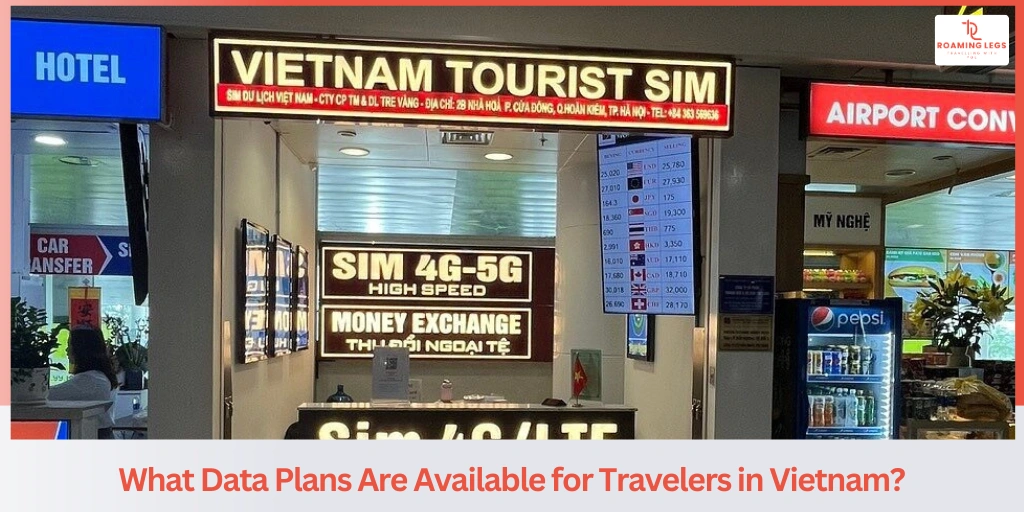
Which SIM card should you actually buy for Vietnam? For most Indian travelers, it’s a Viettel prepaid SIM — around ₹350–₹500 depending on where you buy it, giving you 4G data for 7 to 30 days across the whole country, including Sapa, Ha Giang, and Phu Quoc where other networks drop signal.
If you’re only staying in Hanoi and Ho Chi Minh City, Vinaphone or Mobifone work just as well and are sometimes cheaper.
That one-line answer is enough to get you connected.
But which plan, where to buy it, and whether an eSIM makes more sense for your specific trip — that’s what actually decides whether you’re stuck at the airport counter for 20 minutes or in a Grab within five.
We’ve set up SIM cards for hundreds of Indian travelers heading to Vietnam, and this guide covers what actually matters: real prices, real plan names, and the mistakes we see people make every single week.
Best SIM Card for Vietnam at a Glance
Compare the most popular SIM and eSIM options for travelers.
| Network | Best For | Typical Price | Data |
|---|---|---|---|
| Viettel | Widest coverage, remote areas | 200,000–300,000 VND (₹630–₹950) | Up to 5 GB/day |
| Vinaphone | City-only trips, bundled minutes | 90,000–260,000 VND (₹285–₹820) | 1.5–4 GB/day |
| Mobifone | Budget short trips, Hi Vietnam app | Free 8 GB (first 24 hrs), plans from 100,000 VND | Varies |
| Airalo eSIM (Xin Chao) | Pre-booking before you fly | US$9.50–US$32 (₹800–₹2,700) | 3–20 GB total |
Viettel
Vinaphone
Mobifone
Airalo eSIM (Xin Chao)
Why Bother With a Local SIM in the First Place
Honestly, the first thing that goes wrong for Indian travelers in Vietnam isn’t the food or the heat — it’s landing in Hanoi or Ho Chi Minh City with no working number and no way to call a Grab.
Vietnam’s airport taxi counters are notorious for overcharging tourists, and the easiest way to skip that entirely is opening the Grab app the second you clear immigration.
A local SIM is what makes Grab, Google Maps, Booking.com, and Google Translate actually work while you’re moving — not just at the hotel Wi-Fi.
And unlike a lot of destinations, Vietnam makes this genuinely cheap.
You’re looking at ₹300–₹900 for a plan that covers your entire trip, which is a rounding error next to what Indian roaming plans charge per day.
One thing most first-timers don’t realize: you need your original passport to buy a SIM in Vietnam.
It’s a legal requirement, not a formality — airport counters and city stores will scan it before activating anything.
Leave it in the hotel safe and you’ll be turned away.
Viettel: The One We Recommend for Most Trips
Viettel is government-linked and has invested the most in network infrastructure, which shows the moment you leave the big cities.
If your itinerary includes Sapa, Ha Giang Loop, Ninh Binh, or Phu Quoc along with Hanoi and Ho Chi Minh City, Viettel is the one that won’t drop out on you.
At Tan Son Nhat Airport in Ho Chi Minh City, Viettel runs two counters in the international arrivals hall — one on the left after customs (booth G.1.38/12) and one on the right (booth G.2.44/02).
The two plans most tourists actually buy are TOUR200 (200,000 VND, 5 GB/day for 7 days, includes calls) and TOUR300 (300,000 VND, 5 GB/day for 30 days).
Booking these online in advance usually knocks off 10–15% versus paying at the counter.
One thing most guides miss: buying at the airport costs roughly 20–30% more than the same SIM at a city Viettel store.
If you’re arriving in the evening and just need to get to your hotel, pay the airport premium — it’s ₹150–₹200 extra, not worth the stress of hunting for a store.
If you’re arriving mid-morning with time to spare, walk to a city outlet instead.
Vinaphone: Good for City-Only Trips With Bundled Calling
Vinaphone’s tourist SIM (often sold as the YOLO90 package) runs about 90,000 VND (~₹285) for 30 days with 1.5 GB of data per day — genuinely generous if you’re mostly using maps and messaging along the standard Hanoi–Da Nang–Ho Chi Minh City route.
It also bundles 50 minutes of international calling to India, the US, UK, and a handful of other countries, which regular data-only eSIMs don’t offer.
The catch: the SIM auto-deactivates after 15 days on the base plan and can’t be topped up or extended — you’d need to buy a fresh one if your trip runs longer.
Vinaphone counters are in arrivals at Noi Bai (Hanoi), Tan Son Nhat (Ho Chi Minh City), Da Nang, Cam Ranh (Nha Trang), and Phu Quoc, so it’s an easy pickup regardless of which city you land in.
A comparison worth knowing: if you’re doing a 4–5 day Hanoi-only trip and don’t plan to venture into Ha Giang or Sapa, Mobifone will save you money over Viettel with barely any difference in day-to-day usability.
If your trip includes any remote trekking region, skip it and go Viettel.
Get Our Free Vietnam Connectivity Checklist
Which SIM should you buy?
Which data plan offers the best value?
Which airport counter should you walk to after landing?
We will send you a simple, up-to-date checklist before your trip so you can get connected within minutes of arriving in Vietnam.
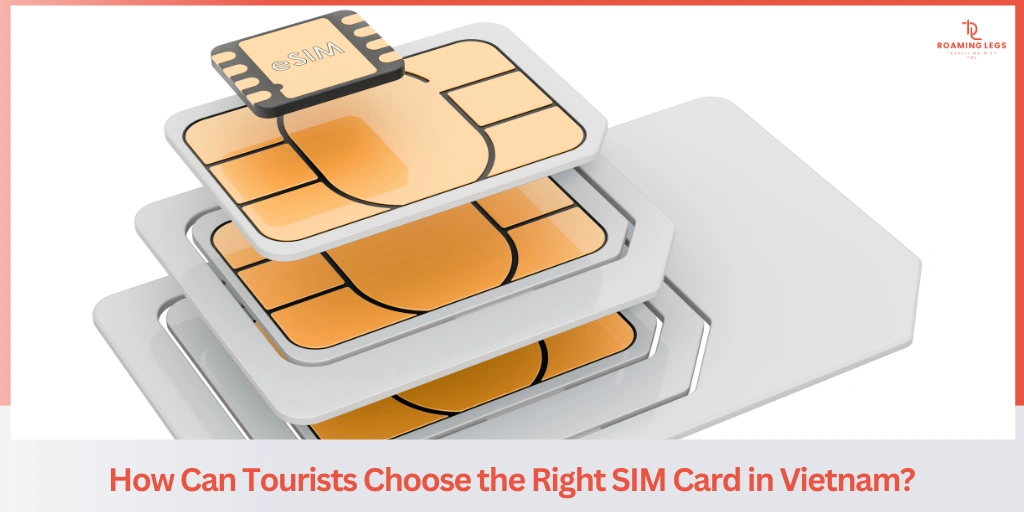
SIM Card or eSIM — Which One Actually Makes Sense for You
This is the question we get asked more than almost anything else while planning Vietnam trips.
Here’s the honest answer: an eSIM is worth it if your phone supports it (iPhone XS and later, Galaxy S20 and later, Pixel 3 and later) and you want data working the second you land, without hunting for a counter.
Airalo’s Vietnam eSIM (branded Xin Chao) runs on Viettel and Mobifone networks, with plans from $4.50 for 1 GB (7 days) up to $32 for 20 GB (30 days).
The trade-off most eSIM guides don’t mention clearly: the vast majority of Vietnam eSIMs are data-only, with no local phone number attached.
That’s fine for maps and Instagram, but Grab drivers frequently call passengers to confirm pickup points at busy spots like airports and train stations — and without a +84 number, that call simply won’t reach you. If you’re getting an eSIM, keep WhatsApp and the in-app chat function open as your backup for driver coordination.
A physical SIM from Vinaphone or Viettel, on the other hand, gives you a working local number from the moment it’s activated — useful not just for Grab but for hotel bookings, bank OTPs, and registering on Zalo, which locals use more than WhatsApp.
Our take: if you’re staying under a week and your phone supports eSIM, go digital and skip the counter queue entirely.
If you’re staying 10+ days, doing any remote travel, or want a proper local number for calls, get a physical Viettel SIM at the airport.
What a SIM Card Actually Costs: Cost Breakdown by Traveler Type
Choose the plan that best matches your travel style and data needs.
| Traveler Type | Cost for a 10–14 Day Trip | What You Get |
|---|---|---|
| Budget / short trip | ₹300–₹500 | Mobifone or basic Viettel SIM, 1–2 GB/day, city-focused use |
| Standard / most tourists | ₹600–₹950 | Viettel TOUR300 or Vinaphone bundle, 4–5 GB/day, works everywhere including remote regions |
| Heavy user / remote work | ₹1,500–₹2,700 | Airalo/Holafly unlimited eSIM or Viettel top-up, streaming and hotspot-friendly |
Budget / short trip
Standard / most tourists
Heavy user / remote work
Practical Info: Visa, Timing, Currency, and One Packing Tip
Indian tourists can currently use Vietnam’s e-visa portal, which is processed online in a few working days — apply at least a week before departure to avoid airport delays.
The best months for a trip that also involves a lot of walking around outdoors are February–April and August–October, when rainfall is lowest.
Currency is the Vietnamese Dong (VND); carry some cash for SIM purchases since not every airport counter accepts card.
One packing tip that surprises people: bring a spare passport photocopy specifically for SIM registration — some smaller city stores prefer to keep a copy rather than just scanning it.
Your Day-1 Connectivity Plan: From Landing to First Grab Ride
On the plane (before landing): If you’ve pre-booked an Airalo or Holafly eSIM, install the profile now using the airport Wi-Fi or your last bit of Indian roaming data — you’ll land already connected.
Immigration and baggage claim (10–15 minutes): Keep your passport out.
You’ll need it again in the next five minutes.
SIM counter (5–10 minutes): Head to the Viettel or Vinaphone kiosk in arrivals.
Show your passport, pick TOUR200 or TOUR300 (Viettel) or the YOLO90 bundle (Vinaphone), and get it activated on the spot — staff usually install it for you.
Outside arrivals (2 minutes): Open Grab, register with your new +84 number, and book your ride to the hotel instead of joining the taxi queue.
At the hotel: Test your data speed, download offline Google Maps for your full route in case you lose signal in remote stretches like Ha Giang, and save your hotel’s address in Vietnamese for showing drivers.
Planning a Vietnam Trip From India Takes Hours of Research
We have planned Vietnam trips for hundreds of Indian travelers.
Tell us your travel dates, departure city, and how many people are traveling.
We will prepare a personalized Vietnam trip plan with the best flight options, recommended SIM card, suggested itinerary, and practical travel tips, ready within 24 hours.
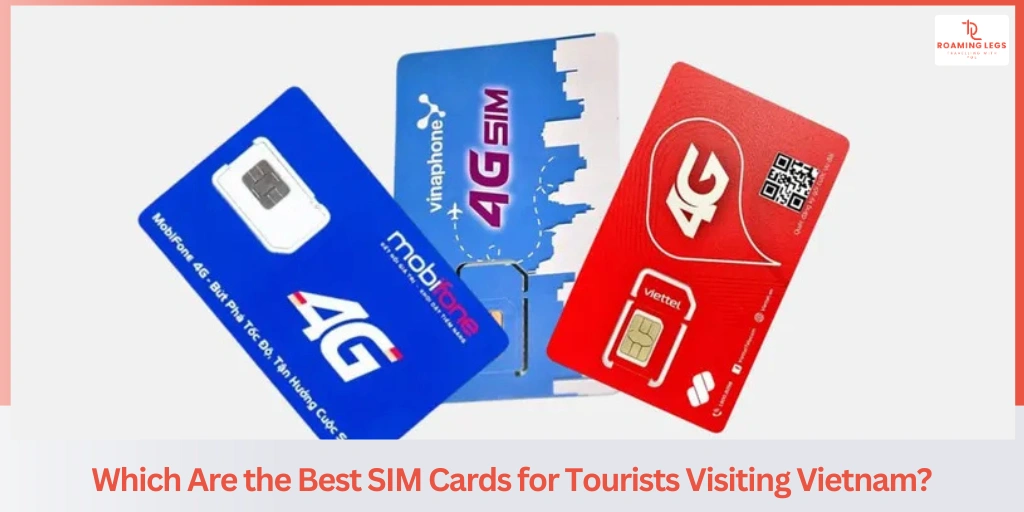
What Travelers Are Saying
Rohan M., Pune (Traveled March 2026): “We landed in Hanoi at 11 PM and honestly weren’t sure the airport SIM counters would even be open.
Roaming Legs told us exactly which Viettel booth to head to and which plan to ask for — took us under ten minutes and we had Grab working before we’d even collected our bags.”
Ayesha K., Bangalore (Traveled May 2026): “Went with the Mobifone free 8GB trick for our first day like they suggested, then upgraded to a proper Viettel plan in the city the next morning.
Saved us close to ₹400 and nobody at the counter tried to upsell us into something we didn’t need.”
Frequently Asked Questions About Vietnam SIM Cards for Indian Tourists
Responsive, Elementor-ready FAQ section with embedded CSS and no JavaScript.
1. Which SIM card is best for Indian tourists visiting Vietnam?
Viettel is the best overall choice thanks to its excellent coverage in cities and remote areas like Sapa, Ha Giang, and Phu Quoc. Vinaphone is a great budget option for city-focused trips.
2. How much does a Vietnam SIM card cost?
Prepaid tourist SIMs generally cost ₹300 to ₹500 in city stores and ₹450 to ₹950 at airport counters depending on the plan.
3. Do I need my passport to buy a SIM card?
Yes. Your original passport is required for SIM registration and activation.
4. Can I buy a SIM card at the airport?
Yes. Hanoi and Ho Chi Minh City airports have official Viettel and Vinaphone counters in the arrivals area.
5. Is an eSIM better than a physical SIM?
An eSIM is convenient for instant data. A physical SIM is better if you need a Vietnamese phone number for calls, Grab, or OTP verification.
6. Does Grab work without a Vietnamese phone number?
Yes, but drivers may call to confirm pickup locations. Keep WhatsApp available if you are using a data-only eSIM.
7. How much data do I need?
Around 2 to 3 GB per day is enough for maps, Grab, messaging, and social media. Plans with 4 to 5 GB per day offer extra flexibility.
8. Which SIM works best in remote areas?
Viettel provides the strongest network coverage in mountainous and rural regions.
9. Is the Mobifone free data offer worth it?
Yes. New users receive free starter data that is useful for the first day after arrival.
10. Can I top up my SIM?
Yes. Viettel and Mobifone can be topped up easily through stores or apps. Some tourist bundles have limitations.
11. Do SIM cards work across Vietnam?
Yes. Major networks provide coverage across mainland Vietnam and islands such as Phu Quoc.
12. Should I buy a SIM before flying or after landing?
Buy an eSIM before departure for instant connectivity or purchase a physical SIM at the airport if you need a local number.
13. What is the biggest mistake tourists make?
Buying a data-only eSIM without a phone number, making it harder for Grab drivers to contact them.
Do Indian Phone Chargers Work in Vietnam? Complete Plug Guide for Indian Travelers
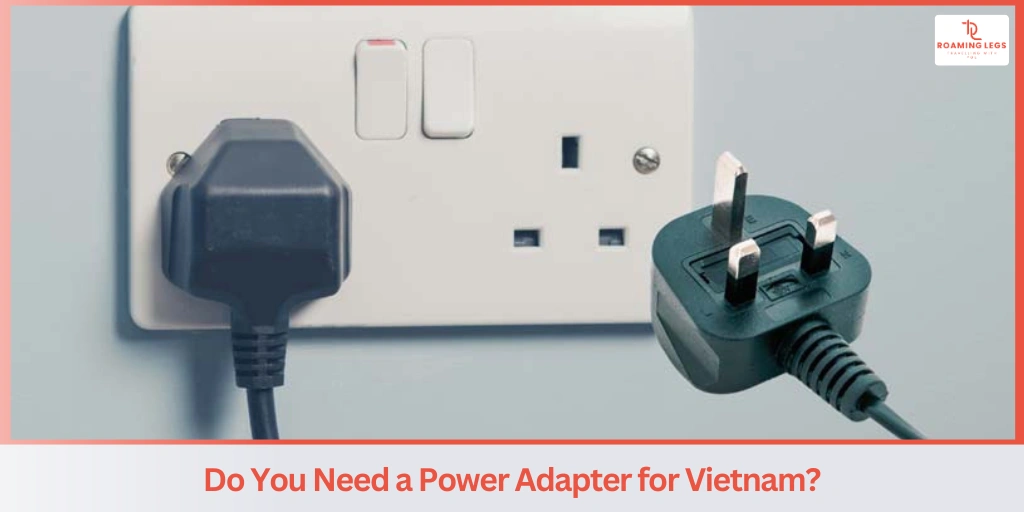
No, most Indian chargers don’t work directly in Vietnam because the socket types are different.
India uses Type D and Type M plugs (three big round pins), but Vietnam uses Type A, Type C, and sometimes Type F plugs.
You’ll need a universal travel adapter to charge your phone, laptop, and camera.
The good news? Vietnam’s voltage (220V) matches India’s (230V), so your devices won’t get damaged—they just won’t fit the socket.
What Plug Types Does Vietnam Actually Use? Your Quick Reference
| Plug Type | What It Looks Like | Common in Vietnam? | Works With Indian Plugs? |
|---|---|---|---|
| Type A | Two flat parallel pins | Yes (South Vietnam mostly) | No — need adapter |
| Type C | Two round pins | Yes (North Vietnam, new hotels) | Maybe — some Indian Type C work |
| Type F | Two round pins + grounding clips | Yes (newer buildings) | No — need adapter |
| Type D | Three round pins (Indian standard) | Rarely | It’s Indian, but Vietnam doesn’t use it |
| Type M | Three big round pins (Indian standard) | Very rarely | It’s Indian, but Vietnam doesn’t use it |
Two flat parallel pins
Common in Vietnam?Yes (South Vietnam mostly)
Works With Indian Plugs?No — need adapter
Two round pins
Common in Vietnam?Yes (North Vietnam, new hotels)
Works With Indian Plugs?Maybe — some Indian Type C work
Two round pins + grounding clips
Common in Vietnam?Yes (newer buildings)
Works With Indian Plugs?No — need adapter
Three round pins (Indian standard)
Common in Vietnam?Rarely
Works With Indian Plugs?It’s Indian, but Vietnam doesn’t use it
Three big round pins (Indian standard)
Common in Vietnam?Very rarely
Works With Indian Plugs?It’s Indian, but Vietnam doesn’t use it
The Real Situation: Indian Plugs vs Vietnamese Sockets
If you are packing from India and planning to travel to Vietnam, here’s what actually happens at the socket.
Type C Plugs from India – Sometimes They Work
Indian phone chargers often come with Type C plugs (two round pins).
Vietnam also uses Type C sockets, especially in Northern Vietnam and newer hotels.
If your charger has a Type C plug, you’re lucky – it might fit directly without an adapter.
But here’s the catch: Not all Type C plugs are created equal.
Indian Type C plugs are slightly different in size and pin thickness compared to European Type C plugs.
Sometimes they fit loosely, sometimes not at all.
The hotel staff at 11 PM can’t fix that kind of problem.
Type D and Type M Plugs – You Definitely Need an Adapter
If you are carrying older devices or specialized electronics (hair dryers, immersion heaters, older laptop chargers), they probably use Type D plugs (the three big round pins in a triangle) or Type M plugs (even bigger three round pins).
Vietnam doesn’t use either of these.
You’ll need a travel adapter, no question.
What this means for you: Don’t assume your charger will work.
Check your plug before you pack.
Check Your Charger’s Voltage – This Matters More Than You Think
Before you worry about the socket, check the tiny label on your charger.
Find where it says something like: Input: 100–240V, 50–60Hz
If you see that range (100–240V), you’re good.
That’s what we call a “dual-voltage” charger, and it works in Vietnam without any problem.
Your phone charger probably says this.
Your laptop charger probably says this.
Your camera charger probably says this.
If your charger says only 230V or 240V, it’s single-voltage and only works in India.
This is rare for modern electronics, but old hair dryers and electric kettles often have single-voltage ratings.
Those won’t work in Vietnam even with an adapter – you’d need a voltage converter, which is a completely different thing.
Quick test:
- Check your charger label right now
- If it says 100–240V → Your device is safe in Vietnam (just need the right socket adapter)
- If it says only 230V → Only works in India (don’t plug in Vietnam)
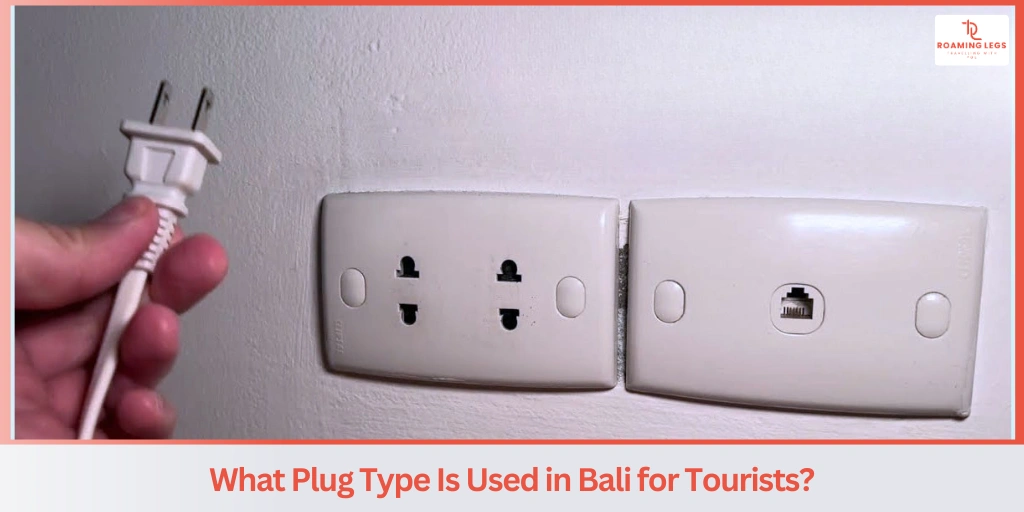
Vietnam’s Electricity: 220V – Almost Exactly Like India’s 230V
Here’s the good news that everyone misses: Vietnam’s electricity is almost identical to India’s.
| Country | Voltage | Frequency |
|---|---|---|
| India | 230V | 50Hz |
| Vietnam | 220V | 50Hz |
230V
Frequency50Hz
220V
Frequency50Hz
That 10-volt difference is so small that modern devices don’t even notice.
Your phone charger doesn’t care.
Your laptop charger doesn’t care.
Your camera doesn’t care.
The only time voltage really matters is if you’re bringing old appliances like hair dryers or electric kettles from India.
Those single-voltage devices expect exactly 230V. At 220V, they might work slowly or might not heat up properly.
At 110V (like in some parts of Vietnam), they won’t work at all.
Why this matters: You don’t need a voltage converter for your electronics.
You only need a plug adapter so your charger physically fits the socket.
Where to Find Different Plug Types in Vietnam
If you are planning to visit Vietnam, you should know where each socket type is actually used:
Southern Vietnam (Ho Chi Minh City, Can Tho, Phu Quoc)
Type A plugs are more common here because of historical American influence.
Older hotels, guesthouses, and local shops often have Type A sockets.
Type A has two flat parallel pins – imagine a tiny rake with just two tines.
If your charger is shaped like that, it will fit many Southern Vietnam sockets without an adapter.
Northern Vietnam (Hanoi, Halong Bay, Hoi An)
Type C and Type F are more common in the north.
These are European-style round-pin sockets. Newer hotels and modern buildings use these.
Both Regions
Newer luxury hotels, co-working spaces, and airport lounges often have hybrid universal sockets that accept multiple plug types.
Look for a socket that has both flat and round holes – you might not need an adapter at all.
The real situation: You still need an adapter because you can’t guarantee which socket type you’ll get.
A single hotel building might have Type A in some rooms and Type C in others.
Honest Talk: What Actually Works and What Doesn’t
Let’s be direct about what to expect.
Devices That Will Definitely Work
- ✅ Your smartphone charger (almost all are Type C or dual-voltage)
- ✅ Your laptop charger (almost all are dual-voltage)
- ✅ Your power bank (all are dual-voltage)
- ✅ Your camera or GoPro charger (almost all are dual-voltage)
- ✅ Any modern USB charger
Devices That Might Not Work
- ⚠️ Old hair dryers from India (single-voltage, don’t fit socket anyway)
- ⚠️ Electric kettles (single-voltage, dangerous at different voltage)
- ⚠️ Older laptop chargers with Type D plugs
- ⚠️ Any device that only says “230V” on the label
What You Actually Need
- A universal travel adapter that supports Type A, Type C, and Type F – costs ₹300–800 online, lasts for every international trip you ever take
- That’s it. You don’t need a voltage converter (unless you’re bringing that hair dryer, which is honestly not worth it)
Real talk: One universal adapter solves 95% of charging problems in Vietnam. Everything else is just being extra cautious.
Where Should You Buy a Travel Adapter?
Before You Leave India (Recommended)
Online: Amazon, Flipkart (search “universal travel adapter”)
- Price: ₹300–₹1,500
- Best ones: Include USB charging ports and work in 150+ countries
- You’ll actually have it when you land, not searching at 11 PM
Electronics stores: Croma, Reliance Digital
- Price: ₹500–₹2,000
- Upside: See it before buying
- Downside: Higher price than online
At Ho Chi Minh City or Hanoi Airport
- Price: Double or triple what you’d pay in India
- Available: Yes, at convenience stores
- When you’d buy: Only if you completely forgot
In Vietnam Cities
Electronics shops, supermarkets (Big C, Co.opmart), and shopping malls have adapters.
- Price: Slightly cheaper than airport, more expensive than online
- Quality: Hit or miss
Honest advice: Buy before you travel. You’ll save money and have peace of mind landing at 1 AM.
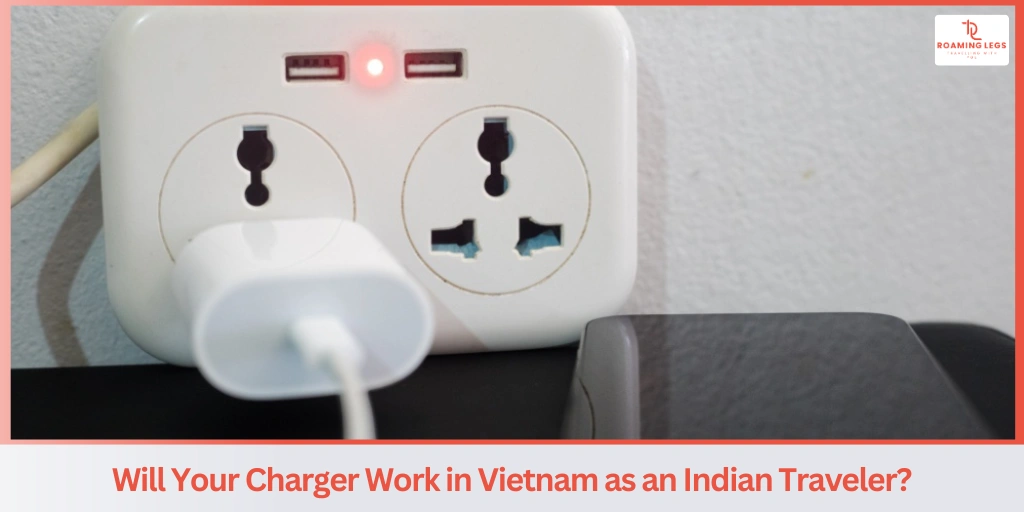
What About Older Hotels and Guesthouses?
If you are staying in a smaller or older hotel, there’s a small chance the room only has Type A or Type D sockets.
The front desk can’t magic up a new socket.
This is when carrying a multi-socket travel adapter (not just a single-type adapter) saves your trip.
A good universal adapter works with every plug type Vietnam has, plus Type D if you somehow need it.
What people forget to do: Don’t call the hotel asking “What socket type do you have?”
because half the staff won’t know what you’re talking about. Just bring a universal adapter and avoid the problem completely.
Won’t Your Hotel Provide an Adapter?
Some 4-star and 5-star hotels might have adapters at the front desk to borrow. Many don’t.
Guesthouses almost never have them.
The problem: If every guest borrowed the hotel’s adapter, the hotel would run out or lose them.
Most places don’t replace them.
Why you shouldn’t rely on this:
- You need to charge your phone before checking in (Grab app for the taxi, Google Maps)
- Hotels can run out at 9 PM
- Some hotels charge ₹200–₹500 just to borrow an adapter
Just carry your own. Problem solved, nothing to worry about.
Practical Tips for Charging Multiple Devices
If you are traveling with family or carrying multiple devices (phone, tablet, laptop, camera), one travel adapter might not be enough.
Here’s what works:
Option 1: Universal Adapter + USB Power Bank
- Plug the universal adapter into the wall socket
- Plug a multi-port USB power bank into the adapter
- Charge your phone, tablet, and earbuds from the power bank
- Cost: ₹600–₹1,500 total, totally worth it
Option 2: Multi-Port USB Charger + Universal Adapter
- Get a USB charger with 3–4 USB ports
- Plug it into the wall with your universal adapter
- Connect 4 devices at once
- Cost: ₹800–₹2,000, super convenient
Option 3: Just Bring Multiple Adapters (Overkill But It Works)
- Two universal adapters, one for the bedroom, one for your bag
- Never fight over outlets
- Cost: ₹600–₹1,600
What people actually do: One universal adapter + one USB power bank.
That’s it. Covers everything.
The Reality of Vietnam’s Power Supply
If you are worried about power safety in Vietnam, don’t be.
Vietnam’s electrical infrastructure is reliable in cities and tourist areas.
Blackouts happen but are rare in Hanoi, Ho Chi Minh City, and major tourist destinations.
One small issue: Some older buildings have occasional voltage fluctuations.
This is why dual-voltage devices exist – they handle small swings.
Modern laptop chargers handle it fine.
When power becomes a problem:
- You’re in a very remote area (not many tourists go there anyway)
- During monsoon season in extreme weather (still rare)
For regular travel: Don’t worry. Plug in, charge your device, get back to exploring.
Get Your Free Vietnam Packing Checklist for Indian Travelers
Already booked your Vietnam trip? Get a complete packing checklist covering power adapters, visas, money, clothes, airport tips, and everything you need before departure.
The Biggest Mistakes Travelers Make (And How to Avoid Them)
Mistake #1: Assuming All Indian Type C Plugs Fit Vietnamese Type C Sockets
Indian Type C pins are slightly thicker. Vietnamese Type C pins are European standard. Sometimes they fit, sometimes they don’t. Solution: Bring a universal adapter anyway.
Mistake #2: Buying a Single-Type Adapter (Like Type A Only)
You arrive in your hotel and find a Type C socket. Your Type A-only adapter is useless. Solution: Always buy a universal adapter that supports multiple types.
Mistake #3: Not Checking Your Charger’s Voltage Before Packing
You assume your hair dryer works in Vietnam because it’s electric. It’s probably 230V only. It won’t work. Solution: Check the label. If it doesn’t say 100–240V, leave it at home.
Mistake #4: Forgetting to Charge Your Phone Before Checking Out of the Hotel
You need Grab to get to the airport, but your phone is at 5%. You’re now stressed, late, and can’t book a cab. Solution: Charge your phone while eating breakfast. Always leave hotels with a full battery.
Mistake #5: Buying an Adapter at the Airport
You’re tired, time is running out, and the airport store charges triple. You panic and buy it anyway. Solution: Buy online from India for a third of the price.
Get Your Custom Vietnam Itinerary
Planning a full Vietnam trip? Share your budget, travel dates, and interests. We will create a customised itinerary covering Hanoi, Halong Bay, Ho Chi Minh City, and other destinations that fit your travel style.
Final Checklist Before You Leave for Vietnam
Before you pack your bags, check everything:
- [ ] I checked my main charger’s label – it says 100–240V ✅
- [ ] I checked my laptop charger’s label – it says 100–240V ✅
- [ ] I checked my camera charger’s label – it says 100–240V ✅
- [ ] I bought a universal travel adapter that supports Type A, C, and F ✅
- [ ] I tested my adapter with my chargers before packing ✅
- [ ] I know where to find outlets in my hotel (ask front desk or look online) ✅
- [ ] I’m bringing at least one USB power bank for long sightseeing days ✅
One more thing: Once you land and turn on your phone, Google your hotel name + “socket type” to know what you’re working with. Half the time, travelers ask the front desk and get confused. Just Google it, saves time.
Ready to Plan Your Vietnam Trip?
The power plug question is solved. Now you can focus on the experiences that make Vietnam special, from Phu Quoc beaches and Hanoi temples to the Mekong Delta, local food, and unforgettable moments.
We have helped 200+ Indian couples and families plan Vietnam trips from start to finish. Our team can help with visas, travel timing, hotels, destinations, and building a smooth itinerary that fits your budget.
Share your travel details and we will create your Vietnam itinerary within 24 hours.
Frequently Asked Questions
Everything Indian travelers need to know about using chargers and electrical devices in Vietnam.
Q1. Will my exact charger work in Vietnam?
If your charger label says 100–240V, it will work in Vietnam with the correct plug adapter.
If it says only 230V, check the device specifications before using it. Most modern phone, tablet, and laptop chargers are designed for international travel.
Q2. Do I need a voltage converter or just an adapter?
Most Indian travelers only need a plug adapter.
Voltage converters are rarely required because modern electronics like phones and laptops usually support 100–240V input.
Q3. Can I charge my phone without an adapter?
It is possible if your charger plug matches the socket, but you cannot rely on this.
Vietnam commonly uses Type A, Type C, and Type F sockets, so carrying a universal adapter avoids last-minute problems.
Q4. What's the best universal adapter for Vietnam?
Choose a universal adapter supporting Type A, Type C, and Type F plugs with USB ports.
A good travel adapter usually costs around ₹500–₹1,000. Brands such as Philips, Portronics, and Amazon Basics are commonly used by travelers.
Q5. Can I share one adapter with other travelers?
Yes, but it can become inconvenient when everyone needs charging at the same time.
For couples or families, a multi-port adapter or power strip setup makes charging much easier.
Q6. What if my adapter doesn't fit the socket?
This usually happens when travelers carry a single-type adapter.
A universal adapter designed for multiple plug types is the safer choice for Vietnam.
Q7. Will my device get damaged if I plug it in wrong?
If the plug does not fit, do not force it. Your device will not be damaged.
Voltage differences can damage electronics, but Vietnam uses 220V, which is the same standard used in India. Dual-voltage devices are generally safe.
Q8. Can I charge my laptop in Vietnam?
Yes. Connect your laptop charger through a universal adapter and plug it into the wall socket.
Most modern laptop chargers support international voltage ranges automatically.
Q9. Are there charging outlets in cafés and restaurants?
Yes, especially in tourist areas of Hanoi and Ho Chi Minh City.
Many cafés provide charging points along with WiFi and air conditioning.
Q10. Do I need an adapter at Vietnam airports?
Sometimes. International lounges may have universal sockets, but regular terminals often use standard Vietnamese outlets.
Keeping your adapter in your carry-on bag is the safest option.
Q11. What if I forget my adapter at the hotel?
You can usually buy a replacement from supermarkets or electronics shops in Vietnamese cities.
Local replacements may cost around ₹300–₹500, but airport shops are generally more expensive.
Q12. Can I use my Indian electrical extension cord in Vietnam?
No. Indian extension cords generally do not fit Vietnamese wall sockets.
Use a universal travel adapter instead for phones, laptops, cameras, and other electronics.
Can You Use Indian Rupees in Bali or Vietnam? The Honest Currency Guide for Indian Travellers
So you’ve booked your Bali or Vietnam trip, and now you’re staring at your wallet wondering — can I just carry rupees and exchange them there?
Or do I need to figure this out before I leave?
Short answer: yes, you need to sort this before you go.
Indian Rupees (INR) are not accepted for payments in either Bali or Vietnam.
Not at restaurants, not at hotels, not at markets. The moment you land, you are dealing with a completely different currency — and if you haven’t planned for it, your first few hours in either country can get genuinely stressful.
This guide tells you exactly what currency to carry, the cheapest ways to get it, which cards actually save you money, what the current exchange rates look like, and the mistakes Indian travellers make that cost them real money.
What Currency Is Used in Bali and Vietnam?
Two different countries, two different currencies — and both of them have a learning curve.
Bali (Indonesia) uses the Indonesian Rupiah (IDR), symbol Rp.
The numbers are large — a casual lunch might cost Rp 80,000, a cab ride Rp 50,000, and a hotel Rp 1,500,000 per night.
As of July 2026, 1 Indian Rupee = approximately 183–190 Indonesian Rupiah.
So that Rp 1,500,000 hotel room is roughly ₹8,000.
Once you get the hang of dividing by 185, you’re fine.
Vietnam uses the Vietnamese Dong (VND).
The denominations are even more extreme — ₹100 gets you roughly 283 VND.
A street food meal in Hanoi might cost 60,000 VND, which is just ₹212.
The confusing part: the 20,000 VND and 500,000 VND notes look similar, and polymer notes stick together.
Count every time.
Neither destination accepts INR at shops, restaurants, taxis, or markets.
A few high-end hotels might quote in USD, but even then, they won’t take rupees.
How Much Does INR Actually Get You?
| Currency Pair | Approximate Rate (July 2026) |
|---|---|
| 1 INR → Indonesian Rupiah (IDR) | ~183–190 IDR |
| 1 INR → Vietnamese Dong (VND) | ~280–295 VND |
| ₹10,000 → IDR | ~18,30,000–19,00,000 IDR |
| ₹10,000 → VND | ~28,00,000–29,50,000 VND |
1 INR → ~183–190 IDR
Example₹10,000 → ~18,30,000–19,00,000 IDR
1 INR → ~280–295 VND
Example₹10,000 → ~28,00,000–29,50,000 VND
Planning Bali or Vietnam? Get Your Real Daily Budget Breakdown
Not sure how much you should actually budget for your trip? Share your travel dates, trip duration, and travel style on WhatsApp, and we will prepare a realistic per-day cost breakdown based on your plans.
Get clear numbers for stays, food, transport, activities, and daily expenses — without unnecessary extras or confusing estimates.
Bali Currency Guide for Indian Travellers
The biggest mistake Indian travellers make in Bali is arriving at Ngurah Rai International Airport and exchanging all their money there.
Airport counters in Bali are consistently 3–6% worse than the rates you’ll get in town.
Change just enough at the airport to cover a taxi or GrabCar to your hotel — around Rp 100,000–200,000 (₹540–₹1,080).
Sort the rest in Seminyak, Ubud, or Canggu.
Where to exchange money in Bali:
The most trusted licensed money changers in Bali are BMC (Bali Money Changer), Central Kuta Money Exchange (PT Central Kuta), and Permata Bali.
All three have Bank Indonesia licence certificates displayed on the wall — check for this before handing over your cash.
Do not exchange money at street-side, unlicensed changers even if they advertise better rates.
Scams include shortchanging, distraction tricks, and fake notes returned in the middle of a big bundle.
Can you exchange INR directly in Bali?
Yes, most licensed money changers in Bali accept Indian Rupees.
But the rate for INR is often slightly worse than for USD.
A practical move many Indian travellers use: carry a portion of your forex budget in USD, which tends to get better rates at Bali changers.
So if you have ₹30,000 to exchange, convert ₹15,000–₹20,000 to USD in India first through a forex dealer like BookMyForex or Thomas Cook, and exchange the rest in Bali as INR.
Cash or card in Bali?
Use both. The recommended split is 60–70% on a forex card loaded with IDR and 30–40% as IDR cash. Here’s why:
Cash is still king at traditional markets like Ubud Art Market and Sukawati Market, street food warungs, scooter rentals, temple entrance fees (most charge Rp 20,000–50,000), parking, and tips.
A good daily cash budget for Bali is Rp 500,000–1,500,000 (₹2,700–₹8,100) depending on your travel style.
Cards are accepted at hotels, beach clubs like Ku De Ta and Potato Head, shopping malls, larger restaurants, and tour operators booking activities like ATV rides with Mason Adventures or sunrise treks to Mount Batur.
Note: many Bali establishments add a 2–3% surcharge for card payments.
Ask before you swipe.
Best ATMs in Bali:
Use BCA or BNI ATMs — they have the most reliable withdrawal limits and lowest additional fees for foreign cards.
Avoid standalone ATMs not attached to a bank building, especially in tourist areas.
Always decline the ATM’s “Dynamic Currency Conversion” offer — it charges you an extra 3–5% to convert into INR on the spot.
Always choose to be charged in IDR.
Vietnam Currency Guide for Indian Travellers
Vietnam is slightly more cash-heavy than Bali, so plan accordingly.
Cities like Hanoi, Ho Chi Minh City (Saigon), and Da Nang have plenty of ATMs and card-accepting restaurants, but once you move to smaller towns, night markets, or street food alleys, you will need VND cash.
Load more cash than you’d carry in Bali.
Where to exchange money in Vietnam:
The best strategy most experienced travellers use: convert INR to USD in India before you fly (through BookMyForex, Orient Exchange, or your local RBI-authorised forex dealer), then exchange USD to VND at a licensed gold shop (tiem vang) in Hanoi’s Old Quarter or HCMC’s District 1.
Gold shops in Vietnam have a long tradition of currency exchange and consistently offer better USD-to-VND rates than airport counters or banks.
Avoid airport exchange counters at Tan Son Nhat (HCMC) and Noi Bai (Hanoi) for anything beyond the minimum to cover your taxi.
Vietnamese Dong is now directly purchasable in India through authorized dealers like Orient Exchange — convenient if you prefer to arrive with local currency already in hand.
Can you exchange INR directly in Vietnam?
It’s possible at some authorized money changers, but INR is not widely traded in Vietnam.
Availability is limited, and the rates are generally worse than for USD or EUR.
Don’t rely on this as your primary strategy.
Best ATMs in Vietnam:
Use VPBank ATMs — as of 2026, most Indian cards work smoothly with only your Indian bank’s fees (roughly ₹125 + 3.5% conversion per withdrawal).
Avoid TPBank (which started charging a 3.3% machine fee in late 2025) and standalone BIDV machines that charge a percentage-based fee instead of a flat one.
UPI does not work in Vietnam — MoMo, ZaloPay, and VietQR all require a Vietnamese bank account.
Cards and cash only.
Not Sure How Much Cash to Carry for Bali or Vietnam?
Managing money abroad can be confusing. We have planned hundreds of trips for Indian travelers and can help you decide the right balance between cash and cards.
Send us your itinerary on WhatsApp and we will share a practical money plan for your route — including how much cash to carry, how much to keep on card, and the best places to exchange currency.
Best Forex Cards for Indian Travellers Going to Bali or Vietnam (2026)
The forex card question comes up constantly — and the honest answer is: the right card depends on how you spend.
Niyo Global Card (DCB Bank): Zero forex markup, real-time interbank rates, and the first four international ATM withdrawals per month are free.
Best for travellers who will mix card payments and ATM withdrawals.
The app is functional, not fancy. Requires you to open a DCB savings account.
BookMyForex WOW Card: Zero cross-currency markup on supported currencies, competitive loading rates, and you can lock in the exchange rate when you load.
Best if you want rate certainty before your trip.
HDFC Multicurrency Platinum / Axis Multi-Currency: Legacy bank cards. Reliable and widely accepted, but charge 3–3.5% cross-currency markup.
Use only if you’re already banking with HDFC or Axis and don’t want to set up a new card.
Scapia Card: Worth considering if you’re booking hotels and activities through the app — the cashback offers can be significant for certain properties.
Less efficient than Niyo for pure ATM withdrawals.
For most Indian travellers heading to Bali or Vietnam, Niyo Global + BCA/VPBank ATMs is the lowest-cost combination.
Activate international transactions at least 24 hours before departure, and test your card at an Indian ATM first.
How Much Cash Should You Carry? A Realistic Budget Guide
| Trip Style | Bali — Per Day (Cash Only) | Vietnam — Per Day (Cash Only) |
|---|---|---|
| Budget traveller |
Rp 300,000–500,000 (₹1,620–₹2,700) |
VND 300,000–500,000 (₹1,060–₹1,770) |
| Mid-range traveller |
Rp 700,000–1,500,000 (₹3,780–₹8,100) |
VND 700,000–1,200,000 (₹2,470–₹4,240) |
| Comfortable traveller |
Rp 1,500,000–3,000,000 (₹8,100–₹16,200) |
VND 1,200,000–2,500,000 (₹4,240–₹8,800) |
Rp 300,000–500,000 (₹1,620–₹2,700)
Vietnam Daily CashVND 300,000–500,000 (₹1,060–₹1,770)
Rp 700,000–1,500,000 (₹3,780–₹8,100)
Vietnam Daily CashVND 700,000–1,200,000 (₹2,470–₹4,240)
Rp 1,500,000–3,000,000 (₹8,100–₹16,200)
Vietnam Daily CashVND 1,200,000–2,500,000 (₹4,240–₹8,800)
Quick Tips to Avoid Losing Money on Currency Exchange
In Bali:
- Never exchange money at the airport for large amounts — rates are 3–6% worse
- Use only licensed changers with the Bank Indonesia licence on the wall (BMC, Central Kuta, Permata Bali)
- Always count your notes at the counter before you walk away — shortchanging is the most common scam
- Ask for a mix of smaller denominations: Rp 10,000, 20,000, 50,000 — useful for taxis, tips, and temple donations
- Decline ATM Dynamic Currency Conversion — always choose to pay in IDR
In Vietnam:
- Convert INR to USD in India, then exchange USD to VND at a gold shop (tiem vang) in Hanoi or HCMC for best rates
- Use VPBank ATMs; avoid TPBank and airport standalone machines
- Watch the 20,000 VND and 500,000 VND notes — they look almost identical
- Keep a small USD reserve (around $50–100) as emergency backup for smaller towns
What Indian Travellers Actually Ask Us
Here’s what couples and families ask our team every week before a Bali or Vietnam trip:
“Nitin, we are going to Bali for 10 nights from Mumbai with our family.
Should we carry USD or INR or just use a card?”
Our answer: carry a Niyo card loaded with IDR, take enough USD to exchange at a licensed changer for your first few days’ cash, and keep your regular debit card as a BCA ATM backup.
Avoid the airport exchange counters entirely for anything over Rp 200,000.
“We are a couple going to Vietnam for 8 days. The guides say USD is better — is that true?”
Yes, in Vietnam, USD gets you a better exchange rate at gold shops than INR does.
Buy USD before you fly, exchange to VND at a reputable tiem vang in Hanoi or HCMC, and use VPBank ATMs when you need more cash mid-trip.
Testimonials
Rajan & Priya Mehta, Ahmedabad — Bali, March 2026 “We almost exchanged everything at the Bali airport until the Roaming Legs team told us not to.
We changed just Rp 200,000 at the airport and got the rest from Central Kuta Money Exchange the next morning.
The rate difference was significant — we saved almost ₹3,000 just by waiting.
The Niyo card worked perfectly at BCA ATMs.”
Sameer Kapoor, Pune — Vietnam, January 2026 “Vietnam’s currency confused me completely at first — I couldn’t tell if 500,000 VND was a lot or nothing.
The team sent us a simple conversion cheat sheet and helped us set up the cash split before we flew.
Hanoi gold shops gave us a far better rate than what the airport would have.”
Frequently Asked Questions
Credit Cards in Vietnam — Where They Work, Where They Don’t, and What Every Indian Traveler Should Carry
So you’re heading to Vietnam and wondering — can I just use my credit card the whole trip? Honest answer: yes and no.
Credit cards work perfectly fine in hotels, shopping malls, bigger restaurants, and most tourist attractions across Hanoi, Ho Chi Minh City, Da Nang, Nha Trang, and Phu Quoc. But the moment you step outside the main tourist zones — street food stalls, local markets, Grab bike rides, small cafés, rural villages — it’s cash only. And that’s most of what makes Vietnam worth visiting.
The smart move is to carry both. This guide tells you exactly how much cash to bring, which ATMs don’t rob you on fees, and which Indian cards actually work well abroad.
Quick Answer: Cash or Card in Vietnam?
| Situation | What Works |
|---|---|
| 5-star hotels, resorts | Credit card ✅ |
| Shopping malls (Vincom, Aeon) | Credit card ✅ |
| International restaurants | Credit card ✅ |
| Supermarkets (VinMart, Co.opmart) | Credit card ✅ |
| Budget guesthouses, homestays | Cash preferred 💵 |
| Street food (Bun Bo, Banh Mi stalls) | Cash only 💵 |
| Local markets (Ben Thanh, Dong Xuan) | Cash only 💵 |
| Grab Bike, local taxis | Cash preferred 💵 |
| Small cafés and family restaurants | Cash only 💵 |
| Rural areas, smaller towns | Cash only 💵 |
| Temples, pagodas, small attractions | Cash only 💵 |
Credit card ✅
Credit card ✅
International restaurants accept cards. Small cafés and local restaurants usually need cash 💵
Cash only 💵
Grab Bike and local taxis: cash preferred 💵
Carry cash for rural areas, temples, pagodas, and small attractions.
Bottom line: Keep at least 500,000–1,000,000 VND in cash at all times. Carry more if you are travelling outside the big cities.
Where Credit Cards Actually Work in Vietnam
If you’re staying in the main tourist areas, you’ll be surprised how card-friendly Vietnam has become over the last few years.
Here’s where your Visa or Mastercard will work without any drama:
Hotels and Resorts — Almost every hotel rated 3 stars and above accepts cards.
Premium beach resorts in Da Nang, Phu Quoc, and Nha Trang are completely card-friendly.
Budget guesthouses and local homestays? Carry cash.
Shopping Malls — Vincom Mega Mall, Aeon Mall, Lotte Mart, and similar malls across major cities all accept cards and even support contactless payments.
Great for shopping, branded goods, and buying last-minute things.
International and Mid-Range Restaurants — Sit-down restaurants with printed menus and air-conditioning almost always have a card machine.
Street-side local spots, open-air eateries, and family-run joints? Cash.
Supermarkets — VinMart, Co.opmart, BigC, MM Mega Market — all accept cards with no issues.
Good for picking up bottled water, snacks, sunscreen, and toiletries cheaper than tourist shops.
Airlines and Tour Operators — Booking domestic flights with VietJet or Bamboo Airways?
Cards are accepted.
Most reputable tour operators also take cards, though some add a 2–3% surcharge.
Always ask before swiping.
Petrol Stations and Chain Pharmacies — Petrolimex and most pharmacy chains in city areas take cards.
Handy for emergencies.
Where You’ll Need Cash — No Exceptions
This is where most Indian travelers get caught off guard.
Vietnam’s most memorable experiences are almost entirely cash-based:
Street Food — A bowl of Pho costs 40,000–80,000 VND (₹130–₹260).
Banh Mi from a sidewalk stall is 25,000–40,000 VND.
These vendors don’t have card machines and never will.
Always carry small notes.
Local Markets — Ben Thanh Market in Ho Chi Minh City, Dong Xuan Market in Hanoi, Han Market in Da Nang — all cash.
You’ll also want small notes for bargaining; vendors rarely have change for large denominations.
Grab Bike and Local Taxis — Grab Car accepts online payment through the app, but Grab Bike drivers (motorbike taxis) often prefer cash.
Local xe om (motorbike taxi) drivers? Cash only. Always.
Temples, Pagodas, and Smaller Attractions — Entry fees at smaller sites are collected by hand.
Keep 20,000–50,000 VND notes handy.
Rural Vietnam and Smaller Towns — Sa Pa, Ha Giang, Mekong Delta villages, Hoi An’s outskirts — the further you go from tourist zones, the more cash-dependent everything becomes.
Stock up before leaving the city.
Tips — At restaurants, spas, and with tour guides, tips are expected in cash. It’s also more personal.
Where Credit Cards Are Commonly Accepted
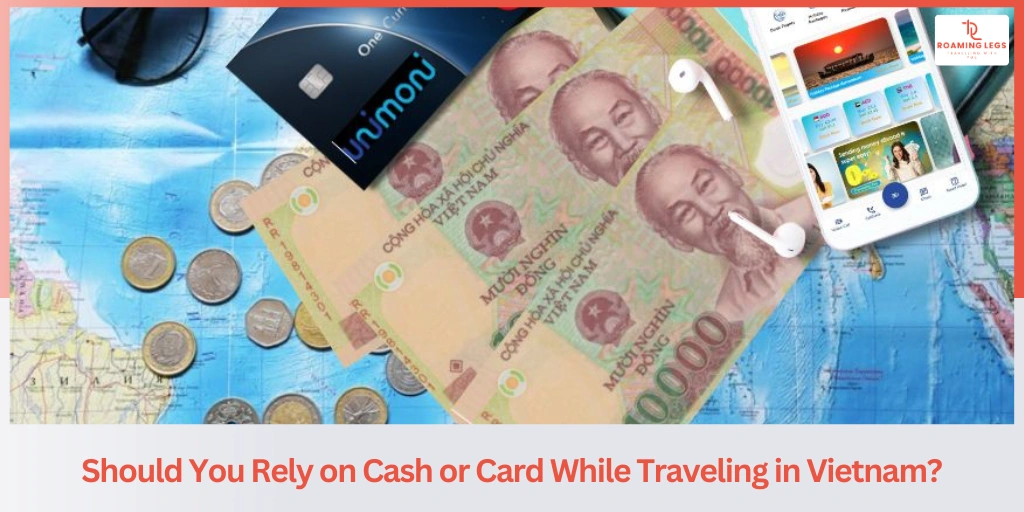
Get Your Custom Vietnam Money Guide
Not sure how much cash to carry, which card works best, or what your Vietnam trip budget will look like? Share your travel dates and itinerary. We will send a practical money guide based on your travel plans.
Which Cards Work Best in Vietnam for Indian Travelers?
Not all cards are equal when you’re travelling abroad. Here’s a practical breakdown:
Visa and Mastercard — These are the two networks you want. Accepted everywhere that takes cards. If you have a Visa or Mastercard from any Indian bank, you’re covered for card payments across Vietnam’s tourist zones.
American Express — Works at some international hotels and upscale restaurants, but you cannot rely on it. Don’t go to Vietnam with only an Amex.
RuPay — Not accepted in Vietnam. Leave this one at home.
Credit Card vs Debit Card — For ATM withdrawals, use a debit card. For purchases, a credit card with zero forex markup is better because you avoid currency conversion losses.
Best Indian Cards for Vietnam Travel (Zero/Low Forex Markup)
| Card | Forex Markup | Annual Fee | Good For |
|---|---|---|---|
| Axis Magnus Credit Card | 0% | ₹12,500 + GST | Frequent travellers, high rewards |
| HDFC Regalia Gold | 0% | ₹2,500 + GST | Balance of benefits and cost |
| SBI Elite Credit Card | 0% | ₹4,999 + GST | Lounge access, travel insurance |
| IDFC FIRST Wealth Credit Card | 0% | ₹0 (milestone-based) | No annual fee, good rewards |
| Niyo SBM Card | 0% | ₹0 | Budget-friendly, zero fee on everything |
0%
Annual Fee₹12,500 + GST
Good ForFrequent travellers, high rewards.
0%
Annual Fee₹2,500 + GST
Good ForBalance of benefits and cost.
0%
Annual Fee₹4,999 + GST
Good ForLounge access and travel insurance.
0%
Annual Fee₹0 (milestone-based)
Good ForNo annual fee, good rewards.
0%
Annual Fee₹0
Good ForBudget travellers, zero fee on everything.
Note: Regular debit/credit cards from Indian banks typically charge 3–3.5% on foreign transactions plus GST. On a ₹1,00,000 Vietnam trip spend, that is ₹3,500–₹4,000 lost in hidden fees. A zero-markup card saves you all of that.
ATMs in Vietnam — Which Ones to Actually Use
Vietnam has ATMs everywhere in cities and tourist areas — airports, city centers, shopping malls, hotel lobbies. Finding one is not the problem. Finding one that does not eat your money in fees is.
ATM Fee Comparison for Foreign Cards
| Bank | Fee Per Withdrawal | Max Withdrawal Limit |
|---|---|---|
| VPBank | ✅ No fee (best option) | Up to 10,000,000 VND |
| Vietcombank | ~50,000 VND (~₹165) | 3,000,000–5,000,000 VND |
| Agribank | ~50,000 VND (~₹165) | 2,000,000–3,000,000 VND |
| BIDV | ~50,000 VND (~₹165) | 2,000,000–3,000,000 VND |
| TPBank | ~3.3% of withdrawal | Varies |
✅ No fee (best option)
Maximum WithdrawalUp to 10,000,000 VND
~50,000 VND (~₹165)
Maximum Withdrawal3,000,000–5,000,000 VND
~50,000 VND (~₹165)
Maximum Withdrawal2,000,000–3,000,000 VND
~50,000 VND (~₹165)
Maximum Withdrawal2,000,000–3,000,000 VND
~3.3% of withdrawal
Maximum WithdrawalVaries
VPBank is clearly the best ATM for foreign cards in Vietnam. No withdrawal fee + highest per-transaction limit (10,000,000 VND = roughly ₹33,000). Withdraw more in one go and save on repeated fees. (Source: Vietnam ATM Guide 2026)
Practical ATM Tips
- Always choose to pay in VND, not INR or USD. When the machine offers to convert for you, say no. That’s Dynamic Currency Conversion (DCC) and it gives you a terrible rate.
- Withdraw larger amounts less often to minimize per-transaction fees.
- VPBank ATMs are common in Ho Chi Minh City and Hanoi — look for them first.
- Avoid airport ATMs for the first withdrawal. Airport exchange counters often have worse rates. Withdraw from city ATMs instead.
- Your Indian bank also charges a fee on top of the ATM’s fee — usually ₹100–₹300 per withdrawal. This is separate from what the ATM charges.
How Much Cash Should You Carry Each Day?
This depends entirely on what kind of traveller you are. If your hotel is already paid and you are on a guided tour, your daily cash needs are lower. If you are a solo explorer eating street food and visiting local markets, you need more.
Daily Cash Estimate (Excluding Accommodation)
| Travel Style | Daily Cash Needed (VND) | Approx. in INR |
|---|---|---|
| Backpacker (street food, budget transport) | 300,000–600,000 VND | ₹1,000–₹2,000 |
| Mid-range (local restaurants, Grab rides, some shopping) | 700,000–1,200,000 VND | ₹2,300–₹4,000 |
| Comfortable traveller (mix of restaurants, markets, shopping) | 1,200,000–2,000,000 VND | ₹4,000–₹6,600 |
300,000–600,000 VND
Approx. INR₹1,000–₹2,000
Street food and budget transport.
700,000–1,200,000 VND
Approx. INR₹2,300–₹4,000
Local restaurants, Grab rides, and some shopping.
1,200,000–2,000,000 VND
Approx. INR₹4,000–₹6,600
Restaurants, markets, and shopping mix.
Exchange rate reference: 1 VND ≈ ₹0.0033 (as of 2026). So 1,000,000 VND ≈ ₹3,300.
Where to Exchange Indian Rupees to Vietnamese Dong
Can you exchange INR directly to VND? Yes, but the rates are usually not great. Here’s what actually works:
- USD is your best friend — Exchange INR to USD in India (through BookMyForex or a bank), then exchange USD to VND in Vietnam. You’ll almost always get a better rate this way.
- Gold shops in Vietnam often give the best VND rates for USD. It sounds strange but it’s a well-known traveler hack in Ho Chi Minh City and Hanoi. They’re legitimate exchange businesses.
- Licensed exchange counters in the city (not at the airport) give competitive rates. Always check the rate board before handing over money.
- Avoid hotel exchange desks — they’re convenient but usually have the worst rates.
- BookMyForex and Thomas Cook India let you buy VND or USD before you fly. Useful if you want to land with local cash in hand.
How Much Cash Should Travelers Carry in Vietnam?
Can You Use Google Pay or PhonePe in Vietnam?
No — Indian UPI apps (Google Pay, PhonePe, Paytm) don’t work in Vietnam.
Vietnam has its own mobile payment apps like MoMo, ZaloPay, and VNPay, but these require a Vietnamese bank account or phone number to set up. \
Not practical for short-term tourists.
In more upscale locations, you may find Apple Pay and Google Pay (linked to international cards) working at contactless terminals. But don’t count on it for daily spending.
City-by-City: How Cash-Dependent Is Each Destination?
| Destination | Card Acceptance | Cash Dependence | Notes |
|---|---|---|---|
| Ho Chi Minh City | High | Medium | Cards common in District 1 and malls; markets are cash-only |
| Hanoi | High | Medium | Old Quarter streets are mostly cash; Hoan Kiem area has card options |
| Da Nang | High | Low–Medium | Modern city, good card acceptance along My Khe Beach strip |
| Hoi An | Medium | High | The Ancient Town is almost entirely cash-based |
| Nha Trang | High | Medium | Beach resorts take cards; local areas need cash |
| Phu Quoc | High | Low | Most tourist infrastructure is card-friendly |
| Sa Pa, Ha Giang | Low | Very High | Carry significant cash before leaving Hanoi for these areas |
| Mekong Delta | Low | Very High | Rural area, essentially cash-only everywhere |
High
Cash DependenceMedium
NotesCards common in District 1 and malls; markets are cash-only.
High
Cash DependenceMedium
NotesOld Quarter streets are mostly cash; Hoan Kiem area has card options.
High
Cash DependenceLow–Medium
NotesModern city with good card acceptance around My Khe Beach.
Medium
Cash DependenceHigh
NotesThe Ancient Town is almost entirely cash-based.
High
Cash DependenceMedium
NotesBeach resorts take cards; local areas need cash.
High
Cash DependenceLow
NotesMost tourist infrastructure is card-friendly.
Low
Cash DependenceVery High
NotesCarry significant cash before leaving major cities. Rural areas are mostly cash-only.
Get Your Vietnam City-Wise Cash Guide + Itinerary
Travelling to Vietnam soon? Share your travel dates and group size. We will send a free city-wise cash guide and a practical 5–7 day itinerary designed around your trip.
A Few Money Scams to Know About
Vietnam is generally safe, but a few payment-related scams catch tourists:
- Cyclo overcharging — Cycle rickshaw drivers sometimes agree on a price per person, then charge per hour. Confirm total cost before getting in.
- Taxi meters running fast — Use Grab Car in cities. It’s metered, app-based, and reliable. Avoid unmetered taxis outside airports.
- DCC at ATMs — When the ATM asks “Would you like to pay in INR?” — always say no. This is dynamic currency conversion and the rate is terrible.
- Unofficial exchange counters — Stick to licensed shops and banks. Anyone approaching you on the street offering exchange rates is not someone to trust.
- Fake VND notes — It happens. Before accepting large change, quickly check for security features on higher denomination notes (200,000 and 500,000 VND notes have color-shifting ink and holographic strips).
Sample 7-Day Vietnam Cash Flow Plan
For a 7-day trip to Vietnam (Hanoi → Ha Long Bay → Da Nang → Ho Chi Minh City), here is roughly how to plan your cash.
| City / Stop | Days | Recommended Cash on Hand |
|---|---|---|
| Hanoi (arrival, Old Quarter) | Day 1–2 | 1,500,000–2,000,000 VND |
| Ha Long Bay cruise | Day 3–4 |
500,000–800,000 VND (most things are included; tips, drinks, extra snacks) |
| Da Nang / Hoi An | Day 5–6 |
1,500,000–2,000,000 VND (Hoi An is very cash-heavy) |
| Ho Chi Minh City (departure) | Day 7 | 800,000–1,000,000 VND |
Day 1–2
Recommended Cash1,500,000–2,000,000 VND
Day 3–4
Recommended Cash500,000–800,000 VND
Most things are included. Carry cash for tips, drinks, and extra snacks.
Day 5–6
Recommended Cash1,500,000–2,000,000 VND
Hoi An is especially cash-heavy.
Day 7
Recommended Cash800,000–1,000,000 VND
Total cash to arrange: Approximately 5,000,000–6,500,000 VND (≈ ₹16,500–₹21,500) for a mid-range 7-day trip, assuming hotels and flights are prepaid.
What to Do Before You Leave India
Here’s a quick pre-trip checklist so you’re not scrambling at the airport:
- ✅ Enable international transactions on your card (call your bank or do it via the app)
- ✅ Inform your bank about your travel dates (prevents security blocks on your card)
- ✅ Get a zero-forex-markup card if you don’t already have one
- ✅ Exchange some INR to USD at BookMyForex or your bank before departure
- ✅ Download the Grab app and set it up before landing in Vietnam
- ✅ Save the Roaming Legs WhatsApp number for on-ground help: +91 85120 00933
Testimonials
“We were so worried about managing money in Vietnam — we didn’t know if cards would work or how much cash to carry. Roaming Legs sorted everything out for us. They told us exactly which ATM to use in each city and how much to keep in our pockets. We didn’t face a single payment issue on the entire 9-day trip.” — Aarav & Priya Mehta, Pune | December 2025
“The cash and currency advice from Roaming Legs was a lifesaver. We were heading to Sa Pa from Hanoi and had no idea we needed a lot more VND up there. They warned us in advance and we withdrew at a VPBank ATM before leaving Hanoi. No stress.” — Rajiv Sharma, Delhi | February 2026
Frequently Asked Questions
Everything Indian travellers need to know about money, cards, and payments in Vietnam.
How much cash should I carry in Vietnam as an Indian tourist?
For a mid-range 7-day trip with prepaid hotels and flights, carry approximately 5,000,000–6,500,000 VND in cash (roughly ₹16,500–₹21,500). This covers street food, local transport, markets, shopping, and daily expenses. Keep at least 2 days' worth on you at all times because ATMs in smaller cities can sometimes run out.
Is credit card accepted in Vietnam?
Yes. Credit cards are widely accepted at hotels, shopping malls, supermarkets, international restaurants, and tourist attractions in major cities like Hanoi, Ho Chi Minh City, Da Nang, Nha Trang, and Phu Quoc. Street food stalls, local markets, Grab bikes, temples, and rural areas are mostly cash-only.
Which ATM is best for foreign cards in Vietnam?
VPBank is one of the best ATM options for foreign cardholders because it usually does not charge withdrawal fees and allows higher withdrawal limits. Other major banks like Vietcombank, Agribank, and BIDV are reliable but may charge a small withdrawal fee.
Can I use my Indian debit card in Vietnam?
Yes. Most international Visa and Mastercard debit cards work at Vietnamese ATMs. Your Indian bank may charge foreign transaction and currency conversion fees, so using a zero-forex-markup card can reduce extra costs.
Is RuPay card accepted in Vietnam?
No. RuPay cards are generally not accepted in Vietnam. Carry Visa or Mastercard as your primary payment option.
Can I use Google Pay or UPI in Vietnam?
No. Indian UPI apps like Google Pay, PhonePe, and Paytm do not work in Vietnam. Carry cash and international cards instead. Contactless payments linked with international cards may work at selected locations but should not be your only payment method.
Should I exchange INR to VND or USD before travelling?
Converting INR to USD in India and exchanging USD to VND after arrival usually gives better rates than exchanging INR directly to VND. Avoid airport exchange counters because rates are generally less favourable.
Is it safe to withdraw cash from ATMs in Vietnam?
Yes, use ATMs located at banks, shopping malls, airports, and hotels. Avoid isolated street ATMs. Always select payment in Vietnamese Dong instead of INR or USD when the ATM asks.
What is the currency of Vietnam?
Vietnam uses the Vietnamese Dong (VND). Exchange rates change regularly, so check the latest rate before exchanging large amounts of money.
How much does street food cost in Vietnam?
A bowl of Pho usually costs around 40,000–80,000 VND, Banh Mi costs around 25,000–40,000 VND, and local coffee costs around 25,000–50,000 VND. Most street food vendors accept cash only.
Is Vietnam more cash-dependent than Thailand or Bali?
Yes. Vietnam still relies heavily on cash, especially for local experiences, street food, and smaller towns. Carrying Vietnamese Dong makes everyday payments much easier.
What should I do if my card is declined in Vietnam?
Enable international transactions through your bank app, try another ATM network, or contact your bank. Always carry backup cash so a card issue does not disrupt your trip.
Can I tip in Indian Rupees or USD in Vietnam?
Vietnamese Dong is preferred for everyday tipping. USD may be accepted at luxury hotels, but INR is not useful locally. Keep small VND notes for guides, drivers, and hotel staff.
Vietnam Currency for Indian Travelers — Cash, Cards, and the ATM Traps Nobody Warns You About
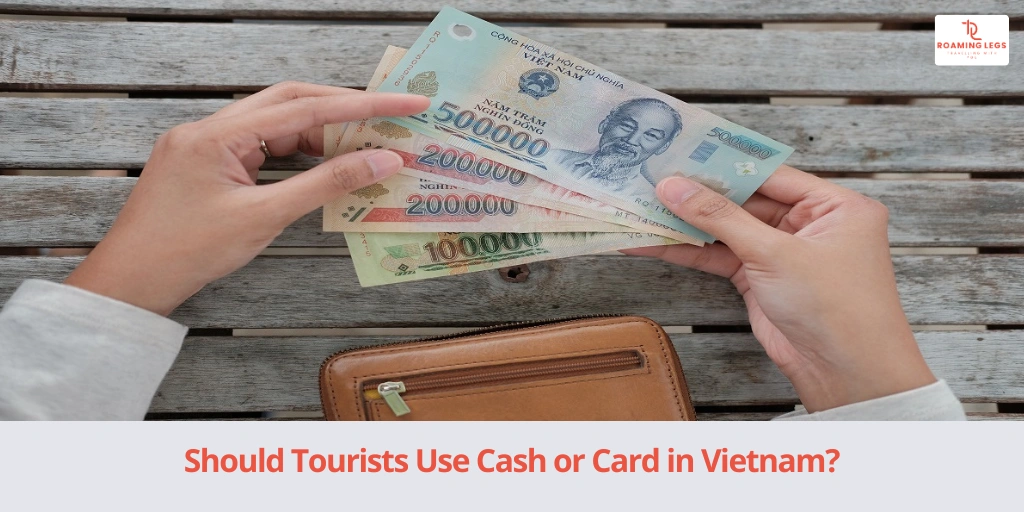
Should you carry cash or use cards in Vietnam? Both — but which one you reach for changes by the minute.
Street food, taxis, and small shops in Hoi An or rural Sapa run almost entirely on Vietnamese Dong (VND). Hotels, malls, and mid-to-upscale restaurants in Hanoi, Ho Chi Minh City, and Da Nang take cards without blinking.
Get this split wrong and you’ll either overpay on ATM fees or stand awkwardly at a street stall with a card nobody can swipe.
Here’s what most currency guides skip: not all Vietnamese ATMs charge the same fee, the dong-to-rupee math trips up almost every first-time visitor, and one specific bank note mix-up costs Indian tourists real money every single week.
That’s what we’re actually covering here — not just “carry both.”
Vietnam Currency at a Glance
| What You Need to Know | Details |
|---|---|
| Currency | Vietnamese Dong (₫ / VND) |
| Current rate | ₹1 ≈ ₫272–276 (check live rate before your trip — it moves) |
| Best zero-fee ATM | VPBank (also ACB, though lower withdrawal limit) |
| Avoid for withdrawals | Vietcombank, Agribank — charge ₫30,000–55,000 (~₹106–₹194) per pull |
| Best forex card for Indians | Niyo Global or Wise — near-zero markup, live rate |
| UPI accepted? | No — Vietnam has no UPI integration |
Currency
Vietnamese Dong (₫ / VND)
Current Rate
₹1 ≈ ₫272–276. Check live rates before exchanging money.
Best Zero-Fee ATM
VPBank is preferred. ACB is another option, although withdrawal limits may be lower.
ATM Withdrawals to Avoid
Vietcombank and Agribank may charge ₫30,000–55,000 (~₹106–₹194) per withdrawal.
Best Forex Card for Indians
Niyo Global or Wise offer near-zero markup with live exchange rates.
Is UPI Accepted?
No, Vietnam currently does not have UPI integration.
Free Vietnam Trip Budget Planner
Not sure how much cash, card balance, or forex you need for Vietnam? Share your travel dates and city list on WhatsApp, and we will send a day-by-day cash vs card budget breakdown within a few hours.
What Currency Does Vietnam Use, and How Do You Read the Numbers?
Vietnam’s official currency is the Vietnamese Dong, and yes, the numbers look alarming at first — a coffee costs 30,000–60,000 VND, a taxi ride runs 80,000–200,000 VND.
The trick that actually works: divide by roughly 275 to get the rupee value in your head. A 500,000 VND dinner bill is about ₹1,800, not the terrifying number it looks like on the bill.
One thing most guides don’t mention clearly enough — the 20,000 VND and 500,000 VND notes are both a similar shade of green, and tourists hand over the wrong one constantly, especially in a rushed street-stall moment.
The 50,000 and 500,000 notes get confused too.
Always check the printed number, never the color.
And since Vietnamese Dong notes are polymer, they stick together in a wallet — fan out a stack before counting, especially when a vendor hands you change in a hurry.
Which ATMs in Vietnam Actually Charge Zero Fees?
This is the part that saves you real money over a week-long trip.
Not every bank charges the same, and the difference between a “free” ATM and a “fee” ATM is sometimes two machines on the same street in Hanoi’s Old Quarter.
VPBank is the one to look for — free withdrawals for foreign cards, with a withdrawal limit of up to 10,000,000 VND (roughly ₹35,000) per transaction, the highest cap among the fee-free options.
ACB is also fee-free but caps out lower, around 3,000,000 VND per transaction, so you’ll be making more trips to the machine.
Vietcombank, despite being Vietnam’s most visible bank with ATMs in nearly every city, charges 30,000–55,000 VND (about ₹106–₹194) per withdrawal — and its per-transaction limit is also lower, around 5,000,000 VND. Agribank and Techcombank carry similar per-pull charges.
One thing worth knowing: since most fee-charging banks cap withdrawals around 3–5 million VND, pulling smaller amounts more often multiplies the fee.
Withdraw the maximum your card allows in one go instead of making three trips to the same machine.
Our tip: when the ATM screen offers to “confirm conversion” in INR or USD before you withdraw — that’s Dynamic Currency Conversion (DCC), and it’s almost always a worse rate than letting your Indian bank do the conversion.
Always select “without conversion” or “in VND” when the option appears.
Which Forex Card Should Indian Travelers Actually Carry?
Niyo Global, a Visa prepaid card issued through DCB Bank, has become the default recommendation for Indian travelers in Vietnam for a reason — near-zero forex markup, and most travelers report their statement matching the live Google rate within a few rupees.
It typically includes a handful of free ATM withdrawals per month before a small flat fee kicks in.
Wise is the other name that comes up repeatedly among Indian travelers for the same reason — transparent mid-market rates with no hidden markup, useful if you’re also topping up other currencies for a multi-country trip.
Compare that to using a regular Indian credit card without a forex-friendly network — the markup on international transactions can run 2–3.5%, which adds up fast on anything above a basic meal.
If you’re planning any shopping in Ho Chi Minh City or Hanoi, that difference alone can mean thousands of rupees on a single big purchase.
One thing worth confirming before you fly: call your bank and activate international transactions on your existing debit or credit card even if you’re also carrying a forex card — it’s a useful backup if your primary card gets declined or lost.
How Much Cash Should You Actually Carry Per Day?
| Travel Style | Daily Budget (VND) | Approx. INR | What It Covers |
|---|---|---|---|
| Budget | 400,000–700,000 | ₹1,450–₹2,550 | Street food, local buses, markets |
| Mid-range | 800,000–1,500,000 | ₹2,900–₹5,450 | Restaurant meals, taxis, some shopping |
| Luxury | 2,000,000+ | ₹7,270+ | Fine dining, private transfers, spa days |
Budget Traveller
Daily Budget: 400,000–700,000 VND
Approx. INR: ₹1,450–₹2,550
Covers: Street food, local buses, markets
Mid-Range Traveller
Daily Budget: 800,000–1,500,000 VND
Approx. INR: ₹2,900–₹5,450
Covers: Restaurant meals, taxis, some shopping
Luxury Traveller
Daily Budget: 2,000,000+ VND
Approx. INR: ₹7,270+
Covers: Fine dining, private transfers, spa days
Free Vietnam Currency Cheat Sheet on WhatsApp
Get a printable card with common note values, ATM bank rankings, and the DCC trap explained — handy to screenshot before you land.
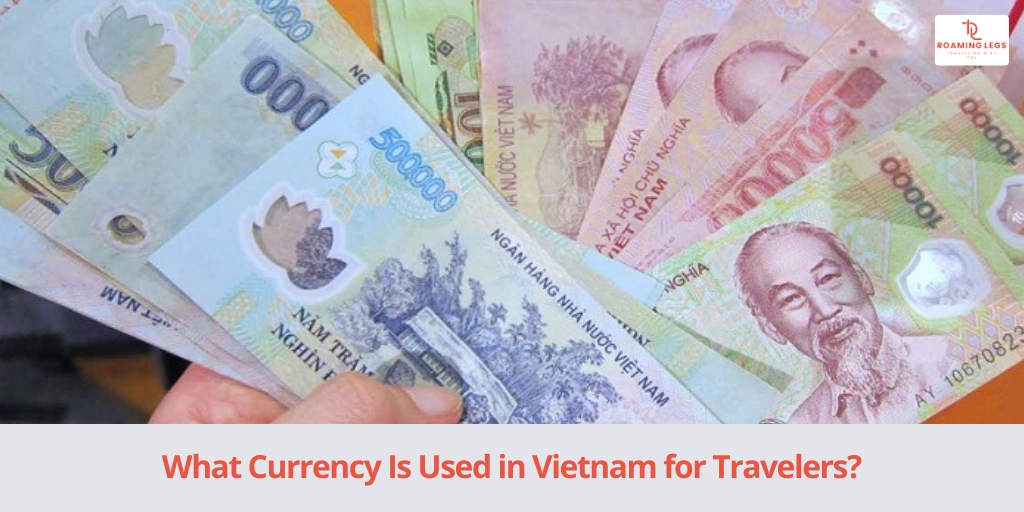
Where’s the Best Place to Exchange Money — Before You Fly or After You Land?
Exchanging a small amount before departure — enough to cover an airport taxi and a first meal — through your bank or a forex company back home is worth doing just for peace of mind.
But for anything beyond that, don’t exchange large sums at the airport counter in Hanoi or Ho Chi Minh City; the rates there are consistently worse than what you’ll find at licensed exchange counters in the city center, particularly around gold shops in areas like Ben Thanh in HCMC or Hang Bac Street in Hanoi’s Old Quarter.
The mistake most travelers make: accepting a suspiciously good rate from a street money-changer.
If the number looks too good, it usually is — count your cash carefully before walking away from any counter, licensed or not.
Practical Money Tips That Actually Matter
- Withdraw larger amounts less often — this spreads any fixed ATM fee over more cash instead of paying it three or four times
- Always decline the on-screen currency conversion offer (DCC) and choose VND directly
- Keep a small stash of cash separate from your main wallet in case of a lost card
- Confirm international transactions are enabled on your Indian card before departure, even if a forex card is your primary
- Carry smaller notes (10,000–50,000 VND) for street food and markets — vendors rarely have change for a 500,000 note
What Real Travelers Say
Rohan, Bangalore, traveled April 2026: “Nobody told me Vietcombank charges a fee on every single withdrawal.
Found a VPBank ATM two streets over in Hanoi and it was free — small thing but it adds up over 10 days.”
Meera, Pune, traveled February 2026: “Used Niyo the whole trip and honestly forgot I was even converting currency.
The only cash I carried was for the night market in Hoi An.”
Frequently Asked Questions
Is Indian rupee accepted anywhere in Vietnam?
No. Vietnamese Dong is the main currency accepted by nearly all businesses. Some hotels or tour operators may quote prices in INR or USD, but daily spending requires VND.
Which ATM should I use in Vietnam to avoid fees?
VPBank is a preferred option for foreign travelers because it offers low-fee withdrawals and higher transaction limits. ACB is another useful option. Avoid ATM networks charging unnecessary fees when alternatives are available.
What's the best forex card for an Indian traveling to Vietnam?
Niyo Global and Wise are popular choices because they offer competitive forex rates compared with regular Indian cards that may add international transaction charges.
How much cash should I carry per day in Vietnam?
Budget travelers generally need 400,000–700,000 VND per day, mid-range travelers around 800,000–1,500,000 VND, and luxury travelers more depending on activities and shopping.
What is Dynamic Currency Conversion, and should I accept it at an ATM?
Dynamic Currency Conversion shows your withdrawal in INR or USD instead of VND. Always choose VND because your bank's conversion rate is usually better.
Are ATMs easy to find in Vietnam?
Yes, in major destinations like Hanoi, Ho Chi Minh City, Da Nang, Hoi An, Nha Trang, and Phu Quoc. Carry extra cash before visiting rural areas.
Can I use my Indian debit or credit card directly in Vietnam?
Yes. Most Visa and Mastercard cards work if international transactions are enabled. Confirm activation with your bank before travel.
What should I do with leftover Vietnamese Dong at the end of my trip?
Exchange remaining VND before leaving Vietnam. Airport exchange counters often offer weaker rates, and exchanging Dong in India can be difficult.
Are there common currency scams to watch for in Vietnam?
Be careful with unofficial money changers and check notes carefully. The 20,000 and 500,000 VND notes can look similar, so always verify the printed value.
Is tipping expected in Vietnam, and should it be cash?
Tipping is not mandatory but is appreciated for restaurants, spas, and guides. Cash tips in smaller denominations like 20,000–50,000 VND are practical.
-

-
 Things to Do in Batumi Georgia With a 3-Day Itinerary October 14, 2026
 -

-
 Kazbegi Georgia Travel Guide With Things to Do and a 2-Day Itinerary October 12, 2026
 -
 Things to Do in Tbilisi With Prices and Travel Tips October 11, 2026
 -
 Where to Stay in Georgia With Family and Kids October 10, 2026
 -
 7-Day Georgia Family Itinerary from India with Kids October 9, 2026
 -
 Best Places to Visit in Georgia with Kids by Age October 8, 2026
 -
 Georgia with Kids A Family Travel Guide for Indian Parents October 7, 2026
 -
 How Much Does a Georgia Family Trip Cost for 4? October 6, 2026
-
-
Things to Do in Batumi Georgia With a 3-Day Itinerary October 14, 2026
-
-
Kazbegi Georgia Travel Guide With Things to Do and a 2-Day Itinerary October 12, 2026
-
Things to Do in Tbilisi With Prices and Travel Tips October 11, 2026

Login
WhatsApp us

Ut enim ad minim veniam, quis nostrud exercitation ullamco laboris nisi ut aliquip ex ea commodo consequat. Duis aute irure dolor in reprehenderit in
Address
Junction, NY 12533