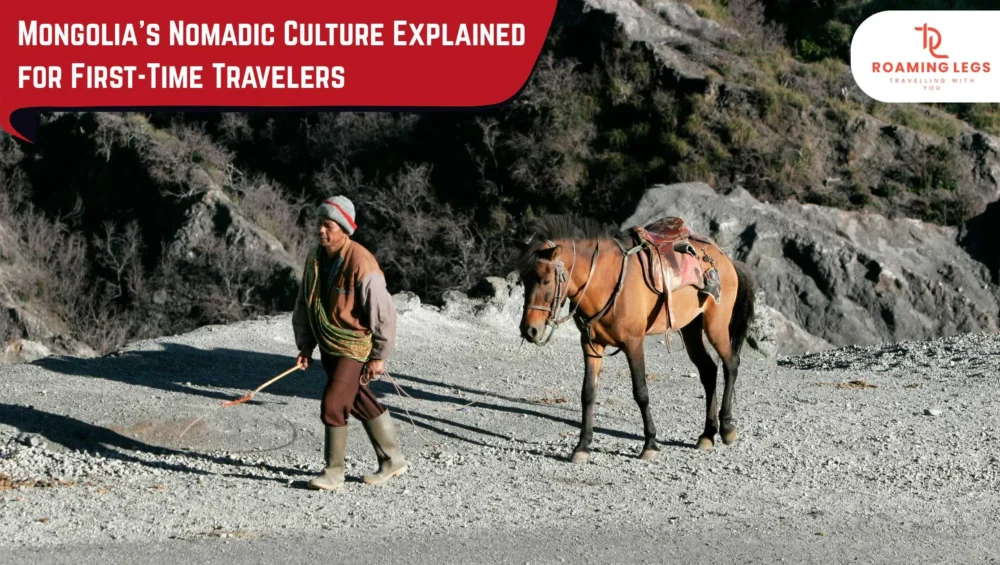
mongolia for first time travelers

Nomadic Culture of Mongolia Explained: Traditions, Lifestyle & Heritage

In many countries, traditional lifestyles mostly survive inside museums, tourist shows, or history books.

Mongolia feels very different.

Here, nomadic culture is still part of everyday life across huge countryside regions.

People still live in ger homes.
Families still move seasonally with livestock.
Horse culture still shapes daily routines.
Hospitality traditions still feel deeply personal.

That’s why understanding Mongolia nomadic culture helps travelers understand the country itself.

Mongolia is one of the few places where ancient traditions still influence modern identity, countryside life, and even the way people welcome guests today.

And honestly, once travelers experience this lifestyle closely, Mongolia stops feeling like a normal tourist destination.

It starts feeling much more human.

What Does “Nomadic Culture” Actually Mean in Mongolia?

At its core, nomadic life means moving from place to place based on seasons and nature.

For centuries, many Mongolian nomads moved across grasslands with animals like horses, sheep, goats, and camels.

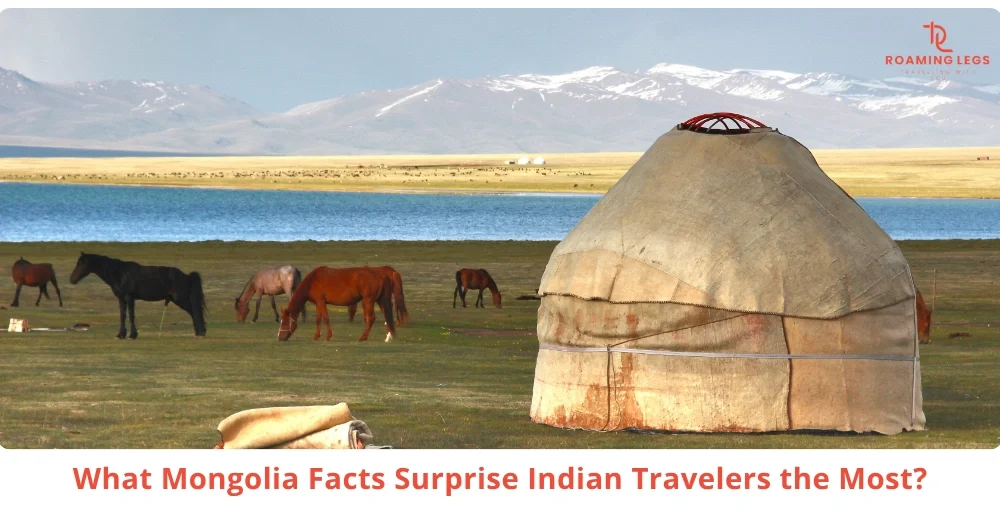
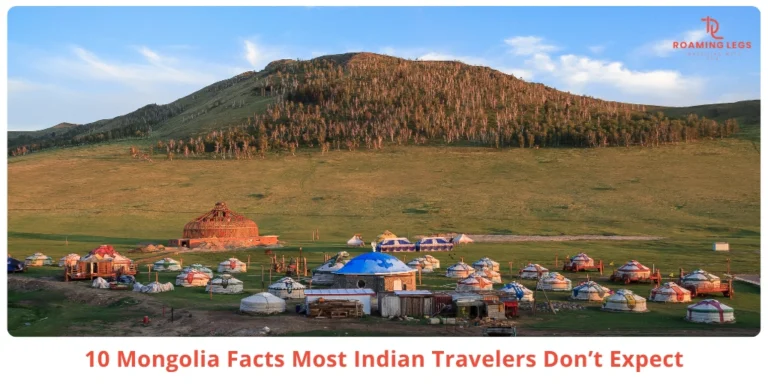
Instead of permanent houses, families lived in portable homes called gers.

Life depended heavily on:

  • Weather
  • Grassland conditions
  • Animal care
  • Seasonal movement

Why Mobility Became Essential in Mongolia

Mongolia’s climate can be harsh.

Different seasons affect where animals can graze safely.

So movement became necessary for survival.

Families often shifted locations to:

  • Find better grasslands
  • Protect livestock
  • Adapt to weather conditions

This system helped communities live sustainably for generations.

Nomadic Life Is Built Around Nature Instead of Cities

Modern city life usually revolves around buildings, schedules, and traffic.

But nomadic lifestyle Mongolia traditions are closely connected with nature.

Daily life depends on:

  • Weather changes
  • Open landscapes
  • Animal movement
  • Seasonal rhythms

That’s why countryside life in Mongolia often feels slower and calmer compared to busy cities.

Curious how nomadic traditions still influence daily life in Mongolia today? Talk with a Mongolia cultural travel expert before planning your journey.

nomadic culture

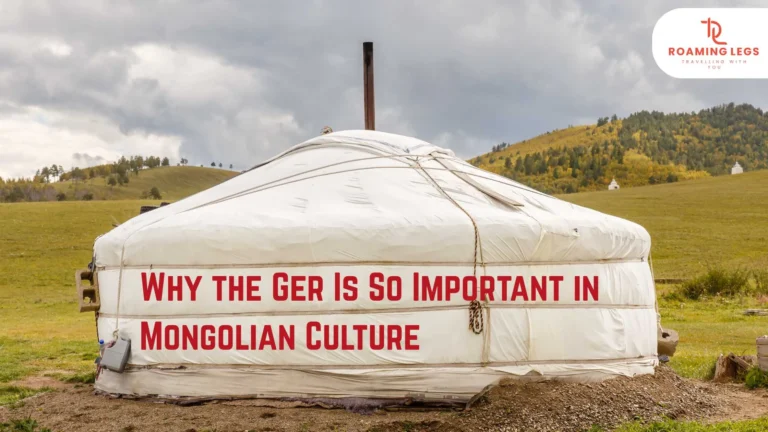
Why the Ger Is So Important in Mongolian Culture

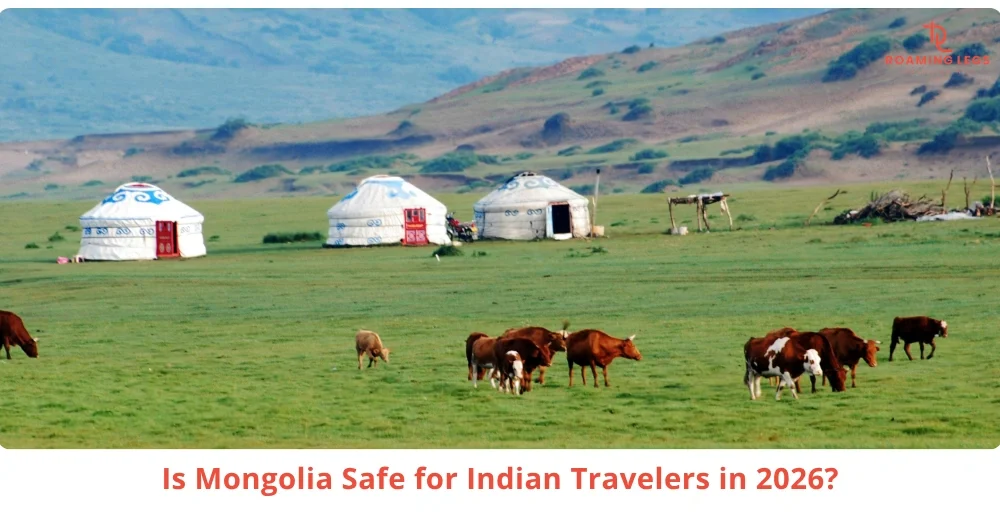
One of the most recognizable parts of Mongolia culture is the ger.

These circular homes are designed for mobile living.

And despite looking simple from outside, they are surprisingly practical and comfortable.

The Ger Is Designed for a Mobile Lifestyle

A ger can be assembled, dismantled, and transported relatively quickly.

Its design helps families adapt to changing locations and weather conditions.

The structure is known for:

  • Strong insulation
  • Wind resistance
  • Efficient heating
  • Portable construction

That’s why gers became central to traditional Mongolian homes for centuries.

Inside a Ger, Life Feels Surprisingly Warm and Social

Inside, the atmosphere feels cozy and community-focused.

Families often gather around the stove for:

  • Shared meals
  • Tea traditions
  • Evening conversations

Guests are usually welcomed warmly, even in remote countryside regions.

And this hospitality becomes one of the strongest memories travelers carry home.

Why Ger Camps Feel Meaningful for Travelers

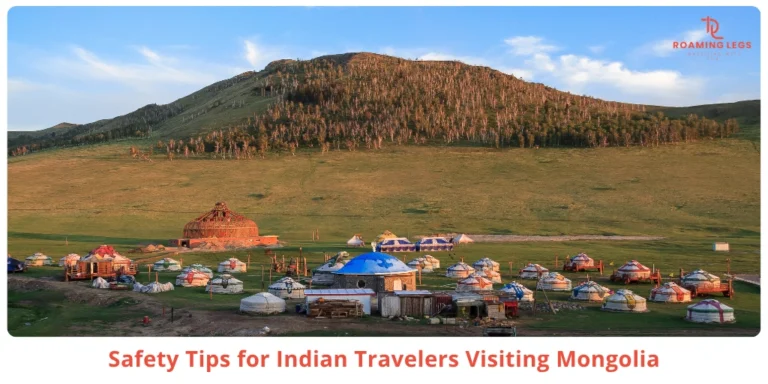
Today, many travelers experience ger camps Mongolia stays during cultural trips.

The experience feels different from regular hotels because life slows down naturally.

People spend more time:

  • Talking
  • Observing nature
  • Sharing meals
  • Enjoying silence

That emotional simplicity often becomes the highlight of the journey.

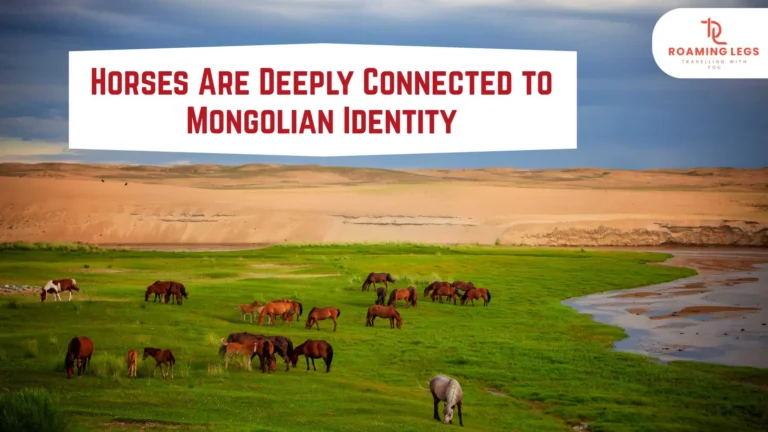
Horses Are Deeply Connected to Mongolian Identity

In many countries, horses are mainly used for sports or tourism.

In Mongolia, horses are part of everyday culture.

Horses Are Part of Everyday Life, Not Just Tourism

For generations, horses helped with:

  • Transportation
  • Herding
  • Countryside movement
  • Family livelihood

Many Mongolian children learn riding skills from a very young age.

That’s why Mongolia horse culture feels natural instead of performative.

Why Mongolian Horse Culture Feels Different

The connection between people and horses feels stronger because of the open landscapes.

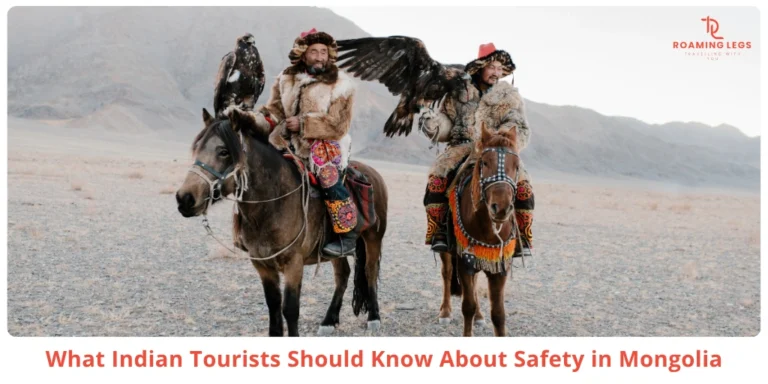
Watching horses move freely across the steppe becomes one of the most iconic experiences in Mongolia.

For many locals, horses also represent:

  • Freedom
  • Strength
  • Cultural pride

Festivals and Competitions Still Celebrate Horse Traditions

Traditional festivals still celebrate these customs today.

The most famous example is the Naadam Festival.

During Naadam, travelers experience:

  • Horse racing
  • Wrestling
  • Archery
  • Traditional celebrations

This keeps horse traditions Mongolia alive even in modern times.

Hospitality Plays a Huge Role in Nomadic Life

One thing travelers often remember most is the warmth of local people.
why the ger is so important

Guests Are Traditionally Welcomed With Respect

In many nomadic households, offering tea or food to guests is considered part of basic hospitality.

Travelers are often welcomed with:

  • Milk tea
  • Shared meals
  • Friendly curiosity

And these moments usually feel genuine instead of commercial.

Why Human Connection Feels Stronger in Remote Areas

Countryside life naturally creates slower social interaction.

People spend more time talking and sharing stories.

Without constant digital distractions, conversations feel more personal.

That’s why Mongolian hospitality often leaves a strong emotional impact on travelers.

Travelers Often Remember the People More Than the Landscapes

The landscapes are beautiful.

But many travelers later remember:

  • Family interactions
  • Evening conversations
  • Shared meals inside the ger

more than sightseeing itself.

That’s what makes many Mongolia cultural experiences feel emotionally meaningful.

How Nomadic Traditions Still Influence Modern Mongolia

Many travelers assume nomadic culture belongs only to history.

But that’s not true in Mongolia.

Many Families Still Maintain Countryside Nomadic Lifestyles

Across rural regions, many families still live through:

  • Seasonal movement
  • Animal herding
  • Countryside living traditions

Modern tools may exist now, but the lifestyle itself continues.

Even Urban Mongolia Keeps Strong Cultural Connections

Even in cities, people remain connected to countryside traditions through:

  • Festivals
  • Family roots
  • Cultural celebrations

This strong identity helps preserve Mongolian traditions even as modernization grows.

Why Travelers Feel Mongolia Has a Stronger Cultural Identity Than Many Destinations

In many countries, traditions feel packaged mainly for tourists.

In Mongolia, the culture still feels lived rather than displayed.

That authenticity creates stronger emotional connection for visitors.

Want to understand Mongolian customs, hospitality, and countryside life before your trip? Download a practical Mongolia cultural insights guide.
horses are mongolia identity

Why Travelers Become Emotionally Connected to Mongolia’s Culture

Many travelers arrive expecting beautiful scenery.

But they leave remembering how the lifestyle made them feel.

Nomadic Life Feels Simpler but Emotionally Richer

Life in the countryside often includes:

  • Slower routines
  • Nature connection
  • Less screen time
  • More human interaction

And for many people, that simplicity feels mentally refreshing.

Cultural Experiences Feel Less Commercialized

Many cultural travel Mongolia experiences still feel natural and unscripted.

Travelers experience real daily life instead of staged performances.

That’s why the emotional connection often feels stronger.

Many Travelers Leave With a Different Perspective on Modern Life

After spending time in Mongolia, many travelers start appreciating:

  • Slower living
  • Simpler routines
  • Human connection
  • Quietness

And sometimes, those feelings stay longer than the trip itself.

Summer Is the Best Season for Experiencing Nomadic Culture

Summer is usually the easiest season for first-time cultural travelers.

Countryside Life Becomes More Active During Summer

During summer, travelers experience:

  • Horse culture
  • Festivals
  • Outdoor gatherings
  • Active countryside routines

This makes Mongolia summer culture experiences much more immersive.

Travelers Experience More Cultural Interaction During Summer

Warmer weather also improves:

  • Ger stays
  • Countryside access
  • Cultural visits
  • Outdoor activities

That’s why many consider summer the best time for Mongolia cultural travel.

Want deeper insights into Mongolian traditions, customs, and countryside life? Download the Mongolia cultural insights ebook before your trip.

Mongolia’s Culture Feels Powerful Because It Still Feels Alive

Many traditions around the world slowly become performances for tourists.

Mongolia feels different because the culture still shapes real life.

People still live these traditions daily.

That’s why travelers connect emotionally with the experience.

The slower pace.
The human warmth.
The simplicity.
The openness.

In Mongolia, travelers often realize they are not simply learning about nomadic culture.

They are briefly experiencing a completely different rhythm of life.

FAQs About Mongolia’s Nomadic Culture

What is Mongolia’s nomadic culture?

It is a lifestyle based on seasonal movement, livestock care, ger living, and strong family traditions connected with nature.

Do nomads still exist in Mongolia today?

Yes.
Many countryside families still maintain nomadic lifestyles, although modern tools and transportation are also used today.

What is a ger in Mongolia?

A ger is a portable traditional Mongolian home designed for nomadic living and changing weather conditions.

Why are horses important in Mongolian culture?

Horses are deeply connected with transportation, identity, herding traditions, and cultural festivals.

Can travelers experience nomadic life in Mongolia?

Yes.
Many guided tours offer ger stays, cultural experiences, and opportunities to interact with nomadic families.
Why Indian Mountain Travelers Instantly Relate to Mongolia

You’ve Done Ladakh. Here’s Why Mongolia Hits the Same Nerve — Except It Never Ends

There’s a specific kind of traveler this article is written for.

You’ve been to Ladakh. Maybe Spiti too. 

You sat next to Pangong Lake and didn’t feel the urge to say anything. 

The silence was enough. 

The drive from Leh to Nubra had that stretch — maybe near Khardung La, maybe before it — where you stopped talking mid-sentence because the landscape outside the window made conversation feel unnecessary.

That feeling. That’s the one.

Mongolia gives you that feeling, but it doesn’t stop.

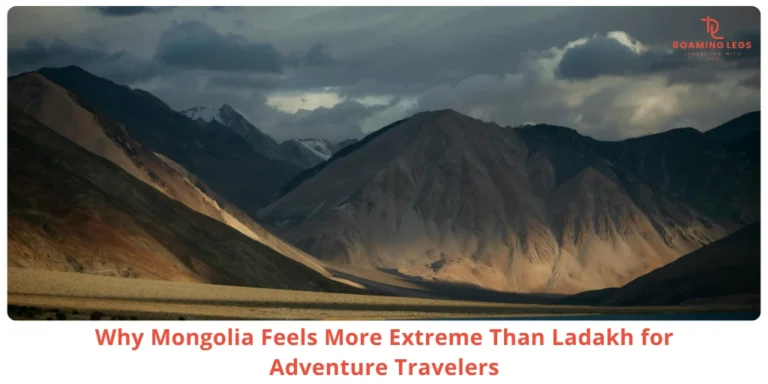
In Ladakh, you get it in flashes — between one mountain pass and the next, at the edge of a lake, on the long road to Hanle. 

In Mongolia, it becomes the default state. You drive for five hours and the steppe just keeps going. The horizon stays empty. 

The sky takes up more of your vision than you expect. 

And at some point, usually on day two or three, you stop waiting for the next viewpoint and start understanding that the drive itself is the thing.

What Makes an Indian Traveler Immediately Recognize Mongolia

Most Indian travelers who’ve done serious mountain trips — Ladakh, Spiti, Zanskar, even parts of Uttarakhand and Sikkim — arrive in Mongolia and feel something familiar within the first hour of leaving Ulaanbaatar.

It isn’t that the landscapes look the same. 

They don’t, not exactly. What’s familiar is the emotional logic of it.

The cold that sits differently than city cold. 

The light that does something strange to the mountains in the late afternoon. 

The way conversations slow down on long drives. 

The feeling that you are very small in a very large space, and somehow that feels good rather than frightening.

Ladakh gives you that emotional logic compressed into mountain valleys and high-altitude lake basins. 

Mongolia is that same logic scaled up across 1.56 million square kilometres — an area roughly half the size of all of India — with a population of just 3.3 million people. 

The country is officially the world’s most sparsely populated sovereign state. 

When you drive across the Mongolian steppe for a full day and see almost nothing man-made, that isn’t a remote corner of the country. 

That’s just what most of Mongolia looks like.

One couple from Chandigarh who traveled with us to Mongolia in September 2024 said it best on the third day: “It feels like someone turned the volume down on everything.” 

They’d done Leh-Manali and Spiti the two years before. 

This is what Mongolia tends to do to people who already understand why silence has its own texture.

The Key Difference: Scale

Here is the honest comparison Indian mountain travelers need.

Experience Ladakh Mongolia
Landscape type High-altitude Cold desert, mountain valleys Steppe grasslands, Gobi Desert, mountain ranges
Emotional feel Dramatic, concentrated, mountain-contained Vast, open, almost disorienting in scale
Crowds at popular spots Growing fast, busy July–August Low — even peak season feels quiet
Road conditions Mix of paved and rough mountain roads Largely off-road, 4x4 required for many areas
Nights Hotels, guesthouses, campsites Ger camps and nomadic family stays
Cultural texture Buddhist monasteries, Ladakhi villages Nomadic families, horse culture, Buddhist monasteries
Best months June to September June to September
Familiar feeling High. Many Indian travelers call it a spiritual home. High. Differently, but quickly.

Landscape Type

Ladakh:
High-altitude Cold desert, mountain valleys

Mongolia:
Steppe grasslands, Gobi Desert, mountain ranges

Emotional Feel

Ladakh:
Dramatic, concentrated, mountain-contained

Mongolia:
Vast, open, almost disorienting in scale

Travel Experience

Ladakh:
Growing crowds, mountain roads, hotels and campsites

Mongolia:
Quiet landscapes, 4x4 routes, ger camps and nomadic stays

Best Months

Ladakh:
June to September

Mongolia:
June to September

The single biggest difference is what happens between the landmarks. In Ladakh, you drive from one dramatic spot to the next and the road connecting them is already interesting. In Mongolia, the road between spots often doesn't exist — you follow tracks across open steppe and the 4x4 makes its own path through grass and rock. That in-between space is not dead time. For most travelers, it becomes the thing they talk about when they come back.
Mongolia and Ladakh Share Similar Feelings — But Very Different Scales

Where in Mongolia Feels Most Like Ladakh — and Where It Goes Beyond

The Gobi Desert: Nubra Valley, But Wider

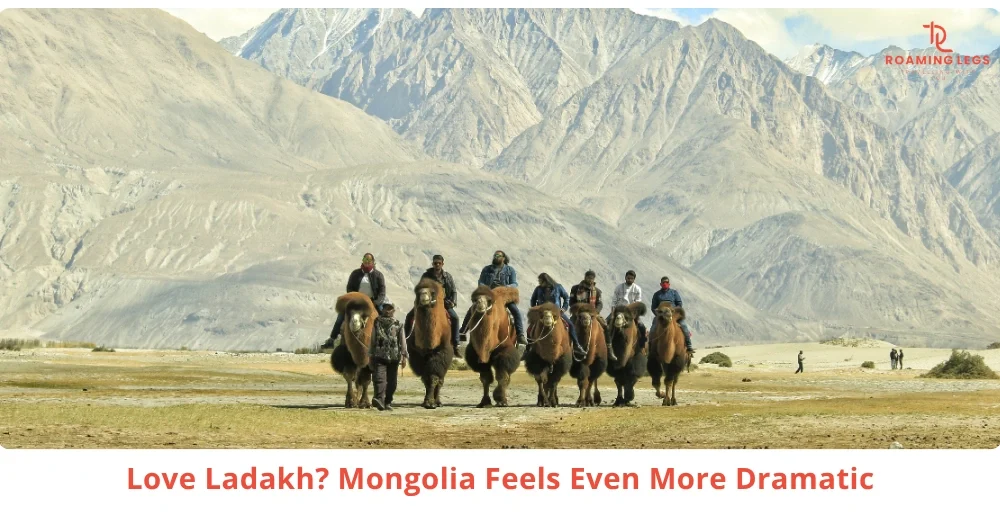
If you’ve been to Nubra Valley — those sand dunes between mountains, the camels, the flat valley floor surrounded by high peaks — the Gobi Desert will feel emotionally familiar while being completely different in scale.

Nubra is a valley with dunes. The Gobi is a desert the size of multiple Indian states, and it’s not what most people picture. 

It’s not an endless sea of sand. It’s rock, gravel plains, scattered dunes, frozen canyons, and red cliffs — constantly shifting in appearance across hundreds of kilometres.

The must-visit sections:

Khongoryn Els (Singing Dunes): Mongolia’s largest sand dune system, stretching 180 kilometres. 

You climb them, ride double-humped camels across the base, and at sunset the light turns everything amber-gold. On windy days the dunes make a low, resonant sound — which is where the name comes from.

Bayanzag (Flaming Cliffs): Red sandstone cliffs where paleontologist Roy Chapman Andrews found the world’s first dinosaur eggs in the 1920s. 

At sunset, the cliffs turn deep orange-red. This is one of the most visually striking landscapes in all of Asia.

Yolyn Am Gorge: A narrow canyon in the Gurvan Saikhan mountains that stays packed with ice well into summer — sometimes through July. You hike between cliff walls with a frozen river underfoot. 

The contrast between icy floor and blazing sun overhead is completely unexpected.

Central Steppe and Orkhon Valley: The Emotional Heart

This is where Mongolia goes somewhere Ladakh doesn’t.

The Orkhon Valley is a UNESCO World Heritage landscape and the geographic heartland of every major Mongolian empire, including Genghis Khan’s. 

The ruins of Karakorum — once the capital of the largest contiguous land empire in history — sit here quietly in the grass. 

The Erdene Zuu Monastery, built in the 1586 from the stones of the old city, is still active.

But what most travelers remember from this region isn’t the history. 

It’s the nights in nomad family gers, watching the family’s daily work unfold around the camp — milking horses, moving livestock, the kids on horseback doing things that would seem extraordinary anywhere else. 

Horse riding across open steppe is included in any properly organised tour here, and for riders who’ve done horse treks in Ladakh or Spiti, this feels familiar but freer — there are no paths or boundaries, just grass and sky.

Terelj National Park: Spiti Valley’s Quieter Cousin

Fifty-five kilometres from Ulaanbaatar, Terelj is where forested granite mountains meet river valleys and open meadows. 

Turtle Rock — a granite formation shaped, obviously, like a turtle — is the iconic photograph. 

Hiking here is lower altitude and more accessible than Ladakh. 

The ger camps in Terelj are the most comfortable countryside accommodation in Mongolia, which makes it a good gentle entry point before the more remote stretches.

Ulaanbaatar: The City Part (Don’t Skip It)

Most travelers want to get to the countryside fast, and that instinct is right. But two days in Ulaanbaatar earns its place.

Gandan Monastery — the largest functioning Buddhist monastery in Mongolia — is a genuine working religious site, not a tourist reconstruction. 

The Natural History Museum has a full T-Rex skeleton and Gobi dinosaur fossils that are legitimately impressive. 

The Zaisan Memorial gives you a panoramic view over the city and the surrounding hills. And the Black Market (Narantuul) is where you buy cashmere — directly from vendors, not at airport prices. 

Budget ₹3,000–₹8,000 for good-quality cashmere pieces; the mark-up at hotel shops is significant.

Free Mongolia Itinerary

Planning a Mongolia Trip From India? Get a Free Custom Itinerary

Mongolia offers very different experiences depending on what you want to see — the vast Gobi Desert, the energy of the Naadam Festival, traditional nomad stays, or a mix of everything. Your route should match your travel time and interests.

Tell us your travel dates, group size, and the experiences that matter most. We will send you a ready-made 10-day Mongolia itinerary on WhatsApp within 24 hours. Free, with no obligation.

10-Day Mongolia Plan Gobi Desert Route Nomad Stay Ideas Experience-Based Planning

The One Thing Mongolia Has That Ladakh Doesn’t: The Naadam Festival

Every year, on July 11–13, Mongolia holds Naadam — its most important national festival, celebrating the Three Manly Games: wrestling (Бөх), archery (Сур Харваа), and horse racing (Морин Уралдаан).

The opening ceremony at the National Stadium in Ulaanbaatar is genuinely one of the most striking spectacles in all of Central Asia. 

Thousands of athletes in traditional costume. 

The president opens the ceremony. Traditional music, cavalry formations, and two thousand years of cultural identity compressed into two hours.

Naadam 2026 runs July 11 to 13, marking the 105th anniversary of the Mongolian Revolution.

Stadium tickets range from USD 25 to USD 120 (approximately ₹2,100 to ₹10,000). 

They sell out months in advance. Book through an operator with pre-purchased allotments — don’t assume you can get tickets at the gate.

Outside the city, regional Naadams happen throughout July in smaller towns and are free. 

The horse racing outside Ulaanbaatar covers a 15–30 km cross-country course ridden by child jockeys — a surreal and completely distinct experience from anything you’ll see in India.

If your dates are flexible, timing a Mongolia trip around Naadam is worth doing. It adds a cultural layer that turns a landscape trip into something more complete.

The Ger: Mongolia’s Version of a Himalayan Homestay

In Ladakh and Spiti, many travelers stay in local homestays — basic rooms, host families, meals shared at a common table. 

That experience of living alongside people in a genuinely different daily rhythm is a big part of why people love those trips.

The Mongolian ger (the word yurt is Turkic and rarely used locally) is the same idea, taken somewhere else entirely.

A ger is a circular lattice-frame structure covered in layered wool felt, heated by a central wood or coal stove, and designed to be assembled and dismantled in under an hour. 

Nomadic families have lived in them for centuries because they work perfectly for a life built around seasonal movement.

Tourist ger camps sit at permanent locations with shared bathroom blocks, generator electricity (usually off by 11 PM), and wooden beds with proper bedding. 

The temperature inside drops once the fire goes out, so you sleep in layers — same as any high-altitude Himalayan night.

The countryside ger experience, staying with actual nomad families, goes further. 

You eat what the family eats — mutton, dairy, salted tea with milk. 

You watch the daily work of a household built around livestock and land. You sleep to total silence, and outside the door is one of the darkest, clearest night skies on the planet. 

This is the level of access to a genuinely different way of life that most international travel destinations can’t offer. 

Very few countries let you step this far into a living traditional culture that isn’t performing itself for tourists.

Practical note for vegetarians: In Ulaanbaatar, vegetarian-friendly restaurants are available. 

In the countryside, Mongolian food is overwhelmingly meat-based. 

Most tourist ger camps accommodate a vegetarian request if flagged in advance through your operator. 

Don’t assume — mention it when you book.

Mongolia Trip Guidance

Not Sure If Mongolia Is Right for You?

Mongolia is a very different kind of adventure. We have helped Indian travelers who were taking their first international trip as well as experienced travelers who wanted something beyond regular mountain destinations like Spiti and Ladakh.

Share your travel experience and what you are expecting from the trip on WhatsApp. We will give you an honest recommendation on whether Mongolia matches your travel style.

Trip Suitability Check Honest Advice Experience Matching Mongolia Travel Guidance
Mongolia and Ladakh Share Similar Feelings

Practical Info: Getting to Mongolia from India

Flights: No direct flights from India to Ulaanbaatar (airport code ULN) currently operate. The most common routes connect through Beijing (Air China), Seoul (Korean Air or Asiana), or Hong Kong. From Delhi, expect 12–16 hours total travel time with one stop. Return fares in 2026:

From Via Approx. Return Fare (INR)
Delhi Beijing (Air China) ₹85,000–₹90,000
Delhi Seoul (Korean Air/Asiana) ₹70,000–₹1,00,000
Mumbai Beijing or Seoul ₹75,000–₹1,10,000
Bengaluru Seoul or Hong Kong ₹80,000–₹1,15,000

Delhi → Mongolia

Route:
Via Beijing (Air China)

Return Fare:
₹85,000–₹90,000

Delhi → Mongolia

Route:
Via Seoul (Korean Air/Asiana)

Return Fare:
₹70,000–₹1,00,000

Mumbai → Mongolia

Route:
Via Beijing or Seoul

Return Fare:
₹75,000–₹1,10,000

Bengaluru → Mongolia

Route:
Via Seoul or Hong Kong

Return Fare:
₹80,000–₹1,15,000

Book 8–10 weeks ahead for the lower end of these ranges. July prices spike; June and September offer meaningful savings.

Visa: Indian passport holders can enter Mongolia visa-free for up to 30 days. No e-visa or pre-approval required. You need a valid passport with at least 6 months remaining and proof of return travel. Confirm with the Embassy of Mongolia in New Delhi before travel, as policies can update.

Best months: June to September. June is fresh and uncrowded. July has the Naadam Festival. August is warm with some northern rain. September has autumn colours, cooler nights, and noticeably fewer tourists. Outside this window, most countryside camps close and roads become impractical.

Total trip cost from India (10 days, per person): ₹1,75,000–₹2,50,000 all-in, including return flights, ground transport, ger camps, meals, and guide. The visa is free for Indians, which is a meaningful cost advantage over most long-haul destinations.

A 10-Day Mongolia Itinerary That Works for Indian Travelers

Days 1–2 — Ulaanbaatar Gandan Monastery, Natural History Museum (T-Rex fossil, Gobi dinosaur eggs), Zaisan Memorial panoramic view. Evening dinner at a local restaurant — a bowl of buuz (steamed dumplings) or tsuivan (noodle stir-fry) runs ₹150–₹250. Shopping at Narantuul Black Market for cashmere.

Days 3–5 — Gobi Desert Short domestic flight or overland drive south. Yolyn Am Gorge hike in ice-floored canyon. Khongoryn Els sand dunes — camel ride at sunrise. Bayanzag Flaming Cliffs at sunset. Dinosaur fossil museum. Nights in ger camps under uninterrupted skies.

Days 6–8 — Orkhon Valley and Central Steppe Drive to the UNESCO World Heritage Orkhon Valley. Ruins of Karakorum, ancient capital of the Mongol Empire. Erdene Zuu Monastery (still active, built from the old city’s stone). Nights with nomadic families — horse riding across open steppe, airag (fermented mare’s milk) if you’re brave, total darkness at night.

Days 9–10 — Terelj National Park and Departure Forested granite mountains 55 km from Ulaanbaatar. Turtle Rock hike. One final ger camp night under forest and stars. Return to the city for last shopping. Flight home.

If traveling in July: Replace Day 1–2 Ulaanbaatar sightseeing with Naadam Festival (July 11–13). Book stadium tickets through your operator well in advance.

What Real Travelers Say

“I’d done Leh-Manali three times and Spiti twice. 

I went to Mongolia thinking I knew what to expect from landscape travel. 

I didn’t. The steppe doesn’t make sense until you’re inside it. The scale of it does something to you that a mountain valley can’t — you feel both very small and very calm at the same time. I came back wanting to go again.” — Abhishek T., Mumbai, September 2024

“The nomad family stay was the part I didn’t expect to affect me. In Ladakh I’d stayed in homestays, but this felt more isolated, more real. No phone signal. 

The kids riding horses like it was nothing. The grandmother making tea at the stove. 

I sat outside the ger at 2 AM and the Milky Way was literally overhead. 

There’s no light pollution for hundreds of kilometres. 

It’s something you can’t plan for.” — Sunita and Rohit V., Bengaluru, June 2025

Mongolia Travel FAQs for Indian Travelers

Frequently Asked Questions About Mongolia Travel for Indian Travelers

1. Is Mongolia similar to Ladakh for Indian travelers?
The emotional experience is similar — open landscapes, cold silence, raw terrain, Buddhist cultural elements — but the scale and setting are completely different. Ladakh is concentrated in mountain valleys and lake basins. Mongolia stretches across steppe, desert, and mountain ranges covering 1.56 million square kilometres with a population of just 3.3 million. Travelers who love Ladakh for its silence and space almost universally connect with Mongolia, usually even more strongly.
2. Do Indian citizens need a visa for Mongolia?
No. Indian passport holders can enter Mongolia visa-free for up to 30 days. You present a valid Indian passport at Chinggis Khaan International Airport in Ulaanbaatar and you're through — no e-visa, no pre-approval required for a standard 10–14 day trip. Passport must be valid for at least 6 months beyond your travel dates. Verify current rules at the Embassy of Mongolia in New Delhi before travel.
3. How much does a Mongolia trip from India cost in 2026?
A 10-day group trip from India costs roughly ₹1,75,000–₹2,50,000 per person all-in, covering return flights, ground transport (4x4 with driver-guide), ger camp nights with meals, and travel insurance. The visa is free for Indians. The biggest variable is flights — booking 8–10 weeks ahead saves ₹25,000–₹40,000 versus last-minute fares.
4. What is the best time to visit Mongolia from India?
June to September is the realistic travel window. July has the Naadam Festival (July 11–13, 2026) and the warmest temperatures, but it's also the most crowded and expensive month. June and September offer similar landscape conditions with fewer tourists and better value. Most countryside ger camps close from October onwards and winter is extreme.
5. What is the Naadam Festival and should I plan my trip around it?
Naadam (July 11–13, 2026) is Mongolia's most important national festival — a three-day celebration of wrestling, archery, and horse racing. The opening ceremony at Ulaanbaatar's National Stadium is one of the most spectacular cultural events in Central Asia. Stadium tickets (USD 25–120, approx. ₹2,100–₹10,000) sell out months ahead. Regional Naadams across the countryside are free. If your dates are flexible, timing your trip around Naadam adds a cultural dimension that's genuinely worth the extra planning effort.
6. What is staying in a Mongolian ger like?
A ger is a round felt-covered structure heated by a central wood stove, with a wooden bed, bedding, and shared bathroom blocks nearby. Generator electricity typically switches off around 11 PM. Temperature drops when the fire goes out — you sleep in layers, same as any cold-mountain night. The countryside ger experience with actual nomad families goes further: you eat local food, watch daily nomadic life, and have some of the darkest skies on earth above you. Most travelers describe it as the highlight of their trip.
7. Is Mongolia good for first-time international travelers?
Mongolia is best approached by travelers who are comfortable with basic facilities, real remoteness, and cultural curiosity rather than resort comforts. That said, joining a well-organised group trip handles the logistics — you're not navigating alone or dealing with route-finding on unmapped steppe. For experienced Indian mountain travelers who've done Ladakh or Spiti and want something that goes further, Mongolia is a natural next step.
8. Can vegetarians eat well in Mongolia?
In Ulaanbaatar, yes — Korean, Chinese, Indian, and European restaurants are available and vegetarian options are easy to find. In the countryside, Mongolian food is heavily meat and dairy based. Most tourist ger camps will accommodate vegetarian requests if flagged through your operator in advance. Dairy (yogurt, cheese, salted milk tea) is always available. Flag this at booking, not on arrival in the countryside.
9. How many days should I plan for a Mongolia trip from India?
Ten days is the sweet spot. It gives you 2 days in Ulaanbaatar for cultural context, 3 days in the Gobi Desert for the dramatic landscape experience, 2–3 days in the central steppe/Orkhon Valley for nomad stays and horse riding, and 1–2 days in Terelj before departure. Less than 8 days leaves the Gobi under-explored. More than 12 days works well for travelers adding western Mongolia or Khövsgöl Lake.
10. What are the best places to visit in Mongolia for Indian travelers?
The core circuit is Ulaanbaatar (Gandan Monastery, Natural History Museum, Narantuul market), the Gobi Desert (Khongoryn Els dunes, Bayanzag Flaming Cliffs, Yolyn Am Gorge), the Orkhon Valley (Karakorum ruins, Erdene Zuu Monastery, nomad family stays), and Terelj National Park. This covers the landscape, cultural, and experiential highlights in 10 days.
11. Is Mongolia safe for Indian travelers?
Mongolia is one of the safer countries in Asia for foreign travelers. Crime targeting tourists is low and Mongolians are generally welcoming — Bollywood has a larger following there than most Indian travelers expect. Practical risks in the countryside are what require attention: being far from medical facilities, unmarked steppe roads, and weather changing without warning. These are reasons to travel with an experienced operator, not reasons to avoid the destination.
12. How does the Ladakh-Mongolia comparison actually hold up?
The emotional experience — silence, open landscapes, Buddhist cultural threads, cold-air clarity — genuinely translates. What's different is the mechanism. Ladakh compresses drama into mountain passes, lake basins, and valley monasteries. Mongolia spreads the same emotional logic across a steppe that has no edges you can see. Indian mountain travelers consistently report that Mongolia confirms rather than replaces their love for Ladakh. It just goes somewhere further.
Bali vs Thailand for Couples

Bali or Thailand for Couples? An Honest Side-by-Side Comparison for Indian Travelers — With Real Costs, Hotels, and a Clear Answer

Bali or Thailand — this is one of the first decisions most Indian couples face when planning an international trip together. 

Both destinations keep showing up in recommendations. 

Both look stunning. 

And both have very different travel experiences hiding behind the Instagram posts.

So here’s the honest answer: Bali is better for couples who want a more meaningful, private, and experience-rich trip. 

Thailand is better for couples who want a shorter, cheaper, more social holiday with easier logistics. 

They’re not the same kind of trip at all — and the confusion usually comes from treating them like they are.

This guide breaks down the real differences — actual costs in INR, specific hotels, honest food realities for Indian palates, what each destination looks and feels like day to day, and a clear recommendation based on what kind of couple you are.

Bali vs Thailand at a Glance — The Quick Answer

Factor Bali Thailand
Total cost (7 nights, per couple incl. flights) ₹1,20,000–₹2,00,000 ₹90,000–₹1,60,000
Flight from India 9–12 hours (1 stop) 3–5 hours (direct)
Visa for Indians Visa on Arrival (~₹3,500/person) Visa-free (30 days)
Private pool villa availability Excellent, affordable Limited, expensive
Food for vegetarians Very good Moderate
Nightlife & social vibe Moderate Very high
Best for couples who want Privacy + experiences Beaches + fun
Recommended duration 7 nights 6–7 nights

Total Cost (7 Nights, Per Couple incl. Flights)

Bali
₹1,20,000–₹2,00,000
Thailand
₹90,000–₹1,60,000

Flight from India

Bali
9–12 hours (1 stop)
Thailand
3–5 hours (direct)

Visa for Indians

Bali
Visa on Arrival (~₹3,500/person)
Thailand
Visa-free (30 days)

Private Pool Villa Availability

Bali
Excellent, affordable
Thailand
Limited, expensive

Food for Vegetarians

Bali
Very good
Thailand
Moderate

Nightlife & Social Vibe

Bali
Moderate
Thailand
Very high

Best for Couples Who Want

Bali
Privacy + experiences
Thailand
Beaches + fun

Recommended Duration

Bali
7 nights
Thailand
6–7 nights

What’s the Real Difference Between Bali and Thailand for Couples?

The question isn’t which is “better.

” The question is which is better for you.

Bali is an experience-driven destination. 

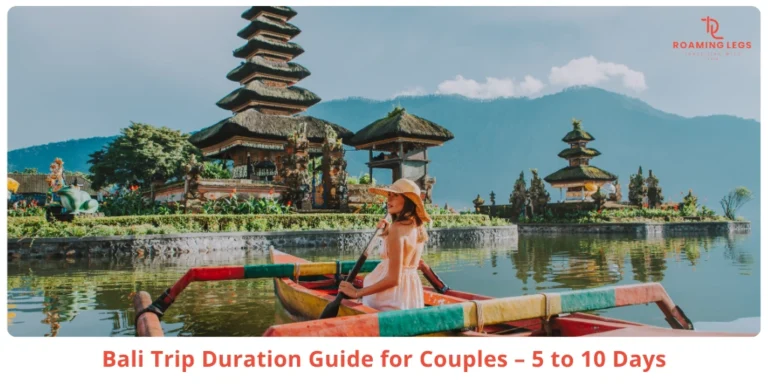
Every day in Bali feels different — rice terraces in the morning, a waterfall at noon, a temple at sunset, dinner at a candlelit villa restaurant. 

The landscape keeps shifting and there’s always something to do that isn’t just “sit on a beach.

” Private pool villas are genuinely affordable (₹5,000–₹10,000/night for quality ones) and the whole island has a calm, romantic energy that suits couples very well.

Thailand is a convenience-driven destination. 

It’s easy to get to, cheap, visa-free for Indians, and the beaches — especially in Krabi and Koh Samui — are genuinely excellent. 

Phuket has great nightlife and a party atmosphere. 

It’s the kind of place where you don’t need to plan much because everything is tourist-ready and accessible. 

That’s both the appeal and the limitation.

Here’s a way to think about it: if you’d enjoy the Goa vibe but international and with better beaches, Thailand delivers that. 

If you want something that feels more curated, private, and unlike anything you’ve experienced before, Bali is the answer.

How Different Are the Costs, Honestly?

Thailand is cheaper — but not by as much as people think once you actually price it out properly.

Where Thailand saves you money:

  • Flights: Direct from Delhi, Mumbai, Bengaluru, Chennai. IndiGo, Thai Airways, and Vistara all operate direct routes. 
  • Return economy typically runs ₹15,000–₹30,000 per person — noticeably cheaper than Bali.
  • No visa cost: Thailand offers 30-day visa-free entry for Indian passport holders. 
  • Bali’s Visa on Arrival costs ~₹3,500 per person.
  • Street food: Authentic Thai food at local stalls is ₹150–₹400 per meal per person. 
  • You can eat very well cheaply in Thailand.

Where Bali gives better value:

  • Private pool villas: This is where Bali genuinely wins. 
  • A beautiful private pool villa in Ubud — places like Alaya Resort (₹8,000–₹12,000/night) or Bisma Eight (₹5,000–₹8,000/night) — costs a fraction of what a comparable villa would in Koh Samui or Phuket. 
  • In Thailand, private pool villas at properties like Silavadee Pool Spa Resort in Koh Samui start at ₹18,000–₹30,000/night.
  • Daily activities: Bali’s cultural and nature experiences (temples, waterfalls, cooking classes, rice terrace walks) run ₹500–₹2,500 per activity. 
  • Thailand’s island hopping and day tours run similar costs but require more travel.

Full Cost Comparison (Per Couple, 7 Nights)

Expense Bali Thailand (Phuket + Krabi)
Return flights ₹44,000–₹70,000 ₹30,000–₹55,000
Accommodation ₹35,000–₹70,000 ₹28,000–₹60,000
Food & dining ₹12,000–₹22,000 ₹10,000–₹18,000
Activities & transport ₹12,000–₹20,000 ₹14,000–₹24,000
Visa ₹7,000–₹8,000 ₹0
Total estimate ₹1,10,000–₹1,90,000 ₹82,000–₹1,57,000

Thailand comes out ₹20,000–₹40,000 cheaper per couple on a like-for-like basis. But the accommodation quality gap — especially for couples wanting a private pool experience — is significant enough that many couples find Bali gives them more for their money despite the slightly higher total.

Return Flights

Bali
₹44,000–₹70,000
Thailand (Phuket + Krabi)
₹30,000–₹55,000

Accommodation

Bali
₹35,000–₹70,000
Thailand (Phuket + Krabi)
₹28,000–₹60,000

Food & Dining

Bali
₹12,000–₹22,000
Thailand (Phuket + Krabi)
₹10,000–₹18,000

Activities & Transport

Bali
₹12,000–₹20,000
Thailand (Phuket + Krabi)
₹14,000–₹24,000

Visa

Bali
₹7,000–₹8,000
Thailand (Phuket + Krabi)
₹0

Total Estimate

Bali
₹1,10,000–₹1,90,000
Thailand (Phuket + Krabi)
₹82,000–₹1,57,000

Thailand comes out ₹20,000–₹40,000 cheaper per couple on a like-for-like basis. But the accommodation quality gap — especially for couples wanting a private pool experience — is significant enough that many couples find Bali gives them more for their money despite the slightly higher total.

Bali or Thailand — Still Not Sure Which Fits You Better?

Most couples who ask us this have done the research but still can't decide — because the answer depends on their specific budget and trip style. Tell us what you want from your trip and your total budget, and we'll give you a straight recommendation with a sample itinerary for whichever destination makes more sense for you.

Budget Comparison Trip Style Match Straight Recommendation Sample Itinerary
Bali or Thailand for Couples

What Are the Best Areas in Each Destination for Couples?

Bali: Three Areas Worth Knowing

Ubud is the most popular choice for romantic couples and for good reason. 

It’s Bali’s cultural heart — rice terraces, ancient temples, jungle cafés, and waterfalls. 

The accommodation here is genuinely stunning. 

Komaneka at Bisma (₹18,000–₹28,000/night) has valley views that are hard to describe. 

Even mid-range options like Alaya Resort Ubud (₹8,000–₹12,000/night) have private pools and a quiet, intimate feel. 

One thing most guides miss: go to Tegallalang Rice Terrace before 8 AM. 

After that, it fills up with tour groups and the quiet magic disappears.

Seminyak is Bali’s answer to a beach-and-lifestyle area — beach clubs, boutique restaurants, sunset evenings. 

Ku De Ta and Potato Head are the big beach clubs. 

Dinner at Merah Putih (₹4,000–₹6,000 for two) is genuinely excellent. 

It’s more social than Ubud but still romantic in the evenings.

Uluwatu is for couples who want dramatic cliff views. 

The Kecak Fire Dance at Uluwatu Temple at 6 PM (tickets: ₹600–₹700/person) followed by a Jimbaran Bay seafood dinner on the beach (₹2,500–₹4,000 for two) is one of the best evenings you can have in Bali.

Thailand: Three Areas Worth Knowing

Phuket is the most popular and most developed. Patong is the party hub — good for nightlife, not so much for romance. 

Kata and Kata Noi beaches are far better for couples — quieter, cleaner, and with nicer resorts. 

The Rosewood Phuket (₹20,000–₹40,000/night) is one of the best luxury properties in Thailand if budget allows.

Krabi is where Thailand gets genuinely romantic. 

Railay Beach — accessible only by long-tail boat from Ao Nang — is one of the most beautiful beach settings in Southeast Asia, hemmed in by limestone cliffs with no roads in or out. 

Phra Nang Cave Beach is right next to Railay and equally stunning. 

Stay at Rayavadee Resort (₹25,000–₹45,000/night) if budget allows — it’s iconic. 

For mid-range, Bhu Nga Thani Resort & Spa in Railay runs ₹8,000–₹14,000/night.

Koh Samui is Krabi’s quieter, more upscale neighbour. 

Less visited than Phuket, better beaches than Phuket in many places, and the resort quality is strong. 

Anantara Bophut Koh Samui (₹14,000–₹22,000/night), Silavadee Pool Spa Resort (₹16,000–₹28,000/night), and Melia Koh Samui (₹10,000–₹18,000/night) are all solid choices for couples. 

One thing most guides miss: fly direct to Koh Samui Airport from Bangkok rather than taking a ferry from Surat Thani — it saves 3–4 hours of exhausting travel.

Beaches — Where Do You Actually Get the Better Experience?

Thailand wins on pure beach quality. 

The Andaman Sea side (Krabi, Phuket, Phi Phi) has crystal-clear water, soft white sand, and coral visible right from the shore. 

Railay Beach in Krabi is genuinely one of the most beautiful beaches in the world — the kind of place that makes people change their travel plans just to stay longer.

Bali’s beaches are different. 

Seminyak and Kuta have strong waves and brown sand — they’re great for atmosphere and surfing but not for swimming or the classic “perfect beach” photo. 

Nusa Dua is calmer and cleaner. 

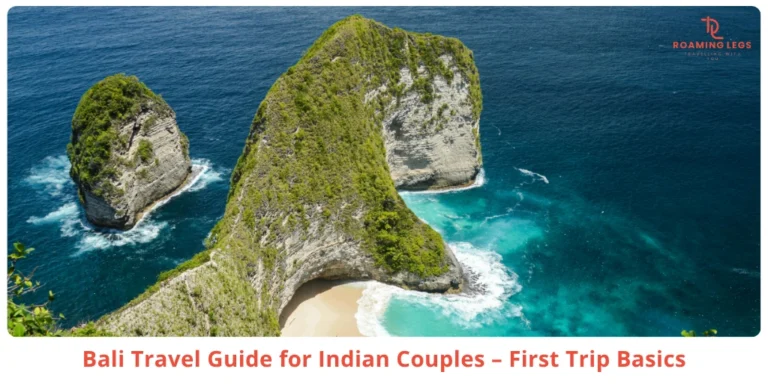
Nusa Penida’s Kelingking Beach has the famous T-Rex cliff viewpoint — extraordinary to look at, not actually swimmable. 

Bali’s beaches are beautiful but in a dramatic, rugged way, not a postcard-perfect lagoon way.

Honest verdict: If a stunning, swimmable beach is your top priority as a couple, Thailand is the better choice. 

Krabi specifically is hard to beat.

Food — The Part That Matters More Than Most Guides Admit

This is genuinely important for Indian couples, and both destinations are very different here.

Bali is very comfortable for Indian vegetarians. 

Ubud especially has a huge range of plant-based cafés — Earth Café Ubud is entirely vegetarian and excellent. 

You’ll find plenty of rice and vegetable dishes at local warungs for ₹300–₹500/meal. 

Indian restaurants exist (not many, but some) and the international food scene is strong. 

The cooking class experience — places like Payuk Bali (₹2,500/person) include a market visit and full session — is something couples genuinely remember.

Thailand has exceptional food but is trickier for vegetarians. 

Most Thai cooking uses fish sauce even in “vegetarian” dishes — you need to be specific when ordering. 

Street food is incredible: Pad Thai, Som Tam, Khao Man Gai, fresh spring rolls from night markets. 

But if you or your partner don’t eat fish or non-veg, you’ll need to be more careful. 

Bangkok and Phuket have good Indian restaurants. 

Smaller islands have fewer options.

Want a Ready-Made Itinerary for the Destination You're Leaning Toward?

We have planned hundreds of couple trips to both Bali and Thailand. Tell us your travel dates, budget, and which destination you are leaning toward — and we will send you a complete day-by-day plan with hotel options and cost breakdown within 24 hours.

Day-by-Day Plan Hotel Options Full Cost Breakdown Ready in 24 Hours
Bali and Thailand for couples tour

Sample 7-Day Itinerary: Bali for Couples

Day 1 — Arrive in Ubud. 

Private airport transfer to Ubud (₹1,500–₹2,000, 90 min). 

Check in. 

Slow evening walk in Ubud town, dinner at a local warung.

Day 2 — Ubud full day. 

Tegallalang Rice Terrace before 8 AM. 

Sacred Monkey Forest mid-morning. 

Campuhan Ridge Walk at 4 PM. 

Dinner at Locavore (₹5,000–₹8,000 for two — book ahead).

Day 3 — Waterfall + cooking class. 

Tegenungan Waterfall morning. 

Payuk Bali Cooking Class afternoon (₹2,500/person). 

Pool evening at the villa.

Day 4 — Nusa Penida day trip. 

Drive to Sanur (45 min), fast boat at 8 AM (₹700–₹1,000 return).

Kelingking Beach viewpoint, Angel’s Billabong, Broken Beach. 

Return by 6 PM.

Day 5 — Move to Seminyak. 

Private transfer (₹1,200, 90 min). 

Check in. 

Beach evening, sunset at Double Six Beach, dinner at Merah Putih.

Day 6 — Uluwatu + Jimbaran. 

Uluwatu Temple morning. 

Kecak Fire Dance at 6 PM (₹600–₹700/person). 

Jimbaran Bay seafood dinner on the beach (₹2,500–₹4,000 for two).

Day 7 — Late checkout, depart. 

Spa morning or last beach walk. 

Airport transfer.

Sample 7-Day Itinerary: Thailand (Phuket + Krabi) for Couples

Day 1 — Arrive Phuket. 

Direct flight from Delhi/Mumbai (3–4 hours). 

Check into hotel in Kata or Kata Noi area. 

Beach evening, dinner at Baan Rim Pa (₹3,500–₹5,500 for two, clifftop Thai fine dining).

Day 2 — Phuket exploration. 

Morning: Promthep Cape viewpoint at sunrise (stunning views, free). 

Big Buddha Phuket mid-morning (entry free). 

Afternoon: Kata Noi Beach. 

Sunset drinks at Café del Mar Phuket.

Day 3 — Phi Phi Islands day trip. 

Speedboat from Phuket to Phi Phi Don (₹3,000–₹4,500/person, organized tours). 

Snorkeling at Bamboo Island, Maya Bay, Viking Cave. 

Return by evening.

Day 4 — Travel to Krabi. 

Ferry from Phuket to Ao Nang, Krabi (90 min, ₹800/person) or speedboat (45 min). 

Long-tail boat to Railay Beach (₹300–₹400/person, 15 min). 

Check into Rayavadee or Bhu Nga Thani.

Day 5 — Railay and Phra Nang Cave Beach. 

Full day at Railay and Phra Nang Cave Beach — considered by many the most beautiful beach in Thailand. 

Limestone cliffs, turquoise water, nearly no development. 

Just walk there — it’s 10 minutes from Railay.

Day 6 — Four Islands tour from Krabi. 

Longtail boat tour of Tub, Chicken Island, Poda, and Koh Mor (₹1,500–₹2,500/person including snorkeling). 

Sunset beach dinner at Ao Nang.

Day 7 — Late morning, depart. 

Transfer to Krabi Airport (30 min). 

Flight back to India.

Practical Info: Flights, Visa, and Getting There

Getting to Bali from India

No direct flights. 

Connect via Kuala Lumpur (AirAsia, Malaysia Airlines), Singapore (Batik Air, Singapore Airlines), or Bangkok. 

Total travel: 9–12 hours. 

Return economy: ₹22,000–₹35,000/person, booked 6–8 weeks ahead. 

Visa on Arrival at Ngurah Rai Airport: ₹2,700/person + ₹800 tourism levy. 

Or apply online at evoa.imigrasi.go.id to skip the queue.

Getting to Thailand from India

Direct flights from Delhi, Mumbai, Bengaluru, Chennai, and Kochi to Bangkok (Suvarnabhumi), and direct seasonal routes to Phuket. 

Airlines: IndiGo, Thai Airways, Vistara, Air India. Total travel: 3–5 hours. 

Return economy: ₹15,000–₹28,000/person. 

No visa required for Indian passport holders — 30-day entry on arrival, completely free.

Best Time to Visit Both

Bali: April–June and September–October (dry season, manageable crowds). 

Avoid Nyepi in March — airport closes 24 hours. 

July–August is peak with more crowds. 

Thailand: November–April for Andaman coast (Phuket, Krabi).

May–October is off-season with lower prices — beaches are still fine but occasional rain. 

Koh Samui has a different rain pattern (October–December is its rainy season).

What Couples Who’ve Done Both Say

“We did Thailand for our first anniversary and Bali for our third. 

Thailand was more fun and easier. 

Bali felt more romantic and meaningful. 

If I had to choose just one, Bali. 

But Thailand has better beaches — Railay is something else.

“ — Ritika & Sameer J., Hyderabad, May 2026

“We almost went to Thailand because it was cheaper and easier. 

Chose Bali at the last minute. 

The Ubud villa, the Kecak Dance, Nusa Penida — we kept saying ‘this doesn’t feel real.

‘ We’re going back next year.

“ — Aditi & Rohan M., Pune, March 2026

Bali vs Thailand FAQs

Bali vs Thailand FAQs for Indian Couples

Honest answers to every question Indian couples ask before choosing between Bali and Thailand — costs, beaches, visas, and more.

1. Is Bali or Thailand better for Indian couples?

Bali is better for couples who want a private, experience-rich, romantic trip with pool villas, cultural experiences, and varied scenery. Thailand is better if you want cheaper flights, visa-free entry, excellent beaches, and a more social, laid-back vibe. The right choice depends entirely on what you want the trip to feel like. For pure romance and privacy, Bali leads. For beach quality and convenience, Thailand leads.

2. Which is cheaper — Bali or Thailand for Indian couples?

Thailand is cheaper overall, typically by ₹20,000–₹40,000 per couple for a similar trip. Direct flights from India cost ₹15,000–₹28,000/person vs Bali's ₹22,000–₹35,000/person (with a layover). Thailand is also visa-free. However, Bali's private pool villas are significantly more affordable than comparable stays in Phuket or Koh Samui, partially closing the gap for couples who want that experience.

3. Which has better beaches — Bali or Thailand?

Thailand, specifically the Andaman coast (Krabi, Phuket, Phi Phi, Koh Lanta). Railay Beach in Krabi is arguably the most beautiful beach in Southeast Asia for couples — limestone cliffs, clear turquoise water, very little development. Bali's beaches (Seminyak, Kuta) are atmospheric but have stronger waves and browner water. Nusa Dua is calmer. For pristine, swimmable beach experiences, Thailand wins clearly.

4. Is Bali or Thailand better for vegetarian Indian couples?

Bali is more comfortable for vegetarians. Ubud has excellent vegetarian and vegan cafés (Earth Café Ubud, Sage Restaurant). Local warungs serve affordable rice and vegetable dishes. In Thailand, most dishes — even labelled "vegetarian" — use fish sauce. Bangkok and Phuket have good Indian restaurants, but smaller islands have limited options. If you or your partner are strictly vegetarian, plan meals more carefully in Thailand.

5. Can you get a private pool villa in Thailand like in Bali?

Yes, but it costs significantly more. In Bali, a quality private pool villa (Bisma Eight, Alaya Resort Ubud) runs ₹5,000–₹12,000/night. In Thailand, comparable private pool villas at resorts like Silavadee in Koh Samui or Rayavadee in Krabi run ₹18,000–₹45,000/night. For couples who want the pool villa experience, Bali offers far better value.

6. How many days should Indian couples spend in Bali or Thailand?

For Bali: 7 nights is ideal — 2–3 nights Ubud, 3–4 nights beach area (Seminyak or Uluwatu), 1 day Nusa Penida. For Thailand: 6–7 nights works well — 3 nights Phuket/Kata, 3 nights Krabi/Railay. Both destinations can feel rushed in 5 nights, especially with internal travel time.

7. Does Thailand require a visa for Indians?

No — Indian passport holders get 30 days visa-free entry into Thailand on arrival at all major airports. No fee, no pre-application needed. This is a genuine advantage over Bali, where Visa on Arrival costs ~₹3,500 per person (IDR 500,000 + tourism levy).

8. Which destination has better nightlife for couples?

Thailand wins clearly. Phuket's Bangla Road (Patong), Koh Samui's Chaweng Beach area, and Koh Phangan (famous for Full Moon Party) all have active nightlife. Bali has beach clubs in Seminyak and Canggu (Potato Head, Ku De Ta, Finn's) which are excellent for sunset evenings but quieter than Thailand's party scene. If evenings out, dancing, and a social atmosphere matter, Thailand is the better pick.

9. Which is better for couples on a honeymoon — Bali or Thailand?

For most Indian honeymoon couples, Bali edges ahead — private pool villas are more accessible, the atmosphere is more intimate, and the cultural experiences (Kecak Dance, rice terrace walks, waterfall visits) feel more memorable and special. Thailand is a great honeymoon destination too, especially Krabi, but the higher accommodation cost for comparable privacy and more crowded tourist zones in Phuket make it slightly less ideal as a first honeymoon.

10. Is Bali safe for Indian couples?

Yes, Bali is very safe for Indian couples. The main tourist areas (Ubud, Seminyak, Nusa Dua, Uluwatu) are well-patrolled and safe even at night. Use Gojek or Grab for taxis to avoid overcharging. Keep bags secure at the Monkey Forest and in crowded markets. Thailand is also very safe — the main concern is occasional tourist-targeted scams (tuk-tuk drivers steering you to overpriced gem shops), which you can avoid by using metered taxis or Grab.

11. Which destination is better for couples on a tight budget under ₹1 lakh?

Thailand is more achievable under ₹1 lakh per couple for 5–6 nights. Direct cheaper flights, no visa cost, affordable street food, and budget guesthouses in Phuket and Krabi make it possible. Bali under ₹1 lakh for two is very tight — possible but requires budget accommodation (3-star hotels rather than villas) and minimal activities. If budget is the primary constraint, Thailand is the more comfortable choice.

12. Which has more activities for couples beyond beaches?

Bali has significantly more. Ubud alone has rice terraces, Sacred Monkey Forest, Campuhan Ridge Walk, waterfalls (Tegenungan, Sekumpul), cooking classes, temple visits, and the Kecak Fire Dance at Uluwatu. Thailand's non-beach activities include Thai cooking classes in Bangkok or Chiang Mai, elephant sanctuaries, and temple visits in Bangkok — but most couples in Phuket and Krabi are mainly doing beach and island activities. If variety of experiences matters, Bali is richer.

13. Which destination is easier to plan as a couple from India?

Thailand is simpler to plan — direct flights, no visa, well-developed tourist infrastructure, and everything is easy to book last-minute. Bali requires slightly more planning: international connections, VOA logistics, internal transfers between areas, and activity bookings. That said, both are very manageable. With a good travel agent or detailed research, Bali's extra complexity is worth the experience.

14. Should couples do Bali and Thailand together in one trip?

Some couples combine both: fly into Bangkok (or Phuket), spend 3–4 days in Thailand, then connect to Bali for 4–5 days. Bangkok to Bali flights run ₹6,000–₹12,000 per person. It's doable and gives you the best of both — Thailand's beaches and Bali's culture. Budget for a combined trip: ₹1,80,000–₹2,80,000 per couple. The downside is more travel days and a disconnect between the two very different vibes.

15. Final answer: Bali or Thailand for Indian couples in 2026?

Bali for couples who want privacy, romantic atmosphere, pool villas at good prices, cultural depth, and a trip that feels different. Thailand for couples who want direct cheap flights, visa-free entry, world-class beaches (especially Krabi), nightlife, and easier logistics. 70% of the Indian couples we work with who want a genuinely memorable couple experience choose Bali. Those with tighter budgets or shorter leave windows often choose Thailand and enjoy it just as much for what it is.

Why many travelers feel disconnected from typical holidays

What Makes Mongolia Different From Every Other Asian Destination?

A lot of travelers don’t say this openly… but many popular Asian holidays are starting to feel repetitive.

The same crowded beaches.
The same photo spots.
The same rushed itineraries where you barely get time to actually feel the place.

You spend months planning the trip, but once you arrive, it sometimes feels more exhausting than refreshing.

That’s exactly why travelers are now searching for more unique Asian destinations instead of following the same tourist routes again and again.

And this is where Mongolia feels completely different.

No pressure to “cover everything.”
No giant tourist crowds everywhere.
No feeling that the destination was built only for Instagram.

Instead, Mongolia gives you silence, space, raw landscapes, and a slower style of travel that many people didn’t even realize they were missing.

Sometimes the best journeys are not the loudest ones. They’re the ones that make you slow down.

Why many travelers feel disconnected from typical holidays:

  • Overcrowded tourist places
  • Tight sightseeing schedules
  • Social media-driven travel trends
  • Same-style itineraries everywhere
  • Commercial experiences that feel staged
  • Trips that feel rushed from day one

Why Mongolia feels refreshing instead:

  • Open untouched landscapes
  • Fewer tourists
  • Slower travel rhythm
  • Emotion-driven experiences
  • Peaceful camp stays
  • More meaningful moments

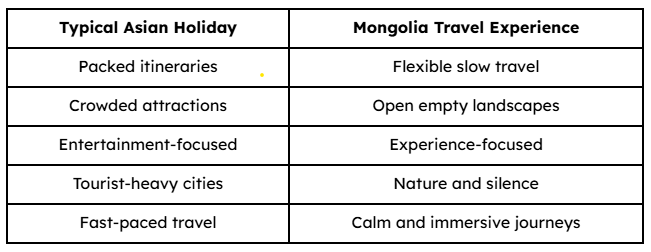
Quick Comparison

Quick comparison Mongolia tour

For travelers searching for alternatives to Bali, offbeat Asia travel, or more meaningful travel experiences, Mongolia feels like a completely different world.

Mongolia Feels Raw, Open, and Emotionally Different

The biggest thing travelers notice about Mongolia is not just the scenery.

It’s the feeling the destination creates.

Some places impress you visually for a few days. Mongolia stays in your head long after the trip ends.

The open land, giant skies, empty roads, and quietness create a feeling that’s hard to explain until you actually experience it yourself.

You stop rushing.
You stop checking your phone every few minutes.
Even time feels slower there.

That’s why Mongolia feels less like a normal vacation and more like a personal experience.

The Landscapes Feel Endless

In Mongolia, the scenery never feels small.

You can drive for hours through open grasslands without seeing crowds, buildings, or heavy traffic. Then suddenly the landscape changes into mountain valleys, dramatic rock formations, or the vast emptiness of the Gobi Desert.

The scale of Mongolia surprises almost everyone.

What travelers usually notice first:

  • Endless open landscapes
  • Giant blue skies
  • Empty scenic roads
  • Wide grasslands
  • Completely untouched areas

Unlike crowded city-heavy trips, Mongolia landscapes feel wild and free.

That’s what makes scenic Mongolia emotionally different from many mainstream Asian destinations.

Silence Becomes Part of the Trip

One thing travelers rarely expect in Mongolia is silence.

Real silence.

No constant traffic noise.
No crowded tourist markets.
No loud nightlife outside your hotel room.

Just wind, open land, and peaceful evenings under the sky.

For many people, this becomes the most mentally refreshing part of the journey.

Mongolia Feels Raw Open and Emotionally Different

Why travelers find Mongolia calming:

  • Fewer tourists
  • Peaceful camp stays
  • Limited digital distractions
  • Calm natural surroundings
  • Slower daily pace

That’s why Mongolia is becoming popular among travelers looking for peaceful travel destinations and genuine slow travel experiences.

Mongolia Feels Less Commercialized

Many destinations today feel built completely around tourism.

Mongolia still feels naturally lived-in.

That’s a huge difference.

You won’t constantly feel like every experience is designed only to sell something to tourists. The simplicity actually becomes part of the beauty.

What Mongolia is NOT:

  • Over-commercialized tourism
  • Shopping-heavy travel
  • Artificial cultural shows
  • Overcrowded nightlife hubs
  • Tourist traps everywhere

Instead, the destination feels more raw, simple, and real.

That’s why travelers looking for authentic travel experiences and less touristy destinations often connect deeply with Mongolia.

Download the Mongolia Inspiration Guide PDF

Want to understand what Mongolia actually feels like before planning your trip?

This free guide includes:

  • Unique Mongolia experiences
  • Best scenic regions
  • Cultural highlights
  • Suggested travel styles
  • First-time traveler insights
  • Seasonal recommendations

Mongolia’s Nomadic Culture Changes the Entire Experience

Mongolia is not just about landscapes.

The people and the nomadic culture completely shape how the journey feels.

And unlike many destinations where culture is shown mainly for tourists, Mongolia’s traditions are still part of everyday life.

That changes the travel experience completely.

The hospitality feels warmer.
The lifestyle feels slower.
Even simple moments feel more personal.

You don’t feel like you’re only “watching” a culture. You feel connected to it.

Travelers Experience a Lifestyle Few Places Still Preserve

Imagine waking up inside a traditional Ger camp surrounded by open grasslands instead of buildings and traffic.

That’s normal in Mongolia.

Nomadic traditions, horse culture, seasonal movement, and minimalist living are still deeply connected to daily life there.

Experiences travelers remember most:

  • Staying in Ger camps
  • Watching horse-riding traditions
  • Seeing nomadic settlements
  • Sharing local meals
  • Experiencing simpler lifestyles

For many Indian travelers, this becomes their first real exposure to authentic nomadic culture.

Hospitality Feels Personal Instead of Transactional

In many tourist-heavy destinations, interactions can sometimes feel routine or business-focused.

Mongolia feels very different.

Locals are often genuinely curious about travelers. Shared meals and conversations feel natural instead of staged.

Travelers often notice:

  • Warm welcomes in remote regions
  • Genuine curiosity from locals
  • Human connection during travel
  • Less “tourist treatment”
  • More meaningful interactions

Sometimes these small moments become stronger memories than famous attractions themselves.

Traditions Still Feel Alive

Festivals and traditions in Mongolia still feel emotionally connected to local life.

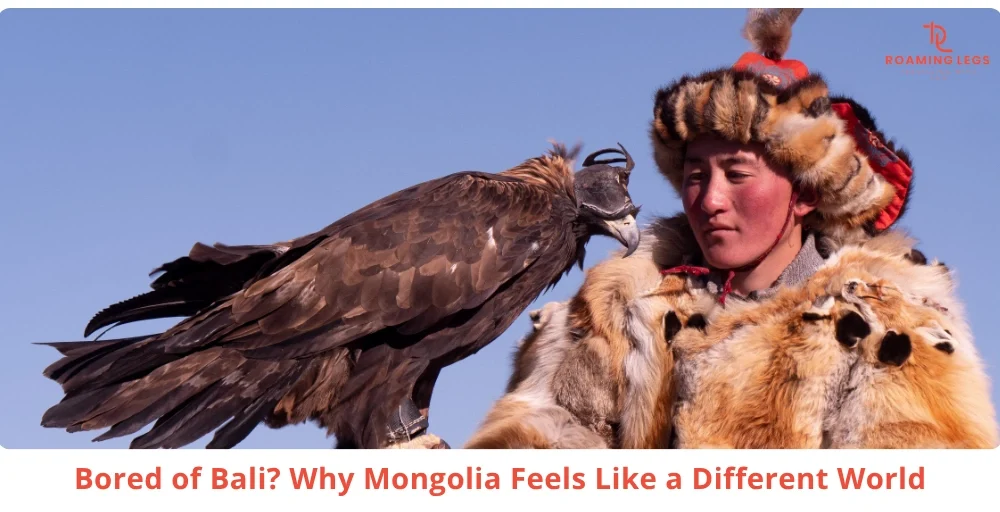
Whether it’s horse racing, wrestling traditions, eagle hunting culture, or the famous Naadam Festival, these experiences feel authentic instead of staged for tourism.

That’s what makes them memorable.

You don’t feel like you’re watching a performance.
You feel like you’re witnessing a living culture.

Why travelers find Mongolia calming

Mongolia Appeals to Travelers Who Want to Slow Down

Travel preferences are changing now.

Many people are no longer interested in rushing through 15 attractions in 4 days just to say they “covered” a destination.

They want experiences that actually feel meaningful.

That’s why Mongolia appeals strongly to:

  • Experience seekers
  • Nature-focused travelers
  • Burned-out professionals
  • Couples wanting peaceful journeys
  • Slow travelers
  • People tired of crowded tourism

Mongolia is not about doing more.

It’s about feeling more connected to the journey itself.

The Journey Matters More Than Attractions

In Mongolia, even the drive becomes part of the experience.

Long scenic roads.
Changing landscapes.
Campfire conversations.
Quiet evenings under the stars.

These moments slowly become the real highlights of the trip.

Experiences travelers remember deeply:

  • Watching sunsets during long drives
  • Stargazing in remote camps
  • Peaceful tea conversations
  • Seeing endless grasslands from the road
  • Feeling disconnected from city stress

That’s why many travelers describe Mongolia as one of their most emotional and memorable journeys.

Get the “Unique Mongolia Experiences” PDF

Thinking about Mongolia but unsure what experiences are actually worth it?

Download our free guide featuring:

  • Bucket-list experiences
  • Scenic hidden regions
  • Luxury and adventure ideas
  • Slow travel recommendations
  • Cultural activities
  • Suggested itineraries

Mongolia Feels Completely Different From Bali or Thailand

This doesn’t mean Bali or Thailand are bad destinations.

They simply offer a very different style of travel.

Mongolia is more about space, nature, culture, silence, and emotional experiences instead of entertainment-focused tourism.

Mongolia Prioritizes Space Over Entertainment

Bali or Thailand often focus on:

  • Beach nightlife
  • Tourist entertainment
  • Busy sightseeing
  • Shopping and cafés
  • Packed tourist zones

Mongolia focuses more on:

  • Open landscapes
  • Quiet experiences
  • Nature immersion
  • Scenic journeys
  • Emotional calmness

For travelers searching for quiet travel destinations, Mongolia often feels much more refreshing.

Experiences Feel More Authentic

Because Mongolia still receives fewer tourists compared to mainstream Asian destinations, the experiences often feel more natural.

Travelers often notice:

  • Less social media tourism
  • Fewer tourist crowds
  • More meaningful interactions
  • Simpler and real experiences
  • Less commercial pressure

That’s why Mongolia often leaves a stronger emotional impact on travelers.

Mongolia Is Better for Curious Travelers Than Luxury Shoppers

Mongolia is not mainly a shopping destination.

It’s best for travelers who enjoy:

  • Experiences over luxury malls
  • Stories over nightlife
  • Nature over entertainment
  • Immersion over fast tourism

That’s why Mongolia attracts travelers interested in premium adventure travel and experiential travel in Asia.

Most Travelers Remember Mongolia for Years

Years after the trip, most people don’t talk first about hotels or sightseeing lists.

They talk about feelings.

The silence of the desert.
The giant grasslands.
The stars at night.
The warmth inside a Ger camp.

These become emotional memories, not just travel photos.

And maybe that’s what makes Mongolia feel so different from typical tourism.

The destination stays with you long after the trip ends.

Not Sure if Mongolia Matches Your Travel Style?

Our travel experts can help you decide whether Mongolia fits your travel expectations, comfort level, and experience goals.

Get guidance on:

  • Luxury vs adventure travel
  • Best travel seasons
  • Couple or family suitability
  • Travel pace
  • Recommended itineraries

Mongolia Changes the Way People Experience Travel

Mongolia is not the kind of destination people visit only to tick another country off their list.

It changes how many travelers think about travel itself.

The slower pace, open landscapes, nomadic culture, and emotional calmness create a travel experience that feels deeply personal.

And maybe that’s why people remember Mongolia for years.

Not because of how many attractions they visited…

But because of how the journey made them feel.

If Mongolia has been sitting quietly in your mind while reading this, it might be worth exploring further.

Read more Mongolia blogs, download the travel guides, and start planning the journey thoughtfully.

Why is Mongolia different from other Asian destinations?

Mongolia feels less crowded, less commercialized, and more experience-focused compared to mainstream Asian tourist destinations. The open landscapes and nomadic culture create a very different atmosphere.

Is Mongolia better for nature-focused travelers?

Yes. Mongolia is ideal for travelers who enjoy open landscapes, deserts, mountains, scenic drives, and peaceful natural environments.

What makes Mongolia unique compared to Bali or Thailand?

Unlike Bali or Thailand, Mongolia focuses more on slow travel, open nature, emotional experiences, and cultural immersion instead of nightlife and entertainment-heavy tourism.

Is Mongolia good for slow travel experiences?

Absolutely. Mongolia is one of the best destinations for slow travel because the journey itself becomes part of the experience.

What kind of travelers usually enjoy Mongolia the most?

Mongolia is best for curious travelers, nature lovers, photographers, couples seeking peaceful experiences, and travelers wanting meaningful journeys instead of rushed tourism.

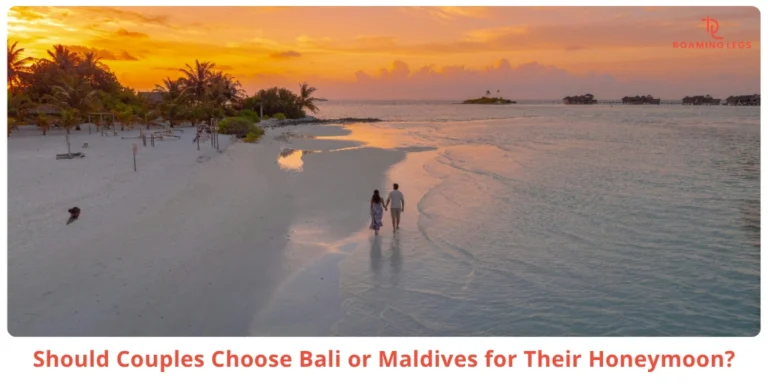
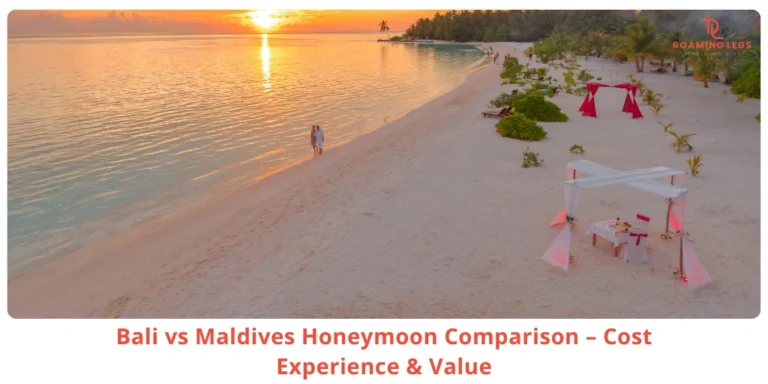
Bali vs Maldives Honeymoon

 Bali or Maldives for Honeymoon? An Honest Side-by-Side Comparison for Indian Couples — With Real Costs, Resort Names, and a Clear Answer

Bali or Maldives — this is genuinely one of the most common questions Indian couples ask when planning their honeymoon. 

Both look stunning on Instagram. 

Both get recommended everywhere. 

And both can feel like the “right” choice until you actually sit down and compare them.

So here’s the honest answer before we go into details: Bali is the better choice for most Indian couples. 

It gives you more variety, better value, and a more active honeymoon experience at roughly half the cost. 

The Maldives beats Bali in exactly one thing — absolute luxury and total seclusion. 

If overwater villa life with nothing but ocean around you is the dream, Maldives wins. 

If you want a honeymoon with real experiences, culture, great food, and still deeply romantic moments, Bali is your answer.

This guide gives you the full comparison — real INR costs, actual resort names, food realities for Indian palates, visa details, and a clear recommendation based on what kind of couple you are.

Bali vs Maldives at a Glance — The Quick Answer

Factor Bali Maldives
Total cost (7 nights, per couple incl. flights) ₹1,20,000–₹1,80,000 ₹2,50,000–₹5,00,000+
Flight time from India 8–12 hours (1 stop) 3–4 hours (direct)
Visa for Indians Visa on Arrival (~₹3,500/person) No visa required
Activities variety Very high Low
Food for Indian vegetarians Excellent Limited
Best for Experience-hungry couples Pure luxury seekers
Romance factor High Very high
Recommended duration 7 nights 5–6 nights
Bottom line: Bali gives you more experiences, more food variety, and a far lower budget. Maldives wins on pure luxury, overwater villa romance, and ease of travel from India. If budget is a factor, Bali delivers far more value per rupee spent.

Total Cost (7 nights, per couple incl. flights)

Bali: ₹1,20,000–₹1,80,000
Maldives: ₹2,50,000–₹5,00,000+

Flight Time from India

Bali: 8–12 hours (1 stop)
Maldives: 3–4 hours (direct)

Visa for Indians

Bali: Visa on Arrival (~₹3,500/person)
Maldives: No visa required

Activities Variety

Bali: Very high
Maldives: Low

Food for Indian Vegetarians

Bali: Excellent
Maldives: Limited

Best For

Bali: Experience-hungry couples
Maldives: Pure luxury seekers

Romance Factor

Bali: High
Maldives: Very high

Recommended Duration

Bali: 7 nights
Maldives: 5–6 nights

How Different Are the Costs, Really?

This is where most couples get a reality check. 

The Maldives looks affordable until you actually price it out.

In Bali, a couple spending ₹1.5 lakh gets 7 nights in a private pool villa, daily breakfast, sightseeing across Ubud and Seminyak, a Nusa Penida day trip, two or three nice dinners, and still comes home with money left. 

That’s a full honeymoon, not a stripped-down one.

In the Maldives, ₹1.5 lakh per couple barely covers the flights and 2 nights at a mid-range overwater villa. 

The iconic overwater villa experience — which is the whole point of going to the Maldives — starts around ₹33,000–₹50,000 per night per room. 

Add seaplane transfers (₹15,000–₹25,000 per person return), resort dining (most Maldives resorts are full-board and still expensive), and activities like scuba diving or sunset cruise — and a 5-night Maldives trip for two can easily cross ₹4–5 lakh.

Here’s the full breakdown:

Bali Honeymoon Cost Breakdown (Per Couple, 7 Nights)

Expense Budget Mid-Range Luxury
Return flights (economy, 1 stop) ₹44,000–₹55,000 ₹44,000–₹60,000 ₹60,000–₹90,000
Hotel / villa ₹21,000–₹35,000 ₹42,000–₹70,000 ₹80,000–₹1,60,000
Food & dining ₹10,000–₹15,000 ₹14,000–₹22,000 ₹20,000–₹35,000
Activities & transfers ₹10,000–₹14,000 ₹14,000–₹20,000 ₹18,000–₹30,000
Visa + levy ₹7,000–₹8,000 ₹7,000–₹8,000 ₹7,000–₹8,000
Total estimate ₹92,000–₹1,27,000 ₹1,21,000–₹1,80,000 ₹1,85,000–₹3,23,000

Return Flights (Economy, 1 Stop)

Budget
₹44,000–₹55,000
Mid-Range
₹44,000–₹60,000
Luxury
₹60,000–₹90,000

Hotel / Villa

Budget
₹21,000–₹35,000
Mid-Range
₹42,000–₹70,000
Luxury
₹80,000–₹1,60,000

Food & Dining

Budget
₹10,000–₹15,000
Mid-Range
₹14,000–₹22,000
Luxury
₹20,000–₹35,000

Activities & Transfers

Budget
₹10,000–₹14,000
Mid-Range
₹14,000–₹20,000
Luxury
₹18,000–₹30,000

Visa + Levy

Budget
₹7,000–₹8,000
Mid-Range
₹7,000–₹8,000
Luxury
₹7,000–₹8,000

Total Estimate

Budget
₹92,000–₹1,27,000
Mid-Range
₹1,21,000–₹1,80,000
Luxury
₹1,85,000–₹3,23,000

Maldives Honeymoon Cost Breakdown (Per Couple, 5 Nights)

Expense Mid-Range Luxury Ultra-Luxury
Return flights (direct) ₹55,000–₹80,000 ₹70,000–₹1,00,000 ₹1,00,000–₹1,60,000
Overwater villa ₹66,000–₹1,00,000 ₹1,00,000–₹2,00,000 ₹2,00,000–₹4,00,000
Seaplane transfers ₹30,000–₹50,000 ₹30,000–₹50,000 Included
Dining (resort-based) ₹20,000–₹35,000 ₹30,000–₹50,000 Included
Activities ₹10,000–₹20,000 ₹15,000–₹30,000 Included
Total estimate ₹1,81,000–₹2,85,000 ₹2,45,000–₹4,30,000 ₹3,00,000–₹5,60,000+

The gap is real and it's significant. For the same budget, a Maldives trip gives you 5 nights and fewer experiences. A Bali trip gives you 7 nights and far more memories.

Return Flights (Direct)

Mid-Range
₹55,000–₹80,000
Luxury
₹70,000–₹1,00,000
Ultra-Luxury
₹1,00,000–₹1,60,000

Overwater Villa

Mid-Range
₹66,000–₹1,00,000
Luxury
₹1,00,000–₹2,00,000
Ultra-Luxury
₹2,00,000–₹4,00,000

Seaplane Transfers

Mid-Range
₹30,000–₹50,000
Luxury
₹30,000–₹50,000
Ultra-Luxury
Included

Dining (Resort-Based)

Mid-Range
₹20,000–₹35,000
Luxury
₹30,000–₹50,000
Ultra-Luxury
Included

Activities

Mid-Range
₹10,000–₹20,000
Luxury
₹15,000–₹30,000
Ultra-Luxury
Included

Total Estimate

Mid-Range
₹1,81,000–₹2,85,000
Luxury
₹2,45,000–₹4,30,000
Ultra-Luxury
₹3,00,000–₹5,60,000+

The gap is real and it's significant. For the same budget, a Maldives trip gives you 5 nights and fewer experiences. A Bali trip gives you 7 nights and far more memories.

Still Can't Decide Between Bali and Maldives?

Most couples who come to us with this question have already done hours of research — and they're still stuck. Send us your budget and what you actually want from your honeymoon (beach? culture? adventure? pure relaxation?) and we'll give you a straight answer within a few hours — along with a sample itinerary for whichever destination fits you better.

Reply in hours Budget-matched advice Free sample itinerary No pressure, no sales
Bali vs Maldives Honeymoon cost and exp

What Your Days Actually Look Like — Bali vs Maldives

This is the comparison most travel blogs skip, and it’s the most important one.

A Day in Bali on Honeymoon

Wake up at your private pool villa in Ubud — somewhere like Komaneka at Bisma (₹18,000–₹28,000/night, stunning valley views) or Alaya Resort Ubud (₹8,000–₹12,000/night for mid-range). 

Breakfast comes with the villa. By 7:30 AM you’re at Tegallalang Rice Terrace before the crowds. 

Back by 10 AM, then a cooking class at Payuk Bali (₹2,500/person — you go to a market, buy ingredients, cook, eat). 

Afternoon: Campuhan Ridge Walk, or just pool time. 

Evening: Kecak Fire Dance at Uluwatu if you’re in the south, or dinner at Locavore in Ubud (₹5,000–₹8,000 for two, one of Bali’s best restaurants). 

Every day feels different. 

Every day has something you’ll talk about years later.

A Day in Maldives on Honeymoon

Wake up in your overwater villa at a resort like Gili Lankanfushi (₹60,000–₹90,000/night, 45 villas all overwater, incredible house reef) or Hurawalhi Island Resort (₹40,000–₹65,000/night, adults-only, famous for its underwater restaurant — dinner there runs ₹35,000–₹50,000 for two but it’s extraordinary). 

Step off your deck directly into the lagoon. 

Breakfast is brought to your villa. 

You spend the morning snorkeling the house reef — the marine life at Gili Lankanfushi and Anantara Kihavah is genuinely world-class. 

Afternoon: couples’ spa treatment or just floating in the lagoon. 

Sunset from your deck with drinks. 

Dinner at the resort (most Maldives resorts run full-board). 

By Day 3, some couples start feeling the repeat rhythm. 

By Day 5 or 6, most are ready to leave — but full. 

That’s actually fine. 

The Maldives isn’t meant to be stimulating. 

It’s meant to be perfect.

The honest difference: Bali keeps giving you new things. 

The Maldives gives you one perfect thing, repeatedly.

What Your Days Actually Look Like — Bali vs Maldives

This is the comparison most travel blogs skip, and it’s the most important one.

A Day in Bali on Honeymoon

Wake up at your private pool villa in Ubud — somewhere like Komaneka at Bisma (₹18,000–₹28,000/night, stunning valley views) or Alaya Resort Ubud (₹8,000–₹12,000/night for mid-range). 

Breakfast comes with the villa. 

By 7:30 AM you’re at Tegallalang Rice Terrace before the crowds. 

Back by 10 AM, then a cooking class at Payuk Bali (₹2,500/person — you go to a market, buy ingredients, cook, eat). 

Afternoon: Campuhan Ridge Walk, or just pool time. Evening: Kecak Fire Dance at Uluwatu if you’re in the south, or dinner at Locavore in Ubud (₹5,000–₹8,000 for two, one of Bali’s best restaurants). 

Every day feels different. Every day has something you’ll talk about years later.

A Day in Maldives on Honeymoon

Wake up in your overwater villa at a resort like Gili Lankanfushi (₹60,000–₹90,000/night, 45 villas all overwater, incredible house reef) or Hurawalhi Island Resort (₹40,000–₹65,000/night, adults-only, famous for its underwater restaurant — dinner there runs ₹35,000–₹50,000 for two but it’s extraordinary). 

Step off your deck directly into the lagoon. 

Breakfast is brought to your villa. 

You spend the morning snorkeling the house reef — the marine life at Gili Lankanfushi and Anantara Kihavah is genuinely world-class.

Afternoon: couples’ spa treatment or just floating in the lagoon. 

Sunset from your deck with drinks. 

Dinner at the resort (most Maldives resorts run full-board). 

By Day 3, some couples start feeling the repeat rhythm. 

By Day 5 or 6, most are ready to leave — but full. 

That’s actually fine. 

The Maldives isn’t meant to be stimulating. 

It’s meant to be perfect.

The honest difference: Bali keeps giving you new things. 

The Maldives gives you one perfect thing, repeatedly.

Which Resorts Are Actually Worth It?

Bali — Best Honeymoon Hotels by Budget

Luxury:

  • Four Seasons Resort Bali at Sayan (Ubud): ₹35,000–₹60,000/night. Probably the most romantic hotel in Bali. 
  • Jungle setting, private pool villas, and the service is extraordinary.
  • Komaneka at Bisma (Ubud): ₹18,000–₹28,000/night. Valley-view infinity pool, 22 rooms only, intimate feel.

Mid-range:

  • Alaya Resort Ubud: ₹8,000–₹12,000/night. 
  • Well-designed private pool villas in a great location.
  • Anantara Uluwatu Bali Resort: ₹14,000–₹22,000/night. 
  • Clifftop, dramatic ocean views, the sunset from here might be the best in Bali.

Budget-friendly:

  • Bisma Eight (Ubud): ₹4,500–₹7,000/night. Incredible valley views, beautiful design, far better value than most competitors.

Maldives — Best Resorts for Indian Honeymoon Couples

Ultra-luxury (₹60,000–₹1,20,000/night):

  • Soneva Jani: Overwater villas with retractable roof, private slide into the ocean, in-villa telescope for stargazing. 
  • Genuinely once-in-a-lifetime.
  • Gili Lankanfushi: 45 overwater villas only, outstanding house reef, one of the best snorkeling in the Maldives.

Luxury (₹35,000–₹65,000/night):

  • Hurawalhi Island Resort: Adults-only, famous 5.8 Undersea Restaurant. 
  • Book it months ahead.
  • Anantara Kihavah Maldives Villas: Consistently rated among the best Maldives resorts for Indian couples. 
  • Exceptional butler service.

Mid-range overwater (₹18,000–₹35,000/night):

  • OBLU Select Lobigili: Adults-only, great for Indian couples, Indian food available, speedboat transfer (not seaplane — saves ₹30,000+).
  • Meeru Maldives Resort Island: Family-friendly (good if your families are joining for a farewell), strong reef, good value for Maldives.

Want a Ready-Made Honeymoon Plan With Real Hotel Options and Costs?

We've planned 200+ honeymoons for Indian couples — both Bali and Maldives. Tell us your travel dates, budget, and whether you're leaning toward Bali or Maldives (or still undecided), and we'll send you a complete day-by-day plan with actual hotel options mapped to your budget — within 24 hours.

200+ couples planned Real hotel options Day-by-day itinerary Ready in 24 hours
Bali vs Maldives Honeymoon exp and cost

Flights, Visa, and Getting There — The Practical Stuff

Getting to Bali

No direct flights from India to Bali. 

You’ll connect through Kuala Lumpur (AirAsia, Malaysia Airlines) or Singapore (Batik Air, Singapore Airlines). 

Total travel time from Delhi or Mumbai: 9–12 hours including layover. 

Economy return per person: ₹22,000–₹35,000 booked 6–8 weeks ahead. 

Visa on Arrival at Ngurah Rai Airport, Denpasar — ₹2,700/person plus tourism levy of ₹800/person. 

Or apply for the e-VOA at evoa.imigrasi.go.id before travel to skip the queue.

Getting to Maldives

Direct flights from Delhi, Mumbai, Bengaluru, Chennai, and Kochi. IndiGo, Air India, and Maldivian operate these routes. 

Flight time: 3–4 hours. 

Economy return: ₹28,000–₹55,000 per person. 

No visa required for Indian passport holders — this is a genuine advantage. 

However, once you land at Malé, you’re not done. 

Most resorts require either a speedboat transfer (30–90 minutes, often free or ₹3,000–₹6,000 per person return) or a seaplane transfer (15–45 minutes, ₹15,000–₹25,000 per person return). 

Seaplane transfers are weather-dependent and only operate in daylight — this matters if your flight arrives after sunset. 

Always confirm transfer type before booking.

Sample 7-Day Bali Honeymoon Itinerary

Day 1 — Arrive, settle into Ubud. 

Airport pickup (private transfer, ₹1,500–₹2,000, 90 minutes). 

Check in, slow evening in Ubud town.

Day 2 — Ubud exploration. 

Tegallalang Rice Terrace before 8 AM (₹200 entry). 

Sacred Monkey Forest mid-morning. 

Campuhan Ridge Walk at 4 PM.

Dinner at Locavore.

Day 3 — Waterfall + cooking class. 

Tegenungan Waterfall morning (30 min from Ubud, ₹150 entry). 

Afternoon Payuk Bali Cooking Class (₹2,500/person). 

Easy evening.

Day 4 — Move to Seminyak. 

Private transfer to Seminyak (₹1,200, 90 min). 

Check in. 

Beach walk, sunset at Double Six Beach (free). 

Dinner at Merah Putih (₹4,000–₹6,000 for two).

Day 5 — Nusa Penida Day Trip. 

Drive to Sanur (45 min), fast boat to Nusa Penida at 8 AM (₹700–₹1,000 return). 

Kelingking Beach viewpoint, Angel’s Billabong, Broken Beach. 

Back by 6 PM.

Day 6 — Uluwatu + Jimbaran. 

Uluwatu Temple morning. 

Kecak Fire Dance at 6 PM (₹600–₹700/person). 

Jimbaran Bay seafood dinner on the beach (₹2,500–₹4,000 for two).

Day 7 — Late checkout, depart. 

Spa morning or last beach walk. 

Transfer to airport.

Sample 5-Night Maldives Honeymoon Outline

Day 1 — Fly to Malé, transfer to resort. 

If you’re at Hurawalhi or Gili Lankanfushi, this involves a seaplane from Malé (book through resort, ₹15,000–₹20,000/person). 

Check in, first evening on your overwater deck.

Day 2 — Snorkeling the house reef. 

Morning snorkel session (often guided and free at good resorts). 

Afternoon at the spa — couples’ massage runs ₹8,000–₹15,000 for 60–90 minutes. 

Sunset drinks from your villa deck.

Day 3 — Water sports + private dining. 

Kayaking, paddleboarding, or diving (diving: ₹4,000–₹7,000 per dive). 

Request a private beach or sandbank dinner — most resorts offer this for ₹10,000–₹20,000 extra, and it’s worth it for the occasion.

Day 4 — Full relaxation day. 

Literally nothing. 

This is the point.

Day 5 — Last morning on the reef, transfer back to Malé, depart.

Note: The Maldives itinerary basically writes itself — there isn’t much to plan beyond which resort activities you’ll do each day. 

That’s the nature of the destination.

What Couples Who’ve Done Both Say

“We were between Bali and Maldives and honestly chose Bali only because of budget. 

Looking back, it was the best decision. 

The Kecak Dance, the Ubud cooking class, the Nusa Penida trip — every day was a story. 

Maldives would have been beautiful but I think we would’ve been bored by Day 3

“ — Sneha & Karthik R., Chennai, March 2026

“We chose Maldives and stayed at Anantara Kihavah. 

It was perfect for what we wanted — complete shutdown from the world. 

Zero stress, zero decisions, just us. 

But we also know we’ll go to Bali separately for a ‘proper exploring’ trip. 

They’re just different experiences.

“ — Prachi & Deepak M., Mumbai, January 2026

Bali vs Maldives Honeymoon FAQs

Bali vs Maldives Honeymoon FAQs for Indian Couples

Everything you need to know before booking your dream honeymoon — honest answers, real costs, and no fluff.

1. Which is better for honeymoon — Bali or Maldives for Indian couples?

Bali is better for most Indian couples — it costs roughly half as much, offers far more variety of experiences, has much better food options for vegetarians, and is equally romantic when planned well. The Maldives is better if your primary goal is a luxury overwater villa experience with total seclusion and budget is not a concern. For couples with ₹1.5–₹2 lakh budget, Bali is the only realistic choice that gives a complete honeymoon.

2. How much does a Maldives honeymoon cost from India in 2026?

A 5-night Maldives honeymoon for two with overwater villa, including direct flights and seaplane transfer, typically costs ₹2,50,000–₹4,50,000. Mid-range resorts like OBLU Select Lobigili (speedboat transfer, no seaplane cost) bring this down to ₹1,80,000–₹2,50,000. Ultra-luxury resorts like Soneva Jani or Gili Lankanfushi can push total spend to ₹5–₹8 lakh for 5 nights.

3. How much does a Bali honeymoon cost from India in 2026?

A 7-night Bali honeymoon for two, including return flights from Delhi or Mumbai, mid-range private pool villa, food, activities, and visa, typically runs ₹1,20,000–₹1,80,000. Budget couples can do it under ₹1 lakh by choosing 3-star hotels and eating mostly at local warungs. Luxury couples (Four Seasons Sayan, Komaneka at Bisma) can spend ₹2.5–₹3.5 lakh comfortably.

4. Does Maldives require a visa for Indian citizens?

No — Indian passport holders do not need a visa for the Maldives. You get a 30-day stamp on arrival at Velana International Airport, Malé, for free. This is a genuine advantage over Bali, where you pay for Visa on Arrival (₹2,700/person) plus tourism levy (₹800/person).

5. Is Bali or Maldives better for vegetarian Indian couples?

Bali is significantly better for vegetarians. Ubud especially has dozens of vegetarian and vegan cafés and restaurants. In the Maldives, most local cuisine is fish-based and vegetarian variety at resorts varies widely. Some luxury resorts (OBLU, Anantara) accommodate vegetarian requests well, but you need to confirm in advance and options remain limited compared to Bali.

6. Which has better beaches — Bali or Maldives?

Maldives has better beaches — full stop. The crystal-clear turquoise lagoons, soft white sand, and coral reefs visible directly from your overwater villa are genuinely world-class. Bali's beaches (Seminyak, Nusa Dua, Jimbaran) are beautiful but have stronger waves, less visibility, and are more crowded. If pristine beach quality is your top priority, Maldives wins.

7. How many days should you spend in Bali vs Maldives for honeymoon?

For Bali: 7 nights is ideal — enough for Ubud, a beach area, and a Nusa Penida day trip without rushing. Minimum 6 nights. For Maldives: 5–6 nights is the sweet spot. More than 6 nights in the Maldives can feel repetitive unless you're genuinely happy doing nothing. 4 nights is the minimum to justify the cost and travel.

8. Is it worth doing Bali AND Maldives in one honeymoon trip?

Some couples combine both — typically 5 nights Bali, then fly to Maldives for 3–4 nights on the way back to India (Bali → Kuala Lumpur or Singapore → Colombo or Malé → India). It's possible and many Indian couples do it, but it adds cost, more travel days, and a disconnect between the two very different trip styles. We generally recommend doing one well rather than rushing through two.

9. Which destination is easier to plan from India?

Maldives is easier to plan — fewer moving parts, mostly just flights + resort booking, no internal transport decisions. Bali requires more planning: airport transfer, multiple hotels if you're splitting between areas, activity bookings, and internal travel logistics. That said, Bali planning is very manageable with a good travel agent or the right guides.

10. What are the best budget-friendly Maldives resorts for Indian couples?

OBLU Select Lobigili is the most-recommended mid-range Maldives resort for Indian couples — adults-only, overwater villas, speedboat transfer (saves ₹30,000+ vs seaplane), and Indian food available. Meeru Maldives and Kandima Maldives are other well-reviewed options in the ₹18,000–₹28,000/night range.

11. Which destination has better nightlife for honeymoon couples?

Bali has significantly more nightlife. Seminyak's beach clubs (Potato Head, Ku De Ta, Motel Mexicola) and Canggu's bar scene give couples plenty of evening options. Uluwatu has Single Fin bar with cliff views. The Maldives essentially has no nightlife — alcohol is available at resorts but evenings are quiet and resort-bound. If evenings out matter to you, choose Bali.

12. Is Bali safe for Indian honeymoon couples?

Yes. Bali is very safe for Indian couples. The main tourist areas — Ubud, Seminyak, Canggu, Nusa Dua — are well-patrolled and safe even late at night. Use Gojek or Grab (app-based taxis) to avoid overcharging by street drivers. Petty theft can occur in busy markets — keep bags secure at the Sacred Monkey Forest and in Kuta. The Maldives is equally safe within resorts; crime is extremely rare.

13. What is the best time to visit Bali and Maldives from India?

For Bali: April–June and September–October are ideal — dry season, fewer crowds than July–August, better hotel rates. Avoid Nyepi (Balinese Hindu New Year, March) — airport shuts for 24 hours. For Maldives: November–April is peak season (dry, calm seas). May–October is wet season with more affordable rates — conditions are still generally fine but occasional rain and slightly rougher seas.

14. Can couples combine Bali and Maldives in one honeymoon trip?

Yes, and this route works well: India → Bali (5–7 nights) → Singapore or Kuala Lumpur (brief stop) → Maldives (3–5 nights) → India. Budget for both: ₹2,50,000–₹4,00,000 per couple depending on hotel choices. The two destinations complement each other — Bali for activity and culture, Maldives for the final wind-down. Tell us your dates and we'll map out a combined plan.

15. Final answer: Bali or Maldives for an Indian honeymoon in 2026?

Bali for 80% of Indian couples — better value, more experiences, better food, equally romantic when planned well. Maldives for couples whose non-negotiable is the overwater villa and private island experience, and who are comfortable spending ₹2.5 lakh and above. If you're asking "which is better" — it's the wrong question. Ask "which fits our travel style and budget better" — and that almost always has a clear answer.

When Indian travelers first hear about Mongolia

Is Mongolia Safe for Indian Tourists? Here’s What Nobody Tells You Before the Trip

Is Mongolia Safe for Indian Tourists? Here’s What Nobody Tells You Before the Trip

Every Indian traveler who first considers Mongolia goes through the same mental loop.

“Mongolia sounds amazing… 

but is it actually safe? Will I be able to manage there? What if something goes wrong in the middle of nowhere?”

Those are fair questions — and they deserve honest answers, not just reassuring fluff.

Here’s the reality: Mongolia is genuinely one of the safer travel destinations in Asia. 

It ranks among the top 10 safest countries in Asia and sits at #40 globally on the Global Peace Index. 

But safe doesn’t mean easy. 

The challenges in Mongolia are real — they’re just different from what most Indian travelers expect.

This is not a place where you’ll worry about pickpockets every 10 minutes or deal with aggressive touts following you down every street. 

What you do need to prepare for is remoteness, weather, and infrastructure that doesn’t look like Dubai or Thailand.

Let’s go through everything honestly.

The Real Safety Picture: What Indian Travelers Actually Experience

Most Indian travelers who complete a Mongolia trip say the same thing: “I felt much calmer there than I expected.”

The reason is that Mongolia is nothing like the heavily commercialized tourist destinations most of us are used to. 

There are no crowds elbowing you at every famous spot. 

No constant “sir, just look” pressure from shop owners. 

No tourist trap restaurants with inflated menus every 50 meters.

What you get instead is open steppe, relatively few tourists (Mongolia still sees under one million visitors per year), and local people who are often genuinely curious and welcoming toward Indian travelers — because many Mongolians have simply never met one before.

Violent crime against tourists is rare. Most travelers complete their entire trip without a single major safety incident. 

The ones who do face problems usually mention petty theft in crowded Ulaanbaatar areas — specifically around the Naadam Festival grounds and the Black Market (Narantuul) area, where pickpockets are known to operate. 

Keep valuables in a money belt or zipped inner pocket in those spots, and you’re largely fine.

Scams are nowhere near the level of Bangkok or Bali. 

Taxi overcharging in Ulaanbaatar does happen — drivers quote 3x the fair rate for tourists. 

The fix is simple: use the Yandex Taxi app (works in Ulaanbaatar) or have your hotel call a registered cab. 

Current standard rate is approximately 2,500–3,500 MNT per kilometer. 

Ask your guesthouse to tell you the approximate fare before you step in any taxi.

One area to be genuinely careful about: bars and nightlife areas in Ulaanbaatar. 

Incidents are more common around cheap bars. 

Unless you’re with Mongolians who know the place well, skip those spots after midnight. 

This is practical advice, not paranoia.

Solo Travel in Mongolia: Honest Take for Indian Travelers

Solo travel in Mongolia is doable — but it requires more planning than solo travel in, say, Vietnam or Sri Lanka.

The countryside is where solo travelers need to think carefully. 

Remote regions of Mongolia can mean:

  • Driving 4–6 hours with no mobile signal
  • No nearby hospital if something goes wrong
  • Zero English speakers in local villages
  • Roads that are basically “suggested directions” across open grassland

Does this mean skip solo travel? Not necessarily. 

It means don’t attempt remote countryside solo without a guide. 

For Ulaanbaatar and organized day trips out of the city, solo travel is comfortable enough.

For solo female travelers specifically: Many women travel Mongolia solo and describe the experience positively. 

Street harassment is generally lower than in many popular tourist cities. 

That said, the U.S. 

State Department advises caution for solo female travelers in remote areas, and that’s worth knowing. 

Harassment incidents in rural areas and at night are more common than in the capital. 

If you are doing countryside exploration, go with a guided tour — not for fear, but for practical reasons: logistics, language, and emergency access.

Best approach for first-time solo travelers: Book a structured tour for the countryside portion (5–7 days), and explore Ulaanbaatar on your own before or after. 

That combination gives you the real Mongolia experience without the logistical stress of remote solo travel.

📋 FREE MONGOLIA TRAVEL CHECKLIST

FREE: Mongolia First-Timer's Safety & Preparation Checklist

Planning your first trip to Mongolia can feel overwhelming, especially if you are unsure what to prepare before you leave. We have created a practical checklist that helps Indian travellers avoid common mistakes and travel with confidence. Simply message us on WhatsApp, and we will send it to you free of charge.

🛂

Documents & Visa Guide

Understand visa requirements for Indian passport holders and the essential travel documents you should carry.

🚑

Emergency Information

Keep important embassy contacts, hospitals, emergency numbers, and safety resources handy throughout your trip.

🎒

Seasonal Packing List

Know exactly what to pack for Mongolia's changing weather, from summer adventures to freezing winter conditions.

📱

Offline Apps & SIM Cards

Discover useful offline navigation apps, translation tools, and the best SIM card and internet options.

👨‍👩‍👧

Solo & Family Tips

Get practical advice for solo travellers, couples, families with children, and first-time international visitors.

📲

Free WhatsApp Delivery

Receive your complete Mongolia Safety & Preparation Checklist directly on WhatsApp within minutes.

Is Mongolia Safe for Solo Travelers

Visa for Indian Passport Holders: Easier Than You Think

This surprises most people: Indian passport holders can enter Mongolia visa-free for up to 30 days. 

No pre-approval needed, no e-visa, no embassy appointment. 

Just show up with a valid passport (6+ months validity), proof of return travel, and proof of accommodation.

That’s it.

If you plan to stay beyond 30 days, you need to register with Mongolian immigration in Ulaanbaatar — your hotel or tour operator can help with that.

What to carry at entry:

  • Valid Indian passport (minimum 6 months validity from arrival date)
  • Return flight ticket
  • Hotel/ger camp booking confirmation
  • Travel insurance documents (recommended; some border officials ask)
  • Sufficient funds proof (bank statement or credit card)

Always confirm the current visa status with the Embassy of Mongolia in New Delhi before travel, as policies can update: call +91-11-4674-4100 or check the official Mongolian Embassy website.

Practical Info: Getting There, Best Time, and What to Budget

Flights from India to Mongolia: IndiGo, Air China, Korean Air, and MIAT Mongolian Airlines operate connecting flights from Delhi’s Indira Gandhi Airport to Chinggis Khaan International Airport (UBN) in Ulaanbaatar. 

There are no direct flights — you’ll typically connect through Beijing, Seoul, or Guangzhou. 

Total travel time from Delhi is around 9–14 hours depending on the layover. 

Round-trip fares currently range from ₹66,000–₹1,10,000 if booked 6–8 weeks in advance. 

Prices jump significantly for July travel (Naadam season), so book early if that’s your plan.

Best time to visit for Indian travelers: June and September are the best months — weather is comfortable (10–22°C), crowds are thinner, and ger camps are fully operational. 

July brings the Naadam Festival (July 11–13, 2026), which is genuinely spectacular — traditional wrestling, archery, and horse racing. 

If Naadam is on your list, book your entire trip at least 3 months ahead. 

Good stadium seats and ger camps near Ulaanbaatar sell out.

Currency: Mongolian Tögrög (MNT). Current rate: 1 INR ≈ 33–35 MNT. USD cash is also widely accepted in tourist areas and ger camps. 

ATMs are available in Ulaanbaatar but unreliable in remote areas — carry enough MNT cash before heading out of the city.

Language: Mongolian is the primary language. 

English is spoken at tourist hotels, major ger camps, and tour operators in Ulaanbaatar. 

Outside the city, you’ll need Google Translate (download the Mongolian offline pack before you leave India) and a local guide.

Tap water: Not safe to drink anywhere in Mongolia, including Ulaanbaatar hotels. 

Stick to bottled or boiled water throughout the trip.

Budget Breakdown for Indian Travelers (Per Person, 7 Nights)

Estimated Mongolia trip costs by travel style.

Travel StyleEstimated Cost Per PersonWhat's Included
Budget₹1,20,000–₹1,60,000Return flights, basic guesthouses in UB, budget ger camps, local transport
Mid-Range₹1,75,000–₹2,50,000Return flights, 3–4 star hotels in UB, comfortable ger camps, guided countryside tours
Luxury₹3,00,000–₹4,50,000+Return flights, boutique hotels in UB, Three Camel Lodge (Gobi) or equivalent, private vehicle with guide

Budget

Estimated Cost
₹1,20,000–₹1,60,000
What's Included
Return flights, basic guesthouses in UB, budget ger camps, local transport

Mid-Range

Estimated Cost
₹1,75,000–₹2,50,000
What's Included
Return flights, 3–4 star hotels in UB, comfortable ger camps, guided countryside tours

Luxury

Estimated Cost
₹3,00,000–₹4,50,000+
What's Included
Return flights, boutique hotels in UB, Three Camel Lodge (Gobi) or equivalent, private vehicle with guide
Seasonal NoteAll costs are approximate and vary by season. July (Naadam Festival) and August are usually the most expensive months, so booking early can help secure better prices.

Where You’ll Actually Stay: Ger Camps Worth Knowing

This is the part most guides skip entirely. 

“Stay in a ger camp” sounds simple until you’re trying to figure out which one. 

Here are real properties across different budgets and regions:

Terelj National Park (55 km from Ulaanbaatar — easiest first countryside stop):

  • Guru Ger Camp — open year-round, 53 km from Ulaanbaatar, great starting point for first-timers, horse riding available
  • Princess Lodge — remote Khan Khentii wilderness location, ideal for nature and wildlife, no roads to the property (add to post-Mongolia bucket list for brave travelers)
  • Terelj Star Lodge — panoramic views, modern amenities, good food, popular with leisure travelers

Gobi Desert:

  • Three Camel Lodge — recognized by National Geographic as one of the world’s top 50 eco-lodges, premium experience, best for families or luxury-minded travelers
  • Dream Gobi Lodge — two restaurants (Mongolian + international), vegetable greenhouse onsite, outdoor bar veranda with desert views
  • Gobi Mirage Lodge — 24-hour electricity, hot showers, authentic ger experience with local and modern food menu

What to expect in a standard ger camp: Central wood stove for warmth, 2 cozy beds, shared bathrooms (separate from ger in most camps), meals included. 

Some luxury camps have ensuite facilities. 

Late-night bathroom trips mean stepping outside — pack a torch.

7-Day Mongolia Itinerary for Indian First-Timers

Day 1: Arrive Ulaanbaatar. 

Check in, rest, explore Sukhbaatar Square in the evening. 

Dinner at Modern Nomads restaurant (excellent Mongolian food, English menu, central location).

Day 2: Ulaanbaatar sightseeing — Gandan Monastery (morning, arrive by 9 AM before tour groups), Chinggis Khaan Museum, National Museum of Mongolia. 

Evening: city walk and local market.

Day 3: Drive to Gorkhi-Terelj National Park (55 km, about 1.5 hours). Check in to ger camp. 

Afternoon horse riding, Turtle Rock hike. 

First night under stars.

Day 4: Morning stroll around Terelj valley. 

Ariyabal Meditation Temple hike (327 steps, stunning views from top). 

Afternoon camel or yak riding near camp.

Day 5: Drive to Chinggis Khaan Statue Complex (Tsonjin Boldog) — the 40-meter stainless steel statue is one of the most striking things you’ll see on this trip. 

Return to Ulaanbaatar, overnight at hotel.

Day 6: Internal flight to Dalanzadgad (1 hour) — gateway to the Gobi Desert. 

Transfer to ger camp. 

Evening: Khongoryn Els sand dunes (the singing dunes — up to 800 meters high, 185 km long). 

Camel ride at sunset.

Day 7: Morning at Yol Valley (ice canyon that holds ice even in summer). 

Afternoon: Bayanzag Flaming Cliffs (where major dinosaur fossils were discovered in the 1920s). 

Return to Ulaanbaatar for evening flight home or overnight before next-day departure.

🗺️ FREE MONGOLIA TRIP PLANNER

Tell Us Your Dates and We'll Build Your Mongolia Itinerary in 24 Hours

Planning a Mongolia holiday from India can easily take 15 to 25 hours of research. You need to figure out visas, ger camps, countryside routes, internal flights, seasonal weather, and which experiences are actually available when you travel. Skip the guesswork. Share your travel dates, budget, and group size on WhatsApp, and our travel specialists will prepare a personalised Mongolia itinerary within 24 hours.

🗓️

Day-by-Day Itinerary

Receive a personalised travel plan based on your dates, interests, and preferred pace.

🏕️

Best Routes & Ger Camps

Stay in the right locations with recommended countryside routes and authentic ger camp experiences.

✈️

Flights & Logistics

Get guidance on international flights, internal travel, transfers, and the best seasonal options.

📲

Delivered in 24 Hours

Your customised Mongolia itinerary is sent directly to WhatsApp, ready to help you plan or book.

Weather Conditions Need Serious Preparation

What Indian Families Should Know

Families are often pleasantly surprised by how well Mongolia works for them — especially if kids are in the 8–18 age range.

The natural pull of the place is remarkable. No screens, no malls, no “I’m bored.

” Kids who spend two days at a ger camp in Terelj or the Gobi come back fundamentally different about what travel can be. 

Camel rides, horse riding, sitting around campfires, learning how nomadic families actually live — these experiences don’t fade.

Practical things families need to know:

  • Carry all regular medicines from India. 
  • Pharmacies in Ulaanbaatar (Monos and Apex chains, available on most main streets) sell some medications, but don’t rely on finding what you need remotely.
  • Medical facilities in Ulaanbaatar are decent — SOS Medica and Intermed Hospital both have English-speaking staff. 
  • Outside the capital, medical access can mean a 2–6 hour drive to the nearest clinic.
  • For serious emergencies, medical evacuation flights go to Beijing or Seoul — this is why travel insurance with medical evacuation coverage is non-negotiable for Mongolia.
  • Young children (under 5) need extra preparation for long vehicle journeys on rough countryside roads.

Testimonials from Indian Travelers

Rakesh and Priya Mehta, Pune — October 2024 “We were skeptical about Mongolia being ‘safe enough’ for us. 

We came back wondering why we waited so long. 

The ger camp experience in Terelj was unlike anything we’ve done in 15 years of travel. 

Not a single uncomfortable moment through the whole trip — just stunning landscapes and genuinely kind people.”

Aishwarya Nair, Kochi — August 2025 “Traveled solo, first time to a non-Southeast Asia destination. Yes, the remoteness is real and the language barrier outside Ulaanbaatar is real. 

But with a local guide for the countryside part, everything was smooth. 

The Gobi Desert night sky alone was worth the entire trip cost.”

Mongolia Safety FAQs

FAQs: Is Mongolia Safe for Indian Tourists?

Responsive, Elementor-ready FAQ section with embedded CSS and no JavaScript.

1. Is Mongolia safe for Indian tourists traveling for the first time?

Yes. Mongolia is considered one of Asia's safer destinations. Ulaanbaatar can be explored independently, while guided tours are recommended for remote countryside areas due to logistics rather than crime.

2. Do Indian citizens need a visa for Mongolia?

Indian passport holders can currently enter visa-free for up to 30 days. Carry a passport with at least six months' validity, return ticket, hotel booking, and travel insurance.

3. What is the best time to visit?

June and September offer pleasant weather and fewer crowds. July is popular for the Naadam Festival, so book well in advance.

4. How much does a Mongolia trip cost?

A mid-range 7-night trip typically costs ₹1,75,000 to ₹2,50,000 per person including flights, accommodation, guided tours, and meals.

5. Is Mongolia safe for solo female travelers?

Yes, especially in Ulaanbaatar and organized tours. Use extra caution in isolated rural areas and avoid walking alone late at night.

6. What should Indian travelers pack?

Bring warm layers, a power bank, offline maps, medicines, sunscreen, sturdy shoes, and some USD cash for remote areas.

7. How do I get from Delhi to Ulaanbaatar?

There are no direct flights. Most routes connect through Beijing or Seoul and take around 9 to 14 hours.

8. Can I drink tap water?

No. Drink bottled, boiled, or properly filtered water throughout Mongolia.

9. Is English spoken?

English is common in hotels and with tour operators in Ulaanbaatar, but much less common in rural regions.

10. Which hospitals are best?

SOS Medica and Intermed Hospital are popular choices for international travelers because they offer English-speaking staff.

11. Is Mongolia safe for families?

Yes. Families enjoy ger camps, nature, and cultural experiences. Carry medicines and prepare for long road journeys.

12. How do I avoid taxi scams?

Use the Yandex Taxi app or ask your hotel to arrange a registered taxi. Agree on the fare before starting if using an unofficial cab.

Bali Travel Guide for Indian Couples (First Trip Basics)

Planning Your First Bali Trip as a Couple? Here’s Exactly What It Costs, Where to Stay, and What to Skip

How Much Does a Bali Trip Actually Cost for a Couple from India?

For 6 to 7 days, a comfortable mid-range Bali trip runs ₹1.1 lakh to ₹1.8 lakh for two people, covering flights, stay, food, local transport, and sightseeing. 

Budget it tighter at ₹85,000–₹1.1 lakh, or go full honeymoon mode at ₹2.2 lakh-plus with private pool villas and a driver on call.

Here’s the thing — most first-time couples don’t actually need a travel agent to figure this out. 

You need three numbers: your flight cost, your nightly villa rate, and a rough daily spend. 

Once those are locked, everything else falls into place. 

This guide walks you through all three, plus the mistakes that quietly wreck first-trip budgets and itineraries.

Bali at a Glance (For the 60-Second Reader)

The essential facts every first-time Bali traveler should know.

What You Need to KnowDetails
Average couple budget₹1.1 lakh – ₹1.8 lakh (mid-range, 6–7 days)
Ideal trip length6–7 days
Best monthsApril–June, September–October
VisaVisa on Arrival, ~₹2,800 (IDR 500,000)
Tourist levyIDR 150,000 (~₹800), paid separately from visa
Flight time from Delhi/Mumbai8–9 hours, mostly one-stop
Where to staySplit between Ubud and Seminyak

Average couple budget

₹1.1 lakh – ₹1.8 lakh (mid-range, 6–7 days)

Ideal trip length

6–7 days

Best months

April–June, September–October

Visa

Visa on Arrival, ~₹2,800 (IDR 500,000)

Tourist levy

IDR 150,000 (~₹800), paid separately from visa

Flight time from Delhi/Mumbai

8–9 hours, mostly one-stop

Where to stay

Split between Ubud and Seminyak
Quick TipFor a first Bali trip, spend 3 nights in Ubud and 3 nights in Seminyak or Nusa Dua. This gives you a balanced mix of culture, nature, beaches, and dining.

Which Area Should You Actually Stay In — Ubud or Seminyak?

Honestly, this is the single decision that shapes your whole trip, more than budget does. 

Ubud gives you rice terraces, quiet mornings, and jungle air. Seminyak gives you beach clubs, café-hopping, and a livelier evening scene. 

Most first-time couples end up happiest splitting their nights — not picking one.

Ubud — best if you want mornings that don’t involve traffic or crowds. 

Stay at Komaneka at Bisma, which sits right on the Campuhan River valley with rice-field views, running roughly ₹13,000–₹20,000 a night. If you want something gentler on the wallet without losing the jungle setting, Bisma Eight does the job well under ₹8,000 a night. 

The mistake most people make here is trying to “see Ubud” in one day — the Campuhan Ridge Walk is genuinely lovely, but only if you’re on it before 7:30 AM, because after that it fills with tour groups and loses the whole point.

Seminyak — best if beach time and dinner-with-a-view actually matter to you. 

This is where you get sunset drinks, better restaurants, and an easier walk to the water. 

One thing most guides don’t mention: Seminyak’s beach itself isn’t the postcard shot — it’s decent sand with a strong local surf and café scene, not calm turquoise water. If you came purely for swimmable beaches, Nusa Dua does that better.

Our advice for a first trip: 3 nights Ubud, 3–4 nights Seminyak. 

You get the calm and the buzz without wasting half your trip stuck in Bali traffic moving between them — which, by the way, can take well over an hour even for distances that look short on Google Maps.

📋 FREE BALI ITINERARY

Get a Free Custom 6-Day Bali Itinerary on WhatsApp

Planning the perfect Bali holiday is easier when you have a route designed around your travel style. Tell us your travel dates and whether you are looking for a relaxed getaway, a romantic honeymoon, or an adventure-filled holiday. Within 24 hours, we'll send you a personalised 6-day Bali itinerary with recommended places to visit, the ideal route, and practical travel suggestions. There is no cost and no obligation.

🗓️

Built Around Your Dates

Your itinerary is planned to match your travel dates and seasonal conditions.

🌴

Matched to Your Travel Style

Whether you prefer beaches, romance, culture, or adventure, we tailor the plan to you.

🗺️

Optimised Day-by-Day Route

Reduce travel time with a logical itinerary covering Bali's top attractions.

📲

Delivered in 24 Hours

Receive your personalised 6-day Bali itinerary directly on WhatsApp, completely free.

Ubud + Seminyak combination works best.

How Much Does a Bali Honeymoon or Couple Trip Cost from India in 2026?

Your total cost depends on flights, accommodation, transport, and the experiences you choose. Here is a realistic breakdown.

Budget StylePer Couple (6–7 Nights, incl. Flights)What You Get
Budget₹85,000–₹1,10,000Economy flights, guesthouses or budget villas, scooter or Grab transport, mostly warung meals
Mid-range₹1,10,000–₹1,80,000Decent flights, private pool villa 3–4 nights, driver for sightseeing, mix of local and nicer restaurants
Luxury₹2,20,000–₹3,50,000+Better flight class or timing, premium pool villas throughout, private tours, fine dining, spa days

Budget

Cost
₹85,000–₹1,10,000
What's Included
Economy flights, guesthouses or budget villas, scooter or Grab transport, mostly warung meals

Mid-range

Cost
₹1,10,000–₹1,80,000
What's Included
Decent flights, private pool villa 3–4 nights, driver for sightseeing, mix of local and nicer restaurants

Luxury

Cost
₹2,20,000–₹3,50,000+
What's Included
Better flight class or timing, premium pool villas throughout, private tours, fine dining, spa days
Reality Check Many couples underestimate transport costs. Hiring a private driver for full-day sightseeing (around ₹2,500–₹4,000 for 8–10 hours) is often better value than relying on multiple Grab rides around Ubud, Canggu, and the temples.

Flight Tip: IndiGo and Air India usually offer the best-value options. For the lowest fares and pleasant weather, aim for April–June or September–October and book flights 6–8 weeks in advance.

Practical Info: Visa, Tourist Levy, Currency, and What to Pack

Visa — Indian passport holders get Visa on Arrival at Ngurah Rai International Airport. 

It costs around ₹2,800 (IDR 500,000) and covers a 30-day stay, extendable once. 

You’ll need a passport valid for at least 6 months and a return ticket.

Tourist levy — separate from the visa, this is a mandatory IDR 150,000 (~₹800) per person fee that funds Bali’s environmental and cultural upkeep. 

Pay it online in advance through the official Love Bali portal — there’s a kiosk at the airport too, but skip the queue and do it before you fly. 

One thing worth knowing: this fee doesn’t cover children, infants included, so budget for it per person regardless of age.

Currency — Indonesian Rupiah (IDR), and 1 INR gets you roughly 185–190 IDR as of mid-2026. 

Cards work fine at hotels, resorts, and larger restaurants, but carry some cash for warungs and local markets, which often don’t take cards. 

Use bank ATMs (BCA, Mandiri, BNI) over unbranded ones — they’re safer and usually have better rates.

What to pack — light cotton clothes, a light rain layer even in dry season (afternoon showers do happen), reef-safe sunscreen, mosquito repellent, comfortable walking sandals, and a basic first-aid kit with something for stomach upset. 

Power sockets are the same as India for most devices, so you likely won’t need an adapter.

Sample 6-Day Bali Itinerary for First-Time Couples

Day 1 — Arrival, Ubud Land at Ngurah Rai, clear the tourist levy check, and take a pre-booked transfer to Ubud (roughly 1.5–2 hours depending on traffic). 

Settle into your villa. Evening: an easy dinner at Locavore to Go or a simpler warung nearby — don’t plan anything active on landing day.

Day 2 — Ubud Mornings Campuhan Ridge Walk before 7:30 AM, breakfast back at the villa, then Tegenungan Waterfall late morning (go before noon, it gets crowded after). 

Afternoon free at the villa or pool. 

Evening: dinner at Sage for plant-based fine dining with rice-field views.

Day 3 — Tegallalang and Culture Morning at Tegallalang Rice Terraces — go by 8 AM to beat both heat and crowds. 

Visit a nearby coffee plantation for a Luwak coffee tasting. 

Afternoon: couple’s massage at your villa or a nearby spa (₹800–₹3,000 for a solid hour-long session). 

Evening: relaxed, no plans.

Day 4 — Transfer to Seminyak Checkout, transfer to Seminyak (1.5–2 hours). Afternoon by the pool or beach. 

Evening: sunset at a beach club like Potato Head or La Plancha, followed by dinner at Merah Putih for upscale Indonesian food.

Day 5 — Beach and Café Day Slow morning, café-hopping (Seminyak has excellent brunch spots), beach time in the afternoon. 

If you want one active outing, a half-day surf lesson runs about ₹1,500–₹3,000 and most first-timers manage to stand up at least once. 

Evening: candlelight dinner — many villas can arrange this in-house for a few thousand rupees extra.

Day 6 — Uluwatu Day Trip or Rest Either a half-day trip to Uluwatu Temple for the cliffside views and evening Kecak dance, or a full rest day if you’re someone who needs unstructured time to actually enjoy a holiday. 

Both are valid. 

Evening: pack, last dinner in Seminyak.

Day 7 — Departure Morning at leisure depending on your flight time, transfer to the airport.

💰 FREE BALI BUDGET GUIDE

Download the Budget vs Experience Guide

Wondering where your Bali budget makes the biggest difference? This free guide shows you exactly where it is worth spending a little more and where you can comfortably save without making the trip feel cheaper. Compare villa categories, private versus shared transport, and the experiences that genuinely add value for first-time couples, so you can plan with confidence and avoid unnecessary expenses.

🏡

Villa Comparisons

Understand the real differences between budget, mid-range, and luxury villas before you book.

🚗

Transport Choices

See when private drivers are worth paying for and when other options save money.

✨

Worth-It Experiences

Learn which upgrades create memorable moments and which extras you can confidently skip.

📥

Instant Download

Get the complete Budget vs Experience Guide and plan your Bali trip with confidence.

Bali couple travel guide

Common Mistakes First-Time Couples Make in Bali

Packing every day with activities. It’s easy to save forty places on Instagram and try to hit all of them. 

By day three, most couples are exhausted, not relaxed. 

One or two planned activities a day, with real free time built in, works better every time.

Changing hotels too often. Moving villas every one or two nights sounds efficient on paper. 

In practice, you lose half a day each time to checkout, transfer, and check-in. 

Two bases — Ubud and Seminyak — is the right number for a 6–7 day trip.

Underestimating travel time. Two spots that look 20 minutes apart on the map can take over an hour during the day because of traffic near Ubud and the beach belt. 

Group nearby attractions together and don’t cram a temple visit and a beach club into the same afternoon unless they’re actually close.

Assuming you need a perfect itinerary before booking. You don’t. 

Lock your budget and dates first — the rest genuinely sorts itself out once those two are fixed.

Is Bali Good for a First International Trip as a Couple?

Yes — Bali is one of the easier and more forgiving first international trips for Indian couples, mainly because of Visa on Arrival, no long embassy process, and genuinely couple-friendly stays at almost every price point. 

In our experience planning these trips, the couples who overthink the least tend to enjoy it the most.

You don’t need months of research — you need a budget, your dates, and a loose plan for where you’ll stay.

One Couple’s Experience

Priya & Arjun, Bangalore, travelled March 2026 — “We were nervous this being our first trip together outside India, but honestly the visa on arrival took maybe 15 minutes. Splitting our nights between Ubud and Seminyak like we were told was the best call — completely different vibes and we didn’t feel rushed either time.”

Bali Trip Cost for Couples FAQ

Frequently Asked Questions

Responsive, Elementor-ready FAQ section with embedded CSS and no JavaScript.

1. How much does a Bali trip cost for a couple from India in 2026?

A mid-range 6 to 7 day trip for two generally costs ₹1.1 lakh to ₹1.8 lakh. Budget trips start around ₹85,000, while luxury honeymoon trips can exceed ₹2.2 lakh.

2. How many days should first-time couples spend in Bali?

Six to seven days is ideal for enjoying both Ubud and Seminyak. Five days is possible, while eight to ten days offers a more relaxed pace.

3. What is the best time to visit Bali?

April to June and September to October offer excellent weather and better prices than peak season.

4. Do Indians need a visa for Bali?

Yes. Most travelers use the Visa on Arrival, valid for 30 days, and must also pay the separate Bali Tourist Levy.

5. What is the Bali Tourist Levy?

It is a separate environmental and cultural preservation fee payable before or upon arrival.

6. Where should couples stay?

Split your stay between Ubud for nature and Seminyak for beaches and nightlife.

7. How much do flights cost?

Return fares for two usually range from ₹40,000 to ₹80,000 when booked early.

8. Is Bali expensive?

No. Bali generally offers better value than many luxury beach destinations.

9. Can couples plan Bali independently?

Yes. Independent planning is straightforward, though packages save time.

10. What documents are required?

Carry a passport with six months' validity, return ticket, hotel bookings, travel insurance, and tourist levy confirmation.

11. Is travel insurance necessary?

It is strongly recommended to cover medical emergencies, delays, and lost baggage.

12. How much should couples budget for food?

Most couples spend around ₹1,500 to ₹3,000 per day for two.

13. Is Bali safe for Indian couples?

Yes. Use normal precautions, licensed transport, and avoid isolated areas late at night.

14. Scooter or private driver?

A private driver is recommended for first-time visitors because it is safer and more convenient.

15. What is the biggest planning mistake?

Trying to see too much and changing hotels too often instead of enjoying a slower itinerary.

Mongolia’s Lifestyle Surprises Most Indian Travelers

 What Indians Don’t Know About Mongolia — And Why That’s Exactly the Reason to Go

Most people planning international travel from India end up choosing the same five or six destinations. 

Thailand. 

Bali. 

Dubai. 

Vietnam. 

Singapore.

And those are great choices — no argument there.

But Mongolia is something else completely.

It is not built for typical tourism. 

There are no crowded beaches, luxury malls, or Instagram-famous food streets. 

What Mongolia has instead is something that is genuinely hard to explain until you are standing in the middle of it: open land that never seems to end, silence that is almost uncomfortable at first, and a culture that has been living the same way for centuries.

That contrast — between the busy life Indian travelers come from and the absolute stillness of Mongolia — is what most people come back talking about.

This guide covers what Mongolia is actually like for Indian travelers: the things that surprise people, the things they wish they knew earlier, and the practical details — visa, cost, food, flights, and timing — so you can make an informed decision.

What Is Mongolia Like for Indian Travelers? (Quick Answer)

Mongolia is a nature-first, experience-first destination. 

Most travel happens in open countryside, not cities. 

The culture is nomadic, Buddhist-influenced, and deeply tied to horses and land. 

For Indian tourists, the biggest surprises are: how quiet everything is, how different the food is, how horse-centric daily life remains, and how emotionally different this trip feels compared to anything else in Asia.

At a Glance:

Factor Quick Detail
Best Time to Visit June to August (peak), September–October (Golden Eagle Festival)
Visa for Indians Visa-free up to 30 days (confirm with Embassy before travel)
Flights from India Delhi to Ulaanbaatar — ~9.5 hrs, one stop. From ₹66,000 return
Budget (10 days, incl. flights) ₹1,75,000–₹2,50,000 per person
Language Mongolian. English works in Ulaanbaatar and with tour operators
Vegetarian Food Available in Ulaanbaatar. Very limited in countryside
Best Time to Visit
Quick Detail

June to August (peak), September–October (Golden Eagle Festival)

Visa for Indians
Quick Detail

Visa-free up to 30 days (confirm with Embassy before travel)

Flights from India
Quick Detail

Delhi to Ulaanbaatar — ~9.5 hrs, one stop. From ₹66,000 return

Budget (10 Days, Including Flights)
Quick Detail

₹1,75,000–₹2,50,000 per person

Language
Quick Detail

Mongolian. English works in Ulaanbaatar and with tour operators

Vegetarian Food
Quick Detail

Available in Ulaanbaatar. Very limited in countryside

Horses Are Not Just an Animal Here — They Are a Way of Life

This sounds like something you’d read in a travel brochure, but it genuinely surprises most first-time visitors.

Mongolia has more horses than people. 

The country has a human population of around 3.5 million and an estimated 4.2 million horses.

That number alone tells you something about how deeply embedded horses are in Mongolian culture. 

Children in nomadic families learn to ride before they learn to read. 

Horses are not ridden for sport or tourism — they are used for transport, for herding livestock, for festivals, and for daily work in the countryside.

During the Naadam Festival in July, horse racing is one of the three main national sports. 

And unlike what you might imagine, the jockeys are usually children between 5 and 13 years old. 

That is not a novelty — it is tradition.

For travelers who grew up seeing horses mostly at weddings or in tourist traps, this feels genuinely different. 

When you see a Mongolian child galloping across open grassland like it is the most normal thing in the world, something shifts.

Many Families Still Live Nomadically — And You Can Actually Stay With Them

This is the detail that surprises Indian travelers the most.

Even in 2026, a significant portion of Mongolia’s population continues to live a nomadic lifestyle. 

They move seasonally — usually two to four times a year — with their livestock. 

They live in a circular portable home called a ger (the Russian version of the word is “yurt”). 

A ger can be set up or dismantled in under an hour, which tells you everything about how efficient this lifestyle is.

What makes a ger camp stay special is not just the accommodation — it is the context. You are waking up to open grassland. 

No traffic. 

No notifications that feel urgent. 

Just horses grazing outside, cold morning air, and a massive sky that the city simply does not have room for.

Ger camps range from very basic (shared bathroom, simple local meals, around ₹800–₹2,000 per person per night) to fully equipped tourist camps with private bathrooms, hot showers, and included meals (₹3,500–₹8,000 per night). 

Tour operators like Discover Mongolia and GER to GER offer structured ger stays that connect you with actual nomadic families, not just tourist setups.

If you are looking for the real experience — eating with a family, watching how the ger is maintained, understanding how they manage livestock across seasons — ask your operator specifically for a community ger stay rather than a standard tourist camp.

Mongolia’s Culture Is More Fascinating Than Most People Expect

The Silence Is Going to Hit You Differently Than You Expect

Indian cities — even the quieter ones — have a baseline level of noise. Traffic, vendors, construction, neighbors, temple sounds, notifications.

Mongolia removes all of that.

In the Mongolian countryside, you can drive for two to three hours without seeing another vehicle. 

The roads in many regions are not even paved — they are just tracks through the land. 

You stop, step out, and there is nothing. No sounds, no movement, nothing except wind and the occasional animal.

For some travelers, that silence is immediately meditative and wonderful. 

For others, it is unexpectedly emotional. 

Several travelers we have spoken to describe it as the first time in years they could actually hear themselves think.

The areas that deliver this most intensely are: the Orkhon Valley in central Mongolia, the vast steppe surrounding Hustai National Park, and the Gobi Desert in the south. 

The Gobi especially — those orange and yellow dunes at Khongoryn Els, with no sound except wind — is something most visitors simply do not have words for.

Free Mongolia Itinerary

Get a Free 7-Day Mongolia Itinerary for Indian Travelers on WhatsApp

Not sure how to structure your first Mongolia trip? We have planned Mongolia journeys for Indian travelers from Mumbai, Delhi, Bengaluru, and Pune, creating practical itineraries that balance adventure, travel time, and comfort.

Get a 7-day Mongolia plan covering Ulaanbaatar, Terelj National Park, Orkhon Valley, and the Gobi Desert, with a route designed around the experiences that matter most.

7-Day Itinerary Gobi Desert Route Indian Traveler Tips Adventure Planning

Sample 7-Day Mongolia Itinerary for First-Time Indian Travelers

Day 1 — Ulaanbaatar Arrive, check into hotel. 

Visit Gandantegchinlen Monastery in the morning (free entry, active monks, genuinely peaceful). 

Afternoon: National Museum of Mongolia for a clear picture of Mongol history. 

Evening: Dinner at Modern Nomads restaurant for traditional Mongolian food in comfortable surroundings.

Day 2 — Terelj National Park Drive 1.5 hours from Ulaanbaatar. 

Visit Turtle Rock and Aryabal Meditation Temple. 

Afternoon: horseback riding through the valley (₹1,500–₹2,500 per hour). 

Night at a ger camp in Terelj.

Day 3 — Hustai National Park Drive to Hustai, home to Przewalski’s wild horses — the last truly wild horse species on earth. 

Morning game drive. Afternoon: open landscape walk. 

Back to Terelj camp or onward.

Day 4–5 — Orkhon Valley & Kharkhorin Drive to the ancient Mongol capital area. 

Visit Erdene Zuu Monastery. Explore Orkhon Waterfall. 

Stay two nights in countryside ger camp — this is where the real Mongolia experience is.

Day 6 — Karakorum Area, drive back Morning at leisure in the countryside. 

Afternoon drive back toward Ulaanbaatar. Optional stop at Elstei sand dunes.

Day 7 — Ulaanbaatar, Departure Morning: Shopping at Naran Tuul market (cashmere, traditional items). Afternoon: depart.

Note: For the Gobi Desert or Golden Eagle Festival, add 3–5 days. 

These require domestic flights or a longer drive.

Mongolia’s Culture Goes Much Deeper Than the Landscape

Most people research Mongolia for the scenery — the grasslands, the deserts, the wide skies. 

What they do not expect is how culturally rich the country is.

The Buddhist connection is real. Mongolia has a deep Tibetan Buddhist tradition. 

Gandantegchinlen Monastery in Ulaanbaatar is an active monastery with resident monks and daily rituals. The Erdene Zuu Monastery in Kharkhorin — built on the site of the ancient Mongol capital — is one of the oldest Buddhist monasteries in Mongolia. 

For Indian travelers with any familiarity with Buddhist traditions, there is an unexpected sense of cultural resonance here.

Eagle hunters are not a tourist show. In western Mongolia’s Bayan-Ölgii Province, Kazakh eagle hunters have practiced their tradition for over 6,000 years. 

These hunters — called berkutchi — train golden eagles from birth to hunt foxes and rabbits. 

The eagles are treated as family members and released back into the wild after about a decade. 

The Golden Eagle Festival, held in Ölgii in early October, is one of the most photographed events in all of Central Asia. 

If you are visiting in autumn, this is worth planning your trip around.

Naadam Festival is unlike any festival you have attended. Held nationally from July 11–13 each year, Naadam celebrates Mongolia’s three traditional sports: wrestling, archery, and horse racing. 

The national celebrations happen in Ulaanbaatar’s National Sports Stadium, but smaller local Naadams happen in provinces throughout July and feel more intimate. 

Unlike Diwali or Holi, Naadam is not a festival you watch — you are surrounded by it, in the crowds, at the races, next to families cheering in traditional dress.

Mongolias Culture Is More Fascinating

What Mongolia’s Food Is Actually Like (And What Indian Travelers Should Know)

Do not expect spice. 

Do not expect variety in the countryside. 

Go in knowing that Mongolian cuisine is meat-heavy, dairy-heavy, and mild in flavour — and you will be fine.

The national staple is tsuivan (stir-fried noodles with mutton), buuz (steamed dumplings filled with meat), and khorkhog (mutton cooked with hot stones inside a pressure-sealed container — a countryside specialty that is genuinely delicious even if you are not a big mutton person). 

Airag — fermented mare’s milk — is something you will be offered constantly. 

It is an acquired taste. Try it once.

For vegetarians: Ulaanbaatar has real options. Namaste Restaurant in the city center serves Indian food including vegetarian dishes. 

Luna Blanca is a popular vegan restaurant. 

Loving Hut has multiple locations in the city. 

Outside Ulaanbaatar, in ger camps and smaller towns, vegetarian options are almost nonexistent unless arranged in advance. 

Tell your tour operator before the trip — most ger camps will accommodate it if they know ahead of time. 

Do not assume you can sort it out on arrival.

How Much Does a Mongolia Trip from India Cost? (Honest Budget Breakdown)

This is the question most Indian travelers want answered clearly, so here it is without fluff.

Style Total Per Couple (10 nights, incl. flights from Delhi) What's Included
Budget ₹2,40,000 – ₹3,00,000 Basic ger camps, shared transport, simple meals, connecting flights with 1–2 stops
Mid-Range ₹3,50,000 – ₹4,80,000 Comfortable tourist ger camps, guided activities, private transport, some meals
Luxury ₹6,00,000 – ₹9,00,000+ Premium ger camps (e.g. Three Camel Lodge in Gobi), private guides, domestic flights within Mongolia
Budget Mongolia Trip
Total Cost Per Couple

₹2,40,000 – ₹3,00,000

Includes

Basic ger camps, shared transport, simple meals, connecting flights with 1–2 stops

Mid-Range Mongolia Trip
Total Cost Per Couple

₹3,50,000 – ₹4,80,000

Includes

Comfortable tourist ger camps, guided activities, private transport, some meals

Luxury Mongolia Trip
Total Cost Per Couple

₹6,00,000 – ₹9,00,000+

Includes

Premium ger camps, private guides, domestic flights within Mongolia

Flights: Return flights from Delhi to Ulaanbaatar typically cost ₹55,000–₹90,000 per person. Airlines operating this route include MIAT Mongolian Airlines, Air China, Korean Air, and IndiGo with a stop. The shortest routing from Delhi takes about 9.5 hours. Book at least 6–8 weeks in advance for reasonable fares.

Currency: The Mongolian Tugrik (MNT) is used locally. Cards work in Ulaanbaatar. Carry USD cash for countryside areas and smaller towns.

Free Mongolia Cost Guide

Planning Mongolia From India but Not Sure What Budget You Need?

Mongolia trip costs can vary a lot depending on your travel style, group size, route, and comfort level. Share your travel dates, number of travellers, and budget range on WhatsApp, and we will prepare a realistic cost estimate for your trip.

We have planned Mongolia journeys for Indian travelers across different travel styles, including solo trips, couples, families, and groups. Get a practical budget breakdown within 24 hours.

Trip Cost Estimate Budget Planning Group Travel Advice Route-Based Planning

Practical Info Every Indian Traveler Needs Before Going

Visa: Indian passport holders can enter Mongolia visa-free for up to 30 days as of 2026. 

Verify this with the Embassy of Mongolia in New Delhi (located in Chanakyapuri) before booking, as visa policies do occasionally change.

Best Time to Visit: June to August is peak season — weather is pleasant (15°C–25°C daytime), grasslands are green, and Naadam happens in July. 

September and October are golden for the landscape and the Eagle Festival. 

Avoid November through April unless you are prepared for extreme cold (down to -30°C in winter).

Flight Time: Delhi to Ulaanbaatar is roughly 9.5 hours with one stop. 

Most flights connect via Beijing, Seoul, or Istanbul.

Currency: Mongolian Tugrik (MNT). 

USD cash is universally accepted in the countryside. 

ATMs are available in Ulaanbaatar.

Connectivity: Ulaanbaatar has good 4G. 

The countryside has very limited connectivity — this is actually part of the appeal for many travelers.

Packing Note: Even in summer, nights get cold. 

Temperatures can drop to 5°C–10°C after sunset. 

Layers are essential even if you are visiting in July.

What Two Indian Couples Said After Their Mongolia Trip

Priya & Arjun Mehta, Pune — August 2025 “We have done Bali, Thailand, and Vietnam before. 

Mongolia was completely different. 

The third day in the countryside, I cried a little — not because I was sad, just because the silence hit me in a way I didn’t expect. 

The ger camp experience was something we will talk about for years.”

Sunita & Ravi Sharma, Bengaluru — September 2025 “We went for the Golden Eagle Festival. 

Watching those hunters ride in full traditional dress with eagles on their arms — no camera can actually capture how that feels. 

We are already thinking about going back in summer for Naadam.”

Mongolia Travel FAQs for Indian Travelers

Everything Indian travelers need to know before planning a Mongolia adventure.

Is Mongolia safe for Indian tourists?

Yes. Mongolia is considered a safe destination for tourists.

Petty theft can happen in Ulaanbaatar, so normal precautions apply. The countryside is extremely safe, and serious crime involving tourists is rare.

Do Indians need a visa for Mongolia?

Indian passport holders can currently visit Mongolia without a visa for up to 30 days.

Visa policies can change, so confirm the latest requirements with the Embassy of Mongolia before booking your flights.

What is the best time to visit Mongolia from India?

June to August is the most popular period because of pleasant weather, green landscapes, and the Naadam Festival in July.

September and October are excellent for autumn scenery and the Golden Eagle Festival. Winter is only recommended for travelers seeking extreme cold experiences.

How do I get from India to Mongolia?

Most flights from Delhi to Ulaanbaatar connect through cities like Beijing, Seoul, or Istanbul.

Return flights usually cost around ₹55,000–₹75,000, with total travel time depending on the connection route.

How much does a Mongolia trip cost from India?

A 10-night mid-range Mongolia trip from India generally costs around ₹1,75,000–₹2,50,000 per person including flights.

Budget travelers can plan around ₹1,40,000, while luxury experiences with premium ger camps and private guides can exceed ₹4,00,000 per person.

Can vegetarians travel comfortably in Mongolia?

Yes, but advance planning is important.

Ulaanbaatar has vegetarian and Indian restaurants. Outside the city, meals are mostly meat-based, so inform your tour operator and ger camps before arrival.

What is a ger camp and what is it like?

A ger is a traditional circular portable home used by Mongolian nomadic communities for centuries.

Tourist ger camps range from basic stays with shared bathrooms to comfortable camps with private bathrooms, hot showers, and included meals.

Sleeping in a ger under Mongolia's endless star-filled sky is one of the most memorable parts of the journey.

Is Mongolia good for families with children?

Yes, especially for children aged 8 and above.

Horse riding, wildlife spotting, open landscapes, and ger stays create unique family experiences. Younger children may find long road journeys challenging.

What language is spoken in Mongolia? Will English work?

Mongolian is the official language.

English works well in Ulaanbaatar and with professional tour operators. In rural areas, your guide will handle communication.

Is Mongolia expensive for Indian travelers?

Mongolia is a mid-range destination mainly because international flights and guided tours add to the cost.

Daily expenses inside Mongolia are reasonable. Food, local transport, and activities are generally affordable compared to many international destinations.

What is the Naadam Festival and should I plan my trip around it?

Naadam is Mongolia's biggest cultural festival held from July 11–13.

It celebrates traditional wrestling, archery, and horse racing. It is a fantastic experience, but July is peak travel season, so accommodation should be booked several months early.

What is the Golden Eagle Festival?

The Golden Eagle Festival takes place in Ölgii, western Mongolia, usually in early October.

The event celebrates Kazakh eagle hunters and their trained golden eagles through competitions and cultural performances.

How many days are enough for Mongolia?

A minimum of 7 days is needed to experience Mongolia beyond Ulaanbaatar.

Ten days allows you to add destinations like the Gobi Desert or Orkhon Valley. For the Gobi, Lake Khuvsgul, or Golden Eagle Festival, plan 12–14 days.

Bali Trip Duration Guide for Couples (5 to 10 Days)

How Many Days Should Couples Actually Spend in Bali? An Honest Answer With Real Itineraries

How many days should a couple spend in Bali? Most people ask Google this question after they’ve already booked the flights and are now second-guessing the trip length. 

Sound familiar?

Here’s the straight answer: 7 days is the right call for most couples. 

It’s enough to cover Ubud’s rice terraces and temples, a beach area like Seminyak or Nusa Dua, and even squeeze in a Nusa Penida day trip — all without feeling like you’re in a race.

That said, 7 days isn’t the only right answer. 

It depends on what kind of trip you want and how much leave you actually have. 

This guide breaks it all down — with real costs in INR, a proper day-by-day itinerary, and honest advice on which duration actually suits which kind of couple.

The Quick Answer: Which Duration Is Right for You?

Duration Best For What You Cover Overall Cost (Per Couple, Incl. Flights from India)
5 Days Short getaway, first international trip 1–2 areas, key highlights ₹80,000 – ₹1,10,000
7 Days Most couples, first-timers Ubud + beaches + optional Nusa Penida ₹1,20,000 – ₹1,80,000
8–10 Days Honeymoon, luxury travelers Full island coverage, slow pace ₹1,60,000 – ₹2,50,000+
Budget note: Flights from Delhi or Mumbai on IndiGo, AirAsia, or Malaysia Airlines typically run ₹22,000–₹35,000 per person return, if booked 6–8 weeks ahead. Everything in the table above includes return airfare for two.

5 Days

Best For: Short getaway, first international trip
What You Cover: 1–2 areas, key highlights
Overall Cost (Per Couple, Incl. Flights): ₹80,000 – ₹1,10,000

7 Days

Best For: Most couples, first-timers
What You Cover: Ubud + beaches + optional Nusa Penida
Overall Cost (Per Couple, Incl. Flights): ₹1,20,000 – ₹1,80,000

8–10 Days

Best For: Honeymoon, luxury travelers
What You Cover: Full island coverage, slow pace
Overall Cost (Per Couple, Incl. Flights): ₹1,60,000 – ₹2,50,000+

What Actually Decides How Many Days You Need?

The destination doesn’t decide your trip length. 

Your travel style does.

A couple who wants to tick off six temples and two waterfalls in a day will feel fine in 5 days. 

A couple who wants to sit by a rice paddy with coffee and do absolutely nothing for two hours needs at least 7. 

Neither is wrong — but confusing the two is how you end up either bored or exhausted.

Here’s what actually matters:

Your pace. 

Bali has a natural rhythm. 

Ubud mornings are best before 8 AM — after that, tour groups arrive and the quiet disappears. 

If you’re the type who hates rushing, build in buffer time. 

5 days doesn’t give you that. 7 days does.

How many areas you want to cover. 

Ubud alone needs 2–3 days. A beach area (Seminyak, Nusa Dua, or Canggu) needs another 2–3 days. 

Add Nusa Penida and you need one full day just for the island transfer and back. You do the math.

Your leave situation. 

Most Indian couples aren’t planning freely — they’re working around office calendars. 

Here’s a trick: take 5 working days of leave and align them with a weekend on each side, and you already have a 9-day trip. 

Many couples miss this completely.

Whether it’s your honeymoon. 

Honeymoon couples should not go below 7 days. 

You don’t want to be checking your watch on the last night wondering where the trip went. 

8 nights minimum is what we recommend for honeymoon couples who want the Bali experience — not just a Bali visit.

5 Days in Bali for Couples — What’s Realistic?

5 days is doable. But let’s be honest about what it looks like.

You land in Bali, lose half a day to travel from Ngurah Rai Airport to your hotel and checking in. 

Your last day is an early departure, so that’s effectively gone too. 

What you’re left with is 3.5 active days.

In that time, you can realistically cover one area well — either Ubud (rice terraces, Tegallalang, Sacred Monkey Forest, a Balinese cooking class, maybe a waterfall) or a beach area (Seminyak sunset strip, beach clubs, maybe a spa day in Nusa Dua).

What you can’t do in 5 days without feeling rushed: visit both Ubud and a beach area, include a Nusa Penida trip, or have any real downtime.

One thing we tell couples who only have 5 days: pick one area and go deep, don’t try to do everything. Spending 3 nights in Ubud properly beats rushing between four places and enjoying none of them.

Best stay for 5 days: Alaya Resort Ubud (₹8,000–₹12,000/night) or Maya Ubud Resort & Spa (₹10,000–₹16,000/night) if budget allows. 

For mid-range, Komaneka at Rasa Sayang sits around ₹6,000–₹9,000/night and is genuinely beautiful.

🌴 FREE BALI TRIP MATCHER

Not Sure If 5 or 7 Days Is Right for You?

Answer 3 quick questions — your pace, budget, and what you actually want from Bali — and we'll tell you exactly which duration fits your trip style, along with a sample plan built around it.

Bali Couple duration tour

7 Days in Bali — Why This Is the Sweet Spot

Couples who come back from a 7-day Bali trip almost never say “that was too long.

” Couples who did 5 days almost always say “we should’ve taken more time.”

That’s not a coincidence.

7 days gives you the right mix: 2–3 days in Ubud, 2–3 days in a beach area, and one day for Nusa Penida if you want it. 

There’s enough time between activities that you’re not sprinting from one place to the next. 

You can actually sit at a café in Ubud and enjoy a cup of Kopi Luwak without watching the clock.

Here’s what 7 days actually covers:

Ubud (Days 1–3): Tegallalang Rice Terrace is the one everyone photographs, but go before 8 AM — the terraces are still misty and quiet, and you’ll get shots without a crowd in the frame. 

Sacred Monkey Forest is best in the morning too. 

The Campuhan Ridge Walk (about 9 km round trip through rice fields) takes 90 minutes and is genuinely one of the most peaceful things you can do in Bali. 

It’s free. 

For evenings, the night market near Ubud Palace is worth an hour of wandering.

Don’t miss a traditional Balinese cooking class — Payuk Bali Cooking Class runs about ₹2,500 per person and includes a market visit, full cooking session, and lunch. 

It’s the kind of experience couples actually remember years later.

Beach Area (Days 4–6): Seminyak is the most popular choice for couples — beach clubs (Ku De Ta has a great sunset, Potato Head is louder and more festive), boutique shopping on Jalan Kayu Aya, and a dinner at Merah Putih restaurant which sits around ₹4,000–₹6,000 for two with drinks. 

It’s worth it.

Canggu is the alternative if you want a more relaxed, cooler vibe. 

Less touristy than Seminyak, better for couples who want to surf in the morning and co-work from a café in the afternoon. 

Uluwatu is for couples who want dramatic cliff views and sunsets — the Kecak Fire Dance at Uluwatu Temple at 6 PM is one of those genuinely unforgettable Bali moments.

Nusa Penida (Day 7 or built into Day 4–5): The fast boat from Sanur takes about 45 minutes and costs ₹700–₹1,000 per person return. 

The two spots everyone goes for: Kelingking Beach (the T-Rex cliff viewpoint — don’t attempt the descent unless you’re very fit) and Angel’s Billabong natural pool. 

Go with a day tour — Mason Adventures or Nusa Penida Day Tour operators run well-organized trips around ₹2,500–₹3,500 per person including transport and guide.

8–10 Days — The Honeymoon Version of Bali

If you’re going for your honeymoon or you just want Bali to feel like a proper escape rather than a trip, 8–10 days is where it changes.

The difference isn’t just about covering more places. 

It’s about pace. 

With 10 days, you can spend a morning doing nothing except sitting by your villa pool with breakfast. You can extend dinner without worrying about the next day’s 7 AM itinerary. 

That’s what makes a honeymoon feel like a honeymoon.

What 8–10 days adds that 7 days doesn’t:

  • A proper Ubud spa day (Karma Spa or COMO Shambhala Estate — the latter runs about ₹8,000–₹12,000 for a half-day program but it’s extraordinary)
  • Sidemen Valley — most couples have never heard of it, which is exactly why it’s worth going. 
  • It’s 45 minutes east of Ubud, almost no tourists, rice terraces with Mount Agung in the background, and a completely different pace
  • Amed or Candidasa for a quiet beach area away from the Seminyak crowd
  • Enough leisure time that you’re actually on holiday, not executing a schedule

Best hotels for honeymoon couples:

  • Four Seasons Resort Bali at Sayan (Ubud): ₹35,000–₹60,000/night. 
  • Worth it if budget allows.
  • Komaneka at Bisma (Ubud): ₹18,000–₹28,000/night. 
  • Stunning valley views, private pool villas.
  • Alaya Resort Seminyak (beach area): ₹10,000–₹18,000/night. 
  • Well-located, genuinely romantic.
  • Anantara Uluwatu Bali Resort (cliff views): ₹14,000–₹22,000/night. 
  • The sunset views from here are the best in Bali.

Bali Cost Breakdown for Indian Couples — By Duration

Expense 5 Days (Per Couple) 7 Days (Per Couple) 10 Days (Per Couple)
Flights (return, economy) ₹44,000–₹70,000 ₹44,000–₹70,000 ₹44,000–₹70,000
Hotel (mid-range villa) ₹20,000–₹35,000 ₹42,000–₹70,000 ₹60,000–₹1,00,000
Food & dining ₹8,000–₹15,000 ₹14,000–₹21,000 ₹18,000–₹28,000
Activities & transport ₹8,000–₹12,000 ₹12,000–₹18,000 ₹16,000–₹24,000
Visa on Arrival + levy ₹7,000–₹8,000 ₹7,000–₹8,000 ₹7,000–₹8,000
Total Estimate ₹87,000–₹1,40,000 ₹1,19,000–₹1,87,000 ₹1,45,000–₹2,30,000

These are real numbers based on what Indian couples actually spend. Luxury adds 60–80% on top. Budget-conscious couples can trim the hotel line significantly — decent 3-star hotels in Ubud and Seminyak start at ₹3,500–₹5,000/night.

Visa note: Indian passport holders get Visa on Arrival at Ngurah Rai Airport. Cost: IDR 500,000 (~₹2,700) per person. Plus there's a tourist levy of IDR 150,000 (~₹800) payable at the airport. Total visa-related cost: ~₹3,500 per person.

Flights (return, economy)

5 Days: ₹44,000–₹70,000
7 Days: ₹44,000–₹70,000
10 Days: ₹44,000–₹70,000

Hotel (mid-range villa)

5 Days: ₹20,000–₹35,000
7 Days: ₹42,000–₹70,000
10 Days: ₹60,000–₹1,00,000

Food & Dining

5 Days: ₹8,000–₹15,000
7 Days: ₹14,000–₹21,000
10 Days: ₹18,000–₹28,000

Activities & Transport

5 Days: ₹8,000–₹12,000
7 Days: ₹12,000–₹18,000
10 Days: ₹16,000–₹24,000

Visa on Arrival + Levy

5 Days: ₹7,000–₹8,000
7 Days: ₹7,000–₹8,000
10 Days: ₹7,000–₹8,000

Total Estimate

5 Days: ₹87,000–₹1,40,000
7 Days: ₹1,19,000–₹1,87,000
10 Days: ₹1,45,000–₹2,30,000
💰 FREE BALI COST BREAKDOWN

Confused About What ₹1.5 Lakh Actually Gets You in Bali?

We've planned 200+ Bali trips for Indian couples. Send us your travel dates, budget, and how many people are travelling — and we'll send you a ready-made itinerary with real hotel options and cost breakdown within 24 hours. No fluff, just a plan you can actually use.

Bali couple tour duration

Sample 7-Day Bali Itinerary for Couples

This is a real working plan, not a generic template.

Day 1 — Arrive in Bali, Settle in Ubud Land at Ngurah Rai Airport, Denpasar. 

Pre-arrange an airport transfer to Ubud (₹1,500–₹2,000 by private car, takes about 1.5 hours). 

Check in, have a late lunch in Ubud town, and do a slow evening walk around Ubud Palace area. Early night — jet lag is real.

Day 2 — Ubud Deep Dive Start at Tegallalang Rice Terrace before 8 AM. 

Back for breakfast by 9:30 AM. Mid-morning: Ubud Sacred Monkey Forest. 

Afternoon: Campuhan Ridge Walk (start by 4 PM, finish as the light gets golden). 

Evening: dinner at Locavore (one of Bali’s best restaurants — book in advance, costs ₹5,000–₹8,000 per couple for the tasting menu but it’s worth it for a special night).

Day 3 — Waterfall and Cooking Class Morning: Sekumpul Waterfall or Tegenungan Waterfall (easier to access, beautiful, about 30 minutes from Ubud). 

Afternoon: Payuk Bali Cooking Class or any market-to-kitchen experience. 

Evening: free to relax at the hotel.

Day 4 — Move to Seminyak / Check In, Beach Evening Morning checkout from Ubud. 

Private transfer to Seminyak (₹1,200–₹1,800, 1.5 hours). 

Check in, lunch at Sea Circus café in Seminyak (excellent and affordable). 

Afternoon: beach walk, sunset at Ku De Ta or Double Six Beach (both free to walk on).

Day 5 — Nusa Penida Day Trip Early start — drive to Sanur (45 mins), fast boat to Nusa Penida at 8 AM (₹700–₹1,000 per person return). 

Full day tour: Kelingking Beach viewpoint, Angel’s Billabong, Broken Beach. 

Return boat by 5 PM. 

Dinner back in Seminyak.

Day 6 — Uluwatu, Kecak Dance, Jimbaran Dinner Drive to Uluwatu (1 hour from Seminyak). 

Morning visit to Uluwatu Temple (best before 10 AM, entry ₹300/person). 

Afternoon: rest, maybe a spa. Return to Uluwatu by 5:30 PM for the Kecak Fire Dance (tickets: ₹600–₹700/person, worth every rupee). 

Post-show: Jimbaran Bay seafood dinner on the beach (₹2,500–₹4,000 for two, setting is spectacular).

Day 7 — Seminyak Half Day, Depart Late checkout. 

Morning spa or last beach walk. 

Transfer to airport by early afternoon depending on flight time. 

Most flights to India depart in the afternoon or evening from Denpasar.

Practical Info for Indian Couples Heading to Bali

Visa: Visa on Arrival at Ngurah Rai Airport. 

No pre-approval needed. 

Queue can be 20–45 minutes — use the e-VOA option at evoa.imigrasi.go.id to save time and pay in advance.

Best time to visit from India: April–June and September–October are ideal — dry season, fewer tourists than July–August, and better hotel rates. 

Avoid Nyepi (Balinese New Year, usually March) as the airport shuts completely for 24 hours.

Flights: IndiGo and AirAsia operate connecting flights from Delhi and Mumbai to Bali’s Ngurah Rai Airport. 

Total travel time is typically 8–11 hours with one stop (usually Kuala Lumpur or Singapore). 

Return economy fares run ₹22,000–₹35,000 per person if booked 6–8 weeks ahead.

Currency: Indonesian Rupiah (IDR).

₹1 = approx. 

IDR 185 (August 2026, varies). 

Carry cash — many smaller warung restaurants and local activity operators don’t accept cards. 

ATMs are widely available in Ubud and Seminyak.

Language: Basic English works everywhere in tourist areas. 

No Bahasa Indonesia needed.

SIM card: Buy an XL Axiata or Telkomsel SIM at the airport. 

About ₹600–₹900 for 10 days unlimited data. 

Don’t rely on hotel WiFi for navigation.

What Couples Who’ve Done This Say

“We were confused between 5 and 7 days. 

Nitin suggested 7, and honestly, we had time to breathe. 

The Uluwatu sunset and the Jimbaran dinner on Day 6 — that was the best evening of our entire trip. 

Couldn’t have done that if we’d rushed the whole thing.

“ — Khushi & Ankit M., Pune, February 2026

“First international trip as a married couple. 

We booked 8 nights on your recommendation. 

Ubud was magical — especially that early morning at Tegallalang before the crowds arrived. 

Wish we could go back.

“ — Meghna & Rohan K., Bengaluru, April 2026

Bali Trip FAQs for Indian Couples — Duration, Cost, Visa & Tips

Bali Trip FAQs for Indian Couples

Everything Indian couples ask before booking Bali — how many days, how much it costs, visa info, best areas, and what not to miss.

1. How many days in Bali is enough for couples?

7 days is the most commonly recommended duration for couples visiting Bali from India. It gives you 2–3 days in Ubud for culture and nature, 2–3 days in a beach area like Seminyak or Nusa Dua, and one day for a Nusa Penida island trip. You get proper experiences without rushing. First-timers who book less than 7 days usually regret it.

2. Is 5 days enough for Bali for couples?

5 days works if you're okay covering one area and keeping the pace moderate. You can do Ubud or Seminyak well in 5 days — but not both. Factor in that your arrival and departure day each cost you 4–6 hours of usable time. Most couples who do 5 days come back saying they wish they had two more nights. If 5 days is all you have, focus on one area and don't overplan.

3. Is 7 days in Bali enough for a honeymoon?

7 days is the minimum for a comfortable honeymoon. It covers the essentials — Ubud's romantic villa experience, a beach area for sunset and leisure, and one day trip. But if you want a slow, pressure-free honeymoon, 8–9 nights is better. The extra night or two changes the entire tone of the trip from "sightseeing" to "actually relaxing."

4. What's the best Bali trip duration for Indian couples on a budget?

5–6 days is the most budget-friendly option. At 5 days, total couple trip cost (including return flights from India, hotel, food, and activities) typically runs ₹80,000–₹1,20,000 depending on hotel choice. To stretch your budget, book flights 6–8 weeks ahead on IndiGo or AirAsia, stay at a mid-range villa in Ubud (₹4,000–₹6,000/night), and eat at local warungs for lunch (₹300–₹600 per meal).

5. Can you cover Ubud and Seminyak in 5 days?

Technically yes, but it will feel rushed. You'd be spending 2 nights in Ubud and 2 nights in Seminyak with half a day lost to travel each way. You won't have time for Nusa Penida, and you'll have limited leisure time. If you want both areas without the stress, go with 7 days.

6. Is Nusa Penida worth adding to a Bali couple trip?

Yes — for almost every couple, Nusa Penida is one of the highlights of the trip. Kelingking Beach (T-Rex cliff viewpoint), Broken Beach, and Angel's Billabong are unlike anything on mainland Bali. A day trip from Sanur takes about 45 minutes by fast boat each way and costs around ₹700–₹1,000 per person return. Go with a guided day tour (₹2,500–₹3,500/person) rather than renting a scooter — the roads are steep and conditions are rough.

7. Which areas in Bali are best for couples?

Ubud for culture, jungle, and romance. Seminyak for beach clubs, sunset, and nightlife. Uluwatu for dramatic cliff views and the Kecak Dance. Canggu for a laid-back surfer vibe. Nusa Dua for luxury beach resort experience. Most couples split their stay between Ubud (cultural side) and one beach area. The Ubud + Seminyak or Ubud + Uluwatu combination is the most popular for first-timers.

8. How much does a 7-day Bali trip cost from India for a couple?

For two people, a 7-day Bali trip from India typically costs ₹1,20,000–₹1,80,000 including return flights. Flights on AirAsia or IndiGo run ₹22,000–₹35,000 per person return. Mid-range villa accommodation in Ubud and Seminyak runs ₹5,000–₹9,000/night per room. Food runs ₹1,500–₹2,500 per person per day. Add visa on arrival (~₹3,500/person) and activities (~₹15,000–₹20,000 for the week for both).

9. What's the best time to visit Bali from India as a couple?

April–June and September–October are ideal. Weather is dry, crowds are manageable, and hotels offer better rates than the July–August peak. Avoid Nyepi (Balinese Hindu New Year, usually in March) — the airport shuts for 24 hours and the island goes completely silent. It's a unique experience if you plan for it, but a logistical nightmare if you don't know it's coming.

10. Do Indian couples need a visa for Bali?

Yes, but it's simple — Visa on Arrival at Ngurah Rai Airport, Denpasar. Cost is IDR 500,000 (~₹2,700 per person). You'll also pay a tourism levy of IDR 150,000 (~₹800) on arrival. Total per person: ~₹3,500. You can also apply for the e-VOA online at evoa.imigrasi.go.id before travel, which saves you the queue at the airport. Carry USD or IDR cash for the visa fee — card payments at the VOA counter can be slow.

11. Is Bali safe for Indian couples?

Yes, Bali is very safe for Indian couples. Petty theft can occur in crowded areas (keep an eye on phones and bags at Monkey Forest and markets), but serious crime targeting tourists is rare. Women traveling as couples report feeling safe even in the evenings. Ubud and the main beach areas (Seminyak, Nusa Dua) are well-lit and have good tourist infrastructure. Use app-based taxis like Gojek or Grab instead of street taxis to avoid overcharging.

12. How far in advance should Indian couples book a Bali trip?

For the best flight prices, book 6–8 weeks ahead. For peak season (July–August, Christmas–New Year), book 3–4 months ahead. Popular couple-friendly hotels like Four Seasons Sayan, Komaneka at Bisma, and Alaya Seminyak fill up fast in high season. If you're travelling in April–June or September–October, 6 weeks ahead is usually sufficient.

13. Should couples stay in one area or move around in Bali?

Move around — but don't overdo it. Two locations is the sweet spot for a 7-day trip: Ubud first (2–3 nights), then a beach area (Seminyak, Uluwatu, or Nusa Dua, 3–4 nights). Moving more than twice adds packing and transfer stress that eats into your relaxation time. If you're doing 10 days, a third location makes sense — Amed or Candidasa for something quieter.

14. What is the minimum days needed for Ubud and Nusa Penida together?

At minimum, 6 days — 2 nights Ubud, 1 day Nusa Penida (as a day trip from Sanur), and 2 nights beach area. But 7 days is more comfortable and gives you proper time in each place. Doing Ubud, Nusa Penida, and a beach area in 5 days is possible but you'll feel the rush.

15. What should couples not miss in Bali?

The Kecak Fire Dance at Uluwatu Temple at sunset (tickets ~₹600–₹700, book on arrival), Tegallalang Rice Terrace before 8 AM, Campuhan Ridge Walk in Ubud (free and genuinely beautiful), a Balinese cooking class, Jimbaran Bay seafood dinner on the beach, and the fast boat to Nusa Penida for Kelingking Beach. These six experiences together are what couples consistently say were the highlights of their Bali trip.

If You Want Raw Adventure and Once-in-a-Lifetime Landscapes, Mongolia Feels Different

Mongolia, Kazakhstan, or Kyrgyzstan — Which Central Asia Trip Should Indian Travelers Actually Book?

Quick Answer for Indian Travelers

Kazakhstan is the easiest pick — visa-free entry for 14 days, comfortable hotels in Almaty, city plus mountain scenery without any remote logistics. 

Kyrgyzstan gives you the best mountain experience per rupee in all of Asia — 30-day visa-free, yurt stays from ₹1,500/night, and a full 10-day trip under ₹90,000. 

Mongolia is for travelers who want a trip they’ll spend years talking about — rawer, pricier, and more demanding than the other two, but nothing else comes close to what it delivers.

Three countries. One big question. 

And nobody wants to spend money on the wrong one.

Mongolia, Kazakhstan, and Kyrgyzstan are all picking up serious interest from Indian travelers right now — and for good reason. 

All three are genuinely beautiful, all three are still refreshingly off the typical tourist circuit, and all three sit close enough to India that the flights don’t require a full week of vacation just to get there. 

But they are completely different experiences, and picking the wrong one based on Instagram reels or a generic blog comparison will leave you either bored, exhausted, or wishing you’d chosen differently.

Here’s the direct answer if you need one fast: Kazakhstan is easiest for first-timers and families. 
Kyrgyzstan is the one for mountain-obsessed travelers on a reasonable budget. 

Mongolia is for people who want a trip they’ll spend the next five years talking about. 

The rest of this guide is for understanding why.

The One-Line Verdict Per Destination

Quick comparison of three popular Central Asian destinations for Indian travelers.

Country Best For Trip Budget (INR, Per Person, 7–10 Days) Visa for Indians
MongoliaAdventure seekers, photographers, nature travelers₹1,50,000–₹2,20,000 (incl. flights)e-Visa required, approved in 3–5 days
KazakhstanFamilies, first-time international travelers, comfort travelers₹90,000–₹1,50,000 (incl. flights)Visa-free up to 14 days
KyrgyzstanFriend groups, budget travelers, mountain lovers₹55,000–₹90,000 (incl. flights)Visa-free up to 60 days

Mongolia

Best For
Adventure seekers, photographers, nature travelers
Trip Budget
₹1,50,000–₹2,20,000 (incl. flights)
Visa for Indians
e-Visa required, approved in 3–5 days

Kazakhstan

Best For
Families, first-time international travelers, comfort travelers
Trip Budget
₹90,000–₹1,50,000 (incl. flights)
Visa for Indians
Visa-free up to 14 days

Kyrgyzstan

Best For
Friend groups, budget travelers, mountain lovers
Trip Budget
₹55,000–₹90,000 (incl. flights)
Visa for Indians
Visa-free up to 60 days
Quick Recommendation Choose Mongolia for dramatic landscapes and adventure, Kazakhstan for an easy and comfortable first international trip, and Kyrgyzstan for the best value if you love mountains and nature.

Mongolia: The Country That Stays With You Long After You’re Back Home

Here’s something honest about Mongolia — it is not a comfortable trip in the way that Dubai or Singapore feels comfortable. 

The roads outside Ulaanbaatar are rough. 

Distances between places are serious. 

The ger camps where you’ll sleep have no heating by Western hotel standards. 

And you will eat more mutton than you ever have in your life.

And yet, every single client we’ve sent to Mongolia comes back with the same look. 

The one that says: I cannot believe that was real.

The reason is simple. 

Mongolia is what the rest of the world used to look like before cities ate everything. 

When you drive through the Gobi Desert and the landscape just goes — for hours in every direction — with no buildings, no billboards, no other cars, just sand and sky and silence, it does something to you that no beach resort ever will. 

When you spend an afternoon with a Kazakh eagle hunter in Western Mongolia — a man who has trained a golden eagle since it was a chick, hunts with it on horseback, and lives in a ger his family has moved seasonally for generations — you understand that not all travel is created equal.

What makes Mongolia genuinely special for Indian travelers:

The Gobi Desert alone covers about 1.3 million square kilometres — more than three times the size of all of Rajasthan. 

The Flaming Cliffs of Bayanzag, where the first dinosaur eggs were discovered, turn deep amber-red at sunset in a way you genuinely cannot photograph properly. 

Terelj National Park, just 55 kilometres from Ulaanbaatar, has horseback trails through forested granite valleys that feel nothing like the capital. 

And the Naadam Festival — held every July 11 to 13 and celebrating Mongolia’s three traditional sports of wrestling, archery, and horse racing — is the kind of event that books up fast and rewards anyone who plans around it.

The practical reality: Mongolia is best done in 8 to 10 days minimum, because the distances mean you need time to actually be somewhere rather than just transit through. 

A typical package from India costs between ₹1,50,000 and ₹2,20,000 per person including return flights, ger camp stays, guided transport in a 4×4 SUV, and meals. 

Indian travelers need an e-Visa (₹2,500–₹3,500, approved in 3–5 days), and the best travel window is June to September — the rest of the year, most ger camps close and temperatures drop to -25°C.

Choose Mongolia if you’ve done the standard international destinations and want something that actually challenges your sense of what travel can be.

🌏 FREE DESTINATION MATCHING

Tell Us Your Travel Style — We'll Tell You Which Country Fits

Choosing between Mongolia, Kazakhstan, and Kyrgyzstan can be surprisingly difficult because each offers a completely different travel experience. Instead of spending hours comparing destinations, simply share your travel dates, group size, and the kind of holiday you want on WhatsApp. Our team has planned trips for Indian travellers across all three countries and can usually recommend the best destination for you in a single conversation.

🧭

Destination Recommendation

Find out which country best matches your interests, travel style, and expectations.

👨‍👩‍👧‍👦

Tailored to Your Group

Recommendations are based on whether you are travelling solo, as a couple, with family, or in a group.

💰

Budget-Based Advice

We shortlist destinations that fit your budget while helping you get the best overall experience.

📲

Free WhatsApp Consultation

Receive personalised destination advice from experienced travel planners before you book anything.

Kazakhstan Feels More Comfortable

Kazakhstan: The Easiest Way Into Central Asia Without Giving Up Comfort

Kazakhstan is the country most Indian travelers choose when they want to do something genuinely different from Thailand or Bali — but aren’t ready to sleep in a tent in the Mongolian steppe either. 

And that’s a perfectly reasonable position to be in.

Almaty, Kazakhstan’s largest city, is genuinely one of the more underrated travel bases in Asia. 

It sits directly beneath the Zailiyskiy Ala-Tau mountains — tall, snow-capped, photogenic — and you can go from your hotel in the city centre to hiking at 2,500 metres in about 45 minutes. 

The city itself has the kind of café culture, restaurant scene, and clean urban infrastructure that makes Indian travelers feel at ease rather than constantly problem-solving.

Specific experiences worth knowing about:

Big Almaty Lake is a high-altitude reservoir surrounded by mountains at 2,511 metres, with water so blue-green it looks edited. 

It’s a 45-minute drive from the city and genuinely stunning, even for travelers who’ve seen mountain lakes before. 

Charyn Canyon, often called Central Asia’s answer to the Grand Canyon, is a 3-hour drive from Almaty — rust-red rock formations, a river running through the bottom, and very few other tourists. 

Medeu is an outdoor skating rink at 1,691 metres altitude surrounded by mountains; even in summer the views are worth the cable car ride up to Shymbulak ski resort above it.

For families specifically, Kazakhstan is the easiest Central Asian destination by a significant margin. Hotels in Almaty range from international chains like Novotel and Ramada to well-run local properties, all with reliable standards. 

The food scene covers everything from Kazakh national dishes like beshbarmak (slow-cooked meat on flat noodles) to good Indian restaurants if the family has picky eaters. 

Internal transportation between the airport, city, and day-trip sites is organized and not intimidating.

Visa situation: Indians get 14 days visa-free in Kazakhstan — no pre-approval, no fees, no waiting. Just arrive. 

A 5 to 7-day Kazakhstan trip from India costs roughly ₹90,000 to ₹1,50,000 per person including return flights (usually routed through Air Astana or IndiGo via connections). 

The best time is April to June and September to October — July and August get hot in the cities, though the mountains stay pleasant.

Choose Kazakhstan if you want real Central Asian character — mountains, steppe, nomadic culture — without giving up comfortable hotels and organized logistics.

Kyrgyzstan: Where the Mountains Are Bigger Than Your Budget Expects

Kyrgyzstan does not get the attention it deserves. 

It sits between Kazakhstan and China, covers an area slightly smaller than the Philippines, and has mountain terrain so dramatic that travelers who’ve done Himachal Pradesh and Ladakh still come back surprised by how different it feels.

The Tien Shan mountain range — which means “Celestial Mountains” in Chinese — runs across most of Kyrgyzstan. 

About 40% of the country sits above 3,000 metres.

Issyk-Kul, the world’s second-largest alpine lake after Titicaca, is 182 kilometres long, sits at 1,607 metres altitude, and doesn’t freeze in winter despite the surrounding peaks being snow-covered. 

Song-Kul is a smaller alpine lake at 3,016 metres where nomadic families still move their herds each summer — you can rent a yurt on its shores for roughly ₹1,500 per night, and the stars on a clear night look like a screensaver someone turned up too high.

What Kyrgyzstan is actually good for:

The Ala Archa National Park is 40 kilometres from the capital Bishkek and has glacier views, hiking trails, and horse-riding routes accessible from a single day trip. 

Karakol, a town in the eastern part of the country, is the base for some of the best trekking in Central Asia including the Jeti-Oguz gorge — red sandstone formations locals call the “Seven Bulls” — and Altyn Arashan valley with its natural hot springs. 

For friend groups who want road trips, Kyrgyzstan’s mountain highways between Bishkek and Osh cover some of the most cinematic driving territory in Asia.

The budget reality is genuinely impressive for Indian travelers. 

A 10-day Kyrgyzstan trip from India — including return flights, yurt stays, guesthouses in Bishkek and Karakol, shared taxi transport between regions, and activities — typically costs ₹55,000 to ₹90,000 per person. 

Flights from major Indian cities run about ₹28,000–₹45,000 return if booked 4–6 weeks ahead. 

Local food at a chaikhana (tea house) costs ₹300–₹500 for a full meal of lagman or manti. 

And the visa situation is possibly the easiest in Central Asia: Indians get 60 days visa-free in Kyrgyzstan. 

Walk up, stamp, done.

The honest limitation: Kyrgyzstan’s tourism infrastructure outside Bishkek is basic. 

Accommodation in remote areas means guesthouses and yurts, not hotels with gym and breakfast buffet. 

This is not a problem if you expect it — it’s actually part of the appeal — but families with elderly members or young children should think about this before booking.

Choose Kyrgyzstan if mountain landscapes, yurt stays, road trips, and genuine budget value matter more to you than urban convenience.

Real Cost Comparison: Where Does Your Money Actually Go?

Compare the major expenses across Mongolia, Kazakhstan, and Kyrgyzstan.

ExpenseMongoliaKazakhstanKyrgyzstan
Return flights from India₹35,000–₹60,000₹25,000–₹45,000₹28,000–₹45,000
Accommodation per night₹3,000–₹8,000 (ger camps)₹3,500–₹9,000 (hotels)₹500–₹2,500 (guesthouses/yurts)
Daily food budget₹1,200–₹2,000₹1,000–₹2,500₹600–₹1,200
Internal transportHigh (4×4 SUV for long routes)Moderate (taxis, day trips from Almaty)Low (shared taxis, marshrutkas)
Guide/tour requirementStrong recommendationOptional for most routesOptional, CBT treks available
Total 7–10 day budget per person₹1,50,000–₹2,20,000₹90,000–₹1,50,000₹55,000–₹90,000

Return flights from India

Mongolia
₹35,000–₹60,000
Kazakhstan
₹25,000–₹45,000
Kyrgyzstan
₹28,000–₹45,000

Accommodation per night

Mongolia
₹3,000–₹8,000 (ger camps)
Kazakhstan
₹3,500–₹9,000 (hotels)
Kyrgyzstan
₹500–₹2,500 (guesthouses/yurts)

Daily food budget

Mongolia
₹1,200–₹2,000
Kazakhstan
₹1,000–₹2,500
Kyrgyzstan
₹600–₹1,200

Internal transport

Mongolia
High (4×4 SUV for long routes)
Kazakhstan
Moderate (taxis, day trips from Almaty)
Kyrgyzstan
Low (shared taxis, marshrutkas)

Guide/tour requirement

Mongolia
Strong recommendation
Kazakhstan
Optional for most routes
Kyrgyzstan
Optional, CBT treks available

Total 7–10 day budget per person

Mongolia
₹1,50,000–₹2,20,000
Kazakhstan
₹90,000–₹1,50,000
Kyrgyzstan
₹55,000–₹90,000
Reality CheckMongolia has the highest overall cost because remote routes usually require guided tours and 4×4 transport. Kazakhstan sits in the middle with comfortable infrastructure, while Kyrgyzstan delivers the best value if you are comfortable using shared transport and independent travel.

How Do You Actually Get There from India?

Mongolia (Ulaanbaatar — Chinggis Khaan International Airport)

No direct flights from India. 

The most common routes are via Seoul on Korean Air or Miat Mongolian Airlines, via Beijing on Air China, or via Hong Kong. 

Total travel time including layover: 8 to 11 hours. 

Return fares from Delhi or Mumbai: ₹35,000–₹60,000 per person if booked 6–8 weeks ahead. 

Book early for June–July travel — Naadam season fills up fast.

Kazakhstan (Almaty International Airport)

Air Astana operates direct flights from Delhi to Almaty. 

You can also connect via Dubai on Emirates/flydubai, or via Sharjah on Air Arabia. 

Total travel time: 6 to 8 hours. 

Return fares: ₹25,000–₹45,000 per person. 

This is the cheapest and shortest routing of the three countries.

Kyrgyzstan (Manas International Airport, Bishkek)

No direct flights from India. 

The cleanest route is Delhi to Almaty on Air Astana, then a 1-hour Almaty–Bishkek hop — total around 7–8 hours including layover. 

Turkish Airlines via Istanbul is the other option, usually 9–10 hours total. 

Return fares: ₹28,000–₹45,000 per person. 

If you’re combining Kazakhstan and Kyrgyzstan, you save money by flying into Almaty and crossing overland to Bishkek (3–4 hours by shared taxi, ₹600–₹900 per seat).

Vegetarian Travelers — What to Expect in Each Country

This is one of the most important questions for Indian travelers and most blogs skip it entirely.

Mongolia is the hardest for vegetarians. 

Mongolian cuisine is built around meat — mutton, beef, and horse meat — and dairy products like fermented mare’s milk (airag) and dried curds. 

In Ulaanbaatar, you’ll find dedicated vegetarian and Indian restaurants without much trouble. 

Outside the capital, you genuinely need to tell your guide in advance so they can coordinate with ger camp cooks. 

It’s manageable but requires active planning — don’t assume it’ll sort itself out.

Kazakhstan is easier, especially in Almaty. The city has Indian restaurants (Namaste India and Taj Mahal in Almaty are well-known), international cafes, and a good variety of options. 

Local Kazakh food leans toward meat and bread, so vegetarians eating outside Indian restaurants should look for Lagman noodle soup (can be made vegetable-based), samsa pastries (request vegetarian), and fresh bread. 

Outside Almaty in smaller towns, options narrow significantly.

Kyrgyzstan sits in between. 

Local food includes Lagman (noodle soup available in vegetable version), shorpo (broth-based soup), bread, and dairy products. 

Bishkek has a small selection of Indian and international restaurants. 

Karakol and guesthouses along the Issyk-Kul route can usually prepare simple vegetable dishes if you ask. 

Yurt stays at Song-Kul almost always include dairy and bread even if you skip the meat. 

For Jain travelers, all three countries require advance communication with your travel operator — don’t leave it for on-the-ground improvisation.

Which Traveler Usually Picks Which Country?

You’ll fit in Mongolia if: You finished the Dubai–Maldives–Thailand circuit and want something that genuinely surprises you. 

You care more about the story you come back with than the hotel’s thread count. 

You’re okay with long drives across open steppe if the destination at the end involves sleeping under the stars next to a nomadic family.

You’ll fit in Kazakhstan if: You’re traveling with parents or kids and need to know that a doctor is nearby and the hotel has a lift. 

You want Central Asia’s mountain scenery without the uncertainty of remote logistics. 

This is your first proper international trip outside South/Southeast Asia.

You’ll fit in Kyrgyzstan if: You and your friends want a road trip with mountain backdrops that costs less than a weekend in Goa once you factor in flights. 

You’ve done Spiti Valley or Ladakh and want the same raw mountain energy in a different country. 

The thought of a yurt stay near a 3,000-metre lake genuinely excites you rather than making you nervous.

🗺️ COMPLETE CENTRAL ASIA TRIP PLANNING

Ready to Book? Let Us Put It Together for You

Planning a trip to Mongolia, Kazakhstan, or Kyrgyzstan on your own can easily take more than 30 hours of research. From comparing flight routes and selecting the right accommodation to arranging 4×4 expeditions in Mongolia, checking CBT trek availability in Kyrgyzstan, or planning day trips from Almaty, there is a lot to coordinate. Share your travel dates, group size, and approximate budget on WhatsApp, and our team at Roaming Legs will prepare a personalised itinerary with recommended stays, transport, and experiences, delivered within 24 hours.

✈️

Flights & Logistics

Get the best flight routes, transfers, and travel connections planned together.

🏕️

Handpicked Stays

Stay at carefully selected ger camps, guesthouses, and hotels that offer the best value.

🧭

Expert Local Itinerary

Receive a day-by-day itinerary built around the season, your interests, and your travel style.

📲

Delivered in 24 Hours

Your customised Central Asia travel plan is sent directly to WhatsApp, ready for booking.

What Roaming Legs Travelers Say

Ankit Verma, Delhi — Mongolia, July 2025: “We went during Naadam and the opening ceremony at the National Stadium was unlike anything I’ve ever seen. 

Three days in the Gobi felt like being on another planet. 

Roaming Legs handled the ger camp bookings and 4×4 logistics — I would have spent weeks trying to sort that on my own.”

Pooja and Rahul Mehta, Pune — Kyrgyzstan, June 2026: “We were skeptical about spending ₹65,000 for a 10-day trip, but that really was the final cost. 

Song-Kul lake is genuinely one of the most beautiful places I’ve ever been. 

The yurt was basic, but the stars that night made up for everything.”

Mongolia vs Kazakhstan vs Kyrgyzstan FAQs for Indian Travelers

Mongolia vs Kazakhstan vs Kyrgyzstan — FAQs for Indian Travelers

Visas, costs, flights, food, best time to visit, and everything else Indian travelers need to know before choosing between Mongolia, Kazakhstan, and Kyrgyzstan.

1. Which is better for Indian travelers — Mongolia, Kazakhstan, or Kyrgyzstan?

It depends on your travel style and budget. Kazakhstan is best for families and first-time international travelers — visa-free 14-day entry, comfortable hotels like Novotel and Ramada in Almaty, organized day trips to Charyn Canyon and Big Almaty Lake, and Indian restaurants in the city. Kyrgyzstan is best for friend groups and budget travelers who want dramatic mountain scenery — 30-day visa-free, yurt stays at Song-Kul from ₹1,500/night, and a full 10-day trip under ₹90,000 including flights. Mongolia is for experienced travelers wanting a once-in-a-lifetime adventure — the Gobi Desert, Flaming Cliffs, Naadam Festival, and nomadic ger stays that feel completely unlike anything else. It costs more and demands more, but nothing compares to what it delivers.

2. Do Indians need a visa for Mongolia, Kazakhstan, and Kyrgyzstan?

Kazakhstan offers visa-free entry for Indian citizens for up to 14 days — just arrive at Almaty airport with your passport and proof of onward travel, no pre-approval or fees required. Kyrgyzstan offers visa-free entry for Indians for up to 30 days — same process, walk up and stamp. Mongolia requires an e-Visa for Indian citizens. Apply at least 7–10 days before travel at the official Mongolia e-Visa portal (evisa.mn). The cost is approximately ₹2,500–₹3,500 and approval takes 3–5 working days. Always double-check the latest rules 2–3 weeks before travel as policies can change.

3. Which is the cheapest Central Asian country for Indian travelers?

Kyrgyzstan is the most affordable by a clear margin. A 10-day trip including return flights from Delhi typically comes to ₹55,000–₹90,000 per person. Yurt stays run ₹1,500–₹2,500 per night including meals, local food at tea houses costs ₹300–₹600 per meal, and the 30-day visa-free entry means no additional cost. Kazakhstan is the next most affordable at ₹90,000–₹1,50,000 per person for 6–7 days including flights, with better infrastructure but higher accommodation costs. Mongolia is the most expensive at ₹1,50,000–₹2,20,000 because remote areas require guided 4×4 transport which adds significantly to the trip cost.

4. How many days do you need for each country?

For Kazakhstan, 5 to 7 days works well with Almaty as your base — the main day trips to Charyn Canyon, Big Almaty Lake, and Kolsai Lakes are all reachable within a few hours. For Kyrgyzstan, plan for 8 to 10 days minimum to properly cover Bishkek, the Karakol and Issyk-Kul region, and Song-Kul without feeling rushed — the mountain roads between regions take time. For Mongolia, 8 to 10 days is the minimum — a domestic flight to the Gobi plus 2 full days there, then Terelj National Park, plus Ulaanbaatar. Trying to fit Mongolia into 5–6 days means most of your time goes in transit rather than being somewhere meaningful.

5. Which country has better photography opportunities — Mongolia or Kyrgyzstan?

Mongolia wins for scale and cultural uniqueness — the Gobi Desert at sunset, the Flaming Cliffs of Bayanzag turning amber-red in the evening light, the Naadam Festival opening ceremony, and the eagle hunters of Western Mongolia are all images that look completely unlike anything else. Kyrgyzstan wins for mountain beauty and color — Song-Kul at sunrise with mist over the water, the red Jeti-Oguz rock formations against green valleys, and the snowcapped Tien Shan peaks above Issyk-Kul. If you're choosing purely for photography, Mongolia offers more unique and culturally rich images; Kyrgyzstan delivers more dramatic alpine scenery.

6. How do you fly to Mongolia, Kazakhstan, and Kyrgyzstan from India?

Mongolia (Ulaanbaatar): No direct flights from India. Route via Seoul on Korean Air or Miat Mongolian, or via Beijing on Air China. Total travel: 8–11 hours. Return fares: ₹35,000–₹60,000.

Kazakhstan (Almaty): Air Astana flies Delhi–Almaty directly. Also via Dubai or Sharjah on budget carriers. Total: 6–8 hours. Return fares: ₹25,000–₹45,000 — the easiest and cheapest routing of the three.

Kyrgyzstan (Bishkek): No direct flights. Best route is Delhi to Almaty, then a 1-hour hop to Bishkek. Or Delhi to Istanbul to Bishkek on Turkish Airlines. Total: 7–9 hours. Return fares: ₹28,000–₹45,000. If combining Kazakhstan and Kyrgyzstan, fly into Almaty and take a shared taxi to Bishkek (₹600–₹900 per seat, 3–4 hours).


7. Is vegetarian food available in Mongolia, Kazakhstan, and Kyrgyzstan?

Mongolia is the hardest — traditional cuisine is almost entirely meat-based. Ulaanbaatar has vegetarian restaurants, but outside the capital you need to brief your guide in advance so ger camp cooks can prepare alternatives. Kazakhstan's Almaty has Indian restaurants and international cafes; outside Almaty options narrow significantly. Kyrgyzstan has vegetable lagman (noodle soup), bread, and dairy widely available. Yurt stays at Song-Kul usually include dairy-based food even if you skip meat. For Jain travelers specifically, all three countries require advance planning with your travel operator — don't leave it to improvise on the ground.

8. What is the best time to visit Mongolia, Kazakhstan, and Kyrgyzstan?

Mongolia: June to September only — ger camps close outside this window and temperatures drop to -25°C in winter. July 11–13 is Naadam Festival — book everything 3–4 months in advance if you want this.

Kazakhstan: April to June and September to October are ideal. July–August is hot in Almaty city (30–35°C) though the mountains stay pleasant.

Kyrgyzstan: June to September. Song-Kul's mountain road only opens when snow clears, usually late May or early June.

All three countries should be avoided November to March unless you specifically want a winter experience — and for most Indian travelers, you don't.

9. Can you combine two of these countries in one trip?

Yes — Kazakhstan and Kyrgyzstan is the most popular combination for Indian travelers. Almaty and Bishkek are just 200 km apart. You can cross by shared taxi in 3–4 hours (₹600–₹900 per seat) or take a short domestic flight. A 12-day combined trip — 5 days Kazakhstan (Almaty + Charyn Canyon + Big Almaty Lake) then 7 days Kyrgyzstan (Bishkek + Karakol + Issyk-Kul + Song-Kul) — works very well and costs roughly ₹1,10,000–₹1,60,000 per person including flights. Combining Mongolia with either country is harder — it's geographically separate, adds another flight, and Mongolia's logistics already require dedicated planning time.

10. Is a guided tour necessary or can you travel independently?

Kazakhstan: Fully independent travel is easy. Almaty is well-organized, day trips are bookable on arrival, English is spoken in tourist areas, and Grab-like taxi apps work in the city.

Kyrgyzstan: Partially independent. Bishkek and Karakol are manageable alone. For Song-Kul and remote treks, the Community Based Tourism (CBT) network — a local guesthouse-run organization — is reliable and affordable for arranging guides, horses, and yurt stays without needing a full tour company.

Mongolia: A guide is strongly recommended for anything outside Ulaanbaatar. Remote routes require 4×4 transport with a driver who knows the terrain, ger camps need advance booking through local operators, and navigating the steppe without local knowledge is genuinely difficult.

11. Which country is best for a family trip with parents and elderly members?

Kazakhstan is clearly the best choice for families with parents or elderly members. Almaty has international hotel standards — Novotel, Ramada, The Ritz-Carlton — with lifts, room service, and reliable medical facilities nearby. Day trips to Charyn Canyon and Big Almaty Lake involve comfortable road travel with organized stops, not physical exertion. Indian restaurants in the city mean no food stress. Kyrgyzstan is manageable for families with older teenagers who are comfortable with adventure, but guesthouses and yurt stays are basic. Mongolia's remote terrain, rough roads, and limited medical facilities outside Ulaanbaatar make it the wrong choice for families with elderly members.

12. What is the Naadam Festival and is it worth planning around?

Naadam is Mongolia's most important national celebration, held every July 11–13. It commemorates the country's three traditional sports — wrestling (Bökh), archery, and horse racing. The opening ceremony at Ulaanbaatar's National Stadium on July 11 includes a dramatic procession in historical military costumes — nothing about it feels manufactured or tourist-facing. The horse racing happens outside the city across open steppe, with child jockeys aged 5–12 racing distances of 15–30 km. If your travel dates can align with July 11–13, build your entire Mongolia itinerary around it. Accommodation in Ulaanbaatar books up 3–4 months in advance for Naadam week, so plan early.